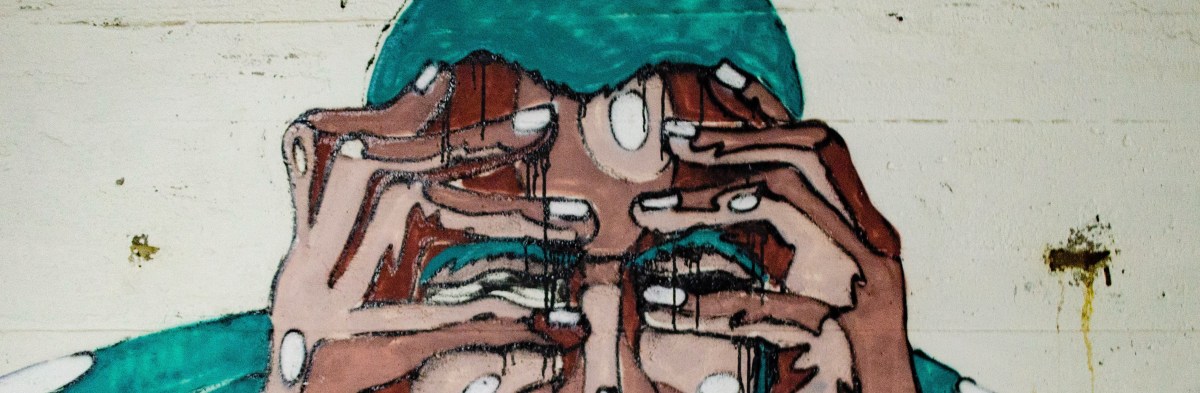
Invisible Effects: Helplessness

Suffice it to say, simply having cancer can leave you feeling helpless. Ignorance of the cause, uncertainty about the future, fear of treatment effects — that lack of control is frightening. But that’s not the helplessness that I’m writing about here.

In my last post on chemo brain, I alluded to the disorientation that comes from distractedness, brought on by lasting effects of chemotherapy on brain function. Here, I want to drill down and describe the feelings of helplessness that arise. 

In WHY Did I Just Do That?, I wrote about a humorous dream in which I couldn’t understand the reasons for my weird behaviors. But the more sobering side of this is that I often feel that same way during my waking hours. There are things that I’ve done — treating a red light like a stop sign, as mentioned in my previous post — that make absolutely no sense to me and make me feel like I’m not in control of my own behaviors.

To make matters worse, I am not aware that I’m doing anything wrong (or dangerous or illegal!) at the time. When I realize what I’ve done, I’m horrified. Want to feel helpless? Not being able to trust yourself is a pretty good way.

I’ve been told that the main issue is loss of focus. Mindfulness helps immensely in these types of situations, but as anyone who has practiced mindfulness can tell you, you can’t be mindful 100% of the time. In my case, I’m fearful that this distractedness can put others or myself at risk.

This.

Want a few more examples? Some are rather benign, like almost flooding the bathroom because I left the water running in the sink. Or writing an important email and leaving it unsent. Most of us have done something like that at one time or another, likely due to juggling too many tasks at once.

But the things that leave me feeling desperate are the ones that are not easily remedied. Having to learn things over and over again because I’m not retaining information. Having trouble expressing myself and not being able to retrieve words. After working as an editor at one point, this is unbelievably disheartening.

However, one event topped them all: I fell for a (well-designed, admittedly) bank scam where I gave out my Social Security Number despite having taken my work’s cybersecurity training course the previous week, and having received constant reminders from my bank that they will never ask for my SSN over the phone. Besides making me feel unimaginably STUPID, it cost me a good deal of money, time and nerves. 

“Helpless” is not even the best word to describe how I feel. “Hopeless” is a more apt term. “Exposed” and “vulnerable” work too. This begs the question: how much more damage will I do to myself before things start improving? I should be working full-time instead of part-time, given the cost of living in my area. But how can I even think of looking for another job when I’m on such shaky ground? Cancer knocked me down in ways that I never anticipated. Yes, I’m grateful for being alive, but YEESH!

Building new neuronal connections, identifying what aspects of my memory issues are most severe, practicing mindfulness as much as humanly possible — it will take all that, along with a healthy dose of patience, to start seeing improvement. Hope I don’t get distracted and drive off a cliff before then.

Invisible Effects: Chemo Brain

Ah, chemo brain: the eater of thoughts. I should note that what I’m experiencing might not just be the effects of chemotherapy messing with my brain cells. This could also be influenced by the estradiol-blocking drug Tamoxifen that is forcing me into menopause before my natural time, or it could simply be the menopause “fog” that women complain about. So I don’t know exactly what it is, besides being infuriating.

I lose thoughts in an instant. Sometimes I actually “see” them disappear in the distance. It’s such a weirdly tangible sensation. I can try to grasp at their coattails and occasionally I’m successful in latching onto the thoughts and pulling them back. Other times I need to stop and walk back through my thought processes to retrieve them. And then sometimes they’re just gone. My desk at work is covered with post-it notes as a testament to what’s going on in my noggin. If there’s something I need to do I need to write it down NOW, and it’s not unusual for me to lose the thought as I’m in the process of getting something to write it down on!

This is what a walk down my memory lane looks like.

I can juggle up to three things in my mind at a time if I keep repeating them over and over again and work to maintain focus. Any more than that and it quickly crosses into the realm of hopelessness — it’s like knowing how to juggle three balls but if someone tosses a fourth at you, they all crash to the ground.

Then there are those chunks of awareness that disappear. It may simply be distraction and losing focus, but it feels like a hiccup in time that I don’t notice until it’s happened. It’s that “huh?” feeling as I return to present time when I realize that I’ve been gone for a second or two.

More disconcerting is a strange myopia that prevents me from reacting normally in a familiar situation. For instance, several months ago I treated a red light like a stop sign, and this was a familiar traffic light in my neighborhood that I’d been through many times. I briefly stopped at it, then drove through it. It was a “T” intersection that’s not terribly busy, but I did get shocked back to reality by the angry honk of a car that had the green and was probably wondering WTF I was doing. 

The bottom line is that I’m distractable beyond belief. My train of thought gets derailed before it even leaves the station. The first time I noticed this, my oncologist ordered a brain MRI, way back in February. Nope, couldn’t blame it on a brain tumor — it’s just chemo brain.

This feels demoralizing, especially since my memory used to be so good. I lament losing all those awesome thoughts and ideas. And I know they were awesome because I remember having them — I just can’t recall exactly what they were. Yeah, there will be more, but I better have a notepad nearby to write them down. I even had a better ending for this post, but, you know…

Treating the Whole Patient

Falling ill in the 1960s, my grandmother was never told by her doctors that she had pancreatic cancer. That seemed to be a fairly common tact when the outcome was bleak: there was no question the end was coming once you got a diagnosis, so why stress the patient even more? 

And survivorship? What was that? Surviving was a long shot and anyone who did make it through was told to be happy that they were still alive. Lingering side effects were considered a small price to pay. But with the advent of more effective treatments, the population of survivors has grown significantly. These days, there is a future for cancer patients, and with that a growing need to address the distresses that may plague former patients for many years to come. 

There are the physical repercussions that we often hear about, such as neuropathy, lymphedema and heart troubles. But more attention needs to be paid to what goes on in the space between patients’ ears. The psychological effects of cancer diagnosis and treatment can be just as, if not more, debilitating and long-lasting. 

It’s the pain no one else sees that hurts the most.

I am fortunate to live in an area of the United States with exceptional medical care and several highly reputable cancer centers. However, I’m even luckier that the particular hospital system my family is part of has gone to great lengths to make sure that they treat the whole patient, offering outstanding psychological support at the cancer center. Not only are there support groups and a variety of classes, but there are exceptional clinical counselors available to deal specifically with mental health issues associated with cancer. Based on what I’ve been told by patients at other facilities, such an enhanced level of emotional support is a rarity.

This is disappointing. We have finally chipped away at the stigma surrounding cancer and have improved the survival rate, but we have much more to do to support patients and survivors in treating the emotional effects of the disease.

Cancer Patient vs. Cancer Survivor

This was the situation: I finished chemo, finished radiation. I had gotten to bang the “Whoopie! I’m done!” gong in the radiation oncology patient waiting area — very satisfying. I had my “exit interview” with the cancer staff. The worst was over.

Every cancer patient looks forward to the end of treatment and a clean bill of health. As a matter of fact, I’d been so focused on finishing that even when I could see the light at the end of the tunnel, I really couldn’t see past that point. Chemo was the monster that consumed me. I had dreamed about the end of treatment for weeks and weeks, trying to hold on mentally until that final infusion, and after that, the last radiation appointment. Finally, that day had come.

However, I still parked in the familiar “cancer patient” spots in the parking garage that allowed me quicker access to the hospital buildings, a necessity on busy days when I needed to get to my appointments promptly. My chemo port was still in because I would be receiving Herceptin (monoclonal antibody) infusions for about six more months, and even though Herceptin doesn’t have noticeable side effects, it had the potential to affect my heart. 

So was I well? Was I sick? The tumor was gone, the treatment was over, my scans had come back clear, but the questions remained. My sense of self had experienced a powerful upheaval during treatment and I felt lost. As much as I hated it, I’d become comfortable with the idea of being a cancer patient. That was the known. The unknown was what came after that. 

Okay, where to now?

The unknown is scary and the uncertainty doesn’t simply go away. When you’re a patient, your medical team works out a plan based on your specific situation, and that’s your roadmap for the length of your treatment. When you pass into survivorship, you travel off the edge of the map. The remission rate for breast cancer is remarkably good, but it’s not guaranteed. 

At some point, I left the map. I have the rest of my life to get comfortable navigating through what comes next.

Survivor’s Guilt and “Noel”

After posting about missing the “downtime” of chemotherapy, I need to talk about how much of a privilege it is to be here writing that. I get to reminisce about the positives of being allowed to have no other job but to rest and recover.

Sometimes I complain about chemo brain, sometimes I wonder why *I* got cancer when those who take worse care of themselves seem to get off scott-free. I’ve left the initial fears about death behind me. Yes, my cancer may come back, but right now I’m in a good place with a good prognosis. My reality is that I will be able to enjoy this holiday season and focus on being with family, feeling physically healthy and “normal” again.

I have friends who are currently going through treatment. And you can bet that they would give anything to not have to be there, in the same way that I would have when it was happening to me. Some of my friends may eventually get to the place that I am now; for others, this may be the last stage of their lives.

malcolm-lightbody-701421-unsplash_cropped
“All we have to decide is what to do with the time that is given us.”   ~Gandalf, The Return of the King

This is not lost on me. In fact, it’s something that I think about a lot. As we approach Thanksgiving, I am very grateful that I’m doing well, not even a full year after completing my last treatment. In addition to my gratitude, however, I carry a lot of guilt. One in eight women will be diagnosed with breast cancer during their lifetime. And many will be diagnosed with other cancers or other life-threatening illnesses. At any given time, there are so many of us going through the shock, fear and psychological and physical suffering of various treatments. How can I complain about my lingering discomforts when I have the pleasure of being here and experiencing them?

There are many things that could have been worse for me. But they weren’t. The more time that passes, the less I worry about why I got cancer and wonder more why I am one of the fortunate ones. As difficult as it is to put my cancer experience behind me and move on as if nothing happened, it’s even harder to do so knowing that I am leaving behind others who will not make it.

~~~~~~~~~~~~~~~~~~~~~~~~~~~~~~~~~~~~~~~~~~~~~~~~~~~~~~~~~~~~~~~~~~

I’ve met a lot of fellow cancer patients in the infusion room, some with metastatic cancer. There’s one in particular I cannot forget. I’ll call her “Noel” since I met her heading into the 2017 holiday season and her mother privately told me that she wasn’t expected to survive past Christmas. Noel was a friendly and sweet woman with aggressive breast cancer. We chatted about hair regrowth as mine was just barely beginning to come back, and she shared with me Facebook photos of what her hair looked like after her first breast cancer treatments were completed. Eighteen months later, the cancer had returned with a vengeance. Noel was divorced with two pre-adolescent daughters. Her mother told me that as Noel’s situation deteriorated, it also devastated her daughters, who were witnesses to their mother’s decline. Luckily, their father was very supportive and provided as much care and love as he could.

I was heartbroken as I left the infusion room that day. I don’t know ultimately what happened to Noel, although I expect the worst. Cancer is a horrible beast that ravages the patient, but also takes the family down with it. I think, “What a blessing to not have to go through that.” But that thought catches on my conscience. I’m still here; do I deserve to be?

Recounting this story a year later, that guilt weighs even heavier now. I feel an obligation to make good use of the time remaining.

Chemotherapy Dreamin’

This is going to sound very strange. In fact, it seems bizarre to me as I’m writing it. But there are parts of chemotherapy that I miss.

So this deserves some clarification: chemo was absolutely miserable and by far the worst part of cancer treatment. When I entered the infusion room, I knew that I’d be out of commission for the next week. I’d feel nauseated with a burning throughout my GI tract and be laid out as if I’d been hit by a locomotive. I could.not.wait for chemo to end.

What changed my opinion? You may think this sounds crazy, but hear me out. The sad fact was, chemo was the only guaranteed way that I could get some rest.

I knew I wasn’t going to handle work issues, clean the apartment, pick up the kids or do anything else that I’m usually expected to do. It was a forced convalescence. One that I desperately needed.

When I was going through cancer treatment, I didn’t worry about the little things. And truly, when you have cancer, everything else seems inconsequential. When you’re wondering whether you’ll live to see your kids graduate from high school, nothing matters as much as survival.

It wasn’t until I finished all my treatments and my hair had grown back that the “little things” started to creep back and set up residence again. Memories of the misery of chemo lose their clarity, the fear of death passes. The overwhelm from a diagnosis is replaced by the more familiar overwhelm of daily stressors, now made worse by the additional complication of chemo brain. No, they’re not life-threatening, but they are all-absorbing.

maarten-van-den-heuvel-5193-unsplash_cropped
I’m gonna lie down and close my eyes for just a sec…

So is it surprising that I wish I could close my eyes and be left alone for a week? Even more so, isn’t it sad that it took cancer for me to be allowed to rest and let others take care of things for a while?

That, I believe, was a warning that my life needed to change and is now the major driving force in my meditation practice.

~~~~~~~~~~~~~~~~~~~~~~~~~~~~~~

Consider: Because my cancer treatment lasted over a year, it became the “familiar”. The “unknown” is what follows, and that includes the threat of recurrence. That’s when things really get scary. Learning to deal with that will literally take the rest of my life.

Addendum to So.Many.Pills

My last post (I Didn’t Expect THAT: So.Many.Pills) was about the overwhelming number of medications associated with cancer treatment, particularly for someone not used to taking pills. But this topic deserves a closer look…

If I had to choose one of the most frightening aspects of cancer treatment, it would be side effects. This is not like popping an aspirin for a headache. These are medications that can take a heavy toll. One of my greatest sources of anxiety was deciding whether to take a pill or try to “tough it out”.

After surgery, I was given a generic form of something approximating Norco. Some people jokingly commented that this was a “perk” of treatment, but I had read the insert that came with the medication and wanted nothing to do with it. The only reason that I took it (a single half dose) was that by the evening I had a horrible headache, more painful than anything at the surgery site and probably due to a combination of the anesthesia and not being able to drink coffee that morning.

devin-avery-552230-unsplash_cropped
Just…no.

It was a miserable night, since the half dose didn’t do much and I tossed in bed, googling interactions between my pill and ibuprofin, which is what I really wanted to take but hadn’t due to potential bleeding issues. At about 5am, satisfied that enough time had passed from my half dose of pain reliever, I took the ibuprofin and finally got some sleep. Wish I’d taken it first instead of the “oooo-you’re-so-lucky” Norco.

Nausea from chemo was another terrifying thought. The nurses had warned me not to risk it; if I started to feel queasy, take anti-nausea meds. Once vomiting sets in, I was told, it was hard to stop. Of course, the side effects associated with the meds were rather extensive and just reading the label made me anxious. There were two different meds and the idea was this: take the first one (ondonsetron) and then if I need a booster in four hours, take the second one (prochlorperazine). And then alternate like that every four hours, if necessary.

Sounds reasonable, except that a couple of nights after my first infusion I mixed up the pills and ended up taking prochlorperazine first. Prochlorperazine is an anti-psychotic (I guess, with anti-nausea properties?) and it was responsible for one of the roughest nights of my life. It was that night that I swore I’d pierced the veil between this world and the next and decided that death was a fair alternative to what I was feeling.

Somehow, I survived those first nights, but I wasn’t keen to go through that again.

alex-loup-606850-unsplash_cropped
Not a perfect solution, but better than the alternatives.

I live in a state that has legalized cannabis, and was sent a shipment of CBD cookies by one of my brothers who had used them to control nausea from migraines. I was encouraged to try them since I was told CBD didn’t have side effects. Of course, as I mentioned in the previous post, it also didn’t have clear dosing guidelines. I mean, this was a crumbly cookie – how do you dose that? My brother said something like, “I take a couple when I get a migraine.” My brother is also 6’3″. I figured I’d start with one.

Shortly after that, I fell into a weird sleep from which, an hour later, I woke with a gasp because I thought I’d stopped breathing. Mmmm, probably not the right dose for me. Four hours after I’d consumed the cookie I needed to pick up my son from school. I wasn’t high, of course, but I wasn’t feeling normal either. I made it there and back alive. It was at that point that I realized having to play mom while going through cancer treatment just plain sucked, but I digress…

Eventually I worked out a dose, about 1/5 to 1/4 of a cookie, which was 20-25 mg of CBD. This was a game-changer for me and I gratefully relied on CBD for the remainder of my treatment. Yes, I truly disliked the taste, and with the lining of my GI tract gone, eating a cookie was not first on my list but being able to calm my nausea without side effects was well worth it. It probably helped my anxiety too.

What it would have been like to go through treatment without being so fearful of what the medications were doing to me? Anxiety always got the best of me. As noted in my last post, getting to the point where I could limit the number of medications I took was key in helping me get through this experience.

While the physical effects were rough, the psychological effects were what magnified the discomfort, and that had to do with feeling so far out of my element. None of this was close to normal. Of course, my normal is not needing medications. That wasn’t happening with cancer, but once I figured out what was what and how much I could handle, treatment became more manageable.

Memories of Blood, Sweat and Tears

There are some odd memories from my chemo experience that stick in my head. It was such a jumbled, frantic time when I was struggling to get a handle on what I was dealing with. I was going through my first few courses of chemo when my daughter was diligently learning the dance steps to K-Pop group BTS’ song, Blood, Sweat and Tears. Lying on the couch in the living room as she followed the dance practice video, I became involuntarily familiar with the song and its accompanying dance moves. Because of the frequency with which I heard the music, I was convinced that either I was going to love it — or would get nauseated and anxious whenever I heard the opening bars.

I never developed an aversion to it. In fact, it remains one of my favorite music videos. Any associations that I have with the song also include knowledge of having endured the chemotherapy medications and emerged on the other side of treatment. That positive perspective gives me a feeling of accomplishment. I can watch the video without any “baggage”, which is a feat for things cancer-related. The surreal nature of the video, coupled with the fact that most of it isn’t even in English, reflects my disoriented state during treatment: colorfully dreamy, occasionally inexplicable and an escape when reality became “too real” to handle.

Peace In Puzzle Pieces

One unexpected thing that had a big influence on me in terms of feeling support from others was a jigsaw puzzle in the oncological radiology’s waiting room. It was a large puzzle with a lot of pieces. Every day for six weeks, as I received radiation treatment, I saw that puzzle in various stages of progress. Eventually, I started poking around at it, and often I would be able to add a piece or two. The next day I came, more would have been completed — seems like a lot of us were poking!

This served as a lovely metaphor for what we, as patients, were going through: cancer is a puzzle, and treatment offers pieces that we put together in hope of finding our way through. All of us were working on this jigsaw puzzle at different levels of ability. Some were stronger than others, some had better support networks, but everyone was shuffling along at their own pace, completing their treatment puzzle, piece by piece, day by day. On days when treatment seemed never-ending, there was gratification to be found in the progress of the jigsaw puzzle.

I had never realized that working on jigsaw puzzles was so soothing. Just as in mindfulness meditation where you focus on the breath, the puzzle offers an opportunity to focus on a particular pattern, color or shape of a piece. It requires concentration, but this concentration comes easily. You don’t have to make yourself focus, it simply happens as you search for a piece.

Eventually, my radiation treatment ended and I left a partially completed puzzle in that cozy waiting room for others to finish, but I longed for that familiar feeling of comfort and quiet. That waiting room had been an inviting sanctuary where my only responsibility was to practice self-care. I wanted that to continue. It wasn’t long before I’d found puzzles to work on at home. I chose the images for how they made me feel, and for quite a few months afterwards, working on puzzles was a meditation. My family played the role of other patients, and together we enjoyed the satisfaction of putting the pieces together.

~~~~~~~~~~~~~~~~~~~~~~~~~~~~~

Here are several of the puzzles I/we finished at home. Apologies again: as with most other photos in this blog, I never intended to post these online, so the photo quality is lacking. I’ve added info on where these puzzles can be found in case anyone is interested, especially if you’d like to see what the pictures look like under ideal conditions.

“Secret Garden” by Alan Giana (Bits & Pieces, 500 pcs, Amazon.com): I was looking for a peaceful oasis and this image fit the bill. I loved the flowers and flying creatures, but particularly the koi, which brought a special zen to the picture. (Bad lighting – doesn’t do it justice!)

Summer_Puzzle

“Marvelous Garden” by Oleg Gavrilov (Bits & Pieces, 500 pcs, Amazon.com): I love peacock blue, the architecture smacked of Tuscanny and the flowers (yes, pink ones) completed the scene. This remains my favorite puzzle to date.

Peacock_Puzzle

“Autumn Oasis II” by Alan Giana (Bits & Pieces, 500 pcs, Amazon.com): Autumn means that Halloween/Thanksgiving/Christmas are coming up soon, and after such a miserable year of fear and cancer treatments, I was so looking forward to a joyous holiday season.

Autumn_Puzzle

“Florence” by Eric Dowdle (Dowdle Puzzles, 500 pcs, dowdlefolkart.com but purchased at Costco): I missed visiting Florence during a European trip due to scheduling conflicts, but it remains one of my most-wanted cities to tour. Seeing Michelangelo’s David in person is on my bucket list! I particularly liked that this puzzle came with a little poster of the image that made putting it together a serene pleasure. The last thing you want is to get headache trying to match up teeny windows!

Florence_Puzzle

This Is Your Arm On Drugs, Part II

While my previous post had focused on appearance, how I looked was a relatively small part of getting back to where I’d been physically. Much more important was the hit my strength and endurance levels took, and those don’t really show up in the photos I posted. While there’s not a huge change in muscle size, my strength did decrease significantly, not surprising given that I was going through cancer treatment. At the “height” of each chemo infusion, I had trouble walking, sometimes even lifting my head from the pillow. Movements required a lot of effort.

All that rest time affected my physical ability. I’d been told not to row (Concept2 erg) for four weeks after the lumpectomy on my left breast. That was tough because rowing is a form of meditation for me, the quintessential mindful movement — it was stress management that I desperately needed. I wanted to follow the rules so I stayed off the erg, but incorporated light weights into my “weenie” workouts. That helped, but I felt frustrated and weak.

Then, after those four weeks were almost over, I had my chemo port implanted on the right side of my chest wall, and again was told not to row for 3-4 weeks. Well, a week after port placement, I had my first infusion. ARGH! Sooooo, I wasn’t able to get back to rowing until I’d recovered from my first chemo.

My strength continued to increase after each of the first three infusions, which was gratifying. I’d gotten to about 2/3 of my pre-surgery strength training weight load. But after the 4th infusion, the fatigue started to catch up with me and I had to slow down. I was tired! To make matters worse, my bloodwork before the 5th infusion revealed an increase in the levels of two liver enzymes, ALT and AST. Chemo is hard on the liver, which works overtime to clear out the drugs from your system. If those numbers continued to go up, my 6th infusion would be delayed.

Now, you might think: what’s the big deal, waiting a week or two longer for the last infusion? Psychologically that would have been devastating. For me, getting through chemo was more than enduring its physical effects; the mental component was huge because of the stark contrast between my level of fitness previously compared to where cancer had knocked me down to. The dates of each infusion were seared into my mind, and I really needed chemo to be over.

My solution was to implement every means imaginable for decreasing liver enzyme levels. That included foregoing heavy lifting, according to my research. Anything, to finish on time. For the weeks before my last chemo, I was a green-tea-guzzling, dark-leafy-green-devouring, turmeric-supplement-popping, hyper-hydrated couch potato. Thankfully, my numbers went down and I finished chemo as scheduled.

The final infusion required the longest recovery. Once I got over the worst of the side effects, I could still only row 500 meters at a time at a harder pace, and my weight load and repetitions had dropped dramatically when strength training. While I was done with the hard chemo, I still had Herceptin infusions (and still had the port implanted, which got in the way) and those affected my heart, so I got tired more quickly. Not chemo-tired, but tired enough. I focused first on improving muscle endurance (lighter weights, higher reps) and then gradually increased the weight and dropped the reps to build muscle back.

There was a fire under my butt to get back to my version of “normal”. Ultimately, regaining strength was the easy part. The hard part was getting back to where I had been mentally, and even now I’m not sure I’m there yet. But who knows if I was in as good a state pre-diagnosis as I think I was?

My focus now is to train as hard as I can, stay as active as possible and not succumb to the weight gain that seems to afflict the average middle-ager. I guess I’m trying to find a “recipe” that will keep the cancer from coming back. It probably doesn’t exist, but seeking it is one way for me to maintain a semblance of control over something that is ultimately uncontrollable.