Time to Stop Complaining?

(Title image: Photo by 光术 山影 on Unsplash)

Nine years after my initial breast cancer diagnosis, I was still finding things to complain about. Yes, it’s 100% true that cancer treatments (surgery, chemo, radiation, endocrine therapy, etc.) are kind of like taking a 2-by-4 between the eyes. You do your best to keep yourself afloat but, with the exception of the effectiveness of the treatments on the tumor cells, you could argue that they are a net negative for the rest of your body.

Once treatments are done, side effects can linger. Some of them may linger for quite a long time, years even. And that’s where I got caught up in all of this.

The problem is that along with cancer treatment, other things are happening in parallel. Because I was pre-/peri-menopausal at the time of diagnosis, the onset of chemotherapy also resulted in a hard stop to my menstruation. This brought with it effects, although luckily mild, that aligned with a menopausal transition.

But there was more. At one point I was so panicked about memory issues that my oncologist decided to do a brain MRI, which found nothing (well, it found my brain…but no brain tumor. I’ll take it). But this was also during a particularly anxiety-driven point in my life, and that’s something that can also affect memory and basic mental functioning.

Imagine taking one of these planks to your face; that’s my impression of cancer treatment.
(Photo by Patrick Robert Doyle on Unsplash)

And so it went, on and on. I saw a cardiologist because I was experiencing heartbeat irregularities—probably anxiety-related also—but even after a stint wearing a Holter monitor (which reminded me of my chemo port, ugh), nothing serious was identified. In fact, the cardiologist remarked that I had a very strong heart. Not what I had feared, but good news.

I was frustrated with the effects of endocrine therapy on muscle wasting, something that I perceived as a huge loss, but when I finished up physical therapy for my shoulder a month ago, the therapists pointed out my strength and flexibility.

I was focused on how much I had lost, somehow ignoring the fact that I just turned 60. I was comparing myself to my abilities in my 40s, which—no big surprise—isn’t reasonable.

It really hit me when I attended an online event with other cancer patients and survivors. I wasn’t experiencing the level of impairment that others described.

This made me think hard about how I perceived myself. I finished my main treatments over eight years ago. That’s a long time, so why was I attributing anything that went “wrong” to cancer? I was doing very well. Still exercising. Still working my job. Still trying new things. Still not feeling my age.

I have nothing to complain about and a lot to be grateful for. The fact is, I left my post-cancer struggles behind some time ago. The “side effects” I thought I was still experiencing are miniscule compared what others, particularly those my age, are dealing with.

So I’m going to do my best to shut up about them.

Go Get Some Rest!

(Title image: Photo by Daniela Turcanu on Unsplash)

I spent the last week sick. I knew it was coming, given how rundown I’d become at the end of last year, although I really didn’t think it was going to take this long for me to succumb to some virus.

But after a rainy week and ample time spent on public transportation, I brought something home with me. And it wiped me out.

Loads of chest and sinus congestion, several days of laryngitis, headache, sore throat and some completely unexpected lower GI tract issues…it was a medley of unpleasant symptoms.

I tried to put in a couple of hours of work from home everyday but was surprised at how difficult it was for me to maintain focus. As a result, I spent my days not really working, not really resting, and just as I started to recover I realized that I had a lot of work to catch up on. That made my lingering symptoms more fatiguing.

This reminded me of chemo, where just as I’d start shaking off the worst side effects from an infusion, it was time to head back to work.

It felt like I never quite got the rest I needed and was working at a deficit that progressively got worse.

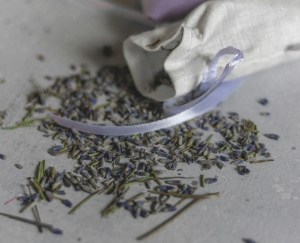
A scent associated with a peaceful time took me back there again.
(Photo by Valerie Sidorova on Unsplash)

It hadn’t quite hit me that the situations paralleled each other until I had dragged myself out with my husband to do some much needed grocery shopping. We stopped by a new produce store we’d never visited before and wandered in. And as I passed their aromatherapy section (yes, it was THAT kind of store), I was hit by an amazing mingling of essential oil scents that gave off dreamy yoga studio vibes.

I stopped to absorb the scent and that sensation, and it brought back memories of yoga training and the peace that I felt from being in that environment. Soothed, grounded, spirited away.

Standing there, I was still not feeling well, but I felt nurtured. That sense of calm brought awareness to the sensations in my body. It was clear that I wasn’t showing myself the respect that I deserved. That was when I realized that I needed to allow myself the time to be sick so that I could find the opportunity to recover.

One delightful little trigger brought on a sweeping wave of pleasant memories, and a reminder that even after all these years, I need to do a better job of taking care of myself.

I spent the rest of the weekend doing that.

A Date with the Oncologist…and the Office Scale

This past week I had my “9-years-since-biopsy” oncology appointment. I have sat in that same exam room numerous times since March 2017.

It still smells the same—I think it’s the cleaning solution the Cancer Center uses, but I’ll never forget that scent. On the other hand, numerous improvements in treatments have taken place since my first time there.

One thing that hasn’t changed is that I still get weighed before every doctor’s visit, just like I do for a lot of other health appointments. It’s also been my least favorite part of getting a check up. No, I am not overweight, but as a child I was taller than all my classmates; basically a lean kid with perfectionistic tendancies who was occasionally teased about having a higher number on the scale, which I can assure you is a shortcut to disordered eating. As a result, even now I am sensitive about how much my healthcare team reads into my weight numbers, even though my weight fluctuations tend to be only a few pounds up & down that are not reflected on my frame.

Yes, you would be correct if I seem to get a bit touchy about this.

I weigh myself twice a week at home with a pricey, high-quality scale that provides all sorts of other metrics. The bodyfat percentage is not accurate and tends to report a lower-than-truthful value, so I don’t swear by it. But I have a great deal of confidence in the weight measurement, especially because I control for as many variables (time of day, clothing, etc.) as possible when I weigh myself.

The scale in the exam room isn’t even one of the “good” ones!
(Photo by Samuel Ramos on Unsplash)

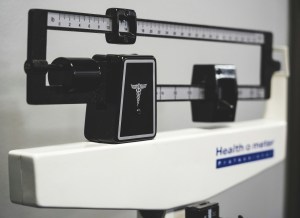
The scale in my oncologist’s exam room literally looks like a bathroom scale. It’s not even the typical mechanical doctor’s scale with the weights that you move across that “T” thing that stands in front of you, if you know what I mean. It’s just a basic electronic scale. I’m sure it’s relatively accurate but not what I’d consider a gold standard.

Why am I making such a big deal out of this? Because my weight at my appointment was about 5 pounds heavier than it had been when I weighed myself at home a few days before and about 3-4 pounds heavier than the last time I was at the oncologist’s office.

And my oncologist pointed it out. It struck a chord. Maybe I sensed concern on his part, maybe I interpreted it as disapproval, maybe I just imagined his reaction. But I immediately felt defensive. This was not a 20-pound difference. This was, for all intents and purposes, a few pounds higher than last time.

I work out 4-6 times a week. I lift weights. I do high intensity interval training. I row on an erg. I take the stairs two at a time. And I cannot shake the feeling that it’s never good enough.

I have been a pescetarian for the past 42 years. I eat mainly vegetables and protein. I don’t put sugar in my coffee. I rarely indulge in alcohol or rich desserts. I have been told that I’m TOO disciplined. And it doesn’t seem to matter.

So, yes, I’m sensitive about this because I’ve spent my entire adult life being very careful about diet and exercise. I have been big on avoiding the things that the general public may consider indispensible treats, even though they’re not healthy. And, quite frankly, I prefer it that way and regret nothing.

Eat healthy, exercise, get cancer—but will people believe you did your best?
(Photo by Nadine Primeau on Unsplash)

But still I feel pressure.

Now, if I were decades younger, this might have sent me into an “I-must-be-even-more-disciplined” state and triggered a clamp-down on myself. But I take a deep breath because I know what I look like naked. I can’t change how people think. I can’t change the healthcare system. The scale is here to stay.

But I can say that as judge-y as people get around weight, the negatives extend way beyond those who might be struggling with weight loss or seem not to care. The effects of perceived judgment touch everyone else too, no matter what shape or size you are. And numbers without context can ruin your day.

As cancer survivors we may already have a difficult relationship with our bodies: changes experienced through surgery, not being able to recognize ourselves after chemo, dealing with unexpected effects of endocrine therapy, even the beliefs of others that we did something to bring cancer upon ourselves. That’s a lot to handle when you’re worried about recurrence or a degraded quality of life.

Hey, it’s okay. I get why we get weighed. But sometimes I hate how it makes me feel.

Showing Self-Mercy

(Title image: Photo by Melanie Stander on Unsplash)

My oncologist keeps telling me that I’m too hard on myself.

This has been something he’s repeated for the nine years that I’ve known him. He says this when I express my frustration with not being as strong or resilient as I used to be. When I complain that I can’t lift as much weight and get injured more easily.

“Relax,” he tells me. But I have a desperate drive that pushes me, as if I’m fearful of stopping or even just slowing down. As if I’m going to sink if I rest for a while.

It’s not just my workouts in which I feel this. It’s also apparent in my professional life which, I admit, did not head down the path that I was expecting it to, and cancer didn’t help. Now, at a time in my life when I’m supposed to be winding down and enjoying a retirement coming in the not-so-distant future…no, I tell myself there’s still so much more to do to get myself to a point where I can finally rest.

Yes, this would be me. No excuses.
(Photo by Jordan Whitfield on Unsplash)

Well, I needed to get that off my chest. As you can image, this kind of mentality has some downsides.

I was reminded of that when, last week, I was again invited to present during an event in which I’ve participated for the past two years. It’s one that I spend about four months practicing for.

The first time in 2024 I was mildly anxious but everything went very well. I couldn’t wait to do it again in 2025.

But last year was really tough for me. I was grieving the death of my father, dealing with weird migraine auras, working on a professional certification that I felt insufficiently prepared for and trying to juggle some major financial changes in my life. I didn’t have the same amount of time to prepare and, consumed by self-doubt, I allowed anxiety to creep in.

No, wait. That’s a lie.

Anxiety didn’t “creep in”, it hit me like a tidal wave. Preparing for an event that should have been amazingly positive and allowed me to showcase my expertise instead kept me up at night. It made me miserable. I obsessed over preparations and couldn’t wait for it to be over.

My presentation came and went well enough. But the experience left me feeling wounded.

Like I said, 2025 was a difficult year with major changes in my life. It stayed difficult up until the last days of December, when I finally had a chance to decompress and enjoy where I was in the present moment.

But when I recently received the invite to once again participate in this year’s event, I felt a familiar undercurrent of panic and despair. And that elicited shame.

First, I tried not to think about it. But that didn’t work well and my anxiety grew. I really wished that I could find an excuse to skip this year but I couldn’t turn it down—that would be “giving up” which would have left me defeated.

Or would it have?

Cutting myself some slack after a lifetime of beating myself up feels like the way I expect these kittens feel.
(Photo by Chirag Bhardwaj on Unsplash)

I have spent so much of my life doing things “for my own good”. When it comes to exercise, that is a very good thing indeed. But what about when doing something genuinely results in anxiety and dread? I had a long track record of pushing through those situations. Over and over again, I would barrel headlong into them, figuring that the more I did things like this, the more comfortable I would get with them. Although it didn’t always work like that. Sometimes, all it did was allow anxiety around it to build even more, painted with self-criticism for feeling that way.

But what if, instead of beating myself up, I took a breath and showed myself some grace? Just this once?

I poked at the possibility of declining the opportunity to present this year, just to test out how I would feel about it. And it immediately felt like a relief. All that anxiety fell away and I saw all the other things I could spend my time doing that I would otherwise put off because practicing required so much mental energy. I made the decision to listen to what my brain and body were yelling at me.

For Pete’s sake…!

This wasn’t a cop-out. This was giving my worn-out self a little love. I need more of that.

Advent 2025: So What Did We Learn?

(Title image: Photo by Nick Fewings on Unsplash)

Yesterday was officially the last Sunday of Advent 2025. Today brings me closer to the end of a difficult year. Ehhh, maybe the end of a difficult eighteen months, given that my dad passed away in July of 2024 and I’ve been dodging tough stuff since then. Change is hard and there was a lot of it.

But after all that, here we are. This reminds me of those “things will turn out okay” adages. Sure, in retrospect you can look back at the maze that you picked your way through and see the clear path. But that’s not what it looks like at the start. It’s a series of twisting turns with no guarantees that you’ll get to where you hope to be by the end, and that you won’t suffer in the process.

Ahhhh, the view from the end comes with a satisfying release of stress.
(Photo by Matt Botsford on Unsplash)

No doubt, it’s much nicer being at the end point and having the luxury of saying, “yep, I survived that.” Reminds me of my last chemo infusion or radiation treatment. The hard stuff is over and now we coast to the finish line.

With the last Sunday of Advent, I finally exhale. My thrice-hourly bells (from the Plum Village app) not only remind me to take a deep breath, they make clear that in between those breaths my breathing has been shallow. The realization that I put an imaginary checkmark beside my deep breath (like, “ok, I did my duty”) but then often return to being a spaced-out mess…hmmm, that’s quite humbling.

In the context of mindfulness, we speak of “remembering” and “being awake” to this life. I spend so much time skittering around like a caffeinated squirrel on an ice rink that it seems I need to be taken by the hand and brought back to my senses. The good news is, the present is a very calming place to be because it’s uncomplicated. You only need to deal with that singular point in time that is “right now”.

So this past Advent was a reminder to myself not to get caught up in what’s coming up, not to wallow in what I should have done differently in the past but to pay attention to where I am.

Ok, What Now?

In the interest of riding the groundswell that I’ve established, I’m going to jump on a free course from Deer Park Monastery’s website called Essential Practices of Mindful Living (https://courses.deerparkmonastery.org/c/essential-practices-of-mindful-living). After pressuring myself with time-intensive certifications over the past years, this is a pleasant change. The online course is self-paced (i.e., no rush, no stress) and teaches topics with which I’m already familiar…but I’m a believer in repetition. Practice, practice, practice

So why am I talking about it now and not on New Year’s Day, as is customary? Because I’ve learned that the best time to start strengthening a habit is now. Not at some arbitrary point in the future (like a certain holiday), but right now.

Onward!

A Thanksgiving Thought and Imminent Return

(Title image: Photo by Priscilla Du Preez 🇨🇦 on Unsplash)

I’ve taken a month or so off from posting due to our apartment move, but I should be back next week.

If there’s one thing that this move has taught me is that sometimes the things you fear the most (like change, for example) end up being what you need the most.

In our case, this move has come with so many positives…including a major purging of belongings that has created not only physical space, but also some much-needed headspace.

There is a certain lightness of being that releasing possessions we don’t need or use anymore has brought us.

This is just what I needed coming into Thanksgiving season. Granted there have been some unexpected and painful changes too, but I can be grateful for what we have had and enjoyed thus far.

So if you celebrate Thanksgiving, make sure to take time to consider all the things around you and, regardless of whether they’re good or bad, what they have taught you.

Have a wonderful week!

Breast Cancer: Know When to Say When

(Title image: Photo by Marius Serban on Unsplash)

This is going to be short because I’m on the cusp of moving my family to a new apartment…and that’s going to take more work now that one of our cars is finally having its damage repaired.

So this is a gentle reminder to slow down and look around once in a while. Life’s obligations can push us like a bulldozer and we might not notice that we’re worn out until something happens that forces us into a mini-vacation.

Something, perhaps, like chemotherapy.

Who needs some love? You do.
(Photo by Mayur Gala on Unsplash)

And if you need a cancer diagnosis (or a broken bone or the flu or…) to give you a break from the pressures of work and family, then I think we can all agree that your mental health needs more love than you’ve been giving it.

Yes, easier said than done. But there are little breaks you can take. A 10-minute body scan meditation or guided breathing practice. A matcha tea break where you focus on the movements of your hands as they prepare your cup. Staring out the window and counting trees/people/cars.

It doesn’t have to be a pricey spa day. You can have a spa inside your head with a phone app and a set of headphones. You just need to care enough about yourself to allow this.

Believe me, I care about you and I don’t even know you. You are the whole reason why I started this blog and why I keep it going, even eight years after my diagnosis. I hope it helps you remember that you are worth being cared for. ❤

Breast Cancer: Life in the Breakdown Lane

Last week, I walked out to my car, which had been parked on the street, to find that someone had hit it. The driver’s side mirror was ripped off, the wheel cover was smashed and the side was dented.

Two things immediately became evident: 1) we were lucky that the person responsible had left us a note with their phone number, (2) we were going to have to completely restructure our travel expectations for the foreseeable future.

While I found a lot to be grateful for in the situation, it also reminded me of a traffic analogy that I have used to describe what happens after you’re handed a cancer diagnosis.

Diagnosis? That’ll throw a wrench into your current plans.
(Photo by Scott Greer on Unsplash)

Being told you have cancer is like getting into a traffic accident: you’re moving along with everyone else in their cars, focusing on getting to where you need to be, and then all of a sudden *CRASH*.

You pull your car over to the side, still stunned by the collision, and take stock of the damage to both your vehicle and yourself.

And as you stand there, all that traffic that you were moving along with has left you behind. You are no longer part of the natural flow of things. All the plans that you had to be somewhere and expectations for what you were going to do this week and next…all of that stops.

You hear the noisy din of traffic and the “Dopplered” sounds of cars zooming by, feeling the whoosh of air as they pass. But when there’s a lull in the traffic, the quiet brings on loneliness, as if the other travelers have moved on and you’ve been forgotten.

The rest of life whooshes by you.
(Photo by Viktor Kiryanov on Unsplash)

Now you have to rework your life. Instead of taking your ability to move through the city for granted, you’re scrambling to figure out what you’re going to have to cancel, how you’ll get to where you need to go and what the immediate future will look like until you get your car back in working order.

In the meantime, you see everyone else progressing along, as they have been, completely unaware of what life looks like in the breakdown lane. Having pleasant conversations, arriving at work on time, meeting with business associates, eating from cafeteria salad bars without the need to double disinfect their lettuce and tomatoes.

Not needing to schedule multiple appointments or surgeries or infusions or radiation treatments. It is such a different life!

~~~~~~~~~~~~~~~~~~~~

Shortly after receiving a cancer diagnosis there’s so much going on that it can be difficult to articulate everything you’re feeling, and those around you might have a hard time relating. I’ve found that this analogy can be helpful in relaying what the experience is like.

See if this works for you too.

The Stuff after Cancer Treatment: Even When It’s Over, It’s Not Over

(Title image: Photo by Leon Seibert on Unsplash)

I stumbled across an article about another celebrity who has gone through breast cancer treatment. That’s not surprising, given the relatively high percentage of women, in particular, who have been diagnosed or are at heightened risk of the disease.

But this one—about celebrity organizer Clea Shearer (of The Home Edit, a home organizing company/brand/empire)—gave me pause for the specific reason that there was so much cancer-related hardship that continued after she finished her treatment.

In 2022, Clea was diagnosed with stage 2 breast cancer (“invasive mammary carcinoma”) and underwent the familiar treatments of surgery, chemotherapy and radiation therapy. However, it’s the complications of her double mastectomy that make her story very striking. To date (that is, as of the release of this article in People magazine a few days ago), she has undergone 14 surgeries and may be running out of options for breast reconstruction.

This is not what anyone expects after they “finish” cancer treatment. In fact, Clea was declared cancer-free in November 2022. But it was clearly not the end of cancer-related effects for her.

I think it’s important for us to consider this when we try to be over-optimistic with cancer survivors. Pushing an upbeat attitude or telling survivors to “just be grateful” glosses over the reality of what they may continue to keep going through.

Yes, of course we are grateful. A cancer diagnosis is terrifying and for those of us who grew up when it was considered practically a death sentence, the idea of having it take your life is hard to get out of your head. In this day and age where social media describes the “condition” as d**th…well, cancer survivors have to meet the possibility head-on, minus the asterisks.

However long a survivor has survived is a cause for celebration and gratitude. But it’s not necessarily the end-of-story, fade-into-the-sunset ending. Clea’s experience is proof of that and I wish her strength and perseverance as she navigates the coming months.

Stories like Clea’s underscore the critical need to treat the whole patient, including offering emotional/mental health support, and not to simply stop the support when the cancer center-based treatment ends. Even when it might seem that treatment is done, it may just be the beginning of a new set of challenges.

Cancer This, Cancer That

(Title image: Photo by National Cancer Institute on Unsplash)

Cancer, cancer, cancer.

There is a part of me that would like to stop talking about cancer. Really.

My cancer diagnosis tops my “Worst Things I’ve Gone Through” list, more than any other crappy things that I’ve gone through. Treatment brought me to a screeching halt and forced me to rethink my expectations for what “success” looked like.

It wouldn’t be surprising if I wanted absolutely nothing to do with cancer and chose to never speak of it again.

However, I DID go through this. I WAS angry and frustrated and literally fearing for my life. So I want to own the fact that I faced one of my greatest health fears and was able to come out of the other end of the cancer tunnel.

Undoubtedly, most of my “success” was sheer luck and well-established medical protocols. There are many other cancer patients who go through the same thing but are not so fortunate. Until we know exactly what triggers the development of a tumor and can determine how to effectively avoid that, we will still be riding by the seat of our pants

In that case, isn’t it sort of odd to wear the “cancer survivor” badge like an achievement?

This goes without saying.
(Photo by National Cancer Institute on Unsplash)

And yet, it does feel like an achievement. Or perhaps, it feels like it gives me a purpose. The entire reason why this blog exists is because I had questions about the experience of being a cancer patient that I could not find answers for, and I wanted to offer what I had gone through in case it might help someone else.

As cancer recurrence became kinda, sorta, maybe less likely with each passing year, I still had an urge to let people know about the disease because it had been so huge in my life. At some point in a conversation, I’d stick in that I was a cancer survivor—it was hard not to, I realized, because there were so many ways that cancer had entangled itself in me.

And people would say congratulations for surviving and then the conversation would become a bit uncomfortable because no one really likes talking about cancer…and everyone would quiet down for a bit. I could easily keep going on about my experiences but I know I’d never get invited to another social event if I did, so I learned to shut up and change the subject.

This blog is my emotional, cancer-indulgent dumping ground.

~~~~~~~~~~~~~~~~~~~~

If someone mentions that they have a cancer diagnosis, I know what not to say first and foremost, but there’s a balancing act between allowing them the space to express themselves (especially if others around them don’t know what to say) and offering supportive bits of random information about things that actually matter to them.

In online forums, I’ve typed out a block of text…only to delete it before sending. Maybe it’s not as important for me to talk about what I went through as it is to simply be there to listen.