“Worth the Wait”: Fruits of Mindfulness

(Title image: Photo by Ante Hamersmit on Unsplash)

No matter how long you’ve been practicing meditation, there generally comes a time when you begin to question whether it’s actually doing anything.

For me, it was when I was going through cancer treatment. Granted, I had only started meditating following my diagnosis, but even knowing that it wasn’t like a pill you took to calm yourself, I was kind of expecting “something”.

And I did get “something”, usually with breathwork, which was more distracting myself than anything else, but also tapping ever-so-slightly into the relaxation response.
Take a breath and notice how it feels to breathe. Then take another one. Notice. And keep going like that.
(Photo by Nick Fewings on Unsplash)

But the rest of the stuff? Where you focus on sensations in your body? I don’t think it really clicked for me at that time.

It wasn’t until later. And exactly how much “later” it was, I don’t know. Probably long enough that it would be hard to get someone enthusiastic about beginning a meditation practice. To really feel something definite about how my body was reacting differently? Yeah, I would say years of daily meditation. That’s not a great selling point although it does drive home the importance in consistency in practice.

But fast forward to somewhere around now. Over nine years of meditation, some days very calm and focused, other days, well, kind of a struggle to rein in my thoughts. There are a lot of stressors these days, some going as far as disrupting our hopes for the future.
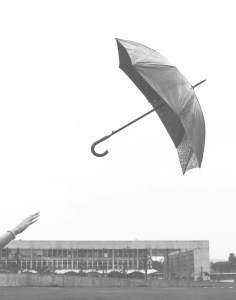
Oh, that uncomfortable “WHOOSH”…that drags you away from the present.
(Photo by Daniel Dan on Unsplash)

If you’ve dealt with anxiety yourself, you may be familiar with that “whoooosh” feeling in your head, when a wave of anxiety hits you. In addition to a chill in my gut, I feel a disconnectedness, like my brain is trying to protect me by taking me out of the situation. I don’t know what to say because I’m not thinking clearly.

Recently, it hit me, however, that I don’t have that experience anymore. As a matter of fact, during a recent heavy conversation that I had been dreading, in the midst of it, I felt remarkably grounded. My words were there and accessible. My sentences were clear and meaningful. I was processing the information in real time. Not rushed, not taken by the wind.

Sure, it was stressful. I was worried about how things would turn out. But the panicky out-of-control feeling was no longer there.

I have no idea when everything changed, but likely it was bit by bit, over the weeks and months and years of practicing breathing through everything.

Experience showed me that even the worst situations can have positive outcomes. Perspective matters.

So, if you’ve ever questioned whether setting time aside every day for quiet contemplation was worth it, I can assure you, yes, it is. It might not be apparent outwardly, but be confident that behind the scenes, things are changing for the better.

Checking-In via Mindful Moments

After writing the last two weeks about things that I am not doing—such as attributing what I perceived as my own shortcomings to cancer treatment side effects or pushing myself into experiences/responsibilities that end up causing distress—I wanted to write about what I am doing.

Lately, I’ve been breaking meditation sessions into shorter, more frequent mindful chunks. Instead of a prolonged sit, I stop what I’m doing and sink into where I am, as a sort of check-in for a few minutes.

This works best for where I am now, with some anxieties about the future rising and others ebbing. There has been a lot of change. It feels like the swirling tides of the Bay of Fundy, putting me in a state where the best work I can do is to remain at an even keel while moods lift and fall all around me.

Tides rise and fall, try to bob with them.
(Photo by Stephen Walker on Unsplash)

This is how it goes: when I notice the mental waters rushing in, I pause and look around. Am I safe? Yes. Am I healthy? Yes, or if I’m fighting an illness, I check to see if I have what I need on hand. Have I been fed and watered? Yes. Is there unrest in my body? Perhaps, and I locate a point if one exists, then slowly release that tension if possible. Do I have everything I need to do my work or complete an errand? Do I know what I’m doing next? Perhaps I should jot some notes? All of this gentle questioning gives me an opportunity to settle and refocus on what is going on right now.

I stretch, as this helps me expand my chest, take a deep breath and feel what it’s like to take up space. Many of us spend our days hunched over our work, contracting inward. That’s tough on our bodies and tough on our minds. I find it really helps to reverse that body posture, which reminds us to open up and reset our perspective.

Finally, I take a moment for stillness, feeling into my entire body at once. Noticing how everything is interconnected and how I blend into my environment. Then recognizing how the ground is solid beneath my feet and how smooth everything feels: flowing time, movements of my body, thoughts in my mind.

This check-in allows me to manage upsetting thoughts and bring my attention back to where I am. Because it’s short, I can intersperse these little sessions into my day, so I’m never too far from one. If you’re feeling too restless to sit for a longer meditation, try this out and see whether it suits you.

Time to Stop Complaining?

(Title image: Photo by 光术 山影 on Unsplash)

Nine years after my initial breast cancer diagnosis, I was still finding things to complain about. Yes, it’s 100% true that cancer treatments (surgery, chemo, radiation, endocrine therapy, etc.) are kind of like taking a 2-by-4 between the eyes. You do your best to keep yourself afloat but, with the exception of the effectiveness of the treatments on the tumor cells, you could argue that they are a net negative for the rest of your body.

Once treatments are done, side effects can linger. Some of them may linger for quite a long time, years even. And that’s where I got caught up in all of this.

The problem is that along with cancer treatment, other things are happening in parallel. Because I was pre-/peri-menopausal at the time of diagnosis, the onset of chemotherapy also resulted in a hard stop to my menstruation. This brought with it effects, although luckily mild, that aligned with a menopausal transition.

But there was more. At one point I was so panicked about memory issues that my oncologist decided to do a brain MRI, which found nothing (well, it found my brain…but no brain tumor. I’ll take it). But this was also during a particularly anxiety-driven point in my life, and that’s something that can also affect memory and basic mental functioning.

Imagine taking one of these planks to your face; that’s my impression of cancer treatment.
(Photo by Patrick Robert Doyle on Unsplash)

And so it went, on and on. I saw a cardiologist because I was experiencing heartbeat irregularities—probably anxiety-related also—but even after a stint wearing a Holter monitor (which reminded me of my chemo port, ugh), nothing serious was identified. In fact, the cardiologist remarked that I had a very strong heart. Not what I had feared, but good news.

I was frustrated with the effects of endocrine therapy on muscle wasting, something that I perceived as a huge loss, but when I finished up physical therapy for my shoulder a month ago, the therapists pointed out my strength and flexibility.

I was focused on how much I had lost, somehow ignoring the fact that I just turned 60. I was comparing myself to my abilities in my 40s, which—no big surprise—isn’t reasonable.

It really hit me when I attended an online event with other cancer patients and survivors. I wasn’t experiencing the level of impairment that others described.

This made me think hard about how I perceived myself. I finished my main treatments over eight years ago. That’s a long time, so why was I attributing anything that went “wrong” to cancer? I was doing very well. Still exercising. Still working my job. Still trying new things. Still not feeling my age.

I have nothing to complain about and a lot to be grateful for. The fact is, I left my post-cancer struggles behind some time ago. The “side effects” I thought I was still experiencing are miniscule compared what others, particularly those my age, are dealing with.

So I’m going to do my best to shut up about them.

Breast Cancer: Finding Gratitude as a Cancer Patient

(Title image: Photo by Diego PH on Unsplash)

I’m not going to lie, gratitude can be difficult to navigate as a cancer patient.

When you’re mourning your diagnosis and trying to hold yourself together from the shock, the last thing you want is for some sunny person to tell you to think about everything you’re grateful for.

At such a time, it can be very difficult to think of anything. I, personally, felt a lot of anger, bitterness and even betrayal after I was told I had breast cancer. It wasn’t a great set of feelings to sink into, but that was my reality.

While I tried doing gratitude practices, in the beginning the process was miserable and felt “fake”. The whole notion of being grateful struck me as forced and required me to think about things I didn’t want to focus on.

Tough to be grateful? Make a list of what doesn’t suck.
(Photo by Hannah Olinger on Unsplash)

However, what helped me was making a list. It started out as a list of things about which I could say, “well, at least this didn’t happen” and slowly shifted to “well, this thing made my life easier”. It enabled me to find positives that I had otherwise overlooked.

I wasn’t grateful for getting cancer. But having bosses whose wives had survived breast cancer made it easier for them to understand what I was going through…and also to offer some useful advice (as did their wives).

I didn’t have the luxury of not working throughout treatment, but I was glad that a series of big projects had ended the previous year, so I didn’t have a huge workload waiting for me at the office. And while I really wished I could have had a full-time income, my part-time position meant that I had an easier time shifting my schedule to accommodate appointments and days off following infusions.

Additionally, it was fortunate that the region in which I live had a number of highly lauded cancer centers. And my cancer center offered free counseling by excellent therapists specifically trained to work with cancer patients.

It was also a plus that the summer during which I had my chemo infusions ended up being mild—luckily, since we didn’t have air conditioning—and my fear of enduring nausea through hot summer days never became a reality.

My list got longer and longer.

Opening the door to gratitude soothes the overwrought mind.
(Photo by Pedro Ramos on Unsplash)

So little by little, I started to pick through all the things that ended up better than they could have been. I didn’t call it “gratitude” at first because I was still bitter and refused to accept that there was anything to be grateful for. But the more things that came up that made me realize how much better the situation had turned out…the easier it was to finally come around to the idea that, even in the midst of the crappiest-thing-that-could-happen, there truly were things that I could l squeeze out a bit of gratitude for.

It took time. But when I loosened my grip on bitterness, I allowed in a swell of gratefulness, so much so that it was almost overwhelming how, if I had to get cancer, if it truly had to happen, there were so many things that had gone right. I started feeling so much better emotionally.

So my advice to anyone who wants to try out that “gratitude stuff” to see why it’s so great for your mental health: be gentle, start slowly and don’t tell anyone you’re doing it. This is a private practice for you. When you finally allow yourself to zero in on those little things that aren’t so bad or are kind of fortuitous given the situation, you may find that they buoy your spirits.

That’s all it takes. Not need to rush. Let the appreciation come to you.

How’s the Weather in There?

(Title image: Photo by NOAA on Unsplash)

Here’s a fun little way of observing your internal state, thanks to a mindfulness practice that I saw on a Calm app tool.

It illustrates the transience of emotions, driving home the notion that nothing is permanent and even the worst of days will come to an end.

It goes like this: consider how you are feeling in this moment. Simply observe without trying to change anything. Are you feeling content and peaceful? Stressed-out? Unmotivated?

Then try to describe those same emotions in terms of the weather. If you are feeling great, it’s sunny without a cloud in the sky. If you feel anxious, perhaps there are dark clouds overhead. Angry? Thunder and lightning abound. Tired and groggy translates to being in the midst of thick fog.

Feeling amazing? It’s a clear day with a warm, gentle breeze.
(Photo by Vlad ION on Unsplash)

Looking at your emotions in this way enables you make some space between the intensity of what you’re feeling and the present moment, so that you don’t get completely sucked in and consumed by negativity. This is a particularly important part of mindfulness and something to practice on a daily basis.

But creating an internal weather report also provides a different perspective on the all-encompassing nature of some emotions. It can be difficult to see the break in the clouds when you are in the midst of a stormy night. But eventually the storm passes, as do different emotions.

This gives us hope that no matter how oppressive things feel right now, they will pass and better times will appear on the horizon.

Give this simple practice a try and I wish you brighter days ahead.

The Bliss of Non-Attachment

(Title image: Photo by PaaZ PG on Unsplash)

So, I have a silly little story about non-attachment.

During Memorial Day weekend, I placed an order with a Maine mushroom company humorously called North Spore. [Note: I am not affiliated with them in any way other than as a customer.]

I ordered two bags of drinking chocolate with functional mushrooms added. While I usually prefer my cacao unsweetened, I was willing to try this as it was a more economical purchase than the orders that I’d placed for “ceremonial grade” cacao. Additionally, I love mushrooms so I considered it a special treat.

I had had several stressful months with no significant break coming up, so I was really looking forward to receiving my package and its delicious contents—a little respite from the tumult that was my life. The package was scheduled to arrive on Saturday, June 7th and you can bet I was tracking its transit via the US Postal Service’s phone app. No matter what kind of a day Saturday turned out to be, I was already imagining enjoying a nice warm cup that evening, making things better in some small way.

Maybe you can see where I’m going with this? I was invested.

Saturday arrived…I received the delivery text…I ran out to our complex’s mailroom. But there was nothing in my mailbox. No package, no key to the larger package holding box, nothing. I groped around inside my mailbox, hoping that maybe I was just blind and the key was actually there. But no.

Frustration!

And it was at that moment, as I was simultaneously (silently) cursing our mail carrier—who has mixed up mailboxes before—and praying that the key had ended up in the box of an honest neighbor, that I was hit square in the face by the suffering that attachment brings.

I had set up an expectation (honestly, a reasonable one), felt into it very deeply, and experienced that ache of having to rip myself away from it when things went in a different direction.

Had I been able to practice non-attachment, I would have taken this in stride. After all, the package was clearly misdelivered and may still show up, and if not, a trip to the post office would follow since I had a tracking number and the shipment was insured. It would have been easier to shake off disappointment because I would not have built up such strong expectations and hung so much on receiving my hot cocoa.

But alas, I am very much an imperfect human being who did a very natural thing in anticipating the arrival of my package, along with expecting the USPS not to louse it up. So after fuming and agonizing over the “unfairness of it all”, I decided to sit with all of this for a while: acknowledging that it made sense for me to look forward to receiving something to brighten my week along with the importance of not beating myself up for doing so; but also cajoling myself into releasing my grip on what I had so wanted as the outcome in addition to stepping back and getting perspective on the situation.

And then I felt better, like a big chunk of tension had been released. It’s not easy being human sometimes.

~~~~~~~~~~~~~~~~~~~~

I realize that not getting a shipment of drinking chocolate is not a devastating outcome, and yet, even something so relatively insignificant felt like a big letdown in the face of expectation. So then, what about a potentially life-changing outcome? The effect could be brutal enough to upset one’s established foundation. It underscores the clinginess of attachment and when possible why we should strive to soften our need to have things be a certain way.

Making a List, Checking It Twice

(Title image: Photo by Kelly Sikkema on Unsplash)

I have been stressed lately, which is a bummer because this year I really wanted to relax and enjoy the holiday season. But once again, it seems like the year has some zingers left for the final months of 2024.

Instead of writing about them in a post, I decided to write them down…and I was surprised by how many stressors had built up.

I made my list carefully, organizing it by time periods: first, I wrote down the things that had been nagging me all year or longer. Stuff like constant increases in rent and cost-of-living. These were exerting continuous pressure on my well-being.

“Dear Santa, please don’t bring me any more stress. I’m good for this year.”
(Photo by Mike Arney on Unsplash)

Second, I wrote down things that seemed to have happened in the second half of the year and had a large impact, like my father’s death and experiencing frequent visual migraine auras.

Third, I got more granular and wrote about the things I was experiencing on a daily basis. Like feeling that my words were misunderstood or having to go through the rigamarole of tracking down a package that hadn’t arrived—these are things that work themselves out in a relatively short period of time but are stressful in the moment.

Why bother listing all this? Because it helps sort things out. I get perspective on exactly what’s going on in my life. Without that, it’s like someone throwing a huge blanket over you—suddenly it’s dark and you feel smothered. And that feeling of overwhelm elicits a lot of anxiety.

And once I had started the lists, I considered how I was reacting to these stressors. For example, since my father’s death I had not given myself the opportunity to grieve, not even during the funeral. There were so many other concerns that it didn’t seem like it was “the right time”.

So over the last two weeks, I gave myself the space to cry. If I hadn’t stopped to consider what was actually going on, I might have tried to soldier on and pushed away how much it hurt. I had been affected by not only his loss, but also by how his gentle nature meant he didn’t push back against forces that led him to forsake his own passions, and knowing that compounded my pain.

Ah, here comes that word again: PERSPECTIVE. You really don’t get the whole view until you step back and quietly observe.
(Photo by Brigitta Schneiter on Unsplash)

But the reactions don’t have to be as heavy as that. I also noticed that I had been doing a lot of sighing this year, something that is associated with stress and anxiety. Even my body was trying to tell me to take a break.

Writing out the lists gave me a chance to acknowledge what I was already feeling, and pushed me to evaluate whether what I was doing to relieve my stress levels was effective enough for what was going on.

It’s important to note that the purpose of writing up these lists is not to wallow in misery! Everyone has stress of some kind and I’m not unique in that, nor am I trying to make this a bigger thing than it is.

The fact is, some stressors happen to me and some I impose upon myself (unrealistic expectations, perhaps?). It is only when I am able to review them that I can determine which is which, and then take appropriate measures to alleviate whatever pressures I can.

Exactly Where You’re Supposed to Be

(Title image: Photo by David Paschke on Unsplash)

Some time ago, I was thinking how I got to where I am and was seized by a sense of regret and shame. This was not where I thought I’d be by this age.

So many things that I’d worked for education-wise, health-wise, career-wise seemed to have been derailed by decisions I’d made based on life circumstances that I didn’t feel I could control…or by just plain bad luck (cancer, I’m looking at you).

As I pondered this, I became enveloped in it, slipping down a dark hole, trying to squash those negative feelings—the ones that get buried for a while only to pop back up at 3am some night.

But then I thought, “Ok, so how about another way of looking at this?”

What if how I am now was the end goal all along?

What if where you are right now is where you need to be for the rest of your life to work out according to plan?
(Photo by Jon Tyson on Unsplash)

And that shift in perspective allowed me to look at the things that I felt I hadn’t fully achieved as being “the plan” for creating me as I am now.

And what I am now is made up of the valuable experiences that I was labeling as half-done or poorly-executed or forced upon me—but no, perhaps they were all so necessary for setting up myself in this place with this knowledge. And from here, preparing me to move forward.

A master’s degree I haven’t used for a couple of decades, a job situation that falls below my career aspirations, a body that is limping back from injuries and cancer, a mind that can be my worst enemy. The experience of all of these brings with it wisdom and insight. And strength.

Where I am now is exactly where I need to be for the next chapter of my life. The foundation for future-me has been established.

So, how about you?

What if you spin the timeline around, understanding and appreciating who you are now, however “imperfect” it might seem to you, social media, whomever else serves as the judge of your life. This is now your starting point.

What’s your next step?

How can you take everything that’s come before you and allow it to support the incredible you that you will become?

The Upside of Chemo Brain

(Title image: Photo by Jon Tyson on Unsplash)

As I’m stumbling through a bad cold, I got a reminder that you can find good stuff in bad situations.

Let me see if I can string this together somewhat coherently…

The cold I have came with an eye infection (relax, not posting pics!) that makes me light-sensitive enough that I need to be chauffeured around. Went to the doc last week, got a prescription for eye drops, then swung by to do some shopping, which I needed to wear sunglasses for.

And as I’m picking my way through a busy Costco, I’m holding onto a phone that I just bought–has a case but no screen protector yet–and I’m really worried that I’m going to drop it or lose it if I get distracted.

And why do I get distracted? Because anxiety and a touch of chemo brain (aka Cancer-Related Cognitive Impairment (CRCI)) have a summative effect that makes me loopy. Not a “scare-your-children” kind of loopy, but a constant “what-was-I-just-doing” kind of loopy. Over and over and over again.

I’ve been dealing with this over the past couple of months while juggling stressors. My eye infection introduced a new wrinkle–I am very much a visual person and use visual cues to manage the anxiety/CRCI problem.

But the good news? The Memory and Attention Adaptation Training (MAAT) classes I took for managing CRCI focused on mindfulness as a way of dealing with the lapses in memory.

And when I was in a Costco bathroom stall, I realized that I was acutely aware of where all my things were–purse on the door hook, phone on top of the toilet paper dispenser. I was ALL THERE and 100% present. I couldn’t afford not to be.

Not an earth-shaking revelation, but it was another reminder that there are all sorts ways to ground ourselves in the present. If I hadn’t taken the MAAT class I don’t think I would have felt so confident that what I was doing (being mindful) would work so well to help me stay focused and aware.

So, yes, I can be grateful for chemo brain for that.

~~~~~~~~~~~~~~~~~~~~~~~~~~~~

Today my vision has improved to the point where I can tell that the kitchen floor is really dirty, and that is most unfortunate indeed.

Dampening the Echoes of the Past

(Title image: Photo by Anastasiya Badun on Unsplash)

The Advent season is a perfect time for introspection and mindfulness. For me, 2023 has had challenges and as a result has served as a proving ground for different calming techniques.

One of the things I’ve grappled with, usually in the wee hours of morning, is the persistence of uncomfortable memories from the past.

It reminds me of a one-panel comic that I saw some time ago: a person lying in bed, eyes wide, a theater marquis over their head that reads in bright lights: PLAYING AT 3AM! EVERYTHING YOU SAID AT THE PARTY LAST NIGHT! [A cartoon in the same general vein by Hilary Fitzgerald Campbell appeared in The New Yorker on Jan 21, 2019 (#11 of 15), but I’m not posting it here because they might be touchy about copyright infringement.]

In the middle of the night, being hit with an glaring memory of something that sends your stress levels rocketing…goodbye sleep.
(Photo by Gregory Brainard on Unsplash)

How many of us have had a similar experience? I occasionally find myself tortured by things I said or did even decades ago. DECADES! Or they could have happened yesterday. A simple image can trigger shame, embarrassment or regret that feels real and vivid and, yes, while this generally happens at night for me, it’s certainly not limited to that time.

How odd that we give the past so much power over us when it’s not even real anymore. While we’re shaped by our experiences, allowing ourselves to be haunted by them serves no purpose, especially not once we’ve learned whatever we needed to from them.

Soooo, one early morning in the darkness I found a way to add some perspective to the memories that bully me: I started thinking of them as echoes, wispy harmless reminders of what happened.

And there in bed at 3am, I am safe. My body is not in the imagined situation, it’s under the covers, lying on my mattress. Here is where mindfulness is so helpful because it brings me back to the present. The past is echoing, trying to get my attention. But the more aware I am of where I am in space currently, the easier it is to step back and simply observe the echoes, watching them fade away.

I’m making this sound simple, I know–as with all the things that bounce around inside our heads, taming a stressful memory is not necessarily easy. But identifying it as just an echo has been remarkably helpful for me. It has provided a different viewing angle that enabled my perspective to shift.

Echo…echo…echo…

Thinking of thoughts as echoes can dispell them, but simultaneously focusing on a sense helps ground us in reality.
(Photo by Mariana Rascão on Unsplash)

I’m not there now, those other people are not there now, that event is not happening now–just because I remember it so vividly doesn’t mean that anyone else does. And most of the time, I don’t remember it either. Only during the limited, wee-morning-hour viewing window during which it appears because I’m susceptible to the tickle of anxiety.

The senses can bring me back to reality. Opening the eyes, feeling where my body contacts the surface that it’s on, hearing the hum of a fan or sound machine. Anything occuring in the present anchors me to what’s going on now.

And in the present, that echo cannot hurt me because it’s just an airy thought.

Of course, this all comes back to the basic idea that the more we practice presence, the easier it will be to minimize the impact of thoughts that unsettle us. It may take some exploration to find what works best for you, but in the end, being patient and consistent will be the best way to calm your mind and bring you back to what is real at the moment.