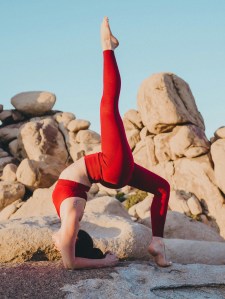
The More Things Stay the Same, the More They Change

(Title image: Photo by Edward Howell on Unsplash)

Maybe it’s time to talk about impermanence.

This is something that I have to remind myself constantly: just because things are a certain way now, no matter how set-in-stone they appear, there’s a high likelihood they will change.

I wish more people understood this. I’m old enough to have experienced a litany of changes in my life, some of which completely blindsided me, like cancer, for example. I was not expecting my entire life to get flipped on its back by one little lump and a subsequent scan. And yet, here we are.

That diagnosis brought a whirlwind of changes as I was assaulted with more medications and procedures that I had ever imagined possible in my life. And they came at me fast, one after the other. Recovering from surgery, dealing with chemo side effects, tearing through loaded weeks of radiation…and then, several years of endocrine therapy, which in retrospect threw me into what felt like the longest-lasting changes.

Those, I consider negatives. I tried to maintain my “normal” through them all, which meant consistency with my workouts and nutrition, just so that I didn’t lose myself in the mess of it. It felt like I was barely holding on with my fingernails.

Just when I thought this was the way it would be from now on, the light broke through.
(Photo by Sharon Co Images on Unsplash)

But…there was a flipside to this. Another change that I didn’t expect, but was actually quite positive: the realization that establishing effective coping strategies like meditation and maintaining existing healthy behaviors were the keys to eventually getting a handle on the negatives.

So everything bad that I thought I was stuck with—decreasing strength and endurance, low libido, thinning hair—all those things that we associate with old age and the relentless march of time gradually started turning around.

Again, impermanence smacked me on the back of my head.

So, there’s a lot I can write about this. I added creatine to my diet and over time it has had a significant impact on my workouts, in particular my strength. After years of watching my “gains” decrease, I could confirm that I was building strength up again at age 60.

My hair, which had been falling out, slowed that regression. Springing for better quality hair products helped, but so did moving to a quieter, updated apartment. The reduction of environmental stress, even in the presence of existing stressors of work and finances, had a dramatic effect. On top of that, becoming aware of the cyclical nature of my hair loss relieved anxiety about it. As did bucking the trend of “embracing” my gray (in my case, white) and instead welcoming light blonde back into my life.

But one of the most striking changes was the return of my libido. This is so delicate and important a topic because I am convinced that many cancer survivors-slash-postmenopausal women suffer in silence about loss of libido, no doubt due to the potentially embarrassing nature of the issue. Many of us were raised to not talk about such sensitive topics, and particularly not with male oncologists.

And all the hype about hormone replacement therapy for postmenopausal women…ah, but breast cancer survivors get locked out of all the positives associated with that…

The topic of libido deserves a post of its own. I will indulge this in the future. Suffice it to say, for me it was one of the changes that had the greatest effect on the current trajectory of my life because it was the one that (I had read? I had been told?) was irreversable and expected and I should just shut up and deal with it.

I thought this was the way it was going to be from now on. And I was afraid of the effect that it would have on my marriage.

Ah, but that beautiful concept of impermanence reminded me that I should never settle into expectations based on what came before me or what happens to others, because everyone has their own individual set of conditions. What a lovely awakening to the rest of my life!
Now You See Me, Now You Don’t

Lately there have been a lot of ups and downs in my life. Certainly, this isn’t very different from what usually happens, as my life is rarely predictable.

However, the difference has been for me in how I have been reacting. Some of the “downs”: my mind is more jumbled and focusing is harder. Sleep is disrupted, which is never a good thing, and I’ve been waking earlier, unable to fall back asleep.

On the other hand, there are pleasant “ups” too. My workouts have been stronger and recovery time has shortened. I’m making noticible fitness progress at a time when I thought losing strength was my new reality. And I’ve experienced a renewed interest in intimacy, something I didn’t expect to happen, even in the midst of the whirlwind of uncertainties.

So the pendulum swings have felt wider. The good news is that I come back to center…but the bad news is that I usually don’t stay there.

The way I have started dealing with this is kind of funny. Instead of forcing myself to sit in meditation for longer, something that feels like wrestling eels, I have been practicing releasing expectations of what meditation should look like.

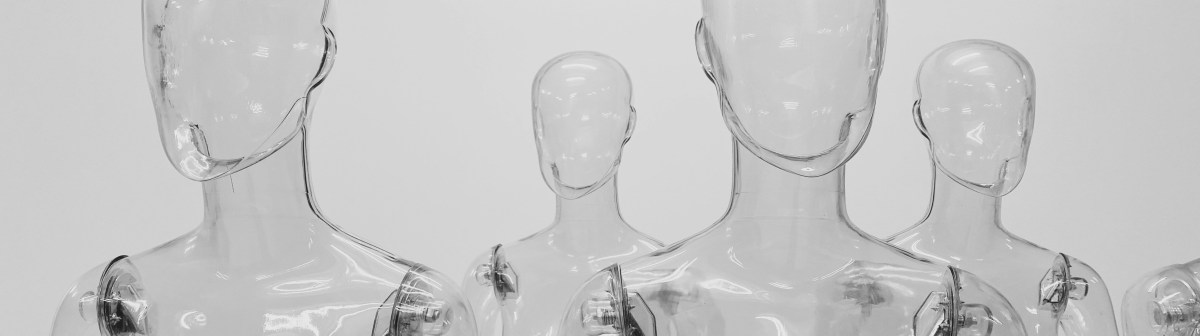
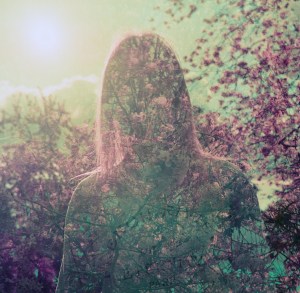
Lately, I have been making myself transparent.

Quietly fading and receding, allowing all my worries to pass me by.
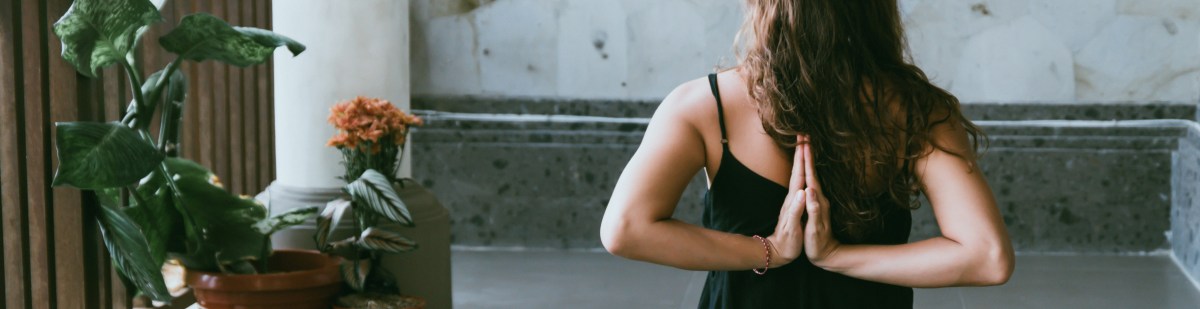
(Photo by Nick Page on Unsplash)

Instead of grounding myself, I allow things to keep moving. I’m not anchored in the earth. I am floating above the tumult. I’m working towards a neutrality to stimuli. My edges are smooth, troubling thoughts don’t take hold, they simply slide off me and around me.

And then, I fade. Deep breaths help move strong emotions through me, not getting stuck along the way. Just passing by as my form becomes invisible.

This is a relief.

There is relatively little effort in this process, which is part of the point. Letting go lightens me. And that’s when I realize that holding on to all the stressors takes more energy and work than releasing them.

Just as they approach me, so they move through me and out.

It takes a little bit to get used to the rhythm: breathing through it and and feeling lighter. Not allowing the irritation, frustration, fear to take root but watching calmly as they fly by, as if ignoring me and looking for another victim.

Eventually I’ll get back on the cushion and root myself again, but not now. At this moment, I appreciate the freedom to float above the fray and quietly fade from sight. At least out of the view of my worries.

Nine-Year Mammogram; or, “One is the Loneliest Number”

(Title image: Photo by Matthew Henry on Unsplash)

It happened again.

I had a mammogram last week, this one being nine-years-post-cancer.

It was the very first one since my original diagnostic mammogram and ultrasound that I went to alone, without my husband.

And I figured that by now it wouldn’t matter, that I felt positive enough about the process that I wouldn’t feel unsettled in the least. Especially since it hadn’t been very long since this year’s clinial breast exam by my oncologist.

But, dammit, it was freaky. I had an uneasy feeling about it mirroring the original visit nine years ago with the mammogram and ultrasound that revealed my tumor. I had gone alone then too, even though I had been panicky, telling myself that I just needed to get through the visit and then I could exhale again and have a good laugh about how I had worried about nothing.

Obviously, that’s not how things went. The mammogram had shown nothing (!) but the tumor was visible in the ultrasound. The ultrasound technician worked absolutely stone-faced…a bit TOO stone-faced, I had noted at the time.

The lights were low. She left the room to meet with the radiologist, and I sat there alone and getting progressively more uneasy. And when she returned with the doctor and he told me it was cancer, it felt like someone had poured me out of a jar and onto the floor.

Yeah, I know, I know. But still…
(Photo by Outcast India on Unsplash)

I struggled to text my husband and my mother, trying to get the news out as quickly as I could, as if to share the burden in an attempt to lighten it.

That, my friends, sucked.

And this time around, nine years later, even though I knew I was fine, that feeling of loneliness crept in again. I wanted to hold someone’s hand and talk about something else.

Most days I don’t entertain the possibility of this cancer coming back. I do feel positive about my future. So much has happened since my initial diagnosis; I’ve learned a lot about myself and my body and especially my mind, which I’ve practiced reigning in so that it didn’t drive me into a panic.

Yes, there have been positive things that resulted from having my world shaken up.

But never in a million years do I ever want to experience anything like that again. So every time I joyfully call myself a survivor and am so willing to tell anyone who’s willing to listen about my experience and how it has changed me, there is heavy part of the experience, the fear, the awareness of my mortality, even the loneliness of feeling so removed from the other members of my family.

Next time, I’m bringing my husband again.

Sometimes I Hate Yoga

(Photo by Avrielle Ali on Unsplash)

So, I’m gonna bitch a bit. If you didn’t come here for that, I’ll see you in next week’s post.

If you’ve decided to stay and slog through my complaints, please know that I’m writing this as someone who is not only a certified yoga teacher (RYT-200) but also a certified teacher of yoga for cancer survivors (y4c), so I have to exert conscious effort to make sure that I’m not part of the problem.

My gripes mainly have to do with beginner-level classes in the US. And I have a list.

Most classes provide insufficient warmup for the majority of students. Important: Stretches are not warmups. Warmups warm up the body, get blood flowing and improve mobility. Stretching cold muscles is a shortcut to an injury. Other fitness modalities have figured this out but many yoga classes start out with static stretches.

In the same vein, some introductory poses are held too long. Look, I get it. I’ve done this too. But getting into twists soon after starting and then holding and trying to deepen them…let’s just say that I’ve spent enough time in Physical Therapy to know that this is not a good idea.

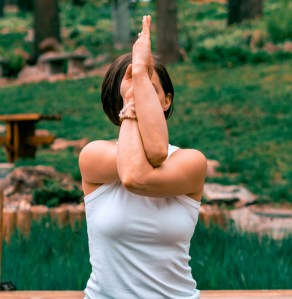
What’s up with the Eagle Arms obsession?
(Photo by Erik Brolin on Unsplash)

Similarly, I’ve been to multiple classes that seem to be in love with Eagle Arms (Garudasana Hasta). Why? And especially not without proper warmup for the pose. I tweaked my shoulder muscles in one class that put us in three sets of Eagle Arms throughout the session including close to the start. Wha???

Particularly in beginner classes, care needs to be taken because as a teacher you are making assumptions about people’s abilities that (a) might make certain asanas inappropriate for them, and even worse (b) might make them feel uncomfortable about backing off from them during a live class, even when they risk injury. Peer pressure is real. Heck, I don’t even want to back off during a recorded class!

Along those same lines, for Pete’s sake, don’t automatically assume that everyone is going to love it when you burn sage or palo santo or whatever it is you’re planning to light on fire in the studio. On the other hand, it’s worth mentioning that I’ve had very astute teachers use aromatherapy in a way that was limited to individual spaces, where students had a chance to indicate whether they did or did not want a waft of essential oil in their direction, and that was perfect! But burning something in a class where you have no idea whether a student has an allergy or even a serious condition like cystic fibrosis means that you may inadvertently send someone to the hospital. Smoke is still smoke, no matter what its role is in traditional beliefs.

Let’s talk about necks. Just because you can turn your neck in a certain way does not mean you should. This is includes even beginner-friendly asanas like Cat-Cow (Marjaryasana-Bitilasana). There is no need to crane your neck to look at the ceiling during Cow. No, no, no. There’s nothing up there worth looking at. And if you’re a teacher, don’t demonstrate potentially injurious extremes.

“Look at meeeeee, all you beginner people!”
(Photo by Wesley Tingey on Unsplash)

When I was studying for my personal trainer certification, I spent a lot of time learning anatomy and kinesiology. When I went through yoga teacher training, not so much. Yoga is complex because of its roots and I agree that proper attention should be paid to them during teacher training with ample opportunities to deepen study later. There are few forms of movement that have such a rich and culturally important tradition. However, in the US, most beginner students are there for the movements and not the philosophy. A teacher being knowledgeable about ayurvedic medicine is not going to prevent one of their students from slipping a disk.

And along those lines, just because an asana exists does not mean that it’s biomechanically safe. I know that yoga imbues certain movements with a sense that they will heal your mind. But if they wreck someone’s body in the meantime…no bueno. So this is a caution for both teachers and students to teach and/or practice material appropriate for the class level.

Finally, for a beginner class, the teacher shouldn’t say something like, “and now, I’d like to give you a chance to do an asana that calls out to you, that we didn’t do in class.” If it’s truly a beginner class, no one will have such an asana. However, if you are giving the more advanced people a chance to, let’s face it, show off in front of everyone else, well, that’s kind of an asshole move.

That’s not what yoga, even in the US, should be like.

~~~~~~~~~~~~~~~~~~~~

Disclaimer:
I know. I know about the Eight Limbs of Yoga. This is not about that. This is about a garden-variety basic beginner yoga class that you might encounter in the wild. I get that you have the choice of whether or not to do an asana. But as I mentioned, I know better and I still do stupid stuff. What if someone doesn’t know better? Yes, a lot depends on the teacher. Some teachers will try to encourage their students to challenge themselves, which might backfire in a beginner class. Actually, that’s another gripe in itself, but I have more than enough listed up there already.