
(Photo by Avrielle Ali on Unsplash)
So, I’m gonna bitch a bit. If you didn’t come here for that, I’ll see you in next week’s post.
If you’ve decided to stay and slog through my complaints, please know that I’m writing this as someone who is not only a certified yoga teacher (RYT-200) but also a certified teacher of yoga for cancer survivors (y4c), so I have to exert conscious effort to make sure that I’m not part of the problem.
My gripes mainly have to do with beginner-level classes in the US. And I have a list.
Most classes provide insufficient warmup for the majority of students. Important: Stretches are not warmups. Warmups warm up the body, get blood flowing and improve mobility. Stretching cold muscles is a shortcut to an injury. Other fitness modalities have figured this out but many yoga classes start out with static stretches.
In the same vein, some introductory poses are held too long. Look, I get it. I’ve done this too. But getting into twists soon after starting and then holding and trying to deepen them…let’s just say that I’ve spent enough time in Physical Therapy to know that this is not a good idea.
(Photo by Erik Brolin on Unsplash)
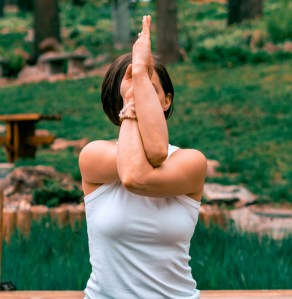
Similarly, I’ve been to multiple classes that seem to be in love with Eagle Arms (Garudasana Hasta). Why? And especially not without proper warmup for the pose. I tweaked my shoulder muscles in one class that put us in three sets of Eagle Arms throughout the session including close to the start. Wha???
Particularly in beginner classes, care needs to be taken because as a teacher you are making assumptions about people’s abilities that (a) might make certain asanas inappropriate for them, and even worse (b) might make them feel uncomfortable about backing off from them during a live class, even when they risk injury. Peer pressure is real. Heck, I don’t even want to back off during a recorded class!
Along those same lines, for Pete’s sake, don’t automatically assume that everyone is going to love it when you burn sage or palo santo or whatever it is you’re planning to light on fire in the studio. On the other hand, it’s worth mentioning that I’ve had very astute teachers use aromatherapy in a way that was limited to individual spaces, where students had a chance to indicate whether they did or did not want a waft of essential oil in their direction, and that was perfect! But burning something in a class where you have no idea whether a student has an allergy or even a serious condition like cystic fibrosis means that you may inadvertently send someone to the hospital. Smoke is still smoke, no matter what its role is in traditional beliefs.
Let’s talk about necks. Just because you can turn your neck in a certain way does not mean you should. This is includes even beginner-friendly asanas like Cat-Cow (Marjaryasana-Bitilasana). There is no need to crane your neck to look at the ceiling during Cow. No, no, no. There’s nothing up there worth looking at. And if you’re a teacher, don’t demonstrate potentially injurious extremes.
(Photo by Wesley Tingey on Unsplash)
When I was studying for my personal trainer certification, I spent a lot of time learning anatomy and kinesiology. When I went through yoga teacher training, not so much. Yoga is complex because of its roots and I agree that proper attention should be paid to them during teacher training with ample opportunities to deepen study later. There are few forms of movement that have such a rich and culturally important tradition. However, in the US, most beginner students are there for the movements and not the philosophy. A teacher being knowledgeable about ayurvedic medicine is not going to prevent one of their students from slipping a disk.
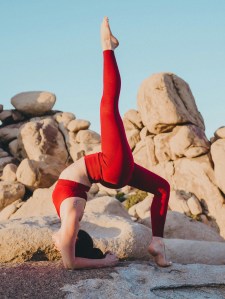
And along those lines, just because an asana exists does not mean that it’s biomechanically safe. I know that yoga imbues certain movements with a sense that they will heal your mind. But if they wreck someone’s body in the meantime…no bueno. So this is a caution for both teachers and students to teach and/or practice material appropriate for the class level.
Finally, for a beginner class, the teacher shouldn’t say something like, “and now, I’d like to give you a chance to do an asana that calls out to you, that we didn’t do in class.” If it’s truly a beginner class, no one will have such an asana. However, if you are giving the more advanced people a chance to, let’s face it, show off in front of everyone else, well, that’s kind of an asshole move.
That’s not what yoga, even in the US, should be like.
~~~~~~~~~~~~~~~~~~~~
Disclaimer:
I know. I know about the Eight Limbs of Yoga. This is not about that. This is about a garden-variety basic beginner yoga class that you might encounter in the wild. I get that you have the choice of whether or not to do an asana. But as I mentioned, I know better and I still do stupid stuff. What if someone doesn’t know better? Yes, a lot depends on the teacher. Some teachers will try to encourage their students to challenge themselves, which might backfire in a beginner class. Actually, that’s another gripe in itself, but I have more than enough listed up there already.