Some time ago, I was thinking how I got to where I am and was seized by a sense of regret and shame. This was not where I thought I’d be by this age.
So many things that I’d worked for education-wise, health-wise, career-wise seemed to have been derailed by decisions I’d made based on life circumstances that I didn’t feel I could control…or by just plain bad luck (cancer, I’m looking at you).
As I pondered this, I became enveloped in it, slipping down a dark hole, trying to squash those negative feelings—the ones that get buried for a while only to pop back up at 3am some night.
But then I thought, “Ok, so how about another way of looking at this?”
What if how I am now was the end goal all along?
What if where you are right now is where you need to be for the rest of your life to work out according to plan? (Photo by Jon Tyson on Unsplash)
And that shift in perspective allowed me to look at the things that I felt I hadn’t fully achieved as being “the plan” for creating me as I am now.
And what I am now is made up of the valuable experiences that I was labeling as half-done or poorly-executed or forced upon me—but no, perhaps they were all so necessary for setting up myself in this place with this knowledge. And from here, preparing me to move forward.
A master’s degree I haven’t used for a couple of decades, a job situation that falls below my career aspirations, a body that is limping back from injuries and cancer, a mind that can be my worst enemy. The experience of all of these brings with it wisdom and insight. And strength.
Where I am now is exactly where I need to be for the next chapter of my life. The foundation for future-me has been established.
So, how about you?
What if you spin the timeline around, understanding and appreciating who you are now, however “imperfect” it might seem to you, social media, whomever else serves as the judge of your life. This is now your starting point.
What’s your next step?
How can you take everything that’s come before you and allow it to support the incredible you that you will become?
A couple of months ago I received an amazing invitation: to teach yoga to cancer survivors at our local Cancer Survivors Day event on June 1st.
What an amazing opportunity! The sole reason that I had gone through yoga teacher training and registered with the Yoga Alliance was to eventually teach cancer survivors. To have this invitation fall into my lap was serendipity at its very finest!
It was also terrifying.
Ever been offered an amazing opportunity and felt like you’re still a little too ‘green’ to handle it? (Photo by Nagara Oyodo on Unsplash)
My first impulse was to run and hide under the most solid object that I could find. You know, sometimes you have great goals, but you don’t consider what you will do if you actually manage to achieve them. I didn’t feel confident that I was ready for something that had always seemed several years away.
But I still had enought time to prepare for this class. I had taken a specialty 5-hour training on teaching cancer survivors, I had 16 years of maintaining a personal trainer certification with a clinical/academic focus and, importantly, I was a cancer survivor myself. I kinda knew what’s what.
At the same time, I felt a nagging doubt. What if I created a yoga class that people hated? What if someone got injured? What if I couldn’t memorize the sequence, kept stumbling over words or blanked out in the middle of it?
The more I practiced the sequence with friends and family, the more opportunities I had to beat myself up over every time I said “right” instead of “left”. Or said “arm” instead of “hand”. Or anything else that seemed less than perfect. The possibility of looking like a bad teacher and shaming myself opened the door for anxiety to flood my mind.
Nothing quite like thinking you’re not good enough and then proving yourself wrong! (Photo by Clay Banks on Unsplash)
Eventually, I recognized that I was driving myself nuts with unrealistic expectations. I also realized that this is a bad habit that I’ve fallen into on other occasions too. So I took some time to sit quietly and reflect on what was happening.
I am an imperfect yoga teacher. While I try to mirror movements for my students, I mess up once in a while (mirroring can be really hard!). I might not always use the right word to describe a body part. I might forget to mention a cue and then have to stick the instruction in later. I might even forget whether I forgot to say something!
But when the day came to teach to this amazing group of people, my students followed along without a problem. And you know what? After class, they clapped for me. My heart was so full!
I may be an imperfect yoga teacher but maybe that’s okay.
About a week ago, I went to see a nurse practitioner (NP) for an interesting combination of symptoms: nausea and middle back pain. After listening to my complaints, she determined that the cause was most likely kidney stones.
So…I’m not the typical kidney stone sufferer…but I wasn’t the typical breast cancer getter either, so I accepted her diagnosis while we awaited lab confirmation of whether there was blood in my urine (TMI, sorry).
And then I proceeded to waste an entire weekend on the Internet, driving myself bonkers about what foods contained oxalates (a common kidney stone culprit) and how to combine foods that did with calcium, but not too much calcium.
I was treading in the Wild West of the Internet and I soon learned that kidneys are big business and everyone not only has an opinion, but is also selling something.
Kidneys = $$$ and clear and concise info was harder to find than I anticipated. More stress! (Photo by JESHOOTS.COM on Unsplash)
At the same time, except for one relatively bad night with a lot of pain, most of my symptoms remained mild-ish. Definitely not “hurts more than childbirth” level.
However, as a result of this, I was afraid to eat, which seemed to increase the pain and I realized that it was actually kinda sorta in my stomach?
Four days after submitting the urine sample, my NP called with the results: no blood in the urine.
That made the “kidney stones” story more difficult to believe. So after more discussions with her, she settled on the possibility that I might just be experiencing particularly bad heartburn and prescribed omeprazole to reduce the levels of acid my stomach produces.
This actually made a lot of sense to me. I am one of those “stress non-eaters”: in difficult situations I lose my appetite quickly, go for longer periods without eating and tend to lose weight. That leaves a lot of time for my stomach to sit empty.
But this also brings up another point that I find personally interesting. I have consistently been doing better with handling general stress and anxious episodes. I now have a plan for stress that includes understanding my reactions and using mindfulness, meditation and exercise. As a result, I experience far fewer episodes of runaway anxiety.
Stomach, stress…it all feels like fire. (Photo by Yaoqi on Unsplash)
However, I am not able to control everything that happens in my body. I might be able to soften my response to stress and anxiety, but over the long term my body may still show signs of wear and tear from the pressures that I face.
This may also mean that while I’m doing great with keeping my stress levels lower, I might not be doing as great as I think I am. If this is truly “heartburn” or a little ulcer or something, it’s a reminder that managing stress is a constant process that requires vigilance.
Oh, and there’s also the oxalate thing, which my NP said not to stress over since it’s probably not a kidney stone. Which is good. Except now I’ve bought a bunch of low-oxalate foods, a number of which are the ones that I learned I should avoid for stomach issues.
Health is becoming a nonstop game of whack-a-mole.
You may be familiar with the old story about the award-winning singer Carly Simon’s stage fright which prevented her from performing in front of an audience for 14 years.
Performance coach Tony Robbins famously compared her anxious reactions to those of superstar Bruce Springsteen (yes, I realize I’m dating myself) who would describe his physiological responses to going on stage in the same way that Carly did, but he associated them with excitement and not fear.
Anxious responses weigh heavily on us…but what if we could reassign their meaning? (Photo by Kyle Glenn on Unsplash)
At least that’s how the story goes. And although I think some of this is an oversimplification of Carly’s experience, there is a lot of wisdom to breaking down both performers’ reactions to the point where we recognize that what we feel in our bodies can be interpreted in very different ways based on what’s going on in our heads.
I grapple with this issue myself when I am offered unexpected opportunities that can propel me forward in career and life…but which also cause me agony in terms of my fear of change.
What to do?
What has worked for me is to identify the sensations that I’m feeling. Naming them makes them less overwhelming and it’s a big plus if I can describe what my head feels like, what my chest feels like, what my belly feels like. I try to understand each sensation’s role in creating the overall experience.
Then I try to image that the emotion these individual sensations lead to is one of positivity and excitement. It’s the anticipatory “butterflies in the stomach” from doing something that seems amazing rather than an upset stomach arising from wanting to flee.
And I sit with all those things, bringing in reasoning too: thinking about the positive consequences while allowing the feelings and sensations to be there. Understanding that they are simply sensations and not dangerous on their own–they are physiological responses that evolved to help us out when we needed an extra boost of energy (think “fight or flight”).
Thinking about all the good stuff that opens up to us when we leave fear behind… (Photo by Allef Vinicius on Unsplash)
I call this reasoning “mental calisthenics”. It takes some massaging and can even get a little metaphysical, but at some point I usually manage to get a grip of that good feeling as if I were gripping the edge of a wall and then pulling myself around to “turn a corner”.
Trying not to overthink it. Just allowing myself to feel into the sensation while giving it a positive spin. And then imagining myself “doing the thing” that I fear…and being good at it.
When particularly anxious, I may even exert myself physically to allow my responses to exercise to meet and match the fast heart rate and breathing that I’m already experiencing.
And that’s about it.
As with meditation, this is a practice and I have to keep reframing the situation in this way to remind myself that change can be unsettling but “unsettling” isn’t inherently negative. It may take a succession of days or weeks to come to grips with the new situation and that’s okay. Patience is the key that leads to progress, and every day that I reframe my sensations is another day that I improve my mental situation.
Hope this helps you too!
~~~~~~~~~~~~~~~~~~~~~~
Important: this is not about “toxic positivity”. There are some situations that are truly bad and understandably elicit an anxious response. Rather, this is realizing that our physiological reactions–the ones that evolved to protect us–may be holding us back because we associate them with fear rather than seeing them as the excitement of possibility arising from change.
In February 2022, I started a yoga teacher training program with a singular goal: to eventually teach yoga to cancer patients and survivors.
With its mix of physical postures (asanas), breathwork (pranayama) and meditation, yoga is ideal for someone going through the traumatic experience that cancer can be. Yoga can provide enough physical exertion to count as moderate exercise and the ability to help the practioner calm their mind, things that are so important for improving cancer treatment outcomes. However, classes must be designed carefully and taught thoughtfully.
Yoga4Cancer Q&A for Cancer Patients and Survivors (Yoga Alliance on YouTube)
Keep in mind, yoga teachers were yoga practitioners first. Many of them got really good at the practice, developed great flexibility and balance and gained respect for the tradition of yoga. But that doesn’t automatically make them appropriate yoga teachers for cancer patients, who need an instructor that understands the nuances of what cancer is and how treatment affects us.
A yoga teacher and breast cancer survivor by the name of Tari Prinster addressed that need by creating yoga4cancer (y4c), “an evidence-informed Oncology Yoga method tailored to address the specific physical and emotional needs left by the cancer and cancer treatments. The approach matches breath and movement to stimulate the immune system, improve flexibility & strength, reduce anxiety and boost overall well-being” (from the y4c website).
I’m planning to begin the y4c advanced 75-hour certification program (see informational video here) either later this year or early next. I’ve been so impressed by y4c’s emphasis on understanding the unique situation that cancer patients and survivors are in–it’s not just your garden variety beginner yoga class with “also for cancer patients” dressing. The program is well-thought out and comprehensive, and I’m so excited to embark on this next leg of moving closer to my teaching goal.
In the meantime, here is a selection of videos created by Tari and her instructors that are specifically geared for the mental and physical needs of cancer patients and survivors:
Yoga4Cancer Oncology Yoga for Cancer Related Fatigue (Yoga Alliance on YouTube)
Yoga4Cancer Yoga for Bone Loss (Yoga Alliance on YouTube)
Yoga4Cancer Yoga for Range of Motion (Yoga Alliance on YouTube)
Yoga4Cancer.com Yoga for Anxiety (Yoga Alliance on YouTube
yoga4cancer.com Yoga for Lymphedema (Yoga Alliance on YouTube)
yoga4cancer.com Yoga for Constipation (Yoga Alliance on YouTube)
As I’m stumbling through a bad cold, I got a reminder that you can find good stuff in bad situations.
Let me see if I can string this together somewhat coherently…
The cold I have came with an eye infection (relax, not posting pics!) that makes me light-sensitive enough that I need to be chauffeured around. Went to the doc last week, got a prescription for eye drops, then swung by to do some shopping, which I needed to wear sunglasses for.
And as I’m picking my way through a busy Costco, I’m holding onto a phone that I just bought–has a case but no screen protector yet–and I’m really worried that I’m going to drop it or lose it if I get distracted.
And why do I get distracted? Because anxiety and a touch of chemo brain (aka Cancer-Related Cognitive Impairment (CRCI)) have a summative effect that makes me loopy. Not a “scare-your-children” kind of loopy, but a constant “what-was-I-just-doing” kind of loopy. Over and over and over again.
I’ve been dealing with this over the past couple of months while juggling stressors. My eye infection introduced a new wrinkle–I am very much a visual person and use visual cues to manage the anxiety/CRCI problem.
But the good news? The Memory and Attention Adaptation Training (MAAT) classes I took for managing CRCI focused on mindfulness as a way of dealing with the lapses in memory.
And when I was in a Costco bathroom stall, I realized that I was acutely aware of where all my things were–purse on the door hook, phone on top of the toilet paper dispenser. I was ALL THERE and 100% present. I couldn’t afford not to be.
Not an earth-shaking revelation, but it was another reminder that there are all sorts ways to ground ourselves in the present. If I hadn’t taken the MAAT class I don’t think I would have felt so confident that what I was doing (being mindful) would work so well to help me stay focused and aware.
So, yes, I can be grateful for chemo brain for that.
~~~~~~~~~~~~~~~~~~~~~~~~~~~~
Today my vision has improved to the point where I can tell that the kitchen floor is really dirty, and that is most unfortunate indeed.
Warmest wishes to everyone for a joyous start to 2024! I hope you had a wonderful holiday season with your loved ones and are ready to launch into the new year!
I…learned a few things about myself in 2023.
My family and I had our share of misfortunes, bumps and hiccups and stumbles that started piling on. An apartment flood, two sizable rent increases, physical pains, emotional turmoils, family illnesses.
It’s easy to focus on the negatives (and *ahem* trust me, I did many times). But there were also some significant positives this year, not the least of which is that my cancer has not returned and I am still alive. Those are two biggies.
But I also found myself somehow managing, even in the midst of the worst stressors. I didn’t respond the way I had in the past, which would have been with a bought of nausea, racing thoughts and tortured nights.
So I know that something has changed: there is actual space between me and the things that suck. Now, there’s not always a lot of space–occasionally it’s a teeny gap that you could only slide a credit card through. And at those times, I might not even remember to take three deep breaths. But when I come to my senses I can breathe more space into that gap.
You need to stop and reflect on how far you’ve come to understand the benefits of what you’ve been doing. (Photo by Alexander Milo on Unsplash)
That, my friends, is called progress.
And as frustrating as it is that anxiety sometimes gets the best of me, my reaction is still so much better than it used to be and that provides motivation to stay consistent with a meditation practice.
So, if I learned anything, it’s that you don’t know how far you’ve come until you look back at the road you’ve been on and reflect on where you started.
But I also learned something else this year: sometimes you need to back off in order to go forward. I dealt with body pains that affected both my strength and conditioning exercise and yoga practice. I fought against taking it easy because I was so afraid of “falling behind”.
Well, nothing good comes of that. If anything, it prolongs recovery.
I was pushing myself to train harder and not respecting my changing limits. At the same time, I was juggling several online classes because I was also afraid of falling behind career-wise, on top of which I was concerned about finding a new apartment.
This was a classic case of spreading myself thin.
Constant striving made it impossible to my body to heal and rest and for my mind to assimilate information and construct useful goals and plans.
It was not until late December that I was forced to prioritize my well being because it hurt too much not to. Stressful events that came in the last quarter of the year gave me no choice. But in doing so, pain in my hip improved significantly and in backing off my expectations, I opted to focus on a single class, while at the same time continuing to sort through our belongings and get rid of things that we no longer need.
I slowed down and made more progress than if I had continued beating myself silly.
Look at all the beautiful positives that show themselves when you focus on the good stuff. (Photo by Kim Stewart on Unsplash)
All in all, as frightening as 2023 was at times, I can see all the good that took place, and that’s the third thing that was a major revelation for me. I’d describe my view of the world as being like a picket fence. Sure, if I only look at the pickets I see the negatives that have taken place. But adjusting my focus on the the world that is visible between the pickets, it becomes clear that there’s so much more that hasn’t gone wrong.
Even when it seems that you’ve suffered so many setbacks–and it felt like I really stumbled during the second half of the year–when you review what DID work out, the sense of gratitude and relief is uplifting.
So even in the midst of everything that stressed me out, 2023 doesn’t seem so bad afterall. And that little burst of positivity is what I’m taking into 2024 with me.
One of the striking benefits of mindfulness is that it amplifies the richness of our world. On a personal level, it’s revealed to me how tightly my mind and body are connected.
I truly believe that when you calm the mind, you calm the body and vice versa. This is particularly important for me because 1) I am prone to anxiety and 2) some of the breast cancer drugs I was given were cardiotoxic. Therefore, I have an inherent interest in keeping calm and avoiding stress.
Avoiding stress. HA!
After several anxious weeks that included trying to secure a new apartment and the possibility of serving as a juror on a 4-week criminal trial (for better or worse, neither one has happened), I found myself drained and unbalanced.
So for my Advent commitment, I’m working on getting my sense of balance back. And while I realize that yoga is much more than just one aspect of the physical practice, in my case, I believe that being able to calm my body, find a point of focus (drishti) and work on my balance go hand in hand with balancing my mind .
The moves that I’m using are uncomplicated and unimpressive, but I’m getting back to basics and rebuilding my balance foundation from there, even though I’ve found that there are more advanced balance moves that I can do that don’t seem to give me as much trouble. Go figure.
My daily practice has incorporated the following poses (asanas) with the intention of holding each for a prolonged period of time:
Standing wind-release pose (Tadasana Pavanmuktasana): This is a classic beginner pose that I chose as a starting point. From Mountain Pose (Tadasana), shifting weight into supporting leg, float the other leg up forward, knee bent with options to draw it into your chest or, which I find more comfortable, have my hands in prayer or support the raised leg under the knee.
Tree pose (Vrksasana): This is the classic tree pose, weight on supporting leg, other leg bent with knee pointing to the side, but with the sole of foot on the inside of the supporting calf instead of the inner thigh, as we usually see it portrayed. I chose this because of the hip opening aspect and by keeping the foot on the lower leg, all my focus is on balance, without having flexibility become an issue, because that is also affected by stress–I found that certain muscles tighten up and throw things out of whack.
Warrior Three (Virabhadrasana III): This is an intermediate level pose in which body weight is in the supporting leg with the upper body bent forward parallel to the floor in line with the hips, and the non supporting leg stretched out back, also in line with the hips. I play around with arm positioning, alternating between arms stretched forward past my head, out to the side or behind me.
Has this been a humbling experience? Yes, it has.
My balance practice is not a competition, it is a gentle smoothing of my nervous system. I’m not trying out for Cirque du Soleil. Ever. (Photo by GMB Fitness on Unsplash)
Balance poses are not my “thing”. They used to be no big deal, but that was in my pre-cancer life. Physical balance took a huge hit during cancer treatment and I found myself strangely off-kilter afterwards. Aromatase inhibitors’ effects on my joints certainly didn’t help either. It was exhausting to fight this deterioration when I already felt spent. Years later, I had been avoiding balance asanas in my practice, which means that what was suboptimal has become worse.
Starting out this time around I was terrible. And I mean embarrassingly terrible. When I moved into the first asana, it felt as though I’d been plugged into a light socket with nervous energy coursing through me, making it so difficult to be still. I couldn’t hold any poses for very long and Warrior Three felt like a constant struggle.
But even in the space of a week’s practice, I am getting better. These asanas were chosen with ease of progress in mind and I’ve decided to keep going with this well into the New Year. I can definitely use the work.
While it’s frustrating feeling like I’ve regressed so much, I guess that means my progress will seem even better, right?
The Advent season is a perfect time for introspection and mindfulness. For me, 2023 has had challenges and as a result has served as a proving ground for different calming techniques.
One of the things I’ve grappled with, usually in the wee hours of morning, is the persistence of uncomfortable memories from the past.
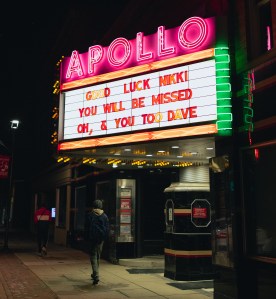
It reminds me of a one-panel comic that I saw some time ago: a person lying in bed, eyes wide, a theater marquis over their head that reads in bright lights: PLAYING AT 3AM! EVERYTHING YOU SAID AT THE PARTY LAST NIGHT! [A cartoon in the same general vein by Hilary Fitzgerald Campbell appeared in The New Yorker on Jan 21, 2019 (#11 of 15), but I’m not posting it here because they might be touchy about copyright infringement.]
In the middle of the night, being hit with an glaring memory of something that sends your stress levels rocketing…goodbye sleep. (Photo by Gregory Brainard on Unsplash)
How many of us have had a similar experience? I occasionally find myself tortured by things I said or did even decades ago. DECADES! Or they could have happened yesterday. A simple image can trigger shame, embarrassment or regret that feels real and vivid and, yes, while this generally happens at night for me, it’s certainly not limited to that time.
How odd that we give the past so much power over us when it’s not even real anymore. While we’re shaped by our experiences, allowing ourselves to be haunted by them serves no purpose, especially not once we’ve learned whatever we needed to from them.
Soooo, one early morning in the darkness I found a way to add some perspective to the memories that bully me: I started thinking of them as echoes, wispy harmless reminders of what happened.
And there in bed at 3am, I am safe. My body is not in the imagined situation, it’s under the covers, lying on my mattress. Here is where mindfulness is so helpful because it brings me back to the present. The past is echoing, trying to get my attention. But the more aware I am of where I am in space currently, the easier it is to step back and simply observe the echoes, watching them fade away.
I’m making this sound simple, I know–as with all the things that bounce around inside our heads, taming a stressful memory is not necessarily easy. But identifying it as just an echo has been remarkably helpful for me. It has provided a different viewing angle that enabled my perspective to shift.
Echo…echo…echo…
Thinking of thoughts as echoes can dispell them, but simultaneously focusing on a sense helps ground us in reality. (Photo by Mariana Rascão on Unsplash)
I’m not there now, those other people are not there now, that event is not happening now–just because I remember it so vividly doesn’t mean that anyone else does. And most of the time, I don’t remember it either. Only during the limited, wee-morning-hour viewing window during which it appears because I’m susceptible to the tickle of anxiety.
The senses can bring me back to reality. Opening the eyes, feeling where my body contacts the surface that it’s on, hearing the hum of a fan or sound machine. Anything occuring in the present anchors me to what’s going on now.
And in the present, that echo cannot hurt me because it’s just an airy thought.
Of course, this all comes back to the basic idea that the more we practice presence, the easier it will be to minimize the impact of thoughts that unsettle us. It may take some exploration to find what works best for you, but in the end, being patient and consistent will be the best way to calm your mind and bring you back to what is real at the moment.
So, something occurred to me as I was dealing with stress about a work project…and then got news of changes that may require us to quickly move from the place in which we’ve lived for over ten years.
I am experiencing two different textures of anxieties. I’ve heard people discuss chronic and acute anxiety, but I would characterize the way I experience anxiety differently.
The first anxiety may wear you down but won’t require a complete change in your life. Photo by Aiony Haust on Unsplash
The first is anxiety about what may happen or anxiety about what has taken place in the past and I can’t change. That encompasses stressful events that you need to work through, like a job-related project, which requires holding on and managing. It’s more of a chronic type of stress even though it might be time-limited. There are things out of my control or, in the case or what has already taken place, there’s no going back. It doesn’t qualify as life-changing as it may intensify and relax depending on conditions.
The second, however, is anxiety about something that *is* life changing. Those of us who have been handed a cancer diagnosis know what it feels like. It means that the future will look dramatically different from what we expected it be. Other examples are a death of a loved one or losing everything in a natural disaster. A sudden involuntary change in your living situation. This requires letting go and radically recalculating what you’ve become very used to. It can be very difficult to do, especially for those of us who like stability in our lives.
The first anxiety is exhausting. The second is terrifying. Having experienced both, I can definitively state that the first anxiety pales in comparison to the second. In fact, in the face of the second anxiety we may actually let go of the first completely and wonder why it ever bothered us.
The second anxiety is more intense and will alter life as you currently know it. Photo by Ann on Unsplash
At the same time, as terrible as it may be, the second anxiety offers us a perspective and clarity that we would be hard pressed to accept as quickly any other way.
I do not wish either of these anxieties on anyone, but if there’s a bright side to them it’s that the same type of mindfulness practice that helps us deal with the anxiety of the first kind will also help when the expectation-smashing heaviness of the second anxiety hits.
Although you may still wake in the middle of the night, heart racing and wishing things had not changed, a consistent mindfulness meditation practice will provide you with the tools to smooth the jagged edges of rumination and fear, slowing the breathing and with it the heart rate, even in the presence of frightening thoughts.
~~~~~~~~~~~~~~~~~~~~~~~
Of course, since this is a mindfulness blog in addition to being cancer-related, I cannot resist talking about one of the most effective techniques that I’ve found for calming myself: belly breathing.
Start by simply breathing deeply into the belly, as anxiety often results in shallow breaths. The deeper the inhale, the more air you will have for the exhale – try matching inhales and exhales in length. It won’t happen immediately. Give it time.
Create a breathing cycle and keep going. Establish a breathing practice and stick with it. Photo by Brett Jordan on Unsplash
Keep breathing into the belly, fully engaging the diaphragm, allowing it to drop and make space for your lungs.
As you do this, focus on the breath. The uncalm thoughts can still be there, but gently allow them to sit on the sidelines for now. I used to try to completely push them away, but they would bob back up to the surface like a balloon pulled under water, bringing the intensity of my anxiety back with it.
So let them be there…keep one eye on them if necessary but give your breath the main stage.
Once the inhales and exhales have evened out in length, insert a short pause between them. Breathe in … pause … breathe out … pause. Just a little stop to elongate the cycle. Consistently breathing into your belly.
Transition to full box breathing, where the inhales, exhales and pauses are all equal in length. If you get very comfortable doing this, for a little extra, try to make the exhales just a touch longer than the inhales.
Or if it gets tiring, simply try to make your exhales a little bit longer than your inhales and dispense with the pauses altogether.
Maintain this type of soothing, intentional breathing for a few minutes or longer, depending on how your body is responding or what your nervous system needs today.
Truly, you don’t have to do this perfectly or adhere to a specific count. Simply focusing on your breath and slowing your breathing will help immeasureably in making space for your thoughts so that you can back away a bit and survey the scene without feeling claustrophobic, no matter which anxiety you’re dealing with at the moment.






![yoga4cancer: Bringing the Benefits of Yoga to Cancer Patients and Survivors [VIDEOS]](https://franticshanti.com/wp-content/uploads/2024/02/zoltan-tasi-vhnvtlk8rcc-unsplash_cropped.jpg?w=1200)







 Frantic Shanti