[IMPORTANT: Please be aware that at the time the videos were filmed, I was in a very negative headspace. My experience should not be considered an example of a “typical” experience because with cancer treatment, there is no such thing. Just as cancer is a disease specific to an individual, so is the treatment and, as a result, one’s response to it. If you are interested in viewing the below videos, please keep all the above in mind.]
I’ve posted quite of few photos of my cancer journey. You’d think I wouldn’t have any more pics left, but–surprise–I do!
I made some important (to me) videos after my sixth and final infusion, but to date I’ve hesitated to post them. In part, this is because I’ve tried to remain anonymous in this blog, but in the clips, you get to see my face. And it’s not a pretty sight.
I didn’t feel human.
I was the weakest that I’d been my entire adult life. My body was feeling the strain of multiple infusions of chemotherapy, I didn’t recognize myself in the mirror and my voice didn’t sound like my own. I was so sick and tired of this part of the treatment and wanted it to be DONE.
At this point, I wasn’t suffering that entire cascade of side effects that I’d experienced after my first chemo infusion, and I’d learned to better deal with what I did experience, and even what to do to avoid some of the side effects.
However, the fatigue I felt was far beyond what I imagined it would be. And it was coupled with constant background nausea, like a slow burn in my gut. This was a result of losing the rapidly-dividing cells that lined my intestinal tract; they were felled by the chemotherapy, collateral damage as the medicine killed off potential cancer cells.
Strangely, there were also times when I was actually quite hungry, but literally too tired to try to get something to eat. Even calling for a member of my family to bring me food required too much effort. Speaking took a lot of energy.
The final infusion’s side effects lasted the longest. A full week after my infusion I was still very unsteady and barely made it to work for a few hours.
It’s worth noting that this was pre-pandemic and I wasn’t properly set up for working from home. Were I experiencing chemo treatment now, I’d be able to get more work done…likely to my detriment, unfortunately, because I really needed that time away.
It took five years for me to decide that it was time to post these videos. Apologies if they get a little intense:
At some point in a cancer patient’s life, there are certain questions that tend to come up. The most likely one of these is why we were singled out to have such a serious calamity befall us.
I went through a long period of this. I mean, loooong. The early posts of this blog are filled with agonized questions about why cancer hit me even when, by all accounts, it shouldn’t have. I posted about not having risk factors and blah blah blah. I kept going around and around and around on this, stuck on a hamster wheel that wouldn’t stop.
I clung to the same ride, unhappy but not wanting to get off.
Allow me to stress: cancer is a serious illness. That is not to be taken lightly. Most of us, regardless of lifestyle, experience profound shock with our cancer diagnosis. It may seem that life is cruel and unfair (well, it is) and that we didn’t deserve to get cancer (well, we didn’t).
I struggled with anger and frustration for years. It’s both embarrassing and freeing to admit that.
Acceptance is a process. I thought I’d accepted my situation a couple of years ago, but in retrospect, I hadn’t. Some days I felt holy and zen-like, floating on my own little cloud, but it was a sham. I’d have glimpses of acceptance and then a wave of anger and resentment would wash over me and I’d be pissed off for another week.
I thought God hated me. A purportedly loving and merciful being allowed this to happen. It was hard to not think of cancer as a blow against my value as a person because of how I interpreted my situation.
It wasn’t until I stepped outside the confines of that type of thinking that I gained a different perspective. I posted about re-writing my life (basically, viewing the same experiences through a different, more positive lens) which provided a glimpse of another way to assess what had happened. And when I heard the retelling of an ancient Buddhist tale I finally understood what it meant.
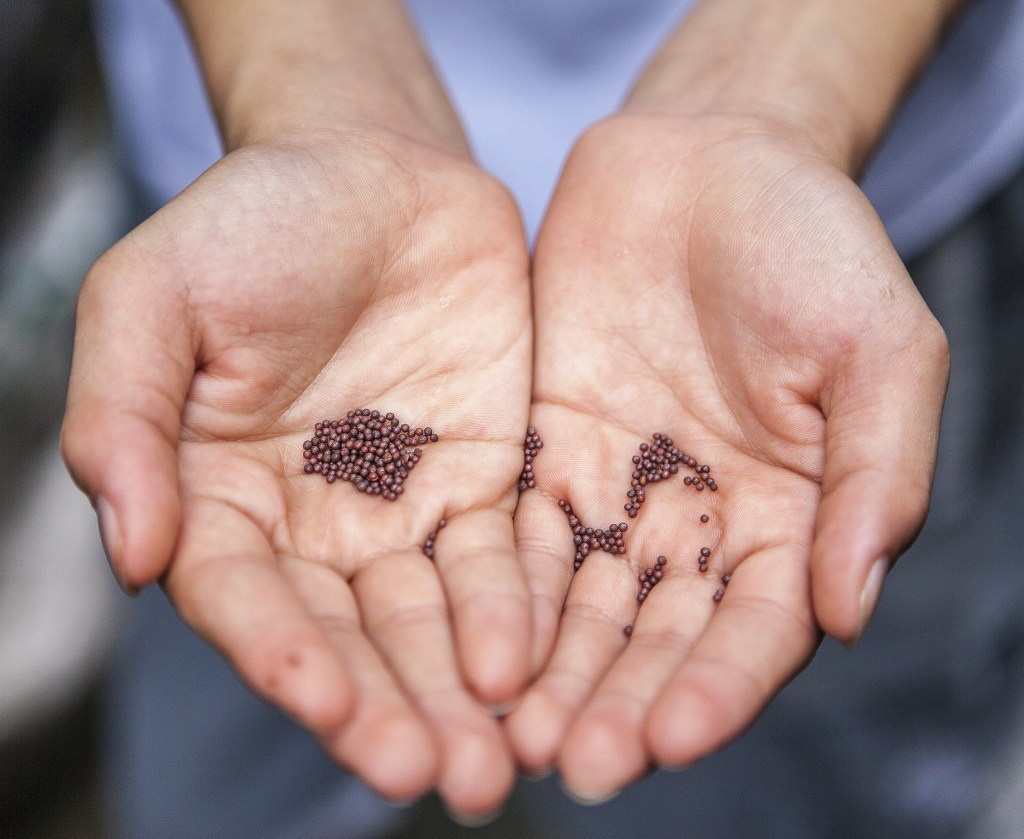
Never seen mustard seeds? Here they are. Kisa, however, came up empty-handed.
What was that tale? It was “Kisa Gotami and the Mustard Seed”. In brief, Kisa Gotami’s young son dies and she is so distraught–not understanding why she would deserve such a painful experience–that she goes to the Buddha in hopes that he can bring the son back from the dead.
The Buddha agrees to revive her son if she can bring him mustard seeds from households where no one has died. Of course, she cannot because death touches all living creatures. She is comforted by the realization that her sorrow is shared and understood by everyone in the community and she finds acceptance of her loss .
Another way of looking at this is that we all suffer. For me, it’s a reminder that while a cancer diagnosis is life-threatening, there are few (if any) humans on this Earth who have not experienced some form of loss or grief at some point in their lives. Yes, some of us bear a far greater burden than others–grave inequities exist. But they also bring profound opportunities for growth.
And while I (and I expect most cancer patients/survivors) would have preferred to experience this personal growth through means other than cancer, being able to be here in this moment, having turned the corner, is one of the most beautiful gifts I could ever receive.
~~~~~~~~~~~~~~~~~~~~~~~~~~~~~~~
Two points need to be made here:
Point #1: Burdens are distributed unequally. Socioeconomic, racial and other disparities further tip the scales, making outcomes from a disease like cancer even worse. As a society, we haven’t come close to rebalancing this. Acceptance is easier for some than for others; no one has a right to preach to anyone else.
Point #2: It’s been over five years since my initial cancer diagnosis, and even longer that I’ve been worrying about it. As I mentioned above, it took a LONG time to get to this point of acceptance. Knowing this, I would never rush a new cancer patient to get here. Acceptance must come organically, and yes, sometimes never does. Cancer breaks hearts and no one experiences it in the same way. Be patient.
One thing I’ve had trouble with is expressing self-compassion. When you’re a driven perfectionist it’s easy to believe that “giving yourself a break” is tantamount to “going soft” and “losing your edge”.
I couldn’t forgive myself when I felt that I’d failed. And guess what, getting cancer made me feel like a failure. I had tried to live the healthiest adult live I could, given the sometimes-limited resources I had, often denying myself what others called “pleasures” or “indulgences”.
I’ve lived most of my life feeling like I had to constantly push myself…and that I was never good enough.
The fact that I was convinced that I shouldn’t have gotten cancer was a recurring theme early on in this blog–I was convinced that I must have done something wrong, even when I tried so hard to do my best.
I was also ashamed. Cancer, I felt, opened my life up to judgment by others.
Getting myself out of that funk took serious work. It meant rewiring my brain and allowing in the same kindness and compassion for myself that I allowed for others. At the same time, I reminded myself of a quote by author and humor columnist Dave Barry: “A person who is nice to you, but rude to the waiter, is not a nice person.” I prefer to interpret Barry’s words in this way: I cannot be genuinely kind and non-judgmental to others until I’ve learned to be so to myself.
Cancer gave me perspective to see how much I needed compassion from myself.
But how do you do that when you’ve spent your life pushing yourself, not accepting excuses? It wasn’t until I hit the lowest low that I ever experienced that I learned to dip into unadulterated compassion for myself. I imagined who I was as a chemo patient–skinny, bald, dehydrated, vulnerable, frightened. And suddenly felt it: that overwhelming desire to wrap my arms around that version of me and protect it.
And while that was “cancer me”, I realized that same version of me was the scared person inside that I had always bullied with perfectionism and accusations of not being good enough. This was who I really was, in need of and deserving of gentle holding.
It took a life threatening illness to make me realize that I deserved kindness and compassion. I believe that you are deserving of the same. Do something today to prove it to yourself.
While this isn’t exclusively an exercise blog, if you’ve perused my posts you’ve probably noticed that I’m a huge proponent of exercise for both cancer patients and survivors (well, actually for everyone; but see my important message at the bottom of this post).
The best way to achieve this is to start exercising right now, if you are not yet, no matter what stage of the cancer experience you’re in.
There is a growing body of research that shows the benefits of exercise for cancer folk (I’ve written about it here). But the fact is that only about 17-37% of cancer survivors meet the minimum physical activity guidelines set out by the American Cancer Society (Hirschey et al., 2017, Cancer Nurs) even though doing so reduces the risk of cancer recurrence by 55%, not to mention the improvement in quality of life (Cannioto et al., 2021, J Natl Cancer Inst).
Exercise, the Cancer Fighter. In the not too distant future, your oncologist might hand you an exercise prescription as part of your cancer treatment.
Now, there is a call to include exercise as an adjuvant therapy for cancer for those who are currently undergoing chemotherapy. During the Oncology session of the 7th International Congress of the Spanish Society of Precision Health (SESAP) that took place in Spring 2022, Adrián Castillo García, a researcher at the Barcelona Biomedical Research Institute (IIBB) of the Spanish National Research Council (CSIC), reviewed recent studies regarding the benefits of exercise during cancer treatment, including the potential role that it had in “modulating the tumor microenvironment and immune function.”
You can read a synopsis of his statements here in the section entitled “Exercise as Oncological Therapy” (starting towards the bottom of page 2). Castillo states that physical exercise “has been shown to have the ability to modulate the tumor environment… . This modulating effect translates into an improvement in the efficacy of chemotherapy and other oncological treatments.”
Castillo goes on to say that “prescribing doses of physical activity at an established intensity and volume can be very decisive in combating the tumor microenvironment, but this preliminary evidence must be confirmed in trials on humans to ratify the role of exercise as a treatment capable of improving the efficacy of the main therapies.” (All quotes from the aforementioned synopsis.)
With such promising results, it’s quite possible that future cancer treatments may be a combination of medicine and physical activity.
Ok, so say that you are not an avid exerciser, but motivated by these studies you’re willing to give regular exercise a go. What do you do when you’re already feeling fatigued from treatments?
I wrote about this here, but in a nutshell, the idea is that you need to decide what the right starting point is for you, and this will depend on your previous experiences, both physical and emotional, with a physical activity program. It will also depend on what you can manage at any given time in your treatment.
Starting an exercise program? Make it something that you can do and enjoy, and it will become a life-long habit.
Ask yourself, “what is reasonable for me?” But don’t respond to that with a t-shirt slogan-type answer (“Exercise? I thought you said extra fries?!?”) that immediately shuts down the idea. Admittedly, there may be times during treatment that getting yourself to the toilet without help is a momumental achievement. But that will pass. And exercise will make you feel more in control of your health and better overall.
IMPORTANT: Find what you can do and then do it as consistently as you can.
This may mean starting very simply [always get your doctor’s okay first!]. Choose an activity, duration and frequency, say, brisk walking for 20 minutes a day, three days a week. Follow that pattern for two weeks, then add to it–perhaps another 10 minutes–not to overwhelm yourself, but simply to push the edge a bit (you can always ease off if you need to, give it a week and increase again). If possible, increase some aspect of your program every couple of weeks, as it suits your condition. In the example of walking, incorporate a flight of stairs and gradual upper body movements: first pumping the arms, then hand weights, eventually strength training for both upper and lower body.
The timing is up to you.
If a walking program feels too easy for you, train at a higher level, but remember that the same concepts still apply: (1) consistency, (2) progression, (3) balance in your activities. If you’re interested, read my post about my three “pillars” of fitness.
Most importantly, start, progress gradually and keep it up for the rest of your life.
If your starting point is a standstill, this will take patience. But I PROMISE you, no matter what you can muster, it will still be better than doing nothing.
~~~~~~~~~~~~~~~~~~~~~~~~~~~
I know I already said this, but it bears repeating, especially for cancer patients and survivors: do not start any exercise program without consulting with your medical team first. While I feel that improving your physical fitness is one of the best things you can do for yourself, every body is different and every cancer situation is different. Talk to your doctor and let them know what you’re planning to do.
I feel like I write a lot about loss when speaking of my cancer experience. That may seem like a downer, but truly, cancer treatment is a complicated process in more ways that expected. Bear with me for a few…
There’s so much to lose: lose control of your life, lose your hair, lose your lunch, lose a lot of money, lose time at work, lose your libido, lose your overall quality-of-life. In more extreme cases, lose your spouse and your house. And unfortunately, sometimes lose your life. On some level most of us may feel some sense of loss.
Cancer is complicated because it can bring on a huge sense of loss.
I keep talking about this because it’s not something that’s fun to talk about. Most people don’t know what to say when they find out you have cancer. They’re hesitant to say something to “remind you” of the illness, as if you could forget. Relationships can become strained and awkward.
Interactions with cancer patients often turn into a “rah-rah” fest, with well-meaning friends showering you with “you got this” encouragement. But that’s not always what you need to hear.
I urge everyone who cares about the well-being of a cancer patient to allow them the opportunity to express how crappy things are. To simply listen and not contradict them. Because being insistent that it’s not okay to talk about anything negative creates an even bigger sense of loss for the patient.
Does this sound wrong? We’ve been led to believe that being positive is the only way we should be and that it’s no fun to be around those who are gloomy.
But consider this: would you go to a funeral and try to get the grieving family to “cheer up”? Would you try to tell them jokes and elbow them into smiling? I don’t think you’d be very successful and might be escorted away – at the least your invitation to the meal afterwards would probably be revoked.
Forgo the cheerleading and simply offer an ear and a shoulder.
We know that behaving this way is unacceptable, at least in most cultures (I can’t speak for everyone). Grieving is an important part of the human condition and not being allowed to grieve loss can be very stressful and lead to problems down the road.
So it is for the cancer patient. There’s so much more going on than simply increased doctor visits and medical procedures. Minimizing the impact that this has on their lives may range from feeling unfair to devastating.
Of course, every patient is different and their reactions will differ too. But I would urge loved ones to err on the side of caution, give their cancer patient the time and space to process and grieve and save the exhuberant “cheering up” for a time when the patient seeks that out.
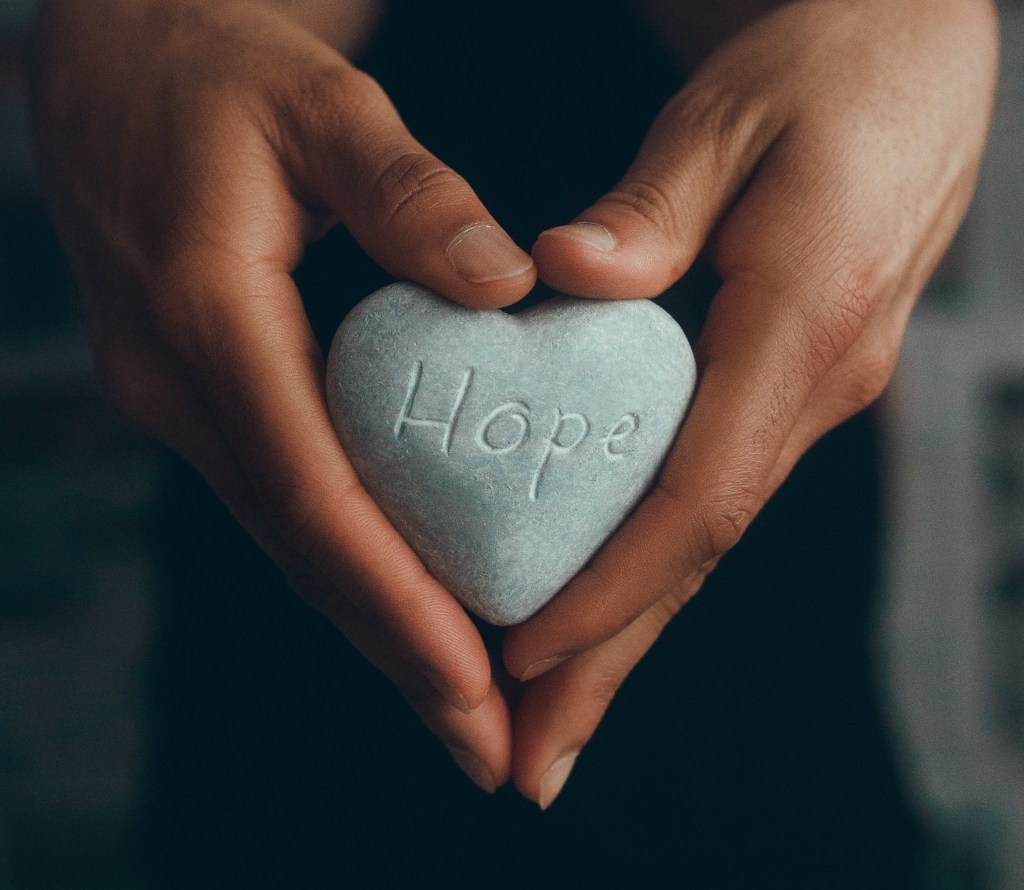
So this isn’t the kind of news you want to see. But there’s still hope…
A scientific journal article from 2017 (Cupit-Link et al., 2017, ESMO Open) describes the toll that cancer treatments can take on the patients subjected to them.
After being told you have cancer and deciding to proceed with the treatments that will offer you the best chance of survival…it’s disheartening to learn that many of those same treatments can accelerate aging, causing damage to your DNA, heart disease, hearing loss, cataracts, liver and kidney diseases, brittle bones, lowered immune response and other cancers (!) among other issues, depending on the type of cancer and treatment (see WebMD article).
The treatments that can save our lives from cancer may hasten our demise from age-related factors.
This is a problem resulting, ironically, from the success of treatments and extended lifespan of cancer survivors. Back when cancer was deadly with a low survival rate, no one was too concerned about the state in which survivors were left in; simply surviving the cancer was enough. Now that people are beating their cancers at greater rates, quality of life has become a much bigger issue.
While the most striking detriments are seen in childhood cancer survivors, accelerated aging occurs in most former cancer patients.
Doctors and researchers are taking note. At the time of this scientific article’s publishing in Dec 2017, there was already discussion on how to “de-escalate” cancer treatments as a way to decrease the amount of cellular damage to patients.
On a personal level, I chose an effective drug for my HER2+ breast cancer (Herceptin) over a more effective drug (Perjeta) that carried a risk of greater cardiotoxicity. I made that decision because although I was terrified of cancer, I was also afraid of what lasting effects the drug would have on me once the treatments were over.
Cancer treatments are strong but healthy living can help mitigate their negative effects.
But even if you didn’t have the opportunity to make such a choice, there’s still something that you can do. The authors of that 2017 paper noted that cancer survivors can take back some control over their health by adopting or continuing those healthy lifestyle habits that should sound familiar by now: not smoking, limiting alcohol, exercising regularly and eating a healthful diet.
To that, I would also add, managing your stress levels, the importance of which has been demonstrated on a cellular level, and getting optimal amounts of sleep.
Improving longevity is a hot field for research as scientists work to determine what aspects of one’s lifestyle show the greatest promise in keeping the body young. This topic is complex and new data is coming in on a regular basis, so I won’t delve into details here, but it stands to reason that being sedentary and eating a high-sugar, high-processed diet is not going to do you any favors.
Just as cancer treatments may have a negative effect on overall health, you can win back some lost ground by making healthy, informed decisions on diet and exercise. No one wants to limit their cancer treatment options, so this is one form of insurance that you can give yourself. No matter what else happens, a healthy lifestyle will benefit your quality of life. And that is an improvement that is yours to keep.
Last year at this time, I feared that I had heart issues based on what I had read about some of the cancer medications that I had been on, so I went to the cardiologist and they administered some tests. When I came back to the cardiologist to discuss results with the doctor, I was told that they had found “something” in the echocardiogram and Holter monitor readings.
But I still had questions, so I had a consultation with the cardiac nurse, who went through everything with me.
In the back of my mind, there’s a fear that my body is harboring serious health problems.
And it turns out that while they did find “something”, it wasn’t really anything out of the ordinary, beyond normal wear and tear. I was assured that my heart was very strong and healthy and I could continue to push through high-intensity workouts.
Still, it was recommended that I get checked out again this year.
But you know what? I’m not going right now. It felt like anxiety about the scans and then waiting for the results did worse things to my heart than whatever I might have been already experiencing.
I talked this over with my oncologist, who agreed.
The fact is, there are things that you need to get checked out, especially as a cancer survivor. But for other things, especially without a specific indication that there’s something wrong, you are simply looking for trouble. And if you’re looking for it, you’re going to find it.
Our bodies are not perfect. And the older we get, the more aches, pains and abnormalities we have. That doesn’t necessarily mean that there’s anything “wrong” that immediately needs to be fixed.
For now, I’m halting my search for trouble and taking the time to breathe deeply and just live.
Anxiety was the driver for me to get tests run. I was overreading about everything that could possibly go wrong–given the medications that I had been taking–and then rushing out to make sure that it hadn’t yet in the hope that I could rectify any budding issues.
And to be fair, there are still things that I could look at, still specialists I could contact. But perhaps I need to chill a bit…
…but perhaps I need to chill a bit. If it were to progress, would I stop exercising? Absolutely not. So then perhaps it’s best to take a wait-and-see approach for now.
All of this is so different from cancer, which drives us to seek treatment immediately. I am forever primed to worry about what might be happening in my body. But I also recognize this as a psychological side effect of cancer. I can’t let fear take over the rest of my life.
So for me, it’s time to stop looking for trouble, stop fearing for the future and simply relax and enjoy what’s happening in the present moment.
Last week I had a 3-D mammogram. This scan marks a bit over five years since the diagnostic test that indicated I had a solid tumor on the outside of my left breast.
Heading into this appointment, I wasn’t particularly worried. Yes, I admit to having little heartbeat skips over “lumps” in my breast that aren’t really lumps: if you recall, I had felt something before my last oncologist visit; my doctor reassured me it was nothing.
I will never again hear the word “lump” and NOT think of cancer.
And because last August I’d had a chest MRI, a more sensitive scan than even a 3-D mammogram, it was HIGHLY unlikely that there was anything to be found in this mammogram.
But still, after the pictures were taken and the mammography technician left the room to consult with the radiologist, I got that all-too-familiar uneasy feeling.
WHY? I knew that the radiologist wouldn’t find anything. The technician practically said that out loud, since she was aware of my recent MRI.
But still.
I sat alone in the mammography room, breathing, looking at the clock on the wall and simply hovering. My attention was like a butterfly looking for a place to alight. I wasn’t holding my breath…but mentally, I had put the rest of my life on hold when the tech stepped out the door.
It took all of four minutes and the mammographer returned and gave me two thumbs up.
For four minutes, I had no plans for anything outside of the room I was in.
I breathed a sigh even though I had expected the good news. And while I wasn’t “freaking out” waiting for the response, it became apparent to me that I might always feel uneasy during that period of uncertainty.
I didn’t want that. I wanted to be completely unaffected, as if I had never had a bad experience and my heart was calm.
But hovering it was, because there are no guarantees. And as the gears of my life started turning once again, I remembered that there was no going back. All the negatives that have happened have happened and I can’t change that.
Eventually, years from now, my emotions may soften, but in the meantime, I’m just going to have to be okay with hovering for a few minutes.
Last week, I had a Pap smear. If you’re not familiar with what that is, you must be either male or blissfully young. In brief, it’s a test for cervical cancer, customarily done every 3-5 years.
I knew my results would come this week, along with other lab results. I was in a work meeting today when I noticed my phone was vibrating. It was my doctor’s office…and I was too late to answer the call.
Me: It’s probably nothing. Also me: OMG I NEED TO CALL NOW!
The doctor’s office didn’t leave a message.
And that’s when I officially tuned out the meeting. A flood of possibilities came rushing in. My boss needed to talk to me but I was trying to suppress the growing urge to call the doctor’s office immediately.
The urge won. I called and left a message and went back to work, but my head was elsewhere.
The fact that there had been no message was extremely unsettling, because it made sense that if there were really bad news, the office would want to speak with me directly instead of leaving a voicemail.
And my reaction shouldn’t come as a surprise, because having been hit with a cancer diagnosis before, I’ve become hypervigilant. Like it or not, my brain wants to prepare for the worst so that I don’t have that horrible fall from thinking that everything’s just peachy to slamming into a nightmare.
It doesn’t help that I’ve read sooo many stories of women talking about being completely blindsighted by frightening diagnoses, and all of them saying that they thought nothing of the missed call from the doctor since they knew they were perfectly healthy, blah blah blah.
Gotta be prepared, ya know?
Of course, I know better than this. And at least I was aware of the hypervigilance, aware of my body’s reactions and aware that I was blowing things out of proportion. But it’s that uncertainty that is so difficult to take. Even though I know my response, I know why it happens and I know that chances are everything is ok…I want that certainty.
As it turned out, the call had come from the nurse assistant to let me know that my blood work results had come in. This was a relief, although I admit I considered it a defeat that I couldn’t be mindful and breathe through it all.
Then again, as a cancer survivor, I need to cut myself some slack. Getting slammed with a devastating diagnosis once leads to understandable echoes, no matter what test results I’m waiting for.
For now, I’m calm. Of course, my actual Pap smear results aren’t in yet. Those should come tomorrow or the next day. The nurse assistant told me that they’ll probably be normal (OMG, how can anyone say that????) and they’ll be loaded onto the patient portal…unless they’re not normal. And then they won’t be.
Guess whose heart will be fluttering for the next few days?
Not mine, because I’ve got it together.
Kind of…
~~~~~~~~~~~~~~~~~~~~~~~
To be fair, I didn’t totally freak out over this. But scanxiety over test results is getting a little old, honestly…
I had another oncologist appointment last week. This one was a milestone, since it officially marks five years since my breast cancer diagnosis.
Five years ago, I was told that with triple-positive breast cancer I had an 85% chance of survival…but there in the fine print was added “five-year survival”.
Delays in routine care due to the pandemic have resulted in more late-stage diagnoses.
With advances in treatment for HER2-receptor-positive tumors (HER2 being the third marker in “triple-positive”), that percentage has improving. But it’s still interesting to note that there’s a finite end to what reliable survival info your doctor can give you, since it’s hard to run longitudinal studies with a large group of participants.
In any case, my oncologist was happy to see me alive and kicking. With the pandemic, women voluntarily and/or involuntarily delayed preventative care, and as a result, there has been an increase in the percentage of women presenting with advanced-stage breast cancer (from UC San Diego Health). Given how far treatment itself has come, this is a distressing statistic because it means that we have effective treatments but patients are not getting them soon enough. So perhaps, for him, I was a five-year treatment success in the midst of all of this.
My oncologist’s concern now is less that my tumor will recur and more that whatever conditions were responsible for the first tumor might result in a brand new one. He still checked me over carefully. My bloodwork looked good with only a lower white blood cell count (“that may never recover,” he’s said in the past). I have no headaches, my bone pain has significantly decreased and other long term physical side effects from endocrine therapy have just about Sudisappeared.
Five years post-diagnosis I’m turning down another path, one that I would have never explored had it not been for what cancer made me face.
I’m still dealing with things like distractability issues, but that could also be due to menopause and the pandemic situation and maybe just the march of age in general. I’ve noted before that it’s hard to pull apart all the factors to identify a single culprit.
My oncologoist remarked that I looked like I was doing well, that I exuded a positive “aura”, and while I’m sure he didn’t mean that metaphysically, the truth is, I feel like I’m finally moving forward in my life again. This coming weekend I start a three-month yoga teacher training course that will move me down a new path for the future.
I still plan to keep posting weekly during this time. We’ll see how it goes!
![Chemo Fatigue: What Is It Like? [video]](https://franticshanti.com/wp-content/uploads/2022/07/howling-red-2tispdidr8i-unsplash_cropped.jpg?w=1200)