Naptime with Animal Friends: A Calming Visualization

(Title image: Photo by Kristin Lyse on Unsplash)

I recently came up with a fun visualization for calming myself that I wanted to share with you. It’s ideal if you love animals.

The concept is quite simple. Imagine yourself in a comfortable place outdoors with an environment that is what you like best. As an example, for me, it’s a warm-ish spring or summer day and I’m sitting under an arbor covered in wisteria or another flowering vine with leaves just dense enough to allow dappled light through.

Create a detailed, colorful picture of your perfect place in your mind. And then…start settling. Bringing attention to your body, imagine what it would feel like to be there. As your breath slows, the calmness you generate travels outward and attracts friendly animals to you.

You are the Pied Piper of imaginary animals.
(Photo by Dmitry on Unsplash)

Perhaps a colorful bird alights on your shoulder or next to you. A bunny hops over and snuggles next to you. Or maybe you attract a group of sleepy cats that come, purring, and rub their faces against you before stretching out beside you and perhaps in your lap.

The animals can be whatever you desire. Maybe it’s a family of platypuses? Or perhaps you’re sitting by a natural pool, feet in the water, and koi are languidly swimming around you. Sometimes, I imagine something potentially frightening and powerful like a tiger appearing, then nuzzling my hair before he rolls onto the ground to snooze, pressed up to me.

It doesn’t have to be realistic. It just has to make you feel good. There are no rules.

All animals relax around you as long as you stay relaxed around them.
(Photo by Sandra Vasilenko on Unsplash)

The richer and more vibrant the picture, the more easily you will settle. As you develop the image in your mind, watching the butterflies circle around your head or feel the weight of the wolf’s head as she lays it on your shoulder, you nurture a sense of calm. These animals are attracted to you because you are what soothes them.

And the reason that you soothe them is because you have calmed yourself. Being calm, and tranferring that feeling to others, is your superpower.

If you lose focus and your mind drifts into worry or to-do lists, the animals will scatter, so you have to notice what’s happening and resume the visualization to show them that it’s safe to return. Allow a warm breeze against your skin or the cooing of mourning doves to transition you back to this calm space.

Understand that you have this ability to generate a sense of well-being, in yourself and others. You might not always be aware of it in the middle of a busy day…but it is there. Close your eyes, feel into your feet and call your favorite furry, feathered or scaly friend to you for a snuggle.

~~~~~~~~~~~~~~~~~~~~

If you’d rather not imagine animals, you can make flowers bloom or young children smile and nod off (which might be very satisfying if you are a preschool teacher!).

Farming ‘Likes’ on Instagram

(Title image: Photo by Chelsea Gates on Unsplash)

I am a reasonably flexible person although I’ve become less so with age and especially following cancer treatment. Yoga asanas that I used to be able to do…well, they don’t come so easily anymore, if at all.

After going through my yoga teacher training in my 50s and now in the middle of an Oncology Yoga (y4c) certification program, I spend a lot of time feeling like an imposter.

There’s an element of shame to this. I tell myself I should be more flexible, I should have better balance, I should be able to hold more advanced poses and for longer.

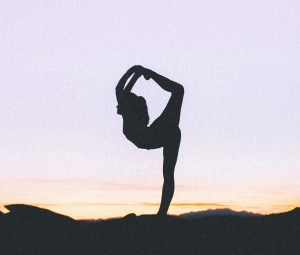
In my y4c training, the manual referenced a concept, versions of which I’ve seen before and have written about myself, but the message continues to hold true (see this article). The proliferation on social media of young, flexible bodies in extremely inaccessible poses for the vast majority of the population not only hurts the practice, but completely misses the point.

It seems like a lot of images that show up as “yoga” on platforms such as Instagram are part (if not wholly) acrobatics and contortions. But yoga is actually a spiritual practice and only one part of it, the one that is overemphasized in the west, is physical.

POV: You’re a cancer patient and your forward-thinking oncologist suggests that you try yoga to help alleviate some of your side effects. But this is what you think of when you hear “yoga”. What are the chances that you’ll try a yoga class? What are the chances that you’ll even find a yoga class that is appropriate for your current condition? Or will be able to afford one?
(Photo by Wesley Tingey on Unsplash)

And that physical practice is a big money maker. If you doubt that, take a look at how many yoga studios exist in affluent areas, and the dearth of studios in more moderate-to-low valued ones.

Yoga was what helped me through my cancer diagnosis, treatments and beyond. But that yoga was minus the “workout”. My workouts during cancer focused more on rowing and lifting weights rather than Sun Salutations and balance asanas. Yoga was for my mind and spirit, to maintain connection and grounding, to not get lost in my fears and to be grateful for what I had.

This is not to say that it’s not impressive when people post challenging asanas on social media. Some of the wonderful teachers that I have trained with have shared those kinds of posts. It’s natural to want to show off a physical achievement that you’ve worked so hard for. In a way, that’s the whole point of social media posts. And that’s also part of the problem with social media.

Frankly, yoga has become deeply entrenched in the United States as a physical practice and nothing is going to change that now. We can be hopeful that those who dutifully attend yoga class, rolled up mat under the arm, will take the time to understand the depth of this ancient practice. But regardless, the flow of the class still brings peace to the mind in a way that my ‘hardcore’ workouts do not.

There are a lot of people who could benefit greatly from the practice of yoga in all its forms, matching breath to movement and developing a mind-body connection. Cancer patients and survivors are some of those people. But if all they know is that yoga demands extreme flexibility, even hypermobility, and statue-like balance, they will avoid the practice as too advanced and inaccessible to them.

If you are a teacher, please keep that in mind. If you are a potential student, please don’t let social media keep you away from such a beneficial form of exercise for both your body and your mind. And if you are a current practitioner, please dig deeper to understand the roots of yoga to honor the cultural tradition from which it arose. It’s not just for likes on Instagram.

Stop and Do This Now

(Title image: Photo by Ruslan Zh on Unsplash)

No matter where you are reading this, pause now and take a deep breath.

And exhale.

How did that feel? How you were breathing right before you took that breath? Were you relaxed with deep breaths already? Or was your breathing quick and shallow and that sudden deep inhale felt very different?

For me, my breath is a reflection of my internal state. It’s a compass that points me to what is happening to me, regardless of what is going on around me. Many times, I’m not aware of how I am responding to things around me until I stop to notice my breathing.

And don’t forget to exhale.
(Photo by Kelly Jean on Unsplash)

Sometimes it takes a number of tries to achieve a deep inhale. Then I realize how shallow my breaths have been. That opens the door for me to consider how I’ve been reacting to things throughout the day. And it also leads to more deeper breaths as I settle down.

If I’m home, I may grab my flute — it is a Native American-style flute of red cedar wood. Holding it in my hands, enjoying the pleasant scent of cedar, playing a few bars of a mournful melody…all that helps to calm and ground me. It demands a controlled lungful of air for a clear tone, an elongated exhale that soothes me.

Did you take a deep breath at the start of this post? If not, try it now. And notice. Notice if it’s easy for your diaphragm to drop and pull in a good lungful of air, or does your body resist, as if something is squeezing your lungs, or your torso is bound tight?

Take several more breaths and allow them to expand your ribcage, coaxing more air in with every inhale and slowly releasing with every exhale. Until, like a balloon that has been stretched, the lungs fill fully, comfortably, easily.

And then just breathe. Allow yourself to stay where you are with whatever is taking place around you and keep breathing. Breathe mindfully for few minutes. Shake off the pressures of the day.

Then take one more deep breath…and carry on.

“Them’s Fightin’ Words!”: Discussing Cancer Language

(Photo by Thao LEE on Unsplash)

Here’s something that I want to share from my Yoga4Cancer teacher training class. It’s an episode from a BBC podcast on the language that we use to talk about cancer, and it is excellent.

The podcast features a group of people touched by cancer: survivors who have finished their treatment and those who are still undergoing it. In one case, there is a woman who will never finish treatment because she needs to stay on it for the rest of her life.

Their topic of conversation circles around how they describe their situations and how they feel about the words that others use. I don’t want to give too much away because the discussion is engaging and even humorous, so I do encourage you to listen for yourselves.

BBC Radio 4 “Fighting Talk: How Language Can Make Us Better” (https://www.bbc.co.uk/programmes/m0001g8w).

I’d be really interested in knowing what your opinion on this is. Many of us might start with more aggressive talk concerning our cancer diagnoses: fight, beat, battle, etc. And yet as you’ll see, those terms can become problematic. We may get worn down by them as the treatment progresses.

How about “toxic positivity” from others? This is the tendency to push a narrative of upbeat positivity no matter what, even when it’s not appropriate to the situation. Such encouragement often ignores the tumultuous inner state of the cancer patient and can lead to a feeling of isolation

Open discussions about cancer help maintain an active support network for the diagnosed individual.
(Photo by Helena Lopes on Unsplash)

Everyone is different and as cancer survivors, we don’t expect well-meaning friends and family to know what personally irks us: for instance, there are differences between men and women in how they react to “fighting” metaphors. But it’s useful to bring a conversation like this into the open because cancer is one of those diseases that may make people around us feel uncomfortable.

A lot of people may not know what to say in response to your diagnosis, so they’ll say something vague and positive, or even nothing at all…and some may avoid you altogether. That can be unfortunate at a time where community support is especially important.

If you are currently undergoing treatment, understand that many around you might not have the vocabulary for talking about cancer in a way that resonates with you.

And if you are one of those friends who doesn’t know what to say, it can be best to admit that. Trying, “I don’t know what to say because I don’t want to say anything wrong,” can be more heartfelt and helpful than an awkwardly-cheery, “You got this!” or “Don’t give up the fight!”

I hope you enjoy the podcast episode!

“Not Just Hot Chocolate”: Making a Cup of Cacao [VIDEO]

(Title image: Photo by Pablo Merchán Montes on Unsplash)

One of the experiences that I had in my yoga teacher training (YTT) class in early 2022 was an introduction to drinking cacao, which originated among indigenous peoples of Mesoamerica and had important sacred cultural meaning.

There’s a lot to say about cacao as it has been adopted in the West as part of spiritual introspection…or possibly exploited by practitioners who don’t fully understand its importance to the cultures from which it came. As such, google ‘ceremonial cacao’ and you will find a lot of information regarding its history on the websites of companies selling cacao. This article from Cacao Mama does a good job of providing a lot of information without immediately trying to sell you something: https://www.cacaomama.com/history-spirit/.

For this post, I want to share the process of making a cup for myself in the morning.

While cacao does have some caffeine, the main stimulant is theobromine, which is also a gentle mood-enhancer. I credit ceremonial grade cacao with being one of the things that helped me get through the visual migraine auras that I was experiencing. The extra mindfulness in making a cup of pure cacao with intention, opening up my senses to its aroma/color/taste, was soothing to me, as was knowing that I was partaking in something ancient and sacred…and of course, being bouyed by the theobromine.

For the time being, cacao has replaced my cup of macha in the morning and has provided yet another moment of calm prior to starting my workday.

~~~~~~~~~~~~~~~~~~~~

The first time I experienced a cup of cacao, I noticed an uplifted mood beyond what I expected, which lasted into the next day. If you have a chance to enjoy a cup—and can handle the stimulants and strong chocolate flavor (it’s not a Hershey bar!)—I encourage you to try it but also urge you to search for a company that treats the farmers who supply its cacao fairly and respectfully.

I have used Ora Cacao intermittently for the past few years and feel that they are honest and credible, deliver a high-quality product and care for their farmers and the Earth. I am confident that when I buy from them, I am getting the best cacao that I can find. [IMPORTANT: I am not compensated for this endorsement.]

Regrettably, due to the ever-increasing costs of purchasing pure, ethically sourced, ceremonial grade cacao, I may soon not be able to afford my morning cup, so I’ll appreciate it while I can.

Simple Meditations: Just a Piece of the Puzzle

Over the holiday break, I indulged myself by lassoing the family into working on a couple of jigsaw puzzles that I’d been saving. It was great! And if one of your goals for 2025 is to establish a mindfulness/meditation habit, here’s a simple practice to try if you, too, enjoy jigsaw puzzles.

Putting together the puzzle itself can be a great pasttime, offering good conversation and comraderie when working with others, or proving a shift of focus when constructing solo.

However, a large multi-piece puzzle can feel overwhelming at the start, even when you’re experienced and KNOW that eventually everything will click into place.

Ah, the joy of a finished puzzle. This one is from the Ravensburger Cozy Series and is a favorite of mine. Such a great experience putting it together with family!

So here’s my suggestion. Put your puzzle together. With whatever help you need, with whomever wants to participate, no matter how long it takes. Because for this, you want to start from the end.

Now, take apart of corner of the puzzle. It’s up to you about how many pieces you will want to remove, but choose a “comfortable” amount. Twenty? Fifty? Start with fewer pieces the first time you try this.

Once you’ve deconstructed that corner, put it back together. But this time, without the “stress” of doing the whole thing. This will be easy. You know that it’s only a handful of pieces. So simply enjoy the process.

The deconstructed corner turns putting the puzzle together into an meditative exercise. The focus is on contemplation, not completion. Enjoy the satisfaction of the clicking the pieces into place.

Perhaps find the edge pieces and create the frame, or simply build out the puzzle from the “raggedly” edges of the puzzle. There is no single “right” way to do this. What is important is that you breathe through the process. Picking up a piece, focusing on its qualities, seeing where it belongs. Either clicking it in or putting it back down and picking up another piece until you find the one that will go where you want it to.

Notice the sensations: the feeling of the puzzle piece in your hand, its shape and color, the texture of the interlocking sides, even the smell of the cardboard all work together to bring you back to the present moment.

The goal is contemplation, not completion. When you’ve put all the pieces together…do it again with another corner. You get the satisfaction of clicking the pieces into place without the fleeting stress of “omg, where do I start?” In turn, this provides you the opportunity to get absorbed in the process.

What a lovely way to meditate.

The Gift of Self-Care

(Title image: Photo by Ben White on Unsplash)

I’m popping in here with a little reminder to practice self-care over the remainder of this holiday season and springboard that care into the new year.

“I have had no time for self-care with everything going on!”, you may protest, but then, what do you imagine self-care to be?

If you believe commercials, it’s drinking red wine in the bathtub, eating ice cream from the container, using a face mask and getting your nails done at a salon. All while chanting, “BECAUSE I’M WORTH IT!”

In general, anyone who is perpetuating that type of “self-care” is trying to sell you something.

Journaling is an effective form of self-care and doesn’t require an expensive journal or pen, no matter what someone tries to sell you.
(Photo by Sixteen Miles Out on Unsplash)

Here are less expensive options that I feel align more closely with the true meaning of self-care:
* pausing during the day to take a few mindful breaths;
* noticing where you are (“Right now, I am in the kitchen doing the dishes, feeling the warm water and slipperiness of the soap on my hands”) to help calm racing thoughts;
* making a decision to choose a more nourishing food, eating slowly, savoring each bite;
* decreasing/eliminating alcohol — substitute a drink that looks festive (sprig of rosemary or a skewered piece of fruit added to sparkling water);
* staying consistent with exercise, or if time is squeezed, sticking in extra movement whereever you can (like doing 5 squats every time you go to the bathroom or a short yoga session right before bed);
*practicing gratitude, and if that’s hard, just finding something to appreciate.

And of course, taking time for a brief meditation whenever you can.

I think you get the idea.

Holiday self-care is not about buying things. It’s not about practicing an Instagram or TikTok version of indulgence. There are no photos to post and you don’t need a manual for it to be beneficial.

It is taking a break to drop down out of your thoughts and into the present moment. Be kind to your body and mind, get enough sleep and exercise to make yourself feel good. And importantly: release expectations of what you think the holiday should look like, how people should act, what you should be able to accomplish, even how you should feel about it. Find appreciation for whatever is going well.

I wish you a peaceful, positive start to 2025!

When Gratitude is Hard, Try Appreciation

(Title image: Photo by Amadeo Valar on Unsplash)

After last week’s post about writing out your stressors, I wanted to follow up with something positive so that we’re not left thinking about all the rough stuff that we have to deal with.

And how better to do that than by counting your blessings? Ok, so I realize that sometimes it’s not so easy to get excited about a great cup of coffee or the fact that it’s almost Friday when you are drowning under a pile of bills or dreading the arrival of combatative relatives.

But part of a resistance to gratitude, at least as far as I’ve experienced it, is feeling that it’s forced. I’ve written a number of posts about this—seems like I hit on this topic at least once a year—and guess what? It’s time for this year’s version.

This week, I’m posting on the magic of gratitude again, but this time for the recalcitrant ‘gratituder’. Full disclosure: sometimes that’s me.

When gratitude doesn’t come easily then maybe we just need to reinterpret how we view gratitude and what it expects of us.

And that can be achieved by switching out the term “gratitude” with “appreciation”.

Appreciating the glorious scent of a bunch of lavender? Yep, that’s gratitude!
(Photo by Richárd Ecsedi on Unsplash)

That’s it. You don’t have to do anything else. Looking at a sunset? Just appreciate the beautiful colors—no need to “wallow in gratitude” about it. You have a cup of coffee? Just appreciate that you’ve got that cup of coffee warming your hands.

Sounds too simple? It is simple and that’s why I love this. Because thinking of it as appreciation rather than GRATITUDE takes some pressure off. All of a sudden, there is a whole world of things that we can appreciate without feeling like we need to crawl on our knees to be grateful for them.

And of course, the silly little truth about this is that appreciation IS gratitude. No matter what label you place on it, it gets us to the same place. It’s quite beautiful how suddenly we find that we can be appreciative, meaning we can be grateful for the little things in our lives without a need to force anything.

One of the posts I wrote about this included the realization that it can be the little things in life (for instance, being able to walk around pain-free after a tweaked muscle heals) that mean so much for our quality of life. And that is a very important thing indeed.

I encourage you to try it out this week: look around and see how many things you can genuinely appreciate, no gratitude required. 😉

(And yes, I’m making a list again.)

Making a List, Checking It Twice

(Title image: Photo by Kelly Sikkema on Unsplash)

I have been stressed lately, which is a bummer because this year I really wanted to relax and enjoy the holiday season. But once again, it seems like the year has some zingers left for the final months of 2024.

Instead of writing about them in a post, I decided to write them down…and I was surprised by how many stressors had built up.

I made my list carefully, organizing it by time periods: first, I wrote down the things that had been nagging me all year or longer. Stuff like constant increases in rent and cost-of-living. These were exerting continuous pressure on my well-being.

“Dear Santa, please don’t bring me any more stress. I’m good for this year.”
(Photo by Mike Arney on Unsplash)

Second, I wrote down things that seemed to have happened in the second half of the year and had a large impact, like my father’s death and experiencing frequent visual migraine auras.

Third, I got more granular and wrote about the things I was experiencing on a daily basis. Like feeling that my words were misunderstood or having to go through the rigamarole of tracking down a package that hadn’t arrived—these are things that work themselves out in a relatively short period of time but are stressful in the moment.

Why bother listing all this? Because it helps sort things out. I get perspective on exactly what’s going on in my life. Without that, it’s like someone throwing a huge blanket over you—suddenly it’s dark and you feel smothered. And that feeling of overwhelm elicits a lot of anxiety.

And once I had started the lists, I considered how I was reacting to these stressors. For example, since my father’s death I had not given myself the opportunity to grieve, not even during the funeral. There were so many other concerns that it didn’t seem like it was “the right time”.

So over the last two weeks, I gave myself the space to cry. If I hadn’t stopped to consider what was actually going on, I might have tried to soldier on and pushed away how much it hurt. I had been affected by not only his loss, but also by how his gentle nature meant he didn’t push back against forces that led him to forsake his own passions, and knowing that compounded my pain.

Ah, here comes that word again: PERSPECTIVE. You really don’t get the whole view until you step back and quietly observe.
(Photo by Brigitta Schneiter on Unsplash)

But the reactions don’t have to be as heavy as that. I also noticed that I had been doing a lot of sighing this year, something that is associated with stress and anxiety. Even my body was trying to tell me to take a break.

Writing out the lists gave me a chance to acknowledge what I was already feeling, and pushed me to evaluate whether what I was doing to relieve my stress levels was effective enough for what was going on.

It’s important to note that the purpose of writing up these lists is not to wallow in misery! Everyone has stress of some kind and I’m not unique in that, nor am I trying to make this a bigger thing than it is.

The fact is, some stressors happen to me and some I impose upon myself (unrealistic expectations, perhaps?). It is only when I am able to review them that I can determine which is which, and then take appropriate measures to alleviate whatever pressures I can.

Staying Calm is the Best Revenge

(Title image: Image by Pexels from Pixabay)

Yes, revenge is not a nice word. But if you’re having “that kind of a day” it just might offer you the kick in the pants that you need.

Here’s an example: last week was hectic for me. There were additional work demands on top of which popped up all sorts of fires that I needed to put out. Things were not going smoothly, I missed out on exercise, wasn’t sleeping well, got a letter of rent increase, had an upset stomach—all of which were dragging me into a funk.

With all the negative things coming at me, I lost my emotional footing.

So…I decided to take revenge on the bad news, work emergencies and everything else.

And I was going to do it by not letting it affect me. I even wrote “revenge” on a sticky note and put it up on my computer monitor (NOT at work! At home, where it’s easier to explain myself).

Just say “NO” to allowing the negatives in life to run you ragged. You show ’em!
(Photo by Jon Tyson on Unsplash)

Like I mentioned at the top of the post, revenge brings with it all sorts of negative connotations. It’s kind of like giving in to the “dark side” and using your anger, frustration, despair and whatnot to overcome you. I’m NOT advocating for that.

But there is a certain fire and focus that the concept of revenge embodies…yes, we can call it passion, but I’m not in the mood for that. So I’ll stick with simple revenge with the understanding that sometimes, little rebels that we are, we will do exactly the opposite of what the situations are drawing out of us. Just because.

Freak out? No, you bully, watch me remain calm. Heart starts racing? No no no, I soothe myself with deep breaths and extended exhales. Scary thoughts fluttering wildly in my head? Nope, I bring my attention down to my feet and seat, settling down into where I am now.

No temporary wrinkles are going to ruffle me. And I know that all these things are TEMPORARY. This might be fierce defiance that I’m dipping into, like a recalcitrant toddler, but if it works, it works.

~~~~~~~~~~~~~~~~~~~~

This is probably not what the great teachers of mindfulness had in mind…but, ehh, today I’m not playing nice.