Over the holiday break, I indulged myself by lassoing the family into working on a couple of jigsaw puzzles that I’d been saving. It was great! And if one of your goals for 2025 is to establish a mindfulness/meditation habit, here’s a simple practice to try if you, too, enjoy jigsaw puzzles.
Putting together the puzzle itself can be a great pasttime, offering good conversation and comraderie when working with others, or proving a shift of focus when constructing solo.
However, a large multi-piece puzzle can feel overwhelming at the start, even when you’re experienced and KNOW that eventually everything will click into place.
Ah, the joy of a finished puzzle. This one is from the Ravensburger Cozy Series and is a favorite of mine. Such a great experience putting it together with family!
So here’s my suggestion. Put your puzzle together. With whatever help you need, with whomever wants to participate, no matter how long it takes. Because for this, you want to start from the end.
Now, take apart of corner of the puzzle. It’s up to you about how many pieces you will want to remove, but choose a “comfortable” amount. Twenty? Fifty? Start with fewer pieces the first time you try this.
Once you’ve deconstructed that corner, put it back together. But this time, without the “stress” of doing the whole thing. This will be easy. You know that it’s only a handful of pieces. So simply enjoy the process.
The deconstructed corner turns putting the puzzle together into an meditative exercise. The focus is on contemplation, not completion. Enjoy the satisfaction of the clicking the pieces into place.
Perhaps find the edge pieces and create the frame, or simply build out the puzzle from the “raggedly” edges of the puzzle. There is no single “right” way to do this. What is important is that you breathe through the process. Picking up a piece, focusing on its qualities, seeing where it belongs. Either clicking it in or putting it back down and picking up another piece until you find the one that will go where you want it to.
Notice the sensations: the feeling of the puzzle piece in your hand, its shape and color, the texture of the interlocking sides, even the smell of the cardboard all work together to bring you back to the present moment.
The goal is contemplation, not completion. When you’ve put all the pieces together…do it again with another corner. You get the satisfaction of clicking the pieces into place without the fleeting stress of “omg, where do I start?” In turn, this provides you the opportunity to get absorbed in the process.
I’m popping in here with a little reminder to practice self-care over the remainder of this holiday season and springboard that care into the new year.
“I have had no time for self-care with everything going on!”, you may protest, but then, what do you imagine self-care to be?
If you believe commercials, it’s drinking red wine in the bathtub, eating ice cream from the container, using a face mask and getting your nails done at a salon. All while chanting, “BECAUSE I’M WORTH IT!”
In general, anyone who is perpetuating that type of “self-care” is trying to sell you something.
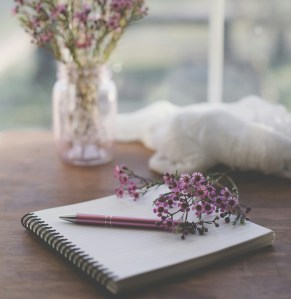
Journaling is an effective form of self-care and doesn’t require an expensive journal or pen, no matter what someone tries to sell you. (Photo by Sixteen Miles Out on Unsplash)
Here are less expensive options that I feel align more closely with the true meaning of self-care: * pausing during the day to take a few mindful breaths; * noticing where you are (“Right now, I am in the kitchen doing the dishes, feeling the warm water and slipperiness of the soap on my hands”) to help calm racing thoughts; * making a decision to choose a more nourishing food, eating slowly, savoring each bite; * decreasing/eliminating alcohol — substitute a drink that looks festive (sprig of rosemary or a skewered piece of fruit added to sparkling water); * staying consistent with exercise, or if time is squeezed, sticking in extra movement whereever you can (like doing 5 squats every time you go to the bathroom or a short yoga session right before bed); *practicing gratitude, and if that’s hard, just finding something to appreciate.
And of course, taking time for a brief meditation whenever you can.
I think you get the idea.
Holiday self-care is not about buying things. It’s not about practicing an Instagram or TikTok version of indulgence. There are no photos to post and you don’t need a manual for it to be beneficial.
It is taking a break to drop down out of your thoughts and into the present moment. Be kind to your body and mind, get enough sleep and exercise to make yourself feel good. And importantly: release expectations of what you think the holiday should look like, how people should act, what you should be able to accomplish, even how you should feel about it. Find appreciation for whatever is going well.
After last week’s post about writing out your stressors, I wanted to follow up with something positive so that we’re not left thinking about all the rough stuff that we have to deal with.
And how better to do that than by counting your blessings? Ok, so I realize that sometimes it’s not so easy to get excited about a great cup of coffee or the fact that it’s almost Friday when you are drowning under a pile of bills or dreading the arrival of combatative relatives.
But part of a resistance to gratitude, at least as far as I’ve experienced it, is feeling that it’s forced. I’ve written a number of posts about this—seems like I hit on this topic at least once a year—and guess what? It’s time for this year’s version.
This week, I’m posting on the magic of gratitude again, but this time for the recalcitrant ‘gratituder’. Full disclosure: sometimes that’s me.
When gratitude doesn’t come easily then maybe we just need to reinterpret how we view gratitude and what it expects of us.
And that can be achieved by switching out the term “gratitude” with “appreciation”.
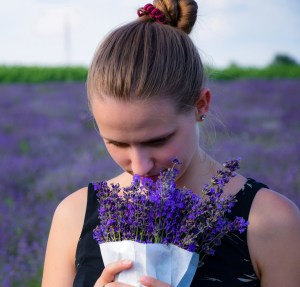
Appreciating the glorious scent of a bunch of lavender? Yep, that’s gratitude! (Photo by Richárd Ecsedi on Unsplash)
That’s it. You don’t have to do anything else. Looking at a sunset? Just appreciate the beautiful colors—no need to “wallow in gratitude” about it. You have a cup of coffee? Just appreciate that you’ve got that cup of coffee warming your hands.
Sounds too simple? It is simple and that’s why I love this. Because thinking of it as appreciation rather than GRATITUDE takes some pressure off. All of a sudden, there is a whole world of things that we can appreciate without feeling like we need to crawl on our knees to be grateful for them.
And of course, the silly little truth about this is that appreciation IS gratitude. No matter what label you place on it, it gets us to the same place. It’s quite beautiful how suddenly we find that we can be appreciative, meaning we can be grateful for the little things in our lives without a need to force anything.
One of the posts I wrote about this included the realization that it can be the little things in life (for instance, being able to walk around pain-free after a tweaked muscle heals) that mean so much for our quality of life. And that is a very important thing indeed.
I encourage you to try it out this week: look around and see how many things you can genuinely appreciate, no gratitude required. 😉
I have been stressed lately, which is a bummer because this year I really wanted to relax and enjoy the holiday season. But once again, it seems like the year has some zingers left for the final months of 2024.
Instead of writing about them in a post, I decided to write them down…and I was surprised by how many stressors had built up.
I made my list carefully, organizing it by time periods: first, I wrote down the things that had been nagging me all year or longer. Stuff like constant increases in rent and cost-of-living. These were exerting continuous pressure on my well-being.
“Dear Santa, please don’t bring me any more stress. I’m good for this year.” (Photo by Mike Arney on Unsplash)
Second, I wrote down things that seemed to have happened in the second half of the year and had a large impact, like my father’s death and experiencing frequent visual migraine auras.
Third, I got more granular and wrote about the things I was experiencing on a daily basis. Like feeling that my words were misunderstood or having to go through the rigamarole of tracking down a package that hadn’t arrived—these are things that work themselves out in a relatively short period of time but are stressful in the moment.
Why bother listing all this? Because it helps sort things out. I get perspective on exactly what’s going on in my life. Without that, it’s like someone throwing a huge blanket over you—suddenly it’s dark and you feel smothered. And that feeling of overwhelm elicits a lot of anxiety.
And once I had started the lists, I considered how I was reacting to these stressors. For example, since my father’s death I had not given myself the opportunity to grieve, not even during the funeral. There were so many other concerns that it didn’t seem like it was “the right time”.
So over the last two weeks, I gave myself the space to cry. If I hadn’t stopped to consider what was actually going on, I might have tried to soldier on and pushed away how much it hurt. I had been affected by not only his loss, but also by how his gentle nature meant he didn’t push back against forces that led him to forsake his own passions, and knowing that compounded my pain.
Ah, here comes that word again: PERSPECTIVE. You really don’t get the whole view until you step back and quietly observe. (Photo by Brigitta Schneiter on Unsplash)
But the reactions don’t have to be as heavy as that. I also noticed that I had been doing a lot of sighing this year, something that is associated with stress and anxiety. Even my body was trying to tell me to take a break.
Writing out the lists gave me a chance to acknowledge what I was already feeling, and pushed me to evaluate whether what I was doing to relieve my stress levels was effective enough for what was going on.
It’s important to note that the purpose of writing up these lists is not to wallow in misery! Everyone has stress of some kind and I’m not unique in that, nor am I trying to make this a bigger thing than it is.
The fact is, some stressors happen to me and some I impose upon myself (unrealistic expectations, perhaps?). It is only when I am able to review them that I can determine which is which, and then take appropriate measures to alleviate whatever pressures I can.
Yes, revenge is not a nice word. But if you’re having “that kind of a day” it just might offer you the kick in the pants that you need.
Here’s an example: last week was hectic for me. There were additional work demands on top of which popped up all sorts of fires that I needed to put out. Things were not going smoothly, I missed out on exercise, wasn’t sleeping well, got a letter of rent increase, had an upset stomach—all of which were dragging me into a funk.
With all the negative things coming at me, I lost my emotional footing.
So…I decided to take revenge on the bad news, work emergencies and everything else.
And I was going to do it by not letting it affect me. I even wrote “revenge” on a sticky note and put it up on my computer monitor (NOT at work! At home, where it’s easier to explain myself).
Just say “NO” to allowing the negatives in life to run you ragged. You show ’em! (Photo by Jon Tyson on Unsplash)
Like I mentioned at the top of the post, revenge brings with it all sorts of negative connotations. It’s kind of like giving in to the “dark side” and using your anger, frustration, despair and whatnot to overcome you. I’m NOT advocating for that.
But there is a certain fire and focus that the concept of revenge embodies…yes, we can call it passion, but I’m not in the mood for that. So I’ll stick with simple revenge with the understanding that sometimes, little rebels that we are, we will do exactly the opposite of what the situations are drawing out of us. Just because.
Freak out? No, you bully, watch me remain calm. Heart starts racing? No no no, I soothe myself with deep breaths and extended exhales. Scary thoughts fluttering wildly in my head? Nope, I bring my attention down to my feet and seat, settling down into where I am now.
No temporary wrinkles are going to ruffle me. And I know that all these things are TEMPORARY. This might be fierce defiance that I’m dipping into, like a recalcitrant toddler, but if it works, it works.
~~~~~~~~~~~~~~~~~~~~
This is probably not what the great teachers of mindfulness had in mind…but, ehh, today I’m not playing nice.
Since I’ve found my stress levels higher this year, I’ve been playing with ways to quickly calm myself down.
Here’s one that I’ve been using lately. It’s very simple and involves a basic visualization, but has also been effective in grounding me fast.
And it goes like this…
Sit comfortably on a stable seat with a dignified upright posture, not too rigid, not too loose. Close the eyes or, if you prefer, soften your gaze with eyes cast downwards.
Then start slowing your breath, deepening your inhale and extending your exhale. Not focusing on a particular part of the breath cycle, but more on your entire body, noticing it rock with the breath, feeling it settle with every exhale.
As this becomes comfortable, start visualizing the expansion and contraction of your body, as if the breath were a hollowing out of your insides. Imagine that inside you there is a space like a balloon. And the inhale is an inflation of the balloon, with the exhale a gentle relaxation of that stretch.
No need to imagine specifics about the balloon, what’s important is to notice the stretch and an opening inside as the air flows in, the expansion releasing muscles that might be tight from stress. And then, as the air flows out, notice the softening and relaxation of the body.
As you continue the inhale and exhale, feel the lightening of the body as it expands, followed by the gentle sinking as it contracts. See if you can notice yourself lift off as you breathe in, as if you were filling up with helium. But then settle into your seat as you breath out.
Continue like this, noticing yourself get progressively lighter, so that when you settle with the exhales, you still maintain some bouyancy.
This type of breathing meditation helps me “lighten up” when I feel overwhelmed, like I’m getting crushed by whatever the stressor is. Putting focus on the body keeps me out of my head and the deep breaths are soothing.
It’s been a very weird few weeks for me. My stress levels have been climbing, and while I can kind of, sort of point to certain anxiety-provoking events that might be responsible…there’s nothing truly significant that would elicit this type of response.
Regardless, I’ve been spending more time in the “higher strata” of myself, and I don’t mean this in a good sense. Another way of putting it is that I’m all up in my own head, bouncing around and being pummeled by all sorts of thoughts, expectations, fears, unreasonable beliefs and the like.
Usually I know when this is happening, but this time I was too preoccupied with the worries of those around me that I didn’t notice myself drift up and stake a camp in the swamp of my mind.
Even my meditations tended to get stuck up there. Time to rappel down.
I get myself down this way: first by acknowledging the mess that I’m dealing with in my head, the rainstorm whipping up swirling thoughts. Not all my concerns are unreasonable, but they are pointless to get hung up on in this moment.
Next, I focus on the noise on the street outside (there is always noise on our street, but the longer I listen, the greater chance that I’ll hear a bird or other wildlife sounds). I bring my attention out to the expanse around me—getting out of the cramped space between my ears.
That’s a nice break. But I can’t ignore myself forever. So I feel into the sensations on my face: the feeling of the air (hot or cool), noticing the weight of my glasses on my nose, perhaps an itch on the scalp or cheek.
And here I go, rappeling down to a place where I can ground myself and return to the present moment. (Photo by Ben Kitching on Unsplash)
Then I drop down to my neck and shoulders, giving them a roll as I go, and then towards my chest. Here I pause and bring focus to my breathing. Usually that results in an automatic slowing of the breath, as I notice my ribs expand and contract.
But after a brief stay I rappel down and out more quickly, into my hands and feet. Noticing how my hands feel on whatever surface they lie. And how my feet feel against the earth.
I imagine that my feet are part of the bedrock, joining the rest of the Earth’s crust. Connected and solid, forming a stable base.
And from down here, I look back up to where those clouds around my head were bringing furious rain, and they seem so far away. I’m peaceful and unruffled here on the ground. Down here is what’s really happening in the present, without being affected by the past and future. And what’s happening is just what’s happening, neither good nor bad.
Taking a deep breath, maybe a yawn, I stretch my body out the way I do when waking from a long sleep, enjoying the slight shiver of the muscles.
And then, on to the rest of my day a little bit calmer.
This is a time-sensitive opportunity for US residents!
NOTE: all links are described at the bottom of this post.
I unexpectedly came across a great opportunity for those of you interested in taking a master class in stress management and also participating in a large research study.
Dr. Judith Moskowitz, a research psychologist at Northwestern University’s Feinberg School of Medicine, is recruiting 20,000 participants for an online, self-guided, positive emotions study/class. The course will teach eight science-backed stress reduction skills over 5 weeks, with the 6th week being a practice and review period (the entire length of the study will be 12 weeks). The skills being taught involve the following (from this National Public Radio (NPR) article):
Positive Events
Savoring
Gratitude
Daily Mindfulness
Positive Reappraisal
Self-Compassion
Personal Strengths
Attainable Goals
Additionally, NPR has an accompanying 5-week newsletter series called Stress Less that will help reinforce these skills. Signing up for that can be done here.
More information and the registration link can be found on Dr. Moskowitz’s site where she describes what’s involved. To participate, you must be over the age of 18, living in the United States and have reliable internet connectivity as this is 100% online. There will be questionnaires to complete about your emotional states at the beginning and end of the study, and you will get nightly homework.
Consistency is the way to grow positive skills and behaviors, which is why I’m looking forward to participating in this class. (Photo by Jane Thomson on Unsplash)
While the “nightly homework” thing might seem like too much, I can personally attest to the fact that consistency is what strengthens skills and habits. You keep yourself accountable by committing to a daily practice. For me, knowing that a course is set up for working on a little every day is actually quite reassuring—I know I’m more likely to get results.
But do these skills really work in reducing stress? Dr. Moskowitz herself said that she was initially skeptical that skills like these would make an appreciable difference, but years of positive research results changed her mind. The idea is to train your brain to experience good feelings.
I love programs like this because the only cost is a little effort on your part. If it doesn’t seem to work for you, you haven’t lost much, but if it works, the rewards can be life-changing.
As a cancer survivor with anxious tendencies, I find this to be a win-win proposition. I have signed up, as have several members of my family. If you are interested, don’t wait! The study is limited to the first 20,000 registrants and when the original NPR story came out on Monday, September 30th, the response was so overwhelming that it effectively shut the regstration site down.
Registration resumed on October 2nd and as far as I know there are still spaces available.
But the enthusiastic initial response to the invitation to join in the research was quite telling. So many of us are looking for a way to reduce our stress levels and bring more positivity into our lives. This challenge is one more way to do that.
Following on the heels of my Elle Macpherson post last week, I wanted to fill in some missing info…
To back up, former supermodel Elle Macpherson revealed that she took the holistic route when deciding to treat her breast cancer in 2017. However, most of the news stories that reported and offered opinions on her choices left out some critical information, as noted by this article in The Guardian (“Crucial information missing in Elle Macpherson breast cancer story, experts warn“). In this case, that information makes a big difference.
While it seems that Elle’s cancer was HER2-receptor positive, which suggests a more aggressive cancer, it was considered “non-invasive”, meaning it was contained within the mammary ducts. Often, this is referred to DCIS, or Ductal Carcinoma In Situ, and at this point those of us with personal knowledge of the disease will knowingly go, “OOooooooh.”
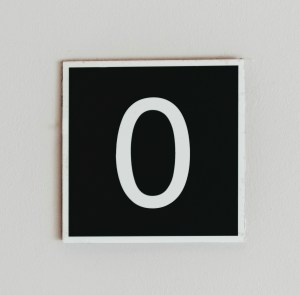
This is basically a “precancerous” mass of cells and often the treatments are more conservative. It’s considered stage 0. Yes, it becomes more dangerous if you do nothing, but clearly Elle did something: she had it removed.
DCIS is a stage 0 cancer, which doesn’t necessitate the most aggressive treatment. (Photo by Bernard Hermant on Unsplash)
Beyond that, there are other conventional treatments offered, depending on how aggressively you want to go. This introduces the issue of potential overtreatment, which is gaining more attention among physicians and the public. It’s easy to throw the kitchen sink at anything that looks like cancer, but that increases the chances that patients unnecessarily experience damaging side effects. Not everyone needs to be smacked that hard with treatment.
So, given that Elle’s cancer was DCIS, her holistic treatment starts looking less extreme. In perspective, for stage 0, a radical mastectomy topped off with chemotherapy and other treatments leans towards overkill with minimal benefits, potentially affecting quality of life. So this is less about the types of Elle’s holistic treatments and much more about her cancer not requiring the same level of aggressive action as stage 1+ tumors.
However, very few of the news stories mentioned this. As a matter of fact, my own blog post last week might have confused the issue—I was writing without having all the facts. This underscores the importance of learning as much about your cancer as you can and understanding that your version of the disease may be very different from that of a friend with cancer.
In light of this, the pile-on regarding Elle’s treatment seems unfair…but only as it regards her personal situation. Because all the opinion pieces that came out against her choices, including my post, did so for a critical reason: that Elle’s story (“follow your heart”) may turn a cancer patient away from much-needed and beneficial treatment that can prolong their lives.
Get the facts, talk to your team, understand what you’re up against and what your risks are—yes, meditate, pray, exercise, change your diet. But don’t try to wish your cancer away.
~~~~~~~~~~~~~~~~~~~~
To clarify, Elle did indeed decline even less radical treatments such as endocrine therapy, so one could argue that she’s still taking a risk. We don’t have a crystal ball to determine whether this was the wisest choice, Elle believed it was the right choice for her.
Supermodel Elle Macpherson recently made the news with an interview with the Australian Women’s Weekly magazine when she revealed her breast cancer diagnosis.
She was diagnosed in 2017 (as I was!), so the fact that she’s here and talking about it suggests that her treatment worked.
But what was her treatment? According to the article, following diagnosis Elle consulted with 32 doctors (and experts, although it’s unclear in what) and ultimately decided to follow a holistic treatment path. In her own words, “an intuitive, heart-led, holistic approach”.
She decided to forego a mastectomy in favor of a lumpectomy (as I also did) but also dispensed with the conventional chemotherapy, radiation and hormone therapy (I went the conventional route).
So let me clarify some things here: Elle had the lump removed. If the cancer had not spread (which presumably it hadn’t) AND no rogue cancer cells had gotten out AND the surgeon confirmed “clear margins” upon excision of the tumor, it’s certainly possible that all evidence of the cancer was removed from Elle’s body with that surgery.
As we survivors know, everyone’s cancer is different. That’s why we discourage comparing tumors or offering advice. What works for one person may not for another because so much depends on the state of the individual…and probably on a lot of other factors that we are not even aware of, even with present day advances in cancer treatment.
Elle has even stated that her treatment is not for everyone. Who knows, she might have said this for legal reasons…because you can see what’s going to happen. While Elle, as a former supermodel, businesswoman, etc., might have access to whatever specialists and level of care she desires, most of us will not.
Do you feel lucky? Rejecting conventional cancer treatments in favor of clinically unproven ones can be a big gamble. (Photo by Chris Liverani on Unsplash)
My concern is that a newly-diagnosed breast cancer patient, fearful of the admittedly-harsh treatments that modern medicine offers, might decide to take Elle’s path (“she did it so I can too!”). But unless this person is independently wealthy or otherwise connected, they will have to cobble together a questionable plan with minimal support, and possibly fall prey to unscrupulous players looking to make a buck out of someone’s desperation.
And in these days of growing suspicion of science and the advice of doctors—brought on by pandemic-related missteps or perceived draconian measures—the chance of patients rejecting well-worn treatments is even more likely. Statistically, this would result in more lives lost to the disease.
When I made my own treatment choices, I didn’t go with the harshest stuff that my oncologist offered, opting for very effective (and, yes, cardiotoxic) Herceptin immunotherapy instead of lobbying my insurance to cover the even-more-effective (but even more toxic) Perjeta for my HER2+ cancer. I also had to cut my hormone therapy short by a number of years due to how it affected my ability to exercise, which has also been shown to have a strong effect on preventing cancer recurrence. These were measured choices, as it’s clear that Elle’s were.
At the same time, in the back of my mind I know I can’t say I did everything I could to blast my cancer into submission. But I do feel that taking everything into consideration, I did enough. My oncologist agrees.
As far as Elle’s treatment is concerned…I also did a number of things that she did, including meditation, exercise, therapy (our cancer center was very supportive of complementary therapies) and more. I cannot say how much conventional treatments vs. complementary ones contributed to my remission, but I assume each played a role. And the combination gave me peace of mind, which I would not have had, had I chosen only alternative therapies.
Ultimately, I hope we get to the point where we can eliminate the most toxic treatments and heal ourselves more gently. Ideally, we’d even prevent cancer. Huge strides have been made in cancer treatment, but we are not there yet. Every time we decline a proven treatment, we roll the dice. I’m hoping that Elle’s story does not unnecessarily put people with fewer resources at risk.