Dampening the Echoes of the Past

(Title image: Photo by Anastasiya Badun on Unsplash)

The Advent season is a perfect time for introspection and mindfulness. For me, 2023 has had challenges and as a result has served as a proving ground for different calming techniques.

One of the things I’ve grappled with, usually in the wee hours of morning, is the persistence of uncomfortable memories from the past.

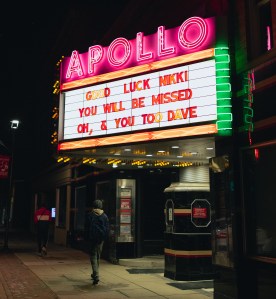
It reminds me of a one-panel comic that I saw some time ago: a person lying in bed, eyes wide, a theater marquis over their head that reads in bright lights: PLAYING AT 3AM! EVERYTHING YOU SAID AT THE PARTY LAST NIGHT! [A cartoon in the same general vein by Hilary Fitzgerald Campbell appeared in The New Yorker on Jan 21, 2019 (#11 of 15), but I’m not posting it here because they might be touchy about copyright infringement.]

In the middle of the night, being hit with an glaring memory of something that sends your stress levels rocketing…goodbye sleep.
(Photo by Gregory Brainard on Unsplash)

How many of us have had a similar experience? I occasionally find myself tortured by things I said or did even decades ago. DECADES! Or they could have happened yesterday. A simple image can trigger shame, embarrassment or regret that feels real and vivid and, yes, while this generally happens at night for me, it’s certainly not limited to that time.

How odd that we give the past so much power over us when it’s not even real anymore. While we’re shaped by our experiences, allowing ourselves to be haunted by them serves no purpose, especially not once we’ve learned whatever we needed to from them.

Soooo, one early morning in the darkness I found a way to add some perspective to the memories that bully me: I started thinking of them as echoes, wispy harmless reminders of what happened.

And there in bed at 3am, I am safe. My body is not in the imagined situation, it’s under the covers, lying on my mattress. Here is where mindfulness is so helpful because it brings me back to the present. The past is echoing, trying to get my attention. But the more aware I am of where I am in space currently, the easier it is to step back and simply observe the echoes, watching them fade away.

I’m making this sound simple, I know–as with all the things that bounce around inside our heads, taming a stressful memory is not necessarily easy. But identifying it as just an echo has been remarkably helpful for me. It has provided a different viewing angle that enabled my perspective to shift.

Echo…echo…echo…

Thinking of thoughts as echoes can dispell them, but simultaneously focusing on a sense helps ground us in reality.
(Photo by Mariana Rascão on Unsplash)

I’m not there now, those other people are not there now, that event is not happening now–just because I remember it so vividly doesn’t mean that anyone else does. And most of the time, I don’t remember it either. Only during the limited, wee-morning-hour viewing window during which it appears because I’m susceptible to the tickle of anxiety.

The senses can bring me back to reality. Opening the eyes, feeling where my body contacts the surface that it’s on, hearing the hum of a fan or sound machine. Anything occuring in the present anchors me to what’s going on now.

And in the present, that echo cannot hurt me because it’s just an airy thought.

Of course, this all comes back to the basic idea that the more we practice presence, the easier it will be to minimize the impact of thoughts that unsettle us. It may take some exploration to find what works best for you, but in the end, being patient and consistent will be the best way to calm your mind and bring you back to what is real at the moment.

A Different Take on Advent

(Title image: Photo by Niklas Ohlrogge on Unsplash)

For anyone here who has celebrated Advent, you know it as the period of time comprised of the four Sundays (and the weekdays in between) leading up to Christmas in preparation for the arrival of the Messiah. The 2023 season of Advent starts this coming Sunday, December 3rd. [Edit: Many consider Advent to run from Dec 1 – Dec 24, and that suits the purpose of this post also.]

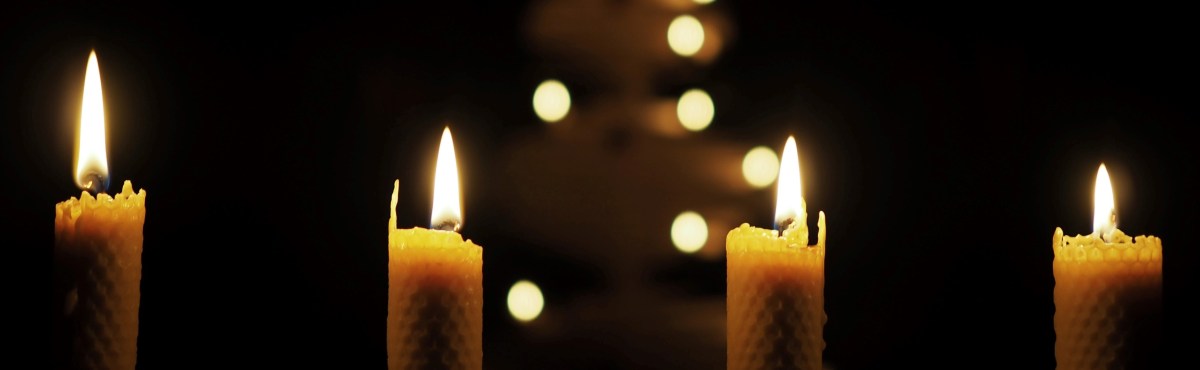
Advent has historically been observed by Christian religious dominations and is marked by the lighting of four candles, one for each Sunday. But it is most famously known by everyone as the four or so weeks before Christmas when you “give up” something.

Advent wreath with four colored candles representing hope, peace, joy and love, one lit every Sunday of Advent. The white candle can be lit on Christmas Eve or Christmas.
(Photo by KaLisa Veer on Unsplash)

Growing up, we’d usually give up sweets during this time, only being allowed a little something each Sunday, with the idea that we would appreciate the candies and cakes at Christmas all the more.

But you know what? I don’t really think it had that effect. That was something geared more towards our stomachs than our souls. Sure, we’d look forward to finally indulging in holiday goodies…but that was about it.

And as the years went on and treats played an ever-decreasing role in my life, I flailed around looking for something else to deny myself. Let’s face it, I was missing the point.

More recently, I’ve turned Advent into a different kind of spiritual opportunity.

So I’d like to offer a most positive way of observing those last weeks of the year for everyone, regardless of religious affiliation. And it has nothing to do with depriving yourself of anything.

Rather, it’s a blissful gift for yourself…and your soul, if you will.

Not everyone lives where the winter weather is warm enough to pick up trash on the beach…but I’m willing to bet that most of us live in a place where we can lend a hand to a charitable organization.
(Photo by Brian Yurasits on Unsplash)

For this Advent, I invite you to commit to several weeks of establishing a new thoughtful behavior. This can look different for everyone:

Perhaps, it’s time to set aside a few minutes in prayer and contemplation, as it suits your own spiritual tradition.

Perhaps it’s an opportunity to commit to volunteering for a charity, giving to others without expecting anything in return.

Perhaps it’s a time to establish a simple meditation practice, a few minutes a day at a specified time.

Perhaps it’s an opportunity to practice daily mindfulness, say, when you make your morning coffee or tea, truly focusing on the process and what the items feel like in your hands.

Perhaps, it’s time to think before reacting, pausing before getting angry and saying something hurtful.

This Advent might be the perfect opportunity to establish a practice of mindful contemplation.
(Photo by Ümit Bulut on Unsplash)

Perhaps this is the time to go through your belongings, a little every day, and gather up what you can give to others in need, or discard if the item is no longer of use to anyone.

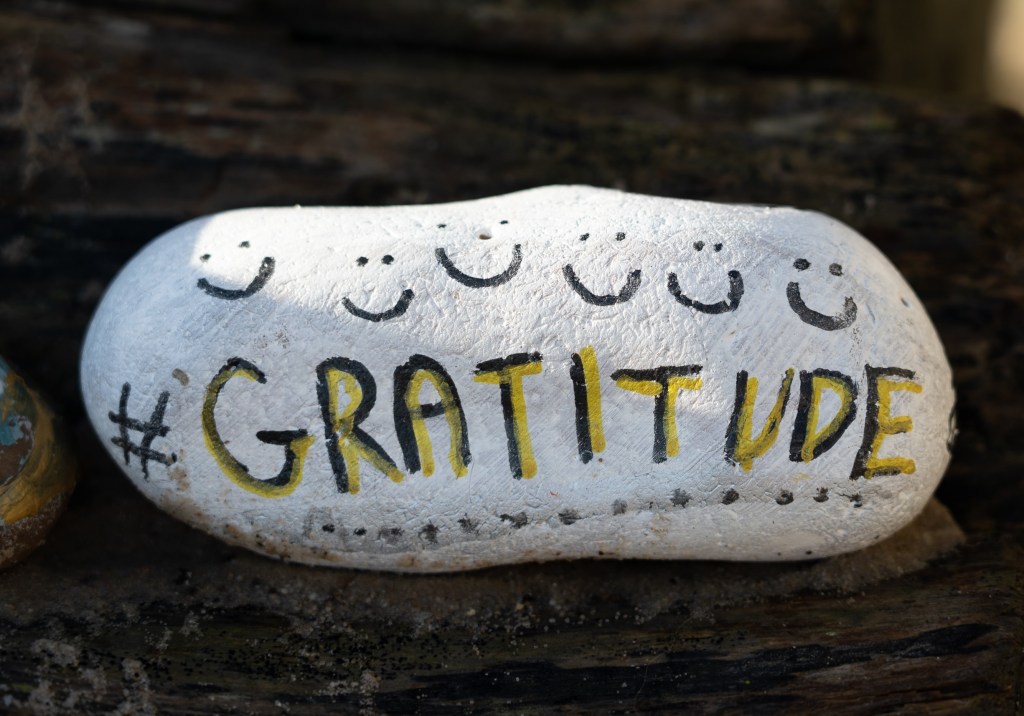
Perhaps this is time to think about all the things for which you’re grateful, starting or ending your day in this way. And if there’s nothing that you can be grateful about, then consider what you’re grateful that is *not* happening.

Choosing what to focus on for Advent can be a very mindful process in itself. And after about a month of this practice, you will emerge with a beautiful new habit.

Give it a try and I wish you a beautiful Advent season!

~~~~~~~~~~~~~~~~~~~~

Please note: I realize that there is a much deeper religious meaning of Advent for Christians, and I’m not trying to minimize that. However, in this time of hyperpolarization when we’re so focused on what sets us apart from those around us, this is a thoughtful way to share the Advent tradition with everyone, with love. And isn’t that the spirit of Christmas?

Even When There’s Nothing to be Grateful for…There’s Something to be Grateful for

(Title image: Photo by Nathan Dumlao on Unsplash)

With the Thanksgiving holiday coming up in the United States this week, I wanted to offer you a funny little story to think about when you feel there’s little to be grateful for.

Although I work from home a lot these days, I had gone in to the office a few days ago to get some things done onsite. It was a hectic day and I ended up leaving later than I expect, and as I walked to the busstop, I was carrying more items than usual, including an umbrella for the sun, a large zippered bag for my water bottle and food I hadn’t had time to eat and held my cell phone connected to a charger in one hand. I was loaded up!

Luckily my purse is backpack-style so I didn’t need to carry it in my hands. And my office keys were on my ID badge, which hung around my neck.

All packed up and ready to go, right?
(Photo by Alexandra Tran on Unsplash)

On the way to the bus, I was preoccupied with things that I still needed to do and concerns about issues at home.

The bus arrived, I got on and put my belongings on the floor at my feet, burying myself in a game on my phone.

NOTHING seemed out of the ordinary, save for someone who sat down beside me and seemed to press against me a bit. But, hey, it’s the bus and there were a lot of people on so it isn’t a completely comfortable ride. That’s okay.

Besides, the guy moved to another seat as people got off on their stops.

By the time we got to my stop, I prepared to get off by collecting my items. And my heart missed a beat: my purse was not there.

I did a double-take. I looked all around my seat. Nope, no purse.

My head started to swim because it seemed obvious that someone had taken it. I rushed over to the driver and told him that I thought my purse had been stolen. He listen to my story, called the dispatch and marked the security video, explaining that I should fill out a police report and let them know the time and bus number…

My mind was a blur as I tried to remember everything that I had in my purse.
(Photo by Nick Noel on Unsplash)

I dutifully wrote down his instructions but I was already thinking of the hours of work that getting my cards cancelled, obtaining a new drivers license, getting new car, apartment and mailbox keys, and everything else would require.

“And now THIS on top of everything else!” I thought to myself as I got off the bus and walked home, feeling dejected and spent.

Before calling the police department I decided to call my co-worker to check my office in case I’d somehow left my purse there.

But I knew that was hopeless. There is no way that I would have walked out of the office without putting on my backpack purse, no way that I would have not felt it on my back as I stood waiting for the bus and absolutely no way that I would not have noticed that it wasn’t there when I put all my belongings by my feet on the bus.

I was wrong.

My co-worker told me that it was on the floor under my desk.

Behold the power of mindlessness! I have no idea how I could have missed all those cues that alert me to presence or absence of my purse, especially when it’s the most important item that I carry. But I did.

Gratitude hides out in the unlikeliest of places.
(Photo by Nick Fewings on Unsplash)

However, that’s not the point of this post. The point of this post is, suddenly I did not need to call the police department, cancel my credit and debit cards, stand in line to get a new driver’s license, sit and recall everything that I had in my purse and wallet and anything else that I would have spent hours doing.

And I felt a tidal wave of gratitude wash over me, one that would have not experienced if I hadn’t spent the last 20 minutes convinced that someone had stolen one of my most important belongings.

That gratitude came out of nowhere. And it made me think.

If I could muster such a powerful feeling of thankfulness when I realized that something bad that I was sure happened actually hadn’t happened, maybe I could find a way to generate that same feeling without needing to experience the sense of doom beforehand?

In other words, I can be thankful for all the bad things that don’t happen even if there aren’t great things going on at the time.

So this Thanksgiving, my wish for you is to be able to experience sincere gratitude without having to lose your wallet and then find it.

Happy Thanksgiving!

5-Minute Meditation: Lovingkindness with Jon Kabat-Zinn [VIDEO]

(Title image: Photo by Mei-Ling Mirow on Unsplash)

Since we’re in the season of gratitude and mindfulness, it’s a great time to post about Dr. Jon Kabat-Zinn, Professor Emeritus of Medicine of the UMass Medical School. Among other things, he is the founder of the Mindfulness-Based Stress Reduction (MBSR) program, which I had the privilege of taking in early 2018.

For this week’s post, I’m including a short, 5-minute guided video meditation by Dr. Kabat-Zinn that was presented as part of his class on MasterClass.com (I was fortunate enough to take this class also). While the subscription to MasterClass is somewhat pricey, the meditation below is free.

The video requires little time investment and will pay back rewards in spades. I hope you enjoy!

This is a beautiful mindfulness meditation for right now.

There are a number of other meditations and talks by him available on YouTube. If you currently don’t have a mindfulness meditation practice, I encourage you to give yourself a gift by looking him up. His videos are the perfect place to start.

“Left Behind”: An Unanticipated Side Effect of Cancer

(Title image: Photo by Denys Argyriou on Unsplash)

Apologies because this might sound like a rant but this topic has been on my mind a lot lately.

When you’re diagnosed with cancer, you learn about the many side effects of treatments.

You will be informed about the physical and even psychological effects that cancer patients deal with, but there are also considerable financial repercussions. Patients may struggle with hospital bills: some lose their insurance coverage, others might never have had any to begin with, those who have coverage may find that it’s insufficient. It’s not uncommon to hear how cancer has driven survivors and their families into bankruptcy.

On top of that, cancer can do a number on your career aspirations for years to come.

Money issues are one of the side effects of cancer that don’t get a lot of airtime…but really should.
(Photo by Alexander Grey on Unsplash)

In case you think that it’s uncool to complain about one’s career in the face of having survived cancer, let me get this out of the way: being a cancer survivor is a privilege. I’ve written before about how acutely aware I am that I have lasted longer than many cancer patients.

But as the effectiveness of cancer treatments improves, the number of cancer survivors increases and long-term repercussions become a more and more serious consideration, particularly how they affect ongoing quality of life.

For people who are still working out their careers, cancer can derail progress because it plants a huge stop sign in their path.

Think of going into the chemo infusion room: the days leading up to it entail appointments, port placement, purchasing supplies (anti-emetics, anyone?) and in general prepping for being out of commission about a week.

It’s not the time to focus on stressful work deadlines (and most sincere condolences to any patient who has to do that!).

Ironically, as much as I feared infusions, they actually gave me an excuse to focus on myself instead of worrying about everyone else. I posted about that here somewhat sadly that chemo allowed me to rest without feeling guilty.

It was at that point that I’d realized I’d been pushing myself, always expecting more and not feeling like I was measuring up. Chemo gave me a break from that. Which was good…kind of…

But after chemo and radiation came endocrine therapy, so just as I was winding down from one set of side effects, up popped another.

Right? RIGHT?
(Photo by Drew Beamer on Unsplash)

And all those plans I’d had for myself were put off again and again. Career goals seemed more out of reach because my timeline had shifted.

Well, I’m not stupid, so I changed my career goals. Makes sense, right? Cancer provided a different perspective on things and motivated me in another direction.

But in the wake of cancer treatment, I feel like I’m walking in cement shoes…if it’s not one thing it’s another. I got off aromatase inhibitors (early) and then realized that I was having memory and focus issues. Whether Cancer Related Cognitive Impairment (CRCI) or menopause-driven brain fog, all of a sudden I’m dealing with something else.

It feels as though the train to prosperity has left the station and I was just a little too late to catch it.

Great.

Right now I’m looking at sky-rocketing costs-of-living in a part of the country that literally got expensive around me. Instead of moving up in the world, my family and I are desperately searching for less pricey housing which will put us in worse conditions and a longer commute to work.

And at age 57, when most of my friends are looking at enjoying retirement in the years to come, planning for what they’ll do in their golden years, I’m trying to reeducate myself, shifting into a career that doesn’t make much use of previous work experience.

And it feel exhausting. Sometimes I want to cry.

I want to believe this, I really do. But I don’t think that there’s a reward for surviving cancer beyond simply surviving cancer.
(Photo by Nik on Unsplash)

Yes, I’m happy to be alive. But no, this was not the way I thought things would go. When initially I was told that I had a decent chance of surviving for five years, that was all I could think about. In fact, that was all that mattered.

I wasn’t thinking about the fact that if I managed to live through this, I’d still need to find a way to make a living. And the interruption that was cancer could do a number on that.

At this point, I need to stress that my intention is *not* to try to scare cancer patients into dreading survivorship. Goodness knows, there are enough things to navigate within the cancer experience as relate to the usual treatments that will take your energy and attention.

I wish nothing less for you than 100% remission and many years ahead to enjoy your “survivor” label.

At the same time, I encourage you to remain present and mindful of the fact that you might have to pivot if you’re not already well-established in your career. If things start to change in a direction that’s southward of what you expected, be patient and readjust your expectations. Nuture acceptance and keep an eye on how you can put yourself in a good position to meet the future. And be kind to yourself.

I’m still working on it.

Two Anxieties but One Breath

So, something occurred to me as I was dealing with stress about a work project…and then got news of changes that may require us to quickly move from the place in which we’ve lived for over ten years.

I am experiencing two different textures of anxieties. I’ve heard people discuss chronic and acute anxiety, but I would characterize the way I experience anxiety differently.

The first anxiety may wear you down but won’t require a complete change in your life.
Photo by Aiony Haust on Unsplash

The first is anxiety about what may happen or anxiety about what has taken place in the past and I can’t change. That encompasses stressful events that you need to work through, like a job-related project, which requires holding on and managing. It’s more of a chronic type of stress even though it might be time-limited. There are things out of my control or, in the case or what has already taken place, there’s no going back. It doesn’t qualify as life-changing as it may intensify and relax depending on conditions.

The second, however, is anxiety about something that *is* life changing. Those of us who have been handed a cancer diagnosis know what it feels like. It means that the future will look dramatically different from what we expected it be. Other examples are a death of a loved one or losing everything in a natural disaster. A sudden involuntary change in your living situation. This requires letting go and radically recalculating what you’ve become very used to. It can be very difficult to do, especially for those of us who like stability in our lives.

The first anxiety is exhausting. The second is terrifying. Having experienced both, I can definitively state that the first anxiety pales in comparison to the second. In fact, in the face of the second anxiety we may actually let go of the first completely and wonder why it ever bothered us.

The second anxiety is more intense and will alter life as you currently know it.
Photo by Ann on Unsplash

At the same time, as terrible as it may be, the second anxiety offers us a perspective and clarity that we would be hard pressed to accept as quickly any other way.

I do not wish either of these anxieties on anyone, but if there’s a bright side to them it’s that the same type of mindfulness practice that helps us deal with the anxiety of the first kind will also help when the expectation-smashing heaviness of the second anxiety hits.

Although you may still wake in the middle of the night, heart racing and wishing things had not changed, a consistent mindfulness meditation practice will provide you with the tools to smooth the jagged edges of rumination and fear, slowing the breathing and with it the heart rate, even in the presence of frightening thoughts.

~~~~~~~~~~~~~~~~~~~~~~~

Of course, since this is a mindfulness blog in addition to being cancer-related, I cannot resist talking about one of the most effective techniques that I’ve found for calming myself: belly breathing.

Start by simply breathing deeply into the belly, as anxiety often results in shallow breaths. The deeper the inhale, the more air you will have for the exhale – try matching inhales and exhales in length. It won’t happen immediately. Give it time.

Create a breathing cycle and keep going. Establish a breathing practice and stick with it.
Photo by Brett Jordan on Unsplash

Keep breathing into the belly, fully engaging the diaphragm, allowing it to drop and make space for your lungs.

As you do this, focus on the breath. The uncalm thoughts can still be there, but gently allow them to sit on the sidelines for now. I used to try to completely push them away, but they would bob back up to the surface like a balloon pulled under water, bringing the intensity of my anxiety back with it.

So let them be there…keep one eye on them if necessary but give your breath the main stage.

Once the inhales and exhales have evened out in length, insert a short pause between them. Breathe in … pause … breathe out … pause. Just a little stop to elongate the cycle. Consistently breathing into your belly.

Transition to full box breathing, where the inhales, exhales and pauses are all equal in length. If you get very comfortable doing this, for a little extra, try to make the exhales just a touch longer than the inhales.

Or if it gets tiring, simply try to make your exhales a little bit longer than your inhales and dispense with the pauses altogether.

Maintain this type of soothing, intentional breathing for a few minutes or longer, depending on how your body is responding or what your nervous system needs today.

Truly, you don’t have to do this perfectly or adhere to a specific count. Simply focusing on your breath and slowing your breathing will help immeasureably in making space for your thoughts so that you can back away a bit and survey the scene without feeling claustrophobic, no matter which anxiety you’re dealing with at the moment.

Cancer Survivorship Ain’t For Sissies

With all the focus on breast cancer during October, pushing us to be warriors and fight our way through this, the concept of survivorship can get lost in the fray.

We talk about cancer treatment and get very granular about the procedures, whether surgery, chemotherapy or radiation therapy. And those do deserve a lot of discussion as they can be difficult to endure. Some, like chemo, have an almost legendary reputation and it’s important to be able to separate fact from fiction.

After all the noise and attention associated with cancer treatment, survivorship can leave some of us feeling alone.
Photo by Atharva Tulsi on Unsplash

Consider: how many of us, upon hearing that we have breast cancer, preoccupy ourselves with worrying about what life will be like five years down the road? More likely, we’re thinking about what treatment will be like and are hoping that we’ll be around when it’s done!

But with so many women surviving breast cancer, it’s important to talk about what happens after the dust settles and you realize you’re on the other side of the treatment that you had so feared. Is it really the “other” side?

So much of my blog has been devoted to the life after cancer. After I documented my treatment journey, I turned around to get hit in the face with all the stuff that I wasn’t expecting.

One of those was endocrine therapy. Women with hormone receptor positive cancers aren’t done when the “tough stuff” is over. Tamoxifen and aromatase inhibitors are a whole new round of treatment that can affect your hair, your libido, your joints and more. Some women get hot flashes and night sweats. Some experience weight gain. And these are medications intended to be taken for a number of years.

There may be body image issues. Breast cancer surgery can leave women looking very different from their pre-cancer days. Like it or not, breasts are associated with womanhood. Whether lumpectomy or mastectomy, with or without reconstruction, there is a new normal that needs to be dealt with.

By seeking support and relating your story, you help not only others who are dealing with something similar in addition to yourself.
Photo by Ivana Cajina on Unsplash

And then cognitive issues like distractibility, loss of memory and difficulty processing concepts may come up. To make things more complicated, these may appear after treatment is in our rear view mirror and our loved ones may simply not appreciate what we’re dealing with. The bodies and minds of survivors may change in a way that they are not prepared for. Because, how do you anticipate something like this?

Survivorship does not mean that you never again have to think about cancer or its repercussions. There will be adjustments to your expectations as to how your life will be from now on. It’s important that those around you understand that just because you are done with the major cancer treatments, things might not feel familiar or normal.

So we need to be having this conversation with those around us and making opportunities for affected women to seek help and support. There is no shame in being a survivor who is also struggling. While it’s true that we are “lucky to be alive”, it does not mean that we have no right to seek a higher quality of life.

Don’t be afraid to talk about it. ❤

Don’t Take Stress Sitting Down

About a year or so before I felt a cancerous lump in my breast, I was tasked with planning an academic conference, which I’d never done before. The project was running behind schedule, procedures had changed and I felt panicky and lost.

As a result, I was working seven days a week with most workdays lasting into the night. This was in addition to having to break in the early afternoon to pick up my children from school, then continuing work from home.

Everything was a rush and I had a constant lightheaded feeling.

When you have the least time to move is when you need to move the most!
Photo by niu niu on Unsplash

Most non-work activities fell by the wayside (Cooking? Cleaning? What’s that?). But the most pivotal of these was exercise. I’d been through highly stressful situations before but always had the opportunity to work off my anxiety. This time there was none of that.

Anxiety sat like a boulder in my stomach. I could feel my brain buzzing from the stress but couldn’t do anything about it. There was SO MUCH to take care of that my work-life balance was non-existent. There was only work, and this went on for weeks. My mental well-being plummeted, sleep was filled with night sweats…and the agony of not having the time to work out magnified my anxiety.

We know how bad sitting is for you physically, but not everyone is aware of the psychological ramifications of being sedentary, especially when it comes to managing stress. I found it so ironic that after my tumor was confirmed, the doctors estimated that it had started developing a year or so prior…during the time that I felt my life falling apart.

Stress did not cause my tumor. But it didn’t help my body counter it either.

~~~~~~~~~~~~~~~~

I personally am convinced that there’s no healthier, more positive way to tame anxiety than exercise. COVID’s remote work situation demonstrated to me that I feel much saner when I can stick a workout into the middle of my day, even if it lengthens my workday a bit, and the increased blood flow helps with my mood and productivity.

There is a Zen saying: “If you don’t have time to meditate for an hour everyday, you should meditate for two hours.” I believe that this saying also holds true if you substitute the word “exercise” for “meditate”.

Find movement that you enjoy and then stick it into your day.
Photo by Ahmad Odeh on Unsplash

Obviously, I’m not suggesting that you do either for two hours. The idea is that when you are overwhelmed with responsibilities and stress, that is an indication that you need meditation AND exercise all the more.

Frankly, it’s also time to reevaluate your life priorities, but that can be difficult.

How to get more movement into your day? Based on the research* that I’ve seen, it’s best to take breaks about every half hour. That might seem impossible for some people and some work situations, but do the best you can. The last thing you need is more pressure on yourself.

Even just standing up and stretching is better than sitting glued to your seat. If you can walk around, take the long way to the bathroom. Hike up and down the stairs. Breathe deeply. Start there and you can add more later, keeping in mind that energy begets energy: the less you move, the harder it will be to get started; the more you move, the easier.

If you have time for a considerably longer break and don’t yet have an established training program, start by picking a rhythmic movement like walking, running, cycling or swimming and lose yourself in the rocking motion. Not only does that give you exercise, but the gentle back-and-forth is soothing for the nervous system.

Most importantly, make the experience a positive one.

My personal recipe for mind-happy exercise is: (1) indoor rowing (for the rhythm and cardio load), (2) strength training (with a focus on each repetition) and of course (3) yoga (for deep breathing and unwinding the stressed-out body). But these recipes will vary for every individual. What’s yours?

*I had a choice between getting my workout and meditation in or digging up these references. Guess which I chose? 😉 I’ll be back with the science in another post.

In the Midst of “Breast Cancer Pink”, Finding Stillness: A Meditation

As you’re probably aware by now, October is Breast Cancer Awareness Month. For breast cancer patients and recent survivors, seeing all that pink around can be a little stressful.

Yes, it’s important to maintain awareness that 1 out of 8 women in the United States will be diagnosed with breast cancer at some point in their lives. Those of us who have already been…well, it would be nice to forget about it once in a while.

One out of 8 is a lot of pink!
(Photo by Pawel Czerwinski on Unsplash)

So for this post, I want to offer you a very simple meditation. No prep needed.

Pause where you are right now and become still. Right where you are.

Notice how your body feels in the space that you’re inhabiting. What sensations do you feel most strongly?

The expansion and contraction of your ribcage with your breath?

The contact points of your body on the surface where it rests?

Perhaps a pesky little ache somewhere, in your joints, muscles or around an incision?

Tingling in your fingers or toes?

Are you gripping anywhere? If you notice tension somewhere in your body, very very slowly see if you can soften it. It’s okay if it doesn’t release completely – imagine that part becoming heavy and pliable.

And then see what other physical sensations make themselves known to you.

Stay with your body. There might be a lot going on in your mind right now, but that’s “up there” in your head.

Here. Stay down here.
(Photo by Tim Mossholder on Unsplash)

We are down here in your physical being. Feel the stillness that exists here, not agitated by your thoughts. It’s okay if there’s noise in your mind, like if you lived on the floor below a bustling office. All those workers up there, getting their stuff done.

You can hear them, moving about, speaking in muffled tones, keeping busy. That’s all okay. They can be there.

But we’re all hanging out in stillness down below, with distance between what’s going on here and what’s happening elsewhere. We have space.

How does it feel knowing that you have permission to be still? That you don’t need to drop everything and dash upstairs? The thoughts can wait. They’re not going anywhere. You have time.

Eventually, you’ll return to the hustle and bustle up there. But know that you can always take a break, come down into your body and sit in the stillness that is here.

~~~~~~~~~~~~~~~~~~~~~~~~~~~~

This October in particular is very busy for me. A big project at work, the holidays around the corner, prepping for guests while our apartment STILL awaits repairs. And then strange guilt that I’m not doing more yoga teaching. It’s a lot to manage in my head, all this piling on of responsibilities.

So that meditation up ^^^ there? Yeah, I needed that. ❤

Where Are You Getting Breast Cancer Info?

Since we are just at the start of October, aka Breast Cancer Awareness Month, I thought I’d go through some basics about getting information on breast cancer.

Let’s face it, as soon as you suspect that you feel a lump in your breast, feel a lump in your breast, have something funny show up on a mammogram and get called in for an ultrasound, are told that there’s something weird on the ultrasound and you need a biopsy, the biopsy reveals a tumor, as you’re in between any of the above, have a loved one go through this, or ANYTHING like the above really, you’ll have the urge to consult Dr. Google.

BE CAREFUL. When I asked my cancer surgeon about getting more info, she gave me a few websites and told me not to go anywhere else. These included:

National Cancer Institute (NCI)

American Cancer Society (ACS)

The National Cancer Institute (NCI) is one of your best and most reliable resources for solid cancer-related medical information.

I was very surprised at the limited number of websites she suggested, but the reasoning made sense. You want to be sure that the information you’re receiving is accurate, up-to-date and vetted by cancer professionals. Both NCI and ACS can provide you with references to clinical studies to back up their information.

This was in 2017. I expect that you can find additional reliable resources now. However, as I discovered when I was looking up other sites, the Internet moves fast and what was once a good source may now be a broken link.

I want to stress: My blog should not be used as a source for making treatment decisions. I mean that with all my heart. I started my blog to relate my own experiences and research in the hopes of being able to provide the view of a cancer patient/survivor about what it’s like to go through a cancer journey.

I had been frustrated by not having an idea of what a lumpectomy looks like, no month-by-month photos of the process of hair regrowth, no good rundown of what to expect during my first chemo infusion, not understanding what that ‘chemo port’ thing was, having my medical team draw a blank when I asked why I had no body odor…and so many more things. So I decided to post photos and write about them in short, to-the-point posts.

But everyone’s experience is different. We have different backgrounds, different lifestyles, varying levels of risk factors and therefore different cancer journeys. The best resource that you have is your medical team. Make sure that you feel comfortable with them, get a second opinion if your treatment options seem inappropriate and definitely change doctors if you feel that yours do not listen to your needs.

Stick with the lastest scientific info.

Even though there are many complementary treatments you can try (I personally benefitted from meditation and exercise), do not use them as alternatives. Your best bet for survival remains conventional medicine.

Please seek out the resources offered by your cancer center. If you need someone to talk to, consult with whatever mental health support is available–this was also invaluable to me. This is not something you should feel you need to “tough it through”. You don’t have to prove anything. Just showing up for your treatments shows your strengh. Same thing goes for those providing care for you during this time, which can more more emotionally taxing than many are willing to admit. Look into support groups for both patients and caregivers.

Understand that you did nothing wrong. You didn’t deserve this.

And everything that I suggested above? Yes, check with your medical team even about my recommendations. The list of sites may very well have expanded by now but my admonishment to watch your step where your get your information for making decisions remains. Please, you are worth it.

As you navigate the experience that is cancer, whether your own or of someone you care about, please know that I am rooting for you, thinking about you and can’t wait to see you on the other side! ❤