One of the amazing “side effects” of meditation for me has been that the calm I experience while I’m on my meditation cushion has been leaking into the rest of my life.
This did not happen overnight. As a matter of fact, it took a number of years (I am currently on 7+ years of daily meditation). But through the ups and downs of my sessions, there’s been a wonderful build-up of grounding and calm.
Yes, I still get smacked with a powerful wave of anxiety from time to time. But recovery is quicker and I don’t feel like I’m being dragged under, disoriented.
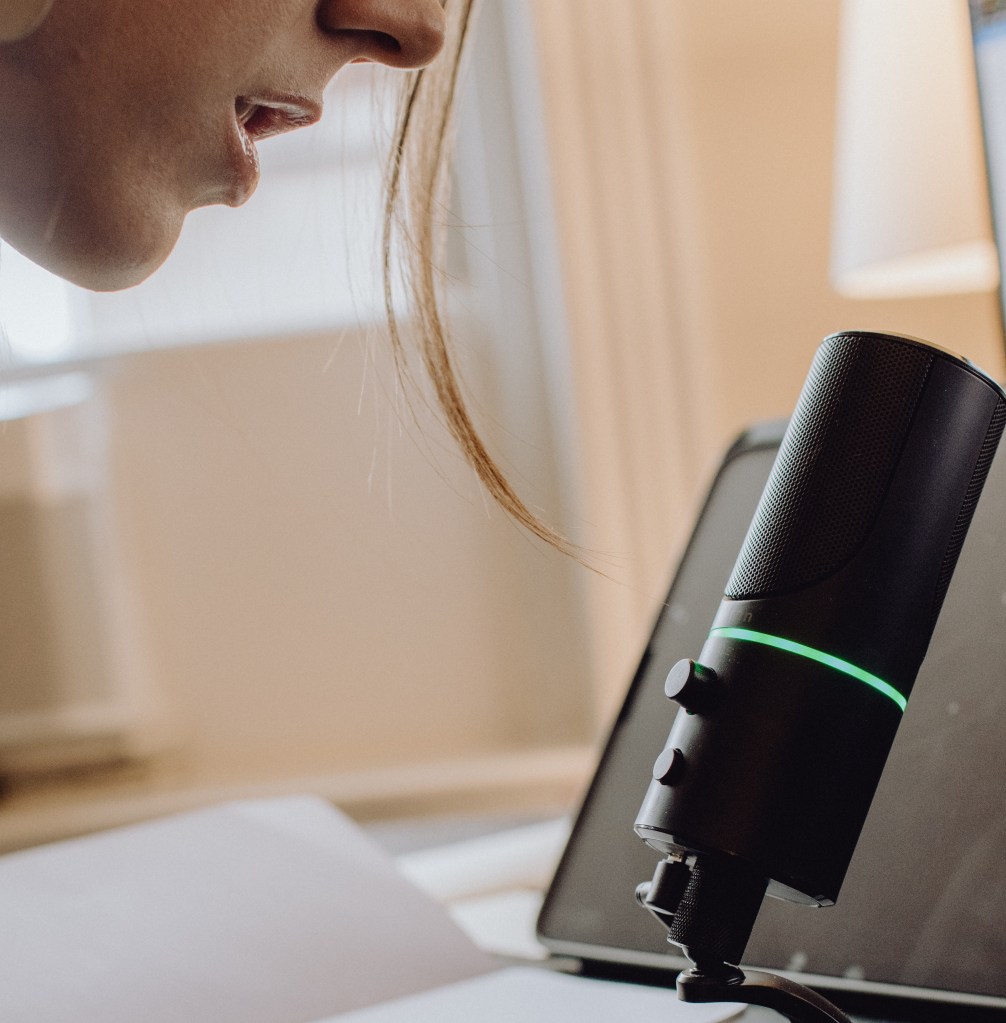
The raw dimension is slippery and loud and agitated. (Photo by Martin Adams on Unsplash)
What I have been feeling lately is that there is a dimensionality to how I experience the world. It’s like this: there is the raw world, which has lots of hard edges and bright lights–overexposed, washed out colors–and loud noises. That’s the world I used to live in exclusively and it felt like a whoosh flying at me and pulling me in, allowing no control over what was hitting me, nor much of a way to steer myself.
But now, I’ve transcended that dimension somewhat. I’ve found a much more grounded dimension, perhaps a more soothing shade–think “golden hour”. The colors are deeper, the pace is slower, the sounds are gentler, the edges are softer. In this dimension, I find my roots quickly, feeling my feet on the floor and connection to the earth, to what is stable and unchanging.
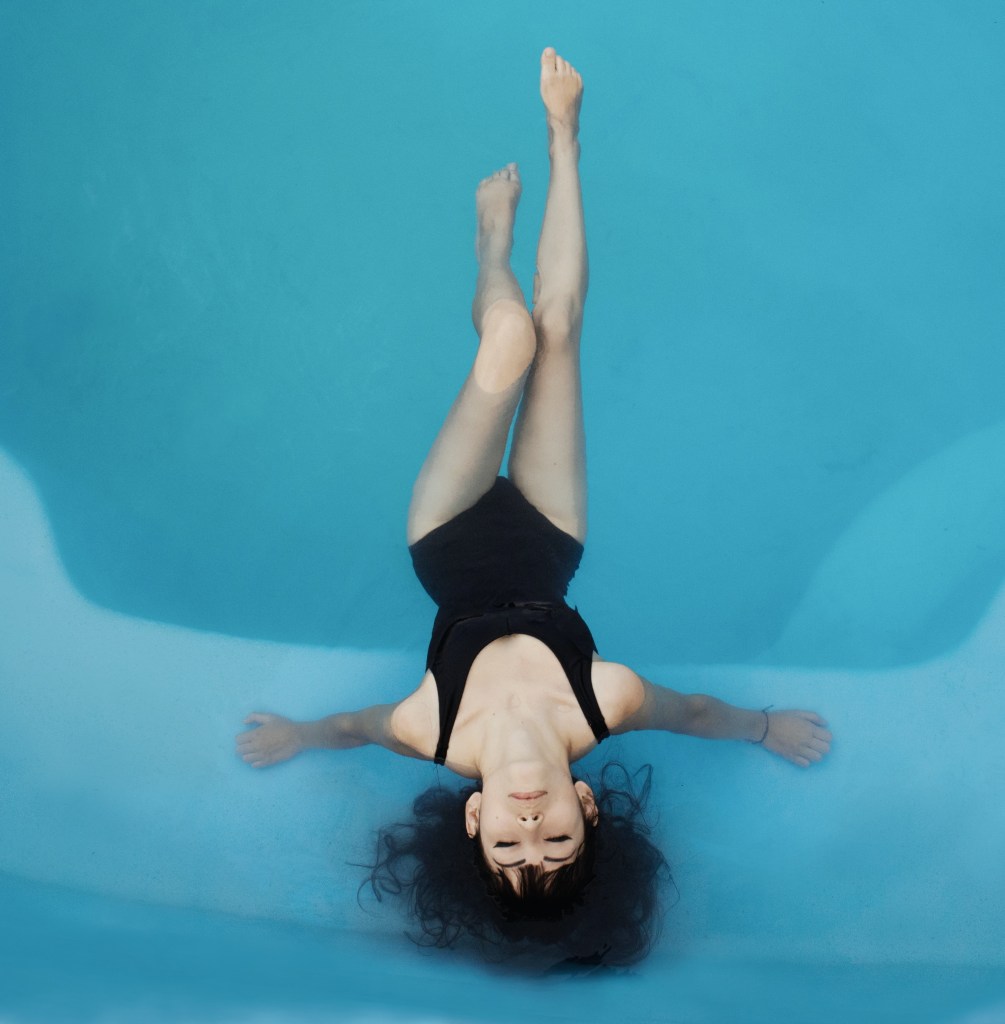
The calm dimension invites deep breaths and beckons us into the present moment. (Photo by Jasper Boer on Unsplash)
Here, I hear my breath and feel the tingle in my hands. I notice when I’m clenching my jaw, furrowing my brow, hunching my shoulders. I am also aware of when the raw dimension starts pushing to the forefront and am able to prioritize creating a safe space so that I don’t leave myself exposed.
This may sound very woo-woo but I assure you it’s not. It’s very much down-to-earth and sensible. There is no otherworldly magic at work. Just the understanding that my nervous system needs to feel safe and stable, and that I can offer myself a protective shield not by running away, but by settling into where I am.
It is as if there is a comfy blanket that I draw around myself, and from there I sit and watch and process and, if necessary, deflect the things around me. This is the gift that consistent meditation along with mindfulness have given me, and it feels like for the first time I’m experiencing life the way it was meant to be lived. Not as something to dodge and weave around but something to grow with.
Wow, 2024 is going by fast! We are now a quarter of the way done with the year and it feels like we just started.
In the midst of the whoosh of weeks flying by, here’s a way to slow things down and get intimate with the present moment. This is a simple little meditation but one that I find to be gloriously soothing.
I often do this in the morning when I awake, still stretched out comfortably in bed. Bringing attention to the weight of my body as it rests on the surface of the mattress. Sinking in.
We usually consider street traffic an annoyance, but it can translate into perfect sounds for a meditation. (Photo by Derek Lee on Unsplash)
And for this meditation, instead of using the breath as a point of focus, I bring attention to the sounds around me. In my room, outside on the street.
There is a lot happening in this soundscape. We have a sound machine going, an air purifier whirring, cars are driving up and down the street below. The sound envelops me and I absorb myself in it. It feels comforting.
Initially, my attention is open, getting settled and taking everything in. Then I shift my focus from the various indoor sounds to the outdoor sounds, traveling around them one at a time, noticing each different one.
Gradually, I select one sound that I can distinguish and move my attention towards it. I get in close. And the closer I get to it, the more my focus turns to a certain aspect of that sound, a certain pitch or rhythm. And then I zoom in even more and try to stay there.
Inevitably, I’ll notice that my attention has been pulled away by thoughts or other sensations, and when I become aware of this, I gently return to that one aspect of that one sound. Exploration continues in this way until I decide to shift my focus to another sound and do the same thing.
It’s a little dance between my thoughts and any given sound. Always returning to the sound.
There are no hard and fast rules to this. The option always exists to pull back from that one sound and open my awareness to everything audible around me. And perhaps instead of finding a specific sound to pour my attention into, I allow the soundscape as a whole to come to me and listen to it as if it were one unit, like a symphony.
This is meant to be uncomplicated and unforced. The idea is to stay present with the sounds around me and notice new textures and dimensions of noises.
I hope you give this a try the next time you find yourself in a perfect spot for it (whether in bed or outside under a tree in the park), and if you do, please let me know how it went!
After I was diagnosed with cancer, one of the things I dreaded the most was having to spend time in the hospital. I’d broken my leg when I was 12 and the four days (and nights) that I was hospitalized were horrible. I was depressed and wanted to go home.
As a cancer patient, I wanted nothing to do with all the beeping and buzzing medical equipment. While all my treatments ended up being out-patient–which I was sooo happy about–I spent enough time in the vicinity of medical devices to hear my share of annoying beeps. In fact, that was the last thing I remember before losing consciousness before my surgery…and the first thing I heard when I awoke.
Last time I checked, BEEP BEEP BEEP was *not* a soothing sound. (Photo by Richard Catabay on Unsplash)
Apparently, I’m not the only one who dislikes the incessant jarring noises of hospital equipment. I recently had the pleasure of attending a webinar with Yoko Sen of Sen Sound, an electronic music artist who has worked with hospitals and medical device manufacturers to address the issue of disruptive noises in an environment that’s supposed to be conducive to healing.
The whistles, beeps, buzzes and alarms are anything but.
Yoko spoke about the stress levels of both patients and medical staff as being affected negatively by this noise pollution. Patients cannot rest and recover. Caregivers are constantly on edge about what piece of equipment is alarming. This is not an insignificant problem as at least in one case, a death resulted from a healthcare worker shutting down a patient’s alarm by their bedside in an effort to make the surroundings more soothing for them, and mistakenly silenced their entire alarm system.
Staff speak of “alarm fatigue”, when everything’s constantly alarming that dire situations are missed among the cacophany that is the hospital situation. The sounds follow healthcare workers home, like echoes that never go away.
Yoko herself was hospitalized some years ago and described the onslaught of noises as terrifying. So as a musician, she set out to help hospitals reduce unnecessary noises and then make the necessary sounds more pleasant while still remaining informative.
The talk was excellent and interactive as she let the audience vote on the different “textures” of sounds. Interestingly, we discovered that past experiences can significantly color the way that we perceive a sound. Yoko’s entire talk was both entertaining and eye-opening. Unfortunately, I do not have a recording of this particular webinar that I can post, but below is one of the videos about her work.
Yoko Sen is bringing beautiful sounds into the healing environment.
I love that not only is a musician looking for ways to make the hospital experience more, well, hospitable for both the healthcare teams and patients, but also that hospitals and device manufacturers themselves identify the stress caused by all these noises as an issue to be addressed.
One of the complaints that’s often voiced about western medicine is that it focuses on disease rather than prevention, on sickness rather than healing. This is a great example of efforts being taken to change that.
Following up on last week’s post on taking a coffee break, I’m sharing my daily matcha experience with you.
During my workday, I need to stop periodically and ground myself so I don’t get sucked into a hectic hole. And for me, there’s no better way to do that than to stand up, walk around to get some movement into my body and extra blood flowing to my brain…and head to the kitchen to make a matcha latte.
There’s nothing like taking a soothing break from my hectic day.
There is something about the process of making that tea drink that offers opportunities to focus on a soothing distraction that grounds me in reality. From pouring water into the tea kettle…scooping out the bright green powder…measuring out the water…whisking the solution into a brilliant verdant tornado…I find it so blissful.
This is reminder to there is more to my day than what shows up on the computer monitor. Those stressors will pass like a wave…new ones will arise…and those too will pass by.
One of the striking benefits of mindfulness is that it amplifies the richness of our world. On a personal level, it’s revealed to me how tightly my mind and body are connected.
I truly believe that when you calm the mind, you calm the body and vice versa. This is particularly important for me because 1) I am prone to anxiety and 2) some of the breast cancer drugs I was given were cardiotoxic. Therefore, I have an inherent interest in keeping calm and avoiding stress.
Avoiding stress. HA!
After several anxious weeks that included trying to secure a new apartment and the possibility of serving as a juror on a 4-week criminal trial (for better or worse, neither one has happened), I found myself drained and unbalanced.
So for my Advent commitment, I’m working on getting my sense of balance back. And while I realize that yoga is much more than just one aspect of the physical practice, in my case, I believe that being able to calm my body, find a point of focus (drishti) and work on my balance go hand in hand with balancing my mind .
The moves that I’m using are uncomplicated and unimpressive, but I’m getting back to basics and rebuilding my balance foundation from there, even though I’ve found that there are more advanced balance moves that I can do that don’t seem to give me as much trouble. Go figure.
My daily practice has incorporated the following poses (asanas) with the intention of holding each for a prolonged period of time:
Standing wind-release pose (Tadasana Pavanmuktasana): This is a classic beginner pose that I chose as a starting point. From Mountain Pose (Tadasana), shifting weight into supporting leg, float the other leg up forward, knee bent with options to draw it into your chest or, which I find more comfortable, have my hands in prayer or support the raised leg under the knee.
Tree pose (Vrksasana): This is the classic tree pose, weight on supporting leg, other leg bent with knee pointing to the side, but with the sole of foot on the inside of the supporting calf instead of the inner thigh, as we usually see it portrayed. I chose this because of the hip opening aspect and by keeping the foot on the lower leg, all my focus is on balance, without having flexibility become an issue, because that is also affected by stress–I found that certain muscles tighten up and throw things out of whack.
Warrior Three (Virabhadrasana III): This is an intermediate level pose in which body weight is in the supporting leg with the upper body bent forward parallel to the floor in line with the hips, and the non supporting leg stretched out back, also in line with the hips. I play around with arm positioning, alternating between arms stretched forward past my head, out to the side or behind me.
Has this been a humbling experience? Yes, it has.
My balance practice is not a competition, it is a gentle smoothing of my nervous system. I’m not trying out for Cirque du Soleil. Ever. (Photo by GMB Fitness on Unsplash)
Balance poses are not my “thing”. They used to be no big deal, but that was in my pre-cancer life. Physical balance took a huge hit during cancer treatment and I found myself strangely off-kilter afterwards. Aromatase inhibitors’ effects on my joints certainly didn’t help either. It was exhausting to fight this deterioration when I already felt spent. Years later, I had been avoiding balance asanas in my practice, which means that what was suboptimal has become worse.
Starting out this time around I was terrible. And I mean embarrassingly terrible. When I moved into the first asana, it felt as though I’d been plugged into a light socket with nervous energy coursing through me, making it so difficult to be still. I couldn’t hold any poses for very long and Warrior Three felt like a constant struggle.
But even in the space of a week’s practice, I am getting better. These asanas were chosen with ease of progress in mind and I’ve decided to keep going with this well into the New Year. I can definitely use the work.
While it’s frustrating feeling like I’ve regressed so much, I guess that means my progress will seem even better, right?
As I sit at home waiting for the stormy remnants of what used to be Hurricane Hilary to pass by, a bit of reflecting…
There is a saying attributed to Buddha: “The root of all suffering is attachment.”
While there is much that can be and has been written about this, I’d like to bring it down to something very concrete in my life.
It seems so simple, this letting go of our expectations. But we humans are hard-wired not to do that!
One of the wonderful attributes that we as humans have is the ability to plan. Yes, that’s been evidenced in very clever animals, but humans take it to a whole new level.
Where that incredible gift fails us is that in the process of planning, our goals and expectations become very real in our minds, and if they don’t play out as we had anticipated…well, sometimes we don’t deal with the disappointment well.
For instance, in such situations I experience stress and anxiety. Others may react with anger and frustration.
Regardless of the outlet (whether handwringing or yelling), it’s safe to say that the outcome is not pleasant for anyone. And yet letting go is hard when we are really counting on the expectation being realized. Or perhaps even worse, when we get lost in thoughts of how things could have been.
Consider this scenario: let’s say that following a leak in our apartment and subsequent slow repair process, two months later our water-damaged kitchen cabinets haven’t yet been replaced.
But wait, I get word that the cabinets are coming finally coming in this Friday, August 25th and will be installed the following Monday (28th)! Expectation established! And it’s not a small one because most of our kitchen and the entire dining room have been sitting in the living room area for over eight weeks.
Oh, how difficult it is to sit with what’s happening in the present moment — we’re always looking to see what’s up ahead or somewhere in the past. The greatest peace I’ve ever felt is to simply be here.
WOW, do I want this to get fixed! We have a house guest arriving on Wednesday the 30th who is supposed to sleep in the living room. Weeks ago, when she arranged to visit, I was sure that all the repairs to our apartment would have been done long ago. But now, between the cabinet installation and her arrival, I don’t have a lot of time to clear out the mess and get everything back in its place.
I cannot let go of the need for everything to go smoothly. But while I’m struggling with the burden of that need, I’m simultaneously living through the stress of, “oh no, what if it doesn’t work out that way???”
So there you go, a double-whammy. All this because although I know better, I latch on to how I want/need things to be. Either expecting perfect success or total disaster.
Letting go will never be as easy to do as it is to talk about. But in my brightest moments, I am able to step outside the confines of my thinking, move out of myself and get perspective on the present situation, accepting that I cannot predict and shouldn’t expect too deeply. That’s when I experience the highest level of calmness.
And then, as will happen, I forget and sink back into my small, highly personal mind, where I once again cling to having things be a certain way.
When I wrote my last post — a visualization and body scan for helping calm yourself and prepare for sleep — I knew I would enjoy immersing myself in describing a space that felt safe to me.
But what I didn’t expect was the effect that the actual process of writing the visualization would have on me.
As I continued describing the “healing bath” scene, searching for reference pictures and letting my imagination create a restful place, I realized that I myself was feeling more and more relaxed — breathing slower and experiencing a sense of placid grounding.
This got me thinking.
Beautiful journals may be appealing to some. But making use of technology in searching for images and recording your words provides you with the most flexibility for documenting ideas and bringing in visual aids…without risking writer’s cramp.
While there is no doubt that listening to a guided meditation can be very soothing, sitting down and writing one yourself takes you to another level. This is an exercise in finding what the most salient relaxing cues are for you personally.
Immersing yourself in locating photographs of environments that you consider your ideal for a retreat getaway helps you isolate those elements that exemplify what relaxation and grounding mean to you. I highly recommend sites like Pinterestfor this; if you’re not interested creating an account there, just start out with Google image searches and see where they lead.
And when you start writing, turning your focus towards describing the scene that you’re imagining means that you are truly “in it” in your mind. As you write about sights, smells, sounds, textures and other sensations, and hold them in your imagination, you sink deeper into them than you might even in a meditation where someone else is describing the surroundings to you.
It’s your writing and therefore everything you select is your choice, suited to your tastes. There’s no need to use complicated language, simply tune in to your mind’s eye and write what you see. Because this is for you alone, there’s no requirement that it be a complete representation of your safe space and no need to judge the quality of your mental picture. There only has to be enough imagery there to trigger the wonderful feeling of peace and calm that you have when you’re there. However, the more descriptive you can be, the better you can lock in the imagery.
Not a scribe? An oral description of your special place can be just as immersive as writing it out. And if you feel so inclined, recording it for yourself can help you preserve the images to return to at a later time.
Finally, each one of us has different experiences with putting words on a page. If you feel that being required to write out your thoughts will be frustrating, then find a quiet space where you have privacy, close your eyes and audibly describe your safe space, perhaps even record it. Imagine that you’re moving through it and explain to yourself what’s there and how it makes you feel.
Whether you choose to write or speak, the reason this can be such a powerful tool is because you focus on something that feels so relaxing. This may turn out to be the ultimate grounding meditation for you.
As a visual person, I have days when my “mind’s eye” has difficulty focusing during meditations. For those times, listening to guided visualizations is my best option for a calming tool.
Additionally, body scans are excellent pre-bedtime wind-downs. So when I recently heard of a great visualization that includes a body scan, I wanted to share it here.
Your private pool can be anywhere you want, even indoors. Source: https://pin.it/4UeEa1U
This one is based on a “healing bath” visualization that was presented by an MSW/Oncological Therapist who leads Friday morning meditation at my cancer center. Putting the focus on vivid visuals and including your other senses fills your awareness with rich imagery that works so well to soothe an overworked nervous system. While this will not be an auditory experience, use your imagination as you read this to paint yourself a picture of a safe, soothing space that you will remember.
Here’s the basic imagery (add details that resonate with you): you arrive at a beautiful natural location, walking down a path surrounded by lush greenery, wearing a luxurious fluffy robe and cushy slippers. As you follow the path, flowery fragrances waft on a gentle breeze that carries bird songs to you. The sun is at a height most soothing for you; for me, it is early morning with a mist in the air. Bright enough to see everything, but imparting a feeling of safety and privacy.
As you continue down the path, it opens up into a small secluded beach with a round pool of water, clear and sparkling; part natural pond and part constructed, with beautiful white stone steps leading into it. Surrounded by flowering plants, it invites you in.
You feel the sensation of the fluffy robe and slippers sliding off of you as you leave these items by the entrance to the steps. Then, you dip the toes of one foot into the water and find that the temperature is perfect for you. Notice the sensation of the warm water as you step onto the stone stairs with both feet, holding onto a sturdy railing. You stand up to your ankles in the pool and sense the difference in the temperature between the misty air and inviting water.
Take two more steps down and the water slides up to your calves, soothing your lower leg muscles. Then step further in as the water line slowly travels up past your knees and halfway up your thighs, so that most of your legs are submerged in the placid, warm pool, now feeling more like a bath.
The bottom of the pool is easily visible through the clear water. Unhurriedly, take a few more steps down as your toes reach the white sandy pool floor and the water rises up to your waist, enveloping your lower body in warmth.
Feel the gentle support of the water.
By one side of the pool is a smooth sculpted stone bench to which you glide, feeling the slip of the water against your skin as you move, drawing the tips of your fingers across the pool’s surface, leaving gentle streaks as you go.
As you lower yourself onto the seat, sense the warmth rise up your torso and arms, traveling up as you settle down. The bench is deep enough for your body to submerge but comfortably keep your head out of the water.
The soothing water supports you as the seat cradles your body. Rest your head on the side of the pool – the edge is sloped and comfortable. Then listen. What do you hear? Sweet songs of birds? The meditative buzz of gentle honeybees that flit among the flowers? Waves on a faraway beach?
Can you smell the fragrances of the flowering plants that surround you? As you breathe, as your chest rises and falls, feel the water glide around you. Warm, secure, safe, secluded. This pool is whatever you need it to be for you to feel nurtured and loved.
Stay here for as long as you like, watching light sparkle on the surface of the water. If you stay until evening, warm lighting illuminates the pool and surrounding plants, dispersing dark shadows and bringing a sleepy tranquility into the area.
Finally, when it’s time to return to present world, lift yourself out of your seat and glide back to the stairs, keeping yourself submerged to your shoulders until you take a hold of the handrail. Slowly, slowly release yourself from the pool, noticing the sensation of air on your skin as you emerge, feeling the waterline move down your body as you climb the steps.
With the final step, you leave the pool and take up the fluffy, soft robe waiting for you, wrapping yourself in it. Slip your feet into the cozy slippers. Your body dries quickly. Make your way up the path. And although you leave this magical space behind, it is always available for you whenever you want to return.
~~~~~~~~~~~~~~~~~~~~~~~~~~~~~~~~~~~
If you are uncomfortable with water or if the visualization keeps bringing in disturbing images such as a very deep pool, dark water or something foreboding lurking underneath the surface, or it feels constrictive or claustrophobic, substitute a sparkling mist or a golden light for the water. You can still feel the body sensations as you enter into the pool. There are no rules here, it is your safe space and you can set it up as you please.
Finally, to bring this from a visualization into reality, create a real-life pool for yourself in your bath, with ample tealights, a soundtrack of nature sounds or gentle music and water temperature that is right for you. Feel your arms and legs float, prop up your head with a towel on the side of the tub. Breathe deeply. This is a perfect way to end the day and prepare yourself for a restful slumber.
While in that post I alluded to using third-person descriptions on stressful days, it’s really worth emphasizing the utility of creating space throughout the day.
To sum up that post, I mentioned a mindfulness technique suggested by meditation teacher Jeff Warren in which when we find ourselves being swept away in thought, we describe what’s happening in “third-person” language and play the role of an observer.
Observe…make space…gain perspective.
But as I said in that post, why limit that to meditation sessions? In fact, you could argue that it is even more important to bring that type of gentle detachment to the things that ordinarily set us off in our daily lives, whether it be with family, at work or anywhere.
I would say that so much of my anxiety has stemmed from an inability to maintain perspective about the trigger. Noticing when I’m getting carried away and then describing the situation as something that is happening to another person — similar to the way a newcaster might report on an event in a calm, informative manner — helps loosen its grip on me.
The ability to step back and detach from the situation is kind of the name of the game in terms of reducing stress levels, isn’t it?
By narrating the circumstances around your stressors, we make space: “FranticShanti felt a little ill when she saw that the letter in her mailbox was from her landlady. She expected this to be about a rent increase…and she was right. Another $200 per month.”
Third-person language gives us the space we need to tackle our stressors without getting pulled into them.
That telling offers some space. It doesn’t change the situation, simply presents what’s happening in an unemotional manner. Then following up with some trouble-shooting helps soothe my agitation: “This will require a review of her finances, but as she calculated with last year’s rent increase, she can still absorb this additional amount. Things will probably be okay. She takes some deep breaths and feels into her hands and feet.”
Not only can you calmly describe the situation, but you can describe yourself engaging in self-soothing techniques as you work out your next steps.
It is quite effective in slowing down racing thoughts, particularly if you’re in a place where you can speak out load, as hearing yourself describing things can be even more grounding.
As with other simple grounding techniques, this may seem a little contrived or simplistic, but it might be just enough to bring you out of your head and into the here and now — cool, calm and collected.
In dealing with anxiety, I’ve come to accept that while fearful thoughts come and go, I remain the same.
Visualizations have been helpful in realizing this. One of my favorites, the one made famous by Jon Kabat-Zinn, PhD — creator of the Mindfulness-Based Stress Reduction (MBSR) program — is the Mountain Meditation, and I value this visualization particularly because it is so meaningful in its description.
For this meditation, you settle into your seat and bring your attention to your body. Scanning your different parts, from your feet to your head. Feeling yourself breathe as you go. No need to change anything; you’re simply noticing sensations.
Imagine your ideal mountain…and then become it.
As you sit with eyes closed, shift your thoughts to a beautiful mountain, tall and stately. Imagine the details about it, it can be whatever kind of mountain you choose. Steep or gently sloping, rocky or carpeted with greenery. Allow the image to form itself: the mountain is stable, majestic and unperturbed regardless of the season or weather.
Then, once you have a clear picture of your mountain…allow yourself to become the mountain, settling into its form and taking on its characteristics. Feel yourself grounded in its stillness.
Sitting as the mountain, imagine the seasonal changes and the different weather that each brings. Through the snow of winter that blankets everything, the spring thaw as nature awakens and buds burst open, the summer teeming with life under the warmth of the sun, and autumn with its changing colors and cooler breezes that move you into a quieter state in preparation for the coming winter again.
All these bring wind, precipitation and occasionally harsh conditions whether they be cold or heat. But the mountain still sits as it always has, unmoving and unbothered.
And so you, as the mountain, also sit in the midst of different conditions. When you take on the garb of the mountain, you link with its strength and stability and unchanging nature from day to month to year. This meditation encourages us to see through the chaos of our everyday lives and find the persistent calm behind it.
This is one of my favorite meditations because it carries so much meaning. Below is a YouTube video of Dr. Kabat-Zinn leading a 20-minute Mountain Meditation:
Jon Kabat-Zinn’s Mountain Meditation
If you would like to read a version of it, PalouseMindfulness.com has provided their own adapted transcript of Kabat-Zinn’s Mountain Meditation in a pdf file. Alternatively, googling “mountain meditation” will also bring up a nice variety of recordings.
I encourage you to try this when you feel you need extra grounding.