The “Side Effects” of Yoga Teacher Training

I’ve shared that I recently completed a three-month, 200 hour Yoga Teacher Training (YTT).

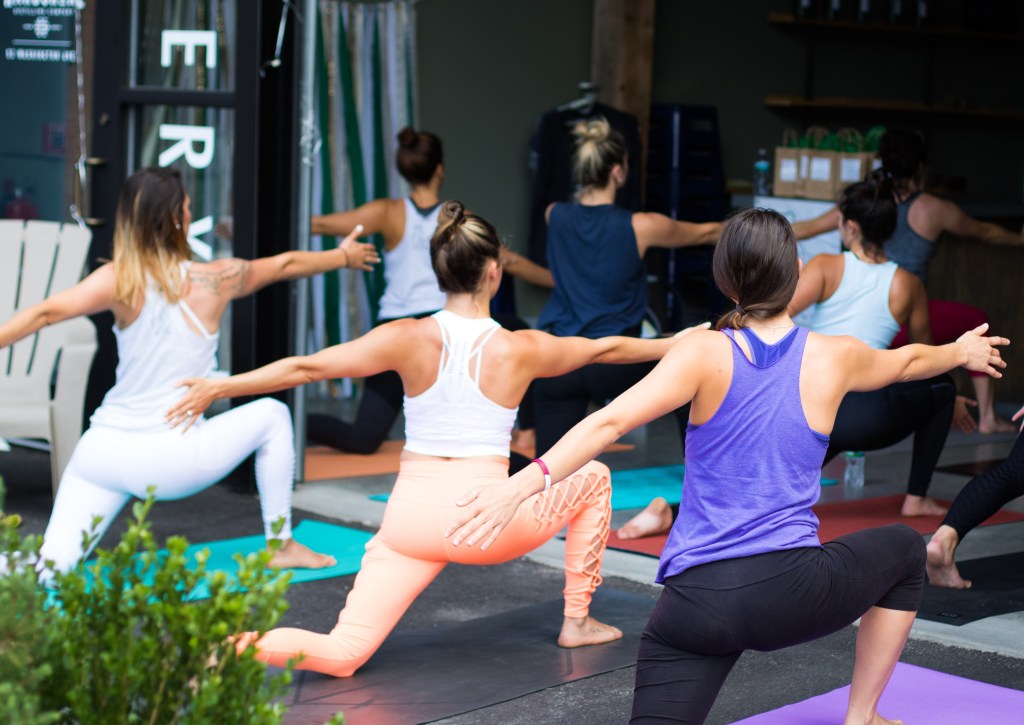
My main motivation for entering YTT revolved around yoga’s role in my emotional recovery from cancer. My teaching goal is to make yoga accessible to more cancer patients and survivors. Sadly, the view that many have of yoga in the USA is that it’s mainly for young, white, flexible, affluent women.

That means that the benefits of yoga are not reaching many of the populations that need it most.

Sadly, yoga in the USA is not associated with a diverse clientele.

In YTT, I expected to deepen my own practice, immerse myself in the roots of yoga and gain experience in sequencing and teaching among other things. And we did that. The program was well-rounded and paid homage to yogic philosophy, in addition to covering a broad range of relevant topics such as anatomy, meditation, sound healing and creating an inclusive atmosphere.

What I didn’t expect was what I learned about myself. Now, in the course of cancer treatment I gained access to counseling at my cancer center with an excellent therapist. And prior to that, I had sought help for anxiety. I’d explored talk therapy, cognitive behavioral therapy (CBT), eye movement desensitization and reprocessing (EMDR), mindfulness-based stress reduction (MBSR) and had gone through a lot of introspection. Basically, I thought I’d covered my bases and knew what’s what when it came to my inner workings.

YTT proved me wrong. I learned that I still struggle with competitiveness, perfectionism and a host of little insecurities. Wow, that was an eye-opener, even after all the “head work” that I’d done! In addition to coursework, YTT had a requirement of attending a number of yoga classes. Due to the limitations on my time given my work and family schedule, I was forced to take the heated (~95F) Level 2 classes, which happened to be most convenient. They emphasized balance and flexibility, while my non-yoga fitness focus has been strength and endurance.

*ahem* This is NOT me.

Balance and flexibility against the backdrop of neuropathy, menopause and vestiges of cancer treatment effects did not allow me to show my “best side.”

Not a big deal, I thought, since yoga for me is a mental “work-in”, not a workout. I’ve felt that holds truer to the traditional purpose of yoga and respects its roots. But in a crowded yoga studio where I was usually the oldest class member, I struggled to maintain my composure. Many of the other students could have been my offspring. The Level 2 classes made me look, I felt, like I didn’t belong.

And that feeling got worse as the classes went on. By the last weekend, I was the only teacher trainee who showed up (others trainees had more flexible schedules that allowed them to take other classes). After weeks of taking Level 2 classes, feelings of dejection had built up.

I should be over this, right? I should have been able to hold my head high and do what I could, knowing that my fitness stemmed from other activities and yoga served a different purpose for me than for “the youngsters”.

But nope.

The YTT itself was exceptional and the teacher trainers were amazingly supportive and knowledgable. The other members of my class were (no surprise) all white, all female and all younger than me. But they were generous and sweet and each one had been through her share of hardships. I felt only love from them. I just didn’t feel it from myself.

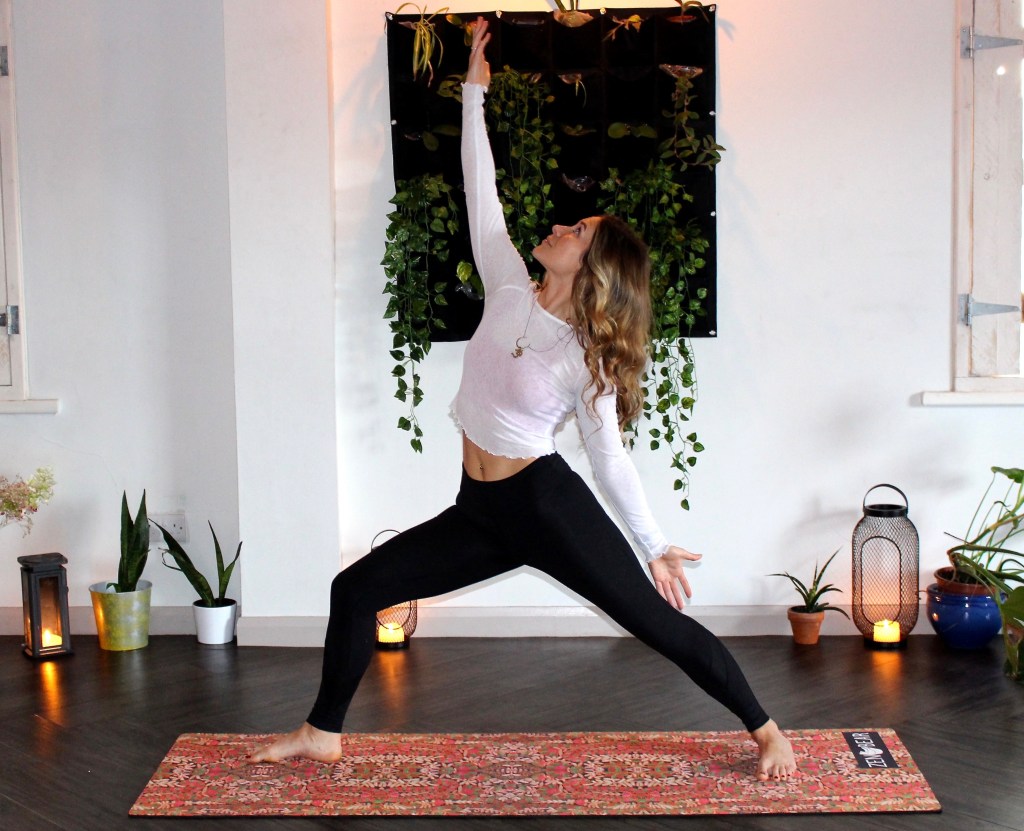
This is my preference for yoga: slow , mindful movements performed with intention. No contortions.

And with fitness being so important to me, I was frustrated that yet again I managed to find a situation where I showed myself to be “less than”. That was painful.

Yet, this peek into my current state was invaluable. Being in the midst of all those younger bodies strengthened my resolve to create classes that are more suitable for not only cancer folk, but also for other special and older populations.

YTT taught me that I don’t have it all figured out yet. However, it also gifted the awareness of what was really going on. Just as in mindfulness meditation, once I became aware of where my mind was leading me, I could take action to return to a place of peace and acceptance. That advanced my emotional evolution by lightyears!

Experiencing classes at a yoga studio also drove home the necessity of offering yoga to people who would benefit from the practice but are often forgotten when classes are planned. There are populations for whom studios are simply inaccessible financially, physically and even psychologically.

Ultimately, this next-level awareness showed me that what I had been doing on my own over the years still counted as yoga, even when I didn’t look like the other class members. It was the yoga I needed. And that was enough.

A Reflection on “Chemo Fatigue”

After posting videos from my final infusion where I described chemo fatigue, I felt it important to follow up with a debriefing.

I was not in a good headspace during that time. I had started a mindfulness meditation practice five months earlier but had too little experience and not enough training for it to significantly affect my mindset, 50+ years in the making.

When I write a cancer-related post, I straddle a line. On the one hand, I want to provide an admittedly subjective and honest account of what I experienced during treatment; on the other hand, understanding that we all come from different backgrounds and may have vastly different perceptions of what cancer means to us, I don’t want to color the reader’s view of what their experience might be like.

Cancer revealed a lot more about myself than I expected to find.

There have been times that I held back on projecting too much of my own personal state. I waited five years to post my videos on Chemo Fatigue because I didn’t know whether it was appropriate to do so. They remain some of the rawest and truest representations of the despair that I felt at the time. I was still very angry and frustrated, feeling what I recognize now as a deep sense of betrayal.

It was mindfulness meditation along with deep reflection, expert counseling and simply the passage of time that ended up bringing me out of the anger. That process took a lot longer than I ever expected. It also showed me aspects of my personality that I hadn’t understood before because I’d never had to confront them.

So while I still would never say that cancer had a positive effect on me, just as with many heavy life experiences, it took me to a new level of maturity and self-awareness. I am very thankful to be on this side of treatment, although I’m acutely aware that everything may change with the next scan. That makes every moment all the more precious.

Cancer, “Why Me?” and Mustard Seeds: The Path to Acceptance

At some point in a cancer patient’s life, there are certain questions that tend to come up. The most likely one of these is why we were singled out to have such a serious calamity befall us.

I went through a long period of this. I mean, loooong. The early posts of this blog are filled with agonized questions about why cancer hit me even when, by all accounts, it shouldn’t have. I posted about not having risk factors and blah blah blah. I kept going around and around and around on this, stuck on a hamster wheel that wouldn’t stop.

I clung to the same ride, unhappy but not wanting to get off.

Allow me to stress: cancer is a serious illness. That is not to be taken lightly. Most of us, regardless of lifestyle, experience profound shock with our cancer diagnosis. It may seem that life is cruel and unfair (well, it is) and that we didn’t deserve to get cancer (well, we didn’t).

I struggled with anger and frustration for years. It’s both embarrassing and freeing to admit that.

Acceptance is a process. I thought I’d accepted my situation a couple of years ago, but in retrospect, I hadn’t. Some days I felt holy and zen-like, floating on my own little cloud, but it was a sham. I’d have glimpses of acceptance and then a wave of anger and resentment would wash over me and I’d be pissed off for another week.

I thought God hated me. A purportedly loving and merciful being allowed this to happen. It was hard to not think of cancer as a blow against my value as a person because of how I interpreted my situation.

It wasn’t until I stepped outside the confines of that type of thinking that I gained a different perspective. I posted about re-writing my life (basically, viewing the same experiences through a different, more positive lens) which provided a glimpse of another way to assess what had happened. And when I heard the retelling of an ancient Buddhist tale I finally understood what it meant.

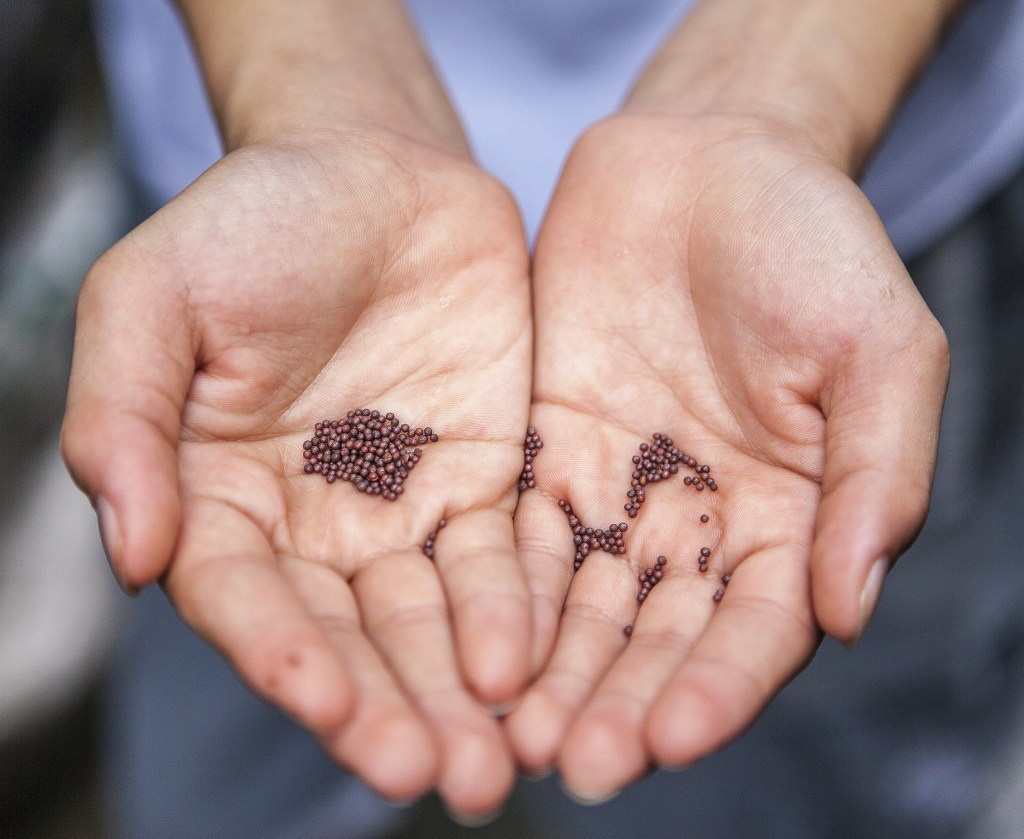
Never seen mustard seeds? Here they are. Kisa, however, came up empty-handed.

What was that tale? It was “Kisa Gotami and the Mustard Seed”. In brief, Kisa Gotami’s young son dies and she is so distraught–not understanding why she would deserve such a painful experience–that she goes to the Buddha in hopes that he can bring the son back from the dead.

The Buddha agrees to revive her son if she can bring him mustard seeds from households where no one has died. Of course, she cannot because death touches all living creatures. She is comforted by the realization that her sorrow is shared and understood by everyone in the community and she finds acceptance of her loss .

Another way of looking at this is that we all suffer. For me, it’s a reminder that while a cancer diagnosis is life-threatening, there are few (if any) humans on this Earth who have not experienced some form of loss or grief at some point in their lives. Yes, some of us bear a far greater burden than others–grave inequities exist. But they also bring profound opportunities for growth.

And while I (and I expect most cancer patients/survivors) would have preferred to experience this personal growth through means other than cancer, being able to be here in this moment, having turned the corner, is one of the most beautiful gifts I could ever receive.

~~~~~~~~~~~~~~~~~~~~~~~~~~~~~~~

Two points need to be made here:

Point #1: Burdens are distributed unequally. Socioeconomic, racial and other disparities further tip the scales, making outcomes from a disease like cancer even worse. As a society, we haven’t come close to rebalancing this. Acceptance is easier for some than for others; no one has a right to preach to anyone else.

Point #2: It’s been over five years since my initial cancer diagnosis, and even longer that I’ve been worrying about it. As I mentioned above, it took a LONG time to get to this point of acceptance. Knowing this, I would never rush a new cancer patient to get here. Acceptance must come organically, and yes, sometimes never does. Cancer breaks hearts and no one experiences it in the same way. Be patient.

It Took Cancer to Teach Me Self-Compassion

One thing I’ve had trouble with is expressing self-compassion. When you’re a driven perfectionist it’s easy to believe that “giving yourself a break” is tantamount to “going soft” and “losing your edge”.

I couldn’t forgive myself when I felt that I’d failed. And guess what, getting cancer made me feel like a failure. I had tried to live the healthiest adult live I could, given the sometimes-limited resources I had, often denying myself what others called “pleasures” or “indulgences”.

I’ve lived most of my life feeling like I had to constantly push myself…and that I was never good enough.

The fact that I was convinced that I shouldn’t have gotten cancer was a recurring theme early on in this blog–I was convinced that I must have done something wrong, even when I tried so hard to do my best.

I was also ashamed. Cancer, I felt, opened my life up to judgment by others.

Getting myself out of that funk took serious work. It meant rewiring my brain and allowing in the same kindness and compassion for myself that I allowed for others. At the same time, I reminded myself of a quote by author and humor columnist Dave Barry: “A person who is nice to you, but rude to the waiter, is not a nice person.” I prefer to interpret Barry’s words in this way: I cannot be genuinely kind and non-judgmental to others until I’ve learned to be so to myself.

Cancer gave me perspective to see how much I needed compassion from myself.

But how do you do that when you’ve spent your life pushing yourself, not accepting excuses? It wasn’t until I hit the lowest low that I ever experienced that I learned to dip into unadulterated compassion for myself. I imagined who I was as a chemo patient–skinny, bald, dehydrated, vulnerable, frightened. And suddenly felt it: that overwhelming desire to wrap my arms around that version of me and protect it.

And while that was “cancer me”, I realized that same version of me was the scared person inside that I had always bullied with perfectionism and accusations of not being good enough. This was who I really was, in need of and deserving of gentle holding.

It took a life threatening illness to make me realize that I deserved kindness and compassion. I believe that you are deserving of the same. Do something today to prove it to yourself.

Why I Stopped Believing in Ghosts

So, I have a confession to make.

Throughout my primary and middle school years, I thought I had powerful extra-sensory perception. Actually, it might have even been longer than that, although I’m embarassed to admit it.

I blame my older brother for this. We were in grade school and my grandma had just passed away. Due to the arrival of a number of relatives for the funeral, we were left alone to entertain ourselves. As we turned off the lights for sleep, he and I somehow got on the topic of extra-sensory perception and decided to test it out.

One of us would think of a number and the other would guess what it was. I guessed correctly, over and over again. I would “see” it through my closed eyes as I concentrated. I didn’t miss a single one and my brother was very impressed.

When I was young, my older brother convinced me that my mind had special powers. Well…he wasn’t exactly wrong.

I fell asleep that night believing that my dear grandmother had imparted me a special gift with her passing, and I felt that I had undisputable empirical evidence of it.

In reality, my claim was on shakey ground, but I had already convinced myself that there was something magical there. In fact, I began seeing “evidence” of it everywhere. These couldn’t have possibly been coincidences, could they? I started fearing that if I could see something as a possibility, it would actually happen. As a result, I fought to keep certain thoughts out of my mind. Avoidance, anyone?

Some years later my older brother admitted he had fibbed to me that night, that no matter what number I “saw”, he would pretend that was the number he was thinking about. He thought it would be funny.

But by then, the latent fear of my thoughts was ingrained in me, even though I knew that triggering event had been a lie. What was true, however, was that my mind had always been very powerful. In one instance, I experienced intense pain that I couldn’t explain, lasting several days. While I was vaguely aware that this pain disappeared upon the release of a stressor, I didn’t realize that it was psychosomatic –literally something my mind created that had been expressed in my body.

My mind also had the power to hijack my thoughts, amplifying negative feelings. I was anything but grounded. I managed to plow on, garnering notable academic achievements. But there was always a sense of fear in the background and since it ran unchecked, eventually it overtook me and pointed my life’s path in a direction quite different from that of my peers.

Wish I’d realized way back when that life could “magical” in its beauty without having to be supernatural and out of my control.

Lacking awareness of how my mind operated meant that I didn’t realize why I was making the decisions that I was. It took years, even decades, to understand that so many of the things I had feared originated in my mind, affecting my interpretation of whatever input I was receiving.

Now, after all these realizations and a number of painful lessons, my world is not as “magical” as it used to be, but I am better rooted and grounded. And that feels a lot better.

What about “ghosts”?

When I live in the present, I am safe and secure. Those unexplainable occurences that I attributed to otherworldly origins have become much more explainable. And I’m well-aware of how my mind has twisted meaningless common things into terrible foreboding ones.

There are quite enough frightening things in the material world (cancer, wars, having my email account hacked…) that there’s no need to search the paranormal world for their cause.

~~~~~~~~~~~~~~~~~~~~~~~~~

A 2021 survey of 1000 Americans revealed that 2 out of 5 people believe in ghosts. I am not here to contradict their beliefs, and frankly, when I talk of “ghosts” I don’t mean spooks. At the same time, I learned the hard way that my mind wasn’t always reflecting 100% truth. I was compelled to take inventory of what was bouncing around in my noggin and decided that, while I can’t neatly explain everything going on around me, it’s harmful to let my thoughts run wild.

Showing Signs of Stress

One of the benefits of doing a yoga teacher training (YTT) is that there are some interesting side effects that go far past learning about yoga instruction.

It also involves a great deal of introspection, sometimes uncomfortable, but always valuable.

Signs of stress are pretty universal and usually unmistakable.

What I found curious about myself was how, when I was stressed, I exhibited loads of visible signs of stress even if I was aware that I was doing it. It was as if I didn’t want anyone to mistake me for not being stressed when I was.

This made me wonder, was it simply habit? Or was I being a drama queen? Stress does affect me deeply and anxiety is hard for me to shake. It’s possible that I feared not being believed that I was suffering.

Perhaps I needed people to care that I was not okay.

But I came across a recent research article about this that suggested an even deeper reason. UK researchers Whitehouse et al. (2022, Evol Hum Behav) conducted a study in which it appeared that individuals displaying signs of stress came across as more likeable and more likely to elicit support from those around us.

This is curious because often in nature, showing “weakness” may result in a greater chance of being attacked. But apparently it doesn’t work this way in human society. The researchers postulated that signs of stress suggested that the individual might be deemed friendly and not a threat.

I can attest to the fact that seeing someone displaying anxiety immediately triggers a strong empathic response in me, no matter who the person is or what they’ve done. Having suffered anxiety myself, I am immediately drawn into what the individual might be feeling, projecting my own feelings onto them.

Yeah…don’t be this.

And it is very true that I’ve often gone out of my way to look more friendly, less scary, particularly when it comes to people smaller and weaker than I am (I’m 5’11”). I have a drive to appear less threatening. However, this does not necessarily benefit me–does the term ‘doormat’sound familiar? When you lower yourself far lower than is even remotely necessary, you’re not doing anyone any favors.

This explains a lot about my own life and it underscores the importance of being aware of your behavior and why you engage in it. When you run on autopilot you risk reinforcing negative self-beliefs and even generating new ones. Self-awareness is the antidote to that.

So that is what I’ve been musing about. YTT provided me with space from which to reflect on the ways that I behave and feel in certain situations. In turn I can use that information to make much needed changes in my life and get myself unstuck. How about you?

~~~~~~~~~~~~~~~~~~~~~~~~~~~~~~~~~~

Original research article:
Whitehouse J, Milward SJ, Parker MO, Kavanagh E, Waller BM (2022). Signal value of stress behaviour. Evolution and Human Behavior; DOI: 10.1016/j.evolhumbehav.2022.04.001

Reader-friendly version:
https://www.sciencedaily.com/releases/2022/05/220515113229.htm

Permission to Grieve

I feel like I write a lot about loss when speaking of my cancer experience. That may seem like a downer, but truly, cancer treatment is a complicated process in more ways that expected. Bear with me for a few…

There’s so much to lose: lose control of your life, lose your hair, lose your lunch, lose a lot of money, lose time at work, lose your libido, lose your overall quality-of-life. In more extreme cases, lose your spouse and your house. And unfortunately, sometimes lose your life. On some level most of us may feel some sense of loss.

Cancer is complicated because it can bring on a huge sense of loss.

I keep talking about this because it’s not something that’s fun to talk about. Most people don’t know what to say when they find out you have cancer. They’re hesitant to say something to “remind you” of the illness, as if you could forget. Relationships can become strained and awkward.

Interactions with cancer patients often turn into a “rah-rah” fest, with well-meaning friends showering you with “you got this” encouragement. But that’s not always what you need to hear.

I urge everyone who cares about the well-being of a cancer patient to allow them the opportunity to express how crappy things are. To simply listen and not contradict them. Because being insistent that it’s not okay to talk about anything negative creates an even bigger sense of loss for the patient.

Does this sound wrong? We’ve been led to believe that being positive is the only way we should be and that it’s no fun to be around those who are gloomy.

But consider this: would you go to a funeral and try to get the grieving family to “cheer up”? Would you try to tell them jokes and elbow them into smiling? I don’t think you’d be very successful and might be escorted away – at the least your invitation to the meal afterwards would probably be revoked.

Forgo the cheerleading and simply offer an ear and a shoulder.

We know that behaving this way is unacceptable, at least in most cultures (I can’t speak for everyone). Grieving is an important part of the human condition and not being allowed to grieve loss can be very stressful and lead to problems down the road.

So it is for the cancer patient. There’s so much more going on than simply increased doctor visits and medical procedures. Minimizing the impact that this has on their lives may range from feeling unfair to devastating.

Of course, every patient is different and their reactions will differ too. But I would urge loved ones to err on the side of caution, give their cancer patient the time and space to process and grieve and save the exhuberant “cheering up” for a time when the patient seeks that out.

~~~~~~~~~~~~~~~~~~~~~

Ok, ok, the “loss of body odor” is one loss that’s not so bad!

Four Minutes of Hovering

Last week I had a 3-D mammogram. This scan marks a bit over five years since the diagnostic test that indicated I had a solid tumor on the outside of my left breast.

Heading into this appointment, I wasn’t particularly worried. Yes, I admit to having little heartbeat skips over “lumps” in my breast that aren’t really lumps: if you recall, I had felt something before my last oncologist visit; my doctor reassured me it was nothing.

I will never again hear the word “lump” and NOT think of cancer.

And because last August I’d had a chest MRI, a more sensitive scan than even a 3-D mammogram, it was HIGHLY unlikely that there was anything to be found in this mammogram.

But still, after the pictures were taken and the mammography technician left the room to consult with the radiologist, I got that all-too-familiar uneasy feeling.

WHY? I knew that the radiologist wouldn’t find anything. The technician practically said that out loud, since she was aware of my recent MRI.

But still.

I sat alone in the mammography room, breathing, looking at the clock on the wall and simply hovering. My attention was like a butterfly looking for a place to alight. I wasn’t holding my breath…but mentally, I had put the rest of my life on hold when the tech stepped out the door.

It took all of four minutes and the mammographer returned and gave me two thumbs up.

For four minutes, I had no plans for anything outside of the room I was in.

I breathed a sigh even though I had expected the good news. And while I wasn’t “freaking out” waiting for the response, it became apparent to me that I might always feel uneasy during that period of uncertainty.

I didn’t want that. I wanted to be completely unaffected, as if I had never had a bad experience and my heart was calm.

But hovering it was, because there are no guarantees. And as the gears of my life started turning once again, I remembered that there was no going back. All the negatives that have happened have happened and I can’t change that.

Eventually, years from now, my emotions may soften, but in the meantime, I’m just going to have to be okay with hovering for a few minutes.

What If It Isn’t?

“Supposing a tree fell down, Pooh, when we were underneath it?”
“Supposing it didn’t,” said Pooh after careful thought.
Piglet was comforted by this.

A. A. Milne

So, I felt a “lump” under my left nipple, what I refer to as my cancer-side. It wasn’t the same kind of lump that I remember from cancer but when I thought of how I’d describe it (mass, thickening, etc.) I came up with cancer-sounding descriptive words.

This “lump” was also way bigger than my tumor had been.

I think I feel “something” and –BAM!– my mind takes me to worst-case-scenario land.

Now you might think that I would reason with myself. I’d had an MRI in the late summer that showed nothing. A real lump that big would have shown up.

Again, it wasn’t a lump, it was a “lump”. But in the back of my mind, a film starting playing…

I was writing letters to my friends on how much I had appreciated their friendship. Practicing how to tell my kids that I wouldn’t be around to see them graduate from college. Posting my final thoughts here.

It sounds sooo melodramatic but my brain is like a motor boat left unattended with the engine running. And it’s just heading away on its own on a course that no one plotted.

Why do I “go there”?

There is a part of the brain called the Default Mode Network (DMN), which is the area that is more active when you’re at rest and otherwise not focusing on anything. There is a nice “plain-English” explanation here (from an accompanying article to meditation teacher Jon Kabat-Zinn’s Mindfulness course on Masterclass.com). It describes the role of the DMN in “self-reflection…social evaluations…memories…envisioning the future”. And it also notes that problems within the DMN can predipose people to a variety of cognitive issues, including anxiety.

Start my motor, cut me loose…and off I go.

This would explain a lot about my personal default mode.

The article goes on to describe how meditation can “keep the mind from wandering into stressful territory, like reliving traumatic events from the past or anxieties about the future.”

Well, it’s good that I’m meditating, then. But I’ve already put a lot of practice into panicking. I’m an expert hand-wringer. I have a lifetime of experience helped along by a series of anxiety-provoking events. Meditation is chipping away at my hypervigilance, but it’s a slow process.

The main thing that has changed, however, is that now I’m more aware when the motorboat putters away. It used to blindsight me and before I knew it, I was hit by a tidal wave of anxious sensations (tightening, gripping, nausea…). I didn’t realize that this habit of automatic thoughts was driving my anxiety.

Now, when I start down the road of “what if it is…”, I can stop and ask, “what if it isn’t”?

And that comforts me.

Lovingkindness When It’s Hard

Lovingkindness (n.): a tenderness and consideration towards others (Oxford Languages)

Sonder (n.): the realization that each random passerby is living a life as vivid and complex as your own (Dictionary of Obscure Sorrows)

~~~~~~~~~~~~~~~~~~~~~~~~~~~~~~~~

One of my goals for 2022 is softening my views of difficult people.

This takes some mental calisthenics. There have been individuals in my life that have impacted me in negative ways, and trying to see around that is usually met with a great deal of internal resistance on my part.

But when we hold onto hurt, we sully ourselves, not to mention completely (and possibly unfairly) writing off the person whom we view as the cause of our pain.

There have been people in my life who seem to go out of their way to be cruel.

I need to stress that giving difficult individuals a second look to examine their internal motivations does not mean absolving them of all responsibility for their actions. What they did or said remains that and their role in your pain is not diminished. But in letting go and softening our own reactions, we heal ourselves and decrease the impact that the individual’s actions have on us.

What has been working for me is one simple thing: to pause and imagine what pushes people to be uncharitable. In my experience one of the main motivators seems to be fear. We all have our own ways of dealing with this emotional state, some of us may retreat and tremble (this would be me), others may lash out and attempt to control the situation that way.

I’ll go out on a limb and say that many of those in our lives that we perceive as “evil” may be running away from something. And their inability to deal with their fears and shortcomings makes them very pitiful indeed. The more thoughtless and controlling and misery-inducing an individual seems to be, the more fear they may well have bubbling under the surface.

If we can step back a bit, we can mitigate their power to upset us, because that’s when we see their behavior in a different context.

Let me offer an example: One of the most toxic bosses I ever had would go into “tyrant” mode, judging immediately and harshly, seemingly unable to manage her employees without bullying them. There was intense tension when she was around and I felt like I was never good enough, something that affected me deeply.

Difficult people may be fighting their own inner demons.

But I soon learned that she made everyone feel that way…and also that she was locked in an unhappy marriage and had little control over her personal life. So she established (and overestablished) control where she could. She hired young employees who would work for lower wages and greatly increased her profits, although it also resulted in a significant turnover because the conditions were psychologically distressing.

I dreaded work so much that it was only a matter of months before I resigned my position. I got myself out of there, a decision I never regretted. And I stress this because if a situation is bad, even if you can find some sympathy for the perpetrator, it never means you should stay there and take the abuse.

But understanding what a difficult person is going through can offer some balm for your soul as you shake off the effects of the negativity. Naturally, this is far easier to do from a distance, but it can also help create some emotional space for you if you cannot put physical space between the two of you just yet.

And in the context of a lovingkindness meditation, this makes it much easier to bring that individual into focus and offer them kindness and compassion for what they are experiencing.

It may help to consider this: true power comes not from expressing your dominion over others; it comes from understanding the reality of the situation and making the choice to respond with compassion.

~~~~~~~~~~~~~~~~~~~~~~~~~~~

In the case of my former boss, upon searching for her recently, I was shocked to learn that she had founded a charitable organization to help children in need. All those profits that she had amassed had gone to a very good cause, as she now worked exclusively on a volunteer basis.

I’m so happy to have seen this giving, caring side of her. Wish she’d been able to show it to us.

And I sat there, staring at her photograph on my computer screen. That was her, certainly decades older, but different from the way that I had remembered her. So much more complex a human being. And instead of scoffing at the “old person trying to get into heaven”, I was filled with joy. Inside that being that I had only known as a tyrannical boss was a genuine caring person who was finally able to express her true loving nature.

Nothing could have made me happier.