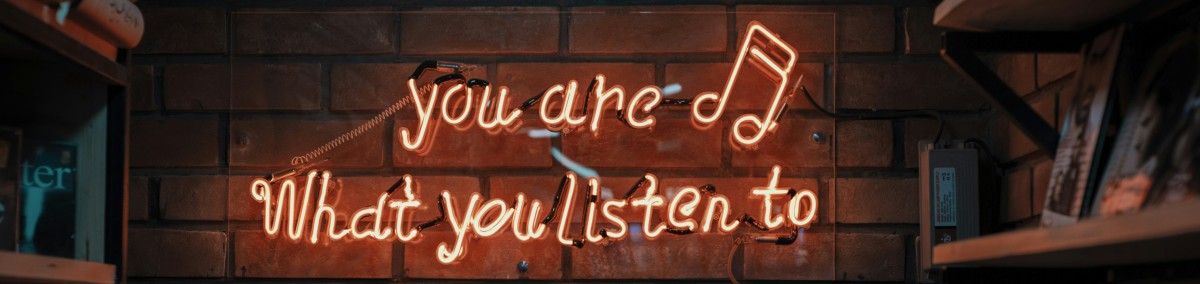
Favorite Calm Things: Music that Soothes

(Title image: Photo by Mohammad Metri on Unsplash)

Let me begin by stating that I have no connection with Jason Stephenson or his YouTube channel, Relax & Rejuvenate with Jason Stephenson, other than that I fell in love with some of the music for which he has posted a (thankfully) loooong version on his channel. Nor am I getting any sort of kickback for writing this post.

The video is called “Happiness Frequency: Serotonin, Dopamine, Endorphin Release Music, Release Negativity”, which is a long title that smacks of click bait and sounds like just about every other positivity-enhancing, negativity-busting title available on YouTube.

But there is something about Jason’s music and this piece specifically. I have used it for yoga, meditation, pre-bedtime wind-down and as a calming backdrop for a stressful day.

What is it about this that is so soothing?
(Relax & Rejuvenate with Jason Stephenson)

I usually don’t put much stock into the claims on these videos. You know, the ones that assure you they can increase positivity, bring you good fortune, pay off your student loans, cure your ingrown toenails and improve your gas mileage. But this one…there is something very special about it.

Everyone I’ve played it for feels the same way that I do, and inevitably, they ask me for the YouTube.

So, I’m curious. Do you have the same reaction? Give it a listen and let me know.

Why Does Mindfulness Have to be Expensive?

(Photo by Mackenzie Marco on Unsplash)

This past January, I was delighted to receive an email from work about a day-long mindfulness class being offered to help usher in the new year. What a great idea! I can think of no better way to launch into another journey around the sun than with a sense of calm and acceptance, and I felt myself puff up with enthusiasm.

But as I scrolled down for more details I saw that this retreat had a price tag. Good feelings gone. It was close to $100.

This was an experience offered by my workplace, presumably so that I could be a more mindful employee, and they were charging for it.

Need I say, work can be stressful?
(Photo by Alex Kotliarskyi on Unsplash)

I understand the importance of investing in yourself. It’s worth more than a monthly Netflix subscription and will get you much farther in life than a daily Starbucks run. Mindfulness experiences are where I want to put my hard-earned dollars.

But this past year was tough. I needed mindful guidance even more, and yet I kept coming across financial barriers.

Why does all this good stuff need to cost so much? Meditation costs absolutely nothing and offers infinite rewards, and yet, there seems to be a vibe out there that you must spend money (the right cushion, the most beautiful journal, the most blissful island retreat, the perfect yoga pants) in order to do this right.

I live in Southern California where the cost-of-living is high and so are many salaries, but not all. And the gap between those who live comfortably and those who struggle to get by is widening. There are so many who could use the grounding and calm that meditation can offer.

At the same time, I completely get that someone like a yoga teacher or a sound therapist in this area is also struggling. In order for them to be able to offer the services that they do, they must cover their costs.

Yeah, I know. All this mindfulness stuff seems to be unnecessarily pricey.
(Photo by Magic Bowls on Unsplash)

So here’s my wish for the remainder of 2024: Hey, workplaces! Yeah, you, the ones who expect a lot from your employees! Make sure they are fully supported in all aspects of wellness. Bring in a meditation teacher or a yoga instructor. Set up a quiet space for people to destress for a few minutes. Don’t expect your workers to shell out part of their paycheck for staying grounded dealing with your expectations.

And for the meditation teachers and yoga instructors and sound therapy practitioners and the like who are actually making a very good living…fine. Do your thing. Charge your prices. I know that trainings and musical instruments and sacred spaces aren’t cheap. There are people who can and will pay a premium for them to get a truly calming and magical experience.

But after that, please. Offer free classes in parks and libraries and community centers. Volunteer your time for a good cause (my favorite has been a charity yoga class at the local Humane Society). Look for opportunities to share your talents in the not-so-bougie parts of town.

It will make a big difference to people who usually are not usually shown such grace.

Patient vs. Survivor: The Impact of a Label

(Photo by Joshua Hoehne on Unsplash)

The first devastating realization I had following my breast cancer diagnosis was that I was now a cancer patient. In my mind I immediately went from “happy-go-lucky, fitter-than-average” to “sick beyond belief”.

Except that nothing physical had changed. But my mindset had. And when I found out that my triple-positive tumor was going to require chemo, I knew that everyone else was going to be aware of my hairless, frail status.

Cancer. Patient. I imagined myself pathetic and scrawny, walking around hunched over in a hospital gown with light shining off my bald scalp. Sounds dramatic, huh?

How do your labels affect you?
(Photo by engin akyurt on Unsplash)

Recently, however, I learned that there’s been a change in the language surrounding those individuals who have been diagnosed, are undergoing treatment for or have finished cancer treatment. The word “patient” as it relates to someone’s status has been supplanted by “survivor” much earlier in their cancer experience.

This is curious to me because I went through a mini identity crisis after I was done with chemo and radiation–I thought that only then could I start calling myself a (hopeful) cancer survivor. But I was a bit anxious about doing so, because I didn’t know whether I truly deserved that title. I thought that I needed to have some special designation before I qualified as a survivor.

These days, the survivor label is given when you receive a diagnosis. The idea is that while initially we didn’t know your status, now that we’ve confirmed your tumor, you are going through the experience of surviving the disease. As stated on the Cancer.net site, “When people talk about ‘survivorship,’ they are usually referring to navigating their life experiences and challenges resulting from their cancer diagnosis.” Read more about how ‘survivor’ is used here.

This sounds a lot better to me than using the term “patient”. By referring to myself as a patient when I didn’t have any reason to–meaning no physical symptoms–I was imagining myself sicker than I really was, which increased my anxiety levels. That made my entire experience worse and it didn’t have to. I did that to myself (‘cept that I was only using the common labels of the time).

How are you choosing to define yourself?
(Photo by Brett Jordan on Unsplash)

Instead of putting my energies into dealing with the side effects of treatment, I went down a dark hole.

Language matters! While there’s no doubt that cancer brings on stress and anxiety, terminology can make a difference in your cancer experience and that can either help or hinder you in the process.

So I urge you to consider the words you use to refer to yourself and pay extra attention to how that feels to you. You could be making yourself miserable without even realizing that you have some control over this.

What If We Re-Interpreted Anxiety?

Title image: Photo by Priscilla Du Preez 🇨🇦 on Unsplash

You may be familiar with the old story about the award-winning singer Carly Simon’s stage fright which prevented her from performing in front of an audience for 14 years.

Performance coach Tony Robbins famously compared her anxious reactions to those of superstar Bruce Springsteen (yes, I realize I’m dating myself) who would describe his physiological responses to going on stage in the same way that Carly did, but he associated them with excitement and not fear.

Anxious responses weigh heavily on us…but what if we could reassign their meaning?
(Photo by Kyle Glenn on Unsplash)

At least that’s how the story goes. And although I think some of this is an oversimplification of Carly’s experience, there is a lot of wisdom to breaking down both performers’ reactions to the point where we recognize that what we feel in our bodies can be interpreted in very different ways based on what’s going on in our heads.

I grapple with this issue myself when I am offered unexpected opportunities that can propel me forward in career and life…but which also cause me agony in terms of my fear of change.

What to do?

What has worked for me is to identify the sensations that I’m feeling. Naming them makes them less overwhelming and it’s a big plus if I can describe what my head feels like, what my chest feels like, what my belly feels like. I try to understand each sensation’s role in creating the overall experience.

Then I try to image that the emotion these individual sensations lead to is one of positivity and excitement. It’s the anticipatory “butterflies in the stomach” from doing something that seems amazing rather than an upset stomach arising from wanting to flee.

And I sit with all those things, bringing in reasoning too: thinking about the positive consequences while allowing the feelings and sensations to be there. Understanding that they are simply sensations and not dangerous on their own–they are physiological responses that evolved to help us out when we needed an extra boost of energy (think “fight or flight”).

Thinking about all the good stuff that opens up to us when we leave fear behind…
(Photo by Allef Vinicius on Unsplash)

I call this reasoning “mental calisthenics”. It takes some massaging and can even get a little metaphysical, but at some point I usually manage to get a grip of that good feeling as if I were gripping the edge of a wall and then pulling myself around to “turn a corner”.

Trying not to overthink it. Just allowing myself to feel into the sensation while giving it a positive spin. And then imagining myself “doing the thing” that I fear…and being good at it.

When particularly anxious, I may even exert myself physically to allow my responses to exercise to meet and match the fast heart rate and breathing that I’m already experiencing.

And that’s about it.

As with meditation, this is a practice and I have to keep reframing the situation in this way to remind myself that change can be unsettling but “unsettling” isn’t inherently negative. It may take a succession of days or weeks to come to grips with the new situation and that’s okay. Patience is the key that leads to progress, and every day that I reframe my sensations is another day that I improve my mental situation.

Hope this helps you too!

~~~~~~~~~~~~~~~~~~~~~~

Important: this is not about “toxic positivity”. There are some situations that are truly bad and understandably elicit an anxious response. Rather, this is realizing that our physiological reactions–the ones that evolved to protect us–may be holding us back because we associate them with fear rather than seeing them as the excitement of possibility arising from change.

“Just Listen”: A Simple Meditation

(Photo by Nick Fewings on Unsplash)

Wow, 2024 is going by fast! We are now a quarter of the way done with the year and it feels like we just started.

In the midst of the whoosh of weeks flying by, here’s a way to slow things down and get intimate with the present moment. This is a simple little meditation but one that I find to be gloriously soothing.

I often do this in the morning when I awake, still stretched out comfortably in bed. Bringing attention to the weight of my body as it rests on the surface of the mattress. Sinking in.

We usually consider street traffic an annoyance, but it can translate into perfect sounds for a meditation.
(Photo by Derek Lee on Unsplash)

And for this meditation, instead of using the breath as a point of focus, I bring attention to the sounds around me. In my room, outside on the street.

There is a lot happening in this soundscape. We have a sound machine going, an air purifier whirring, cars are driving up and down the street below. The sound envelops me and I absorb myself in it. It feels comforting.

Initially, my attention is open, getting settled and taking everything in. Then I shift my focus from the various indoor sounds to the outdoor sounds, traveling around them one at a time, noticing each different one.

Gradually, I select one sound that I can distinguish and move my attention towards it. I get in close. And the closer I get to it, the more my focus turns to a certain aspect of that sound, a certain pitch or rhythm. And then I zoom in even more and try to stay there.

Inevitably, I’ll notice that my attention has been pulled away by thoughts or other sensations, and when I become aware of this, I gently return to that one aspect of that one sound. Exploration continues in this way until I decide to shift my focus to another sound and do the same thing.

There is beauty and peace in a simple meditation.
(Photo by Andriyko Podilnyk on Unsplash)

It’s a little dance between my thoughts and any given sound. Always returning to the sound.

There are no hard and fast rules to this. The option always exists to pull back from that one sound and open my awareness to everything audible around me. And perhaps instead of finding a specific sound to pour my attention into, I allow the soundscape as a whole to come to me and listen to it as if it were one unit, like a symphony.

This is meant to be uncomplicated and unforced. The idea is to stay present with the sounds around me and notice new textures and dimensions of noises.

I hope you give this a try the next time you find yourself in a perfect spot for it (whether in bed or outside under a tree in the park), and if you do, please let me know how it went!

Year 7 Mammogram in the Books

It’s enough to make me get a little cocky.

A few days ago I had my 7th yearly mammogram since my cancer diagnosis. Let me stress first, I am very aware of how fortunate I am. My appointment was early in the morning, my husband came with me (like he’s been doing, since he didn’t come during my diagnostic mammogram seven years ago) and I got a clean bill of health from the radiologist quite quickly.

I didn’t even feel those few minutes of hovering as I waited for the results. The technician had allowed my hubby into the mammogram room to wait with me, and he and I casually chatted so I didn’t notice the time pass.

Wow, things have changed.

‘Scuse me while I sit back and reflect on how fortunate I am for getting this far.
(Photo by Fuu J on Unsplash)

Every year, this feels different, cancer feels further away and I feel less “impending sense of doom” that I had in the first several years.

That’s why something like Kate Middleton’s announcement that she had started chemotherapy for cancer shocked me back to reality.

No matter how good I currently feel about my own situation, there are many reminders that cancer is still a terrible disease that doesn’t care who you are or what you have going on. And it’s still grabbing people and throwing them into treatment.

So much for my cocky attitude.

At times like these, I take a moment to reflect on gratitude for how far I’ve come and, as suggested by my oncologist, how much more life I have in front of me. I don’t think I would have ever felt this appreciation as deeply if I hadn’t gone through the soul-tearing experience that cancer is. Which is not to say that I’m glad I went through it, because I’m not.

Still reminders like Kate’s announcement help counter the selfish little feelings that I sometimes get when I see the free things available to cancer patients now and pout that those weren’t there for me. Yes, those are “human” feelings, but you know what, I can do without them.

Instead, it’s so much more fulfilling to bask in the golden hour sun, taking deep nourishing breaths, and shoo away the everyday concerns that disturb my sleep. At least I have the luxury of being able to busy myself with them, the bothersome little things, and know that I’m still around to have them be a bother.

Why I Get Irritated Searching for Yoga Photos

(Title image: Photo by Katie Bush on Unsplash)

This is getting annoying.

I’ve been posting a lot about yoga, specifically about yoga for cancer populations.

Yoga programming for such populations is *not* your garden variety beginner/intermediate yoga. With the possible exception of well-practiced, life-long yogis who experience a cancer diagnosis, most of the people taking these yoga classes will have limitations to their movement and will need thoughtfully-designed sequences that offer appropriate modifications.

In a number of cases, these individuals may be older (for example, the average age at diagnosis for a woman in the US with breast cancer is 62). Many of them will not have an established yoga practice but may be attracted to yoga due to its reputation as being a mind-body activity: people with cancer not only have to deal with the disease and physical side effects of treatments, but also the emotional repercussions of being diagnosed with a life-threatening illness. Yoga can help.

So why am I irritated? Because the photo databank I use for my blog is replete with photographs of bodies in yoga poses. However, the poses shown are nothing that I would ever consider twisting a cancer patient into.

Make no mistake: the photographs are lovely, the yogis are impressively advanced, but what kind of a message does seeing mainly *these* kinds of yoga photos send to those cancer patients considering trying out yoga?
(Photo by Oksana Taran on Unsplash)

The yogis shown almost without exception are young and flexible. And when I’ve searched for “senior yoga” etc. to increase the diversity of the images…sure, I can find some but they’re locked behind a paywall (mine is a free blog without a budget for such niceities). Apparently, an older individual doing yoga is considered “exotic”.

This type of exclusivity feeds the narrative that yoga is for youthful, injury-free people who have the funds to attend studio classes. Someone who might be older, recovering from surgery, limited in range of motion and conscious about their budget due to treatment costs…well, I wouldn’t be surprised if they felt that yoga wasn’t welcoming of them and their needs.

This is, of course, so ironic, because of all the different exercise modalities, yoga is one of the most perfect for cancer patients. These are the people who need yoga the most!

Yes, I’ve written (griped?) about this topic before. Yes, we’re becoming more accepting of diverse bodies in diverse situations. But good luck trying to illustrate a blog post on yoga for cancer patients with actual photos of cancer patients doing yoga!

~~~~~~~~~~~~~~~~~~~~~~~~~

I’m not expecting to easily find every type of person depicted doing yoga in a given (free) photobank. But in the US we have a problem with making yoga accessible, and the more images that we run of only a certain kind of human doing yoga, the more we inadvertently push the idea that yoga is only for that certain kind of human.

White Paper: “Yoga Interventions for Cancer Patients and Survivors”

(Title image: Photo by Raimond Klavins on Unsplash)

I’ve been writing a lot lately about using yoga to mitigate cancer therapy-related side effects.

In this post, I want to bring your attention to the white paper entitled, “Yoga Interventions for Cancer Patients and Survivors” [Important: this links to the download page on the yoga4cancer website, *not* directly to the pdf itself]. It’s an evidence-based review of research regarding the benefits of a yoga practice in coping with negative side effects that afflict cancer patients and survivors, followed by recommendations for teaching yoga to this population.

This 24-page document (quoted directly from the paper’s abstract) “(1) provides a summary of research on the benefits of yoga for cancer patients and survivors, (2) highlights the most beneficial components of yoga for cancer survivors, (3) identifies barriers and solutions to the creation of accessible, evidence-based yoga programming, and (4) offers guidelines for developing yoga programs that best meet the unique needs of cancer patients and survivors.” [Again, this links to the download page.]

The white paper is written in non-technical language, distilling the research down into a form that doesn’t require a scientific background to understand. Additionally, editions are available in Spanish and Japanese, both available on the download page beneath the English version.

If you’d rather not download, you can read the English version below (or click the “download” button underneath the paper for a pdf):

Unexpected News at my 7-Year Oncology Appointment

(Title image: Photo by Gary Fultz on Unsplash)

A few days ago I had my seven-year post-diagnosis appointment with my oncologist. Seven whole years. And it was a weird conversation.

He said something that set me aback. He told me that he didn’t think I should worry about the cancer coming back. Essentially, I was cured (note: MY words, not his, but that’s the idea). [See bottom of post for disclaimer!]

He’s alluded to this before during previous appointments. But this time around felt different.

I’ve officially hit SEVEN!
(Photo by Himiway Bikes on Unsplash)

I returned home a bit confused. See, for the last seven years, I’ve been a full-on cancer survivor. Still holding on to the fear that at any moment, I would get those terrifying scan results back and–WHAM–I’m a cancer patient once more, back on that sickening rollercoaster ride through treatment.

As difficult as it was to accept that–even trying my best to live a healthy life–I had somehow been smacked down by cancer…now, I had a new problem. Reentering life as maybe not-so-much a cancer survivor anymore, but rather just a healthy, active postmenopausal woman with years ahead of her.

And that is a weird feeling.

For the first five years after my diagnosis, I was frustrated, even angry. Cancer was a devastating detour at a time when I was already struggling to find my way back into a career. Well, forget that. Derailed. I was bitter.

Eventually, I realized that while life sucked, it sucked for a lot of people and I wasn’t special in that regard. That was an important turning point in how I perceived my own role in my cancer story–it was humbling but also gratifying.

Humbling because my experience could have been so much worse. There were people whose treatment did not end well. I was incredibly fortunate, even when it felt like I’d been thrown in a sack and beaten with sticks. At least, I made it out.

Gratifying because early on I held myself responsible for getting cancer, even though I had literally done everything protective (lots of exercise, high fitness, plant-based diet, breastfeeding, not smoking, not drinking) that I could think of. I was desperate with frustration and helplessness about this. Letting go of that guilt was healing.

Feels like I’ve got the green light to hurry up and get on with the rest of my life now.
(Photo by Possessed Photography on Unsplash)

So the last two years have been more about understanding my perspective and then stepping out of it to view things more objectively. Mindfulness and meditation helped with that, which is why I often write about them here. But I hadn’t been ready to get out of the breakdown lane and drive myself back into mainstream life, in part fearful of the pain of having the expectation of cancer-free “normality” smashed to smithereens by a potential diagnosis.

Gradually, that’s changed. But this last appointment felt like getting shoved out the door by someone yelling, “YOU’RE OKAY, DAMMIT!” Here I am, standing and blinking in the sunlight, trying to make sense of exactly what that means for me now. Wow, after seven years, I can actually stop being afraid.

I don’t know if I even remember what that feels like.

Yes, I’m still going to refer to myself as a survivor, because it’s a part of my natural history. I’m never going to forget that experience and I continue to be driven by a need to support others going through this disease.

And if it does return? Well, at least I will have had a brief glimpse of life completely outside the notion of cancer.

~~~~~~~~~~~~~~~~~~~~~~~~~~

Of course, because we’re talking about cancer, the statements above call for level-headness in the midst of levity. While my oncologist feels that the chances of the same cancer coming back are low, the possibility for a brand spankin’ new tumor, breast or otherwise, never goes away. It happened once, it can happen again. But that’s life. I’ll take it.

“Moving Through Cancer”: A Short Film from ACSM

(Title image: Photo by guille pozzi on Unsplash)

I’ve been coming across a lot of interesting–and hopefully useful– videos. The one I’m posting here is presented by the nonprofit Fund for Sustainable Tomorrows and the American College of Sports Medicine, the latter being the organization through which I received my personal trainer certification almost 16 years ago.

This is a 20-minute film with a hopeful message!

The film, narrated by former Olympic figure skater and cancer survivor Scott Hamilton, showcases the stories of how survivors are using exercise to make themselves feel better and increase their chances for survival. It also shows how our knowledge about physical activity’s benefits during cancer treatment has increased, and the programs that have been created to help cancer patients become and stay active.

It’s amazing to see how within a decade or two the attitude about cancer and exercise has changed. Whereas individuals undergoing cancer treatment used to be told to rest as much as possible, now it’s understood that exercising through your treatment is one of the best ways to not only minimize associated side effects but also decrease the chances of cancer recurrence.

For me, exercising during my treatment was a way to feel normal when everything else felt out of control.

The current recommendation is aerobic activity for 150-300 minutes per week along with twice weekly resistance training sessions. And it’s best to do both types of exercise for a well-rounded program, if you can manage it.

But the most important thing to remember is that no matter what you do, doing something is better that doing nothing. Research has discovered the existence of myokines, hormones that are produced in the tissue of skeletal muscles. They are released during muscular contractions and seem to have anti-cancer properties, slowing cancer growth and spread. That is very exciting news!

Of course, exercise is not a cure, and there is no guarantee that if you are an avid exerciser you won’t get cancer or won’t have it recur. However, there’s a very good chance that physical activity will make you feel better and help you continue with life-saving treatments.

As E. Ronald Hale, MD, MPH, Medical Director of Radiation Oncology at Kettering Health states (from the video), “The best cancer treatment in the world is useless if you can’t get through the cancer treatment.” The side effects from cancer therapies can be debilitating, but getting out and moving will improve your quality of life and help you finish your treatment.

~~~~~~~~~~~~~~~~~~~~~~~~

It’s worth mentioning that the number of exercise professionals who have had additional training in working with cancer patients is growing, which means that cancer-informed trainers and yoga teachers are becoming easier to find. Now it’s the insurance companies that need to get on board.