If you had one day to live, how would you live it?
I pondered this question last week as I was trying to calm myself down before teaching my first official public yoga class, while also juggling emotions about certain events at home over which I had no control. Read that as: anxiety.
And in the midst of this all-too-familiar emotional turmoil I felt myself being consumed by my thoughts. And yet, if I had only one day left on this earth, I can’t image that I’d let myself get mired in everyday worries. My perspective would immediately snap into a megawide view of everything that exists in the world.
Never was I so aware of every palm tree…
It would be easier to see the beauty everywhere. Consider this: when I returned to Southern California after four bitterly cold years in a Northern climate, I noticed every.single.palm tree. I was so aware of everything that I had missed during my years away and appreciated every ray of warm sunshine. Other cares temporarily fell away as I was filled with gratitude to be back.
If I had only one day to enjoy the world, I hope that I wouldn’t spend it lamenting over little things. I would sit with my face to the sun, smell the breeze, take deep breaths and appreciate the here and now. Accepting that I had only 24 hours, I imagine that I wouldn’t be ruminating about something a co-worker said to me in passing or how I really should be cleaning the bathroom more often.
So interesting that it would take facing the end of my days to begin truly appreciating them.
So how about this (and this was what I meditated on last week in the midst of nervous feelings), why not imagine the feelings of that last precious day every single day? Stop and feel into my feet on the ground and the air in my lungs. There is so much wonder all around us and what a pity that it takes a drastic event to experience a perspective shift.
It feels so glorious to be alive.
~~~~~~~~~~~~~~~~~~~~~~
Don’t get me wrong, the shock of knowing that your end is near could be devastating. So if you’d like to use this idea as a meditation prompt, perhaps consider if you were on vacation in a paradise-like location and if your plane were leaving in a day, how would you enjoy your remaining time there?
I have a full toolbox of techniques for handling anxiety during the day, but nighttime is a little trickier. If you’ve had the same experience, you’re not just imagining things.
A Live Science article by Louise Bond examines this issue. According to Clinical Psychologist Charissa Chamorro, PhD, at night our brains have fewer distractions, leaving us more vulnerable to worries that creep in. This makes sense as we can redirect our attention during the day to activities that are not available when we’re in bed.
Darkness can be unsettling enough, but researchers feel that the circadian rhythmn is also involved in the accentuation of nighttime fear.
And you don’t need to be suffering from horrible anxiety for this to be the case. Research (Li et al., 2015, Int J Psychophysiol) showed that even among women without anxiety, fear was enhanced at nighttime, and not simply because of darkness, suggesting the involvement of the circadian rhythm. At the same time, as diurnal beings, humans naturally evolved to have stronger fear responses at night. This is partly due to the fact that we don’t see well in the absence of light and therefore are more vulnerable to nighttime predators.
Furthermore, while there is a natural ebb and flow of cortisol throughout the circadian cycle with cortisol levels peaking in the morning and being lowest at midnight, when anxiety keeps cortisol levels high during the day, that affects nighttime hormone release and therefore your ability to rest (Hirotsu et al., 2015, Sleep Sci).
To make matters worse, once your sleep is disrupted, worrying about your inability to get a good night’s sleep can result in being unable to sleep, and a vicious cycle develops.
Establishing calming practices during the day can have a positive effect on nighttime anxiety.
You’ve probably heard the suggestions for improving sleep: turning the lights down in the evening, avoiding electronics (or using blue-light blockers), keeping your bedroom cool and dark, using a sound machine to mask noises, avoiding stressful or polarizing conversations in the evening, and the like.
To that I would add that what you do during the day itself can affect what kind of sleep you have at night. Meditation, practicing mindfulness, doing deep breathing exercises all put us into a calmer state. If you wake up in the middle of the night with a racing mind, having practiced and become adept at self-grounding techniques in daytime can help you soothe yourself at night.
While the roots of our anxiety may be complex, for those of us for whom it’s built up over time, so too will it take time to establish behaviors to help control it. Sometimes we need support of a therapist or medication, sometimes we can manage on our own, but setting aside time every day for even a short calming practice can help you improve management of anxiety no matter when it appears.
For those of us in the United States, Thanksgiving presents an opportunity to gather with family and close friends and share a festive meal.
However, this holiday can become complicated in a time of polarized views. Coming on the heels of another political election, togetherness with those of strong opinions might be, to say the least, uncomfortable.
Put another way, the battles will be epic, the indigestion will be legendary.
So for everyone who is anticipating shifting restlessly in their seats this week, I wanted to offer you a short meditation.
Listen closely. On the surface you might not like what you hear, but there may be deeper messages that speak to the vulnerability of those who seem the most belligerent.
Listen. If you listen closely enough, you will hear the real reasons that your family members believe what they do, particularly if their views seem hurtful or unfair. It often has something to do with fear or an unfulfilled need and often comes from a place of vulnerability.
You will chose how to approach this. But I can assure you that arguments are pointless. There will be no “winner”. Just resentment and an even stronger resolve not to change their minds. Don’t plan on pulling a “zinger” that will convert everyone to your way of understanding. Not gonna happen.
Observe. Instead of reacting to statements that you feel are wrong, watch the body language of those around you – it will show you the state that they are in. Clenched fists, hunched shoulders, unsmiling faces, repetitive movements – all these belie discomfort. Are people enjoying their food or unhappily shoveling it down?
Take a step back to help you see what’s really going on. Everyone at the table has a three-dimensional life with their own desires, joys and sorrows. In the time of heightened emotions, it’s easy to forget that.
Smile and find something that everyone can agree on.
Breathe. Don’t get sucked in. If someone asks you what you think about a contentious topic, smile and compliment Aunt Gladys’ stuffing. How does she always make it so flavorful? You woke this morning salivating, thinking about having it for dinner.
It may sound contrived, but if you can find a sincere compliment to express, you can change the direction of the conversation and relieve tension. But please, be sincere.
This is not a dishonest deflection of attention. This is finding that one thing that everyone can agree on and focusing on it. It’s like lighting a spark and then blowing on it gently to help it grow into a warm and cozy fire. Everyone benefits.
This is mindfulness at its best. Every person has something within them that wants to be loved and respected, even if they don’t feel they deserve it. Sometimes those who seem the most cantankerous feel the most wretched inside. Remember, at the end of the visit, you will get to leave, so why not leave having spread a little joy and goodwill?
At the least, you will have made Aunt Gladys smile.
~~~~~~~~~~~~~~~~~~~~~~~~~~~~~~
There is a lot going on in the world that is worth fighting for. Thanksgiving dinner is not the place to do that. And perhaps the peace that you impart over that meal will eventually soften hearts and open minds.
Ah, anxiety. I hate it but it’s such a fixture in my life, although it’s gotten better now that I’ve become more aware of the nuances of my reactions to stress.
That awareness was key, but it took a while for me to figure it out. I had been told to “feel what the response to anxiety feels like in my body”, but lemme tell ya, when you’re in the middle of being really stressed out, the only answer you can give is: “TERRIBLE!”
I think the way this suggestion has been posed is all wrong. It wasn’t until I started mindfulness meditation that I finally understood what was really the point of feeling into body sensations.
First of all, in case you’ve been fortunate enough to never experience severe anxiety, here’s how to imagine it: (1) turn on a really large blender, (2) stick your head in it. That’s about it. Then, when someone asks you to feel what body sensations you have, you answer, “Dunno, my brain is missing.”
If serenity is a clear day, this is anxiety.
Basically, in the midst of anxiety, there is so much that feels out of control that I don’t think it’s possible to lasso down sensations without having a person hold your hands, look into your eyes and say, “Okay, focus on me and do this…”
And that, my friends, is why scratching out even the slightest bit of space for yourself in a stressful situation, just so that you are not 100% caught up in the whirlwind, is so beneficial for getting yourself through it.
Just like you don’t wait until the day of your first marathon to start training for it, you need to prepare for the next tornadic episode of anxiety before you’re in it.
Become your own Professional Stress Manager. That takes practice, primarily when things are peaceful. Just like you don’t wait until the day of your first marathon to start training for it, you need to prepare for the next tornadic episode of anxiety before you’re in it.
Job One is bringing yourself out of the swirling thoughts in your head and that can be hard to do, since they are where your anxiety originates. That’s why you have to re-direct your attention to something outside your mind, and that’s where focusing on body sensations comes into play.
First, find stability and grounding.
First, find yourself an anchor, like the oft-mentioned breath, and start with that. Focusing on the breath gives you a target for your attention when everything else feels crazy. There are a variety of sensations associated with breathing: the rush of air, expansion of the chest, expansion of the belly and whatever else is salient to you.
Pick one that makes sense. It is expected that you won’t be able to maintain your focus on it and your mind will wander off. That’s OK. In fact, the whole point of this is that you DO lose your focus. And once you realize that you have, bring your attention back to your breath.
And that’s it. That’s ALL of it. It doesn’t get more complicated than that.
And when you’ve achieved some sort of stability there, you’ve made yourself some space. Take advantage of that and bring your attention to other parts of your body, with one eye on your breath: is there a tingle in your fingertips? How about your toes? Are you clenching any muscles in your body and what happens if you try to release them?
Ask yourself, “How do I know I’m anxious?” What are the signs? Face feeling hot? Stomach bunched up? Cold feeling in the intestines? Tightness in the chest? Can I take a deeper breath and try to relieve that tightness? Can I send warmth into my gut? Try to define what anxiety means to you on a physical level. The more you do that, the more control you get on your reaction and the experience is not as frightening.
See, the idea is that you need that fingerhold in the crack between your stressor and your reaction to it so that you don’t get swept up in the lack of control. And establishing that will take some practice and time, but as with any exercise, each practice session will benefit you. And then best time to start is now.
Staying present is key for not letting your thoughts take you on a wild ride.
Maintaining presence, however, takes practice so I’m always on the lookout for new ways to imagine the state of being in the “now”. Some of these are simpler exercises than others, but the upside of a more “complex” technique means that all my mental energy remains on staying present instead of, say, worrying whether I embarrassed myself at a party three nights ago.
The following is a visualization and mental exercise rolled into one:
What if only what you’re touching exists and everything else falls into nothingness?
Seated, close the eyes. Breathing deeply, allow everything that is around you to fall away in your mind, leaving only those points where your body makes contact with the surface beneath you.
Imagine that the soles of your feet sit on top of sole-shaped pieces of support material. Your buttocks and thighs contact like-shaped material, as does any place your back rests against your chair. If you touch your fingers to the side of your chair seat, small oval-shaped pieces of material appear where your fingers make contact.
Everything else disappears against a background of light (or darkness, if that is more calming). The chair and floor and even the room you are in? Gone. The point of this visualization is maintaining focus on only what you are physically experiencing at any given moment.
It is a strange sensation to imagine, floating through the ether but still feeling support from the slightest bits of material that touch you. This is the ultimate in being 100% present and turns the concept of object permanence on its head.
You don’t feel it? It doesn’t exist.
Our brain wants to fill in the parts that we can’t see because the brain has formulated an image of what is out there. However, in this practice we try to do the opposite–let go of what we do not have immediate physical evidence for.
This is a good analogy for dealing with thoughts that our brain fabricates based on the expectations that it has. What if we let go of them, if only for a short while, and simply sit in the stillness of what is happening right now?
I, like so many people, keep a lot of tension in my neck and shoulders. Some days it feels as though my neck is made of steel, but not in a good way.
The reality is that I don’t even realize how tight those muscles are until I lie down and try to relax.
So I have made a meditation of this for bedtime. Instead of focusing on the sensation of my breath, the focus is on releasing the tension in my neck and upper shoulders.
It may sound like I would not be able to squeeze an entire meditation session out of this, but oh, I can.
Complete release takes focus!
Lying down on my back I inhale, and then with the exhale, I focus on my neck and relax it, releasing the rest of my body along with it. With the following exhale, I do that again. That’s because while I may think that the initial release took care of the tension, there is still tightness there and I really have to work on it mentally to release that.
It’s as though my neck muscles are springs that I can stretch, releasing tension through the exhale, but once I let go (inhale) the “memory” in my muscles tightens them up again.
It helps to imagine my body melting, as if I’m being drawn downward into the Earth.
I can keep going like this, feeling my chin inch slightly towards my chest as the tension releases. Melting into the mattress. The more I release, the more subtle the sensation, yet very satisfying. The more I relax, the more deeply I breathe and everything lets go.
The awareness of what is going on in my body helps so much, but the tension is tenacious. This is not surprising, given how much mental weight my neck and shoulders bear. So it is a dance between releasing and returning to release again. Little by little until I eventually fall asleep.
I’ve shared that I recently completed a three-month, 200 hour Yoga Teacher Training (YTT).
My main motivation for entering YTT revolved around yoga’s role in my emotional recovery from cancer. My teaching goal is to make yoga accessible to more cancer patients and survivors. Sadly, the view that many have of yoga in the USA is that it’s mainly for young, white, flexible, affluent women.
That means that the benefits of yoga are not reaching many of the populations that need it most.
Sadly, yoga in the USA is not associated with a diverse clientele.
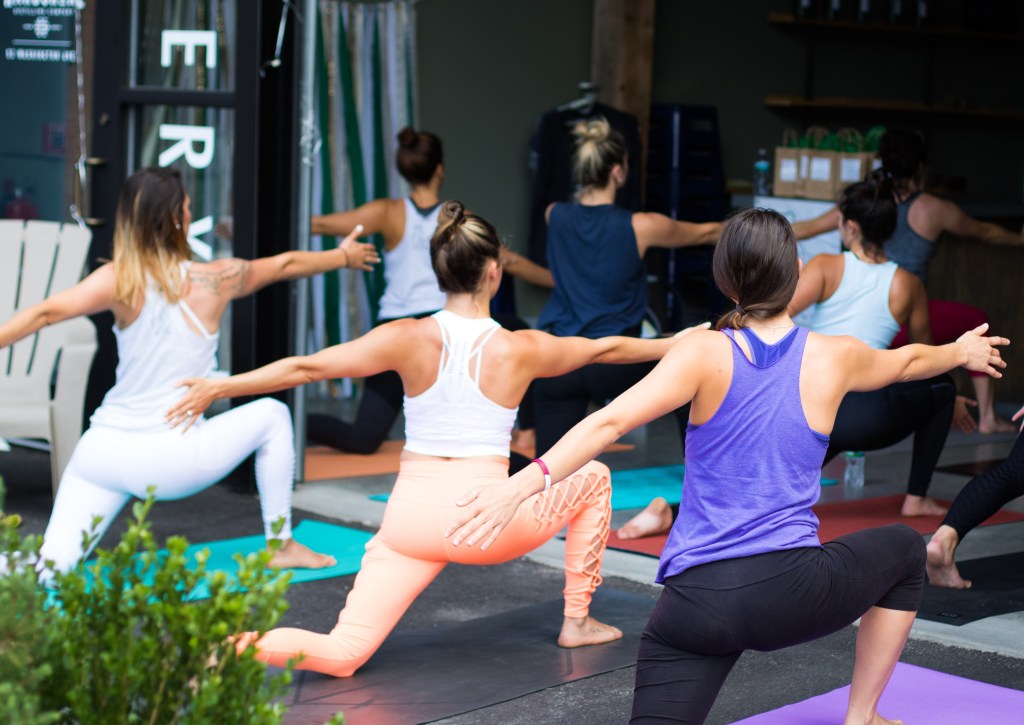
In YTT, I expected to deepen my own practice, immerse myself in the roots of yoga and gain experience in sequencing and teaching among other things. And we did that. The program was well-rounded and paid homage to yogic philosophy, in addition to covering a broad range of relevant topics such as anatomy, meditation, sound healing and creating an inclusive atmosphere.
What I didn’t expect was what I learned about myself. Now, in the course of cancer treatment I gained access to counseling at my cancer center with an excellent therapist. And prior to that, I had sought help for anxiety. I’d explored talk therapy, cognitive behavioral therapy (CBT), eye movement desensitization and reprocessing (EMDR), mindfulness-based stress reduction (MBSR) and had gone through a lot of introspection. Basically, I thought I’d covered my bases and knew what’s what when it came to my inner workings.
YTT proved me wrong. I learned that I still struggle with competitiveness, perfectionism and a host of little insecurities. Wow, that was an eye-opener, even after all the “head work” that I’d done! In addition to coursework, YTT had a requirement of attending a number of yoga classes. Due to the limitations on my time given my work and family schedule, I was forced to take the heated (~95F) Level 2 classes, which happened to be most convenient. They emphasized balance and flexibility, while my non-yoga fitness focus has been strength and endurance.
*ahem* This is NOT me.
Balance and flexibility against the backdrop of neuropathy, menopause and vestiges of cancer treatment effects did not allow me to show my “best side.”
Not a big deal, I thought, since yoga for me is a mental “work-in”, not a workout. I’ve felt that holds truer to the traditional purpose of yoga and respects its roots. But in a crowded yoga studio where I was usually the oldest class member, I struggled to maintain my composure. Many of the other students could have been my offspring. The Level 2 classes made me look, I felt, like I didn’t belong.
And that feeling got worse as the classes went on. By the last weekend, I was the only teacher trainee who showed up (others trainees had more flexible schedules that allowed them to take other classes). After weeks of taking Level 2 classes, feelings of dejection had built up.
I should be over this, right? I should have been able to hold my head high and do what I could, knowing that my fitness stemmed from other activities and yoga served a different purpose for me than for “the youngsters”.
But nope.
The YTT itself was exceptional and the teacher trainers were amazingly supportive and knowledgable. The other members of my class were (no surprise) all white, all female and all younger than me. But they were generous and sweet and each one had been through her share of hardships. I felt only love from them. I just didn’t feel it from myself.
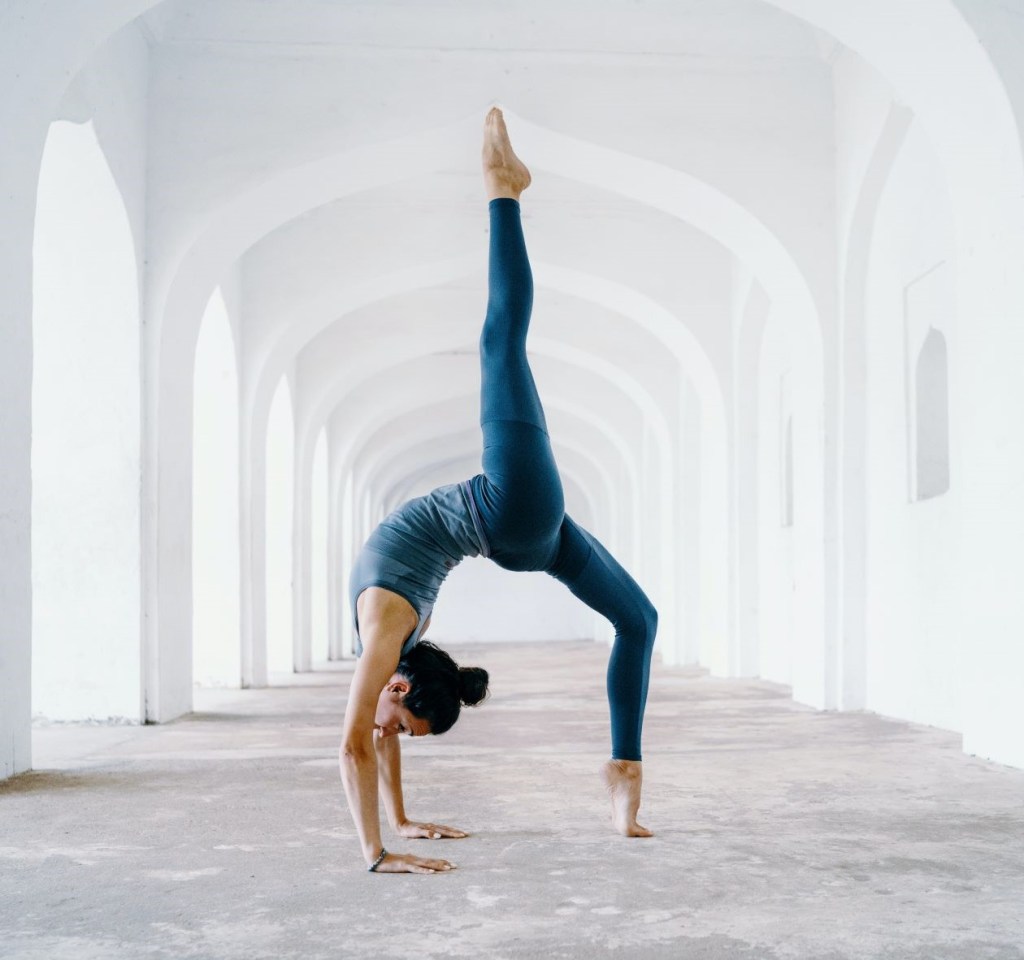
This is my preference for yoga: slow , mindful movements performed with intention. No contortions.
And with fitness being so important to me, I was frustrated that yet again I managed to find a situation where I showed myself to be “less than”. That was painful.
Yet, this peek into my current state was invaluable. Being in the midst of all those younger bodies strengthened my resolve to create classes that are more suitable for not only cancer folk, but also for other special and older populations.
YTT taught me that I don’t have it all figured out yet. However, it also gifted the awareness of what was really going on. Just as in mindfulness meditation, once I became aware of where my mind was leading me, I could take action to return to a place of peace and acceptance. That advanced my emotional evolution by lightyears!
Experiencing classes at a yoga studio also drove home the necessity of offering yoga to people who would benefit from the practice but are often forgotten when classes are planned. There are populations for whom studios are simply inaccessible financially, physically and even psychologically.
Ultimately, this next-level awareness showed me that what I had been doing on my own over the years still counted as yoga, even when I didn’t look like the other class members. It was the yoga I needed. And that was enough.
I was not in a good headspace during that time. I had started a mindfulness meditation practice five months earlier but had too little experience and not enough training for it to significantly affect my mindset, 50+ years in the making.
When I write a cancer-related post, I straddle a line. On the one hand, I want to provide an admittedly subjective and honest account of what I experienced during treatment; on the other hand, understanding that we all come from different backgrounds and may have vastly different perceptions of what cancer means to us, I don’t want to color the reader’s view of what their experience might be like.
Cancer revealed a lot more about myself than I expected to find.
There have been times that I held back on projecting too much of my own personal state. I waited five years to post my videos on Chemo Fatigue because I didn’t know whether it was appropriate to do so. They remain some of the rawest and truest representations of the despair that I felt at the time. I was still very angry and frustrated, feeling what I recognize now as a deep sense of betrayal.
It was mindfulness meditation along with deep reflection, expert counseling and simply the passage of time that ended up bringing me out of the anger. That process took a lot longer than I ever expected. It also showed me aspects of my personality that I hadn’t understood before because I’d never had to confront them.
So while I still would never say that cancer had a positive effect on me, just as with many heavy life experiences, it took me to a new level of maturity and self-awareness. I am very thankful to be on this side of treatment, although I’m acutely aware that everything may change with the next scan. That makes every moment all the more precious.
I came across a delightful mindfulness visualization on the Calmmeditation app, presented by meditation teacher Jeff Warren who credits his teacher, Dan Clurman, with relating the idea of this exercise.
It is an effective and immersive way to ground yourself into the present moment with the emphasis on being in your body.
Imagine that your body is an hour glass and that the falling sand brings awareness as it fills the glass, from the bottom up.
Imagine that you are an hourglass and your awareness is the cool sand that falls from above. First, bring your awareness down into your feet and ankles, feeling into the sensations there, filling up not only that part of your body, but also inviting attention into the space between your feet and around them at the bottom of the hourglass. Feel the level of your awareness rise.
Now invite your awareness to fill up your legs, while still keeping attention on your feet and ankles. Notice how the level of these “sands of awareness” travels up and fills out the space up to your hips. Feel into how that feels, not trying to change anything, but simply noticing any sensations.
In this way, continue to work your way upwards, allowing these “sands” to gradually fill up your body as they empty from your mind. Allow the swirling thoughts to release and drop down to light up your lower limbs, your entire torso, your arms and shoulders little by little. Maintain awareness of the parts of your body that have awakened already, so that as you move along in this way, the sensations in your body build and you feel the liveliness of the present moment in them.
Finally, coming to the top of your head, feel into all the sensations vibrating through your entire body, perhaps gentle tingling in your feet and legs or a subtle pulsing in your arms and hands. Maybe the awareness of movement through your intestines, the beating of your heart and even the areas where your body makes contact with the surface that supports it.
In this way, you bring the whole of your body into the present, not focusing on just one part, but on everything that makes up your physical presence, and also the space around your physical presence, while at the same time relieving your mind of the pressures exerted by thinking. As your body fills, your mind empties and thoughts are replaced by a sense of peace and well-being.
I’ve tried this a number of times and found it to be both grounding and uplifting simultaneously and an effective way to bring myself out of my head and into the here and now. If you’re looking for a different way of engaging in a body scan, give it a try.
~~~~~~~~~~~~~~~~~~~~~~~
Please note that a form of this meditation appeared on the Calm app on April 29, 2022, as an installment of Jeff Warren’s Daily Trip.
While I am a subscriber to Calm, I do not receive compensation for writing about the app. I am simply a very satisfied user.
I’m neck-deep in juggling my day job and studying for my Yoga Teacher Training final exam, so I’m going to keep this short and tell you about a daily practice that I’ve established, as suggested by one of our teacher trainers.
We were to choose one thing to do consistently, something that was just for us and our well-being. And it was something that we should commit to doing everyday.
I chose making myself a tall glassful of hibiscus tea as my daily practice. As it is, I love tea because the process of making it requires that I pay attention to what I’m doing. While we set up morning (decaf) coffee the night before and the coffee maker is on a timer to brew, tea requires my presence.
Between waiting for the water to boil in the tea kettle, placing the hibiscus petals into the infuser, inserting that into the teaglass, pouring the hot water over it…the process becomes mindfulness meditation. And the best part is the visual reward of watching the vivid colors of the red hibiscus flowers seep through the infuser and into the glass, beautiful swirls of vibrant pink that, even if just for a handful of seconds, fill me with a sense of peace and spaciousness.
Feeling my spirit refreshed, I take a deep breath and return to my day.
Actually, it’s 16 seconds…but 15 sounds like a nicer, rounder number. Sorry about the knocking in the background. Once life calms down I’ll post a better version of this clip.