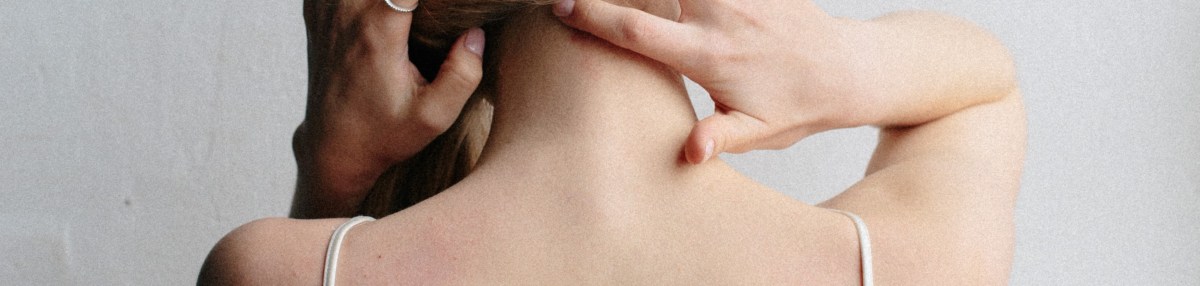
Swinging My Hips

(Title image: Photo by Jessie Shaw on Unsplash)

It’s been over nine years since my cancer diagnosis and treatment. That’s almost a decade, which is hard to believe! But here I am.

While the physical side effects of the cancer treatment itself are mainly gone, I am still dealing with some weird psychological ones. One of the most unexpected effects for me was that I lost a chunk of my self-identity.

I’ve written in the past about difficulty of dealing with this change in my sense of self. Part of it was hormonal, brought on by endocrine therapy. I had been pre-/peri-menopausal when I started treatment so I wasn’t ready for menopause. There was so much anxiety associated with surviving cancer, chemo and radiation, the thought of also dealing with one of the biggest changes in a woman’s life hadn’t even occurred to me. I had not seen that far into the future because I was afraid that I’d never get there.
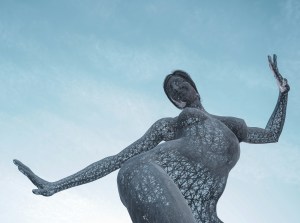
Ah, the joys of letting your body guide how you move through the world.
(Photo by Liberty Ann on Unsplash)

All of this is a long-winded way of getting to the actual point of this post…

So in the aftermath of cancer and this semi-identity crisis, while in yoga teacher training, someone made a comment that stuck with me.

I had bumped into one of the other teacher trainees outside a shopping mall, who said she recognized me from far away. She explained, “I could tell it was you from your walk.”

I didn’t ask for elaboration, but it seemed like an odd comment and made me wonder, what exactly did she see in my walk that made it look so distinct? Some time later, someone else said the same thing! So I started to pay attention.

I realized I wasn’t walking the way I used to.

My walk had become a very quick-paced, tight-strided gait. When I considered myself from the side, my movement looked uncomfortable and self-conscious, as if I were trying to be invisible and not take up space, no mean feat for a nearly six-foot-tall woman.

My flowing saunter had been replaced with something that I can only describe as “getting from point A to point B with my tail tucked between my legs.”

I didn’t feel like a woman. I felt like a survivor, which in itself is not a bad thing. But I defined myself as one, and it had become an all-encompassing definition. Yes, I had survived, but now what?

Moving smoothly, gracefully…
(Photo by Akshaya Jayaprakash on Unsplash)

It wasn’t until I found myself in a completely new environment with calmer surroundings that whatever I was clenching started to unclench and I found myself breathing with more ease. And that’s when I remembered the comments about my walk.

So I reintroduced a playful, natural swing in my hips. Releasing the tension that had built up. Back before I had kids I’d taken several years of belly dancing classes, and I drew on the sensual feelings from that dance form.

I started to roll. It was a fluid motion that felt so right in my body. After years of squats, deadlifts, rows and presses, it was nice to let go of the tightness and return to something that was decidedly more feminine.

This brought with it a mindfulness of where I am in space, and how I move through it. The simple act of allowing my hips to move in their natural arc has reopened a door that I thought was closed forever.

It’s nice to be back.

Navigating Anxious Moments with Breath and Muscle Release

When you can’t control your anxious thoughts, what can you use to get a foothold on stability?

This was the issue for me for years, if not decades. During panicky times, I’d close my eyes at night and see a montage of fleeting images like a rapidly changing patchwork quilt that I couldn’t stop. It was kind of like at the beginning of a Marvel movie, where images whiz by you. Except that for me there were no superheroes or rush of excited anticipation.

This is not an ad for Marvel. The first seven seconds of this 11-second clip represent what I used to “see” during middle-of-the-night panic sessions: just flashing images passing before me.

Anxiety meant being blanketed by nausea and fear that blocked my view of reality. I couldn’t see past any of it because the sensation was all-encompassing. Mindful grounding has enabled me to get a hold on the edge of that blanket and pull it up ever so slightly to let some light in.

That was accomplished by two simple things that I could control in the midst of everything else I couldn’t:
1) changing my breathing pattern
2) identifying and releasing muscle tension

I might not have been able to slow the thoughts, decrease my heartrate or relieve the nausea directly…but the combination of the breath and relaxing my muscles provided a path that led around those things and quietly affected them behind the scenes.

First, start with your breath

Bring your attention to the breath and consciously slow it down. Start by trying to make your inhales and exhales the same length, adding a second-or-two pause in between. Depending on your level of anxiety, this may take some time if your breathing has been rapid and shallow. Any slowing is helpful, especially at the beginning. Be compassionate and patient with yourself.

A hand on the belly makes it easier to focus on breathing into the abdomen.

I find it easiest to deepen the inhale first, drawing the breath into the belly. Placing a hand on the belly helps keep your focus there as the sense of touch supports grounding. Try a deep inbreath, pause, and a lengthened outbreath. Blowing out through pursed lips helps control the air flow and draw out the exhale. An exhale that is longer that an inhale helps slow your heartrate. Belly-breathing makes a big difference.

Aim for an inbreath of 4 counts, pause and hold for 2 counts, exhale for 6 counts.

Some guidance recommends that you place one hand on the chest while you have the other on your belly. However, in my experience, if you are particularly anxious it’s helpful to keep your focus off a racing heart. Keeping your hand on your belly is enough.

Next, relax muscular tension

Releasing the tension in your body will help calm you. We often don’t realize how much tension we’re holding until we mindfully scan our bodies.

Stretch in whatever way feels good. Don’t be afraid to take up some space.

First, streeeetch the way you’d stretch after waking or when you’ve been stuck in one position for a while. Imagine you’re a sleepy bear coming out of hibernation. Too often when stressed we crumple in and hunch over — opening up through a stretch may signal to the body that it’s safe to come out.

Then, roll your shoulders forwards and back. Gently roll your head in a front semicircle, ear to ear, paying attention to how it feel to move in that way. So many of us hold tension in the neck and shoulders and we squeeze muscles there without realizing it. Spend some time loosening up these areas.

Feel into your face. Raise and lower your brows several times. Relax the muscles around the eyes. Open and close your mouth and wiggle your jaw. Clenching in this area can cause headaches so try to release tightness here.

Turn your attention to the rest of your body. Are you knotted anywhere? Simply the process of noticing where your muscles are tightening can change your focus from anxious thoughts in your head to sensations in your body, keeping you present and less likely to get trapped by fears.

Aim for progress, not perfection. This is a learning process, so don’t wait for anxiety to reach a peak before starting. Practice when you’re calm so you know what a lengthened breath and relaxed state feels like in your body.

Those of us who have lived with anxiety would love to hang out in peaceful bliss all the time, but that’s not the reality of life. However, nurturing calm through techniques such as breathwork and muscle relaxation lessens the distress of anxiety-provoking situations and helps us find a sense of comfort within our discomfort.

Wound a Bit Tight? Meditating with Muscle Release

I, like so many people, keep a lot of tension in my neck and shoulders. Some days it feels as though my neck is made of steel, but not in a good way.

The reality is that I don’t even realize how tight those muscles are until I lie down and try to relax.

So I have made a meditation of this for bedtime. Instead of focusing on the sensation of my breath, the focus is on releasing the tension in my neck and upper shoulders.

It may sound like I would not be able to squeeze an entire meditation session out of this, but oh, I can.

Complete release takes focus!

Lying down on my back I inhale, and then with the exhale, I focus on my neck and relax it, releasing the rest of my body along with it. With the following exhale, I do that again. That’s because while I may think that the initial release took care of the tension, there is still tightness there and I really have to work on it mentally to release that.

It’s as though my neck muscles are springs that I can stretch, releasing tension through the exhale, but once I let go (inhale) the “memory” in my muscles tightens them up again.

It helps to imagine my body melting, as if I’m being drawn downward into the Earth.

I can keep going like this, feeling my chin inch slightly towards my chest as the tension releases. Melting into the mattress. The more I release, the more subtle the sensation, yet very satisfying. The more I relax, the more deeply I breathe and everything lets go.

The awareness of what is going on in my body helps so much, but the tension is tenacious. This is not surprising, given how much mental weight my neck and shoulders bear. So it is a dance between releasing and returning to release again. Little by little until I eventually fall asleep.