Cancer Survivorship Ain’t For Sissies

With all the focus on breast cancer during October, pushing us to be warriors and fight our way through this, the concept of survivorship can get lost in the fray.

We talk about cancer treatment and get very granular about the procedures, whether surgery, chemotherapy or radiation therapy. And those do deserve a lot of discussion as they can be difficult to endure. Some, like chemo, have an almost legendary reputation and it’s important to be able to separate fact from fiction.
After all the noise and attention associated with cancer treatment, survivorship can leave some of us feeling alone.
Photo by Atharva Tulsi on Unsplash

Consider: how many of us, upon hearing that we have breast cancer, preoccupy ourselves with worrying about what life will be like five years down the road? More likely, we’re thinking about what treatment will be like and are hoping that we’ll be around when it’s done!

But with so many women surviving breast cancer, it’s important to talk about what happens after the dust settles and you realize you’re on the other side of the treatment that you had so feared. Is it really the “other” side?

So much of my blog has been devoted to the life after cancer. After I documented my treatment journey, I turned around to get hit in the face with all the stuff that I wasn’t expecting.

One of those was endocrine therapy. Women with hormone receptor positive cancers aren’t done when the “tough stuff” is over. Tamoxifen and aromatase inhibitors are a whole new round of treatment that can affect your hair, your libido, your joints and more. Some women get hot flashes and night sweats. Some experience weight gain. And these are medications intended to be taken for a number of years.

There may be body image issues. Breast cancer surgery can leave women looking very different from their pre-cancer days. Like it or not, breasts are associated with womanhood. Whether lumpectomy or mastectomy, with or without reconstruction, there is a new normal that needs to be dealt with.
By seeking support and relating your story, you help not only others who are dealing with something similar in addition to yourself.
Photo by Ivana Cajina on Unsplash

And then cognitive issues like distractibility, loss of memory and difficulty processing concepts may come up. To make things more complicated, these may appear after treatment is in our rear view mirror and our loved ones may simply not appreciate what we’re dealing with. The bodies and minds of survivors may change in a way that they are not prepared for. Because, how do you anticipate something like this?

Survivorship does not mean that you never again have to think about cancer or its repercussions. There will be adjustments to your expectations as to how your life will be from now on. It’s important that those around you understand that just because you are done with the major cancer treatments, things might not feel familiar or normal.

So we need to be having this conversation with those around us and making opportunities for affected women to seek help and support. There is no shame in being a survivor who is also struggling. While it’s true that we are “lucky to be alive”, it does not mean that we have no right to seek a higher quality of life.

Don’t be afraid to talk about it. ❤

Don’t Take Stress Sitting Down

About a year or so before I felt a cancerous lump in my breast, I was tasked with planning an academic conference, which I’d never done before. The project was running behind schedule, procedures had changed and I felt panicky and lost.

As a result, I was working seven days a week with most workdays lasting into the night. This was in addition to having to break in the early afternoon to pick up my children from school, then continuing work from home.

Everything was a rush and I had a constant lightheaded feeling.

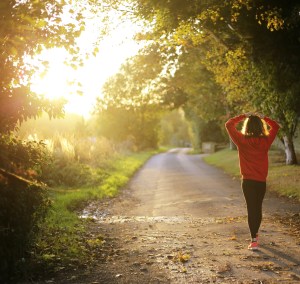
When you have the least time to move is when you need to move the most!
Photo by niu niu on Unsplash

Most non-work activities fell by the wayside (Cooking? Cleaning? What’s that?). But the most pivotal of these was exercise. I’d been through highly stressful situations before but always had the opportunity to work off my anxiety. This time there was none of that.

Anxiety sat like a boulder in my stomach. I could feel my brain buzzing from the stress but couldn’t do anything about it. There was SO MUCH to take care of that my work-life balance was non-existent. There was only work, and this went on for weeks. My mental well-being plummeted, sleep was filled with night sweats…and the agony of not having the time to work out magnified my anxiety.

We know how bad sitting is for you physically, but not everyone is aware of the psychological ramifications of being sedentary, especially when it comes to managing stress. I found it so ironic that after my tumor was confirmed, the doctors estimated that it had started developing a year or so prior…during the time that I felt my life falling apart.

Stress did not cause my tumor. But it didn’t help my body counter it either.

~~~~~~~~~~~~~~~~

I personally am convinced that there’s no healthier, more positive way to tame anxiety than exercise. COVID’s remote work situation demonstrated to me that I feel much saner when I can stick a workout into the middle of my day, even if it lengthens my workday a bit, and the increased blood flow helps with my mood and productivity.

There is a Zen saying: “If you don’t have time to meditate for an hour everyday, you should meditate for two hours.” I believe that this saying also holds true if you substitute the word “exercise” for “meditate”.

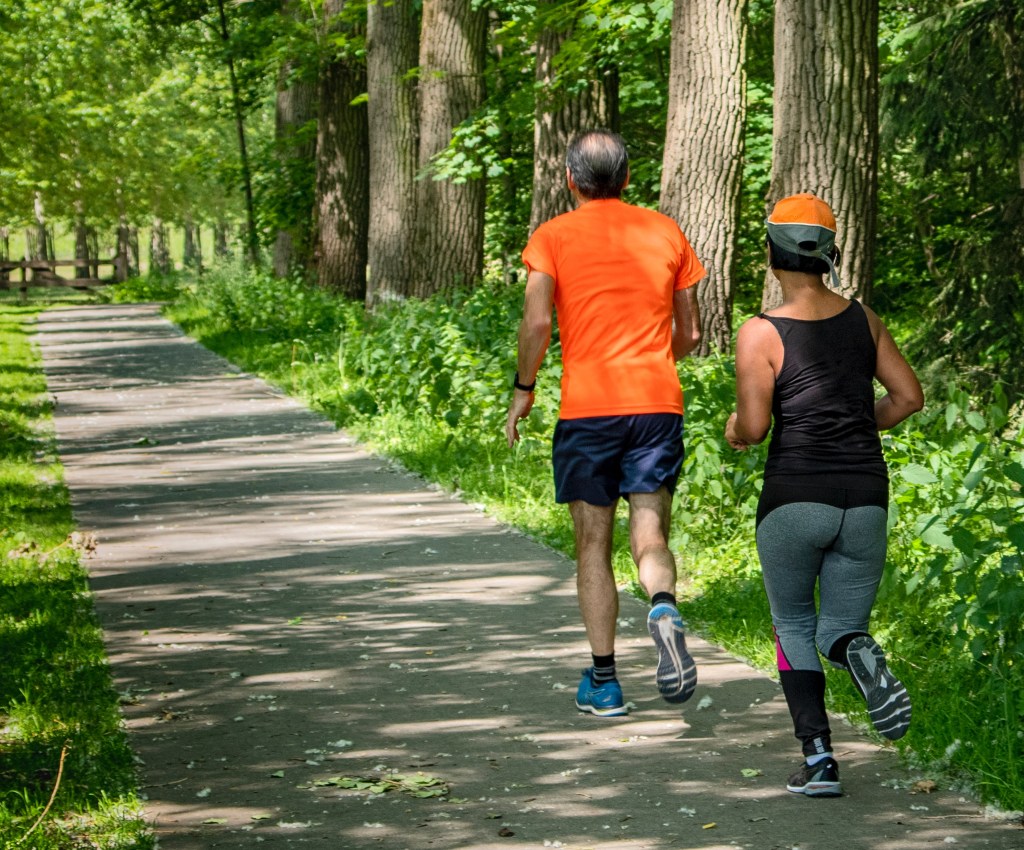
Find movement that you enjoy and then stick it into your day.
Photo by Ahmad Odeh on Unsplash

Obviously, I’m not suggesting that you do either for two hours. The idea is that when you are overwhelmed with responsibilities and stress, that is an indication that you need meditation AND exercise all the more.

Frankly, it’s also time to reevaluate your life priorities, but that can be difficult.

How to get more movement into your day? Based on the research* that I’ve seen, it’s best to take breaks about every half hour. That might seem impossible for some people and some work situations, but do the best you can. The last thing you need is more pressure on yourself.

Even just standing up and stretching is better than sitting glued to your seat. If you can walk around, take the long way to the bathroom. Hike up and down the stairs. Breathe deeply. Start there and you can add more later, keeping in mind that energy begets energy: the less you move, the harder it will be to get started; the more you move, the easier.

If you have time for a considerably longer break and don’t yet have an established training program, start by picking a rhythmic movement like walking, running, cycling or swimming and lose yourself in the rocking motion. Not only does that give you exercise, but the gentle back-and-forth is soothing for the nervous system.

Most importantly, make the experience a positive one.

My personal recipe for mind-happy exercise is: (1) indoor rowing (for the rhythm and cardio load), (2) strength training (with a focus on each repetition) and of course (3) yoga (for deep breathing and unwinding the stressed-out body). But these recipes will vary for every individual. What’s yours?

*I had a choice between getting my workout and meditation in or digging up these references. Guess which I chose? 😉 I’ll be back with the science in another post.

Where Are You Getting Breast Cancer Info?

Since we are just at the start of October, aka Breast Cancer Awareness Month, I thought I’d go through some basics about getting information on breast cancer.

Let’s face it, as soon as you suspect that you feel a lump in your breast, feel a lump in your breast, have something funny show up on a mammogram and get called in for an ultrasound, are told that there’s something weird on the ultrasound and you need a biopsy, the biopsy reveals a tumor, as you’re in between any of the above, have a loved one go through this, or ANYTHING like the above really, you’ll have the urge to consult Dr. Google.

BE CAREFUL. When I asked my cancer surgeon about getting more info, she gave me a few websites and told me not to go anywhere else. These included:

National Cancer Institute (NCI)

American Cancer Society (ACS)

The National Cancer Institute (NCI) is one of your best and most reliable resources for solid cancer-related medical information.

I was very surprised at the limited number of websites she suggested, but the reasoning made sense. You want to be sure that the information you’re receiving is accurate, up-to-date and vetted by cancer professionals. Both NCI and ACS can provide you with references to clinical studies to back up their information.

This was in 2017. I expect that you can find additional reliable resources now. However, as I discovered when I was looking up other sites, the Internet moves fast and what was once a good source may now be a broken link.

I want to stress: My blog should not be used as a source for making treatment decisions. I mean that with all my heart. I started my blog to relate my own experiences and research in the hopes of being able to provide the view of a cancer patient/survivor about what it’s like to go through a cancer journey.

I had been frustrated by not having an idea of what a lumpectomy looks like, no month-by-month photos of the process of hair regrowth, no good rundown of what to expect during my first chemo infusion, not understanding what that ‘chemo port’ thing was, having my medical team draw a blank when I asked why I had no body odor…and so many more things. So I decided to post photos and write about them in short, to-the-point posts.

But everyone’s experience is different. We have different backgrounds, different lifestyles, varying levels of risk factors and therefore different cancer journeys. The best resource that you have is your medical team. Make sure that you feel comfortable with them, get a second opinion if your treatment options seem inappropriate and definitely change doctors if you feel that yours do not listen to your needs.

Stick with the lastest scientific info.

Even though there are many complementary treatments you can try (I personally benefitted from meditation and exercise), do not use them as alternatives. Your best bet for survival remains conventional medicine.

Please seek out the resources offered by your cancer center. If you need someone to talk to, consult with whatever mental health support is available–this was also invaluable to me. This is not something you should feel you need to “tough it through”. You don’t have to prove anything. Just showing up for your treatments shows your strengh. Same thing goes for those providing care for you during this time, which can more more emotionally taxing than many are willing to admit. Look into support groups for both patients and caregivers.

Understand that you did nothing wrong. You didn’t deserve this.

And everything that I suggested above? Yes, check with your medical team even about my recommendations. The list of sites may very well have expanded by now but my admonishment to watch your step where your get your information for making decisions remains. Please, you are worth it.

As you navigate the experience that is cancer, whether your own or of someone you care about, please know that I am rooting for you, thinking about you and can’t wait to see you on the other side! ❤

Hang On, Honeybee!

A few days ago, I took my daughter to the train station, about a 7-mile drive.

As we pulled out of our driveway, I noticed a honeybee on my side window, close to the middle of the pane. It was a foggy morning so the little girl must have lost her way.

In the past, when I start accelerating and there’s a bug on the glass, the insect takes off (or the wind “encourages” her to take off). But not this little bee. She hung on tightly.

Part of the drive was along a stretch of road with a faster speed limit, reaching over 50mph. I wanted to get my daughter to the train early, so I couldn’t drive much slower. At the same time, I was getting very invested in the bee, still hunkered down and holding on.

My daughter suggested that we take the freeway for part of the trip, but I protested, concerned that the bee’s grip wouldn’t be able to handle the acceleration.

Through faster and slower speeds, my tiny hitchhiker clung hard. Her little wings seemed to be fluttering, battered by the wind, but she was not letting go.

She made it all the way to the train station, holding on like crazy! My tenacious little girl! Then took the opportunity to clean herself up. ❤

And then we finally arrived at the station. My daughter made her train with time to spare and I sat in the lot nearby waiting for it to depart. In the meantime, my little bee had started to preen herself, cleaning up her antennae and straightening the hairs on her legs.

I was so impressed with her ability to hold on!

By this time, the fog had lifted but it was still very cloudy–not proper bee-navigation weather. And I was concerned that if the bee took off from the station, 7 miles from home, she’d never find her way back. I needed to return her to familiar lands!

When we returned home, she sat very still. I held my breath.

Now I was 100% into this. And apparently, so was my little bee. Because in the process of grooming she had edged closer to the frame of the car window. Smart girl, because that meant less air resistance! As I started driving, she expertly tucked her wings together, widened her stance, and…if a bee could give a thumbs up, I’m sure that’s what she’d have done.

On the way home, I drove a little more slowly, trying not to go over 40mph and a lot slower whenever possible. She looked determined to make it.

But when I pulled into our driveway and parked the car, she and I both sat motionless. C’mon, I thought, you’ve made it this far. You’re home. You’ve got to be okay!

Looking more closely it seemed like one of her legs was moving, perhaps twitching a bit. But nothing more.

I wasn’t going anywhere until I knew all was well. At that point, clouds were starting to thin and the outline of the sun becoming visible through them. THE SUN! Coming to the rescue!

My little heroine recovered and immediately took to smoothing her antennae, as if 14-mile journeys were an everyday thing. ❤

Eventually, my little bee started straightening her hairs again, then grooming quite vigorously. The air was warming, the sun was coming out, and my darling girl was getting herself together after taking a battering on the road.

Finally, the sun was bright enough to cast shadows, increasing in strength by the minute. And my bee, stalwart little travel companion, walked up the glass onto the door frame to finish warming up.

One last view of her as the sun was coming out. She was vigorously brushing through her hairs and antennae. Ready to return to her sisters and charm them with stories of where she’d been, what she’d seen and how she’d held on. ❤

I returned to my apartment feeling uplifted by the tenacity of that little creature. She had a purpose and was committed to it. What a beautiful analogy for holding on when we think we can’t go any further, when no one would expect us to keep going. Even then, we manage. Because no matter how bad things seem, the sun will come out and we will find our way home.

From a Safe Distance

It’s hard to believe that six years ago I was a week and a half away from my final chemo infusion, in the thick of being a cancer patient with no idea of what tomorrow would bring.

Cancer survivorship used to be a whole lotta “looking over your shoulder” for the next thing to hit.

I also thought that I’d live the rest of my life, however much or little of it there was left, in fear, always looking over my shoulder to see if cancer was close behind. In fact, after my active treatment was over, I expected that my anxiety would increase because I imagined that whatever had triggered my tumor growth would again be unleashed and ready to attack my again.

And when I had to stop aromatase inhibitors early due to side effects, I envisioned even more terror because I wouldn’t have the medication’s protection anymore.

None of this suggested that I would have a very pleasant future. Either I would get cancer again…or I’d be consumed by worry over getting cancer again.

Reality turned out to be quite different.

The more (1) I practiced being present, coupled with the (2) increasing distance between my last dose and today, the easier it has become. Now, that might sound like a no-brainer, but it was news to me.

And I don’t know exactly when I turned the corner on my fear but it was probably after the worst letrozole side effects ceased and I was able to reflect on and accept that cancer happened and now I was moving past it.

It took years to get to that point, but it would have probably come sooner if I hadn’t convinced myself that I’d never get there.

And how are things different now? I don’t think of cancer every minute of every day. And when I do think about it, it doesn’t seem as daunting.

So far, so good.

I realized this after meeting a cancer survivor who works at a store that I frequent. She revealed that she’d just received her three-year “all-clear”. The relief on her face was unmistakable.

And it struck me that I used to have that incredible sense of gratitude too. And I still kind of do for a short bit, but it fades quickly as I turn my focus to the rest of my daily responsibilities.

Yes, I am still seeing my oncologist twice a year, having annual 3D mammograms AND the occasional MRI, so it’s less likely that something’s going to sneak up on me. But the concern is no longer as all-encompassing because it doesn’t feel as likely.

Of course, I could be kidding myself. Even after six-plus years I know that every set of scan results is a door to either “no evidence of disease (NED)” or “we’ll get you in to see the oncologist ASAP”. So far I keep going through the NED door…and it keeps opening onto a bright day.

In the midst of taking things for granted, it’s nice to stop and think about that.

We’ll See What Happens…

As the saga of our building’s leaky pipes continues, this experience reminds me of some of the best advice I received for getting through my cancer treatment.

How could cancer relate to a plumbing emergency? In how I perceived the news and possible outcomes. My cancer diagnosis was terrifying because I had grown up understanding that the disease meant difficult treatment and a real possibility of death. Now that I was dealing with cancer, I was jumping to conclusions, driven by FEAR.

And the leak in our unit? That meant a huge disruption in our lives as workmen enter and our belongings are piled together. But even more so, FEAR of the future, as we didn’t know the extent of the damage and whether we’d be able to to keep living here.

Getting a first glimpse of restoration. Lost some ceiling, light fixtures and a lot of kitchen cabinets.

The thought of moving brought anxiety about higher rental rates, dealing with belongings after nine years in the same apartment, even simply fear of change and uncertainty.

But that best bit of advice that I mentioned above? I found that it applied well to this situation also. And it goes like this: don’t try to tackle everything at once; take it bit by bit.

When I was diagnosed with cancer, the experience was nothing if not overwhelming. So many new terms, treatment options, possible outcomes. It was too much to handle. Someone I worked with suggested that I deal with things on a day to day basis. Not obsessing about the future, only what I needed to get through for today.

This was not easy for me, as being FEARful came naturally to me. But I understood what he was saying, even if I struggled to actually follow this advice at the time.

As with cancer, so with plumbing. My mind had already “gone there”, struggling to afford another unit (this is an older unit with rent lower than other places around us), staying up day and night to pack. Ending up in an even worse situation with inconsiderate neighbors…

But reality was not like that.

Behold, the FORCE AIR 2000EC! This monstrosity is the heart of the asbestos abatement operation. The workmen couldn’t fit it back in their truck so we’re babysitting it for a couple of days. Also, it looks like it was built by orks, but that has nothing to do with anything.

Within a weekend we had moved much of the kitchen and dining area. And really overhauled our possessions — even something as complicated as draining our 20-gallon fishtank and relocating its inhabitants to my husband’s office was not as difficult as anticipated.

I had time. I had time to move things, I had time to reorganize, to declutter, to stop and think about what was next. I had time because it wasn’t all happening at once. Stopping and breathing and noticing all the space around gave me space inside my head.

Discussions with our landlady suggested that we would take it one day at a time. No one was throwing in the towel yet…

…and even if the worst case scenario happened and we had to move, there were other places that were available (all with air conditioning, which we don’t currently have), and the rental cost would have been similar to what we pay now. In some cases the places were newer and most allowed pets (!), which I’ve been longing for.

All of a sudden, things didn’t look that bad. The options seemed promising.

Taking it bit by bit gave back a sense of control. All those fears slowly fell away.

And now, I find myself hovering with acceptance. Not landing on an expectation that THIS or THAT will happen. I don’t know what will happen and I’m finding a comfortable place to simply hang here, not gripping or holding on or needing for anything to be different.

We’ll see what happens…

Protection Against Doxorubicin’s Cardiotoxicity: Exercise?

One of the strongest chemotherapy drugs used for breast cancer is doxorubicin, a drug in the anthracyline family that you might know as Adriamycin. It’s called “The Red Devil” due to its bright red color and tendency to temporarily dye the bodily fluids of its recipient red, but also due to its toxicity.

While it is highly effective, its use is limited by its potentially serious side effects, including damage to the heart. According to Drugs.com, “[b]ecause of its heart toxicity, doxorubicin has a maximum cumulative dose that can be given to each patient. The higher the total dose you receive over time, the greater your chance of heart side effects.”

Doxorubicin is a highly effective chemotherapy, but carries with it a considerable risk of heart toxicity.

There has been interest in discovering other drugs that can decrease the cardiotoxicity of doxorubicin, particularly since in addition to breast cancer, it is used against a variety of other cancers.

But as with so many things cancer-related, the drugs given to protect against chemotherapy side effects themselves have side effects, so it’s useful to explore other means of achieving protection from the toxic effects of doxorubicin.

Can Exercise Help?

In a webinar for the American College of Sports Medicine (ACSM) that I attended on May 18, 2023, University of Florida, Department of Applied Physiology and Kinesiology researcher Dr. Ashley Smuder and her lab presented research about the protective effects of exercise on the heart and muscle doxorubicin.

Importantly, Dr. Smuder’s lab was able to demonstrate that exercise-trained rats who were then given doxorubicin showed a decrease in the amount of drug that accumulated in the heart and diaphragm compared to sedentary rats, echoing the results of Parry and Hayward (2015, Am J Physiol Regul Integr Comp Physiol). Those results had suggested that exercise didn’t diminish and even increased the amount of doxorubicin that made it to the cancer tumor while decreasing the amount of the drug that went to the heart (left ventricle) and diaphragm.

Exercise keeps rodents healthier, even under a punishing chemotherapy regimen.

While the actual mechanism of this protective effect is still being researched, once again these studies show the benefits of exercise in a cancer situation.

Additionally, a doctoral student in Dr. Smuder’s lab, Brendan Nguyen, reported on work that he’s done showing the differences of exercise on fat mass and lean mass in rats administered doxorubicin using the same infusion schedule that a human patient would received (4 doses, 3 weeks apart). There were four conditions: (1) a sedentary group that received saline injections, (2) a sedentary group that received doxorubicin, (3) a moderate-exercise group that received doxorubicin, (4) a high-intensity exercise training (HIIT) group that received doxorubicin.

  • Moderate exercise: rats ran on a treadmill 3 days/week at a speed of 30 meters/min for 60 min/session.
  • HIIT exercise: rats ran on a treadmill 3 days/week, four 4-min bouts at 45 meters/min with 3 minutes of active recovery in between the bouts.

Not surprisingly, the exercise training had a significant effect on the body composition of the animals. Sedentary rats in both groups had an increased risk of obesity. Both groups of exercising rats (both moderate exercise and HIIT) saw a decrease in fat mass during this time and were able to avoid doxorubicin-induced cardiorespiratory weakness. Also, the HIIT exercise animals showed a significant increase in lean mass in addition to the drop in fat mass.

For reliable protection from the negative physiological effects of chemotherapy, exercise is still your best bet.

These findings in rats reflect similar results that have been obtained in humans (Battaglini et al, 2014, World J Clin Oncol; Lee et al, 2019, BMC Cancer; Lee et al, 2021, Support Care Cancer). Brendan noted that particularly HIIT exercise “may prevent unfavorable changes in body composition” compared to a sedentary condition.

The take-home message here remains the same as it’s been in my other posts. If you don’t currently exercise, start now. And then don’t stop. It’s easy to keep laboratory rats active and fit, but humans find many reasons not to challenge themselves with physical activity. If you needed a reason, these studies provide a little encouragement to find your favorite movement modality and make exercise a life-long habit.

REFERENCES

Battaglini CL, Mills RC, Phillips BL, Lee JT, Story CE, Nascimento MG, Hackney AC (2014) Twenty-five years of research on the effects of exercise training in breast cancer survivors: A systematic review of the literature. World J Clin Oncol, 5, 177-190. https://doi.org/10.5306/wjco.v5.i2.177.

Lee K, Kang I, Mack WJ, Mortimer J, Sattler F, Salem G, Dieli-Conwright CM (2019) Feasibility of high intensity interval training in patients with breast Cancer undergoing anthracycline chemotherapy: a randomized pilot trial. BMC Cancer, 19, 653. https://doi.org/10.1186/s12885-019-5887-7.

Lee K, Norris MK, Wang E, Dieli-Conwright CM (2021) Effect of high-intensity interval training on patient-reported outcomes and physical function in women with breast cancer receiving anthracycline-based chemotherapy. Support Care Cancer, 29, 6863-6870. https://doi.org/10.1007/s00520-021-06294-7.

Parry TL, Hayward R (2015) Exercise training does not affect anthracycline antitumor efficacy while attenuating cardiac dysfunction. Am J Physiol Regul Integr Comp Physiol, 309, R675-83. https://doi.org/10.1152/ajpregu.00185.2015.

Smuder AJ, Nguyen BL (May 18, 2023) Cardiorespiratory muscle response to chemotherapy and exercise. ACSM’s From Around The Field webinar.

Can Meditation Fight Cancer?

While it seems like a pretty fantastical concept, a group at the University of California San Diego just received a five-year, $10M grant to examine just that.

Specifically, the InnerScience Research Fund will support ongoing research at UC San Diego’s School of Medicine to determine the biological effects of meditation. Researchers led by Dr. Hemal H. Patel (Dept. of Anesthesiology) are exploring whether meditation can modulate the progression of serious illnesses.

From the UC San Diego Today press release (May 16, 2023):

Researchers are gathering a variety of information from a large group of participants.

“As part of a continuing study entitled “QUest to ANalyze a Thousand hUmans Meditating,” or QUANTUM, Patel and his team are assessing the impact of meditation on nearly 2,000 individuals undergoing intensive meditative experiences. The goal is to capture a depth of unbiased information from a large cohort of healthy and non-healthy individuals to gain insights into the impact of meditation.”

Study participants are contributing a plethora of biometric data obtained via wearable technology, “including heart rate, heart rate variability, sleep, activity and more. That data is then coupled with health survey results and “omic” studies being conducted on blood, microbiome, urine and tears.” Brain activity has also been measured and analyzed.

Perhaps the most unexpected statement in the entire press release was the following: “Early analysis is showing promising results from meditation in impeding serious illnesses such as cancer.”

This is quite an announcement coming from a highly-respected research institution, so I am particulary intrigued.

It would be wonderful to find that the benefits of meditation go far beyond improving one’s sense of calm — lotus position optional!

On the one hand, it’s not difficult to believe that harnessing the mind through meditation could have a dramatically positive impact on one’s health. As I reported in an older post, researchers have elucidated the biochemical pathway by which stress can lead to cancer recurrence in breast cancer survivors. So if we’re able to do the opposite–inviting in a sense of peace and keeping stress at bay–it stands to reason that we affect disease progression. After all, we’ve known for a long time about the benefits of meditation on one’s mental well-being, why not one’s physical health too?

On the other hand, it’s important to understand that meditation alone should not be considered a treatment or cure for cancer. But as my last post on complementary medicine pointed out, cancer patients are increasingly turning to practices such as meditation to help them navigate the cancer experience as they undergo conventional treatment. The added benefits of helping halt the proliferation of a tumor would make meditation an important adjuvant therapy.

This is one story that I will be keeping a close eye on!

“Not Going It Alone”: Complementary Cancer Therapies

With as much sophisticated research as has been done on cancer, it still remains a confounding disease and much of the treatment may seem to be, for lack of a better word, medieval.

So it shouldn’t seem surprising that cancer patients also reach out for less conventional therapy to help themselves through the treatment process.

First, a clarification of terms used in this post:

Acupuncture is utilized as a non-standard treatment (for those who can take more poking)
  • Conventional medicine: chemotherapy, radiation, surgery, immunotherapy, etc., prescribed by your medical team.
  • Complementary medicine: non-standard treatment used in conjunction with conventional treatment; also called Integrative Medicine.
  • Alternative medicine: non-standard treatment used instead of conventional treatment.

Therefore, generally speaking, what distinguishes complementary from alternative medicine is whether it’s used with standard medical treatment.

According to a study (Crudup et al., 2021) that was presented at the 2021 Annual Meeting of the American Society of Clinical Oncology (ASCO), 73% of breast cancer patient participants stated that they employed complementary therapies in their treatment. However, while oncologists were supportive of such therapies, they were not aware of the extent to which their patients utilized them and thought that only 43% of their patients did.

Patients get more benefit from spiritual practices than most oncologists realize

Furthermore, oncologists felt that counseling, support groups, exercise, etc. were the most effective non-standard therapies, in contrast to patients who found great benefit in meditation, mindfulness and spiritual practices. While two-thirds of both patients and oncologists felt that complementary medicine improved quality of life, a majority of patients also felt that it improved their outcomes.

Wayne Jonas, MD, a co-author of this study, says: “Cancer is a complex disease that affects every component of a patient’s life. While conventional medicine is effective for curing disease, it can fall short in helping patients heal. Patients are turning to these therapies to look for hope and to improve their quality of life and well-being after diagnosis… .”

What types of therapies do these include? The website “Cancer Health” provides examples of some complementary treatments (see here for an explanation of each):

Acupuncture
Aromatherapy
Art Therapy
Biofeedback
Cannabis
Herbal Therapies
Labyrinth Walking
Massage
Meditation
Music/Dance Therapy
Qigong
Spirituality
Tai Chi
Traditional Medicine (Ayurvedic, Chinese, etc.)
Vitamins and Supplements
Yoga

[This list is by no means exhaustive.]

I used a number of these complementary therapies myself and can attest to the important role they played in my recovery. As Dr. Jonas points out above, conventional treatments “can fall short in helping patients heal” [emphasis mine], whereas non-standard therapies seem to focus on that aspect.

I believe that these additional therapies, particularly more spiritual ones, are what give us hope throughout the cancer experience. Patients should be encouraged to seek out additional, complementary therapies to help themselves move through treatment, fully supported by their oncologists and ideally also guided by them.

Did you rely on complementary or alternative treatments to help you through your cancer journey?

~~~~~~~~~~~~~~~~~~~~~~~~~~~

REFERENCES

Original Research

Abstract for presentation:

Crudup et al. (2021) Awareness, perceptions, and usage of whole person integrative oncology practices: Similarities and differences between breast cancer patients and oncologists. Presented at 2021 Annual Meeting of the American Society of Clinical Oncology (ASCO), https://meetings.asco.org/abstracts-presentations/200685

Published research article:

Crudup et al. (2021) Breast cancer survivorship and level of institutional involvement utilizing integrative oncology. J Clin Oncol,  39, no. 15_suppl. e18588,
https://www.doi.org/10.1200/JCO.2021.39.15_suppl.e18588

Synopses

The ASCO Post Staff (June 7, 2021; updated June 15, 2021) Use of integrative medicine by patients with breast cancer. ASCO Post, https://ascopost.com/news/june-2021/use-of-integrative-medicine-by-patients-with-breast-cancer/

Tien C (June 28, 2021) Oncologists Underestimate the Number of Breast Cancer Patients Who Use Complementary Medicine. Cancer Health, https://www.cancerhealth.com/article/oncologists-underestimate-number-breast-cancer-patients-use-complementary-medicine

Descriptions of complementary therapies

Living with Cancer: Complementary Therapies. Cancer Health, https://www.cancerhealth.com/basics/health-basics/complementary-therapies

Mindfulness 101: Noticing the Qualities

The main reason why I started a meditation practice was because I had been diagnosed with breast cancer and was, to put it mildly, freaking out.

As a naturally anxious person, the diagnosis blew the roof off my ability to cope and plunged me into a nightmarish situation. Anyone who’s ever dealt with severe anxiety will tell you that nothing is more important than making it stop.

Over the years, my anxiety gathered enough power that it was able to blindside me. Cancer anxiety practically wrecked me.

When my radiation oncologist recommended mindfulness meditation, I felt empowered by the thought of gaining control of my runaway anxiety without the need for medication.

I was hoping meditation would enable me to sit in peace in the midst of chaos. But I imagined that as feeling no stress, as in, being numb to anxiety-provoking stimuli.

That simply doesn’t exist. I wanted to not experience any stressful situations, but there is always stress. We can’t change that. Mindfulness meditation was only going to help me change the way I reacted to it.

So here I am, more than six years after initally starting a daily meditation practice and guess what? I still have stress, I still feel anxiety.

However, what did change is that I can define it now. When I become aware of agitation and anxiety, I know to pause and bring attention to how it manifests in my body.

What does it feel like? Tightness, heat, rapid breath?

Where does it show up? Face, temples, chest, stomach?

Is there a color or sound or smell associated with it? Does it have a “texture”?

Does anxiety have an odor? Next time stop and take a whiff.

I can relax my muscles, sink into the earth, breathe deeply and notice the qualities of anxiety. By pulling apart what is happening, I slow time down. Instead of being hit by a locomotive full force, I walk around the train cars. I can notice how I feel as I pass through the experience.

Is it pleasant? No. Does it always work immediately? No. However, I can see it coming, and as a result, I relax into it. It is the awareness of the anxiety that helps me through it, not a numbness to it. This leads me to acceptance of the situation instead of bracing against it.

On one level, it’s a little discouraging to still be dealing with the unsettling nature of stressors. But I am heartened by the empowerment that mindfulness offers. I have evolved enough that I know I don’t have to go back to being thrashed by the whirlwind. I can sit inside it and watch it swirl and pass through. Every time I do this, it gives me more confidence for the next time.

Is this something that might help you too?