“My Eyelids Are Heavy, But My Thoughts Are Heavier” – Anxiety At Night

I have a full toolbox of techniques for handling anxiety during the day, but nighttime is a little trickier. If you’ve had the same experience, you’re not just imagining things.

A Live Science article by Louise Bond examines this issue. According to Clinical Psychologist Charissa Chamorro, PhD, at night our brains have fewer distractions, leaving us more vulnerable to worries that creep in. This makes sense as we can redirect our attention during the day to activities that are not available when we’re in bed.

Darkness can be unsettling enough, but researchers feel that the circadian rhythmn is also involved in the accentuation of nighttime fear.

And you don’t need to be suffering from horrible anxiety for this to be the case. Research (Li et al., 2015, Int J Psychophysiol) showed that even among women without anxiety, fear was enhanced at nighttime, and not simply because of darkness, suggesting the involvement of the circadian rhythm. At the same time, as diurnal beings, humans naturally evolved to have stronger fear responses at night. This is partly due to the fact that we don’t see well in the absence of light and therefore are more vulnerable to nighttime predators.

Furthermore, while there is a natural ebb and flow of cortisol throughout the circadian cycle with cortisol levels peaking in the morning and being lowest at midnight, when anxiety keeps cortisol levels high during the day, that affects nighttime hormone release and therefore your ability to rest (Hirotsu et al., 2015, Sleep Sci).

To make matters worse, once your sleep is disrupted, worrying about your inability to get a good night’s sleep can result in being unable to sleep, and a vicious cycle develops.

Establishing calming practices during the day can have a positive effect on nighttime anxiety.

You’ve probably heard the suggestions for improving sleep: turning the lights down in the evening, avoiding electronics (or using blue-light blockers), keeping your bedroom cool and dark, using a sound machine to mask noises, avoiding stressful or polarizing conversations in the evening, and the like.

To that I would add that what you do during the day itself can affect what kind of sleep you have at night. Meditation, practicing mindfulness, doing deep breathing exercises all put us into a calmer state. If you wake up in the middle of the night with a racing mind, having practiced and become adept at self-grounding techniques in daytime can help you soothe yourself at night.

While the roots of our anxiety may be complex, for those of us for whom it’s built up over time, so too will it take time to establish behaviors to help control it. Sometimes we need support of a therapist or medication, sometimes we can manage on our own, but setting aside time every day for even a short calming practice can help you improve management of anxiety no matter when it appears.

REFERENCES

Bond, Louise (2023) Can’t sleep? An expert reveals why anxiety may be worse at night. Live Science, https://www.livescience.com/anxiety-at-night

Li Y, Ma W, Kang Q, Qiao L, Tang D, Qiu J, Zhang Q, Li H (2015) Night or darkness, which intensifies the feeling of fear? Int J Psychophysiol, 97, 46-57. https://www.sciencedirect.com/science/article/abs/pii/S0167876015001713

Hirotsu, Tufik S, Anderson ML (2015) Interactions between sleep, stress, and metabolism: From physiological to pathological conditions. Sleep Sci, 8, 143-152. https://www.ncbi.nlm.nih.gov/pmc/articles/PMC4688585/pdf/main.pdf

Six Years and 2 Days Ago, Panic

On Feb 8, 2017, I finally went to see my nurse practitioner about a breast lump that I’d originally noticed six months before, the previous August.

From the split second that the expression on her face shifted as she felt the lump and sent me off with an order for a diagnostic mammogram, everything changed. I went from hemming and hawing about spending the money on a copay for a doc appointment for something that would obviously turn out to be nothing…to a downward spiral into despair like I’d never felt before.

Memories of this period in my life are not very pleasant, so instead of loading up images of frightened faces and horrible possibilities, I’ve decided to post only peaceful pictures here.

Looking back on that time, knowing all the self-calming techniques and meditation methods that I currently practice, if I were going through this now one thing is very clear: I would still have panicked.

It bears mentioning that on Feb 8, 2017, I did not get my diagnosis. That appointment simply opened the door for scans that I was hoping I wouldn’t have to go through, but it devastated me regardless. In the two weeks that it took before I could actually go in for the mammogram and ultrasound, I died many times over.

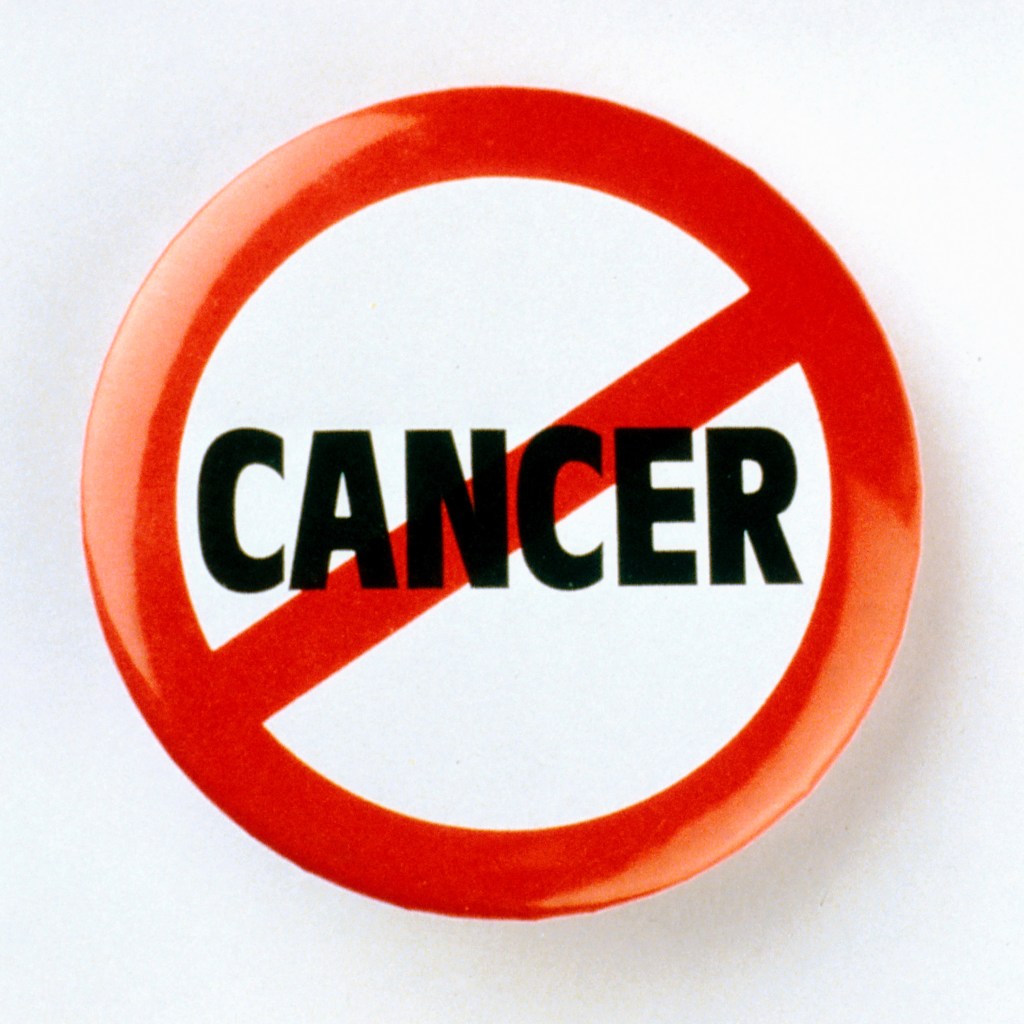
The fact is, nothing ever prepares you for a cancer diagnosis. No matter what sort of mental calisthenics you practice, cancer is still CANCER. And even the idea that cancer could be a reality is terrifying.

There is no “alternative wording” that makes this easier. Sooner or later, you’d still bump up against that six-letter word that, for someone in my generation, meant a distinct possibility for a very sad ending (which arguably is an outdated and potentially irrational view, but that’s what you get).

Yeah, nothing stressful here. Just a sleepy kitten.

So rest assured, if you ever find yourself in this situation, no matter how you’re handling it, you’re doing a good job. Because you don’t really “handle” the news, you just splash around and try to keep your head above water.

Doctors, I’m told, practice delivering the news in a calm but empathic manner. Trust me, that’s kind of lost on the patient. Since my lump was clearly cancerous on the diagnostic ultrasound, I actually got the news broken to me twice:

My radiologist (after the ultrasound): “I have two things to tell you. One, you have cancer. Two, you’re going to be okay.”

My general practitioner (after the biopsy): “It’s as we feared. It’s cancer.”

See, whether the delivery is kind of upbeat with an attempt at a positive ending or whether it’s more reserved, anticipating the patient’s fear at hearing this, it doesn’t matter. Because once you cross that threshhold, you can’t turn back to “it’s nothing, have a nice day”. You are literally propelled forward into the next steps, and there will be many of them.

Room for one more image? How about tulips? I love tulips.

But there are a few things to remember. Being thrust headfirst into the world of cancer means that at least you’re not standing still like you are when you’re worrying about a diagnosis. Recalling Churchill’s famous quote, “When you’re going through hell, keep going”. Of all the times in a cancer journey, the point right around the diagnosis is the most terrifying because you know you have cancer but not necessarily how “bad” your situation is or what the next steps are.

There is relief in the movement of information and the passage of time. If there is a way to focus on the next step, always the next step, without getting overwhelmed by the tidal wave brought on by the concept of having cancer, you will be able to gingerly find yourself a path through which to navigate the cancer journey, and there is peace in that.

And if there isn’t peace…you’re still very normal. ❤

Believing in My Abilities: A Superpower for 2023

I’m calling 2023 my “year of calm”, because I’m going to be nuturing a deep, conscious, peaceful state of being. This is my superpower.

Since my cancer diagnosis six years ago, I’ve worked at combatting the rawness of emotion by making space, and one of the things that I’ve found is very important in doing so is the feeling of self-efficacy: the idea that I, in fact, can step back from frightening or obsessive thoughts and ruminations. Not to repress them, but to observe them without getting sucked in.

Breathing deeply, relaxing, I create space around myself. Relief from the rawness of emotion in my face. Grounded, I watch the world from the safety of my calm bubble.

I flex my superpower of quieting my thoughts by visualizing this scenario: I imagine that I’m being chased by something scary (monsters, zombies, another cancer diagnosis…). But a split-second before something grabs me, I slow everything down, feeling into my extremities and making space all around me. I imagine this as a pearlized bubble forming around me and the calmer I am, the deeper my breaths, the more protected I become. If I believe in my ability to calm myself, no matter how close the monster is to me, they can’t touch me.

My calm demeanor allows me to float in my bubble. I see everything around me, including the things that terrify me. But from within that pearl, sounds are a bit more distant and the view is a little clouded, as if I am watching through a gentle haze. Inside I am firmly grounded and aware in my body. Confident that I’m safe in the present moment. And as long as I believe it, I am.

This might seem like an overly simplistic view of anxiety and it’s not meant to belittle what someone else might experience. I’ve been through those feelings of anxiety run amuck — at that point in my life this would not have worked. What I was experiencing was very real and intense. Having emotions constantly “in your face” chips away at the perception that you’ll ever being able to get a handle on them.

When I believe in my ability to calm myself, I calm myself.

After years of practice in grounding, mindfulness and meditation, I can attest to the fact that believing in my ability to calm myself has been critical in helping combat anxiety. Acquiring that level of confidence was a process of consistent mindful meditation, on good days and bad days. But now that I’ve gotten a fingerhold on it, every time I am able to calm myself, my self-efficacy is strengthened.

Because as anxious as my thoughts can be, and as loud as they may seem, they are only inside my head. Remembering that has given me the greatest superpower in the world.

Navigating Anxious Moments with Breath and Muscle Release

When you can’t control your anxious thoughts, what can you use to get a foothold on stability?

This was the issue for me for years, if not decades. During panicky times, I’d close my eyes at night and see a montage of fleeting images like a rapidly changing patchwork quilt that I couldn’t stop. It was kind of like at the beginning of a Marvel movie, where images whiz by you. Except that for me there were no superheroes or rush of excited anticipation.

This is not an ad for Marvel. The first seven seconds of this 11-second clip represent what I used to “see” during middle-of-the-night panic sessions: just flashing images passing before me.

Anxiety meant being blanketed by nausea and fear that blocked my view of reality. I couldn’t see past any of it because the sensation was all-encompassing. Mindful grounding has enabled me to get a hold on the edge of that blanket and pull it up ever so slightly to let some light in.

That was accomplished by two simple things that I could control in the midst of everything else I couldn’t:
1) changing my breathing pattern
2) identifying and releasing muscle tension

I might not have been able to slow the thoughts, decrease my heartrate or relieve the nausea directly…but the combination of the breath and relaxing my muscles provided a path that led around those things and quietly affected them behind the scenes.

First, start with your breath

Bring your attention to the breath and consciously slow it down. Start by trying to make your inhales and exhales the same length, adding a second-or-two pause in between. Depending on your level of anxiety, this may take some time if your breathing has been rapid and shallow. Any slowing is helpful, especially at the beginning. Be compassionate and patient with yourself.

A hand on the belly makes it easier to focus on breathing into the abdomen.

I find it easiest to deepen the inhale first, drawing the breath into the belly. Placing a hand on the belly helps keep your focus there as the sense of touch supports grounding. Try a deep inbreath, pause, and a lengthened outbreath. Blowing out through pursed lips helps control the air flow and draw out the exhale. An exhale that is longer that an inhale helps slow your heartrate. Belly-breathing makes a big difference.

Aim for an inbreath of 4 counts, pause and hold for 2 counts, exhale for 6 counts.

Some guidance recommends that you place one hand on the chest while you have the other on your belly. However, in my experience, if you are particularly anxious it’s helpful to keep your focus off a racing heart. Keeping your hand on your belly is enough.

Next, relax muscular tension

Releasing the tension in your body will help calm you. We often don’t realize how much tension we’re holding until we mindfully scan our bodies.

Stretch in whatever way feels good. Don’t be afraid to take up some space.

First, streeeetch the way you’d stretch after waking or when you’ve been stuck in one position for a while. Imagine you’re a sleepy bear coming out of hibernation. Too often when stressed we crumple in and hunch over — opening up through a stretch may signal to the body that it’s safe to come out.

Then, roll your shoulders forwards and back. Gently roll your head in a front semicircle, ear to ear, paying attention to how it feel to move in that way. So many of us hold tension in the neck and shoulders and we squeeze muscles there without realizing it. Spend some time loosening up these areas.

Feel into your face. Raise and lower your brows several times. Relax the muscles around the eyes. Open and close your mouth and wiggle your jaw. Clenching in this area can cause headaches so try to release tightness here.

Turn your attention to the rest of your body. Are you knotted anywhere? Simply the process of noticing where your muscles are tightening can change your focus from anxious thoughts in your head to sensations in your body, keeping you present and less likely to get trapped by fears.

Aim for progress, not perfection. This is a learning process, so don’t wait for anxiety to reach a peak before starting. Practice when you’re calm so you know what a lengthened breath and relaxed state feels like in your body.

Those of us who have lived with anxiety would love to hang out in peaceful bliss all the time, but that’s not the reality of life. However, nurturing calm through techniques such as breathwork and muscle relaxation lessens the distress of anxiety-provoking situations and helps us find a sense of comfort within our discomfort.

2023: Thriving at Last?

Some of our greatest strengths are born in our lowest moments.

Unknown

While I try not to keep returning to stories about “how far I’ve come” since my breast cancer diagnosis almost six years ago, for the start of 2023, I wanted to do a teensy bit of navel-gazing and take stock of how different everything looks compared to how it did after my 2017 diagnosis…and even from just a year ago.

My breast cancer story started the same way as it does for most of those diagnosed with cancer, with a lot of shock and disbelief. There’s nothing new or special about that.

However, for me cancer had been my ultimate health fear, the worst thing that I could image happening, particularly because I grew up during a time that cancer patients had poor prognoses and I had lost dear family to the disease. My exercise, dietary and lifestyle habits were in part driven by health concerns and that’s why my eventual diagnosis felt all the more “unfair”.

I have survived almost six years! But I had been so angry about my diagnosis that it took several years to appreciate how much of a victory that was.

The absolute worst health catastrophe that I feared could happen to me actually did happen…and I was too bitter to appreciate that I survived it.

Not only did I survive the treatment, I have slogged through lasting side effects. Trapped by fear and anger, I lost the initial positivity that I’d experienced right after completing chemo and radiation — I mean, after all that almost anything is going to feel better — and became mired in frustration.

When I finally managed to get through my head that there are many bad things that happen to people who do not deserve them, and many far worse than my own, I was able to move past my preoccupation with myself. That took longer than I’d like to admit.

But allowing that time to work through anger and fear until I got to the point of acceptance was so important for me. And the magical part of this is that acceptance was followed by an unfettering of my thoughts. Holding that bitterness had taken so much energy that little remained for other, more important things.

At the time of my diagnosis, I was fearful and bitter. A mere year ago, I was still angry. But in 2023, I have given myself the gift of freedom from that negativity and that allows so much space to breathe deeply and turn my attention towards better things. It was that release that took with it a nice chunk of anxiety that had likewise held me captive.

And now, instead of being just a survivor, I am finally feeling like I’m thriving.

“Scatterbrained”: Yeah, Chemo Brain is Real

After a few years of wondering what the heck is going on with my head, I joined a Memory and Attention Adaptation Training (MAAT) class generously provided by my cancer center (which I’ll be posting about on a later date).

This is gratifying on two levels: first, that I can learn new strategies for dealing with the memory issues and distractibility that have been plaguing me since finishing breast cancer treatment five years ago; and second, and perhaps more important to me emotionally, that what I am experiencing is REAL. It’s officially termed Chemotherapy Related Cognitive Impairment (CRCI) or, informally, chemo brain.

I’ve been told that “you’re imagining this” (I’m not) or “you’ve always been like this” (I haven’t) or “just focus harder” (I AM!!!) or even “this is just an excuse” (Argh! No!), coming from people who have been annoyed by my memory lapses.

Chemo brain spends a lot of time just wandering around without an idea of how to get anywhere.

My brain isn’t lazy. As a matter of fact, it’s the opposite problem. My brain is too busy.

In the MAAT class, we learned of a study from the University of British Columbia (UBC) by Kam et al. (2016, Clin Neurophysiol) that examined what happens inside those brains that suffer cognitive impairment from cancer treatment, even years later. In that published study, the experimental group consisted of nineteen breast cancer survivors. All had undergone chemotherapy for early stage breast cancer and had subsequently self-reported cognitive issues.

Researchers at UBC compared these survivors against twelve (non-cancer) control subjects in a task that required sustained attention. All the participants’ brains were monitored via electroencephalogram (EEG) both while working on the task and while at rest.

The results were vindicating for me and, I’m sure, for others experiencing this. Normal brains cycle through periods of focus and periods of “wandering”. However, as the UBC researchers stated in a summary of their results (published here): “We found that chemo brain is a chronically wandering brain, they’re essentially stuck in a shut out mode.”

This was true even when the breast cancer survivors thought that they were focusing. Furthermore, the survivors’ brains exhibited activity even when they were instructed to relax.

Great. We know that chemo brain is an undeniable fact for some cancer survivors and can last for years — in this study, up to three years. However, for me and some of the people in my MAAT class, it’s been five years and we’re still dealing with this, which is frustrating. What can be done about it?

When anxiety and chemo brain collide, you get a confused goat tangled up in a rope. That would be me.

It won’t come as a surprise — anxiety makes everything worse, and that holds true for chemo brain too. As mentioned above, I’ll discuss this in greater detail in a later post, but basically, a main focus of the MAAT class is learning to handle stressors in an effort to relieve anxiety.

So now that I know that what I’m experiencing is a real thing, a large part of combatting it is what I’m already trying to do — mindfulness, meditation, yoga and similar sensible self-care. And while it might seem aggravating that even with all that practice I’m still dealing with this, I’m actually bouyed by the fact that every bit of mindfulness helps. The reality is, I’ve made a monumental amount of progress from where I was when I started, five years ago.

And that keeps me going. Where would I be if I wasn’t trying?

~~~~~~~~~~~~~~~~~~~~~~~~~~~~~~~~~

References:

Reader-friendly summary:
“‘Chemo brain’ is real, say UBC researchers”, UBC News, Apr 27, 2015, https://news.ubc.ca/2015/04/27/chemo-brain-is-real-say-ubc-researchers/

The published study:
Kam JWY, Brenner CA, Handy TC, Boyd LA, Liu-Ambrose T, Lim HJ, Hayden S, Campbell KL (2016) Sustained attention abnormalities in breast cancer survivors with cognitive deficits post chemotherapy: An electrophysiological study, Clinical Neurophysiology, 127, 369-378. https://doi.org/10.1016/j.clinph.2015.03.007
Please note that the above study is not available free online at this time. For a pdf free of charge, contact one of the authors (email address next to their name at link above) or your local university library. Due to copyright issues, I am unable to distribute the full document myself.

Fighting My Way Out of a Paper Bag: An Analogy

I wanted to share a little technique that I’ve been using to give myself perspective. It’s quite simple: I have a small brown paper bag pinned to the wall above my desk.

The bag is there to remind me that most of the things that are upsetting me or stressing me or just taking up headspace in the moment are transient issues that fit into that paper bag. The REST of my world remains outside that bag and unbothered by whatever is going on in there.

The trick for me is to not get sucked into that brown bag. When that happens, and it does, I’m suddenly whirling around with all the daily stressors and emergencies-of-now, and that’s all I see. My entire experience becomes those anxiety-provoking elements and my stress levels skyrocket.

When stress levels are high, it’s easy to get sucked into a space of high anxiety where you see only those stressors, forgetting that the rest of the world is outside.

It takes a lot more effort to fight my way back out of there than to stay outside in the first place.

At the same time, it’s so easy to follow all those stressors right into that bag. For me, that’s the path of least resistance, even a habit.

But when I lean back and take in the entire picture–the time-limited nature of what’s bothering me and the fact that in a couple of weeks it’ll be gone–my view broadens and I am reminded of what else is going around me right now, in this moment.

Right here, where I feel my feet planted on the ground. I smell the scent of lemon wafting up from my diffuser. I’m aware of sounds from the street below and sunshine coming in through my window.

Perspective. All of these things tumbling around inside the bag will pass. And, yes, perhaps more importantly, new ones will bubble up and take their place. I can’t stop that and I have to accept it. But I can take a deep breath and stay in the bright light of the day instead of darkness of that little bag.

Remember: You’re in the Driver’s Seat

Since we’re halfway through October – Breast Cancer Awareness Month – this is a good opportunity to remind everyone who’s had a cancer diagnosis that you’re still in control.

That might be very different from what you’re feeling. The whole thing with cancer is the sense that your life is out of control. Even your most faithful ally, your body, seems to be out to get you, growing a tumor behind your back.

Does it feel like someone else is controlling everything in your life?

That’s to say nothing of how your weekly schedule gets highjacked with oncological appointments, radiation treatments and days recovering from chemo. Then there’s the onslaught of new medical terms, the many pills that you’re supposed to take, even the practically unpronounceable chemotherapy drug names (what kind of a suffix is “-ib”???).

If anything, this might feel like the most out-of-control time of your life. When you’re slapped with a difficult treatment plan, you want it all to stop, but your oncologist tells you, “we won’t let you skip an infusion or stop taking your medication.”

That sense of being forced to do something (especially when it’s unpleasant) can open the floodgates to a deluge of anxiety on top of the fear and frustration that you might already feel about your cancer treatment. No one wants to feel like they have no say in a matter that affects them so deeply and personally.

This life is yours…and so are decisions about your cancer treatment.

But remember this: you always have a choice. Even though your medical team might not be phrasing it that way, you are still in control.

Perhaps this tiny acknowledgement may relax some of that perceived pressure and actually make it easier to continue. Your cancer treatment choices remain yours to make, so allow that realization to help you to step back, get perspective and weigh your options. When you demand space for yourself, you have room to think and it’s easier to act in your own best interest.

So, breathe. You’re still calling all the shots.

And, hey, medical team: maybe stop being so pushy and remind those cancer patients that they get to make the decisions about their treatment and their lives. It would go a long way towards helping your patients feel better about their treatment plans, like they’re part of the team instead of a prisoner of their situation.

Mindfulness 101: You Want Me To Do WHAT in the Middle of Anxiety?

Ah, anxiety. I hate it but it’s such a fixture in my life, although it’s gotten better now that I’ve become more aware of the nuances of my reactions to stress.

That awareness was key, but it took a while for me to figure it out. I had been told to “feel what the response to anxiety feels like in my body”, but lemme tell ya, when you’re in the middle of being really stressed out, the only answer you can give is: “TERRIBLE!”

I think the way this suggestion has been posed is all wrong. It wasn’t until I started mindfulness meditation that I finally understood what was really the point of feeling into body sensations.

First of all, in case you’ve been fortunate enough to never experience severe anxiety, here’s how to imagine it: (1) turn on a really large blender, (2) stick your head in it. That’s about it. Then, when someone asks you to feel what body sensations you have, you answer, “Dunno, my brain is missing.”

If serenity is a clear day, this is anxiety.

Basically, in the midst of anxiety, there is so much that feels out of control that I don’t think it’s possible to lasso down sensations without having a person hold your hands, look into your eyes and say, “Okay, focus on me and do this…”

And that, my friends, is why scratching out even the slightest bit of space for yourself in a stressful situation, just so that you are not 100% caught up in the whirlwind, is so beneficial for getting yourself through it.

Just like you don’t wait until the day of your first marathon to start training for it, you need to prepare for the next tornadic episode of anxiety before you’re in it.

Become your own Professional Stress Manager. That takes practice, primarily when things are peaceful. Just like you don’t wait until the day of your first marathon to start training for it, you need to prepare for the next tornadic episode of anxiety before you’re in it.

Job One is bringing yourself out of the swirling thoughts in your head and that can be hard to do, since they are where your anxiety originates. That’s why you have to re-direct your attention to something outside your mind, and that’s where focusing on body sensations comes into play.

First, find stability and grounding.

First, find yourself an anchor, like the oft-mentioned breath, and start with that. Focusing on the breath gives you a target for your attention when everything else feels crazy. There are a variety of sensations associated with breathing: the rush of air, expansion of the chest, expansion of the belly and whatever else is salient to you.

Pick one that makes sense. It is expected that you won’t be able to maintain your focus on it and your mind will wander off. That’s OK. In fact, the whole point of this is that you DO lose your focus. And once you realize that you have, bring your attention back to your breath.

And that’s it. That’s ALL of it. It doesn’t get more complicated than that.

And when you’ve achieved some sort of stability there, you’ve made yourself some space. Take advantage of that and bring your attention to other parts of your body, with one eye on your breath: is there a tingle in your fingertips? How about your toes? Are you clenching any muscles in your body and what happens if you try to release them?

Ask yourself, “How do I know I’m anxious?” What are the signs? Face feeling hot? Stomach bunched up? Cold feeling in the intestines? Tightness in the chest? Can I take a deeper breath and try to relieve that tightness? Can I send warmth into my gut? Try to define what anxiety means to you on a physical level. The more you do that, the more control you get on your reaction and the experience is not as frightening.

See, the idea is that you need that fingerhold in the crack between your stressor and your reaction to it so that you don’t get swept up in the lack of control. And establishing that will take some practice and time, but as with any exercise, each practice session will benefit you. And then best time to start is now.