After My Last Oncologist Visit, I Fell Off A Cliff

I had an oncologist appointment last Thursday that marked four years of being done with chemo for breast cancer.

During my previous onc visit in February, I had been a mess: depressed, stressed and miserable with joint pain and a feeling that my endocrine therapy was taking away from me more than it was giving me. At that point, he let me stop the aromatase inhibitors.

Now, half a year later, I felt so different. My blood pressure was 118/83, much lower than the 130s and 140s systolic numbers I was hitting after stepping into the exam room on previous visits. I was peaceful and more hopeful.

We discussed all sorts of “survivor” things. The joint pain had mostly resolved itself and was no longer a hindrance to exercise, one of the things most important to me. My libido could have been higher and my short-term memory was often lacking, but he felt that could also be attributable to working and sleeping in the same room for the past year and a half, coupled with menopause.

Finally, my doctor noted that it was time for another chest MRI. Not the most comfortable of scans, but I’d done it once, I could do it again.

I would love a pet, even if it means having to clean fur out of my keyboard.

It was not until around noon of the next day that I suddenly plunged off a cliff. I was talking to my daughter and randomly mentioned my willingness to look after any pets she might have in the future when she’s living on her own, were she to travel for work, because where we lived now we weren’t allowed to have pets…

…and I was slammed by a massive wave of sadness and regret.

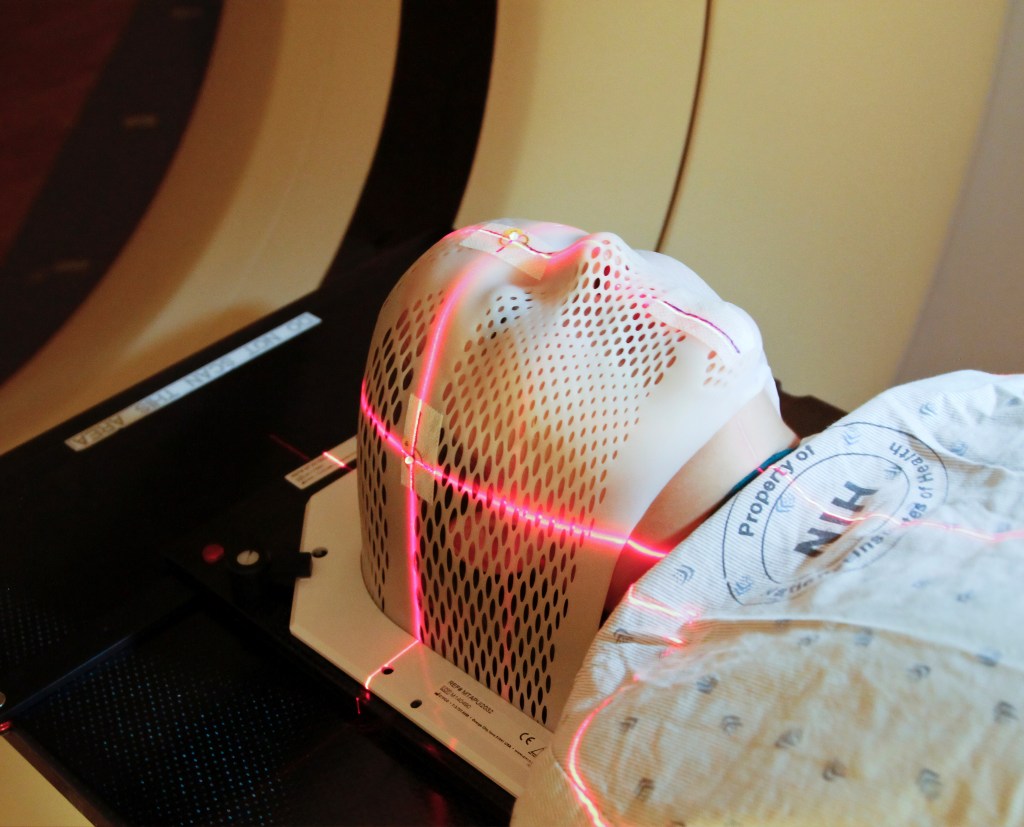
My thoughts zoomed back to my first chest MRI, stripped to the waist, lying on my belly, arms stretched over my head, frightened and painfully vulnerable. All my focus was on breast cancer and what other horrible realities the MRI would reveal. All I could think of was surviving my upcoming treatments.

That MRI meant that my life was on hold. There would be no progress in my career for the foreseeable future, and no chance of moving into a bigger place, one that would allow us to get a cat (note: I’m a dog person, but I would have been happy with a cat!). Animals have always been a part of my life, but our apartment rules prohibited them. I yearned for the chance to have a pet again. It seemed such a small thing to ask, but even that wasn’t available to us now.

That brief discussion with my daughter underscored a profound feeling of loss and despair. Cancer had robbed me of a lot of things in my life that others took for granted.

This was my view before I realized I didn’t have to sit there.

And as I sat there in the depths, I forgot that time does not stand still, things are always changing, nothing is permanent…and I have inside me everything I need to climb out.

Curiously enough, I had recently attended a talk on managing anxiety aimed at cancer patients and survivors. The counselor who presented the information was herself a breast cancer survivor and she told us a story of doing a follow-up chest MRI, which she found very stressful. Afterwards, she was asked by one of the cancer nurses what sorts of mental tools she had used while in the MRI tube to calm herself down. At that point, she realized that even though she taught these techniques to her patients on a daily basis, she had completely forgotten to use them herself!

I had been sitting in the darkness for a few minutes when I remembered her story. Most importantly, I remembered that I didn’t have to feel this way, that it served no practical purpose and that I wanted be happier. The only reason I felt like this was because these emotional plunges had been a habit of mine.

So I twisted a rope out of all those grounding techiques that I’ve posted about and pulled myself up.

~~~~~~~~~~~~~~~~~~~~~~~~~~

True, I still didn’t have a cat. But I was able to take a deep breath and realize that at least I had a future. And that future might contain a cat.

I Still Don’t Recognize “Myself”

You know how you have a picture of yourself in your mind’s eye? The way you imagine you look?

For four years, that self didn’t mesh with reality.

I still saw the long-haired fitness freak who’d never had a surgery in her life and definitely no serious illness. The one who was remarkably healthy at 50…the one whose co-worker assumed was age 35.

This is a perfect illustration of how I felt post-diagnosis.

That reality changed in an instant. The unbelievable happened, the unexplicable knocked me off my feet. There was no transition time. I went from super-healthy and super-fit to being diagnosed with one of the most dangerous diseases in our experience.

As the saying goes, “If you don’t have your health, you don’t have anything.” My health was everything to me, and suddenly I felt as though I had nothing.

And in the cruelty that is cancer treatment, off went the hair. Now there was no mistaking that I was “sick”. So when I bumped into friends who hadn’t heard about my diagnosis and tried to explain what had happened, they all said the same thing: “I know.”

Every time I walked past a mirror, I would get a shock. And this went on. Through the months of chemo, through radiation, waiting for regrowth that seemed to take forever.

My oncologist told me to be patient, the hair would come back. It was different for everyone. But I was still scared. And acceptance was a new concept that I was not comfortable with.

Yes, I felt I bounced back the year after chemo – working out hard, with the most awesome new-growth hair that random people would stop and compliment. That year, I felt strong and full of promise. I dared to say that cancer MIGHT have been the best thing to happen to me…

But as time went on, reality moved in again and I realized that there really was no going back. And that “lift” that I had gotten after my hair started growing back and I was hitting the gym hard, well, I crashed again.

Picking up the pieces has been a process…

Endocrine therapy pushed me through menopause. My hair thinned. And most devastatingly, I lost two friends who had been diagnosed with breast cancer around the same time that I had been.

I couldn’t celebrate that. And I fought it for months and months.

Four years later, I’m comfortable with calling myself a cancer survivor. But you know what? I still get a little jolt when I walk past the mirror. It’s still not the “me” that I expect to see. After several years of endocrine therapy, I do not look like I used to. My body doesn’t feel like it used to.

So I stopped beating myself up about it. I need more rest time between workouts. I get tired earlier in the evening. Yeah, I forget things. A lot. So I write more notes and declare my intentions out loud (“I’m going to have to take the next exit…”) so I remember what I’m doing.

I still don’t recognize “myself” in the mirror, but that is a previous “self” who was the right “self” for that time. The current “self” is wiser and more gentle with her body and her spirit.

And I do recognize her.

Does Mindfulness Make a Difference?

Yes, yes it does.

I am AWARE.

What used to feel like a jumbled mess of emotions and sensations before, now makes sense to me. Intense feelings don’t come at me as quickly as they used to and there’s more space between a stimulus and my response to it.

There is a PAUSE.

I may still feel overwhelmed by circumstances when something unexpected happens, but now I know what’s happening and can pull myself out of it.

That doesn’t mean that I’m perfectly calm and don’t get frightened, anxious or frustrated. I do. You can see that in some of my posts, because I try to be very honest about what I’m experiencing in the moment. But no matter how deeply I dip into fear, I don’t stay there.

I can find the CALM amidst the CHAOS.

When things get intense, I know how to feel into my body. I recognize the physical sensations and I focus on releasing them. Smoothening them out. Breathing through them.

All those abilities were always available to me, but I resisted calming myself. I am aware that on some level I used to feel that anxiety was a necessary way to express my fear; that it was necessary to descend into fear to express my emotional state to others, so that I would be taken seriously. While it sounds odd to read that now, it was only through learning that I was able to soothe myself that I learned I didn’t need to commit to the torture.

I return to the PRESENT.

When I start thinking about fretful things in my past or fearing the possibilities of the future, I can now recognize that my mind has drifted away and I can pull myself into the present, feeling into my bodily sensations. I can break through the dark tumult that’s enveloping me. And suddenly, the noise is gone and I’m standing with my feet firmly planted in my room. I hear the birds and I find peace.

I know I am SAFE.

I have learned how to feel into my body to help it bring me back to the present and away from fearful thoughts.

I realize that there were behaviors that I engaged in during times of anxiety in the past, like pacing back and forth, that actually soothed my nervous system. Just as rhythmic rocking soothes a child. My body was wise and knew what I needed. When, years ago, the burden of my workload chained me to my desk and prevented me from movement, my anxiety skyrocketed and became almost unbearable. That was a clue, but at that point in my life, I didn’t know how to listen to my body.

Now I know what I must do to calm down and I allow myself to do it. But this change didn’t come about suddenly.

It takes PRACTICE.

Practicing mindfulness meditation when I am at peace allows me to build up the habit that carries me through difficult times. I practice daily. Somedays I can focus on my breath perfectly; other times I lose myself in thought shortly after I’ve begun. Regardless, I don’t give up. Even the “bad meditation” days are better than no meditation at all. Each session strengthens my mindfulness habit.

Every day. No matter what. It makes a difference.

Is It Metastasis or Menopause?

Ever get the funny feeling that something’s wrong?

Like things are a bit “off” but you can’t be sure? I’ve been dealing with that ever since I got off letrozole, an endocrine therapy for breast cancer with a reputation for being difficult to take.

As of this posting, I’ve been off letrozole for 117 days exactly–yes, I’m counting. I’m still shaking off side effects like stupid-crazy joint stiffness, but at least I can tell things have improved.

That’s not what I’m talking about here.

I’ve taken a few rides in the MRI tube already. Not in any hurry to repeat that.

Right now I’m having some “really intense” memory and focus issues. I’ve put “really intense” in quotes, because I talk in superlatives so that my concerns are taken seriously. It’s a bad habit, especially when speaking to an oncologist, because it’s a sure way to end up in an MRI tube. Again.

In the past, my oncologist suggested that my memory problems might have been related to anxiety and not the medications I was on. That’s quite possible, although it’s hard to tease apart “anxiety” and “med side effects”. I mean, simply being told you have cancer causes an immediate spike of the Stress-O-Meter. For someone as anxiety-prone as me, it’s like I’m constantly red-lining.

Now I’m off the endocrine therapy and my memory and distractibility seem to have gotten even worse. What I had before wasn’t like THIS.

It’s kind of like saying, “This hurts. I think I’m being hit on the head with a hammer.” But then you actually get hit by a hammer, and think, “WHOA, now THIS is being hit on the head with a hammer!”

If thoughts are beads on a string, my beads are dropping off at a constant rate, leaving me wondering what I was about to do three seconds ago. And getting distracted by shiny objects. Couple that with having to learn a complex new financial system for work (grrrrr, Larry Ellison), not having helpful documentation to do so and having to go through that while being mainly confined to my bedroom for over a year…yeah, it’s a mess.

I am not being rational and I know it. But I’m still on high alert and dialing my fears down is going to take time.

Because my breast cancer was HER2+–which has been associated with metastases to the brain–my anxious little self immediately thinks, “Wait, maybe this is cancer’s spread stealing my thoughts???” I think that I will forever be jumping to that as the first possibility.

That’s not completely unreasonable, either. According to “Medical News Today”, memory problems are listed as one of the symptoms of brain metastases, along with headaches, stroke, seizures, confusion, dizziness…okay not really experiencing any of those.

And the Mayo Clinic metastasis website asks: what are the most likely causes of my symptoms? So, I admit, a brain tumor probably isn’t, given all the other more likely possibilities: menopause, work stress, loneliness, lack of purpose…and *cough* listening to Twitch video streams while I’m trying to focus.

So really, these memory issues could be a completely normal effect of menopause, but in the cancer context the possibilities are frightening. It takes a lot of perspective to be able to look at what’s going on and realize that it’s not aberrant or dangerous. I feel like an idiot for jumping to the worst conclusions, but here I am…

It’s a survivor thing.

Re-writing Your Life

When I look back at the past decades, I feel exhaustion sweep over me.

Negative events may seem like they’re never-ending.

Cancer was not the only negative thing to come up in my life. There have been quite a few horrible things that have taken place, and at times I get overwhelmed by the thought of them.

This is not where, at my age, I thought I would be, and that’s disappointing.

But I realized that part of this disappointment is the lens through which I view things. Granted, I’ve had my share of misfortune, but when my life seems to be sinking into bleakness, it’s time to do something about it.

This calls for a change in perspective.

So I have undertaken a project. I am writing out the story of my life, but with a slightly different bent: when I come across a negative event, I pause and consider whether I can find something in it to be grateful for. I write about how I overcame it, rather than how bad it was, or how unfair and so unlike what others have had to deal with. I place emphasis on the outcome to avoid getting mired in anguish.

A difficult person in my life? I’ve learned that I’m not responsible for their happinesss, only for my own. A disastrous financial situation? I’ve found that what I perceived as a terrifying outcome can be overcome, and there is a light on the other end and a path by which to maneuver through it. A frightening health crisis? I now know I have met head-on the most daunting disease I ever feared that I would have and somehow made it through treatment.

Re-framing your personal history, when you’re ready to do so, can open you up to a glorious new view of how powerful you are and what amazing things you have achieved in your life.

I am still here. Re-framing the bad stuff is work in progress and it’s not always easy to let go of my familiar, well-worn, negative narrative, but, yes, I am still here.

I’ve discovered that my life is a story of perseverence. There have been numerous hardships and it’s true they’ve left deep scars, but I am aware of how they may twist my attitude, which has removed some of their negative punch. While I may look around and wonder why things have gone a certain way, I also see what I’ve learned and how I’ve matured.

If you want to give this a try yourself, there are a few things to keep in mind:
This is something for you to undertake about your life, not to be forced into by another person, nor push someone else into.

This is not about looking through rose-colored glasses or feeling that your concerns are not taken seriously, nor is this a squelching of negative emotions instead of dealing with them. It’s a step to the side for a different view. This doesn’t mean that those events were not disastrous or those who perpetrated bad things don’t deserve punishment.

You have a right to be upset. You are heard.

Re-framing your life in this way means that you give evidence to the exquisite being that you are, and to the power that you have within yourself. If you feel as though you’ve been chewed up and spat out, be gentle and start slowly.

When you’re ready, invite healing by releasing the burden of negativity and, pen in hand, allow yourself to reveal your strengths.

Tripping Over Gratitude for the Little Things

“There are only two ways to live your life. One is as though nothing is a miracle. The other is as though everything is a miracle.”

Albert Einstein

A few days ago, I was hurrying across the room to open the door for a workman who was coming to fix holes in our walls resulting from a plumbing emergency.

In our haste to make space for the workman, we emptied the contents of a closet (where one of the holes was) into the middle of the room that I was crossing, and as I scurried, one of those wayward closet inhabitants tripped me. I crashed onto the floor, twisting the joint of my left big toe and falling onto my right arm.

And this was after icing it as often as I could stand it. I’m a rainbow!

I tried icing, but I could easily ice only one body part at a time as I tried to work at my computer, and since I needed to be able to walk, the foot got preferential treatment. As a result, while the bruise on my foot looked terrible, I could put pressure on it and as long as I limped, was able to get around.

My arm was another matter. For the remainder of the day, I was wondering whether I had fractured anything. Rotating my wrist was excruciating, bending my elbow any amount was painful and even just having the arm hang down hurt like crazy. I couldn’t grasp things with my right fingers. The only non-painful position was if I supported my right hand with my left.

Why am I telling you this?

Because I’d written some time back about how I found it difficult to find gratitude for “little things” because doing so felt forced.

Well, that morning, I ate those words.

I remember the good old days when I could put on a sweater without pain. The opposite side of the elbow is equally colorful.

Because when I think back now of how wonderful it was to be able to open a jar of pickles by myself, or even raise a fork to my mouth, I get hit between the eyes with the concept of finding gratitude for everything.

I found gratitude for the fact that I fell on the carpeted floor and not onto one of my son’s tools (that he had left lying around — I need to talk with that boy), that I am still allowed to work remotely and can do so from the comfort of my bedroom, that we have a car with automatic transmission (no shifting!), and that we had enough bags of frozen veggies that I could easily rotate through as they thawed and keep icing.

The next morning, I experienced a tsunami of gratitude for feeling better, getting more mobility and being able to avoid a visit to urgent care. That one trip knocked some sense into me and reminded me that it is not nearly as difficult to fill my cup with joy for things I’ve been regularly taking for granted.

So, that trip I took helped me discover that I don’t need to wait for gloriously grand things to occur in order to feel gratitude. Multiple reasons for a grateful attitude are all around me, every day.

Making It Through “Now”

My recent post, Just Show Up, about releasing the need to fight through breast cancer treatment, left out an important concept.

My cancer diagnosis was what I deemed the “worst-case scenario” from the viewpoint of everything that came before. The overwhelm was a tidal wave that caught me and spun me around. Disoriented, I struggled to breathe and find my footing, but it was too much and I was poorly equipped to deal with the news.

Taking on everything at once doesn’t help you keep it together, it tears you apart.

I went through the motions, stumbling through the appointments that now multiplied in number. There was so much information to wade through, decisions to make, upcoming treatments to fear.

Then a co-worker whose wife had been diagnosed with cancer some years before sat down with me and gently offered a valuable piece of advice.

I didn’t have to handle everything at once. Some the decisions could be made later. Each day would bring answers and more clarity. There was no need to load up on all the information. It didn’t help anyone get through these days, all it did was weigh them down.

The path through this entailed focusing on what needed to be done now, and then working on doing that and only that. Just taking that one easy step forward.

All that stuff in the past and the things to come, you can release them. Don’t carry that extra burden with you. Just focus on what’s happening now. And now.

Could you get through the last moment? Good.

Now just get through the next.

Just Show Up

The thing about cancer is that the news hits you hard at once.

And it’s not like you get time to get used to it, because the diagnosis is LOADED. All those scary things that you’ve ever associated with the “big C” rush at you and there’s no real way to protect yourself.

It would be terrifying for anyone, but those of us currently in mid-life grew up at a time when cancer treatment was not as refined or targeted as it is now: visions abound of hospital beds, bald heads, bodies wasting away, vomiting, hopelessness. Most cancers were frequently fatal and diagnosis was the beginning of the end.

Everyone’s pushing you to fight, fight, fight. It sounds like the right thing to say, but it can feel exhausting.

As we’re trying to process what this all means for us, for our future and for our families, others try to prop us up with cheers of, “Be a badass!” “Stay strong!” “You’ll beat this!” “You’re a fighter!”

So between juggling the cancer news and the “hang tough” messages from those around us, everything gets overwhelming. Our oncologist lays out a treatment plan and suddenly we need to learn a different language. Tumor types, chemo drugs, clinical terms, side effects.

I distinctly remember wanting to hide under my bed and wait for it to go away. There was so much I needed to do and I didn’t know how to get through it all. It seemed like an immense amount of work for one person.

And then it hit me. All I needed to do was show up.

I put the gloves away and realized I didn’t need to fight anything. I needed self-compassion.

I didn’t need to be the warrior that everyone was pushing me to be. The mere fact that I was going to my appointments on my scheduled day was enough. I wasn’t going to win a prize for being the best “infusee” or for absorbing the most radiation the fastest.

I didn’t have to fight. All I needed to do was endure and allow. To accept what was going on and move through it. And to breathe.

~~~~~~~~~~~~~~~~~~~~~~~~~~~~~~

I brought my office work with me to my first infusion. I was going to be there for at least 5 hours so I figured I should use the time “wisely”. I fired up my laptop but soon the Benadryl that I was given to prevent adverse reactions kicked in and brought on drowsiness.

Suffice it to say I might have answered an email here or there, but did little else. The same thing happened during the next infusion, and the one after that. Eventually I realized that the wisest way I could spend my time was by giving myself permission to rest and ride out the treatments.

When infusion day rolled around, I learned to put aside my work duties and family responsibilities, and simply be. It was such an uncomplicated concept, the benefits of which rippled out beyond my treatment. Why did it take cancer to teach me that?

And Here We Go Again…

If there is a time that I’m going to feel anxiety, there’s a good chance it’ll be during my yearly mammogram. This year it came around the same time that my oncologist gave me permission to stop letrozole (and there was stress preceeding that appointment), but also great fear associated with my perceived cardiac arrhythmias, for which I have several visits with a cardiologist lined up.

Sometimes it feels like the stressors keep coming and coming.

To top that off, a family stressor followed on its heels, which I won’t go into but one that portends difficulties in the future. This last anxiety-provoking event used the previous stressors as a springboard and exploded into something even bigger. I was primed for anxiety and it took me for a ride until I found the traction to dig my heels in and slow down.

The worst part is, none of this stuff will simply go away.

Often, when people speak of anxiety-provoking events, they’re described as stressful things like a tense meeting with the boss or college finals or tight work deadlines. Admittedly these are all nerve-wracking, but they are also time-limited.

Then we have something like cancer.

I remember listening to a talk about anxiety where the lecturer tried to give the audience perspective about what was really going on, and he asked: what’s the worst thing that could happen? “You’re not going to die,” he assured us. And it’s true: let’s say that you fail all your final exams, but you’ll survive, even if you have to retake the classes.

Cancer survivors can attest to the fact that we suffer a different flavor of anxiety. There is no deadline on our stresses. They are thick and cling to us, like caramel sauce on the inside of a coffee cup, thinned by the passage of time, but leaving a film on our lives. Our hope is to get past the two-year mark, then five. Ten, if we’re so lucky.

Often, we hear about the success of treatments only to realize that the success is based on the majority of patients lasting until the end of the study, which might have been only five years.

Having someone tell you that you have a 95% chance of surviving five years is, well, underwhelming, especially for those of us who had premenopausal breast cancer. I mean, yeah, I HOPE I can last five years.

When you are here now, negativity fades to the background. Even if only for a little while.

So, what to do? If there were ever a time to practice non-attachment, this is it. For some of us (present company included), it is excruciatingly difficulty to release expectations–I want, even NEED, to be assured that everything will be okay and then rest easy with that.

But I promise you, clinging to the desire for things to be different only causes suffering. It also robs you of the joy of what you are experiencing right NOW–a beautiful sunrise, the softness of a pet’s fur, the richness of a cup of coffee, the coziness of a warm blanket. We are so wrapped up in fears of what the future holds that we miss the magic of what is before us.

Now is the only moment that exists, so truly, it’s the only moment that is real and certain.

Everything else is either history or what we concoct in our minds.

So this time of the year, I have to sit back and sense the Earth under my feet, feeling into how it supports me. This is what it feels like to be here now. No matter how many times I remind myself of this, I know I’ll have to do it again when the next stressor hits. That’s okay.

~~~~~~~~~~~~~~~~~~~~~~~~~~~

This isn’t the first time I’ve written about anxiety and it certainly won’t be the last. But practicing mindfulness, every time I go through this experience, I reign in my emotions a little earlier and start feeling better a little faster. When I look back at what happened I realize I’m making progress, and that’s what really matters.

What I Learned By Hunting Virtual Ghosts

The drive to conquer my fears is why I insist on playing Phasmaphobia even when I dread the thought of it.

Phasmaphobia is marketed as a “horror” video game, the kind that I actively avoid. The concept is simple: you and up-to-three other networked players enter a haunted building, set up equipment and collect evidence of a ghostly presence. There are different tasks to complete but the ultimate goal is to gather enough data to be able to determine what type of ghost is haunting the premises.

Oh, yeah. And also to get out alive.

Because depending on how long everything takes you to do, sooner or later, the ghost is going to hunt you.

Sure, I’m fine as long as I’m sitting in the ghost-hunting van.

Now, there’s a lot more that I could say about this game, specifically about how it’s set up quite intelligently to be unnervingly terrifying. And there’s Articifial Intelligence involved, which means that the ghost can recognize some of the words that you say (hint: don’t cuss!) that will get it angry and on the hunt faster.

But this post is not a review of the game.

This is an observation that this silly game picked me up and threw me to the ground. It was a reflection of real life, because it perfectly reproduced ME, under acute stress.

By that I mean, tight chest, rapid breathing, elevated heartrate, shaking hands, the whole shebang. I get that gamers go through that, but for me, this meant more. These reactions were exactly the kinds of physiological responses to anxiety that have increasingly plagued me through the years.

People who can handle high levels of stress with cool distance have always impressed me. In fact, I’ve come to see that as a superpower. Being able to maintain mental space around you so that the walls don’t come closing in, squeezing breath out of your chest. That ability to think clearly when things are falling apart around you.

I have often thought, what would my experience be like if I could just dampen that physiological response. Well, Phasmaphobia has given me a chance to practice that.

I don’t do so well when I’m in a dark haunted house, getting threatening messages from the resident ghost.

I imagine myself going into that onscreen home, doing what I need to do, seeing the signal that the ghost is on the hunt (flashlight starts flashing and the front door closes and locks), and very calmly moving to a hiding place and waiting out the event. Declaring to the ghost, “You don’t scare me! I had cancer!” This is, after all, just a game. I’ve been through far worse things in my life.

But, no. Really, I’m kind of a mess. I can’t breathe, I can’t maneuver through a doorway, I drop things and do stupid stuff.

But I’m also stubborn. And playing this game with others like my husband who is unimpressed by the potential terror and shrugs off my disbelief that he’s not unnerved at all (note: he’s also played way more video games) makes me all the more determined to use Phasmaphobia as a “safe space” to practice my calming skills. I can remind myself that the fear is not real, that I’m only looking at a screen and that I walk away from the computer at any time. I don’t have to feel this way.

I am currently a work in progress. But I’ll get there. And once I do, my self-confidence will open the way to conquer other terrifying situations.

Once I stop being scared sh*tless.