Advent 2025: Refusing Good Cheer

(Title image: Photo by Nathan Dumlao on Unsplash)

If you’re following my Advent experience, you’ll know that I had a teensy bit of trouble getting into the swing of things as far as reenergizing my mindfulness practice was concerned. But as I mentioned in my last post, the trick was regular and frequent (3x an hour) reminders to stop, take a breath and return to the present.

This strategy worked so well that these thrice-hourly breaks opened the door for gratitude to seep in. The extra-deep breath slowed everything down and made it easier to notice how “okay” things were around me.

That’s a reminder that I think we all need. So innocently, in casual conversations, I mentioned to friends how I found this Advent practice to be particularly uplifting because it allowed me some time and space, even if only a sliver, to realize there was so much good stuff going on.

And, ok, since I had such a positive experience with my deep breath and gratitude, I (gently) encouraged others to try it.

Psst! It’s that gratitude thing again.
(Photo by Thiago Rocha on Unsplash)

Well, just like unsolicited advice is wont to do, I didn’t get the greatest reaction to what I felt was simply finding light when things feel dark. Many people that I know have worries and hardships and things-to-be-angry-about, and sometimes, when difficulties abound…let’s just say that there’s not a lot of enthusiasm for making yourself feel better.

[Note: I am not suggesting “everything is 100% awesome” toxic positivity! This is about finding little things to appreciate.]

I think it’s very human to resist gratitude at times, especially when you feel you’ve been wronged and might believe that letting go of hurt and anger is like “letting the other side win”, so to speak.

But it is interesting to ponder how we can stubbornly cling to feelings of hurt and agitation if we convince ourselves that making ourselves miserable is how we further our cause. As if nurturing your discontent makes you more focused in fighting for your way. But I’m not convinced that this is beneficial; all it does is increase your stress levels, which introduces physical and emotional repercussions.

Instead, in allowing ourselves to soften and appreciate the good around us, we can lift our spirits. By calming ourselves and creating space, we think more clearly, respond more appropriately and ultimately are more productive.

There’s a lot think about this week—I am amazed at the difference that one little breath timer has made, and I’m so grateful for it.

Advent 2025: Expectation vs. Reality

(Title image: Photo by Dayne Topkin on Unsplash)

Or, “if at first you don’t succeed…”

I had planned out my Advent to incorporate a return to peace through mindfulness after a particularly difficult year. It wasn’t supposed to be overly involved or unattainable.

As a matter of fact, I figured it would be simple to slide back into staying more present, particularly since we are heading into one of my favorite times of the year. Hourly check-ins, more dedicated meditation time, a concerted effort at staying present all day long and avoiding anxious reactivity—oh, the blissful calm that would flood my life!

Hmmm, this did not go according to plan.
(Photo by Alan Rodriguez on Unsplash)

Instead, none of that happened. I was still running up until bedtime when I’d scramble to meditate. Continuously forgot to set an hourly reminder to return to mindfulness. Found myself being yanked around emotionally. And I didn’t even unpack any of the remaining moving boxes that are sitting around the new apartment.

An entire week of Advent was gone and I felt like I frittered it away. I was expecting to feel a bit more grounded by now, but I’m not even getting a decent night’s sleep.

So, I sat down to take a look at where I ran off the road. And truthfully, I was never even on one.

I stated my intention for Advent in last week’s post…and then aimlessly wandered off into the woods.

This is a good reminder that mindfulness doesn’t happen on its own, no matter how long you’ve been practicing it. By its very definition, it requires attention.

Funny, in order to practice mindfulness, you kinda need to be mindful about it.

This time, I had a brilliant idea: why not actually DO the thing that I planned to do?
(Photo: @FranticShanti)

Enough belly-aching. I brushed myself off, hiked up my pants and did the following: I set a timer. This could have been any sort of timer, but I used the Plum Village smartphone app’s “Bell of Mindfulness” timer, set to ring (well, “bong” actually) once every 20 minutes from 8am to 8am.

It’s a low, soulful tone that rumbles through whatever else I’m doing, while at the same time not sounding intrusive.

When I hear the “bong”, I take a deep breath and notice what that feels like. Quite often, that breath turns into a deep sigh and I realize that my breath before was shallower. So I take a few more deep breaths.

That type of diaphragmatic breathing, into the belly, activates the parasympathetic (“rest and digest”) nervous system, and thereby the relaxation response.

Then I go back to my work until I hear the next “bong” and this process repeats.

By mid-afternoon, I found that I was much more aware of my breath and was breathing deeper during the interval between the bonging. And that was just the first day.

Ahhhh, this was a much better plan than my previous “no-plan” plan. Yes, I was bummed that I hadn’t implemented an actual plan a week ago, but here I am now and it’s working well.

The best part is, you can’t really “fall behind” on being mindful. Unlike where I am with my Advent cheese calendar…

Advent 2025: Turning Inward

(Title image: Photo by Waldemar Brandt on Unsplash)

Sunday, November 30 marks the start of Advent. While this is a time period associated with a Christian tradition that encompasses the four Sundays and intervening weeks preceding Christmas—and is considered a season of preparation—I believe that it’s a season that can be appreciated by all, regardless of religious beliefs.

Certainly, stores are very willing to cash in on Advent calendars, some of which are extremely elaborate and quite expensive. That’s a sad reminder that where there’s a tradition, there’s a way to make money off of it.

Yep, there’s an Advent calendar for that.
(Photo: @FranticShanti)

There are more mindful ways of treating this season. While I celebrate Advent every year, as I’ve gotten older, the way that I focus on this time of the year has changed.

It used to be common to “give something up” for Advent. As a child, it was generally sweets, so that when the Christmas holiday came around, we would enjoy desserts all the more.

However, there are more meaningful ways to spend the 3+ weeks prior to end-of-year holidays.

Instead of “giving up” something that I might simply go back to once the holidays hit, I use Advent to help me form new and important habits, or to reinforce practices that I might have allowed to slip.

This year year has been a challenging one for me. I found myself pushing meditation back to evening time, right before bed…and I’d often fall asleep before I was done.

With so many changes and stressors in my life, I have spent too much of the day running, exhausted and not paying attention to what my body and mind are feeling. So for this Advent season, I’ve decided to reacquaint the rest of my day with staying mindful and present.

We can all use a reminder to remain mindful throughout our day.
(Photo by Jakob Owens on Unsplash)

Therefore, my focus has turned inward. I am paying more attention to sensations in my hands and feet, starting with the physical aspects of making my morning coffee (decaf) and tea (matcha). I have set a reminder on my phone to check in at least once an hour to see where my body is in space, no matter where I am. When I do so, I consider how long it’s been since I stretched my limbs or had a drink of water. In doing so, I anchor myself in the present moment and remember that difficulties ebb and wane like the tides.

Yes, I still have a lot of take care of, and the last month brought some painful changes that I have to fully deal with. And I can’t truly “slow down” at work the way some might suggest. But mindfulness works with my schedule.

Staying present means that I can keep pace with my responsibilities instead of allow them to run roughshod over me, since it helps me avoid a sense of overwhelm. Yes, that requires discipline as my tendency is to allow myself to get swept up in the torrent of anxiety and busyness that is my life. But I remain conscious of the fact that I get done what I can, and that is enough.

For anyone who feels that this isn’t “religious” enough, I disagree. I find that experiencing the present moment may be one of the most sacred things that you can do. You honor the nature of the season by being a participant in it, not simply a passive passenger in the whoosh of activities that mindlessly steamroll us through the holidays in the New Year.

I wish you a joyous Advent season!

A Rock in a Bubbling Stream [Visualization]

(Photo by Hendrik Cornelissen on Unsplash)

There’s a lot going on in my family at this time, most importantly the transition of my father to in-home hospice care, signaling that a life chapter will be coming to a close. That’s one of those things that you know is going to happen but usually don’t want to think about.

It’s these kinds of changes that unsettle us the most because they’re significant shake-ups of life as we know it. In the case of my family, this change was not unexpected and yet it is still not easy.

The uncertainties associated with end-of-life issues can be unsettling.
(Photo by Pylyp Sukhenko on Unsplash)

But I can draw on my meditation practice and ability to stay present to accept things are they are now.

It helps to use a visualization in the midst of emotional upheaval. So I think of myself as being a rock in a rushing stream. You know, one of those rocks that sticks out about the water’s surface and might serve as a comfortable sunning place for a river turtle.

The rock sits still even thought there is a rushing tumult all about. The water parts around it and then rejoins on the opposite side, but the rock remains there, unmoving and unbothered.

The rock doesn’t hinder the flow but neither does it get carried away by it. And as it sits, so do I, observing and understanding and accepting everything that is going on around me. Not getting caught up in my head and taken away by thoughts.

Mindfulness meditation provides me with a stable rock from which I observe the tumult of life as it rushes by.
(Photo by Simon Berger on Unsplash)

There will come a time to grieve but now I focus on what is happening in the moment and how I can support my parents. There is gentle planning as I get more information about the situation. And always, taking deep breaths, feeling into my hands and feet, staying grounded. From this vantage point, I can clearly see what needs to be done today.

“This is what’s happening now. Tomorrow may be different, but at this point in time, I am here.”

So the coming weeks may bring shorter posts, perhaps a skipped one here or there. There will be much to do and it will all get done in time. Decisions will be made as they come up. Focus remains on each task at hand. Even if responsibilities come fast, I find a stable base in my practice that helps support a strong relationship with my family.

The river rushes relentlessly. But I know it’s there and expect the constant movement. Changes become familiar, fear drops away and I am comfortable where I sit, calm as I watch the waters flow past me and then continue onward.

“Dropping a Plumb Line”: Dealing with Disappointment

This is a follow up of my last post, where I described the unending saga of unfinished repairs following a leak in our apartment, something that left me feeling helpless.

Before I posted last week, I removed a section that I’d written about fears of kitchen cabinets not arriving on schedule, and that they’d be hung after our upcoming houseguest had arrived and the place would still be torn apart. I cut it out because I thought, “Come on you’re catastrophizing, no one needs to read about that.”

I know how you feel, little buddy.

Except that that’s exactly what happened. I got a call that there was another delay. All the expectations I’d had came crashing down in one big pile of disappointment. That is, disappointment mixed with shame, self-judgment, embarrassment, depression, etc. because I’d mixed so many feelings of self-worth into having our apartment be fixed up prior to our guest’s arrival.

This was something so biting for me as a middle-aged women who, despite being an employed “professional”, was still locked into the idea that whatever else I accomplished didn’t matter if my home wasn’t in guest-ready condition.

I tried to do a meditation on imagining what it would feel like if everything that had happened was the way it was meant to be, but I couldn’t even muster that feeling of acceptance.

Again it was the expectation, the need that I had to have things be different. I tried sitting with my disappointment but the feelings were sticky and pulled me down even more.

So then I thought, if it’s the unrealized expectation that I had, the one that had built up over the last two-plus months of restoration agony in which I had no control and was at the mercy of the HOA, our landlord and anyone else…how do I soften that expectation to make this better?

Oh, how differently things look when you drop down into a situation without prior expectations.

I regrouped and tried meditating again, but this time I was dropping straight into the situation, vertically, without those weeks of built up frustration and need. As if I were sitting on the tip of a plumb line, called into action and ready to problem-solve.

What would it feel like to come into this situation right now? If I were to start out by knowing that I’d have to deal with the kitchen being in boxes in the living room area where our guest is supposed to sleep and then move forward from there.

I imagined myself arriving without baggage and it felt so much better. Suddenly, my focus was on dealing with the situation instead of lamenting about how things could have been. This was more productive and less agonizing. Yes, potentially still frustrating, but it took me out of the magnified disappointment that didn’t even make sense from this perspective.

It was such a small shift but it made a significant and immediate difference. That emotional wall that I’d been hitting fell away and I could see solutions. And now things didn’t look that bad. Yes, things looked different but given that I felt so much better and more in-control, this was the best outcome that I could have expected, given the situation.

Again, perspective came to the rescue and I was reminded that there is always a path out of every situation if we give ourselves space to consider it.

~~~~~~~~~~~~~~~~~~~~~~~~~~~

And now, off to clean the bathroom.

Lightening Your Mood By Letting Go

Quite a lot has happened here in less than a week and it deserves a bit of an introduction.

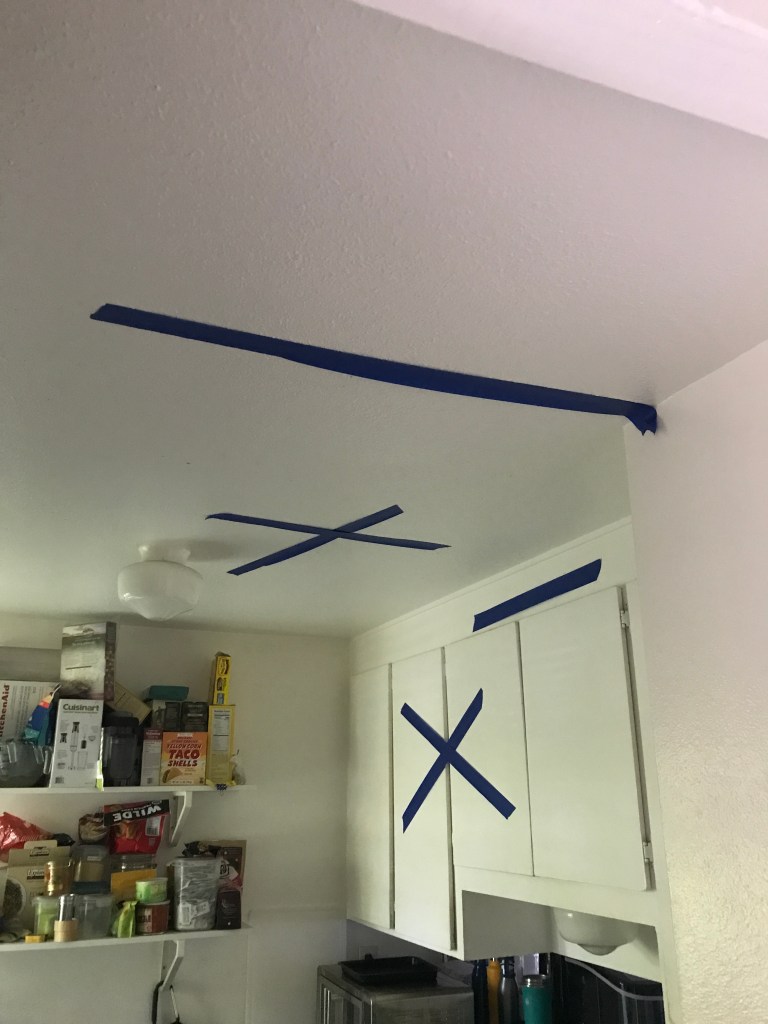
It started with a leak last Wednesday. Water dripping from a ceiling fan…which isn’t supposed to happen! I got the upstairs neighbors to check their plumbing — their carpet was wet. And it got worse from there as plumbers found several gallons of standing water contained within the studs in the floor above us, coming from cracks in our neighbors’ kitchen drain pipe, now starting to overflow those confines.

Yeah…I’m pretty sure this is not a good thing.

That water was searching for low points…which happened to be overhead electrical spaces in our unit: ceiling fan in the dining area, wires coming through our kitchen cabinets, even the overhead kitchen light. Soaking the ceiling as it traveled.

The water looked toxic.

We live in an old-ish building with old-ish pipes that are showing their age. We have had quite a bit of water damage and leaks already, some of which required strict restoration measures since there is asbestos(!) in the ceilings. The current incident is no different except that this time the repairs will be more extensive due to both the asbestos and growing mold, requiring the removal of kitchen cabinets, some carpeting and lots of ceiling.

When things like this happen, the HOA’s insurance covers all issues from the walls into the interwall spaces and the homeowners’ insurance covers everything inside the unit. As risk-averse renters we have our own insurance to protect our belongings, but we are not the owners of this unit. Regrettably, our owner did not have the unit insured. This poses uncertainties that we have yet to address.

This part of the ceiling has been marked for removal…

First things first, however: a restoration company marked out the spaces that were wet and from which we needed to clean everything out. We spent all weekend doing so. And that brings me to the point of this post.

When you have a lot of stuff, it’s easy to keep holding onto it because there’s no real impetus to get rid of it. And even if you try, it’s too easy to talk yourself into not letting go. If you get rid of it and then have to repurchase, that’s like twice the cost, right?

…and this carpet has to go…

Except that I’ve come to believe that space = money. There’s so much that we have that we’re not really using. Maybe it was on sale, maybe it was something you needed one time, maybe you decided to splurge. But if these things are taking up space unnecessarily, they are costing you. I know they take an expensive toll on me in terms of headspace, making cleaning more difficult and our living area less inviting.

So this weekend was about purging. And wow did we PURGE. It felt amazing.

…as do the cabinets and ceiling in our galley kitchen.

Old glassware, shopping lists, aged spices, an extra bathroom scale (from a time long ago when we have two bathrooms), chipped plates, dollar store containers, plastic utensils, old computer cables, and the list went on. We emptied the 20-gallon fishtank, relocated its few inhabitants to the aquarium my husband has at his office, and realized that we could probably get rid of the cart that the tank sat on too.

There was so much that we’d been holding on to that simply was not necessary to have. And the more we got rid of, the lighter I felt. Buoyed by the sensation, I started going into areas not marked for restoration and getting rid of unneeded items, because I believe a big change is imminent. Something has been put into motion that will require big decisions and big action.

So in the midst of having the majority of our kitchen items and the entirety of our dining room stacked up in the living room area, I should be stressed out. But I’m floating in quiet acceptance, staying present and reveling in the lightness. I never expected to feel like this, so positive. Maybe it’s because all those things we held on to were weighing us down?

~~~~~~~~~~~~~~~~~~~~~~~~~~~~~~~~~~

This saga will continue…

Fighting My Way Out of a Paper Bag: An Analogy

I wanted to share a little technique that I’ve been using to give myself perspective. It’s quite simple: I have a small brown paper bag pinned to the wall above my desk.

The bag is there to remind me that most of the things that are upsetting me or stressing me or just taking up headspace in the moment are transient issues that fit into that paper bag. The REST of my world remains outside that bag and unbothered by whatever is going on in there.

The trick for me is to not get sucked into that brown bag. When that happens, and it does, I’m suddenly whirling around with all the daily stressors and emergencies-of-now, and that’s all I see. My entire experience becomes those anxiety-provoking elements and my stress levels skyrocket.

When stress levels are high, it’s easy to get sucked into a space of high anxiety where you see only those stressors, forgetting that the rest of the world is outside.

It takes a lot more effort to fight my way back out of there than to stay outside in the first place.

At the same time, it’s so easy to follow all those stressors right into that bag. For me, that’s the path of least resistance, even a habit.

But when I lean back and take in the entire picture–the time-limited nature of what’s bothering me and the fact that in a couple of weeks it’ll be gone–my view broadens and I am reminded of what else is going around me right now, in this moment.

Right here, where I feel my feet planted on the ground. I smell the scent of lemon wafting up from my diffuser. I’m aware of sounds from the street below and sunshine coming in through my window.

Perspective. All of these things tumbling around inside the bag will pass. And, yes, perhaps more importantly, new ones will bubble up and take their place. I can’t stop that and I have to accept it. But I can take a deep breath and stay in the bright light of the day instead of darkness of that little bag.

Calming the Mind by Counting to 10 – with a Focus Twist

I’ve posted several times about different counting techniques that I’ve used to help calm and ground myself (counting backwards, counting 100 breaths). It sounds like such a simple thing, but it is surprisingly effective.

Counting is one of those things that we naturally learn when we are very young, and because it’s so familiar to us, we can do it with ease as adults.

Job #1 is to stop the swirling thoughts so that you can drop back to sleep.

This ease comes in handy when our Monkey Mind is jumping around like mad, stewing over what has happened or fearing for what is to come. Counting gives it something to do so that its attention is drawn away from anxious thoughts.

In particular, I’ve found this to be useful at night when falling back to sleep has been hindered by that incessant buzz of thinking that won’t go away.

The technique that I’ve used over the last few weeks weaves a counting pattern like this:

Become aware of your body lying in bed. Try to soften the most obvious places of tension (for me, neck and shoulders) and turn your attention to your breath.

Begin by focusing on your inhales of your breaths and counting them, up to ten. Then, switch your focus to your exhales, counting each one up to ten. And again, switch back to focusing on the inhales, continuing this way

The combination of counting up to ten and focusing on either the inhales or exhales provides enough of a distraction from your thoughts, but requires some gentle attention to keep on track. The switching of focus invites your mind to return to the breath.

Counting sheep might work just fine, but counting breaths helps you stay present and grounded.

I’ve found ten to be a very good number; however, five would also work. Whatever you prefer. This might require experimentation to see what is best for you. For example, counting to two might work better for some people during waking hours when there is naturally more stimulation around.

As you establish a pattern with your breath, extend your exhales regardless of where your focus is. This helps slow both your breath and heartrate.

Again, this technique works because counting to ten is simple and unstimulating, allowing the mind to lull itself into a calmer state. When I find myself missing ten and instead counting into the teens without switching my inhale-exhale focus, I know that I’m beginning to drift off. I gently stay with it, but sleep is nearby.

Presence by Touch: A Visualization

Staying present is key for not letting your thoughts take you on a wild ride.

Maintaining presence, however, takes practice so I’m always on the lookout for new ways to imagine the state of being in the “now”. Some of these are simpler exercises than others, but the upside of a more “complex” technique means that all my mental energy remains on staying present instead of, say, worrying whether I embarrassed myself at a party three nights ago.

The following is a visualization and mental exercise rolled into one:

What if only what you’re touching exists and everything else falls into nothingness?

Seated, close the eyes. Breathing deeply, allow everything that is around you to fall away in your mind, leaving only those points where your body makes contact with the surface beneath you.

Imagine that the soles of your feet sit on top of sole-shaped pieces of support material. Your buttocks and thighs contact like-shaped material, as does any place your back rests against your chair. If you touch your fingers to the side of your chair seat, small oval-shaped pieces of material appear where your fingers make contact.

Everything else disappears against a background of light (or darkness, if that is more calming). The chair and floor and even the room you are in? Gone. The point of this visualization is maintaining focus on only what you are physically experiencing at any given moment.

It is a strange sensation to imagine, floating through the ether but still feeling support from the slightest bits of material that touch you. This is the ultimate in being 100% present and turns the concept of object permanence on its head.

You don’t feel it? It doesn’t exist.

Our brain wants to fill in the parts that we can’t see because the brain has formulated an image of what is out there. However, in this practice we try to do the opposite–let go of what we do not have immediate physical evidence for.

This is a good analogy for dealing with thoughts that our brain fabricates based on the expectations that it has. What if we let go of them, if only for a short while, and simply sit in the stillness of what is happening right now?

Another Dual Focus Meditation: Engaging the Ears

In my ever-continuing quest to maintain my concentration during meditation, I’m constantly exploring different points of focus. My go-to still remains the breath, but I’ve written about sharing that spotlight with focus on sensations in the hands as part of a dual focus meditation.

More recently, however, I’ve incorporated more of the senses into my meditation practice (I mean, we have five so why not?).

Urban sounds can provide a constant din that can be used with the breath as a dual focus sensory practice.

In between the inhales and exhales, there’s space during which I’m notoriously susceptible to distractions. Lately, I’ve been working with sounds. I live in the city on a busy street and there’s rarely a lack of noise, so in the lulls between my breaths, my ears turn on and absorb the sounds transpiring outside my window.

The trick with sounds, however, is to allow them to simply be interpreted as tones and refrain from being drawn into naming them. A siren runs the risk of eliciting thoughts of “where’s the fire?” or similar scenarios. For this to work, it’s important to engage our “beginner’s mind” — our brains are quick to match familiar sounds with a story — and divorce the sounds from associations that we’ve made over the years.

If simply shuttling between breath and sound provides enough fodder for concentration, this might not be an issue.

In that case, street noise can be an effective anchor for its variability, its high tones and low tones, as the passing of cars may morph into ocean wave-like sounds.

Meditation music and meditative sounds abound on the internet. Hunt around and you will find a plethora of offerings to use as a focal point.

However, if urban noises are either too intermittent or too difficult to resist spinning tales around, there are many other options for ambient sounds that will work for purposes of meditation. It’s no surprise that platforms like YouTube have a gazillion listings under “meditation music” that may fit the bill. In addition, apps like “myNoise” (and website myNoise.net) provide customizable background sounds to help mask outside noise and maximize ability to stay focused longer.

As the body moves with the breath, sound will remain in the background allowing attention to organically cycle between the two. From personal experience, I’ve learned that juggling between feeling into sensations in the body (breath) and being aware of sounds coming through my ears results in really turning down the dial on my Monkey Mind, which seems to fade to the distance. This dual focus can close the gap through which mind chatter might otherwise intrude.

If you feel inspired, give it a try and let me know how it goes!