Hovering Over Possibilities

(Title image: Photo by Victor Rutka on Unsplash)

Since I’ve been writing about non-attachment, I wanted to follow up with a description of what it feels like for me.

As an example, I’m currently waiting on medical results for a family member. And I can promise you, there is a particular outcome that I really want. It’s the one where everything works out without any problems and you can look back at what transpired and wonder what you were even worried about. All good!

But that’s a best-case scenario, and wish as we might, it’s not a guaranteed outcome, even when we assume it’s a guaranteed outcome. When reality comes out worse, the let-down can feel intense. I’ve experienced that too many times.

Gently, gently. Allowing thoughts to come and go as they please without holding on or pushing away.
(Photo by Dmitry on Unsplash)

So I’ve taken to holding my thoughts lightly, like you would hold a little bird in your hand. Not grasping them, just keeping my hand open and allowing them to flit in and out of it.

It feels like I’m hovering over the possibilities of what might transpire. I am aware of the potential outcomes, but not holding on to them. I don’t push them out of my mind completely. Rather, I fuzz my view of them as if with a softened gaze.

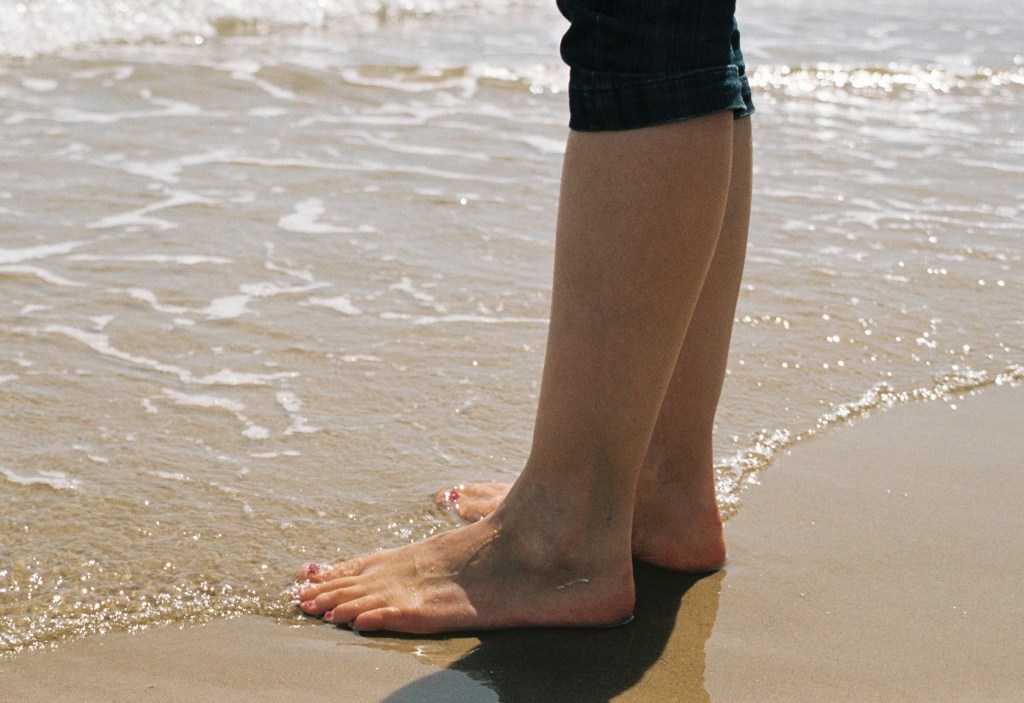
Then time stops. And coming down out of what is swirling in my head, I turn my awareness to what is going on right now. Especially what my feet are doing. How my soles feel pressed against the floor. Focusing on the sensations.

Always, when the possibilities get too intense and clear, I return to my feet on the floor. If my recalcitrant mind continues to swirl, I focus on my hands and pour my senses into what they are doing: tying shoelaces, making coffee, doing the dishes—noticing the movements and pressure, watching my fingers. Once I’m anchored in my body, my awareness reaches out again.

I know those thoughts, hopes and fears are there. I don’t try to repress them. I don’t try to analyze them. They simply come and go, and I return to the calmness of where I am.

Admittedly, some days it’s much harder than on other days. “Letting go” is a practice, not a destination. But even brief moments of respite are welcome.

~~~~~~~~~~~~~~~~~~~~

There’s also something to be said about the underlying fear of waiting for responses, the uncertainty that weighs so heavily upon us. I’ve always felt that one of the toughest times of my cancer experience was when I was waiting for scan results, biopsy results, even doctors’ appointments. That was the real test of “hovering” and it was one that I did not handle well at the time. But thankfully, relief came in the form of a treatment plan, a.k.a. a certainty of sorts. No, it didn’t make everything better, but it gave me a path to focus on.

The Bliss of Non-Attachment

(Title image: Photo by PaaZ PG on Unsplash)

So, I have a silly little story about non-attachment.

During Memorial Day weekend, I placed an order with a Maine mushroom company humorously called North Spore. [Note: I am not affiliated with them in any way other than as a customer.]

I ordered two bags of drinking chocolate with functional mushrooms added. While I usually prefer my cacao unsweetened, I was willing to try this as it was a more economical purchase than the orders that I’d placed for “ceremonial grade” cacao. Additionally, I love mushrooms so I considered it a special treat.

I had had several stressful months with no significant break coming up, so I was really looking forward to receiving my package and its delicious contents—a little respite from the tumult that was my life. The package was scheduled to arrive on Saturday, June 7th and you can bet I was tracking its transit via the US Postal Service’s phone app. No matter what kind of a day Saturday turned out to be, I was already imagining enjoying a nice warm cup that evening, making things better in some small way.

Maybe you can see where I’m going with this? I was invested.

Saturday arrived…I received the delivery text…I ran out to our complex’s mailroom. But there was nothing in my mailbox. No package, no key to the larger package holding box, nothing. I groped around inside my mailbox, hoping that maybe I was just blind and the key was actually there. But no.

Frustration!

And it was at that moment, as I was simultaneously (silently) cursing our mail carrier—who has mixed up mailboxes before—and praying that the key had ended up in the box of an honest neighbor, that I was hit square in the face by the suffering that attachment brings.

I had set up an expectation (honestly, a reasonable one), felt into it very deeply, and experienced that ache of having to rip myself away from it when things went in a different direction.

Had I been able to practice non-attachment, I would have taken this in stride. After all, the package was clearly misdelivered and may still show up, and if not, a trip to the post office would follow since I had a tracking number and the shipment was insured. It would have been easier to shake off disappointment because I would not have built up such strong expectations and hung so much on receiving my hot cocoa.

But alas, I am very much an imperfect human being who did a very natural thing in anticipating the arrival of my package, along with expecting the USPS not to louse it up. So after fuming and agonizing over the “unfairness of it all”, I decided to sit with all of this for a while: acknowledging that it made sense for me to look forward to receiving something to brighten my week along with the importance of not beating myself up for doing so; but also cajoling myself into releasing my grip on what I had so wanted as the outcome in addition to stepping back and getting perspective on the situation.

And then I felt better, like a big chunk of tension had been released. It’s not easy being human sometimes.

~~~~~~~~~~~~~~~~~~~~

I realize that not getting a shipment of drinking chocolate is not a devastating outcome, and yet, even something so relatively insignificant felt like a big letdown in the face of expectation. So then, what about a potentially life-changing outcome? The effect could be brutal enough to upset one’s established foundation. It underscores the clinginess of attachment and when possible why we should strive to soften our need to have things be a certain way.

But What If Everything Goes Right?

(Title image: Photo by Aaron Burden on Unsplash)

Friends, I am a worrier. You’d be hard-pressed to find something that I wouldn’t worry about.

I know better. And I’ve actually gotten better.

But even with practicing mindful self-awareness, those foreboding thoughts of “what if everything goes wrong” creep in, particularly at night.

Because 2025 is a year of big changes for me, there have been many opportunities to awaken in the darkness, worrying about how this and that can go totally downhill.

A few days ago I was on the same train ride, hurtling through fears, when it hit me that, in the same way that I can imagine everything crashing and burning and my life being miserable and terrifying, I didn’t have to fear the worst. Things could work out.

Call that the “Schrodinger’s Box” philosophy of life. At the same time that things could be awful, they can simultaneously be fabulous—or somewhere along that spectrum. No matter what you’re anticipating, it won’t be until you finish the exam, give the speech, get the biopsy results or have the conversation that you will really know how things turn out.

Fear and avoidance are not the way to go through life.
(Photo by Alexander Grey on Unsplash)

So if you don’t know, you might as well think positively, tempered with a healthy dose of realism. Things are rarely black or white. Just as we shouldn’t be “all negative”, we shouldn’t be “all positive” either.

Ok, so right here I need to backtrack and say a word about “positivity” and “negativity”. When we practice mindfulness, we strive to release expectations, to not attach ourselves to an outcome. Yes, I get that.

That is an ideal. Our minds don’t always allow us this.

But if there is a choice between being morose or upbeat, you are still better off being upbeat. Realistic and upbeat.

I’ve heard people justify constantly being negative by saying that at least they will be “prepared for bad news” so that it’s not a shock. I used to think that too, fearing the precipitous drop in spirit when you’re expecting something good and get something bad instead. But I’m no longer convinced that doom-and-gloom saves you from anything.

Consider the “coward dies a thousand deaths” adage. Perpetual pessimism can lead to all sorts of health issues, mental and otherwise. For example, living in constant fear may result in anxiety, depression and high blood pressure,among other things. And with enough time, those can turn into something worse.

Again, the ‘ideal’ is non-attachment. But if you cannot completely disengage from imagining an outcome, your mind and body will be better served by considering that everything will work out in the end. At least you’ll be able to sleep better at night.

~~~~~~~~~~~~~~~~~~~~

And what is recognized as the optimal way of thinking? There exists the concept of “short-term realism, long-term optimism”. This means that you take care of the tough stuff in the present, facing challenges head on, but keep your chin up and not lose hope for the future.

And Here We Go Again…

If there is a time that I’m going to feel anxiety, there’s a good chance it’ll be during my yearly mammogram. This year it came around the same time that my oncologist gave me permission to stop letrozole (and there was stress preceeding that appointment), but also great fear associated with my perceived cardiac arrhythmias, for which I have several visits with a cardiologist lined up.

Sometimes it feels like the stressors keep coming and coming.

To top that off, a family stressor followed on its heels, which I won’t go into but one that portends difficulties in the future. This last anxiety-provoking event used the previous stressors as a springboard and exploded into something even bigger. I was primed for anxiety and it took me for a ride until I found the traction to dig my heels in and slow down.

The worst part is, none of this stuff will simply go away.

Often, when people speak of anxiety-provoking events, they’re described as stressful things like a tense meeting with the boss or college finals or tight work deadlines. Admittedly these are all nerve-wracking, but they are also time-limited.

Then we have something like cancer.

I remember listening to a talk about anxiety where the lecturer tried to give the audience perspective about what was really going on, and he asked: what’s the worst thing that could happen? “You’re not going to die,” he assured us. And it’s true: let’s say that you fail all your final exams, but you’ll survive, even if you have to retake the classes.

Cancer survivors can attest to the fact that we suffer a different flavor of anxiety. There is no deadline on our stresses. They are thick and cling to us, like caramel sauce on the inside of a coffee cup, thinned by the passage of time, but leaving a film on our lives. Our hope is to get past the two-year mark, then five. Ten, if we’re so lucky.

Often, we hear about the success of treatments only to realize that the success is based on the majority of patients lasting until the end of the study, which might have been only five years.

Having someone tell you that you have a 95% chance of surviving five years is, well, underwhelming, especially for those of us who had premenopausal breast cancer. I mean, yeah, I HOPE I can last five years.

When you are here now, negativity fades to the background. Even if only for a little while.

So, what to do? If there were ever a time to practice non-attachment, this is it. For some of us (present company included), it is excruciatingly difficulty to release expectations–I want, even NEED, to be assured that everything will be okay and then rest easy with that.

But I promise you, clinging to the desire for things to be different only causes suffering. It also robs you of the joy of what you are experiencing right NOW–a beautiful sunrise, the softness of a pet’s fur, the richness of a cup of coffee, the coziness of a warm blanket. We are so wrapped up in fears of what the future holds that we miss the magic of what is before us.

Now is the only moment that exists, so truly, it’s the only moment that is real and certain.

Everything else is either history or what we concoct in our minds.

So this time of the year, I have to sit back and sense the Earth under my feet, feeling into how it supports me. This is what it feels like to be here now. No matter how many times I remind myself of this, I know I’ll have to do it again when the next stressor hits. That’s okay.

~~~~~~~~~~~~~~~~~~~~~~~~~~~

This isn’t the first time I’ve written about anxiety and it certainly won’t be the last. But practicing mindfulness, every time I go through this experience, I reign in my emotions a little earlier and start feeling better a little faster. When I look back at what happened I realize I’m making progress, and that’s what really matters.

What I Learned By Feeding Virtual Fish

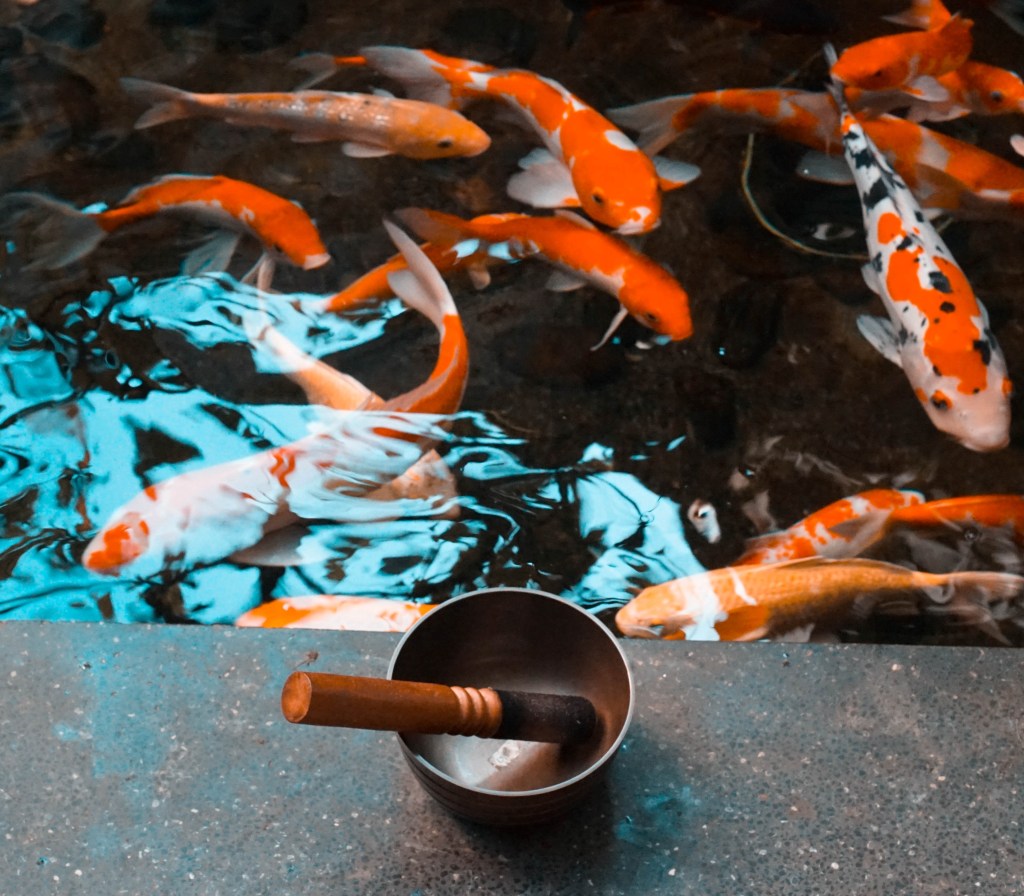
I wrote my previous post about Zen Koi 2 so that I could write you this one.

You’d think that with a lovely mindful smartphone game where there’s limited stress and little competition, I’d be able to sink into peaceful bliss every time I played. Oh, but no. After I fell in love with Zen Koi 2, I found myself engaging in rather unmindful behaviors.

No stress? I’ll create it! All I needed to do was swim my delightfully colorful koi around and nab a little morsel here and there. It wasn’t long before that turned into frantic darting around the pond, frustrated by the prey I wasn’t fast enough to easily catch, annoyed by lack of maneuverability (these abilities improve as you level up), incensed when a spiny pufferfish blocked my path or spikey plants slowed me down. Instead of creating space between myself and the game, I was sucked into it and treading virtual water frantically.

Mind you, there’s no time limit on playing this game, no detriment to your koi if you spend a lot of time in one area. The prey items never run out. All you need is patience…and a little perspective.

I needed more zen in my Zen Koi 2.

I had trouble releasing newly hatched koi, wanting to keep them in my separate, personal pond (which has very limited space), so that I could play with them again. All this, even though once a koi is hatched is it in your collection permanently, and if you release it, you can easily clone it and swim with it once more. So there’s absolutely no need to hold on. But I was grasping, unable to let go. My behavior didn’t make sense.

It really wasn’t until I found myself clenching my jaws and gripping my phone that I dawned on me that I wasn’t enjoying this. I was striving for the next level. What I had at the moment wasn’t good enough, I was always trying to increase my koi’s abilities or get to the next sigil. I wasn’t enjoying the beauty of the little fish I had now. As soon as a mating fish appeared, I started drawing Punnett squares in my head, calculating what color combinations would result, and whether I potentially needed the hatchling to complete a collection.

Clearly, this sort of behavior is *not* what I’m going for when practicing mindfulness. In fact, it is completely antithetical to it. The striving, grasping, inability to focus on “now” was very telling. These are, of course, digital creatures, color pixels on the screen. It was my mind that made them real, my mind that created the anxiety around the game. It was my mind that gave the game so much emotional power over me.

So much grasping. I can’t get back what I lost by holding on to things that can’t be.

So I was thinking. Isn’t that kind of like my relationship with my fears? They too are not real, and it’s likely that a majority of them will never be real. And yet I attach to them and let them drag me around, frustrating me, agitating me, and in general, making me miserable.

For me, my cancer “story” was about loss. Loss of hair, loss of energy, loss of hope, loss of time to do more in my life. And the more I had felt I lost, the more I clung to how I wanted things to be. But they couldn’t be like that. I had already realized that, but it wasn’t until I played that innocent little smartphone game that I saw how powerful my attachment was to the things I really needed to release.

So, the next time I played with my fish, I gave myself distance. When I found myself clinging, I took a deep breath and let go. I let go of the newly hatched koi, I let go of the need to be more than I already am, I let go of the fears about tomorrow. And nothing bad happened. My koi was still peacefully traversing its little pond. I was still sitting on the couch, phone in hand, just like before. It was a pleasantly grounding realization.

Spiny pufferfish be damned. I think I can do this.

~~~~~~~~~~~~~~~~

My need to hold on is like my cancer journey: still a work in progress. I don’t know what the future holds. But if I can make this moment a little more pleasant instead of mourning all my losses, then I will consider that a victory.

So Far, So Good

I had a mammogram last Thursday to ascertain whether or not I was still in remission from breast cancer.

For the record, I still am, although it’s easy to say that like it’s no big deal. Not only is it a huge deal, but getting through last week was more difficult that I anticipated.

One of the basic tenets of mindfulness that I practice, with varying degrees of success, is non-attachment. This is particularly useful when dealing with cancer because the disease involves so many scary things, and as a result, so much wishing that things were different. Of course, the more you agonize over the fact that you’re going through something you desperately don’t want to be going through, the more suffering you experience.

I can personally attest to this.

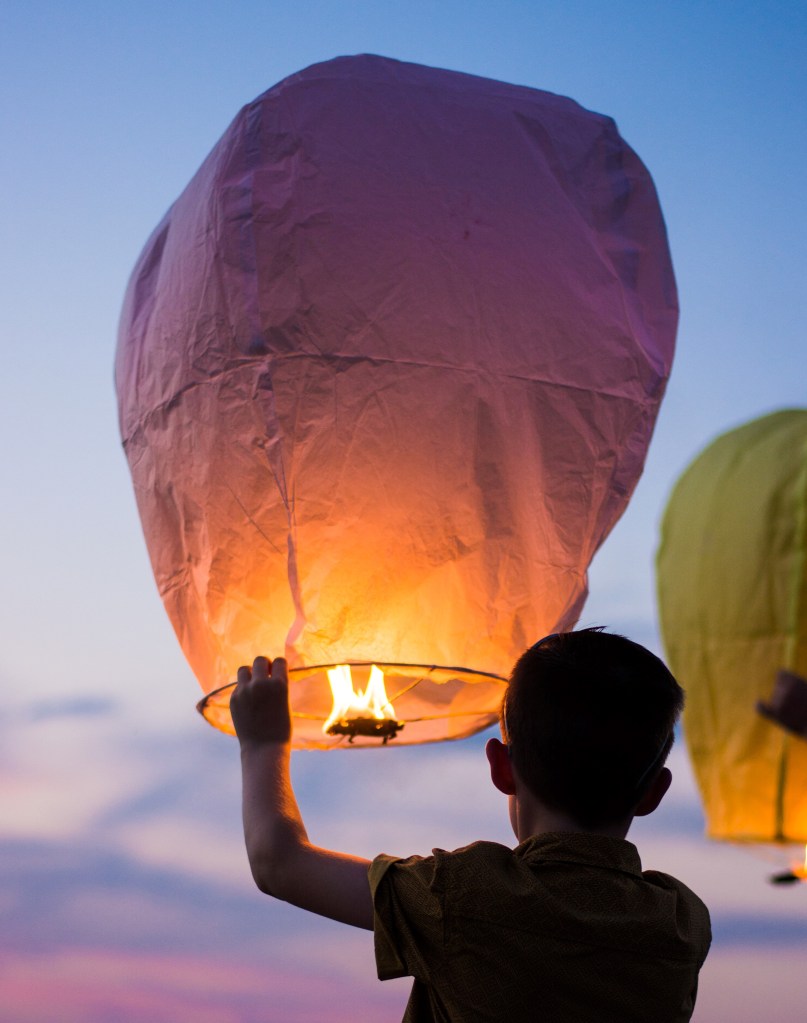
It would be great if letting go of expectations would be as simple as releasing a paper lantern, but it’s not that easy.

To counter this, I do my best to release expectations of specific outcomes. When it come to scans, every cancer patient wants to hear that tumors are shrinking and every cancer survivor wants to be told that the tumor hasn’t returned. It’s REALLY, REALLY, REALLY hard not to cling to those wants, but the harder you cling, the more painful the separation if things don’t turn out the way you hope, and even if they ultimately do, there’s fear that they might not.

So for the past several weeks, I’ve been practicing letting go. It’s funny that “letting go” is so easy to type out, but so incredibly difficult to accomplish. I’m not good at it when it comes to the things I desperately fear.

To counter my clinginess, I’ve adopted a concept I call, “so far, so good”. That means that up to this point, I’ve been able to handle everything that’s happened to me. This doesn’t mean that it’s been easy or pleasant — in fact, at times it’s been horrible — but somehow I’ve made it through to this point. And tomorrow? I cannot predict what will happen then, but right now I’m still here.

This way, I can feel positive without the burden of hopeful expectations — and the fearful possibility that those expectations will be dashed to smithereens. Of course, all of this sounds great because I’m speaking theoretically. But as we know, that ain’t real life, as I’ll illustrate in my next post…

Letting Go, Painfully

I try to avoid “stream-of-consciousness”posts, but occasionally I’ll let one through. This one stings a bit…

I am tired. Physical fatigue is easy for me; getting emotionally wrung out is exhausting.

Events that have taken place over the past several years have demanded a release of expectations, a relinquishing of normality, how I think life “should” be.

Cancer was the big one. I used to wake in the morning, hoping that my diagnosis had been a bad dream. That I could laugh and shake my head, thinking, “Phew! Glad THAT wasn’t real!” And then go about my day, forgetting the fear and immersing myself in blissfully boring everyday life.

But that’s not what happened. I would wake in the pre-dawn hours after sleep had left me to the darkness, coldness spreading through my belly as I remembered that I had cancer. And in the midst of the fear of dying was that wrenching feeling of having to let go of wanting things to be different. Still desperately holding on when it was too late to do so.

Attachment leads to suffering. I know this, but I cling nonetheless, stubbornly refusing to accept change.

I was given a bit of news several days ago, too disorienting for me to even define in this post. Like cancer, it caught me off guard, and I cling to wanting things to be different. To be “normal” and uninteresting. I’m compelled by my need to fix it, make it comfortable and easy to accept.

I need to get.a.grip…

Yet another thing I wish I could control. But I can only paw at it from the outside.

Now I’m engaging in emotional calisthenics, to try to find a notch on this slick surface that I can stick my finger into and get some sort of grip.

I wish this wasn’t the case. I’m disappointed that I feel the way I do. I tell myself, I should be more tolerant of what happens. But it’s the hope that things will stay the same that makes change so difficult.

I twist my thoughts into origami, trying to find a comfortable shape. It takes a lot of massaging to smooth out the edges and make this morsel easier to swallow. Every time I mull it over, it cuts me again.

At some point it is no longer the matter itself that causes pain. It’s all the emotion layered on top of it.

So I’m tired. Letting go, yes, but so slowly. You’d think that it would get easier with practice but even the process hurts.

Of course, holding on hurts more.

“Fly the Friendly Skies”?

What if the skies aren’t guaranteed to be friendly?

While I’ve not been a nervous flyer in the past, I’ve haven’t flown since 2005 (!) and I’m starting to feel unsettled about our upcoming trip. It’s going to be a cross-continental red-eye during which I’ll be Tetris-ing myself into a plane seat (I’m 5’11”) and trying to sleep upright. Then there’s that plane change in the wee hours of the morning, at a time when any sane person would be fast asleep.

After writing a post on the importance of sleep, I’m going to go against my own advice and really screw up my family’s sleep cycle. So there’s that. But I’m also feeling prickly about making it through security, finding storage room in the overhead compartments, making our connection on time, picking up the rental car and remembering how to get to my parents’ home on a few hours’ sleep.

Oh yeah, and hoping that the plane doesn’t drop from the sky. That’s a biggie.

Life: enjoy the flight.

For a cancer patient, plane flight is one of those things you’re supposed to avoid. While I’m well past “patient” stage, my white blood cell count remains abnormally low, so breathing recycled air in cramped quarters is a bit of a concern. Taking Tamoxifen brings with it a risk of deep vein thrombosis, which is associated with long plane rides, and I’ve been warned about breast cancer survivors developing lymphedema due to the changes in air pressure during airflight.

Okay, okay, okay, realistically none of that will cause me problems. And all those other worries about the trip? They only matter if I’m thinking about them. When I’m not thinking about them, they don’t exist (*crossing fingers*).

Of course, the risk remains. I can sleep calmly on the flight with 99.99% confidence that we’ll get to where we need to go without mishaps, but there is that 0.01% that hangs in the back of my mind. Whether or not I give it attention depends on me. My life is not going to be any better if I’m fretting about it.

Cancer is the same way. There is no guarantee that I’ll stay cancer-free and I have to live with the possibility of recurrence for the rest of my life. That is disconcerting, particularly to a card-carrying worrier like me, but when I detach from that and simply appreciate where I am, I find that my days are a lot brighter. So for both air travel and life, the best course of action is to sit back, relax and just enjoy the flight.

Letting Go in 5…4…3…2…

Several nights ago I woke at 3am, my brain abuzz with images of what had taken place that day. In an effort to divert my attention and fall back to sleep I focused on my breath, but I was so groggy that I couldn’t concentrate effectively.

So instead I imagined a beautiful sunny field with chirping birds and various animals coming by to snuggle with me. It was the epitome of placidity and contentment. A darling fawn nuzzled me. Then a purring lion tenderly rubbed up against me. And attacked me.

Seriously??? This is my self-created fantasy and I can’t manage to keep it positive???

But perhaps I shouldn’t be surprised. I’m a few days out from a 3-D mammogram that I’ve managed not to think about because I’ve had such a busy week at work. It will be the first mammogram since completing all my cancer treatments, so it’s kind of a big deal. Somewhere in the back of my mind fears and what-ifs are simmering. It’s scanxiety rearing its ugly head.

People tell me that everything is going to be okay. But how can they say that? This is cancer. There is never a guarantee that everything will be okay. For others to say that to someone who’s been through the full spate of treatments sounds like a brush off. Even when everything is “okay”, it may still not be okay! And sometimes it’s worse.

Sure, Mr. Expectations, you look so cute and peaceful, but if I get too close, you’ll take my head off.

I wrote a letter to myself the evening before my original diagnostic mammogram way back in early 2017, trying to calm myself down because I was an anxious mess. And in that letter I told myself that I’d be able to go back and re-read it after the mammogram and chuckle about how worried I’d been and how everything actually worked out. I tried to reason myself into calm, noting how unlikely it was that I had cancer. That tenuous serenity was blown the next morning by the radiologist who read my scan.

I remember that crushing feeling — it’s what colors my experience right now. I want to believe that everything will be okay, and yet the spectre of possibilities hovers over me ready to potentially ruin my day (and life!). I don’t think that the cancer is back, but I’ve put off making summer travel plan. Just in case.

Gah, is this what the rest of my life will be like? Being fearful of making plans? That’s not a good use of the time I have left on this planet.

Mindfulness as espoused by Jon Kabat-Zinn (drawing heavily on the Buddhist wisdom of Thich Nhat Hanh) speaks of non-attachment. Having expectations and being attached to their outcome causes suffering. I can attest to that.

Trying to reason through to an “answer” only increases agony. So I will take deep breaths and stop thinking.

1975-2019

Unbeknownst to me, the friend whom I wrote about in “Waiting To Say Goodbye” had already passed by the time I posted last Saturday. The end came very rapidly but peacefully Friday at sundown, allowing just enough time to enable her to be surrounded by everyone in her immediate family.

This is sudden and painful. She and I had spent a good chunk of 2017 sharing breast cancer treatment experiences. We knew that there were no guarantees with cancer, but we both had hope. Neither one of us imagined that this would be one of the outcomes.

After she knew her cancer had spread, she continued living as she always had, toughing through the hard parts. She didn’t want people asking her how she was feeling, she wanted to keep on going until she couldn’t go anymore, and that’s what she did. Her decline was so swift that she had felt well enough to do everything normally until the last few days before her passing. That was a beautiful gift that she genuinely deserved.

Understanding that nothing in this life is permanent doesn’t make her death any easier to accept, although it does underscore how things change no matter how desperately we cling to them. I strive to practice non-attachment, but who am I kidding? I am too attached to people and expectations. Yes, it does cause suffering, but right now suffering is just what I do.

Eventually I may transcend this. Eventually.

I end this post with a quote from Claire Wineland, the 21-year-old cystic fibrosis activist who passed away from complications from lung transplant surgery on September 2, 2018. She had spent most of her days knowing that her time on this Earth was short and urged people to live life to the fullest: “Go enjoy it, ’cause there are people fighting like hell for it.”