I Thought I Was Doing Better

(Title image: Photo by Merch HÜSEY on Unsplash)

Last week, I met with a friend that I don’t see often. We were talking about what was going on in our lives and he related how he loved where he lived right now, and put a positive spin on everything in his life, even when talking about negative happenings.

He sounded sunny and was handling the tough stuff that came his way.

But then it was my turn to tell him about what I’d been up to. I started describing what I’d been dealing with: my father’s decline and death last year, worries about my mother’s well-being, concerns about the increasing cost-of-living…

My friend smiled at me. The last time he had talked to me, he said, I was stressed about something else. In fact, every time he calls me, there’s some new thing that I’m stressed about.

And of course he’s right. As much as I’ve improved in handling anxiety using all the tools I’ve developed to calm myself down—and, yes, I’ve found success with that—the overarching feeling that I have is that I’m playing whack-a-mole with my worries.

It’s as if I’m trying to regain my footing, but something new comes up and knocks me off balance again.

I admit it. I’m feeling worn out.
(Photo by Anca Gabriela Zosin on Unsplash)

After getting past cancer treatments like chemotherapy and radiation, you’d think that the skies would look brighter and my outlook would be more positive. And for quite some time that was completely true.

But as endocrine therapy wore on and I went through menopause, my spirit suffered. The luster of surviving cancer started wearing off. That’s embarrasing to admit, especially when I have lost friends and family to the disease and know of many others desperately fighting it.

But even being aware of that, my day-to-day seems to have become darker overall. I start the day with energy to get things done but by evening I’m exhausted and sometimes overwhelmed by what’s in front of me.

I know some of this is my own doing. In fact, one of the big, scary changes that I was faced with this year just sorted itself out. It was simpler than I expected (note my previous post). And then my son was admitted to the college he wanted to attend. All these are refreshing successes that I should have spent time basking in. But it didn’t take long for the clouds to gather again.

After hearing my friend’s assessment of me, I am trying to figure out whether what I’m going through is really getting harder? Or have I gradually been losing my ability to pull myself out of a funk? And once the uncertainties are settled, will I bounce back?

I feel disappointed in myself, which is exactly part of the problem. Lack of self-compassion simply compounds the stress. You know the carrot-and-stick analogy? Well, I’ve tossed the carrot and am just beating myself with the stick.

Back to the drawing board.

Cancer Took the Magic Away, Mindfulness Brought It Back

(Title image: Photo by Ethan Hoover on Unsplash)

And, no, I’m not talking about casting spells.

But I remember “life before cancer” and it felt different. There was a feeling that there was so much life left to live, so many plans still to execute.

I felt bulletproof. My own primary care doctor was impressed that I’d made it through so many years without ever having a major surgery (or any surgery, for that matter). I was looking foward to my future. My workouts were still tough and vigorous and I felt like I was going to age well.

Most importantly, life had a certain magic to it. It felt multidimensional and filled with possibilities, and even with the challenges that I’d had to face, I had hope that things would always get better.

Then I got hit by the locomotive that is cancer and everything ground to a halt. My world went gray and all those plans that I had for “the rest of my life” fell away as all my energy was focused on surviving the diagnosis, surviving chemo…and I didn’t see much past that.

For quite a while after diagnosis, I’d felt like I’d been tossed out by the side of the road.
(Photo by Sven Brandsma on Unsplash)

Emotionally, my life felt like a void. I was too afraid to even let hope in because of the fear of having it dashed to pieces.

It was like being out in the wilderness and calling for help but receiving none, not even an echo. Spiritually, it was the loneliest that I’d ever been.

I was no longer on the highway of life. I was sitting in the breakdown lane.

Forgive me if this sounds melodramatic. All my ‘anxiety chickens’ had come home to roost, so to speak. And I wasn’t handling it well.

I dragged myself around treatment like this…although about two weeks before my cancer surgery, I had started mindfulness meditation, encouraged by my radiation oncologist who suggested it as a non-pharmaceutical way of dealing with anxiety.

It was that little ‘peep’ of mindfulness that had I clung to, terrified, in the beginning, not really sure whether or not it was helping. But at least it was something warm at a point when I felt cold and abandoned.

I can honestly say that mindfulness and meditation were what gave me back the strength to persevere through tough times.
(Photo by Robin van Holst on Unsplash)

As time went on and I stubbornly refused to miss a day of meditation, that little break in the clouds became bigger. In this case, my obstinance was a blessing. Somewhere in the last almost-eight years, not even sure exactly when, something changed.

The fear and loneliness and bitterness crumbled away. Noticing how things were right now, how beautiful the world was when I chose to appreciate it, helped pull me out of the funk.

In our darkest moment we find our greatest strengths. I wish it weren’t like that, I wish there wasn’t a need to hit lowest lows in order to get the biggest spring back up. But I can say that if my life even before cancer had been easier, I would not have experienced the richness of existence as I do now.

Not everything is okay. In many ways, things are even harder and more frightening. But I can accept that and not feel bitter. My expectations have softened and I pause more often to ground myself, to notice that at this moment, I am safe.

And for this moment, I am at peace.

A Vote for Respecting Each Other

(Title image: Photo by alpay tonga on Unsplash)

Some people may experience resistance to this concept.

But as the United States heads into a contentious election, there are a lot of electrified emotions. People are on edge, tempers short and those who think differently from us are viewed with suspicion, disdain or hostility.

It’s very easy to get sucked into that kind of thinking because “us vs. them”messaging abounds and there’s always someone who seeks to profit from continual polarization.

Perhaps someone supports the “other” candidate and we imagine that they are a certain type of person with numeous negative characteristics.

But I offer a different way of looking at them.

We open ourselves to heartbreak when we close the door to understanding.
(Photo by Kelly Sikkema on Unsplash)

Consider someone that you’ve met or read about and formed a negative opinion of based on very little information. All you know is that they disagree with you on topics that you feel strongly about.

Then think about what their motivations are. And instead of allowing yourself to follow down the path of immediate condemnation, consider that they might have motivations very similar to yours. If they seem angry, consider that the anger and hatred you perceive is stoked by fear and concern.

They may fear for what happens to their family. Perhaps they feel that their children are at risk. It’s possible that they believe their livelihood is threatened or that they themselves are in grave danger. They may feel very deeply about the same things that you feel deeply about, but their perspective is different.

What if you try to soften your views of them? That doesn’t mean you have to agree with them. But try not to vilify them for how passionately they care about the issues that they do.

Take a deep breath, it’s okay.
(Photo by freestocks on Unsplash)

Do you find yourself resisting this practice? Perhaps it seems like you don’t want to “give them an inch” because of a plethora of perceived injuries. Or that extending them some grace is somehow morally reprehensible.

But does living with that kind of anger in your heart serve you better? What are the emotions that keep you from wishing someone well: fear, suspicion, anger, pain, obstinance…all these are negative drivers. They will never bring you a sense of peace.

There is a point at which we realize that maintaining polarization takes far more energy than acknowledging that someone thinks differently because they care deeply, even though their solution is different from yours.

Showing respect to people is not the same as agreeing with them. You do not have to vote for their candidate. You don’t have to believe that their way is the only way.

But try to release animosity. Because if there is one right that we should all grant ourselves, it is to live together in an environment where we understand each other, even if we don’t agree.

The Pink Tsunami is Coming

(Title image: Photo by Pawel Czerwinski on Unsplash)

It’s that time of the year again.

I won’t lie, I have mixed feelings about the color pink these days, along with October’s “breast cancer awareness” paraphernalia popping up in stores, in promotions and all over social media. Some of us don’t need the reminder that breasts get cancer.

Breast cancer is probably the most popularized cancer there is, and I’m willing to bet that’s in part because there is a giddiness associated with yelling “SAVE THE BOOBIES” and not getting into trouble for it. It is also the most funded cancer (McIntosh et al., 2023, Lancet, for example) but to be fair, also one of the most common.

So you would think that by now I would be very accepting of all the pink ribbons on yogurt and fizzy drinks and whatnot. But amidst the rah-rah, October also brings with it the memories of feeling very alone with my disease. Once the chemo and radiation were done, I found myself wading through a new phase of life that I wasn’t prepared for.

This is a reminder to myself that it is a privilege to be here griping about October being so pink!
(Photo by Angiola Harry on Unsplash)

I thought I was “done”. And so did everyone else. But dealing with continued Herceptin infusions along with an uncertain future of endocrine therapy frustrated me because I felt I still had an excuse to feel crappy, but no one else thought I did.

And even with that frustration, I have a lot to be grateful for.

All the pink stuff and smiling faces have been so important in bringing so much generous funding to breast cancer research, which has resulted in great strides being made. There are other cancers that are painfully underfunded (for instance, pancreatic cancer, which also has high mortality rates), and I would be lying if I said that I didn’t feel some guilt about that. I cannot gripe about all the pink too much, because I am the beneficiary of all the money that has poured in.

Specifically, my triple-positive breast cancer was actually considered quite aggressive, but research resulted in new pharmaceuticals that have de-fanged that type of breast cancer and resulted in high survival rates. Even my oncologist remarked that he couldn’t remember the last time a HER2-positive patient of his suffered a recurrence, and he’s in his 70s. That says a lot.

So it seems disingenuous of me to lament all the screaming pink at the store. It seems equally disingenuous of me to wonder how much cancer took away from me that I would still have right now. Because one thing it didn’t take away was my life, and not everyone is that fortunate. Remembering that puts everything into perspective.

Reconsidering Yoga Adjustments

(Title image: Photo by Shashi Chaturvedula on Unsplash)

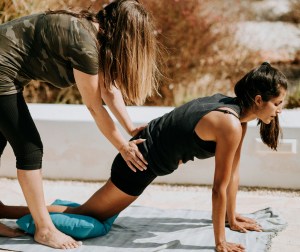
There is an expectation in the US that yoga practitioners are all young and flexible with great balance, but we know that’s not the case. Many people who might benefit the most from a yoga practice are certainly not.

When I started Yoga Teacher Training (YTT), there were two assumptions that most of us made:

“Full expression of the pose” is not accessible to every yoga practitioner.
(Photo by Carl Barcelo on Unsplash)
  1. Every yogi strives for the “full expression of the pose”, suggesting that there is one perfect way to perform a yoga asana.
  2. An important responsibility of a yoga teacher is to move students into the full expression of the pose, using hands-on adjustments if necessary.

Those two assumptions may:
(1) discourage students from yoga practice, particularly when you consider that yoga originally developed as a practice for men, and asanas do not necessarily take into consideration the female body (or diverse body shapes) even though the majority of practitioners in the US are female; and (2) may compel newly-minted yoga teachers to push students into positions that are wrong for their body shapes and can cause harm to them.

During YTT, however, we learned that the “full expression of the pose” as a concept was no longer taught and teachers were discouraged to refer to asanas in that way, no doubt in an effort to be more welcoming to a broad range of people.

My person belief is that hands-on adjustments are not necessary for yoga under most circumstances.
(Photo by Annie Spratt on Unsplash)

We also learned how to do hands-on adjustments. The idea was that you needed to check with the student whether they wanted to be adjusted.

However, I myself have received adjustments in classes that I hadn’t requested or agreed to. It’s never been harmful to me and generally felt good, especially in settings where I couldn’t check my form in a mirror. Futhermore, the classes tended to be higher level, so there was probably an assumption on the part of the instructor that you’re in a more intense class for a reason, otherwise you’d be in a lower level class.

But you can probably see where I’m going with this. I tended to be one of the oldest students in these classes. I’ve done yoga (and a range of other exercise modalities) for decades, but my flexibility and balance have taken a hit from cancer treatment and various injuries. Unless a teacher is sensitive to that, we can run into trouble.

Additionally, I’ve seen less-experienced students attend more difficult classes because they were coming with a friend or couldn’t get to the easier class that they wanted, and decided to just “do their best”. That should always be good enough without putting a student at harm.

Yogis come in different shapes, sizes and levels of flexibility…and that’s okay.
(Photo by LOGAN WEAVER | @LGNWVR on
Unsplash)

My personal feeling? Stick with gentle verbal adjustments to relay the spirit of the asana and cue according to the class’ level, understanding that students will have varying ranges of flexibility. I do not feel comfortable doing hands-on adjustments unless the student is requesting it AND I know the student well enough to be familiar with their limitations, if any. That means verbal adjustment for students in a general class vs. POSSIBLY hands-on adjustments for a student that I’m teaching privately, where we can talk through how the asana feels in their body. Quite often, I will forgo hands-on adjusting altogether.

Finally, I leave you with a quote from the YogaUOnline.com website. Charlotte Bell proposes a difference definition of “full expression”, in an excellent article titled, What is Full Expression in Yoga Practice?: “Full expression arises in a pose when our bodies are aligned such that the wave of the breath is free to circulate throughout the body. It also happens when we have invested our full attention into the sensations arising as we move and breathe in the pose. The full expression is not dependent on what a pose looks like.”

Entering a Dimension of Calm

(Title image: Photo by Ksenia Makagonova on Unsplash)

One of the amazing “side effects” of meditation for me has been that the calm I experience while I’m on my meditation cushion has been leaking into the rest of my life.

This did not happen overnight. As a matter of fact, it took a number of years (I am currently on 7+ years of daily meditation). But through the ups and downs of my sessions, there’s been a wonderful build-up of grounding and calm.

Yes, I still get smacked with a powerful wave of anxiety from time to time. But recovery is quicker and I don’t feel like I’m being dragged under, disoriented.

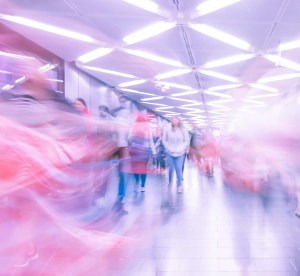
The raw dimension is slippery and loud and agitated.
(Photo by Martin Adams on Unsplash)

What I have been feeling lately is that there is a dimensionality to how I experience the world. It’s like this: there is the raw world, which has lots of hard edges and bright lights–overexposed, washed out colors–and loud noises. That’s the world I used to live in exclusively and it felt like a whoosh flying at me and pulling me in, allowing no control over what was hitting me, nor much of a way to steer myself.

But now, I’ve transcended that dimension somewhat. I’ve found a much more grounded dimension, perhaps a more soothing shade–think “golden hour”. The colors are deeper, the pace is slower, the sounds are gentler, the edges are softer. In this dimension, I find my roots quickly, feeling my feet on the floor and connection to the earth, to what is stable and unchanging.

The calm dimension invites deep breaths and beckons us into the present moment.
(Photo by Jasper Boer on Unsplash)

Here, I hear my breath and feel the tingle in my hands. I notice when I’m clenching my jaw, furrowing my brow, hunching my shoulders. I am also aware of when the raw dimension starts pushing to the forefront and am able to prioritize creating a safe space so that I don’t leave myself exposed.

This may sound very woo-woo but I assure you it’s not. It’s very much down-to-earth and sensible. There is no otherworldly magic at work. Just the understanding that my nervous system needs to feel safe and stable, and that I can offer myself a protective shield not by running away, but by settling into where I am.

It is as if there is a comfy blanket that I draw around myself, and from there I sit and watch and process and, if necessary, deflect the things around me. This is the gift that consistent meditation along with mindfulness have given me, and it feels like for the first time I’m experiencing life the way it was meant to be lived. Not as something to dodge and weave around but something to grow with.

What If We Re-Interpreted Anxiety?

Title image: Photo by Priscilla Du Preez 🇨🇦 on Unsplash

You may be familiar with the old story about the award-winning singer Carly Simon’s stage fright which prevented her from performing in front of an audience for 14 years.

Performance coach Tony Robbins famously compared her anxious reactions to those of superstar Bruce Springsteen (yes, I realize I’m dating myself) who would describe his physiological responses to going on stage in the same way that Carly did, but he associated them with excitement and not fear.

Anxious responses weigh heavily on us…but what if we could reassign their meaning?
(Photo by Kyle Glenn on Unsplash)

At least that’s how the story goes. And although I think some of this is an oversimplification of Carly’s experience, there is a lot of wisdom to breaking down both performers’ reactions to the point where we recognize that what we feel in our bodies can be interpreted in very different ways based on what’s going on in our heads.

I grapple with this issue myself when I am offered unexpected opportunities that can propel me forward in career and life…but which also cause me agony in terms of my fear of change.

What to do?

What has worked for me is to identify the sensations that I’m feeling. Naming them makes them less overwhelming and it’s a big plus if I can describe what my head feels like, what my chest feels like, what my belly feels like. I try to understand each sensation’s role in creating the overall experience.

Then I try to image that the emotion these individual sensations lead to is one of positivity and excitement. It’s the anticipatory “butterflies in the stomach” from doing something that seems amazing rather than an upset stomach arising from wanting to flee.

And I sit with all those things, bringing in reasoning too: thinking about the positive consequences while allowing the feelings and sensations to be there. Understanding that they are simply sensations and not dangerous on their own–they are physiological responses that evolved to help us out when we needed an extra boost of energy (think “fight or flight”).

Thinking about all the good stuff that opens up to us when we leave fear behind…
(Photo by Allef Vinicius on Unsplash)

I call this reasoning “mental calisthenics”. It takes some massaging and can even get a little metaphysical, but at some point I usually manage to get a grip of that good feeling as if I were gripping the edge of a wall and then pulling myself around to “turn a corner”.

Trying not to overthink it. Just allowing myself to feel into the sensation while giving it a positive spin. And then imagining myself “doing the thing” that I fear…and being good at it.

When particularly anxious, I may even exert myself physically to allow my responses to exercise to meet and match the fast heart rate and breathing that I’m already experiencing.

And that’s about it.

As with meditation, this is a practice and I have to keep reframing the situation in this way to remind myself that change can be unsettling but “unsettling” isn’t inherently negative. It may take a succession of days or weeks to come to grips with the new situation and that’s okay. Patience is the key that leads to progress, and every day that I reframe my sensations is another day that I improve my mental situation.

Hope this helps you too!

~~~~~~~~~~~~~~~~~~~~~~

Important: this is not about “toxic positivity”. There are some situations that are truly bad and understandably elicit an anxious response. Rather, this is realizing that our physiological reactions–the ones that evolved to protect us–may be holding us back because we associate them with fear rather than seeing them as the excitement of possibility arising from change.

Another Oncology Appointment…and What’s Up With That Smell?

My oncologist appointment last week marked five years since completing my final chemo infusion (and for those of you keeping track, since I had that nasty chemo nail infection).

Lately, my oncological appointments run like this: my onc asks how things are going, I air all my grievances and we spend the rest of the visit agreeing that there’s no way to determine whether what I’m experiencing is chemo-related, menopause-related, or something that I was dealing with before but hadn’t paid attention to back before cancer.

Because there’s nothing like cancer to make you acutely aware of every twinge and creak in your body.

But that’s about it. We are running out of things to talk about. In this context that’s a good thing.

I used to lament “what could have been” had I not gotten cancer, not experienced chemo, not been pushed into menopause chemically and artificially had my estrogen levels squashed. But now, I know better. What happened, happened. And “what could have been” is pointless to ponder because it simply isn’t reality.

It took me a while to get to that place and I’m finally okay with it .

But there was something else different about this oncology visit…

I walked into the cancer center for my appointment and was hit with “the smell”. There is a distinct scent in the building, possibly the cleaning solutions used to disinfect the place or maybe a fragrance that is purposefully pumped in. I had mentioned it to my clinical counselor several years ago and she admitted that a number of people have said the same thing. The smell is familiar, given that after multiple appointments and infusions and radiation sessions, I’ve experienced it a lot and have made many associations with it.

But for some reason, this time it hit me hard and a wave of sensations washed over me. Not sure why my reaction was so strong, but I’d like to think that between my last onc appointment and this one, I’ve made the most progress in distancing myself from the frustrations of getting cancer and have actually moved on with my life.

However, that rush of emotions served as a reminder of everything that I’ve been through over these past five years. I thought that chemo was going to be the hard part. Turns out, it was the most predictable part: six trying infusions, but they came with an end date. The rest of treatment brought uncertainty and unexpected difficulties. I thought I was done after radiation…but the pills continued.

Looking back at this, while I’m technically not “out of the woods” and may never be, these last six months have felt different. Yes, I still have another onc appointment half a year from now, but I’m finally turning my face forward to the future instead of constantly looking back at the past, worried that those frights will catch me again.

Showing Signs of Stress

One of the benefits of doing a yoga teacher training (YTT) is that there are some interesting side effects that go far past learning about yoga instruction.

It also involves a great deal of introspection, sometimes uncomfortable, but always valuable.

Signs of stress are pretty universal and usually unmistakable.

What I found curious about myself was how, when I was stressed, I exhibited loads of visible signs of stress even if I was aware that I was doing it. It was as if I didn’t want anyone to mistake me for not being stressed when I was.

This made me wonder, was it simply habit? Or was I being a drama queen? Stress does affect me deeply and anxiety is hard for me to shake. It’s possible that I feared not being believed that I was suffering.

Perhaps I needed people to care that I was not okay.

But I came across a recent research article about this that suggested an even deeper reason. UK researchers Whitehouse et al. (2022, Evol Hum Behav) conducted a study in which it appeared that individuals displaying signs of stress came across as more likeable and more likely to elicit support from those around us.

This is curious because often in nature, showing “weakness” may result in a greater chance of being attacked. But apparently it doesn’t work this way in human society. The researchers postulated that signs of stress suggested that the individual might be deemed friendly and not a threat.

I can attest to the fact that seeing someone displaying anxiety immediately triggers a strong empathic response in me, no matter who the person is or what they’ve done. Having suffered anxiety myself, I am immediately drawn into what the individual might be feeling, projecting my own feelings onto them.

Yeah…don’t be this.

And it is very true that I’ve often gone out of my way to look more friendly, less scary, particularly when it comes to people smaller and weaker than I am (I’m 5’11”). I have a drive to appear less threatening. However, this does not necessarily benefit me–does the term ‘doormat’sound familiar? When you lower yourself far lower than is even remotely necessary, you’re not doing anyone any favors.

This explains a lot about my own life and it underscores the importance of being aware of your behavior and why you engage in it. When you run on autopilot you risk reinforcing negative self-beliefs and even generating new ones. Self-awareness is the antidote to that.

So that is what I’ve been musing about. YTT provided me with space from which to reflect on the ways that I behave and feel in certain situations. In turn I can use that information to make much needed changes in my life and get myself unstuck. How about you?

~~~~~~~~~~~~~~~~~~~~~~~~~~~~~~~~~~

Original research article:
Whitehouse J, Milward SJ, Parker MO, Kavanagh E, Waller BM (2022). Signal value of stress behaviour. Evolution and Human Behavior; DOI: 10.1016/j.evolhumbehav.2022.04.001

Reader-friendly version:
https://www.sciencedaily.com/releases/2022/05/220515113229.htm

Yoga Is For Every Body

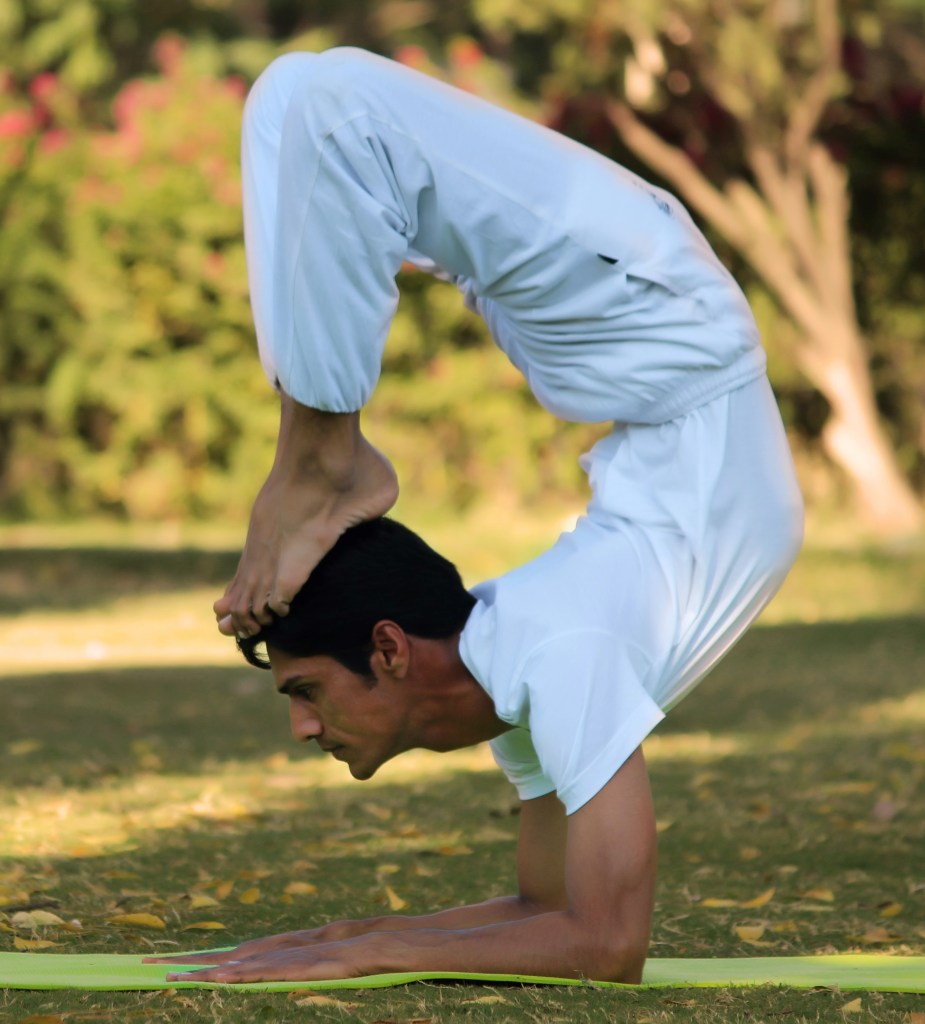
As my interest in and personal practice of yoga has increased, I’ve noticed something peculiar about images of yoga. They send a message that you have to be young, slender and unnaturally flexible to be a “real” yoga practitioner. That seems daunting to anyone who doesn’t fit that mold.

I noticed something similar after I became certified as a personal trainer. I myself loved the feeling of strength and freedom I got from exercise; however, many people I spoke with were reluctant to go to a gym because they felt they needed to be in a certain physical condition before they even started. At the same time, they were daunted by the idea of striking out on their own. Even worse, in personal conversations with experienced exercisers and even other trainers, I found many would poke fun at those who were just starting out.

Come on, everyone has to start somewhere. An expert is just a beginner who stuck with it.

This is unavailable to me.

I thought yoga would be different, given the emphasis on one’s inner state. But I had to get over my apprehension about trying to fit an older creaky body into the unbelievable positions modeled by the yoga teachers I saw online. It was daunting. While I still felt strong, I seemed to lack that which yoga demanded. There were many poses that my old injuries and life-long inattention to flexibility would prevent me from doing.

I mean, google Flying Dragon pose and you’ll see why. Heck, it doesn’t even have to be as exotic as that. Go to Pinterest and search for yoga images – the results seem almost outrageous, with every yogini outdoing the one before them. Is that what we’re supposed to aspire to? I don’t see anyone even close to my age. Are they all in physical therapy? Or traction?

My spine doesn’t bend like that.

This is more my level: still challenging, but quite doable.

But this is yoga, right? There are quite enough poses that most everyone can learn and use to build a regular yoga practice, no matter what the images on the Internet suggest. More importantly, there are modifications for whatever your own body will allow. Can’t put your forehead on your knees in forward-fold? Then how about a ragdoll variation. Guess what, it’s still yoga.

That doesn’t mean that what those super-bendy instructors are doing isn’t impressive. But I view them much as I view someone free-climbing Yosemite’s El Capitan. With awe and admiration for their abilities. And then I delight myself by finally being able to touch my toes again, thanks to my yoga practice.