Mindfulness 101: You’ve Got Options!

It’s been a long work day so this post has a simple message: you have options in practicing mindfulness meditation. And then for good measure, at the end I toss in an article about other meditation practices you can try.

In a nutshell, mindfulness meditation is the process of noticing your thoughts (“awareness”) and observing them without judgment (“acceptance”). It often involves an anchor, such as the sensation of the breath or a constant sound in the background, that the meditator focuses on for the purpose of grounding and staying present. The anchor is what we return to after we realize we’ve been pulled away by thoughts.

The anchor to presence is what we return to after we find ourselves carried away by thoughts.

This way we explore the concept of impermanence as it relates to life and our own situation. Everything is in flux. Negative experiences pass, positive experiences pass and we move through it all. The more we practice, the more we are able to notice the ups and downs without being as affected by them.

In the same way, I consider mindfulness meditation to be fluid without rigid rules. For example, you do *not* have to be seated in Lotus pose with your hand on your heart. You do not need a special cushion, outfit or music. There are no specific words to recite or candles to light. However, you are welcome to do all of these.

Lying down, seated on a chair, leaning against a tree or riding a crowded bus holding on to a strap are all viable positions. Eyes open, closed or half-shut. Paying attention to bird songs, a light rain, a washing machine or cars whooshing down the road, all good. In the early morning, during a work break, when the kids are napping or when you’re settling in for the evening are all ideal opportunites.

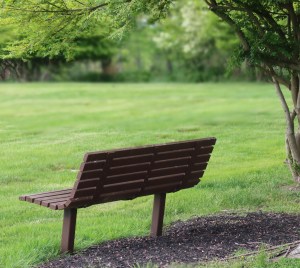
You don’t have to be in a specific location in order to practice mindfulness meditation, although admittedly some places come with a better view than others.

Even carelessly sprawled out on your bed, noticing how it feels to do that, no matter how dorky you think you look. Mindfulness doesn’t judge.

All of these are good conditions under which to practice mindfulness meditation and that is one of the things that I feel makes it an ideal meditation starting point.

As you continue to practice, you develop a tool with which to nurture a sense of peace and calm down a busy mind. It is a tool that you can take with you no matter where you go, like a little gift for yourself that you keep in your pocket, bringing it out whenever there is a need.

And since we’re talking “meditation options”…

I’ll finish up by noting that just as there are different ways to engage in mindfulness meditation, there are a number of other meditations that you can try if you want some variety.

For that, I’m going to punt you over to an article on the website Healthline, written by Holly J. Bertone, CNHP, PMP, and Crystal Hoshaw, entitled, “Which Type of Meditation Is Right for Me?” I really liked the information mentioned here, including the nine types of meditation that they describe:

  • mindfulness meditation
  • spiritual meditation
  • focused meditation
  • movement meditation
  • mantra meditation
  • transcendental meditation
  • progressive relaxation
  • loving-kindness meditation
  • visualization meditation

See the Healthline article for more information.

I do not believe that the above is an exhaustive list by any means, although it is a wonderful place to start if you want to explore other meditative practices. While I feel that mindfulness is one of the most accessible meditations for beginners, if you feel inspired to try something new, there are many options to choose from.

The only thing you “should” do is begin. 🙂

Mindfulness 101: Avoiding Avoidance

There is, unfortunately, a trap that some people may fall into when practicing mindfulness meditation.

In the context of selecting a point of focus that anchors you into the present, there is that teensy possibility that someone just starting out with meditation might focus without equanimity.

Equanimity is the ability to maintain balance and a sense of calm in both good and bad situations. It is the acceptance that impermanence and suffering are a part of life, and it is the state of allowing all feelings to pass through you, observing them without judgement or expectations brought on by previous experiences.

Equanimity is being able to allow in both the good and the bad without getting dragged through it.

Allowing emotions in when you’re trying to stay calm and collected might seem a little counter-intuitive, but in fact, I consider it to be to goal of mindfulness meditation. That’s because the most important time to maintain a sense of inner peace is exactly when the proverbial sh!t hits the proverbial fan. Mindfulness meditation provides us with a safe space within which to practice just that.

The tendency, however, is to try to keep difficult emotions out. I myself encounter a lot of resistance when doing guided meditations that focus on bringing up uncomfortable thoughts, particularly in the evening, when I’m most susceptible to anything that might perturb my sleep.

However, not allowing those thoughts in can set up a pattern of avoidance, depriving us of the opportunity to learn to deal with them. And this avoidance can imbue difficult thoughts with even more power, as if they become the boogeyman lurking behind a door that we’re terrified to open. That’s not a good thing.

So how do we get around this?

Pick a good time to explore the stickier side of things; I would caution against the evening, when, as I mentioned above, bringing up tough feelings can agitate you and make it more difficult to fall asleep. Keep the environment quiet, comforting and safe, with gentle music in the background, if that suits you. I like mid-morning time and natural light, with a cup of tea or cacao or anything else that feels soothing.

Choose your anchor: your breath, a bodily sensation like tingling in your hands, a constant sound in the the background…even lofi music from YouTube.

If you feel too drifty, keep your eyes open to help ground you. Perhaps focus them on an object that brings you peace, such as the photograph of a loved one or an image of a peaceful place.

Give yourself a calm opportunity to explore complicated emotions.

Breathe deeply and pay attention to gripping or tightness in your body, especially forehead, jaw, neck, shoulders and belly. Consciously release any areas that seem to clench as you go along.

And then allow whatever comes up to come up. Observe them…and then let them go. No need to analyze or justify. Imagine that you’re made of Teflon and those uncomfortable images slide off you.

If needed, sit further away from them. When the intensity gets too high, you might need space, so imagine that they are flowing past as if you’re on the bank of a river and they are the leaves that float by on the surface of the water. They come and they go and you breathe deeply through it all.

As you practice, maintain your focus the best that you can. The point of your focus is not the thoughts, it’s the breath or whatever other anchor you might have chosen. This way, the thoughts move independently and subside as smoothly as they appeared. If you find yourself getting stuck, return to your anchor and remind yourself that in this moment, you are safe.

IMPORTANT: If your thoughts are tied to trauma or the intensity seems unbearable, please seek out the help of someone professionally qualified to help you deal with them. Mindfulness meditation is a wonderful tool, but sometimes it’s not enough.

The Satisfying Pleasure of Letting Go

If you’ve read my last couple of posts (here and here), you’ll know that I’ve been dealing with the frustrations of water leaks, never-ending renovations and unfortunate coincidences.

Hopefully, this will be the third and last installment of the trials and tribulations concerning this situation. But just to catch you up, the cabinets which were supposed to be installed Thursday, not in time for our houseguest’s arrival on Wednesday, but just a day late…were not.

Yet again, there were dashed expectations: one of the cabinets arrived with a crushed side and was unable to be used. So the innards of these cabinets are still piled up on and under the dining table and the place looks disheveled.

When things start blowing up, sometimes all you can do is sit back and enjoy the show.

And due to the completely unrelated construction taking place outside, which will prevent daytime access to our unit for several days, there will be no cabinet installation for at least another week, regardless of when the new cabinets come in.

But you know what? It’s okay.

I had wanted to have everything put together for our guest. That was not possible, so–admittedly after much jaw clenching–I completely let go. The crushed cabinet, the disruptive construction, I’m simply accepting it and that feels so good.

It really doesn’t matter when the cabinets are put up or what other monkey wrenches are thrown into the mix. We’ll get to closure when we get there.

Which is a good thing because on Saturday evening, I discovered another leak in the walls that soaked the new (still unpainted) drywall and flooded out the unit below us. And I’m totally serious. The inside of our hall closet sounded like a rainstorm.

Well, we needed rain…

I guess I could have been more stressed about it, but with everything that had already taken place, I shrugged. We notified out unit owner, we called the plumber, we waited for the leak to be fixed.

Another day, another leak, another disruption, another hole in the drywall. Still okay.

These are still problems that need to be dealt with. But whether it’s skillful mindfulness (probably not) or simply emotional exhaustion (more likely), it’s not getting to me and it feels amazing to stay calm under such circumstances.

I know I cannot avoid stressors in my life. So I’m trying to remember what this feels like. If I can draw on this experience the next time an upheaval occurs, perhaps I can slip into gentle acceptance and let reactive anxiety pass me by?

Managing Expectations: A Reflection

As I sit at home waiting for the stormy remnants of what used to be Hurricane Hilary to pass by, a bit of reflecting…

There is a saying attributed to Buddha: “The root of all suffering is attachment.”

While there is much that can be and has been written about this, I’d like to bring it down to something very concrete in my life.

It seems so simple, this letting go of our expectations. But we humans are hard-wired not to do that!

One of the wonderful attributes that we as humans have is the ability to plan. Yes, that’s been evidenced in very clever animals, but humans take it to a whole new level.

Where that incredible gift fails us is that in the process of planning, our goals and expectations become very real in our minds, and if they don’t play out as we had anticipated…well, sometimes we don’t deal with the disappointment well.

For instance, in such situations I experience stress and anxiety. Others may react with anger and frustration.

Regardless of the outlet (whether handwringing or yelling), it’s safe to say that the outcome is not pleasant for anyone. And yet letting go is hard when we are really counting on the expectation being realized. Or perhaps even worse, when we get lost in thoughts of how things could have been.

Consider this scenario: let’s say that following a leak in our apartment and subsequent slow repair process, two months later our water-damaged kitchen cabinets haven’t yet been replaced.

But wait, I get word that the cabinets are coming finally coming in this Friday, August 25th and will be installed the following Monday (28th)! Expectation established! And it’s not a small one because most of our kitchen and the entire dining room have been sitting in the living room area for over eight weeks.

Oh, how difficult it is to sit with what’s happening in the present moment — we’re always looking to see what’s up ahead or somewhere in the past. The greatest peace I’ve ever felt is to simply be here.

WOW, do I want this to get fixed! We have a house guest arriving on Wednesday the 30th who is supposed to sleep in the living room. Weeks ago, when she arranged to visit, I was sure that all the repairs to our apartment would have been done long ago. But now, between the cabinet installation and her arrival, I don’t have a lot of time to clear out the mess and get everything back in its place.

I cannot let go of the need for everything to go smoothly. But while I’m struggling with the burden of that need, I’m simultaneously living through the stress of, “oh no, what if it doesn’t work out that way???”

So there you go, a double-whammy. All this because although I know better, I latch on to how I want/need things to be. Either expecting perfect success or total disaster.

Letting go will never be as easy to do as it is to talk about. But in my brightest moments, I am able to step outside the confines of my thinking, move out of myself and get perspective on the present situation, accepting that I cannot predict and shouldn’t expect too deeply. That’s when I experience the highest level of calmness.

And then, as will happen, I forget and sink back into my small, highly personal mind, where I once again cling to having things be a certain way.

“Am I Clenching?”; or “Wait, Where’s My Tree?”

A few days ago I realized that we were missing a tree out in front of our balcony. Not some little sapling that could be easily overlooked, but a tall, mature pine tree that offered us shade during hot summer afternoons.

It was gone, only stumps remaining. I was stunned. After I furiously texted my family for answers (WHERE IS THE TREE???), my husband texted back that it hadn’t been there for weeks, and I hadn’t noticed its disappearance even though I’d been out on the balcony numerous times.

WHO TOOK MY TREE???

That was weird.

So, you might be wondering what that has to do with this post. Well, it’s easy to cruise through life not being fully aware of what’s going on around us…or in our bodies. Just like I was imaging the tree was still there (while also wondering why the plants on the balcony were drying up much faster this summer), many times I’m also not aware that I’m holding tension in my body.

Perfect example: I had trouble falling asleep a few nights ago. After lying awake in bed for some time, it struck me that I was clenching just about every part of my body. My jaws, neck, shoulders, back, glutes…everything had tightened into knots.

I had been concerned about preparations for a party that we were to attend the next day–and I was aware of that–but all of those worries had passed into my physical being, and that I wasn’t aware of. Good luck trying to get to sleep when you’re as rigid as a board!

So I started a little dance of releasing those muscles, then drifting back to my “normal” state of what can only be described as oblivious unattention, until I noticed that I was still not sleeping and–oh look!–everything was rigid again, so I released my muscles again…

Sometimes I find myself clenching just a teensy bit too tightly…

Yes, I went through the process of relaxing my face, my jaw, my neck…blah blah blah…if you’re a meditator, you know the drill. But a few minutes later, everything had clenched up again without me realizing it.

This went on for a while. When I get caught in a “loop of oblivion” like this, one of the first things I do is stop. Just halt the dance. And take a very deep breath.

That’s the first start in resetting things. Think of it as a much kindler, gentler version of someone slapping you in the face and yelling, “Get it together!”

And that’s when my broader awareness returned and I was able to get out of autopilot mode, acknowledging my mental tension and thereby the physical one. It was a perspective shift because I wasn’t just thinking, “Will we get everything done in time?”

I realized what was actually happening: “All this concern about getting everything done in time is keeping me up.”

That slight shift enabled me to pull back and out of myself, brush off the worries about things I could do nothing about at the moment, and drift off to sleep. But it also reminded me that I need to practice awareness more than I had been. In a sense, I was now more aware of the need to stay even more aware.

Yes, even after years of understanding the importance of mindfulness, I must return to square one and refocus. I don’t think I’ll ever not be restarting, especially not as long as trees keep disappearing from under my nose. But that’s okay…the journey is soothing and the practice itself is a destination. My main task is to not stop practicing.

Sinking into the Depths, but in a Good Way: A Meditation Visualization

As I return to really sinking down into my meditation practice, I am reminded of what I’ve been missing out over the past few months when my practice gradually changed and “shallowed”.

Due to pressures and stressors the start of this year, I had been skittering over the surface of my meditations, much as you would imagine barefoot skiing over the surface of a large body of water, and I use this as a visualization of my experience.

It is not fun trying to keep my head up and focused through my distractions.

Up on the surface, you have wind and waves to contend with. The more time that you spend up on top of the water, the more tumultuous distractions you find there and it becomes more difficult to find a sense of calm. The more you do that, the more it becomes habitual.

But when you stop charging across the surface — resisting the enticing attraction of thoughts — then you find yourself slowly sinking…but in a good way. Thrashing winds disappear, sounds become muffled and fade into the distance, movement slows. The deeper you descend, the more quiet you find there.

There are times that I think I’ve been meditating, only to realize that I’ve floated up to the surface and am actually bobbing around in the choppy waves of my thoughts. That realization comes more quickly the more time I’ve spent in the depths, and when I return to the process of sinking, it feels like such a relief.

The deeper I allow myself to descend, the quieter I become. It becomes less of a struggle to stay down.

I can learn to sit with frightening creatures the way I can learn to sit with unsettling thoughts…and vice versa.

And as I get progressively deeper, light dims. Initially, the darkness felt a little intimidating (I’m not a fan of dark water). But then I remembered, this is my ocean. I decide what dwells in the darkness. I can fill my ocean with fearsome, aggressive creatures — and sometimes I do this — but then because I realize that they are mine, they don’t hurt me and I am able to sit with them peacefully.

What an accurate analogy for our thoughts, no?

In this way I feel my own inner strength and power. The darkness does not have to be frightening — it is a gentle darkness that signals rest, allowing my mind to slow and focus inwards.

If that darkness is too disconcerting to you, imagine that there is a soft blue brightness in the water, illuminating your entire area of vision, and perhaps even an underwater staircase you can use to control your descent. Tweak it however you like so that it fits with your level of comfort.

This visualization is the perfect reminder of how good meditation feels when I don’t get in my way about it. Nothing to do but relax and let myself sink down…

Quitting This Stupid Job…and Going Back to Training

For a number of months now, my meditations have been “sub-par”.

I know I’m not supposed to judge, but objectively I’m aware that I’ve veered off course somewhere. In the past, I’d have good days and bad days, transcendent meditation sessions and really distracted, “no-way-I’m-gonna-focus” ones. But that was okay, because a large part of mindfulness meditation is coming back to the breath AFTER losing focus.

Rabbit holes are very enticing places to disappear into.

This has been a little different.

It started with a few weeks of distractibility as I was navigating stressors in the early months of this year. But gradually, things went downhill until I seemed to make it my job to use meditation time to go down rabbit holes.

Maybe I was too tired, meditating in the evening before bed or when I woke in the middle of the night and couldn’t sleep, so I didn’t check my wandering mind because I was dozing off.

If I had music in the background, my mind would dance off in a tangent and I wasn’t meditating anymore, forgetting that this was a time for calm and presence.

I’d get lost during my meditation with little hope of finding my way back on the path that I was on.

So I’d start a guided meditation — listening to someone’s voice would keep me on track, right? Nope. My ability to allow that voice to fade into the background was nothing short of impressive.

Day after day, I had dutifully taken on the task of wandering way off my meditation path until I realized that I was going nowhere and it was time to quit the restlessness and stay still for a while.

Even after years of daily meditations, I had to re-learn the habit of staying… because over the past few months, I’ve established a new habit of not coming back to my center regularly enough. And this new habit of spending my session mindlessly had managed to supplant my previous meditation flow.

So here we go again: setting aside some quiet time when I’m not particularly sleepy, finding an anchor like the breath to focus on in a patient, non-gripping manner, maintaining a gentle awareness of where my mind is, and when it inevitably wanders away from my point of focus (which it always will), calmly guiding it back.

Going back and consciously setting an anchor again. And enjoying that comfortable feeling of being present and aware of this very second.

When the breath seems like a boring place to drop my anchor, I turn to the sensations in my hands and feet (particulary useful when I’m stressed) or the sounds of automobile traffic outside ebbing and flowing or opening my awareness to all my senses and accepting whatever shows up. My focus is on the present and that’s where I aim to keep it.

So it’s true, that old “muscle memory” is bringing back my meditation practice and strengthening it as it does so. This serves as a good reminder to not get complacent, calling myself a “meditator” and throwing around stats like how many days in a row I’ve been meditating. In the end, the important thing is not my meditation streak, it’s the fact that today I will choose to meditate again.

Lightening Your Mood By Letting Go

Quite a lot has happened here in less than a week and it deserves a bit of an introduction.

It started with a leak last Wednesday. Water dripping from a ceiling fan…which isn’t supposed to happen! I got the upstairs neighbors to check their plumbing — their carpet was wet. And it got worse from there as plumbers found several gallons of standing water contained within the studs in the floor above us, coming from cracks in our neighbors’ kitchen drain pipe, now starting to overflow those confines.

Yeah…I’m pretty sure this is not a good thing.

That water was searching for low points…which happened to be overhead electrical spaces in our unit: ceiling fan in the dining area, wires coming through our kitchen cabinets, even the overhead kitchen light. Soaking the ceiling as it traveled.

The water looked toxic.

We live in an old-ish building with old-ish pipes that are showing their age. We have had quite a bit of water damage and leaks already, some of which required strict restoration measures since there is asbestos(!) in the ceilings. The current incident is no different except that this time the repairs will be more extensive due to both the asbestos and growing mold, requiring the removal of kitchen cabinets, some carpeting and lots of ceiling.

When things like this happen, the HOA’s insurance covers all issues from the walls into the interwall spaces and the homeowners’ insurance covers everything inside the unit. As risk-averse renters we have our own insurance to protect our belongings, but we are not the owners of this unit. Regrettably, our owner did not have the unit insured. This poses uncertainties that we have yet to address.

This part of the ceiling has been marked for removal…

First things first, however: a restoration company marked out the spaces that were wet and from which we needed to clean everything out. We spent all weekend doing so. And that brings me to the point of this post.

When you have a lot of stuff, it’s easy to keep holding onto it because there’s no real impetus to get rid of it. And even if you try, it’s too easy to talk yourself into not letting go. If you get rid of it and then have to repurchase, that’s like twice the cost, right?

…and this carpet has to go…

Except that I’ve come to believe that space = money. There’s so much that we have that we’re not really using. Maybe it was on sale, maybe it was something you needed one time, maybe you decided to splurge. But if these things are taking up space unnecessarily, they are costing you. I know they take an expensive toll on me in terms of headspace, making cleaning more difficult and our living area less inviting.

So this weekend was about purging. And wow did we PURGE. It felt amazing.

…as do the cabinets and ceiling in our galley kitchen.

Old glassware, shopping lists, aged spices, an extra bathroom scale (from a time long ago when we have two bathrooms), chipped plates, dollar store containers, plastic utensils, old computer cables, and the list went on. We emptied the 20-gallon fishtank, relocated its few inhabitants to the aquarium my husband has at his office, and realized that we could probably get rid of the cart that the tank sat on too.

There was so much that we’d been holding on to that simply was not necessary to have. And the more we got rid of, the lighter I felt. Buoyed by the sensation, I started going into areas not marked for restoration and getting rid of unneeded items, because I believe a big change is imminent. Something has been put into motion that will require big decisions and big action.

So in the midst of having the majority of our kitchen items and the entirety of our dining room stacked up in the living room area, I should be stressed out. But I’m floating in quiet acceptance, staying present and reveling in the lightness. I never expected to feel like this, so positive. Maybe it’s because all those things we held on to were weighing us down?

~~~~~~~~~~~~~~~~~~~~~~~~~~~~~~~~~~

This saga will continue…

Ushering in Summer with a Gentle Attitude

With the upcoming longest day of the year on June 21st, many yogis celebrate the Summer Solstice by performing 108 repetitions of the series of movements known as a Sun Salutation, or Surya Namaskar in Sanskrit.

Why 108? The number 108 is significant in a number of dharmic traditions, including Hinduism, Jainism, Buddhism and Sikhism, and appears many times in sacred ancient texts (see more info at sites such as himalayanyogainstitute.com, yogajournal.com, hinduamerican.org).

Practicing 108 Sun Salutations traditionally has been done during the changing of the seasons to usher in the new phase of the year by generating an internal heat for purification (stoked by the energy of the movements), cultivating a will that pushes the practitioner forward and breaking through mental and physical barriers (youaligned.com).

Prior to getting cancer, I would have reveled in the challenge of 108 Sun Salutations. My body was ready to go hard and fast and have everything be perfect. Today, I approach such practices more mindfully, so this post is about a more forgiving alternative to churning through so many Sun Salutations.

This is because high repetitions of these movements are not for everyone, and even otherwise fit people may begin having wrist, shoulder and back issues as they move through the repeats. Proper preparation is essential in avoiding injuries. My own body protests high volumes of some movements so I accept my limitations, reset my expectations and opt for gentler variations.

Does participating in this tradition interest you but you find the high number daunting? Don’t insist on doing all 108 repetitions; set out to do one. And if that flows well, do another. Feel into your body from the very first sequence to the very last one you do, no matter the number.

However, if it helps, set a repetition goal for yourself — keeping in the spirit of the practice, let it be a factor of 108 as there many ways to evenly divide this number: 9, 18, 27, 54 — but don’t make that goal your sole purpose. Instead, keep your attention on your breath and the flow of your body.

This is a meaningful sequence to immerse yourself in as you cycle through the movements.

Avoid worrying about how you look, wondering whether you’re “beating” the pace of others, thinking about what you’re going to do afterwards or how many calories you burned. I would argue that a single Sun Salutation done consciously, appreciating the connection between the ancient origins of the sequence and the present day, is more valuable than 108 repetitions done with your mind elsewhere, focused only on the achievement.

For this practice, send your ego off to wait patiently by itself until you’re done.

IMPORTANT: For this post, I am focusing on the mindful and spiritual benefits of Sun Salutations. It is true that there is the purely physical practice of the sequence, a full-body exercise that has benefits in its own right. If you are more interested in treating this as a workout rather than a symbolic detoxification as you transition to the next season of the year, I’m the last person to try to talk you out of it. But be aware that this is a very sacred practice for some; I encourage you to pause and approach it with respect.

Whatever number you end on, let that be the right number for you, no judgments. This is a beautiful way to add meaning to your yoga practice and nurture a connectedness to everyone else engaged in this tradition.

The next change of seasons, the Autumnal Equinox, is only three months away…

Perhaps this Solstice’s Sun Salutations will lead to a mindful daily practice of Surya Namaskar. This may blossom into the next opportunity to join everyone in the tradition for the Autumn and welcome in a season full of new possibilities…and maybe even the full 108 repetitions.

But for now, start with just one.

For a beginner-friendly version of Surya Namaskar, try the version below:

Putting Pen to Paper for the Ultimate Mental Vacation

When I wrote my last post — a visualization and body scan for helping calm yourself and prepare for sleep — I knew I would enjoy immersing myself in describing a space that felt safe to me.

But what I didn’t expect was the effect that the actual process of writing the visualization would have on me.

As I continued describing the “healing bath” scene, searching for reference pictures and letting my imagination create a restful place, I realized that I myself was feeling more and more relaxed — breathing slower and experiencing a sense of placid grounding.

This got me thinking.

Beautiful journals may be appealing to some. But making use of technology in searching for images and recording your words provides you with the most flexibility for documenting ideas and bringing in visual aids…without risking writer’s cramp.

While there is no doubt that listening to a guided meditation can be very soothing, sitting down and writing one yourself takes you to another level. This is an exercise in finding what the most salient relaxing cues are for you personally.

Immersing yourself in locating photographs of environments that you consider your ideal for a retreat getaway helps you isolate those elements that exemplify what relaxation and grounding mean to you. I highly recommend sites like Pinterest for this; if you’re not interested creating an account there, just start out with Google image searches and see where they lead.

And when you start writing, turning your focus towards describing the scene that you’re imagining means that you are truly “in it” in your mind. As you write about sights, smells, sounds, textures and other sensations, and hold them in your imagination, you sink deeper into them than you might even in a meditation where someone else is describing the surroundings to you.

It’s your writing and therefore everything you select is your choice, suited to your tastes. There’s no need to use complicated language, simply tune in to your mind’s eye and write what you see. Because this is for you alone, there’s no requirement that it be a complete representation of your safe space and no need to judge the quality of your mental picture. There only has to be enough imagery there to trigger the wonderful feeling of peace and calm that you have when you’re there. However, the more descriptive you can be, the better you can lock in the imagery.

Not a scribe? An oral description of your special place can be just as immersive as writing it out. And if you feel so inclined, recording it for yourself can help you preserve the images to return to at a later time.

Finally, each one of us has different experiences with putting words on a page. If you feel that being required to write out your thoughts will be frustrating, then find a quiet space where you have privacy, close your eyes and audibly describe your safe space, perhaps even record it. Imagine that you’re moving through it and explain to yourself what’s there and how it makes you feel.

Whether you choose to write or speak, the reason this can be such a powerful tool is because you focus on something that feels so relaxing. This may turn out to be the ultimate grounding meditation for you.

Give it a try and see where it takes you.