Advent 2025: Expectation vs. Reality

(Title image: Photo by Dayne Topkin on Unsplash)

Or, “if at first you don’t succeed…”

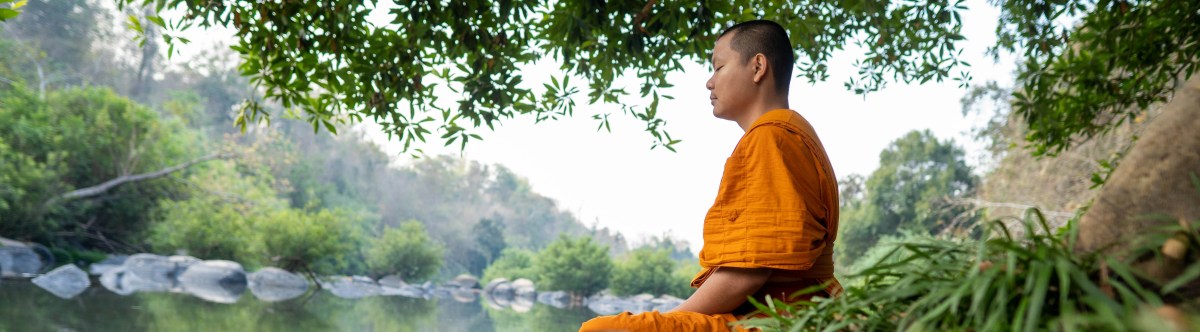
I had planned out my Advent to incorporate a return to peace through mindfulness after a particularly difficult year. It wasn’t supposed to be overly involved or unattainable.

As a matter of fact, I figured it would be simple to slide back into staying more present, particularly since we are heading into one of my favorite times of the year. Hourly check-ins, more dedicated meditation time, a concerted effort at staying present all day long and avoiding anxious reactivity—oh, the blissful calm that would flood my life!

Hmmm, this did not go according to plan.
(Photo by Alan Rodriguez on Unsplash)

Instead, none of that happened. I was still running up until bedtime when I’d scramble to meditate. Continuously forgot to set an hourly reminder to return to mindfulness. Found myself being yanked around emotionally. And I didn’t even unpack any of the remaining moving boxes that are sitting around the new apartment.

An entire week of Advent was gone and I felt like I frittered it away. I was expecting to feel a bit more grounded by now, but I’m not even getting a decent night’s sleep.

So, I sat down to take a look at where I ran off the road. And truthfully, I was never even on one.

I stated my intention for Advent in last week’s post…and then aimlessly wandered off into the woods.

This is a good reminder that mindfulness doesn’t happen on its own, no matter how long you’ve been practicing it. By its very definition, it requires attention.

Funny, in order to practice mindfulness, you kinda need to be mindful about it.

This time, I had a brilliant idea: why not actually DO the thing that I planned to do?
(Photo: @FranticShanti)

Enough belly-aching. I brushed myself off, hiked up my pants and did the following: I set a timer. This could have been any sort of timer, but I used the Plum Village smartphone app’s “Bell of Mindfulness” timer, set to ring (well, “bong” actually) once every 20 minutes from 8am to 8am.

It’s a low, soulful tone that rumbles through whatever else I’m doing, while at the same time not sounding intrusive.

When I hear the “bong”, I take a deep breath and notice what that feels like. Quite often, that breath turns into a deep sigh and I realize that my breath before was shallower. So I take a few more deep breaths.

That type of diaphragmatic breathing, into the belly, activates the parasympathetic (“rest and digest”) nervous system, and thereby the relaxation response.

Then I go back to my work until I hear the next “bong” and this process repeats.

By mid-afternoon, I found that I was much more aware of my breath and was breathing deeper during the interval between the bonging. And that was just the first day.

Ahhhh, this was a much better plan than my previous “no-plan” plan. Yes, I was bummed that I hadn’t implemented an actual plan a week ago, but here I am now and it’s working well.

The best part is, you can’t really “fall behind” on being mindful. Unlike where I am with my Advent cheese calendar…

Breast Cancer: Know When to Say When

(Title image: Photo by Marius Serban on Unsplash)

This is going to be short because I’m on the cusp of moving my family to a new apartment…and that’s going to take more work now that one of our cars is finally having its damage repaired.

So this is a gentle reminder to slow down and look around once in a while. Life’s obligations can push us like a bulldozer and we might not notice that we’re worn out until something happens that forces us into a mini-vacation.

Something, perhaps, like chemotherapy.

Who needs some love? You do.
(Photo by Mayur Gala on Unsplash)

And if you need a cancer diagnosis (or a broken bone or the flu or…) to give you a break from the pressures of work and family, then I think we can all agree that your mental health needs more love than you’ve been giving it.

Yes, easier said than done. But there are little breaks you can take. A 10-minute body scan meditation or guided breathing practice. A matcha tea break where you focus on the movements of your hands as they prepare your cup. Staring out the window and counting trees/people/cars.

It doesn’t have to be a pricey spa day. You can have a spa inside your head with a phone app and a set of headphones. You just need to care enough about yourself to allow this.

Believe me, I care about you and I don’t even know you. You are the whole reason why I started this blog and why I keep it going, even eight years after my diagnosis. I hope it helps you remember that you are worth being cared for. ❤

Remembering to Do Nothing

(Title image: Photo by Ken Cheung on Unsplash)

I remembered something last night about mindfulness meditation that I’d realized I had somehow forgotten.

I don’t have to do anything when I meditate.

Not strain, nor grip, nor furrow my brow.

The only thing I need to do when I meditate is to exist, and to be aware that I am existing.

I was thankful that I remembered this because I’d been struggling with the concept of sitting and being present for the past few months. I had slipped into the belief that I needed to work at it.

But last night I asked myself, “What would it feel like if I didn’t try so hard? Or at all?”

Simply exist.
(Photo by Jeppe H. Jensen on Unsplash)

If you’ve practiced mindfulness meditation, you know that the guidance is simple and straightforward.

It goes something like this:

“Sit comfortably with a tall spine, alert but relaxed. Take a few deep breaths, stretching upward on the inhale and settling down on the exhale. Soften the muscles of your body starting from your face, moving down the neck, shoulders, torso, arms to the fingers, hips and seat, down the legs to your toes. Then allow your awareness to settle onto a focal point like the breath, tingling in the hands, the hum of an appliance or sounds of traffic in the distance.”

Does that sound familiar? There are of course numerous variations of this. You select an anchor to come back to whenever you realize that you’ve drifted away from the present moment and into the thoughts in your head.

And that’s it. It’s quite basic and yet we find ways to complicate it and make it a strenuous exercise.

You don’t necessarily have to sit, you can lie down or even stand if that works for you (or you’re practicing while queuing up for something).

There are no rules for mindfulness meditation. Yes, there are principles and/or steps to take, but no real way to do it “wrong”. The only thing that would be considered “incorrect meditation” would be going to meditate, but then spending all that time doing something else.

Last night, when I remembered that my meditation didn’t have to be a certain way and all I needed to do was simply to be and to be aware of myself being, it felt like a release. The last year has been difficult and there have been tough things that I have been required to do.

This felt like a gift, that I could rest and think, “Oh, yeah…I don’t have to do anything.” And I was so grateful for that moment.

Why do I make these things so much harder than they should be?

Naptime with Animal Friends: A Calming Visualization

(Title image: Photo by Kristin Lyse on Unsplash)

I recently came up with a fun visualization for calming myself that I wanted to share with you. It’s ideal if you love animals.

The concept is quite simple. Imagine yourself in a comfortable place outdoors with an environment that is what you like best. As an example, for me, it’s a warm-ish spring or summer day and I’m sitting under an arbor covered in wisteria or another flowering vine with leaves just dense enough to allow dappled light through.

Create a detailed, colorful picture of your perfect place in your mind. And then…start settling. Bringing attention to your body, imagine what it would feel like to be there. As your breath slows, the calmness you generate travels outward and attracts friendly animals to you.

You are the Pied Piper of imaginary animals.
(Photo by Dmitry on Unsplash)

Perhaps a colorful bird alights on your shoulder or next to you. A bunny hops over and snuggles next to you. Or maybe you attract a group of sleepy cats that come, purring, and rub their faces against you before stretching out beside you and perhaps in your lap.

The animals can be whatever you desire. Maybe it’s a family of platypuses? Or perhaps you’re sitting by a natural pool, feet in the water, and koi are languidly swimming around you. Sometimes, I imagine something potentially frightening and powerful like a tiger appearing, then nuzzling my hair before he rolls onto the ground to snooze, pressed up to me.

It doesn’t have to be realistic. It just has to make you feel good. There are no rules.

All animals relax around you as long as you stay relaxed around them.
(Photo by Sandra Vasilenko on Unsplash)

The richer and more vibrant the picture, the more easily you will settle. As you develop the image in your mind, watching the butterflies circle around your head or feel the weight of the wolf’s head as she lays it on your shoulder, you nurture a sense of calm. These animals are attracted to you because you are what soothes them.

And the reason that you soothe them is because you have calmed yourself. Being calm, and tranferring that feeling to others, is your superpower.

If you lose focus and your mind drifts into worry or to-do lists, the animals will scatter, so you have to notice what’s happening and resume the visualization to show them that it’s safe to return. Allow a warm breeze against your skin or the cooing of mourning doves to transition you back to this calm space.

Understand that you have this ability to generate a sense of well-being, in yourself and others. You might not always be aware of it in the middle of a busy day…but it is there. Close your eyes, feel into your feet and call your favorite furry, feathered or scaly friend to you for a snuggle.

~~~~~~~~~~~~~~~~~~~~

If you’d rather not imagine animals, you can make flowers bloom or young children smile and nod off (which might be very satisfying if you are a preschool teacher!).

An Eyeball Update…and Unfortunate Addendum

(Title image: Photo by Anastasiya Badun on Unsplash)

Last Wednesday, I had a follow-up appointment with my ophthalmologist regarding the visual migraine auras I’d experienced during the second half of last year. [Read through to the end to see what happened a few days later on Sunday.]

I had gone to see her on November 22nd after the aura frequency had increased, and at that point, imaging of my eyes revealed little hemorrhages in both eyeballs, leading my doc to fear that something was exerting pressure, eliciting auras and busting little blood vessels.

And by “something”, she meant possibly a cause as serious as a tumor.

This time around, however, the hemorrhages were gone, healed on their own. As I mentioned in a previous post, my auras had ceased too. And even my eyeballs were not looking as parched as they had before.

Everything had improved. How often does that happen?

While I expected some improvement by virtue of the fact that I was no longer experiencing visual disturbances, I was a little surprised by the complete reversal. My eyeballs looked better than they had even during my first appointment with the eye doctor some months ago.

So we talked about the effects that stress might have had on me, since I had incorporated all sorts of anti-anxiety measures. My opthalmologist is very supportive of meditation and whatever else it takes to calm oneself down. She was very relieved that there was such a marked improvement.

And this made me think about how the extra effort I’d put into being mindful, pausing during the day, increasing meditation time and the like had really paid off. Simply taking the time to look around and notice how I felt, to evaluate the pressures that I was under, to be aware and present…all of this helped me realize where there were things that I could do to change what was happening.

The concept of self-efficacy comes to mind here. Because after going through a cancer journey where everything seems out of my hands, it’s refreshing to have the experience of being able to get a positive response from lifestyle changes.

And, yes, I have to admit: I am making assumptions here. I am assuming that in fact, the visual migraine auras were caused by a pile-on of factors that included anxiety, grief and depression. I am assuming that by being more self-aware of what I was going through, engaging in holistic methods for calming myself and showing self-compassion, even the increased consumption of theobromine, all worked together to help me get a handle on the emotional storm that I’d been facing. I could be completely wrong.

But you know what? It’s not beyond the realm of possibility that all these things were exactly what I needed.

Perhaps it’s not as simplistic as taking deeper breaths. But those self-soothing techniques do not hurt.

Of course, the trick now is to not get complacent. Life is still tough, and I know that I have some challenges coming up this year. Even the greatest techniques do no good if you start cutting corners.

But after the uncertainty of last year, the pain and the loss, once again I get the satisfaction of knowing that as difficult as it seems to be, I can survive this.

~~~~~~~~~~~~~~~~~~~~

ADDENDUM

The trick now is to not get complacent. I feel like I’m eating my words.

I had felt very positive when I wrote the first draft of this post last Friday. But perhaps after almost two months of no auras, I might have assumed that I was done with them.

Yesterday (Sunday), while driving in the car, I experienced another aura. It was “milder” and a little shorter than most, but *groan* it was still an aura. My heart sank.

A few days ago I had noticed that I was experiencing that involuntary sighing reflex again. I didn’t think much of it because, hey, I had everything under control, right? I guess not.

So today my mind is more unfocused, possibly additional stress from life or anxiety over the fact that I just had another aura after things were going so well. Honestly, I don’t know which. All I know is that auras are not going to simply disappear from my life altogether. I guess I should have expected a relapse.

Darn it.

“It’s Not a Toomah”: My Aura Theory

(Title image: Photo by Daniele Levis Pelusi on Unsplash)

I’ve written in my blog that I was experiencing strange visual disturbances, most likely visual migraine auras. Note: I’ve never experienced migraine pain.

This is particularly worrisome for me as a survivor of triple-positive breast cancer, as there is a greater chance of that type of cancer metastasizing to the brain. Presumably, a growing tumor could restrict blood flow to areas of the brain that could result in me seeing strange things.

This was of great concern to my ophthalmologist. However, there was no pain associated with the auras, and pain would have been expected (but not necessarily required) if the auras were caused by a tumor.

There were other confounding variables, too. Since the summer of 2024, shortly before my father’s death, I had noticed that I was doing a lot of involuntary “sighing”. I’d experienced this type of sighing before, but this time it kept going for months, sometimes occurring a number of times an hour.

Naturally I googled it, and Dr. Google pointed out that excessive sighing was potentially associated with undiagnosed anxiety and depression. When I finally started writing out all my stressors, it because obvious to me that I had been far more deeply affected by what was going on in my life than I imagined.

So, after my appointments on Nov 22, I took time to grieve my father’s death, which I hadn’t done up to then. I thought I had accepted his passing and moved on, but clearly I hadn’t. I sought hugs and solace from family members and expressed what I was feeling.

My last aura was on Nov 29th. After that, along with allowing space for grief, I expanded my time in meditation, added up to an hour of breathwork a day and even included a daily cup of ceremonial-grade cacao (for the theobromine).

Mindfulness took a front seat. I paused at various points of the day to simply take deep breaths. I paid attention to what my body was doing and what thoughts were running through my mind. I made a concerted effort to show compassion to myself, more than I had in a long time.

The auras did not come back. As of this writing, it has been 45 days since the last aura. I had been having them once a week, and at their worst, a couple a week and even two on one evening.

I am well aware of the power of the mind. My educational background is in graduate-level psychology and I myself have experienced psychosomatic pain before. But honestly, I never expected to have such a striking response to anxiety/depression/grief.

I have searched for a good visual representation of an aura and it’s hard to find one that actually reflects what I was experiencing. It was something like this:

This is not exactly what it looks like for me, as some of my auras have been “thicker” and more “stained glass-like” in color, looking more zigzagged (as if the entire half-circle is made up of triangular pieces of vividly bright LED-like colors). Also, mine were gone within about 20 minutes.

That’s not an insignificant reaction to something that is going on in my head. My brain created those auras. That is amazing.

I should mention, I never had an MRI so technically a tumor cannot be ruled out. And neither can some other cause that I have not considered. However, the fact that my auras stopped after I put concerted effort into exploring my anxiety, acknowledging depression and recognizing that I was not okay with the pressures I was under suggests that it’s probably not a tumor.

Simple Meditations: Just a Piece of the Puzzle

Over the holiday break, I indulged myself by lassoing the family into working on a couple of jigsaw puzzles that I’d been saving. It was great! And if one of your goals for 2025 is to establish a mindfulness/meditation habit, here’s a simple practice to try if you, too, enjoy jigsaw puzzles.

Putting together the puzzle itself can be a great pasttime, offering good conversation and comraderie when working with others, or proving a shift of focus when constructing solo.

However, a large multi-piece puzzle can feel overwhelming at the start, even when you’re experienced and KNOW that eventually everything will click into place.

Ah, the joy of a finished puzzle. This one is from the Ravensburger Cozy Series and is a favorite of mine. Such a great experience putting it together with family!

So here’s my suggestion. Put your puzzle together. With whatever help you need, with whomever wants to participate, no matter how long it takes. Because for this, you want to start from the end.

Now, take apart of corner of the puzzle. It’s up to you about how many pieces you will want to remove, but choose a “comfortable” amount. Twenty? Fifty? Start with fewer pieces the first time you try this.

Once you’ve deconstructed that corner, put it back together. But this time, without the “stress” of doing the whole thing. This will be easy. You know that it’s only a handful of pieces. So simply enjoy the process.

The deconstructed corner turns putting the puzzle together into an meditative exercise. The focus is on contemplation, not completion. Enjoy the satisfaction of the clicking the pieces into place.

Perhaps find the edge pieces and create the frame, or simply build out the puzzle from the “raggedly” edges of the puzzle. There is no single “right” way to do this. What is important is that you breathe through the process. Picking up a piece, focusing on its qualities, seeing where it belongs. Either clicking it in or putting it back down and picking up another piece until you find the one that will go where you want it to.

Notice the sensations: the feeling of the puzzle piece in your hand, its shape and color, the texture of the interlocking sides, even the smell of the cardboard all work together to bring you back to the present moment.

The goal is contemplation, not completion. When you’ve put all the pieces together…do it again with another corner. You get the satisfaction of clicking the pieces into place without the fleeting stress of “omg, where do I start?” In turn, this provides you the opportunity to get absorbed in the process.

What a lovely way to meditate.

The Gift of Self-Care

(Title image: Photo by Ben White on Unsplash)

I’m popping in here with a little reminder to practice self-care over the remainder of this holiday season and springboard that care into the new year.

“I have had no time for self-care with everything going on!”, you may protest, but then, what do you imagine self-care to be?

If you believe commercials, it’s drinking red wine in the bathtub, eating ice cream from the container, using a face mask and getting your nails done at a salon. All while chanting, “BECAUSE I’M WORTH IT!”

In general, anyone who is perpetuating that type of “self-care” is trying to sell you something.

Journaling is an effective form of self-care and doesn’t require an expensive journal or pen, no matter what someone tries to sell you.
(Photo by Sixteen Miles Out on Unsplash)

Here are less expensive options that I feel align more closely with the true meaning of self-care:
* pausing during the day to take a few mindful breaths;
* noticing where you are (“Right now, I am in the kitchen doing the dishes, feeling the warm water and slipperiness of the soap on my hands”) to help calm racing thoughts;
* making a decision to choose a more nourishing food, eating slowly, savoring each bite;
* decreasing/eliminating alcohol — substitute a drink that looks festive (sprig of rosemary or a skewered piece of fruit added to sparkling water);
* staying consistent with exercise, or if time is squeezed, sticking in extra movement whereever you can (like doing 5 squats every time you go to the bathroom or a short yoga session right before bed);
*practicing gratitude, and if that’s hard, just finding something to appreciate.

And of course, taking time for a brief meditation whenever you can.

I think you get the idea.

Holiday self-care is not about buying things. It’s not about practicing an Instagram or TikTok version of indulgence. There are no photos to post and you don’t need a manual for it to be beneficial.

It is taking a break to drop down out of your thoughts and into the present moment. Be kind to your body and mind, get enough sleep and exercise to make yourself feel good. And importantly: release expectations of what you think the holiday should look like, how people should act, what you should be able to accomplish, even how you should feel about it. Find appreciation for whatever is going well.

I wish you a peaceful, positive start to 2025!

Cancer Took the Magic Away, Mindfulness Brought It Back

(Title image: Photo by Ethan Hoover on Unsplash)

And, no, I’m not talking about casting spells.

But I remember “life before cancer” and it felt different. There was a feeling that there was so much life left to live, so many plans still to execute.

I felt bulletproof. My own primary care doctor was impressed that I’d made it through so many years without ever having a major surgery (or any surgery, for that matter). I was looking foward to my future. My workouts were still tough and vigorous and I felt like I was going to age well.

Most importantly, life had a certain magic to it. It felt multidimensional and filled with possibilities, and even with the challenges that I’d had to face, I had hope that things would always get better.

Then I got hit by the locomotive that is cancer and everything ground to a halt. My world went gray and all those plans that I had for “the rest of my life” fell away as all my energy was focused on surviving the diagnosis, surviving chemo…and I didn’t see much past that.

For quite a while after diagnosis, I’d felt like I’d been tossed out by the side of the road.
(Photo by Sven Brandsma on Unsplash)

Emotionally, my life felt like a void. I was too afraid to even let hope in because of the fear of having it dashed to pieces.

It was like being out in the wilderness and calling for help but receiving none, not even an echo. Spiritually, it was the loneliest that I’d ever been.

I was no longer on the highway of life. I was sitting in the breakdown lane.

Forgive me if this sounds melodramatic. All my ‘anxiety chickens’ had come home to roost, so to speak. And I wasn’t handling it well.

I dragged myself around treatment like this…although about two weeks before my cancer surgery, I had started mindfulness meditation, encouraged by my radiation oncologist who suggested it as a non-pharmaceutical way of dealing with anxiety.

It was that little ‘peep’ of mindfulness that had I clung to, terrified, in the beginning, not really sure whether or not it was helping. But at least it was something warm at a point when I felt cold and abandoned.

I can honestly say that mindfulness and meditation were what gave me back the strength to persevere through tough times.
(Photo by Robin van Holst on Unsplash)

As time went on and I stubbornly refused to miss a day of meditation, that little break in the clouds became bigger. In this case, my obstinance was a blessing. Somewhere in the last almost-eight years, not even sure exactly when, something changed.

The fear and loneliness and bitterness crumbled away. Noticing how things were right now, how beautiful the world was when I chose to appreciate it, helped pull me out of the funk.

In our darkest moment we find our greatest strengths. I wish it weren’t like that, I wish there wasn’t a need to hit lowest lows in order to get the biggest spring back up. But I can say that if my life even before cancer had been easier, I would not have experienced the richness of existence as I do now.

Not everything is okay. In many ways, things are even harder and more frightening. But I can accept that and not feel bitter. My expectations have softened and I pause more often to ground myself, to notice that at this moment, I am safe.

And for this moment, I am at peace.

A Rock in a Bubbling Stream [Visualization]

(Photo by Hendrik Cornelissen on Unsplash)

There’s a lot going on in my family at this time, most importantly the transition of my father to in-home hospice care, signaling that a life chapter will be coming to a close. That’s one of those things that you know is going to happen but usually don’t want to think about.

It’s these kinds of changes that unsettle us the most because they’re significant shake-ups of life as we know it. In the case of my family, this change was not unexpected and yet it is still not easy.

The uncertainties associated with end-of-life issues can be unsettling.
(Photo by Pylyp Sukhenko on Unsplash)

But I can draw on my meditation practice and ability to stay present to accept things are they are now.

It helps to use a visualization in the midst of emotional upheaval. So I think of myself as being a rock in a rushing stream. You know, one of those rocks that sticks out about the water’s surface and might serve as a comfortable sunning place for a river turtle.

The rock sits still even thought there is a rushing tumult all about. The water parts around it and then rejoins on the opposite side, but the rock remains there, unmoving and unbothered.

The rock doesn’t hinder the flow but neither does it get carried away by it. And as it sits, so do I, observing and understanding and accepting everything that is going on around me. Not getting caught up in my head and taken away by thoughts.

Mindfulness meditation provides me with a stable rock from which I observe the tumult of life as it rushes by.
(Photo by Simon Berger on Unsplash)

There will come a time to grieve but now I focus on what is happening in the moment and how I can support my parents. There is gentle planning as I get more information about the situation. And always, taking deep breaths, feeling into my hands and feet, staying grounded. From this vantage point, I can clearly see what needs to be done today.

“This is what’s happening now. Tomorrow may be different, but at this point in time, I am here.”

So the coming weeks may bring shorter posts, perhaps a skipped one here or there. There will be much to do and it will all get done in time. Decisions will be made as they come up. Focus remains on each task at hand. Even if responsibilities come fast, I find a stable base in my practice that helps support a strong relationship with my family.

The river rushes relentlessly. But I know it’s there and expect the constant movement. Changes become familiar, fear drops away and I am comfortable where I sit, calm as I watch the waters flow past me and then continue onward.