We Need Mindfulness Now More Than Ever

If there were ever a time to open yourself up to being more mindful, it’s in the midst of a global pandemic. We are in foreign territory, in an unsettled state where we’ve lost our footing. Mindfulness can help us find a path through this.

Stay Healthy

Being mindful is critical now that we’ve got to remain more aware of how we move through space.

Stop. Where are your hands now?

There are things that we do automatically. Consider how often you touch your face. Don’t do that! It’s important to notice where your hands are. Are you wearing a face mask? Don’t touch the front of it. When you inhale, you’re creating suction around the mouth and nose, and if you’ve come into contact with viruses, it is more likely that the cloth covering those areas will be contaminated. Remove the mask only using the ties on the back of your head or elastics around your ears.

Going to the store? Be aware of which hand you’re using to do what, even if you’re wearing gloves. Touching door knobs or packages with one hand? Use the other to get your wallet out of your pocket or purse.

What hand are you holding your phone with? Which finger are you touching the screen with? The COVID-19 situation necessitates a focus on what you’re doing. Take a deep breath…and then disinfect everything when you get home.

Lessen Anxiety

Living mindfully, in the present, helps us let go of fears surrounding what may happen, and in the midst of unprecedented uncertainty when , most of us have those thoughts. But you don’t have to let them take you over.

Stay grounded in the moment. No one knows exactly what the future will bring, but the possibilities can be scary. Right now, however, you are safe. Feel what part of your body is in contact with the seat or floor. Come down from the frightening thoughts and listen to your breaths. Those imaginings of the future are not happening now. At this moment you are standing or sitting, breathing. Feel into your hands and feet. Can you feel the blood pulsing through them? Feel yourself being supported by the earth. Breathe.

You can meditate without twisting yourself into a pretzel.

If you don’t yet meditate, this is a chance to start, and it’s a habit that will benefit you for years to come. The good news is that you don’t have to get it “right” the first time. In fact, there is no “right”. There is just consistent practice.

What does meditation look like for you? It doesn’t have to be sitting in lotus position and chanting mantras. There are other ways to meditate. Stay in the moment. Keep your attention on your breath, noticing the quality of the inhales and exhales. When your mind wanders, as soon as you notice your loss of focus, bring yourself back to the breath. Resist jumping down rabbit holes of tempting thoughts. Just stay with your breath. That’s all.

If you need to bring yourself down to a more peaceful state, you can try a more structured breathing technique, such as the 4-7-8 “relaxing breath” espoused by Dr. Andrew Weil: inhale for 4 counts, hold for 7, exhale for 8. It is more important to maintain that ratio rather than to have a count last for a specific amount of time. Do several cycles of this, then return to natural breaths.

Does this feel too forced for you? Your meditation might be listening to a complex piece of music — truly listening to how the instruments blend together, gliding through the different layers of sound — and feeling into the sensations that it invokes in your body.

Perhaps it’s looking at nature through a window, holding a cup of warm tea, immersing yourself in the subtleties and complexities of the world.

Or constructing a jigsaw puzzle, diligently looking for pieces to match a color or pattern. Focusing on the satisfying click when they snap into place. Apparently, this is a stress reducer for many, many people, given how quickly puzzles disappeared from Amazon!

Find your own meditation. Let go of what you think it “should” be and focus on what works for you. There will not be a quiz.

Calm Stress Eating

For those prone to emotional or stress eating, a stay-at-home order can result in weight gain. This is the time to practice awareness of what goes in your mouth. Do you respect yourself with nutritious food or treat your body carelessly? Are you truly hungry or do you eat out of habit or boredom? Are mealtimes a mechanical process for you?
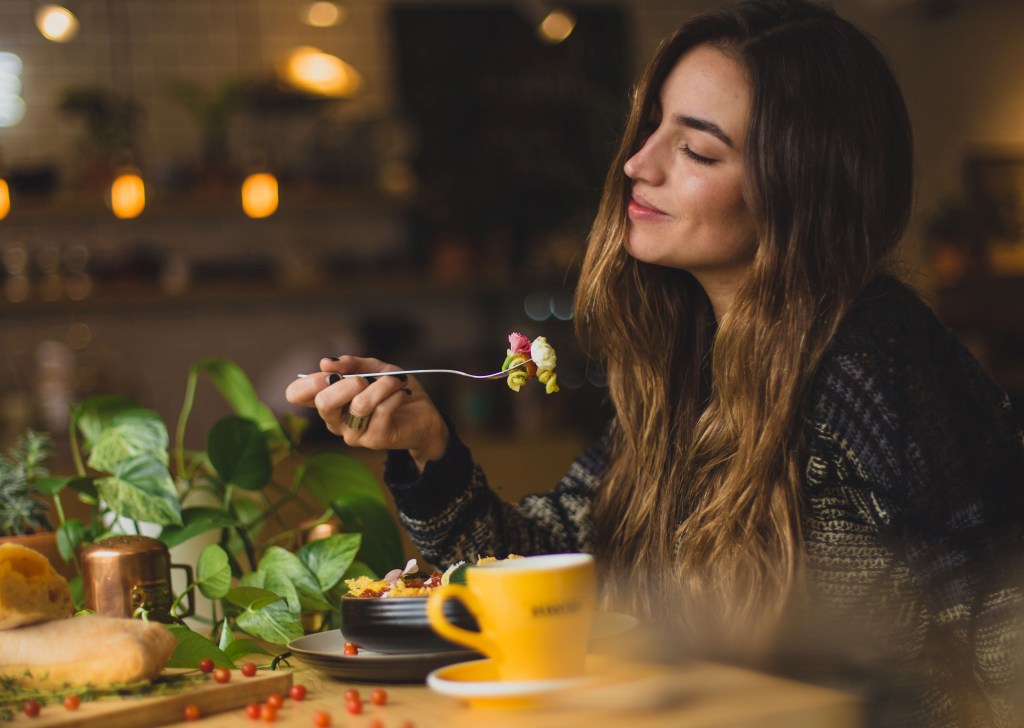
Slow down and savor your food.

Allow yourself the opportunity to halt other distractions and focus on what you’re eating. In a busy household, this can be difficult, but as with all mindful things, there is no “perfection”. There is simply practice: doing, and doing again.

Look at your food. Savor the aromas. Listen to yourself chew. Taste the flavors. Feel the textures. Close your eyes. Slow everything down. See if you can sense when your hunger has subsided, instead of stopping simply when you’ve eaten everything on your plate.

Create a Calming Space

Now that we’re sheltering in place, it’s not as easy to overlook cluttered spaces. Living in the midst of disorder can be very stressful, but trying to balance remote work and childcare, or beating back concerns about no longer having a job, while trying to maintain a cleaning routine is also anxiety-provoking. There is nothing normal about the situation we are in, so allow yourself the latitude to prioritize.

Mindfulness takes the drudgery out of cleaning. Stop and look. Breathe. Decide what you can take on and then go for it. Focus on one spot and stay present as you work on it. Set a timer for ten or fifteen or thirty minutes and see what you can get done within that time. I guarantee you that you will find yourself in a better place than if you hadn’t done anything at all.

Ha! I WISH my kitchen were this big. But even a small kitchen, clean and organized, can feel spacious.

This is not a punishment. It’s an opportunity to create a positive environment in which to ride out the pandemic. I spent Easter Sunday bleaching my kitchen, which seems so antithetical to what we expect to do on a holiday. But for me it was a gift, being present and scrubbing counters and appliances bit by bit, no expectations. Yes, there are still many loose papers on the dining room table, but when I enter the kitchen, I breathe a sigh.

I could say, “it’s not enough,” but you know what? It is more than enough. It’s a semblance of order in a situation that felt out of control, just as the COVID-19 situation is out of our control. We all need some grounding, and I promise you, a clean, uncluttered room lowers stress levels. When I went into the kitchen to get coffee this morning, I thought I was in heaven.

This sense of calm is still with me, even as my son has decided to bake cookies…

What a good time to take some relaxing breaths.

Don’t Call It “Social Distancing”

By now, I’m hopeful that we all understand the importance of putting physical space between ourselves and those outside of our household in order to avoid transmission of the coronavirus. According to the BBC and its broom trick, you should be able to hold out a broom and not be able to twack another person with it. That means about six feet of distance, as everyone’s been repeating.

But socially distancing ourselves in this time of uncertainty is the last thing we need. In fact, we need to be reaching out to others, trying to bridge the social isolation gap.

It should be easy enough to strengthen our social ties with all the technology that we have available, like Zoom meetings and FaceTime sessions. But all those require at least a little planning, especially when we’re living in comfy clothes, forgoing haircuts and not necessarily getting made up to go out. What we’re missing are all those little interactions that we have in our daily lives: impromptu water cooler conversations, brief chats with a cashier, a quick joke with the server who brings your lunch. There are many ways that we touch each other’s lives than we’re likely conscious of, and those have abruptly stopped.

So if you’re feeling a strange emptiness in your life, there’s a good reason for it.

Got the toilet paper, got the gas mask…but missing the human contact.

And this social isolation is significant. Research has shown that in times of stress, social support is particularly helpful in coping and resilience (for example: Ozdemir & Taz Arslan, 2018; Ozbay et al., 2007), and individuals who are socially isolated have negative health consequences (again, an example: Cacioppo & Hawkley, 2003).

Now, consider that people are being isolated at a time when many are losing their jobs, worrying about being able to pay their bills, fearing for their health and wondering when all of this is going end. The financial and health concerns are immediate and frightening, but it’s the unknown extent of the damage that continues to keep people up at night.

This is the time when we should be reaching out to our friends and family members, checking in with loved ones and re-establishing our social connections. While “we’re all in this together” might seem like a hackneyed slogan, it is a perfect description of this new reality. As distant as we might feel, particularly those who are forced to shelter-in-place alone, we are experiencing a global pandemic. Never in my own life have I been able to share in such collective concerns, ones that are literally reverberating throughout this entire planet.

This should be something that ties us together. So as you do your best to be safe and keep your distance for the sake of health, please don’t forget to bridge the social and emotional distance that this unique situation has bought upon us.

What My MonkeyMind Needs, Part 2

There’s more to the story I began in Part 1 and what better time than the start of a new decade to relate it?

I have a monkey. Those of you aware of your monkey minds know exactly what I mean.

But at this moment, “I have a monkey” means something more tangible. After giving it some thought, after going through struggle after exhausting struggle over all the negative chatter in my head, it was clear that I needed to change my strategy.

A quick Amazon search provided the result I needed: a gloriously soft, appropriately small, unbelievably cute plush monkey that would serve as my previously-maligned nemesis. It is a physical representation of my MonkeyMind (my little MoMi), but not one that I’d want to stay away from. This one begs for soft cuddles.

(To be clear, I bought a stuffed toy from the Amazon site, not an actual primate from the Amazon!)

How can something so darling be a nemesis? It shouldn’t be.

This is not about avoiding thoughts or wrestling my mind into submission, which I’d been trying to do. This is about acceptance of something that is a part of me.

Instead of tossing and turning at night, instead of succumbing to anxiety, instead of frantically trying not-to-think about what’s bothering me, I take that comfy manifestation of my worries and shower it with affection. I hold it gently, and then I hold my thoughts gently too.

Spread the love in 2020. We desperately need it.

The best part of this is that MoMi, a representation of that which upsets me, is actually so easy to hold and love.

What does my MonkeyMind need? The same thing this world needs a lot more of: LOVE.

May this New Year bring you lots of it.

Hi-Ho, Hi-Ho, On Letrozole We Go

Starting up again…

After giving me a six-week respite from tamoxifen and then running bloodwork that revealed I was postmenopausal, my oncologist made good on his threat to put me on letrozole, an aromatase inhibitor. This breast cancer medication is supposed to block “the enzyme aromatase, which turns the hormone androgen into small amounts of estrogen in the body. This means that less estrogen is available to stimulate the growth of hormone-receptor-positive breast cancer cells” (breastcancer.org). It’s also better suited for postmenopausal women.

Perhaps it’s more correct to say that the journey is BACK on. I enjoyed my time off tamoxifen, but I really didn’t notice much of a difference in myself whether I was taking it or not, suggesting that maybe what I thought were side effects, weren’t. So I’m willing to humor my oncologist and try an aromatase inhibitor.

Not gonna lie, I really did not want to go on yet another medication, but for this appointment, I left all the journal articles at home and put away the boxing gloves. I promised my oncologist that I would stay off the forums, stay off PubMed, quit overthinking things and give letrozole a chance.

The reason? My oncologist thinks that my earlier frustration with tamoxifen was, to put it bluntly, in my head. And my clinical counselor suggested that what I complained of could be explained by anxiety. But I swore that my memory and focus issues started with tamoxifen.

You know what? I’m not so sure now.

The fact is, everything that I was experiencing could have been caused by anxiety (or menopause). And even more striking were the things that I didn’t experience. Not only did I not have significant hot flashes (maybe a “warm flush” here or there, easily countered by taking off a sweater), I never had night sweats. Heck, I had more night sweats before my cancer.

No weight gain, either, which had been another big concern of mine. I’ve been disciplined in maintaining healthy fitness habits throughout my adult life, probably to the point that most people wouldn’t tolerate. Tamoxifen didn’t manage to mess with that, which was extremely gratifying.

While I really want to peg the concentration problems, distractability, flagging libido and other negatives on estrogen-blockers, a retrospective look at my emotional history suggests that (1) I’m highly suggestible (I need to stay off the internet!), (2) there have been loads of anxiety-amplifying events in my life, even before cancer, that I haven’t handled well, and (3) I would be better off shutting up, taking the pill and working on getting my mental state in order.

I mean, I already knew most of this. But some things need to hit me between the eyes a number of times before they actually register.

Wow, dizziness and impaired ability to drive are bad enough to merit a prominent place on the label? Yay! I’m going to pretend that this is a sleep inducer that will leave me better rested. I’ll let you know if that works.

So, while my oncologist warned me about “a little joint pain” (eek!), I’ve avoided anything but a cursory glance at what I might experience on letrozole, besides what reactions would necessitate calling the doctors.

We’ll see how bad these side effects really are.

~~~~~~~~~~~~~~~~~~

A FINAL NOTE – According to what was written on the bottle, this stuff can cause dizziness and impair my ability to operate a vehicle. Seriously? I didn’t expect that, but here’s what I’m going to do with that tidbit of information: I’m going to view letrozole as a reason to get to bed earlier, since I’ll obviously have to take it in the evening. And I’m going to tell myself that this is going to help me sleep. Who knows, maybe it will?

(Almost) Two Years on Tamoxifen: A Change in Plans

This weekend would have marked two years of taking tamoxifen, the estradiol-blocking medication that is supposed to keep my hormone-positive breast cancer from recurring.

As it turns out, there will be no such commemoration. Several weeks ago, I started noticing a funny cramping feeling in the general area of my uterus. It was light and under any other circumstances, I would have ignored it, but use of tamoxifen is associated with an increased risk of endometrial/uterine cancer, so it kept me on edge.

It’s worth noting that the increased risk is actually for postmenopausal women, and to the best of my knowledge, I was not yet postmenopausal. That’s why pre- and perimenopausal women are started on tamoxifen but taken off of it as soon as they go through menopause. Still the sensation, although intermittent, didn’t go away.

I finally called my oncologist. As it was, I was wary of tamoxifen – I already blamed it for a number of other negative things that I experienced: fatigue, hair thinning, low libido, cognitive issues, mood swings, general misery…all of those and more were listed as possible side effects.

I complained about the light cramping to an oncological nurse, who was surprised that I didn’t have a recent pap smear on record, because according to her, the oncologist wanted me to have one yearly. Mind you, pap smears are for cervical cancer, and I wasn’t at an increased risk for that. But whatever. The nurse gave me her blessing to stay off tamoxifen until I next saw the oncologist.

Conveniently, my oncologist appointment was in three days.

I was stressed, because if there’s one thing that being a cancer survivor made me good at, it was stressing. So much so, that my blood pressure hit 165/95 at my appointment. I couldn’t get over how ridiculous that was and how my thoughts had generated that sort of a reaction. I don’t think my pressure was even that high before my cancer surgery, at a time when my anxiety was raging and everything felt out of control.

I had a prolonged discussion (negotiation?) with my oncologist. In the end, we decided the following: I could take a month off tamoxifen and meet with him again in six weeks. In the meantime, I would go to my gynecologist to rule out endometrial cancer. (Incidentally, a week later at the gynecologist’s office my blood pressure was back down to a very reasonable 102/64.)

No more tamoxifen? Yeah, I feel like celebrating.

My oncologist and my clinical counselor (who I discovered had spoken to him about me) thought that some of the worst side effects that I was experiencing were not due to tamoxifen, but anxiety. My onc suggested that if nothing improved after a month off tamoxifen, I should consider anti-anxiety meds.

But he also checked my hormone levels to see where I was in my journey into menopause. A few days later, I got the news: I was officially postmenopausal and was told to not restart tamoxifen.

So, okay, no more tamoxifen. I was also quite happy that I managed to transition through menopause without any significant hot flashes. The downside of this was, however, that I would be put on an aromatase inhibitor, which came with its own set of side effects, not the least of which was significant bone pain and bone density loss.

Or at least those were some of the effects that I remembered from the last time that I read about them, which was a while ago. This time, I’ve decided, I won’t go back and research all the negatives of the medication. Anxiety does hit me hard, I have to admit, and I want to be sure that I’m really experiencing what I’m experiencing and not simply being influenced by what I’ve read.

So I’ll give the new medication a fair shake and give myself a break by not getting worked up by what *might* happen. As the gynecologist said, looking over my bloodwork, “Actually, you’re really healthy, except for having had breast cancer.” I’m going to go with that and see where it takes me.

Releasing Stress Bubbles

I’m constantly working to keep anxiety under control. For me, one of the most common feelings associated with stress is that of it being “in your face”. There is no buffer and therefore no easy way to give yourself time to pause. Emotions rush at you.

I’ve developed visualizations to give me some space. I’ve already written about getting perspective and keeping anxiety at arm’s length, but sometimes I need another way of freeing myself from stressful thoughts. So I use bubbles!

Oooo, bubbles!

When I get caught up in thoughts of a stressful situation and I feel like the images are right in front of me, I imagine pulling back from the scene. What is transpiring before me continues, but I slowly move away, and as I do, the periphery of my vision starts bending inward. As I pull back, I realize that I am inside a bubble with finite edges.

I keep moving backwards through the wall of the bubble until I’m standing outside it. The actions within are still taking place, but they’re no longer coming at me. I watch from a safe distance, feeling secure.

I may allow the bubble to float away or I can pop it if I choose. Or I may stay with it for a while, observing without getting drawn back in.

Sometimes this becomes a game, particularly if I wake in the middle of the night and find myself in the grip of fearful thoughts. It’s usually not enough for me to back out of one bubble. There may be many. Sometimes I leave a bubble and then realize that I’m standing in another, even bigger one.

When my mind is particularly active, the bubbles keep coming.

But eventually, I get to the point where I am standing outside of all the bubbles, watching them floating before me, the figures or events looking small and not menacing at all. That is the perspective that I need to create myself breathing space.

The metaphor of a bubble is a lovely one because bubbles by themselves are playful, beautiful and, of course, ephemeral. Just as the bubble does not last forever, the events in our lives, no matter how stressful, don’t last forever either. The bubble reminds me that all things pass.

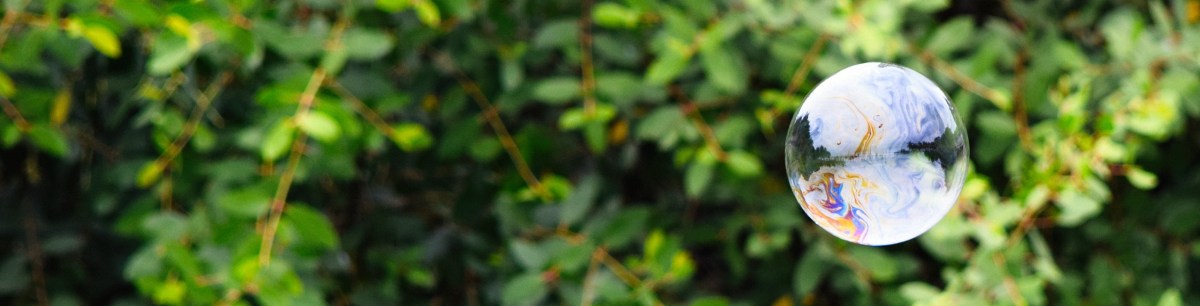
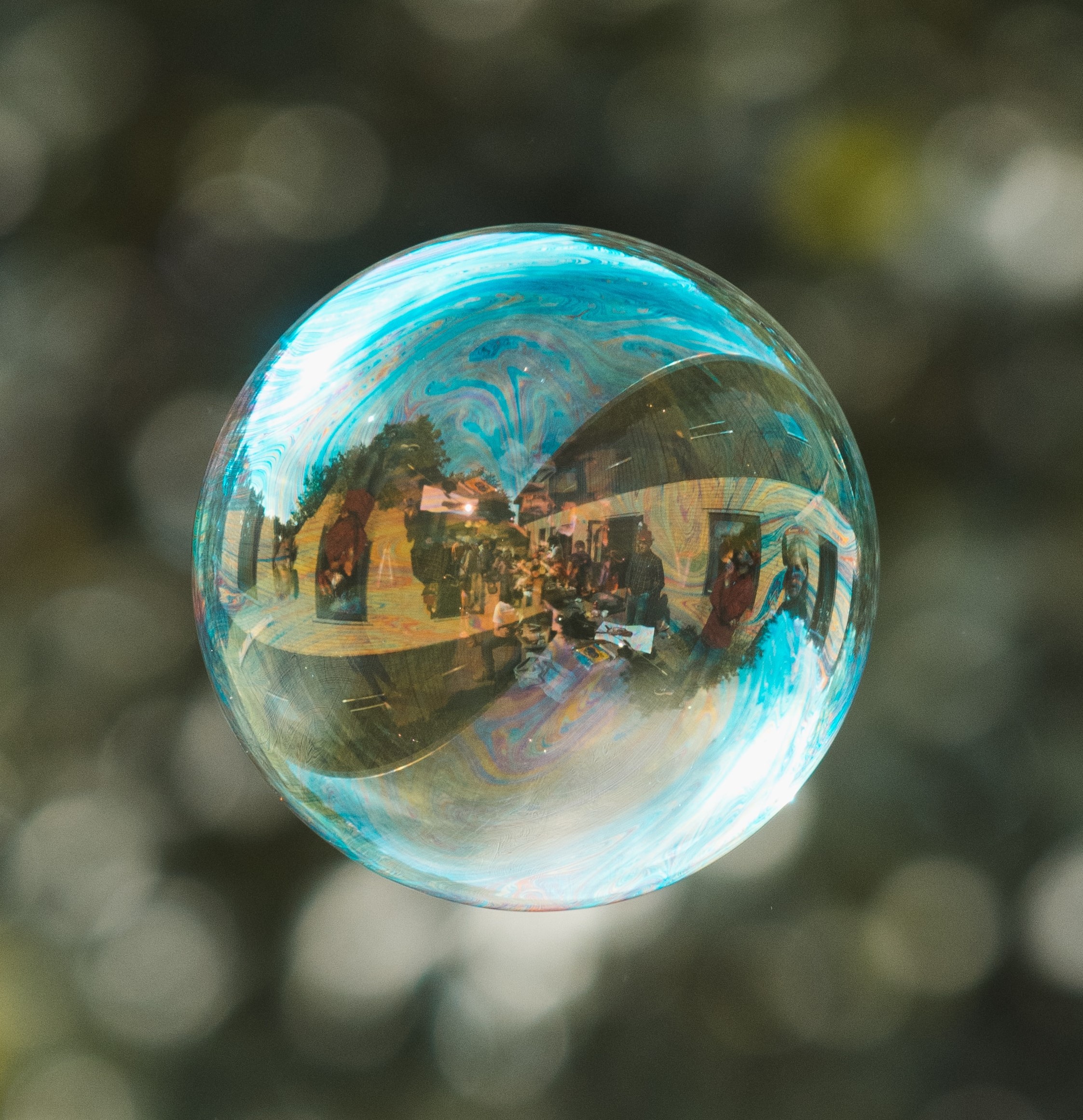
I’ve even brought a little container of soapy water with a bubble wand to work. Blowing bubbles (when no one’s looking) in my office slows my breathing and requires some focus. A controlled exhalation is needed to not pop the prismatic ball of soap-water before I can send it on its way, taking my worries along with it.

A stressful event taking place inside a bubble seems less frightening.

When I cannot do this indoors, I may take a break and head outside, letting the bubbles float off into the breeze. I might make someone else smile in the the process and that gladdens my heart.

It’s silly and fun and reminds me not to take everything so seriously. And if I can send my cares off in bubbles, giving me even a temporary reprieve from anxiety, then perhaps what might have seemed like an overwhelming crisis may feel more manageable.

“Fly the Friendly Skies”?

What if the skies aren’t guaranteed to be friendly?

While I’ve not been a nervous flyer in the past, I’ve haven’t flown since 2005 (!) and I’m starting to feel unsettled about our upcoming trip. It’s going to be a cross-continental red-eye during which I’ll be Tetris-ing myself into a plane seat (I’m 5’11”) and trying to sleep upright. Then there’s that plane change in the wee hours of the morning, at a time when any sane person would be fast asleep.

After writing a post on the importance of sleep, I’m going to go against my own advice and really screw up my family’s sleep cycle. So there’s that. But I’m also feeling prickly about making it through security, finding storage room in the overhead compartments, making our connection on time, picking up the rental car and remembering how to get to my parents’ home on a few hours’ sleep.

Oh yeah, and hoping that the plane doesn’t drop from the sky. That’s a biggie.

Life: enjoy the flight.

For a cancer patient, plane flight is one of those things you’re supposed to avoid. While I’m well past “patient” stage, my white blood cell count remains abnormally low, so breathing recycled air in cramped quarters is a bit of a concern. Taking Tamoxifen brings with it a risk of deep vein thrombosis, which is associated with long plane rides, and I’ve been warned about breast cancer survivors developing lymphedema due to the changes in air pressure during airflight.

Okay, okay, okay, realistically none of that will cause me problems. And all those other worries about the trip? They only matter if I’m thinking about them. When I’m not thinking about them, they don’t exist (*crossing fingers*).

Of course, the risk remains. I can sleep calmly on the flight with 99.99% confidence that we’ll get to where we need to go without mishaps, but there is that 0.01% that hangs in the back of my mind. Whether or not I give it attention depends on me. My life is not going to be any better if I’m fretting about it.

Cancer is the same way. There is no guarantee that I’ll stay cancer-free and I have to live with the possibility of recurrence for the rest of my life. That is disconcerting, particularly to a card-carrying worrier like me, but when I detach from that and simply appreciate where I am, I find that my days are a lot brighter. So for both air travel and life, the best course of action is to sit back, relax and just enjoy the flight.

Pulling Back for a Broader View

The World Is Too Much with Us

The world is too much with us; late and soon,
Getting and spending we lay waste our powers;
Little we see in Nature that is ours;
We have given our hearts away, a sordid boon!
This Sea that bares her bosom to the moon,
The winds that will be howling at all hours,
And are up-gathered now like sleeping flowers,
For this, for everything, we are out of tune;
It moves us not. –Great God! I’d rather be
A Pagan suckled in a creed outworn;
So might I, standing on this pleasant lea,
Have glimpses that would make me less forlorn;
Have sight of Proteus rising from the sea;
Or hear old Triton blow his wreathèd horn.

William Wordsworth

At times, the manufactured world feels like it’s closing in on me. Admittedly, that’s not what Wordsworth meant when he wrote his famous sonnet, although his poem, written to protest the spiritual collateral of the Industrial Revolution, is sharply appropriate for describing our current relationship with Nature and how we’re mucking it up.

But I’m going to sidestep that for a second and draw a different parallel. Because as I get drawn into day-to-day worries, when I wallow through the weeds of common stressors, I miss the overall beauty of this Earth and the fact that I get to walk on it.

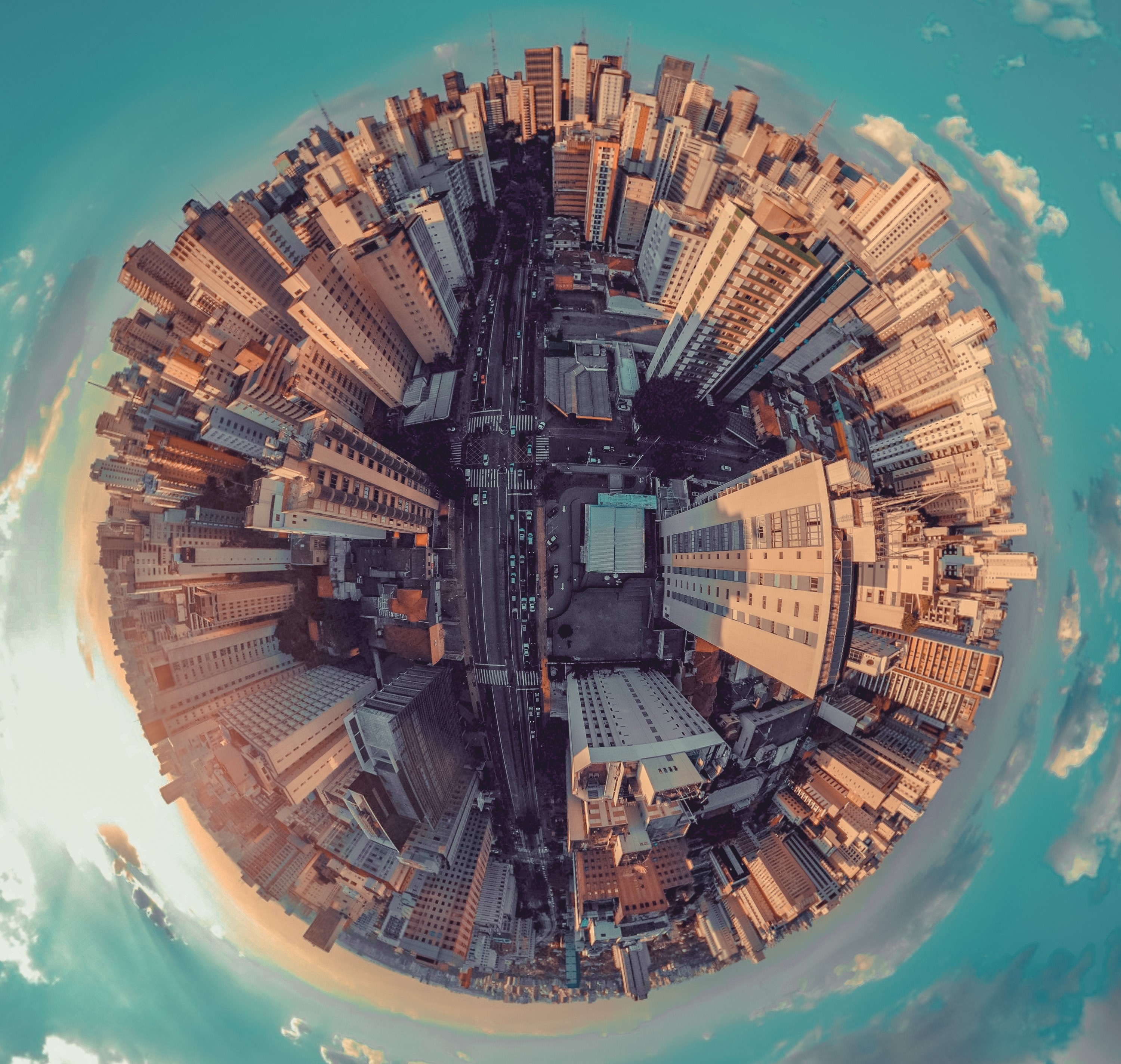
My anxieties seem all-encompassing and fill my field of view, although the reality is that I’m just a speck. That’s not to minimize the significance of what I’m feeling while I’m feeling it and how it affects me, but once in a while I need some perspective. When I pull back to take a wider view of things (say, like from the height of the International Space Station!), things look different.

It’s so much quieter up here. I think I’ll stay for a bit.

Away from the noisy hum of machines and the incessant jabbering of humans, Earth seems pretty peaceful and quiet, which I never get in a large city. There’s always some whirring or buzzing here, traffic on the street and planes overhead. Not even earplugs provide complete relief.

In the same way, there’s a lot of chatter in my head. It gets so overwhelming at times so I need to apply “mental earplugs”: a grounded seat, darkness, lengthened breaths.

Suddenly, I’m no longer dragged by the runaway freight train crashing about in the space between my ears. For a moment, on a small cushion, those things that seemed important float away in imaginary bubbles and, if only for a moment, everything is still.

Keeping Anxiety at Arm’s Length

These are the most difficult mental calisthenics I’ve ever done.

The most frightening part of anxiety for me is that when scary, intrusive thoughts hit, they are right in my face. It feels as though there is no buffer zone so they come at me fast. I am highly reactive — nausea, cold bowels, rapid breathing, sweating, buzzing head. No opportunity to pause and consider a response. I am thrown into “flight” mode.

I don’t get panic attacks the way others have described them: heart beating so hard it feels like it’ll burst out of your chest, or hyperventilation to the point of getting lightheaded, even passing out. But I still feel anxiety intensely and physically.

So my practice lately has involved allowing stressful thoughts into my line of sight, but softening them, so that they appear blurred and more distant.

I establish this by immediately focusing on my body sensations as soon as I’m aware of the physical sensations of anxiety. That means feeling down to where my skin touches my clothing and focusing on the sensation of pressure on my seat and feet (if sitting) or the entire length of my back (if lying down).

Once my attention in on my body, I revisit the stressful thought, but as if squinting with my “inner eyes”, sometimes looking at it from the side instead of head on. I acknowledge its presence, but fuzz out the details, and most importantly, I keep it at a distance from me so that I have some space. Then I bring in deep breaths, slowing them down and allowing them to calm me as much as possible.

This is not even remotely easy. On some level, I’m still reacting to the thought and do experience a fear of bringing it closer to me. But the soothing nature of the breath helps temper my reaction. I think of this as exposure therapy, a form of cognitive behavioral therapy, except where everything takes place inside my head.

Establishing the breath as a self-soothing “anchor” takes time and consistency in practice.

Lately, I’ve been having more success with this, particularly when I wake in the middle of the night, which is one of the most frightening times for me to experience runaway anxiety. This self-comfort would not be possible without established meditation and relaxation techniques — I’ve used the breath to soothe myself through cancer diagnosis and treatment, but the great majority of my meditation practice takes place when I am not stressed.

That fact, along with consistency in practice, has been critically important to me. In order for the breath to serve as an effective anchor, it must be recognized as one. And that means building up “anchor-like” peaceful associations over time so that the link is not easily broken.

None of this is a quick fix. But as with many things that are not quick fixes, the process of achieving success is part of the success itself. And that is a very reassuring thought.

Between the Past and Future: A Cancer Survivor’s Perspective

I attended a workshop on cancer and stress given by the social workers at my cancer center. Since I like to take advantage of every opportunity to explore what’s going on inside my noggin I was looking forward to the presentation, but I didn’t realize that I would be offered a curious vantage point at the same time.

Sitting in the front row as I always do, I was joined by a woman who was awaiting the results of her second breast tumor biopsy; her first had confirmed cancer but another tumor was discovered shortly thereafter.

She told me about her racing thoughts, lack of appetite, inability to sleep — all those symptoms of intense stress that I also experienced as I awaited diagnosis. How odd it was to revisit this through her, now that I had a comfortable seat on the other side of that experience.

I commiserated with her, briefly offering up my own experience, and assured her that some of the anxiety would mellow once she had a definitive diagnosis and accompanying treatment plan. That’s the only thing I assured her of, knowing the nature of cancer, but I hope it gave her comfort seeing how far I’d already made it on the cancer journey.

And then, ironically, I realized that the woman sitting directly behind me was someone I had sat next to during one of my chemo infusions in 2017. I re-introduced myself, and while she didn’t remember me, she said she’d been through so many chemo sessions that it was hard to differentiate one from the other.

When I met her in 2017, she had hair and a good dose of energy. We talked about our kids (hers were grown) among other things. She was being treated for lung cancer but we didn’t dwell on the particulars. That’s not generally what you talk about during chemo. You gravitate towards non-cancer topics.

Things don’t always turn out the way we predict they will.

But now, she wore a ball cap to cover her bare head and walked with a cane. She seemed frail and was accompanied by a caregiver — several years of cancer treatment, not to mention the cancer itself, will do that to you. I’m not sure what her prognosis was, but given what I knew about her and the fact that she was still doing chemo, it probably wasn’t favorable.

There I sat, trying to stay present, next to my past and in front of my potential future. I had the good fortune of surviving the one and a decent chance of escaping the other.

There is no crystal ball with which we can gauge the future, deciding whether or not we like it, and if not, opting out. So here’s to making the best of the time that we have.