Keeping Anxiety at Arm’s Length

These are the most difficult mental calisthenics I’ve ever done.

The most frightening part of anxiety for me is that when scary, intrusive thoughts hit, they are right in my face. It feels as though there is no buffer zone so they come at me fast. I am highly reactive — nausea, cold bowels, rapid breathing, sweating, buzzing head. No opportunity to pause and consider a response. I am thrown into “flight” mode.

I don’t get panic attacks the way others have described them: heart beating so hard it feels like it’ll burst out of your chest, or hyperventilation to the point of getting lightheaded, even passing out. But I still feel anxiety intensely and physically.

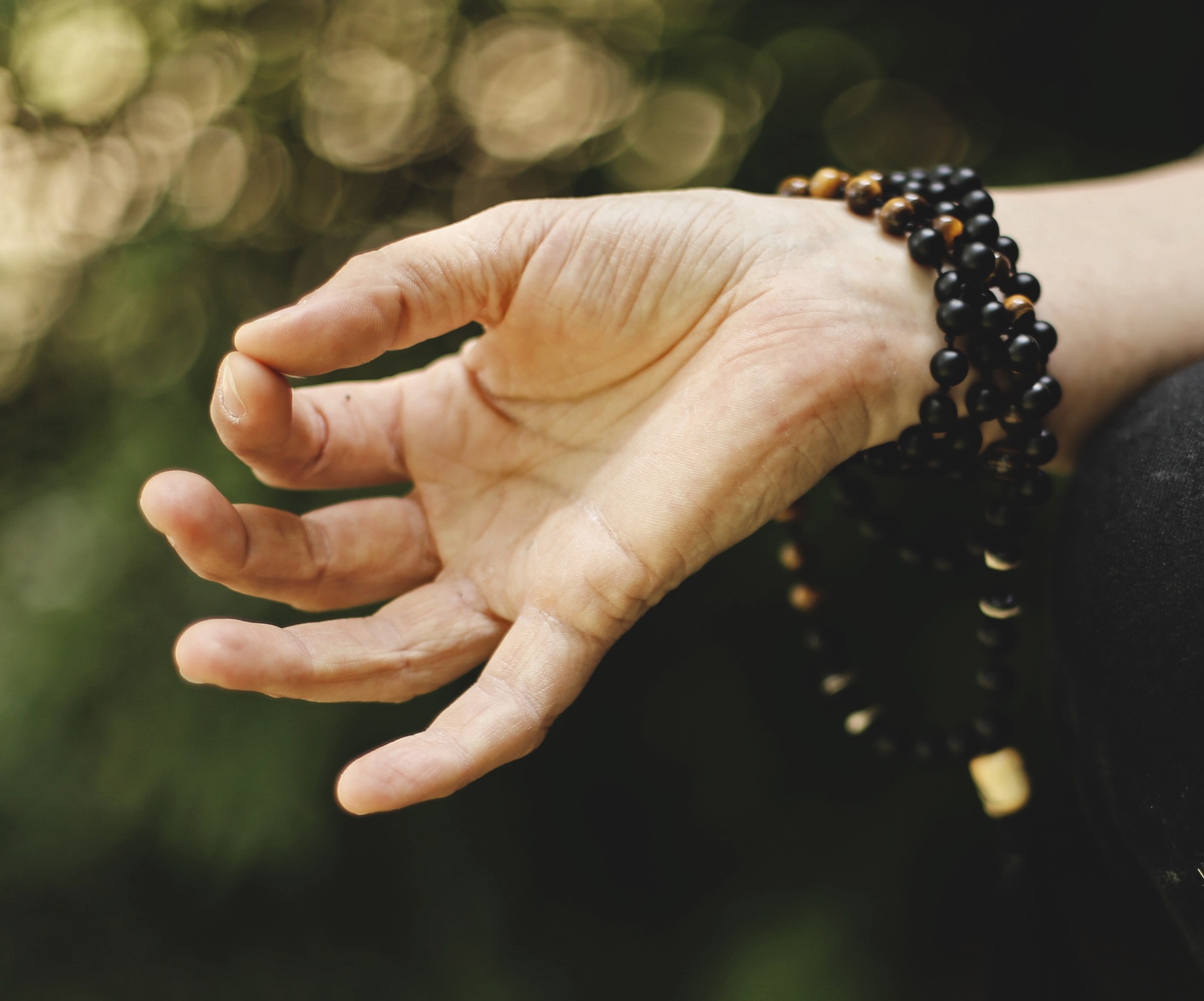
So my practice lately has involved allowing stressful thoughts into my line of sight, but softening them, so that they appear blurred and more distant.

I establish this by immediately focusing on my body sensations as soon as I’m aware of the physical sensations of anxiety. That means feeling down to where my skin touches my clothing and focusing on the sensation of pressure on my seat and feet (if sitting) or the entire length of my back (if lying down).

Once my attention in on my body, I revisit the stressful thought, but as if squinting with my “inner eyes”, sometimes looking at it from the side instead of head on. I acknowledge its presence, but fuzz out the details, and most importantly, I keep it at a distance from me so that I have some space. Then I bring in deep breaths, slowing them down and allowing them to calm me as much as possible.

This is not even remotely easy. On some level, I’m still reacting to the thought and do experience a fear of bringing it closer to me. But the soothing nature of the breath helps temper my reaction. I think of this as exposure therapy, a form of cognitive behavioral therapy, except where everything takes place inside my head.

Establishing the breath as a self-soothing “anchor” takes time and consistency in practice.

Lately, I’ve been having more success with this, particularly when I wake in the middle of the night, which is one of the most frightening times for me to experience runaway anxiety. This self-comfort would not be possible without established meditation and relaxation techniques — I’ve used the breath to soothe myself through cancer diagnosis and treatment, but the great majority of my meditation practice takes place when I am not stressed.

That fact, along with consistency in practice, has been critically important to me. In order for the breath to serve as an effective anchor, it must be recognized as one. And that means building up “anchor-like” peaceful associations over time so that the link is not easily broken.

None of this is a quick fix. But as with many things that are not quick fixes, the process of achieving success is part of the success itself. And that is a very reassuring thought.

Between the Past and Future: A Cancer Survivor’s Perspective

I attended a workshop on cancer and stress given by the social workers at my cancer center. Since I like to take advantage of every opportunity to explore what’s going on inside my noggin I was looking forward to the presentation, but I didn’t realize that I would be offered a curious vantage point at the same time.

Sitting in the front row as I always do, I was joined by a woman who was awaiting the results of her second breast tumor biopsy; her first had confirmed cancer but another tumor was discovered shortly thereafter.

She told me about her racing thoughts, lack of appetite, inability to sleep — all those symptoms of intense stress that I also experienced as I awaited diagnosis. How odd it was to revisit this through her, now that I had a comfortable seat on the other side of that experience.

I commiserated with her, briefly offering up my own experience, and assured her that some of the anxiety would mellow once she had a definitive diagnosis and accompanying treatment plan. That’s the only thing I assured her of, knowing the nature of cancer, but I hope it gave her comfort seeing how far I’d already made it on the cancer journey.

And then, ironically, I realized that the woman sitting directly behind me was someone I had sat next to during one of my chemo infusions in 2017. I re-introduced myself, and while she didn’t remember me, she said she’d been through so many chemo sessions that it was hard to differentiate one from the other.

When I met her in 2017, she had hair and a good dose of energy. We talked about our kids (hers were grown) among other things. She was being treated for lung cancer but we didn’t dwell on the particulars. That’s not generally what you talk about during chemo. You gravitate towards non-cancer topics.

Things don’t always turn out the way we predict they will.

But now, she wore a ball cap to cover her bare head and walked with a cane. She seemed frail and was accompanied by a caregiver — several years of cancer treatment, not to mention the cancer itself, will do that to you. I’m not sure what her prognosis was, but given what I knew about her and the fact that she was still doing chemo, it probably wasn’t favorable.

There I sat, trying to stay present, next to my past and in front of my potential future. I had the good fortune of surviving the one and a decent chance of escaping the other.

There is no crystal ball with which we can gauge the future, deciding whether or not we like it, and if not, opting out. So here’s to making the best of the time that we have.

Who Let That Monkey into the Courthouse?

My right heel has been hurting — for the past week I contemplated
claiming plantar fasciitis to get out of jury duty.

Okay, I knew that excuse wouldn’t fly, but I was stressed about getting pulled out of everyday life, with an already overfull plate, to do my civic duty. The more I thought about it, the more I worked myself up into a lather.

Mindfulness couldn’t cut through the noise in my sleep-deprived head. This agony of anticipation made several things crystal clear:

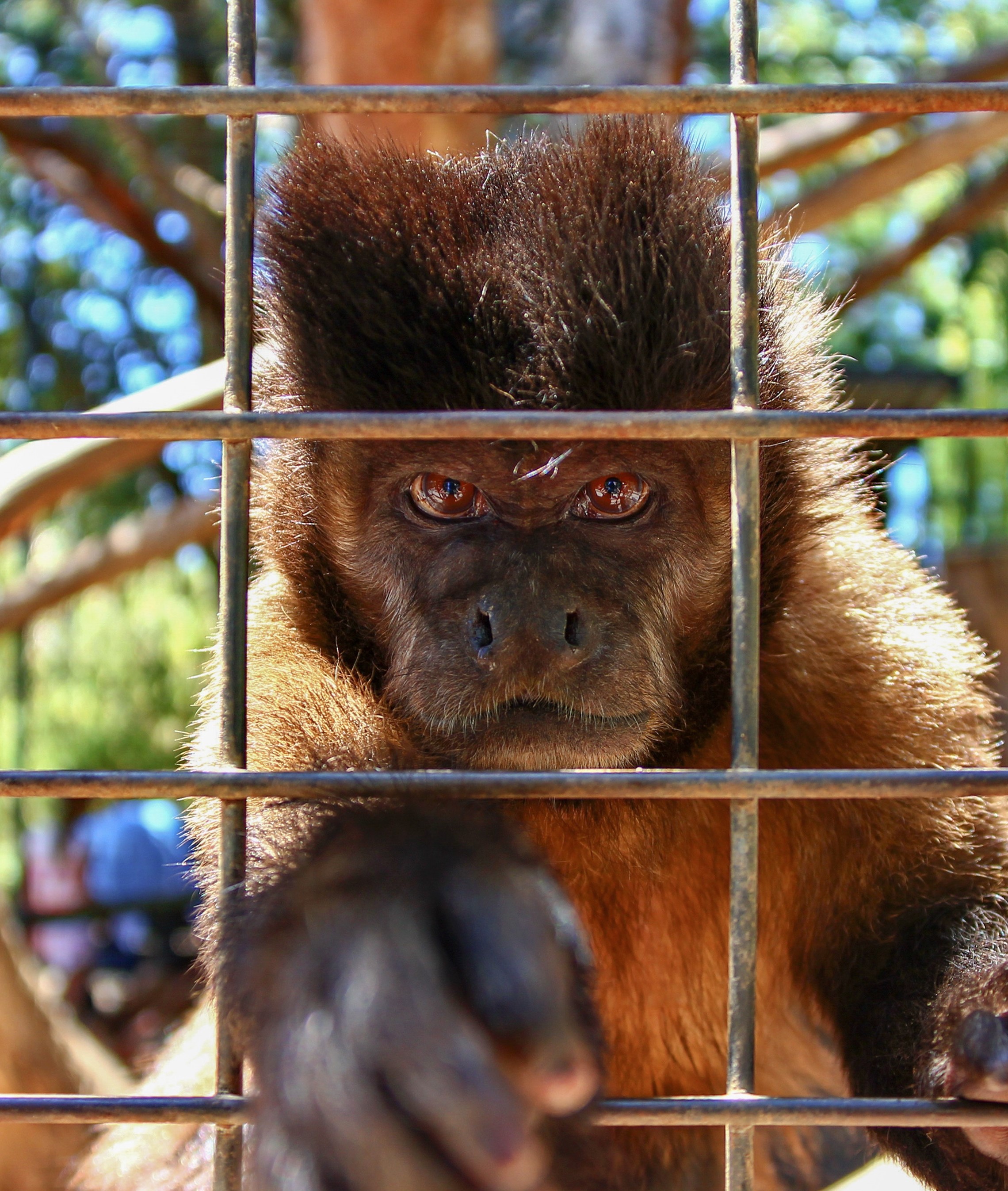
My nemesis. This monkey will pull your lungs out through your nose.
  1. I ruminate enough to rival a massive herd of cows. Hello, monkey mind! I’d been thrashing through all the unknowns, unfettered irritation and unfounded fears in my head. This was the monkey-on-my-back, screeching madly.
  2. My physiological reaction to even the anticipation of potential stress is out of control. Granted, this reaction was lubricated by a hefty pint of caffeinated coffee from the courthouse cafe. But when the voice over the loudspeaker called out names in alphabetical order, my heart pounded as the list approached where my name would be. I knew what was happening and that it was ridiculous, but simply couldn’t stop.
  3. Instead of patiently waiting to see what happens, I really really really want things to be a certain way. I punished myself by clinging too tightly to expectations. I mean, tight enough to turn my knuckles white (knucklehead that I am).

All of this opened the door to a boatload of suffering. Great. So much for being mindful. My morning as a prospective juror was fraught with anxiety.

Even after several years of daily meditation and mindfulness bells and “take 5” reminders, even after trying to be all zen about it, I was still a mess. Disappointing, by my judging eyes. But also, very human.

Things didn’t improve until I started pacing at the back of the jury lounge briskly enough to feel conspicuous. The motion soothed me, like rocking a baby. It was self care, which is the first casualty of my anxiety.

It was the only mindful thing that I could manage, but it kept the monkey busy as we zigged and zagged around other people to avoid a collision.

Once I racked up a good 3000 steps and a bunch of odd stares (don’t care, don’t care, don’t care), the pressure released a bit. Okay, that and the fact that I’d made it through the first two rounds of juror calls without hearing my name and it was already time for lunch. That combo was like the “pffft” from a fizzy bottle of kombucha. I was feeling better.

I returned from a long lunch break with my reasoning mind in charge, calculating probabilities. Three sections of seats, fifteen rows each, a minimum of three people per row…not counting the folks at random round tables and working on laptops along the walls…hey, that’s a LOT! Safety in numbers! The odds were in my favor, otherwise known as, “if your group is being chased by a hungry leopard, don’t worry about outrunning the cat, just outrun your friends.”

You mean, NONE of this stuff is real???

So the reasoning mind wrestled the crazy monkey mind into a half nelson. But alas, the reasoning mind was still a slave to expectation, with its own monkey-on-the-back. It was a tenuous peace, unstable and easily shattered by the voice over the loudspeaker, but it enabled me to approach the situation with less reactivity even if temporarily.

Guess how this messy day ended: a thousand deaths later (around 2pm, to be exact) the voice from the loudspeaker released us from service, giving me a year’s reprieve and kicking the monkey to the curb. And it was at that moment that I realized how tightly worry had gripped me, and it wasn’t even real. Everything had taken place in the space between my ears.

I thought about how my agony had been self-generated. And that’s a topic for another post.

Mindfulness Apps I Love: “Calm”

Following my cancer diagnosis, my General Practitioner wrote me a prescription for Xanax because anxiety resulted in a steep drop in my weight (not a great way to prepare for chemo!). I’m not a pill popper and didn’t like the idea of treating my runaway anxiety with drugs; nonetheless, I relented because my situation seemed out of control. When my radiation oncologist suggested that I try meditation for long term stress relief, I jumped at the idea, but wasn’t sure where to start.

The opening screen of the app reminds you to breathe. I’ve conditioned myself to take an extra deep breath here.

The Calm phone app was enthusiastically recommended by a co-worker, so I tried it. It remains the only phone app to which I’ve ever gotten a lifetime subscription. I used the free version for several weeks but got so hooked I decided to spring for it — since my first meditation with Calm almost exactly two years ago, I have not missed a single day. I also shamelessly plug it to anyone who’ll listen (*ahem*) like I’m doing here.

Features that are worth the price of admission~

Tamara Levitt’s voice: Perfection! Tamara is officially the Head of Content for the Calm app and her voice is so soothing it could cool sunburns. I’ve tried a lot of guided meditations hosted by a variety of speakers and have heard few voices that can compare to hers. Try one of her meditations and you’ll immediately know what I mean.

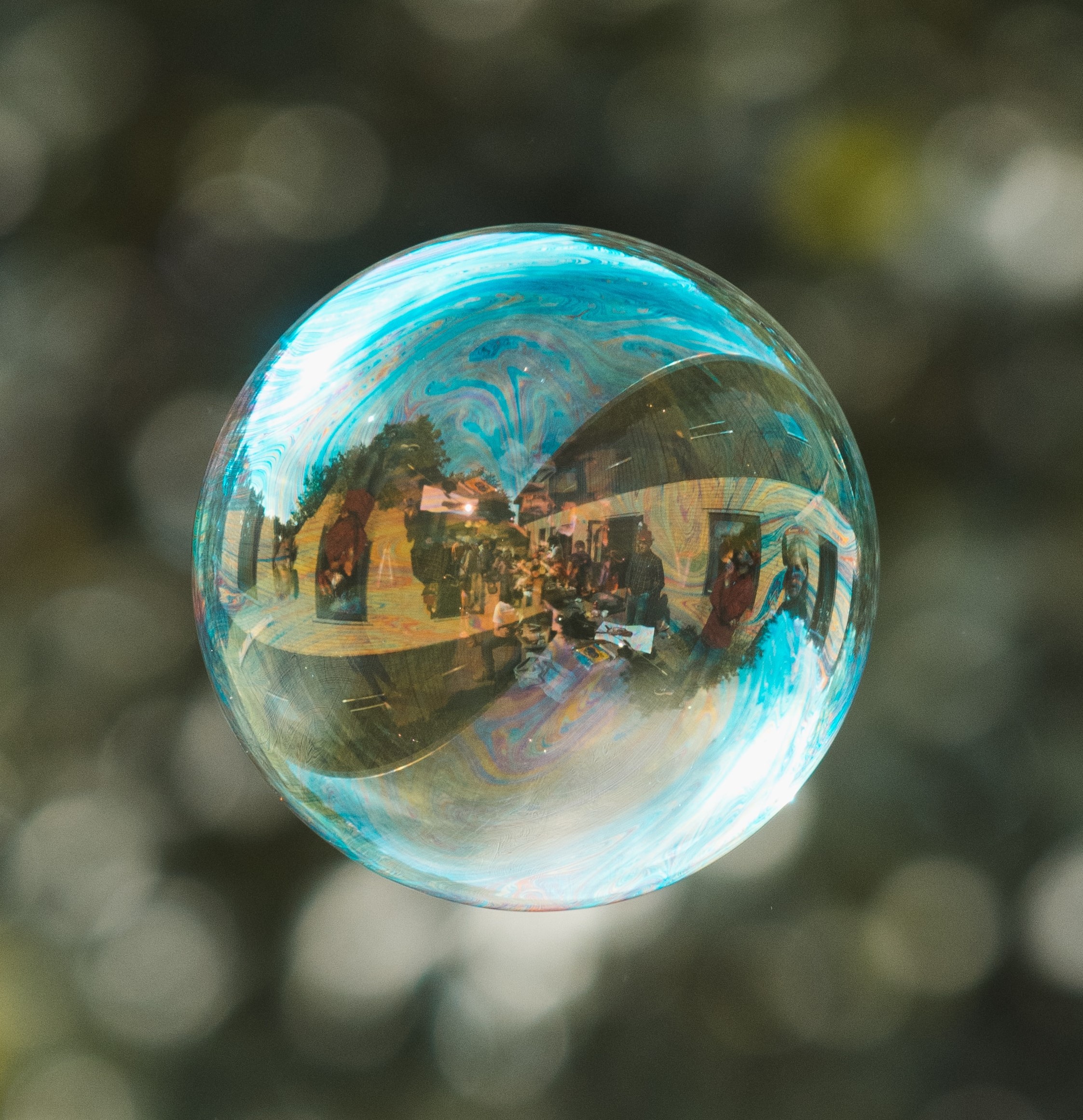
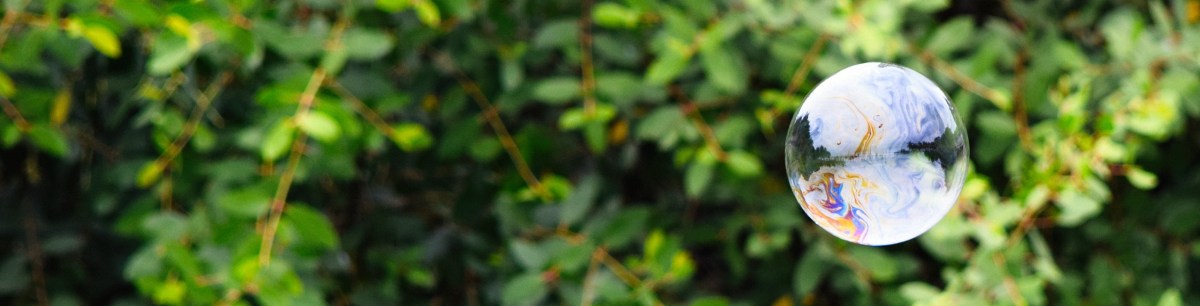
This little bubble provides a lot of relief!

Breathe bubble: This is a circle that expands and contracts, enabling you to follow along and breathe as it does so. It has “inhale” and “exhale” tones so you can close your eyes if you wish, and you can adjust the pace and pattern (with or without pauses) of breath, albeit minimally. I wish there were a way to personalize it more fully, but I make do with the available options. I used the bubble feature at times when I was too anxious to effectively listen to a guided meditation and I credit it with getting me through some very tough times.

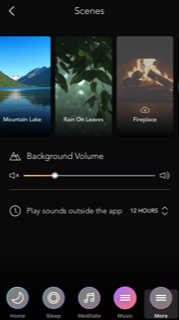
Just a few of the scenes available to play in the background. Love this!

Scenes: I adore this feature! You can select from (at last count) 35 dynamic background visuals with nature sounds or airy musical motifs to play alone or along with the meditations. All these scenes are available in the free version and suit a broad spectrum of moods. I open the web version of the app on my work computer and play this feature in the background all day long. It’s magical!

As an extra bonus, you can set up the background sounds to continue playing after the meditation is over, so that if you fall asleep during your practice, you’re not jarred awake by sudden silence.

And of course, Meditations: Take your pick! There are a vast variety of meditations to choose from, most guided but some with only bells, and there are a number of lengths (in minutes) available. Since I subscribe to the app, I enjoy the Daily Calm, which has a different topic everyday, always led by Tamara, so you can expect a consistent level of quality from them (kind of like a cup o’ java from a favorite coffee chain, but without the caffeine).

Beginners should try the free “7 Days of Calm” learn-to-meditate series that offers a week’s worth of daily 10-minute sessions to ease you into a mindfulness meditation practice.

Be aware: the free version does offer some meditations, but the majority are available only to subscribers, and you’ll soon find yourself craving for more. At that point, you’ll have to decide whether it’s in your budget to commit to the paid version.

The “more” screen showing additional features available. Loads of great stuff here!

There are other features that I use less often but are worth mentioning. A friend of mine swears by the Sleep Stories, which are high quality tales designed to help you nod off, and a number of them are voiced by celebrities like Bob Ross (yes, the ‘happy clouds’ painter — what could be better?), Matthew McConaughey, Stephen Fry and even Peter Jefferson, who used to do the UK shipping forecast which so many in that part of the world found so soothing. Most, although not all, require the paid version of the app.

There are also Masterclass courses offered that I’ve found useful enough to make my family listen to them during long car trips. Topics are broad-ranging and presented by experts in their fields and new courses are added from time to time. Some courses are free, but most require the subscription to progress further than the first class session.

The Music feature offers a generous variety of specially curated musical pieces that are perfect for creating space in your day, like a life vest in stormy seas. I haven’t even come close to making full use of this feature! Many of these are free and worth exploring.

Calm Bodies is a new feature which brings mindful movement into your repertoire of calming tools. I prefer to do yoga on my own, so I haven’t made use of this feature, which unfortunately is limited to subscribers.

There are other perks for subscribers (even a special relaxation room available at select airports!) not available to those using the free version. For me, investing in a well-curated library of meditation and mindfulness options was worth the cost.

Want to stick with the free version? There are still enough great elements available to merit downloading and playing around with the app.

If you are interested in incorporating mindfulness and meditation into your life, the Calm phone app is a great place to begin.

Transitioning from “Frantic” to “Shanti”

I’ve been juggling two parts of myself.

The original “me” is the Frantic part. This was the side that fed on anxiety and didn’t learn to rein in my runaway emotions. While Frantic didn’t interfere with academic success as I was growing up, it did stifle my future prospects as I let fear drive career decisions.

Frantic is the “me” that struggles with where I am and how I got here. It’s the competitive “me”, the perfectionist “me”, the self-critical “me”. It’s the one that’s never satisfied and always trying to improve. It’s frightened and frustrated. And it’s still angry about getting cancer.

Frantic hobbled me during the times I should have run free. It followed me home from work, woke me up in the night, poked at me on the weekends. And as long a shadow as it cast on me, I was oblivious to its effects.

But there is another side. The evolving “me” is the Shanti part. It holds the world in a single breath…and then easily lets it go. It stays present and grounded. There is a sense of calm about it, and ample space to hold emotions and observe them without being overtaken by them.

When I make a mistake, it asks gently, “Might it be okay that you did what you did based on the information you had?”

It reminds me to be compassionate, that everyone is worthy of love, including me. When things feel bleak, it holds me until the darkness passes.

When these two “me”s appear, Frantic has often been first, rushing in breathless and disheveled. Shanti arrives after and gently takes over. But on those occasions when Shanti is first, Frantic stays away and things feel a little more peaceful.

I’ve been “Frantic” and I’ve been “Shanti”. The latter is a more pleasant houseguest.

Lately, Shanti has been present more often. I’ve been able to scoot Frantic into a corner where it passes time aimlessly twisting itself in knots, allowing Shanti to spread out inside my head.

Frantic is still welcome, as long as it behaves, which isn’t often. It does keep me moving forward, never resting on laurels. But Shanti tempers its blustering when it threatens to get out of control.

~~~~~~~~~~~~~~~~~~~~~~~~~~~~~~~~~~~~~~~~~~~~~~~~~~~~~~

Nervous energy, even anxiety, has been a driving force for most of my life. It kept me productive and lean. But as much as it propelled me forward, ultimately it held me back. It wasn’t until my cancer diagnosis that I realized how detrimental it had been. I was spent. It was time to stop.

Peace arrived with my meditation practice. Cancer forced me to slow down and be mindful of the present, to sit with uncertainty. It is a beautiful change that has brought a new dimension into my life. I only wish I’d discovered it sooner, or that it were stronger, but that will come with time.

I have not completely shaken that Frantic side of me, but Shanti has brought emotional space and a sense of gentle control. Getting that balance to shift has taken work. It is, however, the most fruitful work imaginable.

Invisible Effects: Body Image, Part 2

Oddly enough, one of the things that scared me about cancer was that it threatened all the work I’d put into my body. Being a bit under six feet tall since my teenage years, I was called “big” a lot whether or not I was overweight. At 16, I went through a phase of disordered eating. That passed, but I retained a sensitivity to how I was perceived by others. Always, I was fearful of being judged, and that pushed me towards perfectionism.

Fast-forward to 2017 and my diagnosis. When I started researching breast cancer, one thing that struck me was that the information I found didn’t mesh with my conception of what cancer was, in terms of what the treatment did to the patient. I had always thought of cancer treatment as having a wasting effect on the sufferer. But then I read of the propensity that many breast cancer patients had for putting on excess weight, not only throughout chemo, but also due to taking estradiol-blocking medications like Tamoxifen.

Wait, what? Gaining weight? But I’d always thought that cancer patients lost weight! Sure enough, google “breast cancer weight gain” and you get a lot of entries from reputable sources that warn about this tendency to pack on weight. My Nurse Navigator echoed that point, noting that many women “put on 10-15 pounds.”

Many decisions in my life have been motivated by a fear of being judged.

This provoked a lot of frustration. I had established excellent diet and fitness habits for the very purpose of building strength and endurance and avoiding the weight gain that accompanies advancing age. I had kept emotion out of my food choices (kudos to my mother for being careful about not connecting food and emotion). During my time as a stay-at-home-mom, I’d obtained a highly-respected personal trainer certification because I wanted to be sure I knew what I was talking about. My standards were high, but even if I couldn’t attain my version of “perfection”, I put in 100% effort and that made me feel good.

And then, cancer. Despite doing everything I could think of to maintain peak health, I still had not been able to prevent the development of my tumor. That was extremely unsettling. But for me, having my whole body shape change as a result of this was almost worse.

Predictions of the future raced through my mind: I was going to lose my lean mass, lose my fitness and put on ten or more pounds. I would be judged for “letting myself go”. None of this would be under my control. Just like the cancer, it was all happening to me, and as far as I was concerned it was bound to ruin my life, whether or not it actually killed me.

However, as with so many other things related to my cancer, this didn’t go the way statistics predicted. And that’s why there’s a Part 3 to this body image series…

Invisible Effects: Bring On The Waterworks

While I’m exposing all my post-cancer psychological quirks, I might as well write about this one. Technically, this is not an “invisible effect”, but the emotions are, so I’m taking a little liberty with the title.

I cry. And I mean, like over almost nothing. I choke up over the smallest kind-of emotional thing and in situations where tears are not merited.

While tears are often considered another aspect of the anxiety/depression complex, in this case, my propensity to cry seems to exist in isolation from definite psychological states, which is why it deserves its own post. My emotional highs and lows cross the tear threshold more easily. And it really doesn’t have to be something terribly sad or unbelievably touching…it just has to be a standard deviation or two beyond neutral.

I am much more sensitive than I’ve ever been. Yes, it’s been a rough couple of years since my original diagnosis in early 2017, but right now I feel as if I’m teetering on the edge of exhaustion and have no resistance to an outward demonstration of emotion. The end-of-year holidays are notorious for stirring up deep emotions and feelings of overwhelm, so I’m sure there’s an element of that chipping away at me too. But this didn’t start with Christmas preparations.

Oh look! A puppy playing with toilet paper. *starts bawling*

Who knows what sort of residual effect the chemotherapy has on me? Combine that with any weird hormonal fallout from the Tamoxifen, which is blocking estradiol receptors in my body, and throw in some menopause, which I’m heading towards both pharmaceutically and naturally. I guess tears are to be expected?

I try my hardest to remain mindful of what I’m experiencing and not dissolve into a puddle in public places, but this may be an indication that I’m not doing a great job of “making space” for my emotions. Everything is RIGHT THERE in my face. My buffer is very thin and that doesn’t give me much room for observing my feelings impassionately.

I’ve read that many people feel more emotional even months (years?) after completing cancer treatment. But…really? I am bowled over by how much MORE there is to cancer than the cancer! It seems like the back end of this disease is just as complex as the front.

And I’ve got a load of empty kleenex boxes to prove it.

Addendum to Anxiety

I am just coming off a bout of particularly intense anxiety, so this is a good time to write an addendum to my last post. This episode of anxiety was striking in its intensity, hit me much harder than I expected and took a lot more out of me. The trigger was something that happened to someone I love, so I had no control over it but felt all the emotional pain.

It’s now been almost a week. Intellectually I’m over it but its physical effects linger and threaten to pull me back in. This is a change from the past because I used to be able to shake these feelings more easily. Now anxiety casts a long shadow that remains after the worst has passed. I get flashes of the stressful event and I re-experience that despair.

As it did with my cancer diagnosis, my weight plummeted over the past week. The reason: my reaction to anxiety is in the gut and intestines. A cold, tight, miserable feeling — emotional pain made physical. As days go by and things seem to fall back into place, meditation grounds me and staying mindful keeps me focused on the “now” and not ruminating on what has happened. But while I can calm myself, the physical effects of the nausea hold on. 

That nausea, then, serves as a reminder of the event and re-triggers the anxiety. In times of distress I fear eating because the nausea is even worse with food in my stomach. But not eating weakens me and increases the sense of agony. This transitions into a depression of sorts. Quite simply, at this point I can’t win.

What causes even more anxiety is the link between stress and inflammation, and thereby inflammation and cancer. While I’ve been assured that it’s not the case, there’s a part of me that still implicates stress in the proliferation of my cancer. 

As my weight drops I am reminded of that same fear I felt after my diagnosis, that the drop in weight would worsen my outcome because I still had to go through chemo and its effects. So all that fear is concentrated and deep in meaning. One event triggers multiple memories.

This seems like an impossible situation. Anxiety brings worries of cancer, which cause more anxiety. I’m afraid of being afraid. Doesn’t that sound ridiculous?

The cycle runs its course as time passes. The intensity fades. Slowly I regain my emotional footing, but I’m still attached to the expectations I had before the event that triggered this anxiety. Those expectations will eventually transition into a new reality, but until I am truly able to practice non-attachment, I am destined to repeat this.

Invisible Effects: Anxiety

This is tough to write.

One of the reasons this blog is currently anonymous is that there are topics I want to cover without the fear of being judged. As many strides as have been made in dealing with mental health issues, there still remains a stigma associated with things going on in your headspace.

If there’s one thing that cancer did, for better or for worse, is force me to face the fact that I have a problem with anxiety. I’ve often wondered how different my cancer experience would have been, had I been able to go through all of this without the uncontrollable fear. I expect that I would have been less angry, less nauseated, less desperate. I’m sure that other people experience anxiety with their diagnosis too; mine devoured me.

Cool, calm, collected…and so not me.

This deserves a description: if asked to describe myself as a dog breed, I would like to say that I’m a Great Dane or a Mastiff (hopefully less drooly), watching the world coolly, not getting too excited about anything. But that’s not who I am. I’m a Chihuahua — but not a nasty, bitey, snarly guy with a Napoleon complex. I’m one of those pathetic little dogs that just sits there and trembles with a paw raised. I get anxious, and how. But in the past, the bouts of anxiety always passed rather quickly, perhaps in a matter of hours or, at worst, a day or two. My mind would work through it, and that would ease the tension. That’s why I’ve always been able to handle it.

But going through cancer blew that to pieces. When I experience anxiety now, it hits me like a freight train. The effects are immediate: a cold punch to my gut followed by nausea and weakness. When I focus on being mindful and present, I can slow my breathing and heartrate but I cannot get rid of the nausea, so I can’t shed the overall feeling.

This sensation is horrible. Meditation works wonders, but I cannot yet make enough space for my anxiety to be able to step back and observe it. It’s in my face, and that’s terrifying, but not necessarily apparent to those around me. It’s a dirty little secret that has affected my quality of life.

That can be harder to deal with than cancer. And I can’t believe that I let myself write that. But apparently, I’m not the only one who feels that way. Dr. Stephen Ilardi, Associate Professor of Psychology at the University of Kansas with a private practice in Clinical Psychology, teaches a Calm Master Class called “Rethinking Depression” (Calm.com) in which he describes the experience of a former cancer patient who battled Hodgkin’s lymphoma. While undergoing particularly difficult cancer treatment, the patient was visibly ill and suffering but received an enormous amount of support from those around him, and that helped him through the disease.

Several years after he recovered from his cancer, the young man experienced a bout of serious clinical depression, but he didn’t “look sick” the way he had from the lymphoma. As a result few people around him understood the level of psychological pain he endured, and he received little support.

After his depression finally lifted, the patient declared that if he had to chose between once again going through the cancer or experiencing depression, he would take the cancer even though its treatment was pure physical torment. 

That speaks volumes regarding not only the agony of psychological distress but also how critically important it is to take it seriously. Mental health issues deserve more attention, and even though we’ve come a long way in understanding their impact, we need to do better. In the context of cancer, I feel it’s imperative to address the psychological repercussions of the disease, in addition to the life-threatening physical ones.

Which is why I’m writing. I can’t help but think how much worse this would be if I wasn’t actively engaged in coping techniques.

Chemotherapy Dreamin’

This is going to sound very strange. In fact, it seems bizarre to me as I’m writing it. But there are parts of chemotherapy that I miss.

So this deserves some clarification: chemo was absolutely miserable and by far the worst part of cancer treatment. When I entered the infusion room, I knew that I’d be out of commission for the next week. I’d feel nauseated with a burning throughout my GI tract and be laid out as if I’d been hit by a locomotive. I could.not.wait for chemo to end.

What changed my opinion? You may think this sounds crazy, but hear me out. The sad fact was, chemo was the only guaranteed way that I could get some rest.

I knew I wasn’t going to handle work issues, clean the apartment, pick up the kids or do anything else that I’m usually expected to do. It was a forced convalescence. One that I desperately needed.

When I was going through cancer treatment, I didn’t worry about the little things. And truly, when you have cancer, everything else seems inconsequential. When you’re wondering whether you’ll live to see your kids graduate from high school, nothing matters as much as survival.

It wasn’t until I finished all my treatments and my hair had grown back that the “little things” started to creep back and set up residence again. Memories of the misery of chemo lose their clarity, the fear of death passes. The overwhelm from a diagnosis is replaced by the more familiar overwhelm of daily stressors, now made worse by the additional complication of chemo brain. No, they’re not life-threatening, but they are all-absorbing.

maarten-van-den-heuvel-5193-unsplash_cropped
I’m gonna lie down and close my eyes for just a sec…

So is it surprising that I wish I could close my eyes and be left alone for a week? Even more so, isn’t it sad that it took cancer for me to be allowed to rest and let others take care of things for a while?

That, I believe, was a warning that my life needed to change and is now the major driving force in my meditation practice.

~~~~~~~~~~~~~~~~~~~~~~~~~~~~~~

Consider: Because my cancer treatment lasted over a year, it became the “familiar”. The “unknown” is what follows, and that includes the threat of recurrence. That’s when things really get scary. Learning to deal with that will literally take the rest of my life.