I’ve been writing a lot lately about using yoga to mitigate cancer therapy-related side effects.
In this post, I want to bring your attention to the white paper entitled, “Yoga Interventions for Cancer Patients and Survivors” [Important: this links to the download page on the yoga4cancer website, *not* directly to the pdf itself]. It’s an evidence-based review of research regarding the benefits of a yoga practice in coping with negative side effects that afflict cancer patients and survivors, followed by recommendations for teaching yoga to this population.
The white paper is written in non-technical language, distilling the research down into a form that doesn’t require a scientific background to understand. Additionally, editions are available in Spanish and Japanese, both available on the download page beneath the English version.
If you’d rather not download, you can read the English version below (or click the “download” button underneath the paper for a pdf):
I’ve been coming across a lot of interesting–and hopefully useful– videos. The one I’m posting here is presented by the nonprofit Fund for Sustainable Tomorrows and the American College of Sports Medicine, the latter being the organization through which I received my personal trainer certification almost 16 years ago.
This is a 20-minute film with a hopeful message!
The film, narrated by former Olympic figure skater and cancer survivor Scott Hamilton, showcases the stories of how survivors are using exercise to make themselves feel better and increase their chances for survival. It also shows how our knowledge about physical activity’s benefits during cancer treatment has increased, and the programs that have been created to help cancer patients become and stay active.
It’s amazing to see how within a decade or two the attitude about cancer and exercise has changed. Whereas individuals undergoing cancer treatment used to be told to rest as much as possible, now it’s understood that exercising through your treatment is one of the best ways to not only minimize associated side effects but also decrease the chances of cancer recurrence.
For me, exercising during my treatment was a way to feel normal when everything else felt out of control.
The current recommendation is aerobic activity for 150-300 minutes per week along with twice weekly resistance training sessions. And it’s best to do both types of exercise for a well-rounded program, if you can manage it.
But the most important thing to remember is that no matter what you do, doing something is better that doing nothing. Research has discovered the existence of myokines, hormones that are produced in the tissue of skeletal muscles. They are released during muscular contractions and seem to have anti-cancer properties, slowing cancer growth and spread. That is very exciting news!
Of course, exercise is not a cure, and there is no guarantee that if you are an avid exerciser you won’t get cancer or won’t have it recur. However, there’s a very good chance that physical activity will make you feel better and help you continue with life-saving treatments.
As E. Ronald Hale, MD, MPH, Medical Director of Radiation Oncology at Kettering Health states (from the video), “The best cancer treatment in the world is useless if you can’t get through the cancer treatment.” The side effects from cancer therapies can be debilitating, but getting out and moving will improve your quality of life and help you finish your treatment.
~~~~~~~~~~~~~~~~~~~~~~~~
It’s worth mentioning that the number of exercise professionals who have had additional training in working with cancer patients is growing, which means that cancer-informed trainers and yoga teachers are becoming easier to find. Now it’s the insurance companies that need to get on board.
In February 2022, I started a yoga teacher training program with a singular goal: to eventually teach yoga to cancer patients and survivors.
With its mix of physical postures (asanas), breathwork (pranayama) and meditation, yoga is ideal for someone going through the traumatic experience that cancer can be. Yoga can provide enough physical exertion to count as moderate exercise and the ability to help the practioner calm their mind, things that are so important for improving cancer treatment outcomes. However, classes must be designed carefully and taught thoughtfully.
Yoga4Cancer Q&A for Cancer Patients and Survivors (Yoga Alliance on YouTube)
Keep in mind, yoga teachers were yoga practitioners first. Many of them got really good at the practice, developed great flexibility and balance and gained respect for the tradition of yoga. But that doesn’t automatically make them appropriate yoga teachers for cancer patients, who need an instructor that understands the nuances of what cancer is and how treatment affects us.
A yoga teacher and breast cancer survivor by the name of Tari Prinster addressed that need by creating yoga4cancer (y4c), “an evidence-informed Oncology Yoga method tailored to address the specific physical and emotional needs left by the cancer and cancer treatments. The approach matches breath and movement to stimulate the immune system, improve flexibility & strength, reduce anxiety and boost overall well-being” (from the y4c website).
I’m planning to begin the y4c advanced 75-hour certification program (see informational video here) either later this year or early next. I’ve been so impressed by y4c’s emphasis on understanding the unique situation that cancer patients and survivors are in–it’s not just your garden variety beginner yoga class with “also for cancer patients” dressing. The program is well-thought out and comprehensive, and I’m so excited to embark on this next leg of moving closer to my teaching goal.
In the meantime, here is a selection of videos created by Tari and her instructors that are specifically geared for the mental and physical needs of cancer patients and survivors:
Yoga4Cancer Oncology Yoga for Cancer Related Fatigue (Yoga Alliance on YouTube)
Yoga4Cancer Yoga for Bone Loss (Yoga Alliance on YouTube)
Yoga4Cancer Yoga for Range of Motion (Yoga Alliance on YouTube)
Yoga4Cancer.com Yoga for Anxiety (Yoga Alliance on YouTube
yoga4cancer.com Yoga for Lymphedema (Yoga Alliance on YouTube)
yoga4cancer.com Yoga for Constipation (Yoga Alliance on YouTube)
Many cancer patients complain of feelings of helplessness after their diagnosis, and I can certainly relate to that. As a result, I’m particularly interested in research that explores whether patients can gain control over the success of their treatments.
The most recent study I’ve come across includes breast cancer patients undergoing treatment at Yale and Dana Farber Cancer Centers.
This study appeared in the Journal of Clinical Oncology(Sanft et al., 2023). Researchers examined the effect of diet and exercise on “relative dose intensity” (RDI), which is the relationship between the amount of chemotherapy delivered to the patient compared to the standard amount prescribed. Low RDI means that there was a reduction in the chemotherapy the patient received and is generally associated with a poorer outcome. Dose reductions result from the patient’s difficulty in tolerating the drug.
The researchers also looked for “pathologic complete response” (pCR), which is “the lack of all signs of cancer in tissue samples removed during surgery or biopsy after treatment with radiation or chemotherapy” (definition from cancer.gov). This was for women receiving neoadjuvant chemotherapy, which is chemotherapy administered prior to surgery.
Yep, once again we come back to diet and exercise, even during chemo. (Photo by Yulissa Tagle on Unsplash)
The subjects of this study were women recently diagnosed with stage I-III breast cancer, who either received the “usual care” or a diet and exercise intervention. Those in the intervention group received nutritional counseling with a focus on a plant-based diet. The physical activity included counseling and support for maintaining a home-based exercise program that included strength training (2x/week) and brisk walking (150 min/week of moderate intensity or 75 min/week of vigorous intensity).
What the research confirmed first was that the subjects in the intervention group were able to increase their exercise and diet quality, which showed that it was feasible to make lifestyle improvements even in the midst of chemotherapy.
However, in this study, the RDI for both groups (“usual care” and diet & exercise intervention) ended up being similar, but also quite high, which meant that women in both groups completed most of their treatment. The researchers noted that the study should be re-run with patients who were at greater risk of not being able to complete all their chemo to see how much of an effect improved diet and exercise would have, especially since exercise has been shown in other studies to have a positive effect on patient outcomes.
But a striking difference was seen for women receiving neoadjuvant (prior to surgery) chemotherapy in that the rates of pCR (disappearance of cancer in the tissues) were 53% for women in the intervention group versus 28% for women receiving usual care. That suggests that the intervention enabled the chemotherapy to be more effective.
There are many physical activities you can choose from–clifftop not required. (Photo by Sigmund on Unsplash)
The researchers stated the following in summarizing their study: “Given that pCR is an accepted predictor of recurrence and mortality, our findings could provide oncologists with a supportive care intervention that affects the ability to potentially improve survival outcomes” (Sanft et al., 2023, J Clin Oncol). And this is very good news indeed.
The take-home message here is not surprising, and it’s good advice for life in general: no matter what your current lifestyle, prioritizing a healthier diet (emphasis on whole foods, plant-based, less processing, etc.) and engaging in regular cardiovascular and strength training exercise will improve your quality of life. It is always worth the effort.
~~~~~~~~~~~~~~~~~~~~~~~~~~
REFERENCE: Sanft et al. (2023) Randomized Trial of Exercise and Nutrition on Chemotherapy Completion and Pathologic Complete Response in Women With Breast Cancer: The Lifestyle, Exercise, and Nutrition Early After Diagnosis Study. J Clin Oncol, 41: 5285–5295. https://doi.org/10.1200%2FJCO.23.00871. [This paper is Open Access and can also be found in PubMed Central: https://www.ncbi.nlm.nih.gov/pmc/articles/PMC10691793/]
After I was diagnosed with cancer, one of the things I dreaded the most was having to spend time in the hospital. I’d broken my leg when I was 12 and the four days (and nights) that I was hospitalized were horrible. I was depressed and wanted to go home.
As a cancer patient, I wanted nothing to do with all the beeping and buzzing medical equipment. While all my treatments ended up being out-patient–which I was sooo happy about–I spent enough time in the vicinity of medical devices to hear my share of annoying beeps. In fact, that was the last thing I remember before losing consciousness before my surgery…and the first thing I heard when I awoke.
Last time I checked, BEEP BEEP BEEP was *not* a soothing sound. (Photo by Richard Catabay on Unsplash)
Apparently, I’m not the only one who dislikes the incessant jarring noises of hospital equipment. I recently had the pleasure of attending a webinar with Yoko Sen of Sen Sound, an electronic music artist who has worked with hospitals and medical device manufacturers to address the issue of disruptive noises in an environment that’s supposed to be conducive to healing.
The whistles, beeps, buzzes and alarms are anything but.
Yoko spoke about the stress levels of both patients and medical staff as being affected negatively by this noise pollution. Patients cannot rest and recover. Caregivers are constantly on edge about what piece of equipment is alarming. This is not an insignificant problem as at least in one case, a death resulted from a healthcare worker shutting down a patient’s alarm by their bedside in an effort to make the surroundings more soothing for them, and mistakenly silenced their entire alarm system.
Staff speak of “alarm fatigue”, when everything’s constantly alarming that dire situations are missed among the cacophany that is the hospital situation. The sounds follow healthcare workers home, like echoes that never go away.
Yoko herself was hospitalized some years ago and described the onslaught of noises as terrifying. So as a musician, she set out to help hospitals reduce unnecessary noises and then make the necessary sounds more pleasant while still remaining informative.
The talk was excellent and interactive as she let the audience vote on the different “textures” of sounds. Interestingly, we discovered that past experiences can significantly color the way that we perceive a sound. Yoko’s entire talk was both entertaining and eye-opening. Unfortunately, I do not have a recording of this particular webinar that I can post, but below is one of the videos about her work.
Yoko Sen is bringing beautiful sounds into the healing environment.
I love that not only is a musician looking for ways to make the hospital experience more, well, hospitable for both the healthcare teams and patients, but also that hospitals and device manufacturers themselves identify the stress caused by all these noises as an issue to be addressed.
One of the complaints that’s often voiced about western medicine is that it focuses on disease rather than prevention, on sickness rather than healing. This is a great example of efforts being taken to change that.
So, now that we’re a week into 2024, what a great time to set an intention for the New Year.
For me, it’s going to be “stress less and move forward”. At least I’ve got the “moving forward” part planned out, as there will be a lot of changes in my life this year.
It’s the “stress less” part that trips me up. So I’m redoubling my efforts to make sure that mindfulness takes priority in my daily activities, and one of the best ways to do this is to see how I can make everyday tasks into moving meditations.
I present to you, the coffee break. Tea works as well, even better, it could be argued. Regardless of your preference, this is how the break works (and obviously, this should be adapted to your own situation):
Wow, I can literally smell this image and the aroma is glorious! (Photo by Mae Mu on Unsplash)
When you arrive in the kitchen (or wherever you keep your coffee, I’m not judging), bring your attention to your hands. Look at them. Notice the temperature of the air on them. Flex and straighten your fingers…and then observe your hands open the cupboard and remove the container in which you keep your coffee–mine is a metal cannister–along with a stack of paper coffee filters.
My cannister is has a pretty blue and green pattern on it and it feels cool to the touch, nice and smooth. As I open the top, the scent of coffee fills the air. I savor that for a moment.
Set the container down by the coffee maker and pick up a coffee filter. Mine is cone-shaped. Notice if the paper feels coarse against your fingertips and how it sounds as you handle it. Nestle it into place inside the coffee maker.
What does your running water look like, sound like, feel like? (Photo by Nathan Dumlao on Unsplash)
Then, back to the coffee…and fish out the scoop (mine invariably gets buried under the grounds), spooning out however-much coffee you want. Listen to the “crunch” of the grounds as you do so.
Transferring the coffee into the filter may elicit more aroma during the process. What does it sound like as it falls onto the filter? When done, replace the scoop and then the top of the coffee container.
Whatever water container you user–mine is a plastic water jug, perhaps yours is the coffee carafe itself– bring that to the sink, place under the faucet, and turn on the cold water.
Does the faucet handle feel cool to the touch? As the water runs, notice whether light shines through the stream or if it’s aerated and fizzy. Listen to the sounds of water flowing through the plumbing and into your water container. Perhaps there’s a cool splash.
Such a peaceful start to the day. Inhale… (Photo by Clay Banks on Unsplash)
When filled, turn off the water, noticing whether the handle makes a sound as you turn it. Bring the water container to the coffee maker and as you pour the liquid, listen to how it runs in, watching the waterline rise.
Close the coffee maker’s top, press the requisite buttons and savor the sights, sounds and smells of the coffee as it brews.
So as I mentioned above, depending on your own situation, your experience may vary, but the main idea remains the same: when you are in the process of making morning coffee or tea, be IN IT. Invite your senses to this event and, perhaps most importantly, keep unrelated thoughts out of it.
Start your day with a mindful ritual like this and it will help carry that attitude of staying present into the rest of your day. Give it a try and enjoy the calm!
If you needed yet another reason to turn to meditative exercise practices in the course of cancer treatment, here it is.
A recent, unpublished study that was presented at the 2023 ASCO (American Society of Clinical Oncology) Quality Care Symposium, entitled “Virtual Mind–Body Fitness Classes Show Unexpected Benefit in People with Cancer” (Mao et al., 2023), examined the effects of virtual mind-body fitness classes on visits to urgent care or unplanned hospitalizations for cancer patients who were in active treatment and were dealing with moderate or greater fatigue.
While mind-body practices are already recommended for cancer patients to help deal with the symptoms of treatment and its emotional fallout, the results of this study illuminated specific benefits. Those patients who had been assigned to the group given access to virtual live mind-body and fitness classes (called Intergrative Medicine at Home, or IM@Home) had fewer hospitalizations and shorter hospital stays, in addition to fewer visits to urgent care, compared to those subjects who were only given access to pre-recorded online meditation resources (Enhanced Usual Care, or EUC).
It’s not surprising that mindfulness benefits cancer patients, although it’s striking how those benefits manifest themselves.
This study was run at the renown Memorial Sloan Kettering Cancer Center (MSKCC) with 200 cancer patients randomized into the two groups (IM@Home and the stan, which makes the design more solid and increases confidence in the results. Nonetheless, as the lead author Dr. Jun Mao (Chief of Integrative Medicine at MSKCC) stated in the National Cancer Institute’s Cancer Currents blog, “I do want to caution that the current trial was designed as an early-phase trial, so we would like to do a larger study with longer follow-up to confirm our results before we are completely confident in the findings.”
A larger study is currently in the works. Dr. Mao would like to explore whether these classes help patients follow through on their treatment plans, and if so, whether these patients also live longer.
The IM@Home group’s classes included a variety of classes (again, quoted from Cancer Currents blog): “Some of the classes taught participants movement-based activities such as yoga, tai chi, and dance therapy; other classes taught meditation-based practices, such as music therapy and mindfulness.” It is already known that exercise during cancer treatment can reduce fatigue, but the researchers felt that part of the success of this study was due to the participants’ ability to choose the level of exertion based on how they were feeling at the time of the class.
Looking forward to further research on the ways that we can support cancer patients physically, emotionally and spiritually!
As Dr. Mao pointed out, more directed research on this must be done before drawing specific conclusion, but this was a very valuable pilot program, the results of which would not surprise those of us who have made use of various exercise modalities, particularly those with a mind-body angle, for calming ourselves during our cancer journeys.
The more this subject is studied, the greater the chance that cancer centers focusing on whole-patient treatment will be offering such classes to their patients. COVID taught us that there are ways to make classes accessible to people with limited mobility or conditions that may prevent physical travel to classes.
While I believe that attending mind-body oriented classes in person is ideal, this study illustrated that even virtual opportunities can have significant benefits for the patient.
It’s worth pointing out that of the 200 study participants, 91% were female and 77% were white. That is not a diverse spread and reflects the typical clientele at your average yoga studio (based mainly on my personal observations), with the exception being that the average age of these study participants was 60 years. I would be willing to bet that less-represented groups would benefit greatly from the stress relievers offered here and I hope that the researchers expand their subject pool to balance out the participants in their future study.
Regardless, these are intriguing results that underscore the important of mind-body focused classes, and exercise in general, in the well-being and improvement of cancer patients. This study joins a growing list of research that is changing the way that we look at managing cancer treatment side effects.
Research Study Abstract Mao, JJ et al., Effect of virtual mind-body fitness program on reduction in unplanned hospitalizations among patients undergoing active cancer treatments: A pragmatic randomized clinical trial, presented at 2023 ASCO Quality Care Symposium, October 28, 2023: https://meetings.asco.org/2023-asco-quality-care-symposium/15514?presentation=227485#227485 (note: click on “Abstract 473” on right side panel for abstract text)
One of the striking benefits of mindfulness is that it amplifies the richness of our world. On a personal level, it’s revealed to me how tightly my mind and body are connected.
I truly believe that when you calm the mind, you calm the body and vice versa. This is particularly important for me because 1) I am prone to anxiety and 2) some of the breast cancer drugs I was given were cardiotoxic. Therefore, I have an inherent interest in keeping calm and avoiding stress.
Avoiding stress. HA!
After several anxious weeks that included trying to secure a new apartment and the possibility of serving as a juror on a 4-week criminal trial (for better or worse, neither one has happened), I found myself drained and unbalanced.
So for my Advent commitment, I’m working on getting my sense of balance back. And while I realize that yoga is much more than just one aspect of the physical practice, in my case, I believe that being able to calm my body, find a point of focus (drishti) and work on my balance go hand in hand with balancing my mind .
The moves that I’m using are uncomplicated and unimpressive, but I’m getting back to basics and rebuilding my balance foundation from there, even though I’ve found that there are more advanced balance moves that I can do that don’t seem to give me as much trouble. Go figure.
My daily practice has incorporated the following poses (asanas) with the intention of holding each for a prolonged period of time:
Standing wind-release pose (Tadasana Pavanmuktasana): This is a classic beginner pose that I chose as a starting point. From Mountain Pose (Tadasana), shifting weight into supporting leg, float the other leg up forward, knee bent with options to draw it into your chest or, which I find more comfortable, have my hands in prayer or support the raised leg under the knee.
Tree pose (Vrksasana): This is the classic tree pose, weight on supporting leg, other leg bent with knee pointing to the side, but with the sole of foot on the inside of the supporting calf instead of the inner thigh, as we usually see it portrayed. I chose this because of the hip opening aspect and by keeping the foot on the lower leg, all my focus is on balance, without having flexibility become an issue, because that is also affected by stress–I found that certain muscles tighten up and throw things out of whack.
Warrior Three (Virabhadrasana III): This is an intermediate level pose in which body weight is in the supporting leg with the upper body bent forward parallel to the floor in line with the hips, and the non supporting leg stretched out back, also in line with the hips. I play around with arm positioning, alternating between arms stretched forward past my head, out to the side or behind me.
Has this been a humbling experience? Yes, it has.
My balance practice is not a competition, it is a gentle smoothing of my nervous system. I’m not trying out for Cirque du Soleil. Ever. (Photo by GMB Fitness on Unsplash)
Balance poses are not my “thing”. They used to be no big deal, but that was in my pre-cancer life. Physical balance took a huge hit during cancer treatment and I found myself strangely off-kilter afterwards. Aromatase inhibitors’ effects on my joints certainly didn’t help either. It was exhausting to fight this deterioration when I already felt spent. Years later, I had been avoiding balance asanas in my practice, which means that what was suboptimal has become worse.
Starting out this time around I was terrible. And I mean embarrassingly terrible. When I moved into the first asana, it felt as though I’d been plugged into a light socket with nervous energy coursing through me, making it so difficult to be still. I couldn’t hold any poses for very long and Warrior Three felt like a constant struggle.
But even in the space of a week’s practice, I am getting better. These asanas were chosen with ease of progress in mind and I’ve decided to keep going with this well into the New Year. I can definitely use the work.
While it’s frustrating feeling like I’ve regressed so much, I guess that means my progress will seem even better, right?
The Advent season is a perfect time for introspection and mindfulness. For me, 2023 has had challenges and as a result has served as a proving ground for different calming techniques.
One of the things I’ve grappled with, usually in the wee hours of morning, is the persistence of uncomfortable memories from the past.
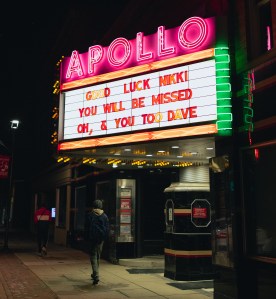
It reminds me of a one-panel comic that I saw some time ago: a person lying in bed, eyes wide, a theater marquis over their head that reads in bright lights: PLAYING AT 3AM! EVERYTHING YOU SAID AT THE PARTY LAST NIGHT! [A cartoon in the same general vein by Hilary Fitzgerald Campbell appeared in The New Yorker on Jan 21, 2019 (#11 of 15), but I’m not posting it here because they might be touchy about copyright infringement.]
In the middle of the night, being hit with an glaring memory of something that sends your stress levels rocketing…goodbye sleep. (Photo by Gregory Brainard on Unsplash)
How many of us have had a similar experience? I occasionally find myself tortured by things I said or did even decades ago. DECADES! Or they could have happened yesterday. A simple image can trigger shame, embarrassment or regret that feels real and vivid and, yes, while this generally happens at night for me, it’s certainly not limited to that time.
How odd that we give the past so much power over us when it’s not even real anymore. While we’re shaped by our experiences, allowing ourselves to be haunted by them serves no purpose, especially not once we’ve learned whatever we needed to from them.
Soooo, one early morning in the darkness I found a way to add some perspective to the memories that bully me: I started thinking of them as echoes, wispy harmless reminders of what happened.
And there in bed at 3am, I am safe. My body is not in the imagined situation, it’s under the covers, lying on my mattress. Here is where mindfulness is so helpful because it brings me back to the present. The past is echoing, trying to get my attention. But the more aware I am of where I am in space currently, the easier it is to step back and simply observe the echoes, watching them fade away.
I’m making this sound simple, I know–as with all the things that bounce around inside our heads, taming a stressful memory is not necessarily easy. But identifying it as just an echo has been remarkably helpful for me. It has provided a different viewing angle that enabled my perspective to shift.
Echo…echo…echo…
Thinking of thoughts as echoes can dispell them, but simultaneously focusing on a sense helps ground us in reality. (Photo by Mariana Rascão on Unsplash)
I’m not there now, those other people are not there now, that event is not happening now–just because I remember it so vividly doesn’t mean that anyone else does. And most of the time, I don’t remember it either. Only during the limited, wee-morning-hour viewing window during which it appears because I’m susceptible to the tickle of anxiety.
The senses can bring me back to reality. Opening the eyes, feeling where my body contacts the surface that it’s on, hearing the hum of a fan or sound machine. Anything occuring in the present anchors me to what’s going on now.
And in the present, that echo cannot hurt me because it’s just an airy thought.
Of course, this all comes back to the basic idea that the more we practice presence, the easier it will be to minimize the impact of thoughts that unsettle us. It may take some exploration to find what works best for you, but in the end, being patient and consistent will be the best way to calm your mind and bring you back to what is real at the moment.
Since we’re in the season of gratitude and mindfulness, it’s a great time to post about Dr. Jon Kabat-Zinn, Professor Emeritus of Medicine of the UMass Medical School. Among other things, he is the founder of the Mindfulness-Based Stress Reduction (MBSR) program, which I had the privilege of taking in early 2018.
For this week’s post, I’m including a short, 5-minute guided video meditation by Dr. Kabat-Zinn that was presented as part of his class on MasterClass.com (I was fortunate enough to take this class also). While the subscription to MasterClass is somewhat pricey, the meditation below is free.
The video requires little time investment and will pay back rewards in spades. I hope you enjoy!
This is a beautiful mindfulness meditation for right now.
There are a number of other meditations and talks by him available on YouTube. If you currently don’t have a mindfulness meditation practice, I encourage you to give yourself a gift by looking him up. His videos are the perfect place to start.


![yoga4cancer: Bringing the Benefits of Yoga to Cancer Patients and Survivors [VIDEOS]](https://franticshanti.com/wp-content/uploads/2024/02/zoltan-tasi-vhnvtlk8rcc-unsplash_cropped.jpg?w=1200)








![5-Minute Meditation: Lovingkindness with Jon Kabat-Zinn [VIDEO]](https://franticshanti.com/wp-content/uploads/2023/11/mei-ling-mirow-4tdl2qojwcc-unsplash_cropped.jpg?w=1200)
 Frantic Shanti