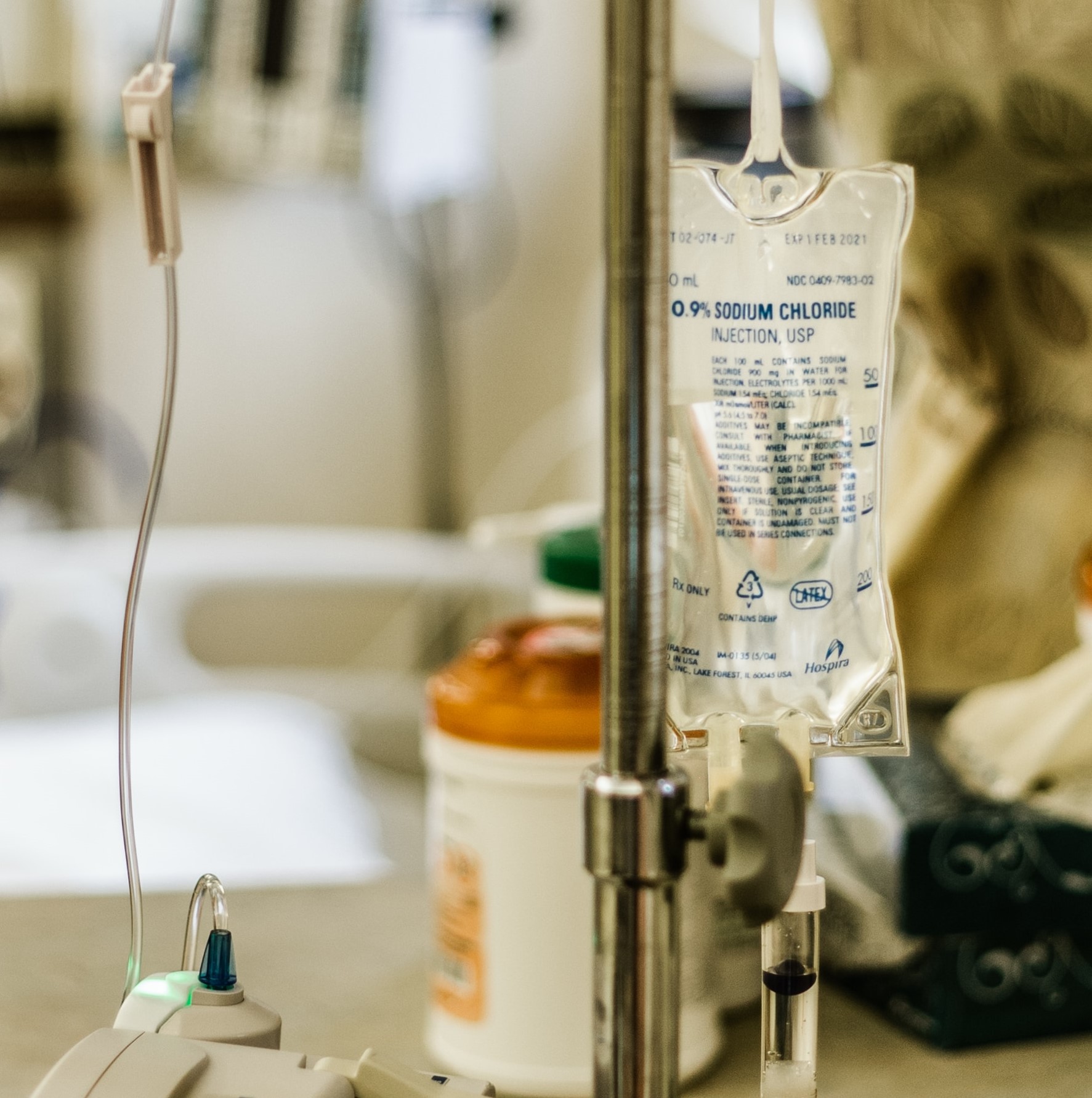
I Saw My Oncologist…and Left Ridiculously Happy

(Title image: Photo by Nick Fewings on Unsplash)

Yep, this is another installment of “I had another oncologist appointment today”. This time I’m marking seven years since completing my chemo treatment, which I can assure you at the time was a very happy event…

…marred only by that little nail infection a few weeks later. But don’t go there unless you have a strong stomach.

Regardless, I had a great meeting with my oncologist. The concern now is about whether I’m experiencing anything cancer-related, either long-term side effects or—perish the thought—a recurrence. Today the answer was neither.

We talked about the recent death of my father…and that’s pretty much the way the appointment went–catching up on the last six months. Naturally, I forgot to tell him about a bunch of the other concerns I had, little weird things in my body. But really, they’re not unusual given what I’ve gone through.

If there’s one thing I’ve learned, it’s that I need to slow down when interpreting body sensations as health problems. Usually they’re not. (Even though once they were cancer.)
(Photo by LOGAN WEAVER | @LGNWVR on Unsplash)

We did, however, discuss how it takes a little while to get used to all those sensations in your body. After cancer, I was on high alert. My medical team was asking detailed questions about what I was feeling, and as a result, I was laser-focused on every twitch and twinge…and maybe some that I just imagined. At one point, I was sent for a brain MRI because of what I feared were serious cognitive issues. But in reality it was anxiety, not a tumor.

Seven years out, however, you kinda get expect all those funny sensations and don’t interpret them as being dangerous anymore. Even the heart palpitations that I would get from time to time…yeah, I still get those, maybe once a week, maybe a couple of times a month. But they only last a handful of seconds and I no longer think that my heart is failing (especially not when I can turn around and do a HIIT workout). I haven’t been back to the cardiologist and my oncologist agrees that it’s not necessary.

He asked if I wanted to come back in six months. Sure, I like being back in the Cancer Center as *NOT* a cancer patient. It’s nice being there and remembering doing jigsaw puzzles in the radiation oncology waiting room, or even feeling well-taken-care of after my treatments were done. There ARE positive memories in a place that you’d think would only be negative.

That can change very quickly, of course. But for the time being, I’m feeling happy.

Patient vs. Survivor: The Impact of a Label

(Photo by Joshua Hoehne on Unsplash)

The first devastating realization I had following my breast cancer diagnosis was that I was now a cancer patient. In my mind I immediately went from “happy-go-lucky, fitter-than-average” to “sick beyond belief”.

Except that nothing physical had changed. But my mindset had. And when I found out that my triple-positive tumor was going to require chemo, I knew that everyone else was going to be aware of my hairless, frail status.

Cancer. Patient. I imagined myself pathetic and scrawny, walking around hunched over in a hospital gown with light shining off my bald scalp. Sounds dramatic, huh?

How do your labels affect you?
(Photo by engin akyurt on Unsplash)

Recently, however, I learned that there’s been a change in the language surrounding those individuals who have been diagnosed, are undergoing treatment for or have finished cancer treatment. The word “patient” as it relates to someone’s status has been supplanted by “survivor” much earlier in their cancer experience.

This is curious to me because I went through a mini identity crisis after I was done with chemo and radiation–I thought that only then could I start calling myself a (hopeful) cancer survivor. But I was a bit anxious about doing so, because I didn’t know whether I truly deserved that title. I thought that I needed to have some special designation before I qualified as a survivor.

These days, the survivor label is given when you receive a diagnosis. The idea is that while initially we didn’t know your status, now that we’ve confirmed your tumor, you are going through the experience of surviving the disease. As stated on the Cancer.net site, “When people talk about ‘survivorship,’ they are usually referring to navigating their life experiences and challenges resulting from their cancer diagnosis.” Read more about how ‘survivor’ is used here.

This sounds a lot better to me than using the term “patient”. By referring to myself as a patient when I didn’t have any reason to–meaning no physical symptoms–I was imagining myself sicker than I really was, which increased my anxiety levels. That made my entire experience worse and it didn’t have to. I did that to myself (‘cept that I was only using the common labels of the time).

How are you choosing to define yourself?
(Photo by Brett Jordan on Unsplash)

Instead of putting my energies into dealing with the side effects of treatment, I went down a dark hole.

Language matters! While there’s no doubt that cancer brings on stress and anxiety, terminology can make a difference in your cancer experience and that can either help or hinder you in the process.

So I urge you to consider the words you use to refer to yourself and pay extra attention to how that feels to you. You could be making yourself miserable without even realizing that you have some control over this.

February: A Great Month for a Diagnosis Reenactment

(Title image: Photo by Aaron Burden on Unsplash)

It’s February and that means it’s the start of “diagnosis season” for me. At this point in cancer survivorship, I don’t get as affected by everything that happened “on this date X years ago“. However, I have an oncologist appointment and my yearly 3D mammogram around this time, so I can’t forget what this month means.

You would think that since 2024 marks seven (!) years since my initial diagnosis, I’d feel pretty good about having made it this far past my treatment…and you would be right.

Seven years down and still going strong!
(Photo by Frankie Lopez on Unsplash)

I’m now living the feeling that I so desperately wished for seven years ago when everything felt devastating and out of control. My outcome, even with the many pesky moguls that I’ve had to clear, is something I’m so thankful for.

But of course, even as mellow and relatively unconcerned as I am now, there are little reminders of the rough and tumble past that unsettle me.

Like that point in my mammogram when the tech finishes up and leaves the room to consult with the radiologist, and all of a sudden I don’t feel great anymore. It’s maybe 5-10 minutes or so of sitting in a quiet room all by myself, wrapped up in that bathrobe-y gown made out of fabric that seems like it should be less scratchy, trying to focus really hard on the tropical ocean video that they have playing on the tv screen on the wall.

No matter how warm the room is, there is a cold spot in the pit of my stomach. The hospital does its best making the surroundings seem inviting. Really they try. But it’s kind of hard to mellow out the echo of an impending sense of doom.

Same goes for every time my oncologist says something like, “Hmmm, should we do another chest MRI?” No, no we should not. That’s about 45 minutes of being stretched out like superman on a surface that’s clearly meant for a woman much shorter than me, while getting my ears blasted.

In case you’ve never taken a ride in the tube, this is what it’s like. Don’t forget your earplugs. Bonus for chest MRIs: you’re lying on your belly with your arms stretched past your head for almost an hour, giving you plenty of time to reconsider your life choices.

My husband says the MRI sounds like a broken dot matrix printer. I think if your printer is making sounds like that, it’s time to evacuate the building.

Ah the memories. But again, I am talking about this from the vantage point of seven years away. It is nicer being up here above the fray. It also gives me a great view of the potential rollercoaster disaster that this season could become, if my scans go south.

But seven years into this, I’m betting it probably won’t. So far, so good.

Cancer Survivorship Ain’t For Sissies

With all the focus on breast cancer during October, pushing us to be warriors and fight our way through this, the concept of survivorship can get lost in the fray.

We talk about cancer treatment and get very granular about the procedures, whether surgery, chemotherapy or radiation therapy. And those do deserve a lot of discussion as they can be difficult to endure. Some, like chemo, have an almost legendary reputation and it’s important to be able to separate fact from fiction.

After all the noise and attention associated with cancer treatment, survivorship can leave some of us feeling alone.
Photo by Atharva Tulsi on Unsplash

Consider: how many of us, upon hearing that we have breast cancer, preoccupy ourselves with worrying about what life will be like five years down the road? More likely, we’re thinking about what treatment will be like and are hoping that we’ll be around when it’s done!

But with so many women surviving breast cancer, it’s important to talk about what happens after the dust settles and you realize you’re on the other side of the treatment that you had so feared. Is it really the “other” side?

So much of my blog has been devoted to the life after cancer. After I documented my treatment journey, I turned around to get hit in the face with all the stuff that I wasn’t expecting.

One of those was endocrine therapy. Women with hormone receptor positive cancers aren’t done when the “tough stuff” is over. Tamoxifen and aromatase inhibitors are a whole new round of treatment that can affect your hair, your libido, your joints and more. Some women get hot flashes and night sweats. Some experience weight gain. And these are medications intended to be taken for a number of years.

There may be body image issues. Breast cancer surgery can leave women looking very different from their pre-cancer days. Like it or not, breasts are associated with womanhood. Whether lumpectomy or mastectomy, with or without reconstruction, there is a new normal that needs to be dealt with.

By seeking support and relating your story, you help not only others who are dealing with something similar in addition to yourself.
Photo by Ivana Cajina on Unsplash

And then cognitive issues like distractibility, loss of memory and difficulty processing concepts may come up. To make things more complicated, these may appear after treatment is in our rear view mirror and our loved ones may simply not appreciate what we’re dealing with. The bodies and minds of survivors may change in a way that they are not prepared for. Because, how do you anticipate something like this?

Survivorship does not mean that you never again have to think about cancer or its repercussions. There will be adjustments to your expectations as to how your life will be from now on. It’s important that those around you understand that just because you are done with the major cancer treatments, things might not feel familiar or normal.

So we need to be having this conversation with those around us and making opportunities for affected women to seek help and support. There is no shame in being a survivor who is also struggling. While it’s true that we are “lucky to be alive”, it does not mean that we have no right to seek a higher quality of life.

Don’t be afraid to talk about it. ❤

From a Safe Distance

It’s hard to believe that six years ago I was a week and a half away from my final chemo infusion, in the thick of being a cancer patient with no idea of what tomorrow would bring.

Cancer survivorship used to be a whole lotta “looking over your shoulder” for the next thing to hit.

I also thought that I’d live the rest of my life, however much or little of it there was left, in fear, always looking over my shoulder to see if cancer was close behind. In fact, after my active treatment was over, I expected that my anxiety would increase because I imagined that whatever had triggered my tumor growth would again be unleashed and ready to attack my again.

And when I had to stop aromatase inhibitors early due to side effects, I envisioned even more terror because I wouldn’t have the medication’s protection anymore.

None of this suggested that I would have a very pleasant future. Either I would get cancer again…or I’d be consumed by worry over getting cancer again.

Reality turned out to be quite different.

The more (1) I practiced being present, coupled with the (2) increasing distance between my last dose and today, the easier it has become. Now, that might sound like a no-brainer, but it was news to me.

And I don’t know exactly when I turned the corner on my fear but it was probably after the worst letrozole side effects ceased and I was able to reflect on and accept that cancer happened and now I was moving past it.

It took years to get to that point, but it would have probably come sooner if I hadn’t convinced myself that I’d never get there.

And how are things different now? I don’t think of cancer every minute of every day. And when I do think about it, it doesn’t seem as daunting.

So far, so good.

I realized this after meeting a cancer survivor who works at a store that I frequent. She revealed that she’d just received her three-year “all-clear”. The relief on her face was unmistakable.

And it struck me that I used to have that incredible sense of gratitude too. And I still kind of do for a short bit, but it fades quickly as I turn my focus to the rest of my daily responsibilities.

Yes, I am still seeing my oncologist twice a year, having annual 3D mammograms AND the occasional MRI, so it’s less likely that something’s going to sneak up on me. But the concern is no longer as all-encompassing because it doesn’t feel as likely.

Of course, I could be kidding myself. Even after six-plus years I know that every set of scan results is a door to either “no evidence of disease (NED)” or “we’ll get you in to see the oncologist ASAP”. So far I keep going through the NED door…and it keeps opening onto a bright day.

In the midst of taking things for granted, it’s nice to stop and think about that.

Another Oncology Appointment…and What’s Up With That Smell?

My oncologist appointment last week marked five years since completing my final chemo infusion (and for those of you keeping track, since I had that nasty chemo nail infection).

Lately, my oncological appointments run like this: my onc asks how things are going, I air all my grievances and we spend the rest of the visit agreeing that there’s no way to determine whether what I’m experiencing is chemo-related, menopause-related, or something that I was dealing with before but hadn’t paid attention to back before cancer.

Because there’s nothing like cancer to make you acutely aware of every twinge and creak in your body.

But that’s about it. We are running out of things to talk about. In this context that’s a good thing.

I used to lament “what could have been” had I not gotten cancer, not experienced chemo, not been pushed into menopause chemically and artificially had my estrogen levels squashed. But now, I know better. What happened, happened. And “what could have been” is pointless to ponder because it simply isn’t reality.

It took me a while to get to that place and I’m finally okay with it .

But there was something else different about this oncology visit…

I walked into the cancer center for my appointment and was hit with “the smell”. There is a distinct scent in the building, possibly the cleaning solutions used to disinfect the place or maybe a fragrance that is purposefully pumped in. I had mentioned it to my clinical counselor several years ago and she admitted that a number of people have said the same thing. The smell is familiar, given that after multiple appointments and infusions and radiation sessions, I’ve experienced it a lot and have made many associations with it.

But for some reason, this time it hit me hard and a wave of sensations washed over me. Not sure why my reaction was so strong, but I’d like to think that between my last onc appointment and this one, I’ve made the most progress in distancing myself from the frustrations of getting cancer and have actually moved on with my life.

However, that rush of emotions served as a reminder of everything that I’ve been through over these past five years. I thought that chemo was going to be the hard part. Turns out, it was the most predictable part: six trying infusions, but they came with an end date. The rest of treatment brought uncertainty and unexpected difficulties. I thought I was done after radiation…but the pills continued.

Looking back at this, while I’m technically not “out of the woods” and may never be, these last six months have felt different. Yes, I still have another onc appointment half a year from now, but I’m finally turning my face forward to the future instead of constantly looking back at the past, worried that those frights will catch me again.

Putting a Hold on Looking for Trouble

Last year at this time, I feared that I had heart issues based on what I had read about some of the cancer medications that I had been on, so I went to the cardiologist and they administered some tests. When I came back to the cardiologist to discuss results with the doctor, I was told that they had found “something” in the echocardiogram and Holter monitor readings.

But I still had questions, so I had a consultation with the cardiac nurse, who went through everything with me.

In the back of my mind, there’s a fear that my body is harboring serious health problems.

And it turns out that while they did find “something”, it wasn’t really anything out of the ordinary, beyond normal wear and tear. I was assured that my heart was very strong and healthy and I could continue to push through high-intensity workouts.

Still, it was recommended that I get checked out again this year.

But you know what? I’m not going right now. It felt like anxiety about the scans and then waiting for the results did worse things to my heart than whatever I might have been already experiencing.

I talked this over with my oncologist, who agreed.

The fact is, there are things that you need to get checked out, especially as a cancer survivor. But for other things, especially without a specific indication that there’s something wrong, you are simply looking for trouble. And if you’re looking for it, you’re going to find it.

Our bodies are not perfect. And the older we get, the more aches, pains and abnormalities we have. That doesn’t necessarily mean that there’s anything “wrong” that immediately needs to be fixed.

For now, I’m halting my search for trouble and taking the time to breathe deeply and just live.

Anxiety was the driver for me to get tests run. I was overreading about everything that could possibly go wrong–given the medications that I had been taking–and then rushing out to make sure that it hadn’t yet in the hope that I could rectify any budding issues.

And to be fair, there are still things that I could look at, still specialists I could contact. But perhaps I need to chill a bit…

…but perhaps I need to chill a bit. If it were to progress, would I stop exercising? Absolutely not. So then perhaps it’s best to take a wait-and-see approach for now.

All of this is so different from cancer, which drives us to seek treatment immediately. I am forever primed to worry about what might be happening in my body. But I also recognize this as a psychological side effect of cancer. I can’t let fear take over the rest of my life.

So for me, it’s time to stop looking for trouble, stop fearing for the future and simply relax and enjoy what’s happening in the present moment.

Four Minutes of Hovering

Last week I had a 3-D mammogram. This scan marks a bit over five years since the diagnostic test that indicated I had a solid tumor on the outside of my left breast.

Heading into this appointment, I wasn’t particularly worried. Yes, I admit to having little heartbeat skips over “lumps” in my breast that aren’t really lumps: if you recall, I had felt something before my last oncologist visit; my doctor reassured me it was nothing.

I will never again hear the word “lump” and NOT think of cancer.

And because last August I’d had a chest MRI, a more sensitive scan than even a 3-D mammogram, it was HIGHLY unlikely that there was anything to be found in this mammogram.

But still, after the pictures were taken and the mammography technician left the room to consult with the radiologist, I got that all-too-familiar uneasy feeling.

WHY? I knew that the radiologist wouldn’t find anything. The technician practically said that out loud, since she was aware of my recent MRI.

But still.

I sat alone in the mammography room, breathing, looking at the clock on the wall and simply hovering. My attention was like a butterfly looking for a place to alight. I wasn’t holding my breath…but mentally, I had put the rest of my life on hold when the tech stepped out the door.

It took all of four minutes and the mammographer returned and gave me two thumbs up.

For four minutes, I had no plans for anything outside of the room I was in.

I breathed a sigh even though I had expected the good news. And while I wasn’t “freaking out” waiting for the response, it became apparent to me that I might always feel uneasy during that period of uncertainty.

I didn’t want that. I wanted to be completely unaffected, as if I had never had a bad experience and my heart was calm.

But hovering it was, because there are no guarantees. And as the gears of my life started turning once again, I remembered that there was no going back. All the negatives that have happened have happened and I can’t change that.

Eventually, years from now, my emotions may soften, but in the meantime, I’m just going to have to be okay with hovering for a few minutes.

(Almost) Two Years on Tamoxifen: A Change in Plans

This weekend would have marked two years of taking tamoxifen, the estradiol-blocking medication that is supposed to keep my hormone-positive breast cancer from recurring.

As it turns out, there will be no such commemoration. Several weeks ago, I started noticing a funny cramping feeling in the general area of my uterus. It was light and under any other circumstances, I would have ignored it, but use of tamoxifen is associated with an increased risk of endometrial/uterine cancer, so it kept me on edge.

It’s worth noting that the increased risk is actually for postmenopausal women, and to the best of my knowledge, I was not yet postmenopausal. That’s why pre- and perimenopausal women are started on tamoxifen but taken off of it as soon as they go through menopause. Still the sensation, although intermittent, didn’t go away.

I finally called my oncologist. As it was, I was wary of tamoxifen – I already blamed it for a number of other negative things that I experienced: fatigue, hair thinning, low libido, cognitive issues, mood swings, general misery…all of those and more were listed as possible side effects.

I complained about the light cramping to an oncological nurse, who was surprised that I didn’t have a recent pap smear on record, because according to her, the oncologist wanted me to have one yearly. Mind you, pap smears are for cervical cancer, and I wasn’t at an increased risk for that. But whatever. The nurse gave me her blessing to stay off tamoxifen until I next saw the oncologist.

Conveniently, my oncologist appointment was in three days.

I was stressed, because if there’s one thing that being a cancer survivor made me good at, it was stressing. So much so, that my blood pressure hit 165/95 at my appointment. I couldn’t get over how ridiculous that was and how my thoughts had generated that sort of a reaction. I don’t think my pressure was even that high before my cancer surgery, at a time when my anxiety was raging and everything felt out of control.

I had a prolonged discussion (negotiation?) with my oncologist. In the end, we decided the following: I could take a month off tamoxifen and meet with him again in six weeks. In the meantime, I would go to my gynecologist to rule out endometrial cancer. (Incidentally, a week later at the gynecologist’s office my blood pressure was back down to a very reasonable 102/64.)

No more tamoxifen? Yeah, I feel like celebrating.

My oncologist and my clinical counselor (who I discovered had spoken to him about me) thought that some of the worst side effects that I was experiencing were not due to tamoxifen, but anxiety. My onc suggested that if nothing improved after a month off tamoxifen, I should consider anti-anxiety meds.

But he also checked my hormone levels to see where I was in my journey into menopause. A few days later, I got the news: I was officially postmenopausal and was told to not restart tamoxifen.

So, okay, no more tamoxifen. I was also quite happy that I managed to transition through menopause without any significant hot flashes. The downside of this was, however, that I would be put on an aromatase inhibitor, which came with its own set of side effects, not the least of which was significant bone pain and bone density loss.

Or at least those were some of the effects that I remembered from the last time that I read about them, which was a while ago. This time, I’ve decided, I won’t go back and research all the negatives of the medication. Anxiety does hit me hard, I have to admit, and I want to be sure that I’m really experiencing what I’m experiencing and not simply being influenced by what I’ve read.

So I’ll give the new medication a fair shake and give myself a break by not getting worked up by what *might* happen. As the gynecologist said, looking over my bloodwork, “Actually, you’re really healthy, except for having had breast cancer.” I’m going to go with that and see where it takes me.

Balancing Side Effects vs. Quality of Life

“Remember that your doctor has prescribed this medication because he or she has judged that the benefit to you is greater than the risk of side effects.”

I can’t tell you how many times I’ve read that statement on the informational leaflets from various bottles prescribed for me. When it comes to a disease like cancer, it might as well say, “You think these side effects are bad? Hohoho, just try not taking your meds!”

This does not give warm, fuzzy feelings of hope. Then again, there’s not much about cancer that’s warm and fuzzy.

It can feel like the treatment is as bad as the disease.

I, admittedly, am generally accepting of the advice given by knowledgeable professionals. When my oncologist laid out a treatment plan, I didn’t argue, although when offered a choice between an effective targeted therapy versus an even more effective but also more toxic one, I opted for lower toxicity.

For me, it was a quality of life issue. If I’m “cured” of cancer but end up with severe heart problems…well, I’d rather take my chances with a less damaging option.

Cancer still remains life-threatening, now as it did decades ago. The difference is that patients are living longer and some go completely into remission. Survivorship should be considered a factor when designing a treatment plan, as should long-lasting repercussions of side effects.

So if I had one request of oncological health teams, it would be that they look beyond simply bombarding the cancer and consider the physical and mental condition in which they leave the patient, being sensitive to the possibility of ‘overtreatment’ in their exuberance to squash as much of the disease as possible.

Should you use a sledgehammer when a rubber mallet might be sufficient? Is “just to be sure” a justification for side effects than can compromise your quality of life, however long that is?

It’s not always easy to find that sweet spot between acceptable risk and tolerable side effects.

There is no “right” answer to this as everyone’s situation and risk tolerances are different. So if I could have a second request of the medical community, family and friends of the patient, it would be that they respect the limits and decisions of the one who’s going through this.

To be able to weigh the risks and decide what’s acceptable and where to draw the line — that might offer at least a semblance of control in the crazy roller-coaster ride that is cancer.