Over the holiday break, I indulged myself by lassoing the family into working on a couple of jigsaw puzzles that I’d been saving. It was great! And if one of your goals for 2025 is to establish a mindfulness/meditation habit, here’s a simple practice to try if you, too, enjoy jigsaw puzzles.
Putting together the puzzle itself can be a great pasttime, offering good conversation and comraderie when working with others, or proving a shift of focus when constructing solo.
However, a large multi-piece puzzle can feel overwhelming at the start, even when you’re experienced and KNOW that eventually everything will click into place.
Ah, the joy of a finished puzzle. This one is from the Ravensburger Cozy Series and is a favorite of mine. Such a great experience putting it together with family!
So here’s my suggestion. Put your puzzle together. With whatever help you need, with whomever wants to participate, no matter how long it takes. Because for this, you want to start from the end.
Now, take apart of corner of the puzzle. It’s up to you about how many pieces you will want to remove, but choose a “comfortable” amount. Twenty? Fifty? Start with fewer pieces the first time you try this.
Once you’ve deconstructed that corner, put it back together. But this time, without the “stress” of doing the whole thing. This will be easy. You know that it’s only a handful of pieces. So simply enjoy the process.
The deconstructed corner turns putting the puzzle together into an meditative exercise. The focus is on contemplation, not completion. Enjoy the satisfaction of the clicking the pieces into place.
Perhaps find the edge pieces and create the frame, or simply build out the puzzle from the “raggedly” edges of the puzzle. There is no single “right” way to do this. What is important is that you breathe through the process. Picking up a piece, focusing on its qualities, seeing where it belongs. Either clicking it in or putting it back down and picking up another piece until you find the one that will go where you want it to.
Notice the sensations: the feeling of the puzzle piece in your hand, its shape and color, the texture of the interlocking sides, even the smell of the cardboard all work together to bring you back to the present moment.
The goal is contemplation, not completion. When you’ve put all the pieces together…do it again with another corner. You get the satisfaction of clicking the pieces into place without the fleeting stress of “omg, where do I start?” In turn, this provides you the opportunity to get absorbed in the process.
Yep, this is another installment of “I had another oncologist appointment today”. This time I’m marking seven years since completing my chemo treatment, which I can assure you at the time was a very happy event…
…marred only by that little nail infection a few weeks later. But don’t go there unless you have a strong stomach.
Regardless, I had a great meeting with my oncologist. The concern now is about whether I’m experiencing anything cancer-related, either long-term side effects or—perish the thought—a recurrence. Today the answer was neither.
We talked about the recent death of my father…and that’s pretty much the way the appointment went–catching up on the last six months. Naturally, I forgot to tell him about a bunch of the other concerns I had, little weird things in my body. But really, they’re not unusual given what I’ve gone through.
If there’s one thing I’ve learned, it’s that I need to slow down when interpreting body sensations as health problems. Usually they’re not. (Even though once they were cancer.) (Photo by LOGAN WEAVER | @LGNWVR on Unsplash)
We did, however, discuss how it takes a little while to get used to all those sensations in your body. After cancer, I was on high alert. My medical team was asking detailed questions about what I was feeling, and as a result, I was laser-focused on every twitch and twinge…and maybe some that I just imagined. At one point, I was sent for a brain MRI because of what I feared were serious cognitive issues. But in reality it was anxiety, not a tumor.
Seven years out, however, you kinda get expect all those funny sensations and don’t interpret them as being dangerous anymore. Even the heart palpitations that I would get from time to time…yeah, I still get those, maybe once a week, maybe a couple of times a month. But they only last a handful of seconds and I no longer think that my heart is failing (especially not when I can turn around and do a HIIT workout). I haven’t been back to the cardiologist and my oncologist agrees that it’s not necessary.
He asked if I wanted to come back in six months. Sure, I like being back in the Cancer Center as *NOT* a cancer patient. It’s nice being there and remembering doing jigsaw puzzles in the radiation oncology waiting room, or even feeling well-taken-care of after my treatments were done. There ARE positive memories in a place that you’d think would only be negative.
That can change very quickly, of course. But for the time being, I’m feeling happy.
As a visual person, I have days when my “mind’s eye” has difficulty focusing during meditations. For those times, listening to guided visualizations is my best option for a calming tool.
Additionally, body scans are excellent pre-bedtime wind-downs. So when I recently heard of a great visualization that includes a body scan, I wanted to share it here.
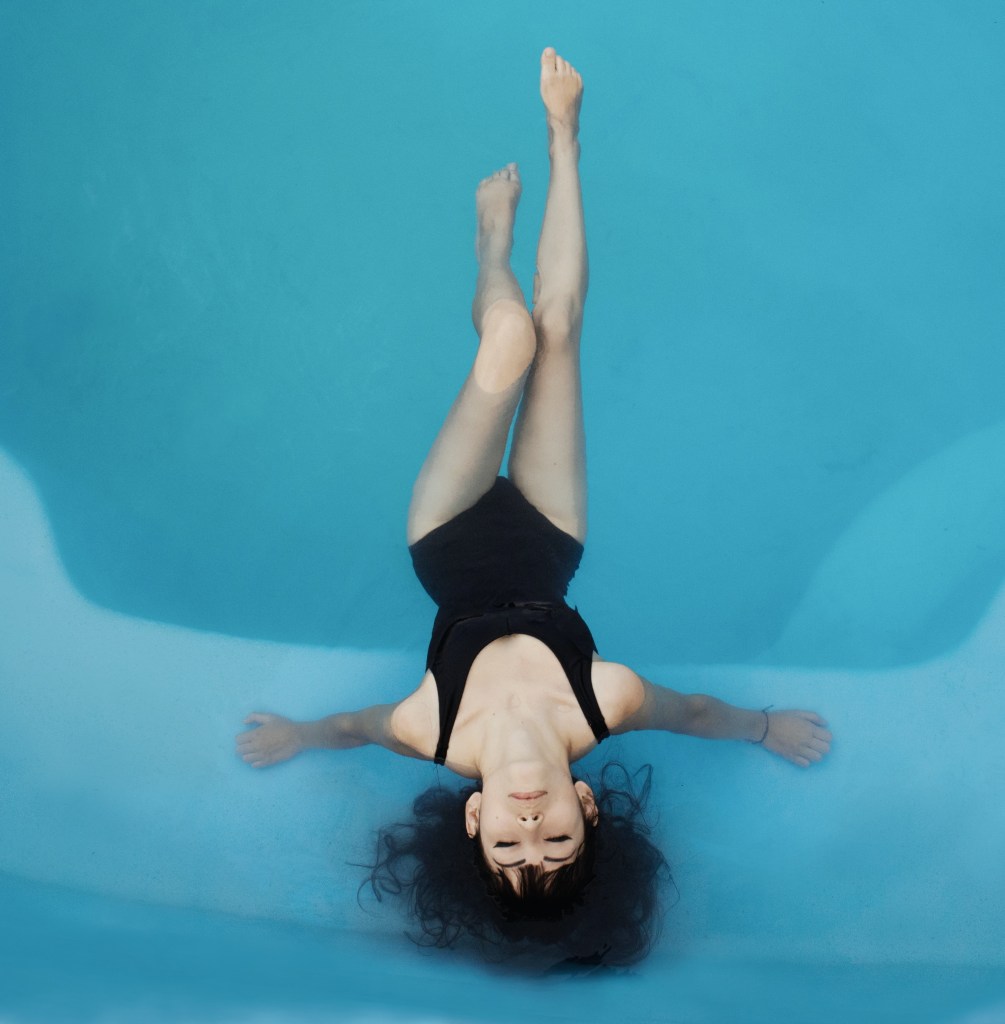
Your private pool can be anywhere you want, even indoors. Source: https://pin.it/4UeEa1U
This one is based on a “healing bath” visualization that was presented by an MSW/Oncological Therapist who leads Friday morning meditation at my cancer center. Putting the focus on vivid visuals and including your other senses fills your awareness with rich imagery that works so well to soothe an overworked nervous system. While this will not be an auditory experience, use your imagination as you read this to paint yourself a picture of a safe, soothing space that you will remember.
Here’s the basic imagery (add details that resonate with you): you arrive at a beautiful natural location, walking down a path surrounded by lush greenery, wearing a luxurious fluffy robe and cushy slippers. As you follow the path, flowery fragrances waft on a gentle breeze that carries bird songs to you. The sun is at a height most soothing for you; for me, it is early morning with a mist in the air. Bright enough to see everything, but imparting a feeling of safety and privacy.
As you continue down the path, it opens up into a small secluded beach with a round pool of water, clear and sparkling; part natural pond and part constructed, with beautiful white stone steps leading into it. Surrounded by flowering plants, it invites you in.
You feel the sensation of the fluffy robe and slippers sliding off of you as you leave these items by the entrance to the steps. Then, you dip the toes of one foot into the water and find that the temperature is perfect for you. Notice the sensation of the warm water as you step onto the stone stairs with both feet, holding onto a sturdy railing. You stand up to your ankles in the pool and sense the difference in the temperature between the misty air and inviting water.
Take two more steps down and the water slides up to your calves, soothing your lower leg muscles. Then step further in as the water line slowly travels up past your knees and halfway up your thighs, so that most of your legs are submerged in the placid, warm pool, now feeling more like a bath.
The bottom of the pool is easily visible through the clear water. Unhurriedly, take a few more steps down as your toes reach the white sandy pool floor and the water rises up to your waist, enveloping your lower body in warmth.
Feel the gentle support of the water.
By one side of the pool is a smooth sculpted stone bench to which you glide, feeling the slip of the water against your skin as you move, drawing the tips of your fingers across the pool’s surface, leaving gentle streaks as you go.
As you lower yourself onto the seat, sense the warmth rise up your torso and arms, traveling up as you settle down. The bench is deep enough for your body to submerge but comfortably keep your head out of the water.
The soothing water supports you as the seat cradles your body. Rest your head on the side of the pool – the edge is sloped and comfortable. Then listen. What do you hear? Sweet songs of birds? The meditative buzz of gentle honeybees that flit among the flowers? Waves on a faraway beach?
Can you smell the fragrances of the flowering plants that surround you? As you breathe, as your chest rises and falls, feel the water glide around you. Warm, secure, safe, secluded. This pool is whatever you need it to be for you to feel nurtured and loved.
Stay here for as long as you like, watching light sparkle on the surface of the water. If you stay until evening, warm lighting illuminates the pool and surrounding plants, dispersing dark shadows and bringing a sleepy tranquility into the area.
Finally, when it’s time to return to present world, lift yourself out of your seat and glide back to the stairs, keeping yourself submerged to your shoulders until you take a hold of the handrail. Slowly, slowly release yourself from the pool, noticing the sensation of air on your skin as you emerge, feeling the waterline move down your body as you climb the steps.
With the final step, you leave the pool and take up the fluffy, soft robe waiting for you, wrapping yourself in it. Slip your feet into the cozy slippers. Your body dries quickly. Make your way up the path. And although you leave this magical space behind, it is always available for you whenever you want to return.
~~~~~~~~~~~~~~~~~~~~~~~~~~~~~~~~~~~
If you are uncomfortable with water or if the visualization keeps bringing in disturbing images such as a very deep pool, dark water or something foreboding lurking underneath the surface, or it feels constrictive or claustrophobic, substitute a sparkling mist or a golden light for the water. You can still feel the body sensations as you enter into the pool. There are no rules here, it is your safe space and you can set it up as you please.
Finally, to bring this from a visualization into reality, create a real-life pool for yourself in your bath, with ample tealights, a soundtrack of nature sounds or gentle music and water temperature that is right for you. Feel your arms and legs float, prop up your head with a towel on the side of the tub. Breathe deeply. This is a perfect way to end the day and prepare yourself for a restful slumber.
Note: this is another grounding technique, by which I mean a way to retain focus on what is happening in the “now” rather than getting lost in memories of the past, which we cannot change, or succumbing to fears about what may happen in the future. It’s not a woo-woo magical technique. It’s merely being mindful about what is currently taking place so that you can respond appropriately and maintain your composure.
During acute stress, we need to bring ourselves back to the present quickly. By doing so, we are able to clear our heads of the “what-ifs” and “you shouldas” that cloud our thoughts at those times.
But what’s the fastest way to do that? For me, it’s definitely focusing on the fingertips. Each fingertip has approximately 3,000 nerve endings, more than any other part of the body (except the most intimate). When you touch something, all those nerves start firing.
You can take advantage of this sensitivity to ground yourself.
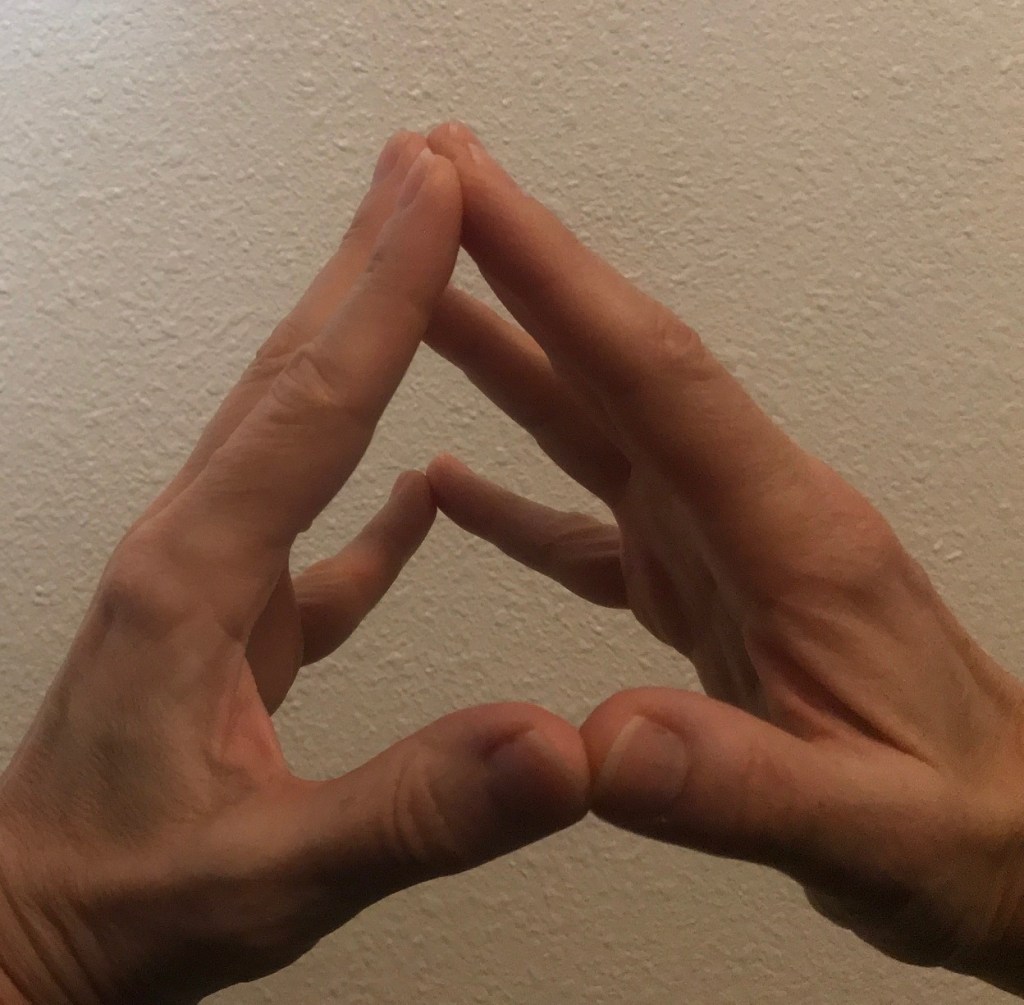
Channel Benedict Cumberbatch’s Sherlock and put your fingertips together.
This is what I do: I “steeple” my fingers (thumb against thumb, index finger against index finger, etc.) as if I were Star Trek‘s Mr. Spock contemplating a complex situation. The fingertip pressure immediately commands attention from my fearful mind in the same way that a boss displaying that hand gesture would command an employee’s attention. Taking deeper breaths, I rub my fingertips against each other in a circular motion. The movement enables the nerve endings on the fingertips to keep firing as the sensation continues. Or I can bounce my fingertips off each other, or keep them together but flex the fingers to create a pulsing motion.
Closing my eyes accentuates the emphasis on sensation and makes maintaining focus on it easier.
Yes, this seems so simple, but it’s also quite effective. By placing our focus on the fingertips, we take our attention away from more reactive parts of the body like the chest area, where the heart might be beating fast and ribcage expanding and contracting with rapid breathing. Feeling into those areas might only serve to reinforce the heightened emotions that we’re experiencing.
The hands lie further away from that commotion, and that distance between the chest and our fingertip sensations enables us, if even for a short while, to get some perspective. Think of it as the anxiety not being “in your face”.
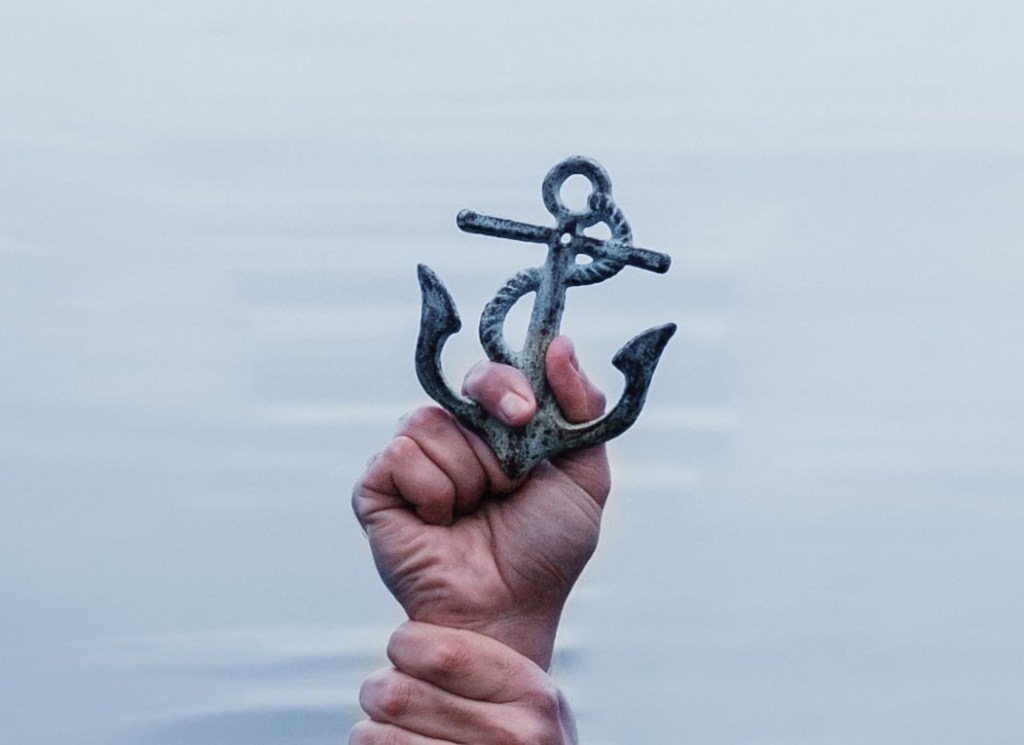
We can use body sensations as anchors to help stabilize us through anxious times.
Sometimes, when I close my eyes, all I “see” is that sensation of fingertip to fingertip, as if it’s the only thing that exists. I can play with this, imagining that I’m holding something between my hands, and that the sensation I feel is actually the feeling of that object against my fingers. It can be a pane of glass or even a beach ball. It all depends on what my brain is willing to accept at the moment. It’s a relaxing mental exercise.
As with many things related to mindfulness, it’s helpful to practice this fingertip pose when we’re in a relaxed and meditative state to connect the sensation to a feeling of calm, enabling it to serve as an anchor when our emotional seas are rough. The more we practice, the stronger that association, and the more effective the grounding response when we use this technique in the midst of anxiety.
~~~~~~~~~~~~~~~~~~~~~~~~~~~
Fun fact: body language experts consider steepled fingers to be an expression of confidence. That might be the little boost you need when you’re navigating a stressful event!





 Frantic Shanti