Lovingkindness When It’s Hard

Lovingkindness (n.): a tenderness and consideration towards others (Oxford Languages)

Sonder (n.): the realization that each random passerby is living a life as vivid and complex as your own (Dictionary of Obscure Sorrows)

~~~~~~~~~~~~~~~~~~~~~~~~~~~~~~~~

One of my goals for 2022 is softening my views of difficult people.

This takes some mental calisthenics. There have been individuals in my life that have impacted me in negative ways, and trying to see around that is usually met with a great deal of internal resistance on my part.

But when we hold onto hurt, we sully ourselves, not to mention completely (and possibly unfairly) writing off the person whom we view as the cause of our pain.

There have been people in my life who seem to go out of their way to be cruel.

I need to stress that giving difficult individuals a second look to examine their internal motivations does not mean absolving them of all responsibility for their actions. What they did or said remains that and their role in your pain is not diminished. But in letting go and softening our own reactions, we heal ourselves and decrease the impact that the individual’s actions have on us.

What has been working for me is one simple thing: to pause and imagine what pushes people to be uncharitable. In my experience one of the main motivators seems to be fear. We all have our own ways of dealing with this emotional state, some of us may retreat and tremble (this would be me), others may lash out and attempt to control the situation that way.

I’ll go out on a limb and say that many of those in our lives that we perceive as “evil” may be running away from something. And their inability to deal with their fears and shortcomings makes them very pitiful indeed. The more thoughtless and controlling and misery-inducing an individual seems to be, the more fear they may well have bubbling under the surface.

If we can step back a bit, we can mitigate their power to upset us, because that’s when we see their behavior in a different context.

Let me offer an example: One of the most toxic bosses I ever had would go into “tyrant” mode, judging immediately and harshly, seemingly unable to manage her employees without bullying them. There was intense tension when she was around and I felt like I was never good enough, something that affected me deeply.

Difficult people may be fighting their own inner demons.

But I soon learned that she made everyone feel that way…and also that she was locked in an unhappy marriage and had little control over her personal life. So she established (and overestablished) control where she could. She hired young employees who would work for lower wages and greatly increased her profits, although it also resulted in a significant turnover because the conditions were psychologically distressing.

I dreaded work so much that it was only a matter of months before I resigned my position. I got myself out of there, a decision I never regretted. And I stress this because if a situation is bad, even if you can find some sympathy for the perpetrator, it never means you should stay there and take the abuse.

But understanding what a difficult person is going through can offer some balm for your soul as you shake off the effects of the negativity. Naturally, this is far easier to do from a distance, but it can also help create some emotional space for you if you cannot put physical space between the two of you just yet.

And in the context of a lovingkindness meditation, this makes it much easier to bring that individual into focus and offer them kindness and compassion for what they are experiencing.

It may help to consider this: true power comes not from expressing your dominion over others; it comes from understanding the reality of the situation and making the choice to respond with compassion.

~~~~~~~~~~~~~~~~~~~~~~~~~~~

In the case of my former boss, upon searching for her recently, I was shocked to learn that she had founded a charitable organization to help children in need. All those profits that she had amassed had gone to a very good cause, as she now worked exclusively on a volunteer basis.

I’m so happy to have seen this giving, caring side of her. Wish she’d been able to show it to us.

And I sat there, staring at her photograph on my computer screen. That was her, certainly decades older, but different from the way that I had remembered her. So much more complex a human being. And instead of scoffing at the “old person trying to get into heaven”, I was filled with joy. Inside that being that I had only known as a tyrannical boss was a genuine caring person who was finally able to express her true loving nature.

Nothing could have made me happier.
Making Space for Cancer Emotions

While I myself am celebrating three years since the summer of my chemo for breast cancer, I was shocked to hear of actor Kelly Preston’s death from the disease. It’s a reminder that in an egalitarian way, cancer doesn’t care how famous you are.

I’ve been reading about those who are dealing with late-stage cancer. Most notable for me is actor Shannen Doherty, whom those of my generation remember from “Beverly Hills 90210” (although, admittedly, I didn’t watch the series).

Shannen, along with well-known names like Alex Trebek, Olivia Newton-John, Congressman John Lewis and others have been interviewed by the press. We hear about daunting odds and their strength of character. Anyone battling the late-stages of cancer shows a lot of bravery.

They speak of gratitude, perseverance, patience, a forward-thinking mentality. But as anyone with cancer can tell you, they would rather not be fighting this fight. Yes, there are “bright moments” (and I use that term loosely) that come with learning you have a “serious” cancer diagnosis, but that’s because you find those breaks in the darkness.

Cancer brings powerful emotions, often negative ones. And that’s perfectly okay.

However, I think it’s critical that cancer patients be given the uninterrupted space to talk about the fear and anxiety associated with this situation. It’s not all happy trips to the infusion room as everyone cheers you on. Shannen is quoted as saying, “The unknown is always the scariest part…Is the chemo going to work? Is the radiation going to work? You know, am I going to have to go through this again, or am I going to get secondary cancer? Everything else is manageable. Pain is manageable, you know living without a breast is manageable, it’s the worry of your future and how your future is going to affect the people that you love.”

This is something that must be addressed. When others call you a warrior, they need to understand that you’ve not been given a choice in the matter. And you yourself have a right to feel all the emotions that you feel, whether it’s anger, fear, helplessness or numbness. That must be allowed because it’s real.

Most importantly, no one should tell a patient that they need to only think positive. That is telling them that they shouldn’t feel what they feel. And that’s never a good thing.

So just as Shannen has done and others continue to do, we must accept the weight of the emotions felt by cancer patients, not diminish it. We should hold space for them to express everything they’re feeling. And then actively offer all the support and love that they need.

Releasing Stress Bubbles

I’m constantly working to keep anxiety under control. For me, one of the most common feelings associated with stress is that of it being “in your face”. There is no buffer and therefore no easy way to give yourself time to pause. Emotions rush at you.

I’ve developed visualizations to give me some space. I’ve already written about getting perspective and keeping anxiety at arm’s length, but sometimes I need another way of freeing myself from stressful thoughts. So I use bubbles!

Oooo, bubbles!

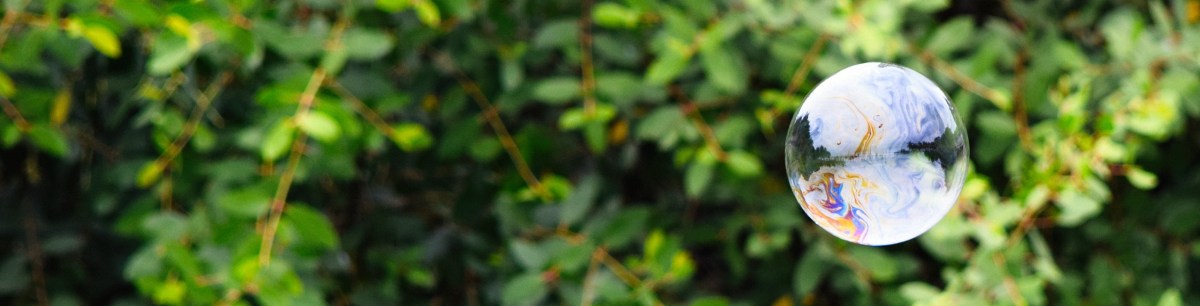
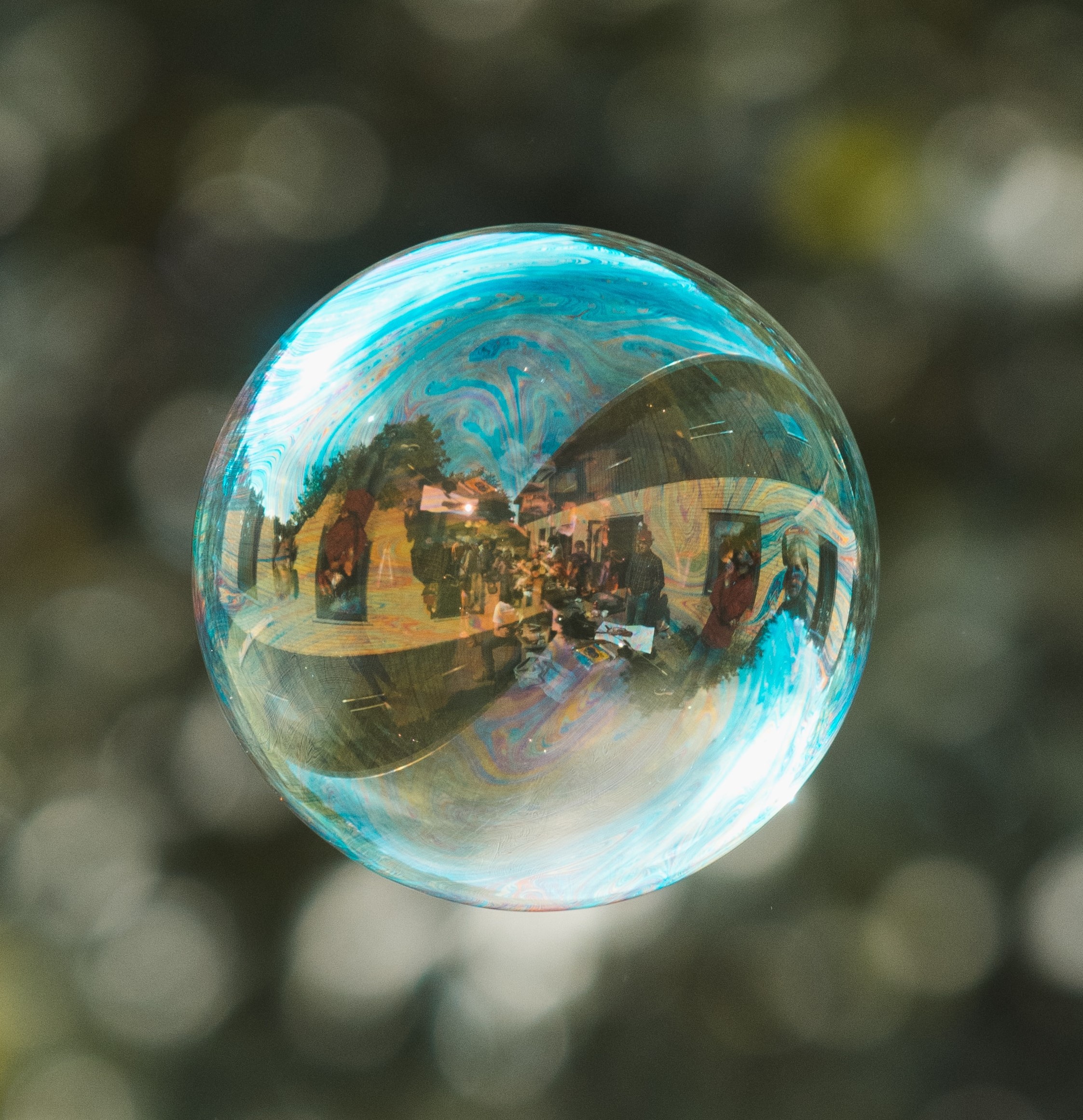
When I get caught up in thoughts of a stressful situation and I feel like the images are right in front of me, I imagine pulling back from the scene. What is transpiring before me continues, but I slowly move away, and as I do, the periphery of my vision starts bending inward. As I pull back, I realize that I am inside a bubble with finite edges.

I keep moving backwards through the wall of the bubble until I’m standing outside it. The actions within are still taking place, but they’re no longer coming at me. I watch from a safe distance, feeling secure.

I may allow the bubble to float away or I can pop it if I choose. Or I may stay with it for a while, observing without getting drawn back in.

Sometimes this becomes a game, particularly if I wake in the middle of the night and find myself in the grip of fearful thoughts. It’s usually not enough for me to back out of one bubble. There may be many. Sometimes I leave a bubble and then realize that I’m standing in another, even bigger one.

When my mind is particularly active, the bubbles keep coming.

But eventually, I get to the point where I am standing outside of all the bubbles, watching them floating before me, the figures or events looking small and not menacing at all. That is the perspective that I need to create myself breathing space.

The metaphor of a bubble is a lovely one because bubbles by themselves are playful, beautiful and, of course, ephemeral. Just as the bubble does not last forever, the events in our lives, no matter how stressful, don’t last forever either. The bubble reminds me that all things pass.

I’ve even brought a little container of soapy water with a bubble wand to work. Blowing bubbles (when no one’s looking) in my office slows my breathing and requires some focus. A controlled exhalation is needed to not pop the prismatic ball of soap-water before I can send it on its way, taking my worries along with it.

A stressful event taking place inside a bubble seems less frightening.

When I cannot do this indoors, I may take a break and head outside, letting the bubbles float off into the breeze. I might make someone else smile in the the process and that gladdens my heart.

It’s silly and fun and reminds me not to take everything so seriously. And if I can send my cares off in bubbles, giving me even a temporary reprieve from anxiety, then perhaps what might have seemed like an overwhelming crisis may feel more manageable.

Invisible Effects: Bring On The Waterworks

While I’m exposing all my post-cancer psychological quirks, I might as well write about this one. Technically, this is not an “invisible effect”, but the emotions are, so I’m taking a little liberty with the title.

I cry. And I mean, like over almost nothing. I choke up over the smallest kind-of emotional thing and in situations where tears are not merited.

While tears are often considered another aspect of the anxiety/depression complex, in this case, my propensity to cry seems to exist in isolation from definite psychological states, which is why it deserves its own post. My emotional highs and lows cross the tear threshold more easily. And it really doesn’t have to be something terribly sad or unbelievably touching…it just has to be a standard deviation or two beyond neutral.

I am much more sensitive than I’ve ever been. Yes, it’s been a rough couple of years since my original diagnosis in early 2017, but right now I feel as if I’m teetering on the edge of exhaustion and have no resistance to an outward demonstration of emotion. The end-of-year holidays are notorious for stirring up deep emotions and feelings of overwhelm, so I’m sure there’s an element of that chipping away at me too. But this didn’t start with Christmas preparations.

Oh look! A puppy playing with toilet paper. *starts bawling*

Who knows what sort of residual effect the chemotherapy has on me? Combine that with any weird hormonal fallout from the Tamoxifen, which is blocking estradiol receptors in my body, and throw in some menopause, which I’m heading towards both pharmaceutically and naturally. I guess tears are to be expected?

I try my hardest to remain mindful of what I’m experiencing and not dissolve into a puddle in public places, but this may be an indication that I’m not doing a great job of “making space” for my emotions. Everything is RIGHT THERE in my face. My buffer is very thin and that doesn’t give me much room for observing my feelings impassionately.

I’ve read that many people feel more emotional even months (years?) after completing cancer treatment. But…really? I am bowled over by how much MORE there is to cancer than the cancer! It seems like the back end of this disease is just as complex as the front.

And I’ve got a load of empty kleenex boxes to prove it.