I Thought I Was Doing Better

(Title image: Photo by Merch HÜSEY on Unsplash)

Last week, I met with a friend that I don’t see often. We were talking about what was going on in our lives and he related how he loved where he lived right now, and put a positive spin on everything in his life, even when talking about negative happenings.

He sounded sunny and was handling the tough stuff that came his way.

But then it was my turn to tell him about what I’d been up to. I started describing what I’d been dealing with: my father’s decline and death last year, worries about my mother’s well-being, concerns about the increasing cost-of-living…

My friend smiled at me. The last time he had talked to me, he said, I was stressed about something else. In fact, every time he calls me, there’s some new thing that I’m stressed about.

And of course he’s right. As much as I’ve improved in handling anxiety using all the tools I’ve developed to calm myself down—and, yes, I’ve found success with that—the overarching feeling that I have is that I’m playing whack-a-mole with my worries.

It’s as if I’m trying to regain my footing, but something new comes up and knocks me off balance again.

I admit it. I’m feeling worn out.
(Photo by Anca Gabriela Zosin on Unsplash)

After getting past cancer treatments like chemotherapy and radiation, you’d think that the skies would look brighter and my outlook would be more positive. And for quite some time that was completely true.

But as endocrine therapy wore on and I went through menopause, my spirit suffered. The luster of surviving cancer started wearing off. That’s embarrasing to admit, especially when I have lost friends and family to the disease and know of many others desperately fighting it.

But even being aware of that, my day-to-day seems to have become darker overall. I start the day with energy to get things done but by evening I’m exhausted and sometimes overwhelmed by what’s in front of me.

I know some of this is my own doing. In fact, one of the big, scary changes that I was faced with this year just sorted itself out. It was simpler than I expected (note my previous post). And then my son was admitted to the college he wanted to attend. All these are refreshing successes that I should have spent time basking in. But it didn’t take long for the clouds to gather again.

After hearing my friend’s assessment of me, I am trying to figure out whether what I’m going through is really getting harder? Or have I gradually been losing my ability to pull myself out of a funk? And once the uncertainties are settled, will I bounce back?

I feel disappointed in myself, which is exactly part of the problem. Lack of self-compassion simply compounds the stress. You know the carrot-and-stick analogy? Well, I’ve tossed the carrot and am just beating myself with the stick.

Back to the drawing board.

8 Year Cancer-versary and Everything Hurts

(Title image: Photo by Nick Fewings on Unsplash)

This past weekend marked eight years since my breast cancer diagnosis and I recently had another oncologist appointment.

Over the years my appointments have become lighthearted. This one was not so much.

While I was concerned about the migraine auras that I’d been experiencing in the fall of last year, my oncologist had called me in November 2024 with the results of my bone density scan: I’d lost more bone and was deeper in osteopenia.

To be fair, I don’t even know how much more. It had been strange to find myself labeled with osteopenia when I had my first bone density scan over five years ago. Neither my oncologist nor I could understand it. I live a very active life with frequent workouts, including a lot of strength training. By all accounts I should have strong bones. At the time, we figured it was something to do with algorithms applied to the bone density data and my bones were actually in better shape.

Ow, ow, ow, ow, ow!
(Photo by julien Tromeur on Unsplash)

This time around, it was worse. Since the first measurement, I’d had two years of tamoxifen and one of aromatase inhibitors. That didn’t help. But all the exercise? Did it not matter? Apparently not enough.

That was frustrating on its own. But to add to that frustration, I’ve been hit with injuries. My left shoulder, my left hip and most recently my lower back.

Each one of these has taken a toll on my exercise schedule and I will likely have to seek out physical therapy for at least the shoulder. At least. The hip I have been able to manage to a certain extent. Then I tweaked my lower back rowing about two weeks ago…I kept working out, more gingerly for sure…until I managed to re-tweak my back because apparently I am incapable of leaving things well enough alone.

On the bright side, the pain in my back made me completely forget the pain in my hip. Which is not to say that there is no pain, just that it pales in comparison to back spasms.

My oncologist offered to order a spinal scan for me. I graciously declined—I’m pretty darn sure it’s just my back muscles—but his concern is valid. If I’m lifting weights with increasingly porous bones, he’s worried about spinal compression fractures.

I guess he won’t have to worry about it now. I’ve been smacked in the face with a healthy dose of humility. No, I had no intention of pulling back on my workouts, but doing so is unavoidable. The amount of weight I can lift without injury has steadily decreased (injury by injury) and with this last helping of pain, I have to face reality. I need to completely rehaul my workouts along with my expectations.

Just sittin’ and chillin’ and dreamin’ of strong bones.
(Photo by Anne Nygård on Unsplash)

Perhaps most importantly, I need to not view this as a failure on my part. Because while I knew that eventually that day would come, I was not prepared to actually accept that it was here. I was still trying to “work my way back up” to where I was before, even when I knew that it was unrealistic.

After all, I remind myself, the fact that I need to adopt a slightly gentler approach to my workouts is a sign of success: the reason I need to be more careful now is because I have survived this long past my diagnosis. That’s not a punishment or a capitulation. It is, in fact, a blessing and a luxury that many cancer patients don’t have.

~~~~~~~~~~~~~~~~~~~~

What now? I am resistant to bone-building bisphosphonates at this time, for a variety of reasons (hello, side effects). I want to see if I can stop/slow the bone loss on my own. I have the exercise part down, no problem. But to be completely honest, my dietary intake of calcium was very low. I had every intention of supplementing with calcium after my first bone density scan, but got spooked by the potential for heart issues.

Since then, I’ve learned about the importance of Vitamin K2 and the Japanese fermented bean natto, which has loads of it and makes sure calcium gets to the bones instead of the heart. I’ve re-started the calcium supplements with a daily serving of the fermented stuff. You could say, I’ve become an aficio-natto.

And now that I am forced to back off the intense exercise, I have the opportunity to focus on mobility work, stretching and rehabilitation as I discover what body parts are going to need the attention of a physical therapist. We’ll see how this new approach to fitness works.

Farming ‘Likes’ on Instagram

(Title image: Photo by Chelsea Gates on Unsplash)

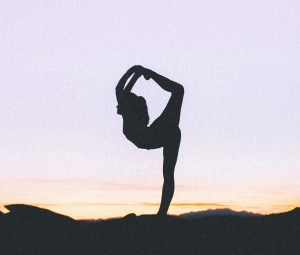
I am a reasonably flexible person although I’ve become less so with age and especially following cancer treatment. Yoga asanas that I used to be able to do…well, they don’t come so easily anymore, if at all.

After going through my yoga teacher training in my 50s and now in the middle of an Oncology Yoga (y4c) certification program, I spend a lot of time feeling like an imposter.

There’s an element of shame to this. I tell myself I should be more flexible, I should have better balance, I should be able to hold more advanced poses and for longer.

In my y4c training, the manual referenced a concept, versions of which I’ve seen before and have written about myself, but the message continues to hold true (see this article). The proliferation on social media of young, flexible bodies in extremely inaccessible poses for the vast majority of the population not only hurts the practice, but completely misses the point.

It seems like a lot of images that show up as “yoga” on platforms such as Instagram are part (if not wholly) acrobatics and contortions. But yoga is actually a spiritual practice and only one part of it, the one that is overemphasized in the west, is physical.

POV: You’re a cancer patient and your forward-thinking oncologist suggests that you try yoga to help alleviate some of your side effects. But this is what you think of when you hear “yoga”. What are the chances that you’ll try a yoga class? What are the chances that you’ll even find a yoga class that is appropriate for your current condition? Or will be able to afford one?
(Photo by Wesley Tingey on Unsplash)

And that physical practice is a big money maker. If you doubt that, take a look at how many yoga studios exist in affluent areas, and the dearth of studios in more moderate-to-low valued ones.

Yoga was what helped me through my cancer diagnosis, treatments and beyond. But that yoga was minus the “workout”. My workouts during cancer focused more on rowing and lifting weights rather than Sun Salutations and balance asanas. Yoga was for my mind and spirit, to maintain connection and grounding, to not get lost in my fears and to be grateful for what I had.

This is not to say that it’s not impressive when people post challenging asanas on social media. Some of the wonderful teachers that I have trained with have shared those kinds of posts. It’s natural to want to show off a physical achievement that you’ve worked so hard for. In a way, that’s the whole point of social media posts. And that’s also part of the problem with social media.

Frankly, yoga has become deeply entrenched in the United States as a physical practice and nothing is going to change that now. We can be hopeful that those who dutifully attend yoga class, rolled up mat under the arm, will take the time to understand the depth of this ancient practice. But regardless, the flow of the class still brings peace to the mind in a way that my ‘hardcore’ workouts do not.

There are a lot of people who could benefit greatly from the practice of yoga in all its forms, matching breath to movement and developing a mind-body connection. Cancer patients and survivors are some of those people. But if all they know is that yoga demands extreme flexibility, even hypermobility, and statue-like balance, they will avoid the practice as too advanced and inaccessible to them.

If you are a teacher, please keep that in mind. If you are a potential student, please don’t let social media keep you away from such a beneficial form of exercise for both your body and your mind. And if you are a current practitioner, please dig deeper to understand the roots of yoga to honor the cultural tradition from which it arose. It’s not just for likes on Instagram.

Revisiting Radiation Tattoos

(Title image: Photo by FlyD on Unsplash)

I came across a story from November 2024 about actress Nicole Eggert (“Baywatch”, “Charles in Charge”) discussing her breast cancer diagnosis.

While I admit that I hadn’t watched any of her acting projects, I could completely relate to her reaction to preparing for radiation therapy.

The article focuses on an Instagram post that she made after leaving a doctor’s appointment during which she received her radiation tattoos, expressing surprise at the fact that they were, in fact, actual tattoos.

As the article continues, “She then started to cry as she realized just how permanent the tattoo would be. ‘And it’s minor, it’s nothing but dots, but boy, every step of this process is never gonna let you forget it, there’s just always going to be a constant reminder.’

This really resonated with me because I had a similar reaction to getting my own radiation tattoos. I had never had an interest in getting any kind of tattoo myself. But now, with cancer, nothing was under my control anymore. It felt like my body was not my own.

Nope, never wanted a tattoo. But had to get four anyway (minus the pretty flowers).
(Photo by Lucas Lenzi on Unsplash)

And I remember being told that now I was going to get tattooed, just like that. No fanfare or anything. I don’t remember being told in advance, although I would not be surprised if I had and it simply hadn’t registered. I felt helpless a lot of the time and I had hoped that after chemo I could get a sense of self-ownership back. But the tattoos were a big “NOPE” to that!

I agree with Nicole, it’s the permanence of these things and even the long-term nature of some of the side effects of cancer treatment that add to the emotional impact of the disease.

I don’t know much about Nicole’s tattoos, but because I am pale with lots of moles already, my tattoos were blue to distinguish them from everything else on my skin. So while they were just small dots, to me they were very visible when I looked in the mirror.

My post about the experience (“I Didn’t Expect THAT: Radiation Tattoos“) talks a bit more about this. Now, almost 8 years later, I’ve made peace with the blue dots in the same way that I’ve tried to accept my scars and aches and whatever else has hung around since treatment.

Made peace, yes. But like the tattoos, although their sharpness fades, the memory remains.

“Them’s Fightin’ Words!”: Discussing Cancer Language

(Photo by Thao LEE on Unsplash)

Here’s something that I want to share from my Yoga4Cancer teacher training class. It’s an episode from a BBC podcast on the language that we use to talk about cancer, and it is excellent.

The podcast features a group of people touched by cancer: survivors who have finished their treatment and those who are still undergoing it. In one case, there is a woman who will never finish treatment because she needs to stay on it for the rest of her life.

Their topic of conversation circles around how they describe their situations and how they feel about the words that others use. I don’t want to give too much away because the discussion is engaging and even humorous, so I do encourage you to listen for yourselves.

BBC Radio 4 “Fighting Talk: How Language Can Make Us Better” (https://www.bbc.co.uk/programmes/m0001g8w).

I’d be really interested in knowing what your opinion on this is. Many of us might start with more aggressive talk concerning our cancer diagnoses: fight, beat, battle, etc. And yet as you’ll see, those terms can become problematic. We may get worn down by them as the treatment progresses.

How about “toxic positivity” from others? This is the tendency to push a narrative of upbeat positivity no matter what, even when it’s not appropriate to the situation. Such encouragement often ignores the tumultuous inner state of the cancer patient and can lead to a feeling of isolation

Open discussions about cancer help maintain an active support network for the diagnosed individual.
(Photo by Helena Lopes on Unsplash)

Everyone is different and as cancer survivors, we don’t expect well-meaning friends and family to know what personally irks us: for instance, there are differences between men and women in how they react to “fighting” metaphors. But it’s useful to bring a conversation like this into the open because cancer is one of those diseases that may make people around us feel uncomfortable.

A lot of people may not know what to say in response to your diagnosis, so they’ll say something vague and positive, or even nothing at all…and some may avoid you altogether. That can be unfortunate at a time where community support is especially important.

If you are currently undergoing treatment, understand that many around you might not have the vocabulary for talking about cancer in a way that resonates with you.

And if you are one of those friends who doesn’t know what to say, it can be best to admit that. Trying, “I don’t know what to say because I don’t want to say anything wrong,” can be more heartfelt and helpful than an awkwardly-cheery, “You got this!” or “Don’t give up the fight!”

I hope you enjoy the podcast episode!

An Eyeball Update…and Unfortunate Addendum

(Title image: Photo by Anastasiya Badun on Unsplash)

Last Wednesday, I had a follow-up appointment with my ophthalmologist regarding the visual migraine auras I’d experienced during the second half of last year. [Read through to the end to see what happened a few days later on Sunday.]

I had gone to see her on November 22nd after the aura frequency had increased, and at that point, imaging of my eyes revealed little hemorrhages in both eyeballs, leading my doc to fear that something was exerting pressure, eliciting auras and busting little blood vessels.

And by “something”, she meant possibly a cause as serious as a tumor.

This time around, however, the hemorrhages were gone, healed on their own. As I mentioned in a previous post, my auras had ceased too. And even my eyeballs were not looking as parched as they had before.

Everything had improved. How often does that happen?

While I expected some improvement by virtue of the fact that I was no longer experiencing visual disturbances, I was a little surprised by the complete reversal. My eyeballs looked better than they had even during my first appointment with the eye doctor some months ago.

So we talked about the effects that stress might have had on me, since I had incorporated all sorts of anti-anxiety measures. My opthalmologist is very supportive of meditation and whatever else it takes to calm oneself down. She was very relieved that there was such a marked improvement.

And this made me think about how the extra effort I’d put into being mindful, pausing during the day, increasing meditation time and the like had really paid off. Simply taking the time to look around and notice how I felt, to evaluate the pressures that I was under, to be aware and present…all of this helped me realize where there were things that I could do to change what was happening.

The concept of self-efficacy comes to mind here. Because after going through a cancer journey where everything seems out of my hands, it’s refreshing to have the experience of being able to get a positive response from lifestyle changes.

And, yes, I have to admit: I am making assumptions here. I am assuming that in fact, the visual migraine auras were caused by a pile-on of factors that included anxiety, grief and depression. I am assuming that by being more self-aware of what I was going through, engaging in holistic methods for calming myself and showing self-compassion, even the increased consumption of theobromine, all worked together to help me get a handle on the emotional storm that I’d been facing. I could be completely wrong.

But you know what? It’s not beyond the realm of possibility that all these things were exactly what I needed.

Perhaps it’s not as simplistic as taking deeper breaths. But those self-soothing techniques do not hurt.

Of course, the trick now is to not get complacent. Life is still tough, and I know that I have some challenges coming up this year. Even the greatest techniques do no good if you start cutting corners.

But after the uncertainty of last year, the pain and the loss, once again I get the satisfaction of knowing that as difficult as it seems to be, I can survive this.

~~~~~~~~~~~~~~~~~~~~

ADDENDUM

The trick now is to not get complacent. I feel like I’m eating my words.

I had felt very positive when I wrote the first draft of this post last Friday. But perhaps after almost two months of no auras, I might have assumed that I was done with them.

Yesterday (Sunday), while driving in the car, I experienced another aura. It was “milder” and a little shorter than most, but *groan* it was still an aura. My heart sank.

A few days ago I had noticed that I was experiencing that involuntary sighing reflex again. I didn’t think much of it because, hey, I had everything under control, right? I guess not.

So today my mind is more unfocused, possibly additional stress from life or anxiety over the fact that I just had another aura after things were going so well. Honestly, I don’t know which. All I know is that auras are not going to simply disappear from my life altogether. I guess I should have expected a relapse.

Darn it.

Cancer Took the Magic Away, Mindfulness Brought It Back

(Title image: Photo by Ethan Hoover on Unsplash)

And, no, I’m not talking about casting spells.

But I remember “life before cancer” and it felt different. There was a feeling that there was so much life left to live, so many plans still to execute.

I felt bulletproof. My own primary care doctor was impressed that I’d made it through so many years without ever having a major surgery (or any surgery, for that matter). I was looking foward to my future. My workouts were still tough and vigorous and I felt like I was going to age well.

Most importantly, life had a certain magic to it. It felt multidimensional and filled with possibilities, and even with the challenges that I’d had to face, I had hope that things would always get better.

Then I got hit by the locomotive that is cancer and everything ground to a halt. My world went gray and all those plans that I had for “the rest of my life” fell away as all my energy was focused on surviving the diagnosis, surviving chemo…and I didn’t see much past that.

For quite a while after diagnosis, I’d felt like I’d been tossed out by the side of the road.
(Photo by Sven Brandsma on Unsplash)

Emotionally, my life felt like a void. I was too afraid to even let hope in because of the fear of having it dashed to pieces.

It was like being out in the wilderness and calling for help but receiving none, not even an echo. Spiritually, it was the loneliest that I’d ever been.

I was no longer on the highway of life. I was sitting in the breakdown lane.

Forgive me if this sounds melodramatic. All my ‘anxiety chickens’ had come home to roost, so to speak. And I wasn’t handling it well.

I dragged myself around treatment like this…although about two weeks before my cancer surgery, I had started mindfulness meditation, encouraged by my radiation oncologist who suggested it as a non-pharmaceutical way of dealing with anxiety.

It was that little ‘peep’ of mindfulness that had I clung to, terrified, in the beginning, not really sure whether or not it was helping. But at least it was something warm at a point when I felt cold and abandoned.

I can honestly say that mindfulness and meditation were what gave me back the strength to persevere through tough times.
(Photo by Robin van Holst on Unsplash)

As time went on and I stubbornly refused to miss a day of meditation, that little break in the clouds became bigger. In this case, my obstinance was a blessing. Somewhere in the last almost-eight years, not even sure exactly when, something changed.

The fear and loneliness and bitterness crumbled away. Noticing how things were right now, how beautiful the world was when I chose to appreciate it, helped pull me out of the funk.

In our darkest moment we find our greatest strengths. I wish it weren’t like that, I wish there wasn’t a need to hit lowest lows in order to get the biggest spring back up. But I can say that if my life even before cancer had been easier, I would not have experienced the richness of existence as I do now.

Not everything is okay. In many ways, things are even harder and more frightening. But I can accept that and not feel bitter. My expectations have softened and I pause more often to ground myself, to notice that at this moment, I am safe.

And for this moment, I am at peace.

All I Want for Christmas is No More Auras

(Title image: Photo by Brian Suh on Unsplash)

This was supposed to be a post for USA residents about how to find some harmony during the Thanksgiving holiday amidst the tensions brought by relatives with strongly differing views of the world. Such disagreements are always a possibility when families get together, but likely even worse this year.

But, no. Instead, I’m sitting here wearing sunglasses in a darkened room as I plink out this post.

Remember those shimmering scythe-shaped mosaics (auras) that I wrote about intruding on my vision some weeks ago? The ones that are associated with ocular migraines, but in my case minus any headache? Well, they’re still happening and with greater frequency.

Depending on which of my healthcare professionals you talk to, they either want to (1) wait and see how things progress or (2) shove me into an MRI tube ASAP.

And me? I really want to not be dealing with this issue. After seven years of putting a lot of space between my cancer diagnosis and the present moment, I am getting stressed by the possibility of this being something quite serious. And all I wanted was to enjoy the upcoming holiday season.

But I’m getting ahead of myself. Here are the details: I’ve now had seven of these episodes in about two months—I’m not even sure when the very first one was. After the last one (which was the second of two last week), I left a message with my ophthalmologist.

However, it was my oncologist who happened to call a few hours later, completely coincidentally, to give me unrelated scan results.

So, since I had him on the line, I told him about the auras. He sounded sad. And you know what? You never want your oncologist to sound sad, especially when they’re usually so good at being neutral when delivering news.

And then my ophthalmologist called back late that afternoon, urging me to see my primary care doctor as soon as possible and also schedule an appointment with her for the next day.

Next day, I snag a morning appointment with my primary care provider, explain the situation and the fact that I have no other symptoms other than the auras. Her take: this is very weird, yes…but it’s a hard sell to get this to qualify for an MRI at this time, even with the frequency. With my consent, she wanted to wait for a little bit and see whether the auras continued.

Or, I guess, until my head exploded or something.

Find a happy place, find a happy place, find a happy place…
(Photo by serjan midili on Unsplash)

When I saw my ophthalmologist that afternoon, she was extremely concerned and incredulous that an MRI wasn’t the first course of action. I could tell that she felt waiting was a bad idea.

But ultimately, she acquiesed to the notion that we’ll wait, although she’s sending a synopsis of her findings to my primary. She instructed me to take excruciatingly detailed notes the next time one of these auras occurs

And if you’re still reading this far down and are convinced that my goose is cooked, maybe it isn’t. Sure this whole experience is stressing me out. But there are far too many confounding variables present to resign myself to the fact that I’ll be getting my head shaved again soon…variables which I might be writing about in a future post…

…or I’ll be talking about my ride in the MRI tube and subsquent diagnosis.

But for now, I’m going to rest my eyes in a darkened room and think of silky fur on a contentedly purring kitten.

~~~~~~~~~~~~~~~~~~~~

For everyone in the USA, have a wonderful Thankgiving with your lovely families this Thursday…and let’s all try to keep it civil.

Lucy in the Sky with Diamonds: And Now…My Eyes?

(Title image: Photo by Adam Gonzales on Unsplash)

So one of the hardest things for me about having cancer was losing a sense of security. Suddenly my body was out to get me, without my knowledge, while I was basking in a false sense of security that everything was okay.

Dealing with uncertainty is tough. It made me painfully aware of my own mortality before I was ready for it. It was as if cancer became my midlife crisis.

But it wasn’t just that I had to deal with not having guarantees about my own health (I mean, do we ever really have that?), about cancer not bothering me again. It also brought uncertainty about whether strange feelings in my body meant something.

I got to a point where I was afraid of anything, real or imagined, that I felt in my body. And after doing that for a while and completely exhausting myself, I called it quits and stopped running to the doctor for every little thing.

But now…I’m wondering if I’m kidding myself?

About a week ago, I had a weird thing happen. I was shopping at a market with my daughter. We were almost done when I noticed a funny change in my vision.

This wasn’t what I saw, but the colors were just as bright and vibrant.
(Photo by Randy Bayne on Unsplash)

I started seeing rings, the best way I can describe them is as if they were stained glass rings of vibrant colors, like an OLED screen, kind of like what you might see in a beautiful kaleidoscope. They were noticible, but didn’t take over all of my visual field. And YES, they were freaky. The entire show lasted about 20 minutes and primarily affected my left eye.

Then they faded away.

At that point, I recalled that I had experienced something similar, but without the vibrant colors, a few months ago. Again, I had been at a store and noticed a funny change in my vision, zigzagged lines.

That time it also didn’t last very long. Neither one of these episodes was associated with headaches.

Now we have a situation.

My oncologist always asks about visual disturbances, like seeing things that aren’t there, shadows, headaches, severe loss of balance. As a triple positive breast cancer survivor, I know this is because of possible metastases to the brain.

But instead of calling him last week to tell him what happened, I paused. I had done some research on the internet about these types of phenomena, and it’s quite possible that I’m experiencing ocular (acephalgic) migraines…again, without the headache. I’ll have to see if those rings/zigzags happen again, but at this point, with the amount of upheaval that I’ve experienced over the past few months (including the death of a parent)…and the fact that both times these visual oddities happened in stores with bright overhead lighting, well, let’s just say “brain tumor” doesn’t strike me as the most likely cause.

Yes, yes, yes, I will reach out to my oncologist this week. Probably, maybe. And if I do, I will ask to wait before being required to take another ride in the MRI tube. I’ve learned that at times like this, it is best to take a breath, stay present and wait for more information before proceeding.

Elle Macpherson’s Cancer Story and the Missing Tumor Info

(Title image: Photo by Pierre Bamin on Unsplash)

Following on the heels of my Elle Macpherson post last week, I wanted to fill in some missing info…

To back up, former supermodel Elle Macpherson revealed that she took the holistic route when deciding to treat her breast cancer in 2017. However, most of the news stories that reported and offered opinions on her choices left out some critical information, as noted by this article in The Guardian (“Crucial information missing in Elle Macpherson breast cancer story, experts warn“). In this case, that information makes a big difference.

While it seems that Elle’s cancer was HER2-receptor positive, which suggests a more aggressive cancer, it was considered “non-invasive”, meaning it was contained within the mammary ducts. Often, this is referred to DCIS, or Ductal Carcinoma In Situ, and at this point those of us with personal knowledge of the disease will knowingly go, “OOooooooh.”

This is basically a “precancerous” mass of cells and often the treatments are more conservative. It’s considered stage 0. Yes, it becomes more dangerous if you do nothing, but clearly Elle did something: she had it removed.

DCIS is a stage 0 cancer, which doesn’t necessitate the most aggressive treatment.
(Photo by Bernard Hermant on Unsplash)

Beyond that, there are other conventional treatments offered, depending on how aggressively you want to go. This introduces the issue of potential overtreatment, which is gaining more attention among physicians and the public. It’s easy to throw the kitchen sink at anything that looks like cancer, but that increases the chances that patients unnecessarily experience damaging side effects. Not everyone needs to be smacked that hard with treatment.

So, given that Elle’s cancer was DCIS, her holistic treatment starts looking less extreme. In perspective, for stage 0, a radical mastectomy topped off with chemotherapy and other treatments leans towards overkill with minimal benefits, potentially affecting quality of life. So this is less about the types of Elle’s holistic treatments and much more about her cancer not requiring the same level of aggressive action as stage 1+ tumors.

However, very few of the news stories mentioned this. As a matter of fact, my own blog post last week might have confused the issue—I was writing without having all the facts. This underscores the importance of learning as much about your cancer as you can and understanding that your version of the disease may be very different from that of a friend with cancer.

In light of this, the pile-on regarding Elle’s treatment seems unfair…but only as it regards her personal situation. Because all the opinion pieces that came out against her choices, including my post, did so for a critical reason: that Elle’s story (“follow your heart”) may turn a cancer patient away from much-needed and beneficial treatment that can prolong their lives.

Get the facts, talk to your team, understand what you’re up against and what your risks are—yes, meditate, pray, exercise, change your diet. But don’t try to wish your cancer away.

~~~~~~~~~~~~~~~~~~~~

To clarify, Elle did indeed decline even less radical treatments such as endocrine therapy, so one could argue that she’s still taking a risk. We don’t have a crystal ball to determine whether this was the wisest choice, Elle believed it was the right choice for her.