Breast Cancer: Know When to Say When

(Title image: Photo by Marius Serban on Unsplash)

This is going to be short because I’m on the cusp of moving my family to a new apartment…and that’s going to take more work now that one of our cars is finally having its damage repaired.

So this is a gentle reminder to slow down and look around once in a while. Life’s obligations can push us like a bulldozer and we might not notice that we’re worn out until something happens that forces us into a mini-vacation.

Something, perhaps, like chemotherapy.

Who needs some love? You do.
(Photo by Mayur Gala on Unsplash)

And if you need a cancer diagnosis (or a broken bone or the flu or…) to give you a break from the pressures of work and family, then I think we can all agree that your mental health needs more love than you’ve been giving it.

Yes, easier said than done. But there are little breaks you can take. A 10-minute body scan meditation or guided breathing practice. A matcha tea break where you focus on the movements of your hands as they prepare your cup. Staring out the window and counting trees/people/cars.

It doesn’t have to be a pricey spa day. You can have a spa inside your head with a phone app and a set of headphones. You just need to care enough about yourself to allow this.

Believe me, I care about you and I don’t even know you. You are the whole reason why I started this blog and why I keep it going, even eight years after my diagnosis. I hope it helps you remember that you are worth being cared for. ❤

Breast Cancer: Life in the Breakdown Lane

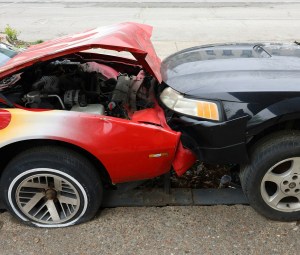
Last week, I walked out to my car, which had been parked on the street, to find that someone had hit it. The driver’s side mirror was ripped off, the wheel cover was smashed and the side was dented.

Two things immediately became evident: 1) we were lucky that the person responsible had left us a note with their phone number, (2) we were going to have to completely restructure our travel expectations for the foreseeable future.

While I found a lot to be grateful for in the situation, it also reminded me of a traffic analogy that I have used to describe what happens after you’re handed a cancer diagnosis.

Diagnosis? That’ll throw a wrench into your current plans.
(Photo by Scott Greer on Unsplash)

Being told you have cancer is like getting into a traffic accident: you’re moving along with everyone else in their cars, focusing on getting to where you need to be, and then all of a sudden *CRASH*.

You pull your car over to the side, still stunned by the collision, and take stock of the damage to both your vehicle and yourself.

And as you stand there, all that traffic that you were moving along with has left you behind. You are no longer part of the natural flow of things. All the plans that you had to be somewhere and expectations for what you were going to do this week and next…all of that stops.

You hear the noisy din of traffic and the “Dopplered” sounds of cars zooming by, feeling the whoosh of air as they pass. But when there’s a lull in the traffic, the quiet brings on loneliness, as if the other travelers have moved on and you’ve been forgotten.

The rest of life whooshes by you.
(Photo by Viktor Kiryanov on Unsplash)

Now you have to rework your life. Instead of taking your ability to move through the city for granted, you’re scrambling to figure out what you’re going to have to cancel, how you’ll get to where you need to go and what the immediate future will look like until you get your car back in working order.

In the meantime, you see everyone else progressing along, as they have been, completely unaware of what life looks like in the breakdown lane. Having pleasant conversations, arriving at work on time, meeting with business associates, eating from cafeteria salad bars without the need to double disinfect their lettuce and tomatoes.

Not needing to schedule multiple appointments or surgeries or infusions or radiation treatments. It is such a different life!

~~~~~~~~~~~~~~~~~~~~

Shortly after receiving a cancer diagnosis there’s so much going on that it can be difficult to articulate everything you’re feeling, and those around you might have a hard time relating. I’ve found that this analogy can be helpful in relaying what the experience is like.

See if this works for you too.

Breast Cancer: Finding Gratitude as a Cancer Patient

(Title image: Photo by Diego PH on Unsplash)

I’m not going to lie, gratitude can be difficult to navigate as a cancer patient.

When you’re mourning your diagnosis and trying to hold yourself together from the shock, the last thing you want is for some sunny person to tell you to think about everything you’re grateful for.

At such a time, it can be very difficult to think of anything. I, personally, felt a lot of anger, bitterness and even betrayal after I was told I had breast cancer. It wasn’t a great set of feelings to sink into, but that was my reality.

While I tried doing gratitude practices, in the beginning the process was miserable and felt “fake”. The whole notion of being grateful struck me as forced and required me to think about things I didn’t want to focus on.

Tough to be grateful? Make a list of what doesn’t suck.
(Photo by Hannah Olinger on Unsplash)

However, what helped me was making a list. It started out as a list of things about which I could say, “well, at least this didn’t happen” and slowly shifted to “well, this thing made my life easier”. It enabled me to find positives that I had otherwise overlooked.

I wasn’t grateful for getting cancer. But having bosses whose wives had survived breast cancer made it easier for them to understand what I was going through…and also to offer some useful advice (as did their wives).

I didn’t have the luxury of not working throughout treatment, but I was glad that a series of big projects had ended the previous year, so I didn’t have a huge workload waiting for me at the office. And while I really wished I could have had a full-time income, my part-time position meant that I had an easier time shifting my schedule to accommodate appointments and days off following infusions.

Additionally, it was fortunate that the region in which I live had a number of highly lauded cancer centers. And my cancer center offered free counseling by excellent therapists specifically trained to work with cancer patients.

It was also a plus that the summer during which I had my chemo infusions ended up being mild—luckily, since we didn’t have air conditioning—and my fear of enduring nausea through hot summer days never became a reality.

My list got longer and longer.

Opening the door to gratitude soothes the overwrought mind.
(Photo by Pedro Ramos on Unsplash)

So little by little, I started to pick through all the things that ended up better than they could have been. I didn’t call it “gratitude” at first because I was still bitter and refused to accept that there was anything to be grateful for. But the more things that came up that made me realize how much better the situation had turned out…the easier it was to finally come around to the idea that, even in the midst of the crappiest-thing-that-could-happen, there truly were things that I could l squeeze out a bit of gratitude for.

It took time. But when I loosened my grip on bitterness, I allowed in a swell of gratefulness, so much so that it was almost overwhelming how, if I had to get cancer, if it truly had to happen, there were so many things that had gone right. I started feeling so much better emotionally.

So my advice to anyone who wants to try out that “gratitude stuff” to see why it’s so great for your mental health: be gentle, start slowly and don’t tell anyone you’re doing it. This is a private practice for you. When you finally allow yourself to zero in on those little things that aren’t so bad or are kind of fortuitous given the situation, you may find that they buoy your spirits.

That’s all it takes. Not need to rush. Let the appreciation come to you.

Breast Cancer: Surviving the High Cost of Treatment

(Title image: Photo by Alexander Mils on Unsplash)

Since we are now in the Pink Season, otherwise known as Breast Cancer Awareness Month, in the midst of encouraging mammograms and regular clinical exams, it’s also useful to consider a very important barrier to obtaining cancer treatment and services in the United States: cost.

This is particularly distressing because breast cancer research has been very well-funded and treatments are quite effective for most forms of the disease, with great strides also having been made in understanding some of the most aggressive variants.

But according to a 2021 memo from the the American Cancer Society’s Cancer Action Network, 61% of (all) cancer patients describe paying for their treatment to be “somewhat or very difficult”.

It is striking that financial difficulty affects the majority of cancer patients. Obviously, the lower the family income, the greater the hardship, with 80% of patients having to “make financial sacrifices to cover their health care expenses, including 44% who’ve dipped into their savings, 36% who’ve gone into credit card debt to pay medical bills and nearly a quarter who say they did not schedule or cancelled an appointment or procedure because of cost.”

None of this will come as a surprise to you if you’ve ever had to pay for healthcare in the United States. Suffice it to say, we have a problem with affordability here.

Aside from the stressors of the disease and treatment side effects, many people have the added anxiety of not being able to afford the cost of cancer care.
(Photo by Woliul Hasan on Unsplash)

I was one of the very lucky ones in this regard, as my husband and I both work for non-profit research institutes with generous benefits. At the time of my diagnosis, we were enrolled in an employer sponsored PPO (Preferred Provider Organization) insurance plan with a per-person, out-of-pocket yearly maximum of $2000. When we initially signed up for the coverage, I thought the increased cost of the PPO was unnecessary as we were all quite healthy. However, after my diagnosis, I was struck by how blessed we were to even have this degree of health coverage as an option.

Clearly, my family is in the minority in our good fortune. We were able to avoid the financial fears and burdensome debt, even bankruptcy, that affect so many other cancer patients. Cancer care is devastatingly expensive, particularly for those with little to no insurance coverage, or insurance coverage with extremely high deductables.

What options do you have if you find yourself delaying care due to finances?

*Start with your cancer center’s social workers. They have experience in helping patients and survivors who are dealing with financial hardship and can point you in the right direction.
* Visit the Cancer Financial Assistance Coalition (CFAC) website, which has a database that you can search according to your cancer type and financial needs to find a list of charitable organizations that can offer support for your situation.
*For medicines that are not covered by insurance, pharmaceutical companies may offer deep discounts on their drugs. Reach out to them directly. They would rather sell you a heavily discounted medication than not make a sale at all.

Even when it seems that your luck has run out, there are still options available to ease your financial burden. Unfortunately, the healthcare system might not change anytime soon, but please know that supportive charities can to lend a hand as you make your way through the cancer maze.

The Stuff after Cancer Treatment: Even When It’s Over, It’s Not Over

(Title image: Photo by Leon Seibert on Unsplash)

I stumbled across an article about another celebrity who has gone through breast cancer treatment. That’s not surprising, given the relatively high percentage of women, in particular, who have been diagnosed or are at heightened risk of the disease.

But this one—about celebrity organizer Clea Shearer (of The Home Edit, a home organizing company/brand/empire)—gave me pause for the specific reason that there was so much cancer-related hardship that continued after she finished her treatment.

In 2022, Clea was diagnosed with stage 2 breast cancer (“invasive mammary carcinoma”) and underwent the familiar treatments of surgery, chemotherapy and radiation therapy. However, it’s the complications of her double mastectomy that make her story very striking. To date (that is, as of the release of this article in People magazine a few days ago), she has undergone 14 surgeries and may be running out of options for breast reconstruction.

This is not what anyone expects after they “finish” cancer treatment. In fact, Clea was declared cancer-free in November 2022. But it was clearly not the end of cancer-related effects for her.

I think it’s important for us to consider this when we try to be over-optimistic with cancer survivors. Pushing an upbeat attitude or telling survivors to “just be grateful” glosses over the reality of what they may continue to keep going through.

Yes, of course we are grateful. A cancer diagnosis is terrifying and for those of us who grew up when it was considered practically a death sentence, the idea of having it take your life is hard to get out of your head. In this day and age where social media describes the “condition” as d**th…well, cancer survivors have to meet the possibility head-on, minus the asterisks.

However long a survivor has survived is a cause for celebration and gratitude. But it’s not necessarily the end-of-story, fade-into-the-sunset ending. Clea’s experience is proof of that and I wish her strength and perseverance as she navigates the coming months.

Stories like Clea’s underscore the critical need to treat the whole patient, including offering emotional/mental health support, and not to simply stop the support when the cancer center-based treatment ends. Even when it might seem that treatment is done, it may just be the beginning of a new set of challenges.

Cancer This, Cancer That

(Title image: Photo by National Cancer Institute on Unsplash)

Cancer, cancer, cancer.

There is a part of me that would like to stop talking about cancer. Really.

My cancer diagnosis tops my “Worst Things I’ve Gone Through” list, more than any other crappy things that I’ve gone through. Treatment brought me to a screeching halt and forced me to rethink my expectations for what “success” looked like.

It wouldn’t be surprising if I wanted absolutely nothing to do with cancer and chose to never speak of it again.

However, I DID go through this. I WAS angry and frustrated and literally fearing for my life. So I want to own the fact that I faced one of my greatest health fears and was able to come out of the other end of the cancer tunnel.

Undoubtedly, most of my “success” was sheer luck and well-established medical protocols. There are many other cancer patients who go through the same thing but are not so fortunate. Until we know exactly what triggers the development of a tumor and can determine how to effectively avoid that, we will still be riding by the seat of our pants

In that case, isn’t it sort of odd to wear the “cancer survivor” badge like an achievement?

This goes without saying.
(Photo by National Cancer Institute on Unsplash)

And yet, it does feel like an achievement. Or perhaps, it feels like it gives me a purpose. The entire reason why this blog exists is because I had questions about the experience of being a cancer patient that I could not find answers for, and I wanted to offer what I had gone through in case it might help someone else.

As cancer recurrence became kinda, sorta, maybe less likely with each passing year, I still had an urge to let people know about the disease because it had been so huge in my life. At some point in a conversation, I’d stick in that I was a cancer survivor—it was hard not to, I realized, because there were so many ways that cancer had entangled itself in me.

And people would say congratulations for surviving and then the conversation would become a bit uncomfortable because no one really likes talking about cancer…and everyone would quiet down for a bit. I could easily keep going on about my experiences but I know I’d never get invited to another social event if I did, so I learned to shut up and change the subject.

This blog is my emotional, cancer-indulgent dumping ground.

~~~~~~~~~~~~~~~~~~~~

If someone mentions that they have a cancer diagnosis, I know what not to say first and foremost, but there’s a balancing act between allowing them the space to express themselves (especially if others around them don’t know what to say) and offering supportive bits of random information about things that actually matter to them.

In online forums, I’ve typed out a block of text…only to delete it before sending. Maybe it’s not as important for me to talk about what I went through as it is to simply be there to listen.

Another Oncology Visit and “Not Being Good Enough”

(Title image: Photo by Nik on Unsplash)

“I see pharmacological interventions in your future” is a paraphrasing of what my oncologist told me at my last doctor’s visit.

So let me back up a bit. I had my “eight-years-since-finishing-chemo” appointment with my oncologist last week. Things went the way they’ve been going for a while. He was very pleased with how things have been going and that made me feel very positive.

Certainly, I have my share of stressors churning at the moment, but most of them are not health-related. Most.

When my oncologist reviewed my bone density reports, however, he made the same prediction that he has during my previous two visits with him (see his quote above). The issue is that my bone scan in 2019 showed osteopenia, which I have to say is pretty weird given my lifestyle, which includes a lot of strength training. We both thought that perhaps it was an issue with the way the numbers were calculated.

Unfortunately, my 2024 bone scan showed a significant loss of bone compared to 2019. Enough to really concern my oncologist and befuddle us both.

So despite my living the lifestyle that medical guidelines say I’m “supposed to” live in order to stay healthy and strong, it’s still not good enough.

Tried as hard as you could? Well, too bad, try harder.
(Photo by Mads Schmidt Rasmussen on Unsplash)

This harkens back to what I experienced after being diagnosed with breast cancer. It seemed like I had done everything I could to lessen my chances of getting cancer, including things that should have been protective, but there I was, a breast cancer patient, and a young one at that (which, I later learned, what one of the reasons the risk factors didn’t necessarily apply to me, but I didn’t know that at the time).

It drove my perfectionistic mind haywire.

It brought on feelings of helplessness and even despair.

The only thing that gave me a bit of a lift was learning to meditate. Meditation imparted a sense that I had a teensy bit of control, if not on the situation, at least in the way that I reacted to it.

I got through that period of my life, brushed myself off and went on. And for a while, I was feeling blessed.

But cancer treatments have long-term effects. And the repercussions of being pushed through menopause and being on endocrine therapy eventually caught up to me. Physical movements that used to be easy started to hurt. I lost muscle mass…and apparently, I lost bone too. I felt like I was treading water with a weight tied around me.

Never good enough.

So I am bearing down and reworking my diet and exercise program even more. And to be honest, this is also an opportunity to shed some of my perfectionistic tendencies. While I want to feel like I am doing everything I can to help stop my bone loss and avoid taking medication for it, I need to learn to give myself grace. Sometimes even doing everything “right” will not be 100% successful, and I have to be okay with that.

Bang a Gong: The Problem with the End-Of-Cancer Treatment Bell

(Title image: Photo by rhoda alex on Unsplash)

When I finished my final radiation treatment for breast cancer in 2017, I got to bang a gong as part of my cancer center’s tradition.

The gong-ringing marked getting to a milestone, one that I only dreamed about when I was handed my treatment plan. It felt like closure…except that I wasn’t really “done”—I still had months of Herceptin to go and years of endocrine therapy ahead of me. But the toughest chemo and radiation were over.

And those around me who weren’t done yet also celebrated along, just as I had for the patients that had gone before me, eagerly awaiting their turn at the gong. This tradition also occurs at many other cancer centers, although instead of a gong, it might be a bell or a chime or something similar.

However, as with many things that have to do with cancer, there is a more somber side to the end-of-chemo bell. As noted in this article from Psychology Today (“The Psychology of the Cancer Bell”), hearing the ringing of the bell can be devastating for someone with metastatic cancer, who will never be done with treatment, or is at late stages of the disease.

There are many other creative ways to commemorate the end of treatment for cancer than simply bell-ringing.
(Photo by Nick Fewings on Unsplash)

The article also points out that in cases where someone experienced a cancer recurrence, hearing the bell rung by someone else elicited painful emotions. What should be a jubilant event for all can feel depressing and isolating, like being left behind.

But it goes beyond that. As a study by Williams et al. (2019, Int J Radiat Oncol) found, even those who are finishing their treatment might not have a positive response to ringing the bell. From the “Conclusion” section in the study’s abstract:

Counter to our hypothesis, ringing the bell on the final day of RT [radiation therapy] worsens patients’ evaluation of overall distress from cancer treatment, and this distress persists and even worsens in the months after treatment. Emotional arousal created by ringing the bell may magnify the distress from cancer treatment and subsequently worsen the perception of distress from treatment.

Not what I would have expected! And it certainly came as a surprise to the study’s authors.

These findings have been reflected in a reimagining of the completion bell. As the Psychology Today article mentions, some cancer centers are moving it’s location and renaming it the “Bell of Hope”, or providing different means of allowing patients to mark the stages of their treatment rather than focusing on “completion”.

Personally, I was looking forward to banging my gong and was more focused on what treats I could bring for the radiology staff and saying goodbye to all of them. But I can see why such a commemoration could be problematic, especially when so many parts of the cancer experience are stressful. You don’t need one more.

How about you? How do you feel about ringing a bell (or similar)? Is there something else that you did or would prefer?

REFERENCES

Leeby C, July 30, 2025, The Psychology of the Cancer Bell. Psychology Today Blog, https://www.psychologytoday.com/us/blog/consciously-creating-your-soul-life/202507/the-psychology-of-the-cancer-bell

Williams PA et al. (2019) The Cancer Bell: Too Much of a Good Thing? Int J Radiat Oncol, 105, 247-253. https://www.redjournal.org/article/S0360-3016(19)30838-7/abstract

For information on what Penn Medicine has done to reimagine the bell-ringing tradition:
Greer M, December 23, 2022, Redefining the Bell Makes the Ritual Inclusive for All Patients With Cancer. ONS Voice, https://www.ons.org/publications-research/voice/news-views/12-2022/redefining-bell-makes-ritual-inclusive-all-patients

Strength Training through Chemotherapy: A Case Study

(Title image: Photo by Luis Reyes on Unsplash)

It used to be that people undergoing chemotherapy for cancer were told to be careful with physical activity and restrict themselves to low- and moderate-intensity exercise. Even when I was going through cancer treatment eight years ago, there was concern about how much weight I was lifting for fear of eliciting lymphedema, although by that time, exercise was more encouraged.

I am so glad that our understanding of exercise and cancer has changed! This evolution in thinking is exemplified by a case study that was recently published in the journal Lifestyle Medicine (Rolle & Crane, 2025). The lead author and PhD student in Public Health at U of Miami, LaShae Rolle (age 27), was also a competitive powerlifter who was diagnosed with stage 2B estrogen receptor-positive breast cancer in 2024.

For LaShae, exercise was an integral part of her life, something to which I can relate. She worked with her team to create training sessions that aligned appropriately with her cancer treatments which consisted of four cycles of chemo following a mastectomy.

Remarkably, by modifying her workouts as needed, LaShae was able to maintain 93% of her squat strength (408 lbs of her 441-lb one-repetition maximum (1RM)) and 87% of both her bench press (254 lbs of her 292-lb 1RM) and deadlift (430 lbs of her 497-lb 1RM). This is so impressive considering that throughout her chemo treatment she was still able to squat and deadlift over 400 lbs!

Not surprisingly, attempting to train at high-intensity on the day following her first infusion (!) resulted in severe dizziness and fatigue. By the 3rd and 4th cycles of her chemo, Rolle found that delaying intense exercises for about a week following her infusions allowed her to train more effectively. Note that her chemo cycles were three weeks apart, allowing sufficient time to recover.

Yes, you can train vigorously during chemotherapy!

Why keep training during chemotherapy? There is a rapidly increasing body of research that demonstrates the critical role that physical activity plays in recovery from cancer treatment and avoiding recurrence. Unfortunately, for people who view exercise as a chore or burden, being urged to maintain an exercise program while they’re undergoing something as punishing as chemotherapy may feel like an additional punishment.

But the benefits of exercising throughout treatment, as appropriate, are irrefutable. For those who haven’t previously exercised, it’s important to begin slowly, finding physical activities that are enjoyable and rewarding, eventually ramping up the challenge to include cardiovascular exercise, strength training, balance work and flexibility training.

For those for whom workouts are an integral part of their lives, being encouraged to continue exercising as we have prior to cancer is psychologically uplifting. I’ve written in earlier posts that working out was one of the few things that I could do that gave me a sense of control in the out-of-control landscape of a cancer diagnosis. It helped me feel “normal” when I felt anything but, and that was such an important part of mentally getting through treatment.

Bottom line: Participating in your regular exercise routine during chemotherapy is doable, with modifications, and the physical activity can help you get through the treatment process. While LaShae Rolle did experience treatment side effects, she was able to work around those to limit the amount of strength she lost during chemo to an impressive degree.

REFERENCES

Research Article:

Rolle LD & Crane TE (2025) Exercising Through Breast Cancer: A Case Study on Strength Training During Active Treatment. Lifestyle Medicine, 6, e70034. https://doi.org/10.1002/lim2.70034

Reader-friendly versions:

EurekaAlert!
https://www.eurekalert.org/news-releases/1092107

University of Miami News Article
https://news.med.miami.edu/exercising-through-breast-cancer-how-one-powerlifter-defied-chemotherapy-with-strength-training/

“Dear Princess Kate, I Can Relate”

(Title image: Photo by Bence Balla-Schottner on Unsplash)

Over the last week or so, there have been a number of news articles focused on Catherine, Princess of Wales, who has been talking about life after finishing her cancer treatment.

She is officially in remission from her unspecified cancer, having completed chemotherapy. However, in a conversation on July 2 with hospital patients, staff and volunteers at Colchester Hospital in Essex (in southeast England), the princess noted that there was still more to endure once she was past her cancer treatment.

This is summed up from an article in USA Today (and numerous other outlets):

Kate described the cancer diagnosis and treatment as “life-changing” for both patients and their loved ones. “You have to find your new normal and that takes time … And it’s a roller coaster. It’s not smooth, like you expect it to be,” she said, according to the outlet. “But the reality is you go through hard times. … “You put on a sort of brave face, stoicism through treatment. Treatment’s done, then it’s like, ‘I can crack on, get back to normal,’ but actually the phase afterwards is really, really difficult.”

Wow, this is so relatable! I’m grateful that Kate is discussing life after cancer treatment, especially because she’s a highly public figure.

Many cancer survivors have experiences similar to Kate’s, particularly those, such as breast cancer survivors with hormone-positive cancers, who continue to take “maintenance” medications like tamoxifen and aromatase inhibitors. While many patients expect chemotherapy and radiation to be tough, they are often not prepared for the side effects associated with endocrine treatments that are prescribed to be taken for years after finishing everything else.

Princess Kate breaks with royal protocol in speaking frankly about the struggles following the end of cancer treatment.
(Video from TODAY)

But even without endocrine therapy, many cancer survivors are left with long-lasting side effects of varying severity. Some may be truly life-changing. Most of them will prevent a return to “normal” as we used to know it.

That normal, however, is what others may be expecting of you. Or you might expect of yourself. And that’s tough. Kate mentions the importance of reaching out for professional support if it is especially difficult to manage the phase following treatment, and I concur 100%.

Because it’s not simply the side effects…it’s the frustration that we feel with having the side effects linger. Or even the reactions of loved ones who don’t understand why things aren’t back to how they used to be. There is a grieving process associated with the loss of our previous lives that those around us may not appreciate, so I’m glad that Princess Kate is using her position to bring this out into the open.