Grounding Through Mental Tracing

I’ve written before many times about different “grounding” techniques. Grounding is what helps move us out of the chatter in our heads and brings us into the present moment, where we can pause and realize that we are safe. It helps put space between our ourselves and both fears about the future and regrets about the past that may unnecessarily cloud our minds.

On days like those, I need to fine-tune my focus. This calls for a grounding technique that won’t be as easy to derail.

Body scans are some of my favorite grounding and calming go-tos. But recently, I was introduced to tracing the outline of the hand with your mind, a focus on just one part of the body. I tried this and found that it worked brilliantly!

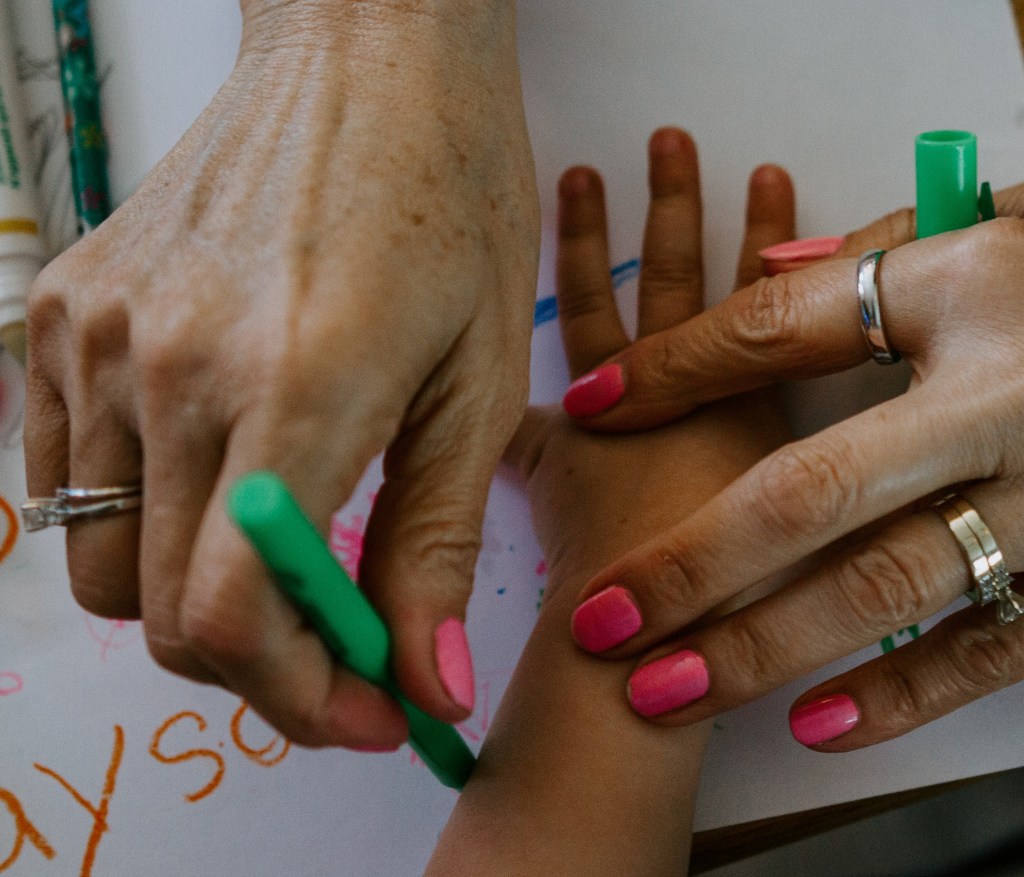
As kids, we traced our hands to help us draw; now, it can help us stay present.

Just like when, as a child, you started a drawing using the outline of your hand by placing it on a piece of paper and tracing the around your fingers with a pencil, you can do the same thing mentally. Imagine the sensation of a point of pressure (say, an invisible crayon) moving up your wrist to the outside of your pinkie, around the fingertip, and down the other side into the hollow between the fingers…and doing the same as it moves up and down each finger until it ends up on the outside of the thumb and travels back down the wrist.

What makes this so effective for me is that it is a simple visualization that requires a bit more concentration, and yet it is still uncomplicated. That means that it gives my monkey mind a little extra to focus on, but not so much that it becomes a struggle.

Try it next time you need grounding and want to trying something different.

Kindness to Cancer Patients

REMINDER: Be nice to other cancer patients and survivors.

It feels weird to write that, because why wouldn’t you? So many of us who have had the cancer experience feel like we want to support and encourage those who come after us. We are driven to help. But that’s not always what happens.

Let me provide an analogy of sorts:

When I was pregnant with my first child, a daughter, I got an enthusiastic positive response from so many other moms. Everyone was ready with helpful tips and good wishes. At the same time, many also started in with stories of their own experiences, often times telling vividly about their struggles and pain and even, “Oh, girls are the absolute worst!”

Some experiences may leave us feeling “unfinished”, needing a kindred spirit to tell our story to. But we need to be aware of whose ear we’re bending.

Why would some women do this? I can only hazard a guess: perhaps because no one wants to listen to difficult stories. Childbirth is a momentous life event brimming with intense emotions that friends and family forget, but the mother in question holds on to because they are tied into so much of her. Her lingering feelings are brushed aside. No one else cares to revisit the labor pains or complications. As a result, tales of the experience are often not expressed until she sees another woman, a kindred spirit, embarking on the same journey.

So, too, with cancer. And it can be a difficult and awkward subject for many, cancer patients or not. Those of us who are breast cancer survivors may want to “talk about it”, and thankfully there are support groups for that. But friends and family may not understand the scope of the emotional fallout. We get comments like, “well, at least you got a nice set of boobs out of it,” and are expected to move on. Conversation over.

And then we see another woman going through this, and it’s difficult to resist inundating her with your own experiences and emotions, all in the name of letting her know that she can get through this, just like you did.

Does it help? Maaaaybe? But as we all know, everyone’s experience is different. What happens is that you’re not “preparing” her for what might come. You’re inducing anxiety in an already stressed-out situation.

I experienced this myself after my diagnosis, when, a week before my surgery, I ran into an aquaintance who had gone through breast cancer treatment several years before. And I know she was trying to offer support and make me feel better, but it didn’t. She made me anxious about my upcoming therapies, including ones that she not gone through herself. While my intent as a newbie was to share about my diagnosis because I felt that she would understand, I ended up being a sounding board for her concerns. Concerns that were valid, definitely, but not appropriate in the context of a very fearful cancer patient.

Offer support without taking over the conversation.

For the record, this was a lovely woman with whom I’ve had numerous subsequent exchanges. There was no ill-will intended. But it’s likely that she didn’t have many opportunities to speak to relate her story to other women, and given the chance, just needed to talk.

And I know that in my exhuberance to show support for other cancer patients, I’ve probably tripped over myself in an attempt to reassure too much. Offer too many hugs. While also trying to be noncommital about outcome. That’s a really messy combination.

So please, let us remember (and by “us” I mean myself!) that sometimes the best form of support for a newly diagnosed cancer patient is simply being there with them and holding space for what they may be going through. They will make their way through the experience, day by day, just like we did. There will be time to talk about the ups and downs of treatments.

But maybe not right now.

Grounding though Contact Points

Lately I’ve been speaking with people who are having a hard time dealing with anxiety, so I thought it would be worthwhile to dive deeper into grounding methods.

For me, hands down, strong neutral physical sensations (with “neutral” being the operative term here) are by far the best ways to pull my head out of swirling thoughts and get back to where I am now on the Earth.

Buttocks and feet are great focal points for drawing attention away from rapid breathing or heartrate.

Currently, I’m focusing on touch points: those places on your body where you are making contact with any surface. This is highly effective because it is well-suited for any situation. You don’t necessarily need to be in a particular position, nor do you need a quiet space. So if you’re in the middle of an exam, sitting in your boss’ office, standing at a podium or walking down the hallway of a hospital, this grounding method can shift you back to the present moment.

The idea is to focus on the sensation of pressure. My suggestion would be to bring your attention to whereever on your body you can sense that contact with a surface, giving preference to places further from areas that might be reinforcing anxiety, such as the chest region and a rapidly beating heart. So, hands, feet and buttocks would be good candidates. If you’re walking, then pay attention to the change in pressure of your steps as you put your foot down and lift it again.

Feel into these body parts, sensing how the pressure feels against them. You can also bring in sensations such as tingling and temperature. Like an investigator, experiencing these sensations as if for the first time, get curious about their quality. If needed, squeeze the muscles, but then make sure to relax them too, so that you’re not clenching. Then see if you notice a difference in sensation.

Try it right now. Go ahead, I’ll wait…

You don’t need a special place to practice grounding yourself. Where you are right now is perfect.

Did you try it? And did you feel anything? The type of sensation doesn’t matter here. The main goal is to get out of your head, which may be in overdrive. Paying attention to what your body is doing RIGHT NOW helps move you away from thoughts of dread and gives you a handle on your reactions.

Important: as with all calming techniques, this takes practice. It is not a one-time thing that you try, nor is it a pill that you pop and everything settles down. The more you practice this, especially when you’re in a peaceful surroundings, the better you will get at shifting your focus during times of anxiety. Just as with a formal meditation practice, it is consistency that will improve your focus and thereby your abilities.

The added benefit to practice is that you will realize you *can* do it, that it *does* work, and you will build confidence in yourself that you can handle it. So in an anxious moment, you’ll be able to say, “I got this” and bring yourself to a more manageable place.

Does Mindfulness Make a Difference?

Yes, yes it does.

I am AWARE.

What used to feel like a jumbled mess of emotions and sensations before, now makes sense to me. Intense feelings don’t come at me as quickly as they used to and there’s more space between a stimulus and my response to it.

There is a PAUSE.

I may still feel overwhelmed by circumstances when something unexpected happens, but now I know what’s happening and can pull myself out of it.

That doesn’t mean that I’m perfectly calm and don’t get frightened, anxious or frustrated. I do. You can see that in some of my posts, because I try to be very honest about what I’m experiencing in the moment. But no matter how deeply I dip into fear, I don’t stay there.

I can find the CALM amidst the CHAOS.

When things get intense, I know how to feel into my body. I recognize the physical sensations and I focus on releasing them. Smoothening them out. Breathing through them.

All those abilities were always available to me, but I resisted calming myself. I am aware that on some level I used to feel that anxiety was a necessary way to express my fear; that it was necessary to descend into fear to express my emotional state to others, so that I would be taken seriously. While it sounds odd to read that now, it was only through learning that I was able to soothe myself that I learned I didn’t need to commit to the torture.

I return to the PRESENT.

When I start thinking about fretful things in my past or fearing the possibilities of the future, I can now recognize that my mind has drifted away and I can pull myself into the present, feeling into my bodily sensations. I can break through the dark tumult that’s enveloping me. And suddenly, the noise is gone and I’m standing with my feet firmly planted in my room. I hear the birds and I find peace.

I know I am SAFE.

I have learned how to feel into my body to help it bring me back to the present and away from fearful thoughts.

I realize that there were behaviors that I engaged in during times of anxiety in the past, like pacing back and forth, that actually soothed my nervous system. Just as rhythmic rocking soothes a child. My body was wise and knew what I needed. When, years ago, the burden of my workload chained me to my desk and prevented me from movement, my anxiety skyrocketed and became almost unbearable. That was a clue, but at that point in my life, I didn’t know how to listen to my body.

Now I know what I must do to calm down and I allow myself to do it. But this change didn’t come about suddenly.

It takes PRACTICE.

Practicing mindfulness meditation when I am at peace allows me to build up the habit that carries me through difficult times. I practice daily. Somedays I can focus on my breath perfectly; other times I lose myself in thought shortly after I’ve begun. Regardless, I don’t give up. Even the “bad meditation” days are better than no meditation at all. Each session strengthens my mindfulness habit.

Every day. No matter what. It makes a difference.

Is It Metastasis or Menopause?

Ever get the funny feeling that something’s wrong?

Like things are a bit “off” but you can’t be sure? I’ve been dealing with that ever since I got off letrozole, an endocrine therapy for breast cancer with a reputation for being difficult to take.

As of this posting, I’ve been off letrozole for 117 days exactly–yes, I’m counting. I’m still shaking off side effects like stupid-crazy joint stiffness, but at least I can tell things have improved.

That’s not what I’m talking about here.

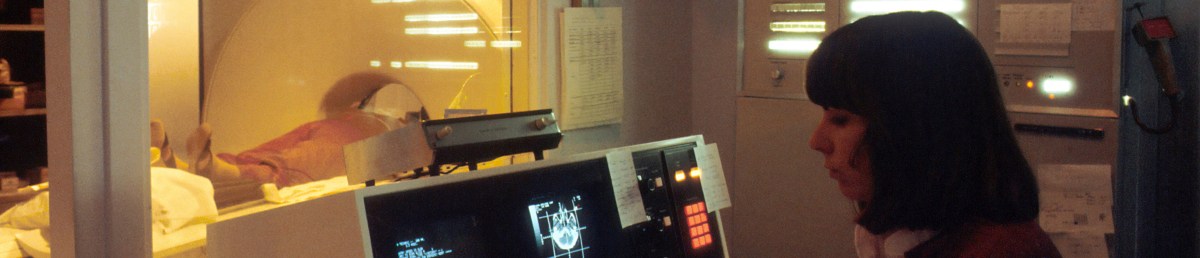
I’ve taken a few rides in the MRI tube already. Not in any hurry to repeat that.

Right now I’m having some “really intense” memory and focus issues. I’ve put “really intense” in quotes, because I talk in superlatives so that my concerns are taken seriously. It’s a bad habit, especially when speaking to an oncologist, because it’s a sure way to end up in an MRI tube. Again.

In the past, my oncologist suggested that my memory problems might have been related to anxiety and not the medications I was on. That’s quite possible, although it’s hard to tease apart “anxiety” and “med side effects”. I mean, simply being told you have cancer causes an immediate spike of the Stress-O-Meter. For someone as anxiety-prone as me, it’s like I’m constantly red-lining.

Now I’m off the endocrine therapy and my memory and distractibility seem to have gotten even worse. What I had before wasn’t like THIS.

It’s kind of like saying, “This hurts. I think I’m being hit on the head with a hammer.” But then you actually get hit by a hammer, and think, “WHOA, now THIS is being hit on the head with a hammer!”

If thoughts are beads on a string, my beads are dropping off at a constant rate, leaving me wondering what I was about to do three seconds ago. And getting distracted by shiny objects. Couple that with having to learn a complex new financial system for work (grrrrr, Larry Ellison), not having helpful documentation to do so and having to go through that while being mainly confined to my bedroom for over a year…yeah, it’s a mess.

I am not being rational and I know it. But I’m still on high alert and dialing my fears down is going to take time.

Because my breast cancer was HER2+–which has been associated with metastases to the brain–my anxious little self immediately thinks, “Wait, maybe this is cancer’s spread stealing my thoughts???” I think that I will forever be jumping to that as the first possibility.

That’s not completely unreasonable, either. According to “Medical News Today”, memory problems are listed as one of the symptoms of brain metastases, along with headaches, stroke, seizures, confusion, dizziness…okay not really experiencing any of those.

And the Mayo Clinic metastasis website asks: what are the most likely causes of my symptoms? So, I admit, a brain tumor probably isn’t, given all the other more likely possibilities: menopause, work stress, loneliness, lack of purpose…and *cough* listening to Twitch video streams while I’m trying to focus.

So really, these memory issues could be a completely normal effect of menopause, but in the cancer context the possibilities are frightening. It takes a lot of perspective to be able to look at what’s going on and realize that it’s not aberrant or dangerous. I feel like an idiot for jumping to the worst conclusions, but here I am…

It’s a survivor thing.

Grounding Through the Fingertips: Hand Steepling

Note: this is another grounding technique, by which I mean a way to retain focus on what is happening in the “now” rather than getting lost in memories of the past, which we cannot change, or succumbing to fears about what may happen in the future. It’s not a woo-woo magical technique. It’s merely being mindful about what is currently taking place so that you can respond appropriately and maintain your composure.

During acute stress, we need to bring ourselves back to the present quickly. By doing so, we are able to clear our heads of the “what-ifs” and “you shouldas” that cloud our thoughts at those times.

But what’s the fastest way to do that? For me, it’s definitely focusing on the fingertips. Each fingertip has approximately 3,000 nerve endings, more than any other part of the body (except the most intimate). When you touch something, all those nerves start firing.

You can take advantage of this sensitivity to ground yourself.

Channel Benedict Cumberbatch’s Sherlock and put your fingertips together.

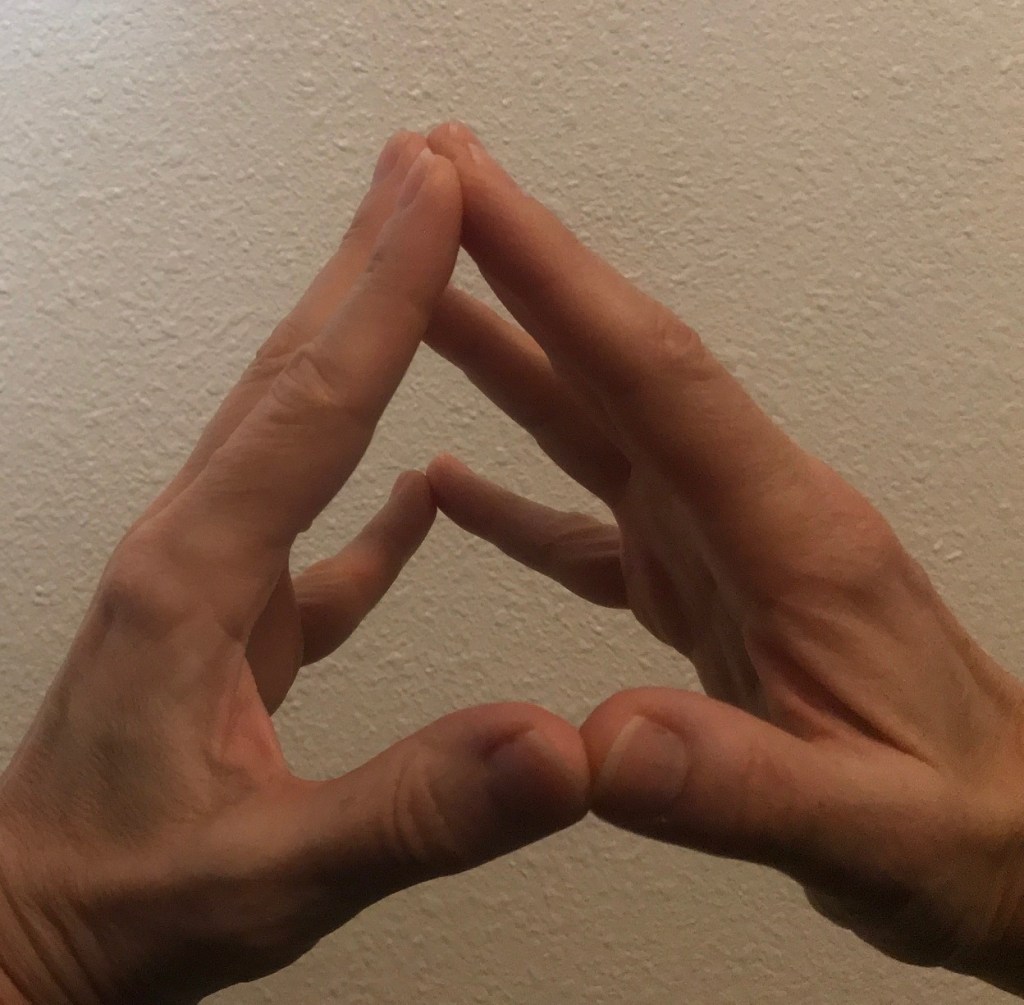
This is what I do: I “steeple” my fingers (thumb against thumb, index finger against index finger, etc.) as if I were Star Trek‘s Mr. Spock contemplating a complex situation. The fingertip pressure immediately commands attention from my fearful mind in the same way that a boss displaying that hand gesture would command an employee’s attention. Taking deeper breaths, I rub my fingertips against each other in a circular motion. The movement enables the nerve endings on the fingertips to keep firing as the sensation continues. Or I can bounce my fingertips off each other, or keep them together but flex the fingers to create a pulsing motion.

Closing my eyes accentuates the emphasis on sensation and makes maintaining focus on it easier.

Yes, this seems so simple, but it’s also quite effective. By placing our focus on the fingertips, we take our attention away from more reactive parts of the body like the chest area, where the heart might be beating fast and ribcage expanding and contracting with rapid breathing. Feeling into those areas might only serve to reinforce the heightened emotions that we’re experiencing.

The hands lie further away from that commotion, and that distance between the chest and our fingertip sensations enables us, if even for a short while, to get some perspective. Think of it as the anxiety not being “in your face”.

We can use body sensations as anchors to help stabilize us through anxious times.

Sometimes, when I close my eyes, all I “see” is that sensation of fingertip to fingertip, as if it’s the only thing that exists. I can play with this, imagining that I’m holding something between my hands, and that the sensation I feel is actually the feeling of that object against my fingers. It can be a pane of glass or even a beach ball. It all depends on what my brain is willing to accept at the moment. It’s a relaxing mental exercise.

As with many things related to mindfulness, it’s helpful to practice this fingertip pose when we’re in a relaxed and meditative state to connect the sensation to a feeling of calm, enabling it to serve as an anchor when our emotional seas are rough. The more we practice, the stronger that association, and the more effective the grounding response when we use this technique in the midst of anxiety.

~~~~~~~~~~~~~~~~~~~~~~~~~~~

Fun fact: body language experts consider steepled fingers to be an expression of confidence. That might be the little boost you need when you’re navigating a stressful event!

Making It Through “Now”

My recent post, Just Show Up, about releasing the need to fight through breast cancer treatment, left out an important concept.

My cancer diagnosis was what I deemed the “worst-case scenario” from the viewpoint of everything that came before. The overwhelm was a tidal wave that caught me and spun me around. Disoriented, I struggled to breathe and find my footing, but it was too much and I was poorly equipped to deal with the news.

Taking on everything at once doesn’t help you keep it together, it tears you apart.

I went through the motions, stumbling through the appointments that now multiplied in number. There was so much information to wade through, decisions to make, upcoming treatments to fear.

Then a co-worker whose wife had been diagnosed with cancer some years before sat down with me and gently offered a valuable piece of advice.

I didn’t have to handle everything at once. Some the decisions could be made later. Each day would bring answers and more clarity. There was no need to load up on all the information. It didn’t help anyone get through these days, all it did was weigh them down.

The path through this entailed focusing on what needed to be done now, and then working on doing that and only that. Just taking that one easy step forward.

All that stuff in the past and the things to come, you can release them. Don’t carry that extra burden with you. Just focus on what’s happening now. And now.

Could you get through the last moment? Good.

Now just get through the next.

The Saga Continues…

I mentioned a few posts back that in addition to stopping letrozole (an aromatase inhibitor) which had originally been prescribed to me as long-term endocrine therapy for breast cancer, I saw a cardiologist. I was experiencing what felt like irregular heartbeats. Since arrhythmias have been associated with aromatase inhibitor use, I wanted to make sure that I wasn’t going from one problem to another.

The cardiologist I met with ran an EKG, listened to my heart and told me he really didn’t think I had any issues. However, he ordered an echocardiogram and a Holter monitor just to be on the safe side. I did both tests.

A week ago, I met with him to go over my results. He was pleasant as always, asked me how I was feeling–I was feeling great, actually, since I was pretty positive that I’d imagined any heart issues because I’d experienced little since I turned in the Holter monitor for analysis. So, if anything, I was a tad embarrassed for blowing things out of proportion. Geez, I’m such a hypochondriac!

That’s good, he said, equally pleasantly. “Because we found something.” Equally pleasantly.

Hang in there, baby!

I had not expected that. What I was expecting was, “everything looks normal.”

However, looks like there were some arrhythmias: supraventricular tachycardia and supraventricular ectopics.

My doc wasn’t concerned. He said that based on other data (72% left ventricular ejection fraction [LVEF]) my heart was healthy and strong.

Ooookay. But I was a little shaky that my concern about extra beats had been confirmed. Because I hate fearing that something’s wrong and finding out that I was right in fearing it! I’d prefer that it be all in my head.

Then we delved further into the echocardiogram. I shifted uncomfortably in my seat.

On the plus side, lots of things were normal. That’s good.

However, way back in early 2018, while I was receiving infusions of Herceptin, my then-cardiogram showed pericardial effusion (fluid where it shouldn’t be), but in a subsequent echo it had “fixed” itself. Well, that was back now. Also trace mitral and tricuspid regurgitation: my valves are a touch leaky. My cardiologist wasn’t too concerned about it. “Wear and tear,” he said.

But he also noted that I had a marginally “dilated proximal ascending aorta.” Right after which he noted that I was tall, suggesting that there could be error in the extremes. But neither one of us was 100% sure whether that was a change from the previous echo, based on how the report was written. And he questioned some of the values, saying that echocardiograms weren’t perfect or always accurate.

Get off one ride and right back on another.

At the same time, he wanted me to come back in a year for another echo. Just so that we can be sure that the dilation hadn’t progressed. “Then we worry,” he said.

I left the office with questions swirling inside my noggin and decided to do some computer research, which I immediately regretted.

First of all, “dilated proximal ascending aorta”, when googled, brings up a gazillion results about aneurysms.

ANEURYSMS.

I know I don’t have an aortic aneurysm. But I have to wait a year to see if the dilation progresses. That’s 365 nights of staring at the ceiling. And I have to make sure to remain calm and not harrass myself into elevated blood pressure, because that can put more stress on the blood vessel and dilate it even more.

Oh, and the supraventricular tachycardia and ectopics? Those are improved by exercise (um, yep, been doing that) AND by staying calm.

Try yoga and meditation, the websites suggest.

Okay, yep, been doing that too.

So where am I with all of this now? Obviously, I need to keep doing what I’ve been doing. But this really does underscore a couple of things:

1) Meditation and mindfulness are critical to our well-being. These are habits to establish now (yesterday!) and not stop. Ever.
2) Cancer casts a long shadow. You might be fortunate enough to earn the title of “cancer survivor”, but that doesn’t mean that it’s all giggles and rainbows afterwards. Cancer treatments are tough and while we’re furiously obsessed with doing whatever we can to minimize the chances of cancer returning (because that’s Job One), someone at some point needs to start thinking about what happens once the cancer is gone and we have to clean up after the long-term effects of the treatments.

Could my heart “issues” (I don’t know if they are serious issues yet) have been caused by Herceptin infusions, radiation to the chest and aromatase inhibitors? Yes, they could have. But could the fact that I am highly reactive and have a strong response to stressors played a role in this? Yes, of course.

Time is moving forward and I’m going to have to keep up.

And does it really matter? No, in all honesty it makes no difference. Whatever happened has passed. My only path through this is a calm heart and solid grounding on the Earth. I’ll know more about my physiological state in a year, which gives me another twelve months of daily meditation and exercise, and an even better appreciation of how my mind generates agony.

Maybe this is what I need to help me get better.

When Is a “Chemo Port” Not a Chemo Port?

When is a “chemo port” not a chemo port? When it’s a heart rate monitor. Except that my emotional brain can’t tell the difference.

For anyone unfamiliar with cancer chemotherapy, a chemo port, or subcutaneous implantable catheter, is a device implanted under the skin (usually on the chest) that is accessed during an infusion to enable easy mixing of the chemo drugs with blood within a major blood vessel. This avoids a good deal of injury to any smaller blood vessels, were you to get chemo drugs via an IV to your arm. (For more info, see this post.)

This is what I had under my skin for a year while I was undergoing chemotherapy infusions. It took some getting used to but I never reached the point where I could ignore it.

As much of a blessing as the chemo port is, having a foreign object pushing up from the chest wall under your skin can give “Alien” (as in the movie) vibes. For me personally, the implanted chemo port was more psychologically taxing than I anticipated, and as soon as all my infusions were done, which took a year, I had it taken out ASAP.

So almost three years after its removal, the chemo port is spooking me again, this time in the form of an extended Holter monitor for continuous heart rate recording, which I’ll have on for almost two weeks. It’s taped to the skin in a fancy patch that you can exercise and shower in, and supposedly you forget that you’re wearing it and go on your daily routine as normal.

But for me, it’s bringing up the spectre of chemo port, and memories of discomfort and pain I felt having that bulge stretching my skin of my chest. I chant my mantra of “it’s ON, not IN” in an effort to distinguish between the port and monitor, but the longer than it stays on, the more anxiety I feel about it.

My Holter monitor (ePatch) sits on the side opposite from where my port did, but it takes up the same amount of space in my head.

All those emotions about the lack of control over my own body, feeling so abnormal and outwardly looking “sick” (not to mention fear of death) are rushing back. The Holter monitor peeks up from the neckline of my shirt, hooks my car’s seatbelt and often seems to be in the way. I find myself moving away from other people in fear of having them knock it or hug me too tightly and cause pain, even though the monitor doesn’t deserve the same apprehension that the port did.

I’m removing the Holter patch today and sending it back for analysis, so that’ll be a big relief. But the power of this reaction is another reminder of the depth of fear that the cancer experience placed within me.

~~~~~~~~~~~~~~~~~~~~~~~~~

So why am I wearing the heart rate monitor anyway? I was having little cardiac “episodes”, particularly over the last year, and this was one of the (many) reasons for discontinuing aromatase inhibitors. Mainly these were sensations of skipped or extra beats or an odd “fluttering”. I’ve already had an EKG and echocardiogram, neither of which apparently showed anything abnormal (I haven’t received a final report of my echocardiogram but had been told that the cardiologist would contact me if he found anything problematic, and it’s been a week and a half, so I’m guessing everything’s okay?).

Okay, it’s off. But it’s left its mark on me. I’m hopeful I can get rid of this impression faster than the port’s. Chant with me: “ON, not IN…”

The Holter monitor was the last step in looking for arrhythmias or similar issues. And wouldn’t you know it? The further I’ve gotten from stopping aromatase inhibitors, the fewer episodes I’ve experienced and haven’t felt anything distinct since I got the monitor. What I’m feeling is very occasional, subtle “sensations”…but these may turn out to be nothing. I’m okay with that. As a matter of fact, I’m not even worried about what the data might show.

I just want this thing off me.

And Here We Go Again…

If there is a time that I’m going to feel anxiety, there’s a good chance it’ll be during my yearly mammogram. This year it came around the same time that my oncologist gave me permission to stop letrozole (and there was stress preceeding that appointment), but also great fear associated with my perceived cardiac arrhythmias, for which I have several visits with a cardiologist lined up.

Sometimes it feels like the stressors keep coming and coming.

To top that off, a family stressor followed on its heels, which I won’t go into but one that portends difficulties in the future. This last anxiety-provoking event used the previous stressors as a springboard and exploded into something even bigger. I was primed for anxiety and it took me for a ride until I found the traction to dig my heels in and slow down.

The worst part is, none of this stuff will simply go away.

Often, when people speak of anxiety-provoking events, they’re described as stressful things like a tense meeting with the boss or college finals or tight work deadlines. Admittedly these are all nerve-wracking, but they are also time-limited.

Then we have something like cancer.

I remember listening to a talk about anxiety where the lecturer tried to give the audience perspective about what was really going on, and he asked: what’s the worst thing that could happen? “You’re not going to die,” he assured us. And it’s true: let’s say that you fail all your final exams, but you’ll survive, even if you have to retake the classes.

Cancer survivors can attest to the fact that we suffer a different flavor of anxiety. There is no deadline on our stresses. They are thick and cling to us, like caramel sauce on the inside of a coffee cup, thinned by the passage of time, but leaving a film on our lives. Our hope is to get past the two-year mark, then five. Ten, if we’re so lucky.

Often, we hear about the success of treatments only to realize that the success is based on the majority of patients lasting until the end of the study, which might have been only five years.

Having someone tell you that you have a 95% chance of surviving five years is, well, underwhelming, especially for those of us who had premenopausal breast cancer. I mean, yeah, I HOPE I can last five years.

When you are here now, negativity fades to the background. Even if only for a little while.

So, what to do? If there were ever a time to practice non-attachment, this is it. For some of us (present company included), it is excruciatingly difficulty to release expectations–I want, even NEED, to be assured that everything will be okay and then rest easy with that.

But I promise you, clinging to the desire for things to be different only causes suffering. It also robs you of the joy of what you are experiencing right NOW–a beautiful sunrise, the softness of a pet’s fur, the richness of a cup of coffee, the coziness of a warm blanket. We are so wrapped up in fears of what the future holds that we miss the magic of what is before us.

Now is the only moment that exists, so truly, it’s the only moment that is real and certain.

Everything else is either history or what we concoct in our minds.

So this time of the year, I have to sit back and sense the Earth under my feet, feeling into how it supports me. This is what it feels like to be here now. No matter how many times I remind myself of this, I know I’ll have to do it again when the next stressor hits. That’s okay.

~~~~~~~~~~~~~~~~~~~~~~~~~~~

This isn’t the first time I’ve written about anxiety and it certainly won’t be the last. But practicing mindfulness, every time I go through this experience, I reign in my emotions a little earlier and start feeling better a little faster. When I look back at what happened I realize I’m making progress, and that’s what really matters.