I wanted to share a little technique that I’ve been using to give myself perspective. It’s quite simple: I have a small brown paper bag pinned to the wall above my desk.
The bag is there to remind me that most of the things that are upsetting me or stressing me or just taking up headspace in the moment are transient issues that fit into that paper bag. The REST of my world remains outside that bag and unbothered by whatever is going on in there.
The trick for me is to not get sucked into that brown bag. When that happens, and it does, I’m suddenly whirling around with all the daily stressors and emergencies-of-now, and that’s all I see. My entire experience becomes those anxiety-provoking elements and my stress levels skyrocket.
When stress levels are high, it’s easy to get sucked into a space of high anxiety where you see only those stressors, forgetting that the rest of the world is outside.
It takes a lot more effort to fight my way back out of there than to stay outside in the first place.
At the same time, it’s so easy to follow all those stressors right into that bag. For me, that’s the path of least resistance, even a habit.
But when I lean back and take in the entire picture–the time-limited nature of what’s bothering me and the fact that in a couple of weeks it’ll be gone–my view broadens and I am reminded of what else is going around me right now, in this moment.
Right here, where I feel my feet planted on the ground. I smell the scent of lemon wafting up from my diffuser. I’m aware of sounds from the street below and sunshine coming in through my window.
Perspective. All of these things tumbling around inside the bag will pass. And, yes, perhaps more importantly, new ones will bubble up and take their place. I can’t stop that and I have to accept it. But I can take a deep breath and stay in the bright light of the day instead of darkness of that little bag.
Since we’re halfway through October – Breast Cancer Awareness Month – this is a good opportunity to remind everyone who’s had a cancer diagnosis that you’re still in control.
That might be very different from what you’re feeling. The whole thing with cancer is the sense that your life is out of control. Even your most faithful ally, your body, seems to be out to get you, growing a tumor behind your back.
Does it feel like someone else is controlling everything in your life?
That’s to say nothing of how your weekly schedule gets highjacked with oncological appointments, radiation treatments and days recovering from chemo. Then there’s the onslaught of new medical terms, the many pills that you’re supposed to take, even the practically unpronounceable chemotherapy drug names (what kind of a suffix is “-ib”???).
If anything, this might feel like the most out-of-control time of your life. When you’re slapped with a difficult treatment plan, you want it all to stop, but your oncologist tells you, “we won’t let you skip an infusion or stop taking your medication.”
That sense of being forced to do something (especially when it’s unpleasant) can open the floodgates to a deluge of anxiety on top of the fear and frustration that you might already feel about your cancer treatment. No one wants to feel like they have no say in a matter that affects them so deeply and personally.
This life is yours…and so are decisions about your cancer treatment.
But remember this: you always have a choice. Even though your medical team might not be phrasing it that way, you are still in control.
Perhaps this tiny acknowledgement may relax some of that perceived pressure and actually make it easier to continue. Your cancer treatment choices remain yours to make, so allow that realization to help you to step back, get perspective and weigh your options. When you demand space for yourself, you have room to think and it’s easier to act in your own best interest.
So, breathe. You’re still calling all the shots.
And, hey, medical team: maybe stop being so pushy and remind those cancer patients that they get to make the decisions about their treatment and their lives. It would go a long way towards helping your patients feel better about their treatment plans, like they’re part of the team instead of a prisoner of their situation.
Ah, anxiety. I hate it but it’s such a fixture in my life, although it’s gotten better now that I’ve become more aware of the nuances of my reactions to stress.
That awareness was key, but it took a while for me to figure it out. I had been told to “feel what the response to anxiety feels like in my body”, but lemme tell ya, when you’re in the middle of being really stressed out, the only answer you can give is: “TERRIBLE!”
I think the way this suggestion has been posed is all wrong. It wasn’t until I started mindfulness meditation that I finally understood what was really the point of feeling into body sensations.
First of all, in case you’ve been fortunate enough to never experience severe anxiety, here’s how to imagine it: (1) turn on a really large blender, (2) stick your head in it. That’s about it. Then, when someone asks you to feel what body sensations you have, you answer, “Dunno, my brain is missing.”
If serenity is a clear day, this is anxiety.
Basically, in the midst of anxiety, there is so much that feels out of control that I don’t think it’s possible to lasso down sensations without having a person hold your hands, look into your eyes and say, “Okay, focus on me and do this…”
And that, my friends, is why scratching out even the slightest bit of space for yourself in a stressful situation, just so that you are not 100% caught up in the whirlwind, is so beneficial for getting yourself through it.
Just like you don’t wait until the day of your first marathon to start training for it, you need to prepare for the next tornadic episode of anxiety before you’re in it.
Become your own Professional Stress Manager. That takes practice, primarily when things are peaceful. Just like you don’t wait until the day of your first marathon to start training for it, you need to prepare for the next tornadic episode of anxiety before you’re in it.
Job One is bringing yourself out of the swirling thoughts in your head and that can be hard to do, since they are where your anxiety originates. That’s why you have to re-direct your attention to something outside your mind, and that’s where focusing on body sensations comes into play.
First, find stability and grounding.
First, find yourself an anchor, like the oft-mentioned breath, and start with that. Focusing on the breath gives you a target for your attention when everything else feels crazy. There are a variety of sensations associated with breathing: the rush of air, expansion of the chest, expansion of the belly and whatever else is salient to you.
Pick one that makes sense. It is expected that you won’t be able to maintain your focus on it and your mind will wander off. That’s OK. In fact, the whole point of this is that you DO lose your focus. And once you realize that you have, bring your attention back to your breath.
And that’s it. That’s ALL of it. It doesn’t get more complicated than that.
And when you’ve achieved some sort of stability there, you’ve made yourself some space. Take advantage of that and bring your attention to other parts of your body, with one eye on your breath: is there a tingle in your fingertips? How about your toes? Are you clenching any muscles in your body and what happens if you try to release them?
Ask yourself, “How do I know I’m anxious?” What are the signs? Face feeling hot? Stomach bunched up? Cold feeling in the intestines? Tightness in the chest? Can I take a deeper breath and try to relieve that tightness? Can I send warmth into my gut? Try to define what anxiety means to you on a physical level. The more you do that, the more control you get on your reaction and the experience is not as frightening.
See, the idea is that you need that fingerhold in the crack between your stressor and your reaction to it so that you don’t get swept up in the lack of control. And establishing that will take some practice and time, but as with any exercise, each practice session will benefit you. And then best time to start is now.
Anyone who’s been through cancer knows that the experience is not just about the cancer. The entire journey involves much more, revealing even the little anxieties that had been tucked away in dark corners.
One of those for me was that I was constantly put on scales. EVERY single doctor’s visit, I was weighed. And I hated it.
It’s worth mentioning that I don’t have what most people refer to as a “weight problem”. Unless, that is, you mean being exceptionally diligent that I not put on weight. For me, weight was tied to self-worth, and in my perfectionist view, I was driven by fear of shame to keep my weight down.
At every single (frequent!) oncologist visit: “Step on the scale and I’ll get your weight.”
Ironically, the positive side effect of this was that I became very interested in exercise and healthy eating, and that has served me well. But of course, it took a long while for all of this to shake out into a truly healthy mentality, and particularly in my teens and early 20s, my mindset was not the healthiest.
By my 50s, however, I had a great relationship with my active, healthy lifestyle.
And then I got cancer.
And all of a sudden, hospital scales were all over the place, and even not being overweight, I sweated the weigh-ins. I sweated them when I first went to see my doc about the lump, when my weight started plummeting even before my first chemo infusion (hello, uncontrolled anxiety) and when post-infusion I was retaining water and my weight crept up.
I could write an entire post (or several!) about how, while I religiously weighed myself twice a week at home, I had intentionally put off several doctor’s visits over the years NOT because I was 10-20 pounds over a reasonably healthy weight…but because I was about three pounds higher than I felt I should be. Those three or four pounds would have disappeared on my 5’11” athletic frame, but that was beside the point.
There was an “acceptable” number and I wanted to make sure I was there before heading to the doctor.
The number of cancer visit weigh-ins was staggering. Every.single.time I saw the doctor (which was a lot), I had to hop on the scale. I would purposefully not drink very much water or eat less beforehand. It DID NOT EVEN MATTER that we were dealing with a life threatening illness. I absolutely hated getting weighed in a doctor’s office and I hated what the scale meant to me – that I was somehow never good enough.
Since adopting a spirit of mindfulness, my perfectionism has softened and I no longer abhore the weigh-ins like I used to.
I had internalized that belief.
Gradually, the number of weigh-ins decreased. It was as if a pot that was at full boil slowly simmered down. My mindfulness practice showed me not only that anxiety was not a helpful reaction to a stressful situation, but that the slight weight fluctuations that I obsessed about weren’t apparent to anyone else. Nonetheless, I had taken them to be indicative of yet another way that I felt I had fallen short of the person I “should have” been.
And that helped me understand and begin to deal with those unreasonable and even meaningless expectations I had of myself that were still lurking in the shadows.
So now, when it’s time to go to the doctor, do I fret the scale?
Well, I still feel that twinge because it’s a deeply-ingrained habit, but now I understand where that twinge comes from. And once I get off the scale, I forget about it and go on with my day.
I’ve posted several times about different counting techniques that I’ve used to help calm and ground myself (counting backwards, counting 100 breaths). It sounds like such a simple thing, but it is surprisingly effective.
Counting is one of those things that we naturally learn when we are very young, and because it’s so familiar to us, we can do it with ease as adults.
Job #1 is to stop the swirling thoughts so that you can drop back to sleep.
This ease comes in handy when our Monkey Mind is jumping around like mad, stewing over what has happened or fearing for what is to come. Counting gives it something to do so that its attention is drawn away from anxious thoughts.
In particular, I’ve found this to be useful at night when falling back to sleep has been hindered by that incessant buzz of thinking that won’t go away.
The technique that I’ve used over the last few weeks weaves a counting pattern like this:
Become aware of your body lying in bed. Try to soften the most obvious places of tension (for me, neck and shoulders) and turn your attention to your breath.
Begin by focusing on your inhales of your breaths and counting them, up to ten. Then, switch your focus to your exhales, counting each one up to ten. And again, switch back to focusing on the inhales, continuing this way
The combination of counting up to ten and focusing on either the inhales or exhales provides enough of a distraction from your thoughts, but requires some gentle attention to keep on track. The switching of focus invites your mind to return to the breath.
Counting sheep might work just fine, but counting breaths helps you stay present and grounded.
I’ve found ten to be a very good number; however, five would also work. Whatever you prefer. This might require experimentation to see what is best for you. For example, counting to two might work better for some people during waking hours when there is naturally more stimulation around.
As you establish a pattern with your breath, extend your exhales regardless of where your focus is. This helps slow both your breath and heartrate.
Again, this technique works because counting to ten is simple and unstimulating, allowing the mind to lull itself into a calmer state. When I find myself missing ten and instead counting into the teens without switching my inhale-exhale focus, I know that I’m beginning to drift off. I gently stay with it, but sleep is nearby.
In my continuing quest to find ways to calm myself and soften anxious thoughts, I often resort to visualizations. They are effective in putting the breaks on distressing thought patterns, creating space and encouraging a broader perspective.
My clinical counselor offered the visualization I’m introducing here. It works similarly to “thought container“, which is a visualization in which you create a container for your stressful thoughts, put them in there, lock the container up and place it on a shelf.
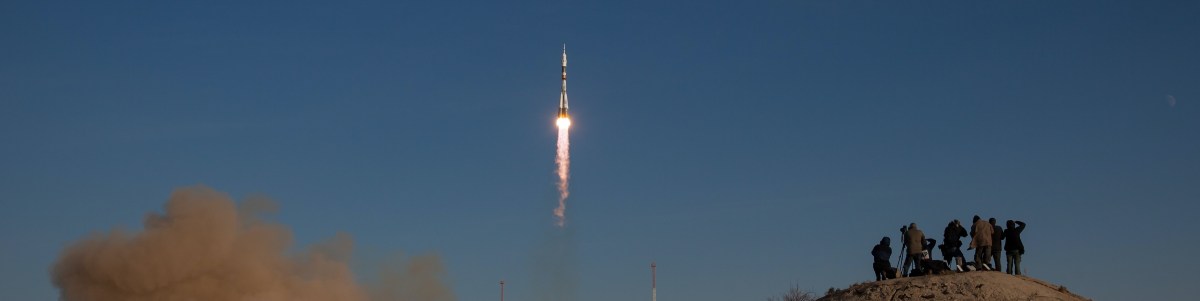
You decide how you’d like your rocket to look. Serious and foreboding or cute and shiny?
However, this one goes a step further. For this visualization, imagine a shiny space capsule on a launch pad, of whatever style and era that suits you. Gather up your troubling thoughts and send them towards the capsule, marching them up the ramp and in through the door. You can wave good-bye as the thoughts enter and settle into comfy seats, safely belted in.
Your thoughts are not “bad”. They simply elicit negative reactions in your body. And right now you want to loosen their grip on you.
When all those stressful images are inside, close the airlock/door. It’s up to you how that’s going to look. Perhaps it’s a high-tech electronic door that shuts and locks remotely so you don’t have to be close by. Or maybe it looks like a massive bulkhead, with a wheel that you yourself physically crank shut and secure so that you can be sure that nothing slips out.
When the capsule is secured. Start the countdown to launch. Or just press a button and shoot it off into space immediately. You have full control here.
But here’s the thing: this is a visualization to create distance, not to completely eradicate those thoughts. Because that’s impossible. They will not simply disappear. However, you can give yourself a little break from them, which is what this lauch is about.
Your stressors are still there, but it’s easier to learn to deal with them from down here. Give yourself some space.
Where does the capsule go? To the Moon. It will rocket off the Earth and land on our satellite neighbor. Point your telescope at the Moon at night and you’ll see the capsule, knowing that those thoughts are there but far enough away that they don’t torment you. You’re not trying to forget about them completely. Instead, practice dealing with them where they’re not an in-your-face threat.
In this way, you don’t repress or avoid, you give yourself breathing space and the opportunity for calm.
~~~~~~~~~~~~~~~~~~~~~~~~~~~~~~~~~
I admit that if you’ve been particularly beleaguered by stressors, it would be very tempting to treat the rocket like a clay pigeon and blast the whole thing to bits…and maybe there’s a great idea for a video game there. But truly, it may be easiest to handle them by releasing the thoughts into the ether.
Yes, they’ll be back. And so will the chance to take a deep breath and send them off again.
I have a problem. And if you’ve been reading this blog, that statement won’t surprise you.
My thoughts take me for a ride and it’s a wild one. I’ve gone from being perfectly calm one minute…and the next minute gesturing wildly, face screwed up, whisper-arguing with a person who is not there. I can feel agitation in my belly and an increase in breathing and heartrate.
The story takes off.
I have a solo argument with an invisible adversary. Sometimes it’s someone I know, rehashing past hurts; other times it’s an imaginary situation that my brain concocted, a fear of the future. Regardless, there is always some form of negative state change involved.
When my mind starts creating stories, it’s hard not to jump on board the train and get taken for a ride.
In the past, I would have barreled along like a runaway freight train, exhausting and unnerving myself. It became a habit, like an itch I needed to scratch. It was so hard to stop those thoughts once the train started rolling along.
Mindfulness changed that, but it took time to develop awareness. I learned to ask one very simple question of myself as soon I realize that I’m being swept away by that torrent of brain activity.
Three simple words: where am I?
This works like magic for me. It’s instant grounding.
That’s because the train screeches to a halt and I shake off the mental noise and look around myself. I’m usually somewhere alone. There’s often some far away street hum or something else not very intrusive. I feel where my body makes contact with whatever surface I’m on.
As soon as I poke my head out from the noise, I realize that I’m on the train. And I get off.
I am HERE. And in this moment, I am safe. Regardless of all the thoughts that suggest otherwise, I am safe.
It doesn’t mean that there aren’t problems that will need solving or work that needs to be done. But all that noise that was panicking me just a bit ago? I am reminded that it doesn’t exist right now. And right now is the only moment that matters.
Three simple words. Man, if I’d known this years ago, I could have saved myself so much heartache. But at least I know now. And now, so do you.
Throughout my primary and middle school years, I thought I had powerful extra-sensory perception. Actually, it might have even been longer than that, although I’m embarassed to admit it.
I blame my older brother for this. We were in grade school and my grandma had just passed away. Due to the arrival of a number of relatives for the funeral, we were left alone to entertain ourselves. As we turned off the lights for sleep, he and I somehow got on the topic of extra-sensory perception and decided to test it out.
One of us would think of a number and the other would guess what it was. I guessed correctly, over and over again. I would “see” it through my closed eyes as I concentrated. I didn’t miss a single one and my brother was very impressed.
When I was young, my older brother convinced me that my mind had special powers. Well…he wasn’t exactly wrong.
I fell asleep that night believing that my dear grandmother had imparted me a special gift with her passing, and I felt that I had undisputable empirical evidence of it.
In reality, my claim was on shakey ground, but I had already convinced myself that there was something magical there. In fact, I began seeing “evidence” of it everywhere. These couldn’t have possibly been coincidences, could they? I started fearing that if I could see something as a possibility, it would actually happen. As a result, I fought to keep certain thoughts out of my mind. Avoidance, anyone?
Some years later my older brother admitted he had fibbed to me that night, that no matter what number I “saw”, he would pretend that was the number he was thinking about. He thought it would be funny.
But by then, the latent fear of my thoughts was ingrained in me, even though I knew that triggering event had been a lie. What was true, however, was that my mind had always been very powerful. In one instance, I experienced intense pain that I couldn’t explain, lasting several days. While I was vaguely aware that this pain disappeared upon the release of a stressor, I didn’t realize that it was psychosomatic –literally something my mind created that had been expressed in my body.
My mind also had the power to hijack my thoughts, amplifying negative feelings. I was anything but grounded. I managed to plow on, garnering notable academic achievements. But there was always a sense of fear in the background and since it ran unchecked, eventually it overtook me and pointed my life’s path in a direction quite different from that of my peers.
Wish I’d realized way back when that life could “magical” in its beauty without having to be supernatural and out of my control.
Lacking awareness of how my mind operated meant that I didn’t realize why I was making the decisions that I was. It took years, even decades, to understand that so many of the things I had feared originated in my mind, affecting my interpretation of whatever input I was receiving.
Now, after all these realizations and a number of painful lessons, my world is not as “magical” as it used to be, but I am better rooted and grounded. And that feels a lot better.
What about “ghosts”?
When I live in the present, I am safe and secure. Those unexplainable occurences that I attributed to otherworldly origins have become much more explainable. And I’m well-aware of how my mind has twisted meaningless common things into terrible foreboding ones.
There are quite enough frightening things in the material world (cancer, wars, having my email account hacked…) that there’s no need to search the paranormal world for their cause.
~~~~~~~~~~~~~~~~~~~~~~~~~
A 2021 survey of 1000 Americans revealed that 2 out of 5 people believe in ghosts. I am not here to contradict their beliefs, and frankly, when I talk of “ghosts” I don’t mean spooks. At the same time, I learned the hard way that my mind wasn’t always reflecting 100% truth. I was compelled to take inventory of what was bouncing around in my noggin and decided that, while I can’t neatly explain everything going on around me, it’s harmful to let my thoughts run wild.
One of the benefits of doing a yoga teacher training (YTT) is that there are some interesting side effects that go far past learning about yoga instruction.
It also involves a great deal of introspection, sometimes uncomfortable, but always valuable.
Signs of stress are pretty universal and usually unmistakable.
What I found curious about myself was how, when I was stressed, I exhibited loads of visible signs of stress even if I was aware that I was doing it. It was as if I didn’t want anyone to mistake me for not being stressed when I was.
This made me wonder, was it simply habit? Or was I being a drama queen? Stress does affect me deeply and anxiety is hard for me to shake. It’s possible that I feared not being believed that I was suffering.
Perhaps I needed people to care that I was not okay.
But I came across a recent research article about this that suggested an even deeper reason. UK researchers Whitehouse et al. (2022, Evol Hum Behav) conducted a study in which it appeared that individuals displaying signs of stress came across as more likeable and more likely to elicit support from those around us.
This is curious because often in nature, showing “weakness” may result in a greater chance of being attacked. But apparently it doesn’t work this way in human society. The researchers postulated that signs of stress suggested that the individual might be deemed friendly and not a threat.
I can attest to the fact that seeing someone displaying anxiety immediately triggers a strong empathic response in me, no matter who the person is or what they’ve done. Having suffered anxiety myself, I am immediately drawn into what the individual might be feeling, projecting my own feelings onto them.
Yeah…don’t be this.
And it is very true that I’ve often gone out of my way to look more friendly, less scary, particularly when it comes to people smaller and weaker than I am (I’m 5’11”). I have a drive to appear less threatening. However, this does not necessarily benefit me–does the term ‘doormat’sound familiar? When you lower yourself far lower than is even remotely necessary, you’re not doing anyone any favors.
This explains a lot about my own life and it underscores the importance of being aware of your behavior and why you engage in it. When you run on autopilot you risk reinforcing negative self-beliefs and even generating new ones. Self-awareness is the antidote to that.
So that is what I’ve been musing about. YTT provided me with space from which to reflect on the ways that I behave and feel in certain situations. In turn I can use that information to make much needed changes in my life and get myself unstuck. How about you?
~~~~~~~~~~~~~~~~~~~~~~~~~~~~~~~~~~
Original research article: Whitehouse J, Milward SJ, Parker MO, Kavanagh E, Waller BM (2022). Signal value of stress behaviour. Evolution and Human Behavior; DOI: 10.1016/j.evolhumbehav.2022.04.001
I’ve posted previously about the sensations I’ve experienced in the midst of anxiety, as if the stressor is right in my face, raw and unescapable.
Combatting this feeling has been my number one priority, since anxiety overtakes me before I even know it, triggering my fight-or-flight response. Once my sympathetic nervous system gets going, getting it “back in the box” can be difficult, possibly taking days, depending on the intensity of the stressor.
Anxiety can make us feel like we’re trapped and suffocating.
My current strategy is to create protective distance for myself in a very simple way. And it consists of visualizing an expansion of the space around my body.
It goes something like this: Imagine you are inside a deflated balloon. If you are experiencing tighteness in your head or chest, this serves as an effective analogy, particularly if your balloon is constricting you. Without letting your mind be consumed by the tightness, allow yourself to acknowledge the stressor that surrounds you.
Then, taking a deep breath in, exhale through pursed lips and inflate that space around you. Imagine how it feels to expand the balloon and release that clinging sensation. Feel the fresh air moving against your skin as the space around you continues to broaden.
Maybe you begin with the area around your head first, as if creating a bubble around it allows oxygen to flow freely, then move the expansion towards the torso, protecting and releasing the heart, lungs and other vital organs.
Or perhaps begin with the chest if that’s where the constriction feels greatest. Anxiety can squeeze your breath, so focus on mentally removing that weight from your sternum and ribs, visualizing an expansion of the free space around your chest with a deliberate slowing of breath. This takes some work, a back-and-forth between imagining space expanding around you and your breath taking advantage of the room that it has.
Breathe, expand and feel the space!
If your chest is mired too deeply in anxiety, turn your attention to your extremities, starting with the feet and hands, getting a foothold there and allowing the sensation of space to move slowly towards the center of your body.
The idea is to E-X-P-A-N-D the space around you, dispelling the feeling of closeness and suffocation that results in the wild urge to flee. Note that this is not avoidance of the stressful situation. You are acknowledging its existence…and then creating room so that your brain has space and time in which to think, to know that it’s protected from words and sensations and fearful possibilities. To know that it’s safe in the “now”.
Try this the next time you have a quiet moment. As with many of these techniques, it is helpful to practice in times of calm, to feel into what that sensation of space feels like. The more we practice, the clearer and more familiar that sensation becomes, and we can draw upon that feeling during stressful times.




















 Frantic Shanti