I wanted to revisit the issue of having an important thought pop into my mind in the midst of a meditation session, and how I’ve ultimately allowed myself to deal with it.
For some background: in mindfulness meditation, we are taught to let go of thoughts and focus on the breath. But with all the cancer treatments that I’ve had, memory is collateral damage. During the course of a regular day, I have thoughts go POUF in the ether — and sometimes they’re important things that I really should remember. Ironically, I’ve had them return to me while my mind is still and uncluttered, as during meditation.
I’ve been told that during meditation if a thought that you need to remember comes up, you should make a “mental note” and release it, and then come back to it once your meditation is over.
If an important thought comes up during meditation, you better believe I’m writing it down!
Well, lemme tell ya, that simply no longer works for me since there’s no guarantee that a “mental note” will work. When that thought pops into my head, I’ve decided to pause my session and write it down.
You could say that I’m not supposed to do this, but I know that this is the only thing that works for me — I can record the thought and not spend the rest of the session worrying that I’m going to forget it, which might otherwise consume the remainder of my meditation.
I feel that mindfulness teachers would agree with me that mindfulness should flow out of your situation. It works with what you need, allowing you to appreciate this moment. In the Mindfulness Based Stress Reduction (MBSR) classes that I took, we were always told to take care of ourselves, to make sure that we were comfortable and secure.
It became apparent to me that I wasn’t going to look like the meditators that we see when we google an image of one: seated in lotus position, palms up with thumb and forefinger touching. That wouldn’t be conducive to a prolonged session for me.
This will not be me anytime soon.
While I do own a meditation cushion, I prefer to sit in a chair during MBSR workshops, since my joints ache and legs go numb if they’re crossed for too long. And when I’m home, sometimes I’ll lie on my back during meditation with my legs up a wall in the pose called Viparita Karani. This is very soothing for me because, again, I have problems with my feet, and this not only helps with the weird numbness but also lessens the chance that I’ll experience restless leg syndrome.
I believe that mindfulness is not about living up to someone else’s idea of perfection. Nor is it a competition to see who can meditate in the most uncomfortable position. It is staying present, noticing what is happening right now, in this moment. I can do this much better if I’m not fighting pain.
So I don’t focus on the concepts of “right or wrong”. Getting to this point took some doing because I am by nature a perfectionist. But part of my mindfulness journey has been simply releasing that rigidity of what I think I “should” do and finding peace in doing what is best for me.
~~~~~~~~~~~~~~~~~~~~~~~~~~~~~~~~~~~
I remember as a young child listening to a missionary priest talk about his travels. He spoke of a little boy tending sheep in a field who had come up with his own prayer: he had a handful of pebbles and was talking to God, saying “one for you, one for me, one for you, one for me” as he made two little piles.
That was the way he prayed, and the priest said that it was exactly the way that suited him. He might not have been doing it “right” according to the teachings of the Church, but he was praying sincerely and lovingly, and that was what really mattered.
During my last oncologist appointment, I was told it was time for a chest MRI.
The last time I had one of those, I was barely holding it together–it had been a couple of weeks since my breast cancer diagnosis an dI was in an emotionally fragile state.
But that was four and a half years ago. This time, I was fine. I thought.
In case you’re never experienced one, the bilateral chest MRI is not particularly comfy. You lie face-down, your breasts hang between two open slots beneath you and your arms are outstretched in a “superman” pose.
I was a bit taller than they expected…things didn’t completely fit.
And you hold that for a specified length of time. I seem to recall almost an hour last time in 2017, but this time it was only a half hour. Which is good, since I had a hard time getting comfortable–based on how the MRI bed was set up, they hadn’t expected me to be quite so tall.
And since I needed “contrast” in my MRI, I was hooked up to an IV for infusing gadolinium. But the veins on my right arm (which is the only one I’m supposed to use) have seen a lot of wear and tear. Yes, they bulge and look nice and juicy. But it’s a lie. Only after some false starts–the first vein the nurse tried was a bust–did we get the IV going.
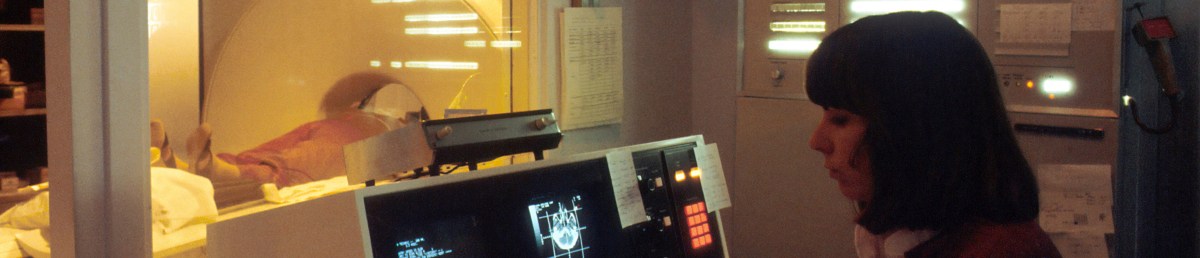
The MRI machine looked shiny and competently high-tech. I got to listen to spa music through headphones, which is kind of funny, since it’s like being at a spa where they also bang pots and jackhammer while you’re getting your treatment. In case you’re not aware: MRIs are LOUD.
Ironically, there’s something quite positive about that: the percussive nature of the noise has an almost lulling effect–if you let it. This worked quite well with my strategy of meditating throughout the procedure. Breathing was not particularly comfortable because of pressure on my ribcage (again, due to my height and positioning on the bed), so I chose not to focus on it.
The dressing room was cute, but I couldn’t help feeling so alone in it.
Instead, there were many other bodily sensations that I could pay attention to. At times, I could “feel” the MRI in my hips and spine. I focused on the weight of my body on that bed and on releasing tension whereever I sensed it. Compared to the previous chest MRI, I felt a sense of grounding.
But there were little cracks in my composure. I took a picture of the cute little dressing room where I changed and left my clothing. It was lightly decorated with homey touches. At the same time, it looked so empty: my gown on one chair, my belongings on another. Briefly, I felt small and alone.
After unsuccessful attempts, the IV was connected, and I remembered the feeling of expecting that things were just gonna hurt.
After I got home I removed my bandages from the IV arm and looked at the crook of my elbow, and it reminded me of all the pokes that I’ve endured. All the discomfort that I learned to expect and not question if it was necessary, because it always was. And I fought back feelings of helplessness.
It’s not all bad. This time, I had a better grip on things. I wasn’t even thinking about the MRI the next morning when I went grocery shopping, until…
…I saw a call come through from my oncologist’s office. And suddenly my heart started racing. It was a pure knee-jerk reaction. The voice on the other end told me that the MRI looked normal and my oncologist would see me at my next scheduled appointment next year.
It took a bit for my heart to calm down. I hadn’t been worrying about the results, certainly hadn’t expected anything bad, but wow, when that phone rang, it was as if my brain yelled at me, “Time to PANIC!”
This ride in the tube had a happy ending. But there’s no mistaking all the anxiety bubbling under the surface. Try as I might, I am always going to associate these procedures with fear and possible death. Memories of what happened a few years ago are not going anywhere.
And that’s okay. Because even though my reactions to those memories may still be stressful, I can accept that this will be the case and not expect them to be otherwise. And that acceptance is one of the most valuable skills that I’ve learned.
The last time I was researching the link between cancer and sleep, noting the myriad benefits gained from solid nighttime rest, I was surprised to see mention of melatonin’s role in decreasing the risk of cancer.
For anyone who might not be familiar with it, melatonin (a tryptophan derivative) is a naturally-occuring hormone secreted by the pineal gland that signals when it’s time to sleep and wake. It’s mediated by light levels, with the amount of melatonin in your body increasing as the sun goes down. You’ve probably seen melatonin on the vitamin shelves at your local store, as in recent years it’s been popularized as a non-addictive sleep aid. What I hadn’t realized was that its effect on cancer cells has become an active area of study.
I dug into the PubMed database to find there was quite a bit on this topic. However, note that not all the journals in which these results were published were familiar to me, so I cannot vouch for the rigor of the peer review, however, there was a general consensus that melatonin showed promise.
Melatonin shows a lot of promise as a cancer fighting hormone.
It’s well-established that women who work night shifts experience disruption of their circadian cycle and have an increased risk of breast cancer risk, purported to result from extra circulating estrogen (Cohen et al., 1978, Lancet). Researchers are now linking that disruption with a decrease in melatonin production.
Amin et al. (2019, J Cell Biochem) describe the action of melatonin as it relates to cancer: “Melatonin via its receptors and various second messenger pathways decrease[s] cell duplication and increase[s] cell differentiation.” Since cancer tumors are composed of a proliferation of poorly differentiated cells, this means that the action of melatonin works against the process by which cancer develops and progresses.
Amin et al. continue by noting that melatonin “regulates estrogen-dependent pathways (by nonreceptor-dependent means) and reduces the production of oxidants; as a result, melatonin inhibits cell toxicity and mutations….Melatonin interrupts estrogen-dependent cell signaling and also causes reduced estrogen-stimulated cells in breast cancer. [It] is a mammary tumor inhibitor…[as relates to the] development, progression, and metastasis of breast cancer via a number of molecular mechanisms.”
A randomized, double-blind, placebo-controlled research study showed that melatonin has a neuroprotective effect that can counteract the effects of chemotherapy on “cognitive function, sleep quality and depressive symptoms” (Palmer et al., 2020, PLOS One). These are significant side effects that have a profound impact on the patient’s quality of life, and anything that may relieve these will improve the entire treatment experience.
Griffin & Marignol (2018, Int J Radiat Biol) noted that melatonin administered to subjects before they were exposed to ionizing radiation resulted in the breast cancer cells being more sensitized to the radiation therapy, rendering it more effective. And melatonin seemed to reduce the radiation-induced side effects exhibited by both human and rodent subjects.
No matter how many drug treatments are available for cancer, they do no good if the cancer cells develop a resistance to them. In a study published this year, Sang et al. (2021, Cancer Lett) found that melatonin increased the effectivess of drug lapatinib in HER2 receptor-positive breast cancer cells that were originally resistant to the drug, suggesting that melatonin could be a promising adjuvant therapy for treating advanced HER2+ tumors.
So, melatonin may reduce breast cancer risk, make existing treatments more effective and help protect patients against negative effects of these therapies. Does that mean you should run out and gobble melatonin every night?
Many studies are first run on animal subjects, but to truly determine whether a treatment will be effective for cancer patients, it must be tested on humans.
No! As tempting as it sounds, that’s not an advisable course of action. Many more studies still have to be run to evaluate the exact mechanisms by which melatonin acts on physiological processes. Some of the results in the cited studies were based on small sample sizes; good for proof of concept, but following up with larger scale studies is critical. Some studies were run on animal models which are not the best human analogues. In addition, there’s little direction regarding proper therapeutic dosages. Establishing those will take additional research.
Keep in mind: a naturally-occurring hormone like melatonin likely has a “sweet spot” in terms of dosing, and determining the ideal amount may be tricky. Just because you can buy melatonin gummies in 10mg doses does not mean you should be taking that much.
Furthermore, melatonin may elicit negative side effects in some people, including headaches, nightmares and nausea. Side effects tend to be short-lived with short-term usage but there’s still not enough information available about long-term safety, so taking it for longer periods of time is strongly discouraged.
Note also, the articles I’ve mentioned above were selected because they describe recent research, although some of these are review articles that espouse the authors’ opinion, backed up by research selected for the purpose. If you’d like to read the above studies yourself and the links I’ve posted do not provide you full access, please consult your local university library for copies (copyright laws prohibit me from providing access to pay-only articles, regrettably).
Finally, it may be that some of melatonin’s benefits might be its undoing. Reiter et al. (2017, Int J Mol Sci) note that melatonin is inexpensive and readily available, and therefore there might not be the same level of interest in researching and developing it for cancer use as there might be with a novel drug with the potential to be more lucrative.
Where does this leave us?
I would urge you to: 1) Ask your oncologist about what they would recommend, given the research that’s coming out. They are still your best source for information. FranticShanti.com is only a blog and can be used as food-for-thought but definitely not for determining your course of treatment. 2) Learn how to read scientific studies. There are free courses on educational site such as Coursera.com that explain research design and interpretation in layperson terms. They can offer instruction on reading research with a critical eye. 3) Keep an eye on emerging research. Databases such as PubMed are excellent sources for health research. Even if you’re not well-versed in research design, you can look up articles to bring to your next visit with a health provider. 4) Do not take megadoses of melatonin! There is still so much we have to learn about this hormone as it relates to cancer, and self-medicating with melatonin in the hopes that “maybe it’ll help” is dangerous. Again, your oncologist remains your best source of information.
Promising drugs aside, get your sleep!
I do encourage you to respect your circadian rhythm by establishing good sleep hygiene practices to improve the conditions for your body to create and release its own melatonin. Proper and adequate sleep will always benefit you!
And so we get back to the idea that launched this post: sleep remains the ultimate good.
~~~~~~~~~~~~~~~~~~~~~~~~
It bears repeating: ALWAYS ask your cancer team about starting any new medication or supplement, regardless of how well-supported it is by research.
I had an oncologist appointment last Thursday that marked four years of being done with chemo for breast cancer.
During my previous onc visit in February, I had been a mess: depressed, stressed and miserable with joint pain and a feeling that my endocrine therapy was taking away from me more than it was giving me. At that point, he let me stop the aromatase inhibitors.
Now, half a year later, I felt so different. My blood pressure was 118/83, much lower than the 130s and 140s systolic numbers I was hitting after stepping into the exam room on previous visits. I was peaceful and more hopeful.
We discussed all sorts of “survivor” things. The joint pain had mostly resolved itself and was no longer a hindrance to exercise, one of the things most important to me. My libido could have been higher and my short-term memory was often lacking, but he felt that could also be attributable to working and sleeping in the same room for the past year and a half, coupled with menopause.
Finally, my doctor noted that it was time for another chest MRI. Not the most comfortable of scans, but I’d done it once, I could do it again.
I would love a pet, even if it means having to clean fur out of my keyboard.
It was not until around noon of the next day that I suddenly plunged off a cliff. I was talking to my daughter and randomly mentioned my willingness to look after any pets she might have in the future when she’s living on her own, were she to travel for work, because where we lived now we weren’t allowed to have pets…
…and I was slammed by a massive wave of sadness and regret.
My thoughts zoomed back to my first chest MRI, stripped to the waist, lying on my belly, arms stretched over my head, frightened and painfully vulnerable. All my focus was on breast cancer and what other horrible realities the MRI would reveal. All I could think of was surviving my upcoming treatments.
That MRI meant that my life was on hold. There would be no progress in my career for the foreseeable future, and no chance of moving into a bigger place, one that would allow us to get a cat (note: I’m a dog person, but I would have been happy with a cat!). Animals have always been a part of my life, but our apartment rules prohibited them. I yearned for the chance to have a pet again. It seemed such a small thing to ask, but even that wasn’t available to us now.
That brief discussion with my daughter underscored a profound feeling of loss and despair. Cancer had robbed me of a lot of things in my life that others took for granted.
This was my view before I realized I didn’t have to sit there.
And as I sat there in the depths, I forgot that time does not stand still, things are always changing, nothing is permanent…and I have inside me everything I need to climb out.
Curiously enough, I had recently attended a talk on managing anxiety aimed at cancer patients and survivors. The counselor who presented the information was herself a breast cancer survivor and she told us a story of doing a follow-up chest MRI, which she found very stressful. Afterwards, she was asked by one of the cancer nurses what sorts of mental tools she had used while in the MRI tube to calm herself down. At that point, she realized that even though she taught these techniques to her patients on a daily basis, she had completely forgotten to use them herself!
I had been sitting in the darkness for a few minutes when I remembered her story. Most importantly, I remembered that I didn’t have to feel this way, that it served no practical purpose and that I wanted be happier. The only reason I felt like this was because these emotional plunges had been a habit of mine.
So I twisted a rope out of all those grounding techiques that I’ve posted about and pulled myself up.
~~~~~~~~~~~~~~~~~~~~~~~~~~
True, I still didn’t have a cat. But I was able to take a deep breath and realize that at least I had a future. And that future might contain a cat.
This is critical to be aware of when you’ve gotten your cancer diagnosis and are meeting your oncologist for the first time. We all go into that exam room fearful but hoping for good news. We want reassurance that it’s going to be okay.
The problem is, your oncologist can’t tell you that. They can’t say that you’ll get through this fine. Because they’re not going to promise you something they cannot guarantee. What they can give you is statistics. However, that may come in the form of something like, “You have an 85% chance of surviving…”, which sounds great, right, “…for 5 years.”
Is it good news or bad news? Their faces won’t tell.
Now, I don’t know how you feel about this, but honestly, when I heard that I thought, um, is that the best you can give me?
While I adore my oncologist, there was no cute wrinkled nose, no “I’m sure you’re gonna be okay” warm-and-fuzzies. It was all, “this is what’s next.”
I’m convinced that oncologists start their day by practicing how to deliver information without emotion, without giving away whether the news is good or bad. As patients, we literally hang on every word, every hesitation, every wrinkle on our oncologist’s face for an indication of just HOW bad the situation is. Some will reveal more than others, but in my own experience, it was “just the facts, ma’am” for quite a long time.
This could be very frustrating. I learned that I needed to get the “rah-rah” encouragement elsewhere.
On the plus side, however, I knew that if something was bad, my oncologist was going to tell me. He wouldn’t be like that friend who assures you your ugly outfit looks good just so that they don’t hurt your feelings. So if it’s any consolation, you’ll leave the office knowing what’s up, and what the doc doesn’t know yet if they’re still waiting for results. No false promises.
That helps get your head past the diagnosis and moving forward into treatment.
~~~~~~~~~~~~~~~~~~~~~~~~~~
I remember when, after my final infusion, I developed a horrible nail infection that landed me in the Emergency Room. I was stabilized, pumped full of antibiotics and my wound cleaned out. As I recovered, my ER doc came back to see how I was doing because he knew I’d just finished chemo and was familiar with the cancer experience. He told me that he was about to go notify another ER patient that they had liver cancer and wanted to take a breather and come talk to me before he had to break the news to them. It was obvious that he was moved by his patient’s plight.
So this was a great reminder for me that even though the doctors may seem to be stone-faced, they are by no means stone-hearted.
I’ve written before many times about different “grounding” techniques. Grounding is what helps move us out of the chatter in our heads and brings us into the present moment, where we can pause and realize that we are safe. It helps put space between our ourselves and both fears about the future and regrets about the past that may unnecessarily cloud our minds.
On days like those, I need to fine-tune my focus. This calls for a grounding technique that won’t be as easy to derail.
Body scans are some of my favorite grounding and calming go-tos. But recently, I was introduced to tracing the outline of the hand with your mind, a focus on just one part of the body. I tried this and found that it worked brilliantly!
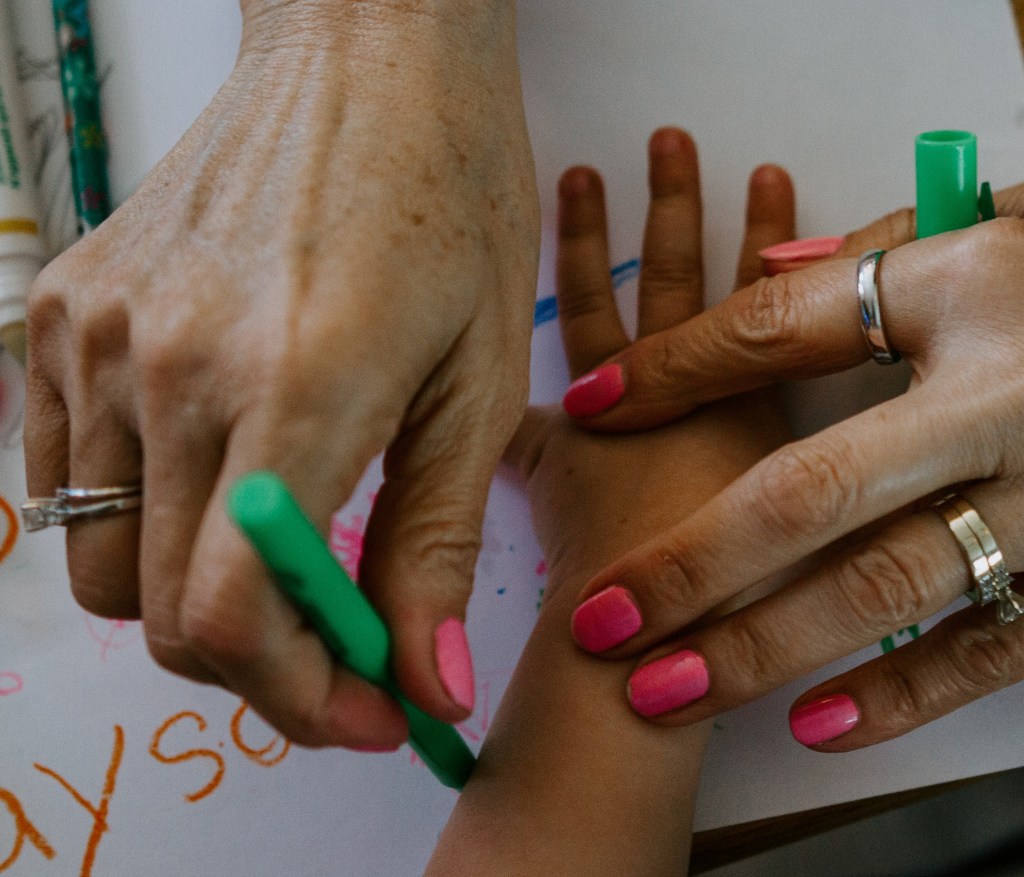
As kids, we traced our hands to help us draw; now, it can help us stay present.
Just like when, as a child, you started a drawing using the outline of your hand by placing it on a piece of paper and tracing the around your fingers with a pencil, you can do the same thing mentally. Imagine the sensation of a point of pressure (say, an invisible crayon) moving up your wrist to the outside of your pinkie, around the fingertip, and down the other side into the hollow between the fingers…and doing the same as it moves up and down each finger until it ends up on the outside of the thumb and travels back down the wrist.
What makes this so effective for me is that it is a simple visualization that requires a bit more concentration, and yet it is still uncomplicated. That means that it gives my monkey mind a little extra to focus on, but not so much that it becomes a struggle.
Try it next time you need grounding and want to trying something different.
You know how you have a picture of yourself in your mind’s eye? The way you imagine you look?
For four years, that self didn’t mesh with reality.
I still saw the long-haired fitness freak who’d never had a surgery in her life and definitely no serious illness. The one who was remarkably healthy at 50…the one whose co-worker assumed was age 35.
This is a perfect illustration of how I felt post-diagnosis.
That reality changed in an instant. The unbelievable happened, the unexplicable knocked me off my feet. There was no transition time. I went from super-healthy and super-fit to being diagnosed with one of the most dangerous diseases in our experience.
As the saying goes, “If you don’t have your health, you don’t have anything.” My health was everything to me, and suddenly I felt as though I had nothing.
And in the cruelty that is cancer treatment, off went the hair. Now there was no mistaking that I was “sick”. So when I bumped into friends who hadn’t heard about my diagnosis and tried to explain what had happened, they all said the same thing: “I know.”
Every time I walked past a mirror, I would get a shock. And this went on. Through the months of chemo, through radiation, waiting for regrowth that seemed to take forever.
My oncologist told me to be patient, the hair would come back. It was different for everyone. But I was still scared. And acceptance was a new concept that I was not comfortable with.
Yes, I felt I bounced back the year after chemo – working out hard, with the most awesome new-growth hair that random people would stop and compliment. That year, I felt strong and full of promise. I dared to say that cancer MIGHT have been the best thing to happen to me…
But as time went on, reality moved in again and I realized that there really was no going back. And that “lift” that I had gotten after my hair started growing back and I was hitting the gym hard, well, I crashed again.
Picking up the pieces has been a process…
Endocrine therapy pushed me through menopause. My hair thinned. And most devastatingly, I lost two friends who had been diagnosed with breast cancer around the same time that I had been.
I couldn’t celebrate that. And I fought it for months and months.
Four years later, I’m comfortable with calling myself a cancer survivor. But you know what? I still get a little jolt when I walk past the mirror. It’s still not the “me” that I expect to see. After several years of endocrine therapy, I do not look like I used to. My body doesn’t feel like it used to.
So I stopped beating myself up about it. I need more rest time between workouts. I get tired earlier in the evening. Yeah, I forget things. A lot. So I write more notes and declare my intentions out loud (“I’m going to have to take the next exit…”) so I remember what I’m doing.
I still don’t recognize “myself” in the mirror, but that is a previous “self” who was the right “self” for that time. The current “self” is wiser and more gentle with her body and her spirit.
REMINDER: Be nice to other cancer patients and survivors.
It feels weird to write that, because why wouldn’t you? So many of us who have had the cancer experience feel like we want to support and encourage those who come after us. We are driven to help. But that’s not always what happens.
Let me provide an analogy of sorts:
When I was pregnant with my first child, a daughter, I got an enthusiastic positive response from so many other moms. Everyone was ready with helpful tips and good wishes. At the same time, many also started in with stories of their own experiences, often times telling vividly about their struggles and pain and even, “Oh, girls are the absolute worst!”
Some experiences may leave us feeling “unfinished”, needing a kindred spirit to tell our story to. But we need to be aware of whose ear we’re bending.
Why would some women do this? I can only hazard a guess: perhaps because no one wants to listen to difficult stories. Childbirth is a momentous life event brimming with intense emotions that friends and family forget, but the mother in question holds on to because they are tied into so much of her. Her lingering feelings are brushed aside. No one else cares to revisit the labor pains or complications. As a result, tales of the experience are often not expressed until she sees another woman, a kindred spirit, embarking on the same journey.
So, too, with cancer. And it can be a difficult and awkward subject for many, cancer patients or not. Those of us who are breast cancer survivors may want to “talk about it”, and thankfully there are support groups for that. But friends and family may not understand the scope of the emotional fallout. We get comments like, “well, at least you got a nice set of boobs out of it,” and are expected to move on. Conversation over.
And then we see another woman going through this, and it’s difficult to resist inundating her with your own experiences and emotions, all in the name of letting her know that she can get through this, just like you did.
Does it help? Maaaaybe? But as we all know, everyone’s experience is different. What happens is that you’re not “preparing” her for what might come. You’re inducing anxiety in an already stressed-out situation.
I experienced this myself after my diagnosis, when, a week before my surgery, I ran into an aquaintance who had gone through breast cancer treatment several years before. And I know she was trying to offer support and make me feel better, but it didn’t. She made me anxious about my upcoming therapies, including ones that she not gone through herself. While my intent as a newbie was to share about my diagnosis because I felt that she would understand, I ended up being a sounding board for her concerns. Concerns that were valid, definitely, but not appropriate in the context of a very fearful cancer patient.
Offer support without taking over the conversation.
For the record, this was a lovely woman with whom I’ve had numerous subsequent exchanges. There was no ill-will intended. But it’s likely that she didn’t have many opportunities to speak to relate her story to other women, and given the chance, just needed to talk.
And I know that in my exhuberance to show support for other cancer patients, I’ve probably tripped over myself in an attempt to reassure too much. Offer too many hugs. While also trying to be noncommital about outcome. That’s a really messy combination.
So please, let us remember (and by “us” I mean myself!) that sometimes the best form of support for a newly diagnosed cancer patient is simply being there with them and holding space for what they may be going through. They will make their way through the experience, day by day, just like we did. There will be time to talk about the ups and downs of treatments.
Lately I’ve been speaking with people who are having a hard time dealing with anxiety, so I thought it would be worthwhile to dive deeper into grounding methods.
For me, hands down, strong neutral physical sensations (with “neutral” being the operative term here) are by far the best ways to pull my head out of swirling thoughts and get back to where I am now on the Earth.
Buttocks and feet are great focal points for drawing attention away from rapid breathing or heartrate.
Currently, I’m focusing on touch points: those places on your body where you are making contact with any surface. This is highly effective because it is well-suited for any situation. You don’t necessarily need to be in a particular position, nor do you need a quiet space. So if you’re in the middle of an exam, sitting in your boss’ office, standing at a podium or walking down the hallway of a hospital, this grounding method can shift you back to the present moment.
The idea is to focus on the sensation of pressure. My suggestion would be to bring your attention to whereever on your body you can sense that contact with a surface, giving preference to places further from areas that might be reinforcing anxiety, such as the chest region and a rapidly beating heart. So, hands, feet and buttocks would be good candidates. If you’re walking, then pay attention to the change in pressure of your steps as you put your foot down and lift it again.
Feel into these body parts, sensing how the pressure feels against them. You can also bring in sensations such as tingling and temperature. Like an investigator, experiencing these sensations as if for the first time, get curious about their quality. If needed, squeeze the muscles, but then make sure to relax them too, so that you’re not clenching. Then see if you notice a difference in sensation.
Try it right now. Go ahead, I’ll wait…
You don’t need a special place to practice grounding yourself. Where you are right now is perfect.
Did you try it? And did you feel anything? The type of sensation doesn’t matter here. The main goal is to get out of your head, which may be in overdrive. Paying attention to what your body is doing RIGHT NOW helps move you away from thoughts of dread and gives you a handle on your reactions.
Important: as with all calming techniques, this takes practice. It is not a one-time thing that you try, nor is it a pill that you pop and everything settles down. The more you practice this, especially when you’re in a peaceful surroundings, the better you will get at shifting your focus during times of anxiety. Just as with a formal meditation practice, it is consistency that will improve your focus and thereby your abilities.
The added benefit to practice is that you will realize you *can* do it, that it *does* work, and you will build confidence in yourself that you can handle it. So in an anxious moment, you’ll be able to say, “I got this” and bring yourself to a more manageable place.
I am always looking for ways to illustrate the complexity of emotions associated with having cancer, or caring for someone who does, as a means of relating it to people without this experience.
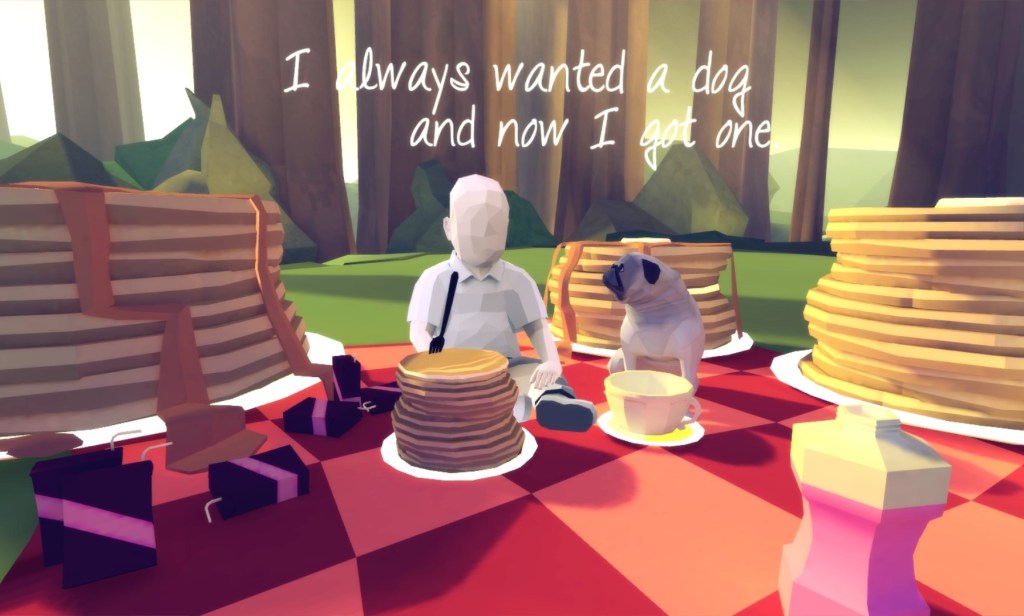
An immersive video game called That Dragon, Cancer does this by telling the story of a young child with the disease, in this case, a brain cancer called Atypical Teratoid Rhabdoid Tumor (AT/RT). The game explores the fear, hope, helplessness and fight that we go through when confronting so much uncertainty.
To be clear, this is not a video game in the usual sense, it’s a narrative with mini-game elements, sometimes lighthearted, sometimes dark. We follow the journey of a family as they navigate the rollercoaster of cancer diagnosis, doctor appointments and treatments. Those of us who have been on this path can relate to the tsunami of emotions and information, all rolled up into one overwhelming ball. The game does a good job of representing these feelings.
If you’re interested in experiencing this game with a blind playthrough, this is where you should stop reading. For more information on That Dragon, Cancer, visit the official website here.
WARNING/SPOILER: Because this is a true story, the developer Ryan Green (Numinous Games), along with his wife Amy, could not control the outcome; the game was created to honor the memory of their young son, Joel, by chronicling his battle with terminal childhood cancer.
Little Joel underwent a staggering number of treatments for his brain tumors.
Be aware that there are very distressing parts to this game. Just as cancer patients fight for meaning and claw for hope, so does this family. If you are not in the right frame of mind for this, or are at a painful part of your cancer journey, it might be best to skip this game. When the game originally came out in 2016, it left well-known YouTubers in tears. Everyone can relate to loss; Ryan and Amy made this even more powerful by documenting their son’s journey in recordings made during his treatments. Therefore, when you hear the distressed cries of a young child in misery, those are Joel’s actual cries, and they are heartbreaking. But hearing his delighted giggles helps ease the pain.
It is all very raw and real.
Even in the distress, we experience joy in the life Joel lived.
Losing hope, or clinging to it in the face of insumountable odds, is documented here. The Green family hopes for a big miracle, with Ryan and Amy each heading towards the outcome in different ways: Amy is adamant that Joel will be healed while Ryan is riddled with doubt. There is a very strong Christian influence in this gamethat reflects the Green’s religious beliefs, with many references to God, Jesus and saving grace through prayer, so those whose beliefs differ may find this element foreign and possibly irritating, and they should decide whether it is appropriate for them. Nonetheless, the game is beautifully done with moments that will make you smile in between tearful episodes and there is value in experiencing it.
Those who expect a movie-style, “deus ex machina” happy ending may be left empty and unsatisfied, but I found the end to be uplifting, inviting in the acceptance of inevitability.
The game also honors the memories of other cancer patients in imaginative ways.
I’ve now played That Dragon, Cancer three times through. The emotions that it evokes are very familiar and I found this game cathartic and validating. As the Green family discovers, if someone succumbs to cancer, it does not mean that their faith was not strong enough. If there’s one thing I’ve learned about this disease, it is that cancer is not picky, it doesn’t care about your desires and it doesn’t play by the rules.
~~~~~~~~~~~~~~~~~~~~~~~~~~~~~~~~~~~
From the developer, Numinous Games: “An immersive narrative videogame that retells Joel Green’s 4-year fight against cancer through about two hours of poetic, imaginative gameplay that explores faith, hope and love.” $9.99 on Steam.