Re-writing Your Life

When I look back at the past decades, I feel exhaustion sweep over me.

Negative events may seem like they’re never-ending.

Cancer was not the only negative thing to come up in my life. There have been quite a few horrible things that have taken place, and at times I get overwhelmed by the thought of them.

This is not where, at my age, I thought I would be, and that’s disappointing.

But I realized that part of this disappointment is the lens through which I view things. Granted, I’ve had my share of misfortune, but when my life seems to be sinking into bleakness, it’s time to do something about it.

This calls for a change in perspective.

So I have undertaken a project. I am writing out the story of my life, but with a slightly different bent: when I come across a negative event, I pause and consider whether I can find something in it to be grateful for. I write about how I overcame it, rather than how bad it was, or how unfair and so unlike what others have had to deal with. I place emphasis on the outcome to avoid getting mired in anguish.

A difficult person in my life? I’ve learned that I’m not responsible for their happinesss, only for my own. A disastrous financial situation? I’ve found that what I perceived as a terrifying outcome can be overcome, and there is a light on the other end and a path by which to maneuver through it. A frightening health crisis? I now know I have met head-on the most daunting disease I ever feared that I would have and somehow made it through treatment.

Re-framing your personal history, when you’re ready to do so, can open you up to a glorious new view of how powerful you are and what amazing things you have achieved in your life.

I am still here. Re-framing the bad stuff is work in progress and it’s not always easy to let go of my familiar, well-worn, negative narrative, but, yes, I am still here.

I’ve discovered that my life is a story of perseverence. There have been numerous hardships and it’s true they’ve left deep scars, but I am aware of how they may twist my attitude, which has removed some of their negative punch. While I may look around and wonder why things have gone a certain way, I also see what I’ve learned and how I’ve matured.

If you want to give this a try yourself, there are a few things to keep in mind:
This is something for you to undertake about your life, not to be forced into by another person, nor push someone else into.

This is not about looking through rose-colored glasses or feeling that your concerns are not taken seriously, nor is this a squelching of negative emotions instead of dealing with them. It’s a step to the side for a different view. This doesn’t mean that those events were not disastrous or those who perpetrated bad things don’t deserve punishment.

You have a right to be upset. You are heard.

Re-framing your life in this way means that you give evidence to the exquisite being that you are, and to the power that you have within yourself. If you feel as though you’ve been chewed up and spat out, be gentle and start slowly.

When you’re ready, invite healing by releasing the burden of negativity and, pen in hand, allow yourself to reveal your strengths.
Tripping Over Gratitude for the Little Things

“There are only two ways to live your life. One is as though nothing is a miracle. The other is as though everything is a miracle.”

Albert Einstein

A few days ago, I was hurrying across the room to open the door for a workman who was coming to fix holes in our walls resulting from a plumbing emergency.

In our haste to make space for the workman, we emptied the contents of a closet (where one of the holes was) into the middle of the room that I was crossing, and as I scurried, one of those wayward closet inhabitants tripped me. I crashed onto the floor, twisting the joint of my left big toe and falling onto my right arm.

And this was after icing it as often as I could stand it. I’m a rainbow!

I tried icing, but I could easily ice only one body part at a time as I tried to work at my computer, and since I needed to be able to walk, the foot got preferential treatment. As a result, while the bruise on my foot looked terrible, I could put pressure on it and as long as I limped, was able to get around.

My arm was another matter. For the remainder of the day, I was wondering whether I had fractured anything. Rotating my wrist was excruciating, bending my elbow any amount was painful and even just having the arm hang down hurt like crazy. I couldn’t grasp things with my right fingers. The only non-painful position was if I supported my right hand with my left.

Why am I telling you this?

Because I’d written some time back about how I found it difficult to find gratitude for “little things” because doing so felt forced.

Well, that morning, I ate those words.

I remember the good old days when I could put on a sweater without pain. The opposite side of the elbow is equally colorful.

Because when I think back now of how wonderful it was to be able to open a jar of pickles by myself, or even raise a fork to my mouth, I get hit between the eyes with the concept of finding gratitude for everything.

I found gratitude for the fact that I fell on the carpeted floor and not onto one of my son’s tools (that he had left lying around — I need to talk with that boy), that I am still allowed to work remotely and can do so from the comfort of my bedroom, that we have a car with automatic transmission (no shifting!), and that we had enough bags of frozen veggies that I could easily rotate through as they thawed and keep icing.

The next morning, I experienced a tsunami of gratitude for feeling better, getting more mobility and being able to avoid a visit to urgent care. That one trip knocked some sense into me and reminded me that it is not nearly as difficult to fill my cup with joy for things I’ve been regularly taking for granted.

So, that trip I took helped me discover that I don’t need to wait for gloriously grand things to occur in order to feel gratitude. Multiple reasons for a grateful attitude are all around me, every day.

Clicking Back to the Breath

I’ve written before about being an imperfect meditator. There are days when the narrative running through my head is never-ending and refuses to be silenced.

However, I found something that helps while I was playing a meditation game called “Playne” (about which I’ll write in the future). One aspect of this game is that it allows you to mark the occurrence of a thought by clicking the mouse button.

As soon as you realize you’re not focused on your breath, you click the button, and the program makes a pleasant little noise.

The concept is similar to that of a meditation bell except you decide when the “bell” sounds.

As simple as this sounds, it has made a huge difference in my meditation practice. Not only does it help me recognize when I’ve drifted away, but that little sound is very effective at bringing me back to the breath. Instead of gradually floating back to breath awareness, I immediately wake up into the present moment.

It’s as if the sound plants a sonic flag at the point where realization hits and that speeds my return.

This is not unlike a meditation bell that sounds at regular intervals and invites you back into focus. However, the benefit from the sound in my meditation game comes from teaching self-awareness and presence, because I ring it when I myself identify the thought. In mindfulness meditation, we are taught to note the thought inside our head, but in my opinion, the sound helps it “stick”.

Over the past weeks, I’ve become quicker in releasing the thoughts and returning to the breath. The more I practice, the stronger the habit of regaining focus quickly becomes.

While it’s not feasible for me to hold all my meditation sessions within the confines of a game, I’ve found that there are other means of marking my thoughts. Clicking a retractable pen works similarly to the sound in “Playne”. The “click” is just enough to bring attention to itself without being disruptive

Something as simple as the clicking sound of a retractable pen can serve the purpose of noting a thought an d bringing you back to the breath.

Other gadgets that can work? Anything that delivers a distinct sonic note. Tapping a hard surface with the edge of a coin would serve the purpose. Or a hand tally counter that one might use to count people coming through an entrance. A quick search of phone apps reveals a number of tally counter apps if you don’t have access to the handheld mechanical device.

But it’s important to remember that the point of this is not to get obsessed about how many thoughts you had during a particular meditation. What you want is a little sound, like a gentle beep or click, to make you more aware of the thought.

Next time you are finding it hard to focus on your breath, grab a pen, a coin, open an app on your phone…even snapping your fingers may serve as your thought marker. It may be that little extra something that helps you back to the present all that more quickly.

Making It Through “Now”

My recent post, Just Show Up, about releasing the need to fight through breast cancer treatment, left out an important concept.

My cancer diagnosis was what I deemed the “worst-case scenario” from the viewpoint of everything that came before. The overwhelm was a tidal wave that caught me and spun me around. Disoriented, I struggled to breathe and find my footing, but it was too much and I was poorly equipped to deal with the news.

Taking on everything at once doesn’t help you keep it together, it tears you apart.

I went through the motions, stumbling through the appointments that now multiplied in number. There was so much information to wade through, decisions to make, upcoming treatments to fear.

Then a co-worker whose wife had been diagnosed with cancer some years before sat down with me and gently offered a valuable piece of advice.

I didn’t have to handle everything at once. Some the decisions could be made later. Each day would bring answers and more clarity. There was no need to load up on all the information. It didn’t help anyone get through these days, all it did was weigh them down.

The path through this entailed focusing on what needed to be done now, and then working on doing that and only that. Just taking that one easy step forward.

All that stuff in the past and the things to come, you can release them. Don’t carry that extra burden with you. Just focus on what’s happening now. And now.

Could you get through the last moment? Good.

Now just get through the next.

The Saga Continues…

I mentioned a few posts back that in addition to stopping letrozole (an aromatase inhibitor) which had originally been prescribed to me as long-term endocrine therapy for breast cancer, I saw a cardiologist. I was experiencing what felt like irregular heartbeats. Since arrhythmias have been associated with aromatase inhibitor use, I wanted to make sure that I wasn’t going from one problem to another.

The cardiologist I met with ran an EKG, listened to my heart and told me he really didn’t think I had any issues. However, he ordered an echocardiogram and a Holter monitor just to be on the safe side. I did both tests.

A week ago, I met with him to go over my results. He was pleasant as always, asked me how I was feeling–I was feeling great, actually, since I was pretty positive that I’d imagined any heart issues because I’d experienced little since I turned in the Holter monitor for analysis. So, if anything, I was a tad embarrassed for blowing things out of proportion. Geez, I’m such a hypochondriac!

That’s good, he said, equally pleasantly. “Because we found something.” Equally pleasantly.

Hang in there, baby!

I had not expected that. What I was expecting was, “everything looks normal.”

However, looks like there were some arrhythmias: supraventricular tachycardia and supraventricular ectopics.

My doc wasn’t concerned. He said that based on other data (72% left ventricular ejection fraction [LVEF]) my heart was healthy and strong.

Ooookay. But I was a little shaky that my concern about extra beats had been confirmed. Because I hate fearing that something’s wrong and finding out that I was right in fearing it! I’d prefer that it be all in my head.

Then we delved further into the echocardiogram. I shifted uncomfortably in my seat.

On the plus side, lots of things were normal. That’s good.

However, way back in early 2018, while I was receiving infusions of Herceptin, my then-cardiogram showed pericardial effusion (fluid where it shouldn’t be), but in a subsequent echo it had “fixed” itself. Well, that was back now. Also trace mitral and tricuspid regurgitation: my valves are a touch leaky. My cardiologist wasn’t too concerned about it. “Wear and tear,” he said.

But he also noted that I had a marginally “dilated proximal ascending aorta.” Right after which he noted that I was tall, suggesting that there could be error in the extremes. But neither one of us was 100% sure whether that was a change from the previous echo, based on how the report was written. And he questioned some of the values, saying that echocardiograms weren’t perfect or always accurate.

Get off one ride and right back on another.

At the same time, he wanted me to come back in a year for another echo. Just so that we can be sure that the dilation hadn’t progressed. “Then we worry,” he said.

I left the office with questions swirling inside my noggin and decided to do some computer research, which I immediately regretted.

First of all, “dilated proximal ascending aorta”, when googled, brings up a gazillion results about aneurysms.

ANEURYSMS.

I know I don’t have an aortic aneurysm. But I have to wait a year to see if the dilation progresses. That’s 365 nights of staring at the ceiling. And I have to make sure to remain calm and not harrass myself into elevated blood pressure, because that can put more stress on the blood vessel and dilate it even more.

Oh, and the supraventricular tachycardia and ectopics? Those are improved by exercise (um, yep, been doing that) AND by staying calm.

Try yoga and meditation, the websites suggest.

Okay, yep, been doing that too.

So where am I with all of this now? Obviously, I need to keep doing what I’ve been doing. But this really does underscore a couple of things:

1) Meditation and mindfulness are critical to our well-being. These are habits to establish now (yesterday!) and not stop. Ever.
2) Cancer casts a long shadow. You might be fortunate enough to earn the title of “cancer survivor”, but that doesn’t mean that it’s all giggles and rainbows afterwards. Cancer treatments are tough and while we’re furiously obsessed with doing whatever we can to minimize the chances of cancer returning (because that’s Job One), someone at some point needs to start thinking about what happens once the cancer is gone and we have to clean up after the long-term effects of the treatments.

Could my heart “issues” (I don’t know if they are serious issues yet) have been caused by Herceptin infusions, radiation to the chest and aromatase inhibitors? Yes, they could have. But could the fact that I am highly reactive and have a strong response to stressors played a role in this? Yes, of course.

Time is moving forward and I’m going to have to keep up.

And does it really matter? No, in all honesty it makes no difference. Whatever happened has passed. My only path through this is a calm heart and solid grounding on the Earth. I’ll know more about my physiological state in a year, which gives me another twelve months of daily meditation and exercise, and an even better appreciation of how my mind generates agony.

Maybe this is what I need to help me get better.

Just Show Up

The thing about cancer is that the news hits you hard at once.

And it’s not like you get time to get used to it, because the diagnosis is LOADED. All those scary things that you’ve ever associated with the “big C” rush at you and there’s no real way to protect yourself.

It would be terrifying for anyone, but those of us currently in mid-life grew up at a time when cancer treatment was not as refined or targeted as it is now: visions abound of hospital beds, bald heads, bodies wasting away, vomiting, hopelessness. Most cancers were frequently fatal and diagnosis was the beginning of the end.

Everyone’s pushing you to fight, fight, fight. It sounds like the right thing to say, but it can feel exhausting.

As we’re trying to process what this all means for us, for our future and for our families, others try to prop us up with cheers of, “Be a badass!” “Stay strong!” “You’ll beat this!” “You’re a fighter!”

So between juggling the cancer news and the “hang tough” messages from those around us, everything gets overwhelming. Our oncologist lays out a treatment plan and suddenly we need to learn a different language. Tumor types, chemo drugs, clinical terms, side effects.

I distinctly remember wanting to hide under my bed and wait for it to go away. There was so much I needed to do and I didn’t know how to get through it all. It seemed like an immense amount of work for one person.

And then it hit me. All I needed to do was show up.

I put the gloves away and realized I didn’t need to fight anything. I needed self-compassion.

I didn’t need to be the warrior that everyone was pushing me to be. The mere fact that I was going to my appointments on my scheduled day was enough. I wasn’t going to win a prize for being the best “infusee” or for absorbing the most radiation the fastest.

I didn’t have to fight. All I needed to do was endure and allow. To accept what was going on and move through it. And to breathe.

~~~~~~~~~~~~~~~~~~~~~~~~~~~~~~

I brought my office work with me to my first infusion. I was going to be there for at least 5 hours so I figured I should use the time “wisely”. I fired up my laptop but soon the Benadryl that I was given to prevent adverse reactions kicked in and brought on drowsiness.

Suffice it to say I might have answered an email here or there, but did little else. The same thing happened during the next infusion, and the one after that. Eventually I realized that the wisest way I could spend my time was by giving myself permission to rest and ride out the treatments.

When infusion day rolled around, I learned to put aside my work duties and family responsibilities, and simply be. It was such an uncomplicated concept, the benefits of which rippled out beyond my treatment. Why did it take cancer to teach me that?

Counting Backwards to Sleep

I’m still experiencing weird sleep disruptions. Many nights I’ll be up for an extended time during the wee hours of the morning.

This isn’t conducive to being bright and alert during the day, so I’m devising a game plan for limiting the length of these nighttime interruptions.

My newest strategy is a variant of a counting practice that I heard over the radio years ago, and it goes like this:

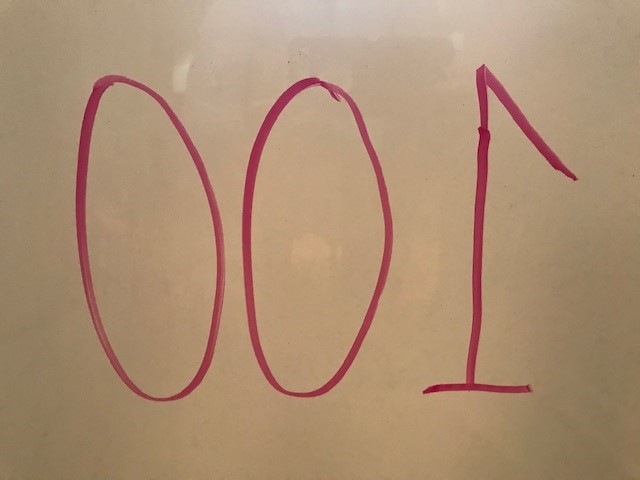
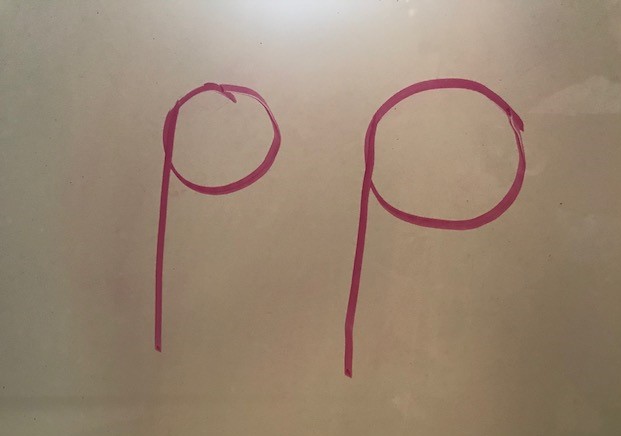
Imagine a clean whiteboard. In one hand you’re holding a dry-erase marker in your favorite color, in the other a cloth or eraser.

Your imaginary nighttime whiteboard won’t have a reflection like mine, but you get the idea. The numbers are familiar but you might need to think a bit about how to form them in reverse.

Write “100” in large numbers, but do it backwards so it looks like a mirror image. Channel your inner da Vinci. 🙂

Your board may be brighter and the numbers more perfect than mine. Perhaps you’ll choose a different color. All that matters is that you focus on forming the numbers in reverse.

Then erase the number and write “99”, again reversed. Erase it again.

Keep counting down. Don’t rush. Think about how your hand should move to scribe the backwards numbers. Breathe deeply. When you erase, erase carefully and completely.

As you count down, don’t breeze past the erasure. Make sure you allow your imagination to clean off all markings of the previous numbers before you start writing the next ones.

You probably won’t get to zero. The first two nights I did this, I didn’t make it past 80. It doesn’t always work so well, but when it does, it’s soothing and sleep-inducing.

Why does it put you to sleep? First, you’re not doing anything very complex and therefore this shouldn’t be putting you into a greater state of wakefulness; in fact, counting down is kind of boring. You’re giving your full focus to this task so there are fewer opportunities for intrusive thoughts to interrupt. If they do, return your focus to the numbers. Do this each time your mind wanders. And while the task is easy enough, it does require you to pause and consider how to move your hand, since you’re doing the opposite of what you usually do to write a number.

The counting task requires enough attention that you shift your focus away from thoughts that may be keeping you up, but is gentle enough to lull you into a calmer state that helps bring on sleep.

If imagining a whiteboard doesn’t work for you in the middle of the night, there are other counting variations that would work as well:

Starting from 100, simply count backwards by threes (no imaginary writing required). If 100 seems too optimistically small a number from which to start, use 300 or even 1000. If counting down by threes seems too complex, try twos. Go slow.

Really good at addition? Try calculating the Fibonacci Sequence, a series of numbers where the next number is the sum of the two preceeding it. Start from zero, add one and then keep going: 0, 1, 1, 2, 3, 5, 8, 13, 21, 34… unfortunately, this can get out of control quickly (I usually lose track somewhere in the three-digit numbers). But intrepid math fans might be able to get far enough to refocus themselves to the present and enter a calmer state.

Does the idea of math cause you stress? Then just count your breaths, start from 100 and going backwards, slowing down the breathing as you go, imagining the numbers count down with each inhale. This works particularly well if you focus on releasing all your muscles with each exhale.

A specific strategy may not work every time, but the overall idea is the same: something that requires a little brain focus with minimal excitation or strain (so that you can lazily shift your focus and keep your mind gently occupied). Do not rush through these; the magic lies in the process. There is nothing to achieve here. You’re simply boring yourself to sleep.

Try any of these the next time you find yourself awake with a racing mind and let me know how it goes.

When Is a “Chemo Port” Not a Chemo Port?

When is a “chemo port” not a chemo port? When it’s a heart rate monitor. Except that my emotional brain can’t tell the difference.

For anyone unfamiliar with cancer chemotherapy, a chemo port, or subcutaneous implantable catheter, is a device implanted under the skin (usually on the chest) that is accessed during an infusion to enable easy mixing of the chemo drugs with blood within a major blood vessel. This avoids a good deal of injury to any smaller blood vessels, were you to get chemo drugs via an IV to your arm. (For more info, see this post.)

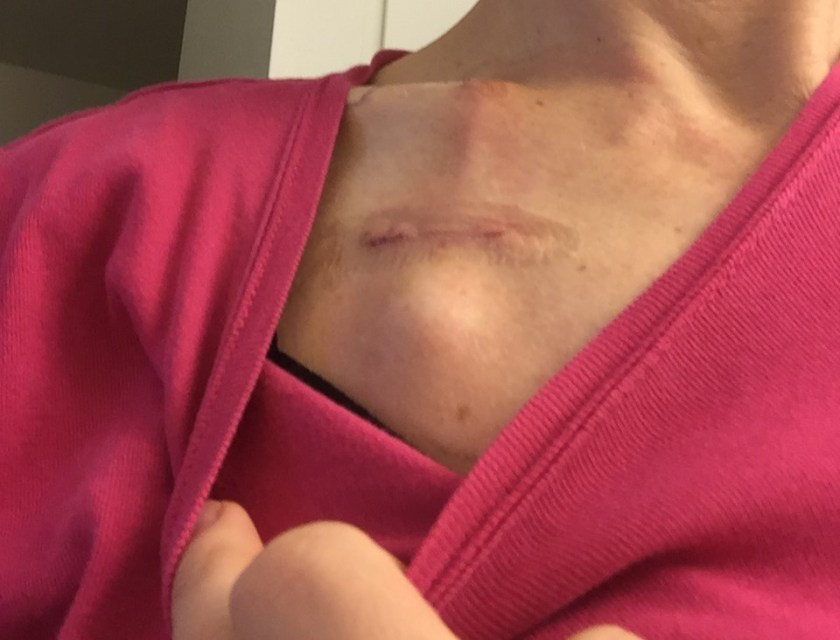
This is what I had under my skin for a year while I was undergoing chemotherapy infusions. It took some getting used to but I never reached the point where I could ignore it.

As much of a blessing as the chemo port is, having a foreign object pushing up from the chest wall under your skin can give “Alien” (as in the movie) vibes. For me personally, the implanted chemo port was more psychologically taxing than I anticipated, and as soon as all my infusions were done, which took a year, I had it taken out ASAP.

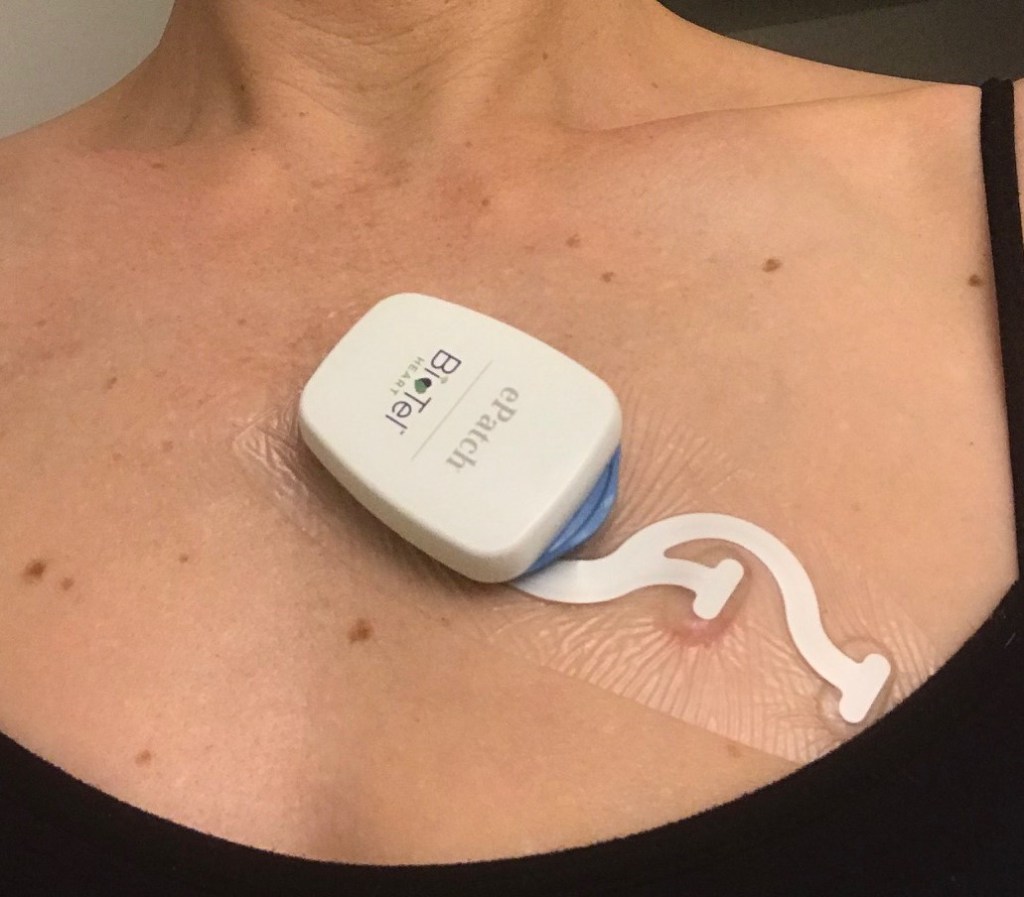
So almost three years after its removal, the chemo port is spooking me again, this time in the form of an extended Holter monitor for continuous heart rate recording, which I’ll have on for almost two weeks. It’s taped to the skin in a fancy patch that you can exercise and shower in, and supposedly you forget that you’re wearing it and go on your daily routine as normal.

But for me, it’s bringing up the spectre of chemo port, and memories of discomfort and pain I felt having that bulge stretching my skin of my chest. I chant my mantra of “it’s ON, not IN” in an effort to distinguish between the port and monitor, but the longer than it stays on, the more anxiety I feel about it.

My Holter monitor (ePatch) sits on the side opposite from where my port did, but it takes up the same amount of space in my head.

All those emotions about the lack of control over my own body, feeling so abnormal and outwardly looking “sick” (not to mention fear of death) are rushing back. The Holter monitor peeks up from the neckline of my shirt, hooks my car’s seatbelt and often seems to be in the way. I find myself moving away from other people in fear of having them knock it or hug me too tightly and cause pain, even though the monitor doesn’t deserve the same apprehension that the port did.

I’m removing the Holter patch today and sending it back for analysis, so that’ll be a big relief. But the power of this reaction is another reminder of the depth of fear that the cancer experience placed within me.

~~~~~~~~~~~~~~~~~~~~~~~~~

So why am I wearing the heart rate monitor anyway? I was having little cardiac “episodes”, particularly over the last year, and this was one of the (many) reasons for discontinuing aromatase inhibitors. Mainly these were sensations of skipped or extra beats or an odd “fluttering”. I’ve already had an EKG and echocardiogram, neither of which apparently showed anything abnormal (I haven’t received a final report of my echocardiogram but had been told that the cardiologist would contact me if he found anything problematic, and it’s been a week and a half, so I’m guessing everything’s okay?).

Okay, it’s off. But it’s left its mark on me. I’m hopeful I can get rid of this impression faster than the port’s. Chant with me: “ON, not IN…”

The Holter monitor was the last step in looking for arrhythmias or similar issues. And wouldn’t you know it? The further I’ve gotten from stopping aromatase inhibitors, the fewer episodes I’ve experienced and haven’t felt anything distinct since I got the monitor. What I’m feeling is very occasional, subtle “sensations”…but these may turn out to be nothing. I’m okay with that. As a matter of fact, I’m not even worried about what the data might show.

I just want this thing off me.

Soy and Breast Cancer: What Does the Science Say?

IMPORTANT: Please discuss the information below with your oncological and nutritional team prior to making changes to your diet! They will be able to provide you with the proper guidelines for your situation.

One common area of contention within the context of hormone-positive breast cancer is the effect of soy consumption on cancer risk. There has been some back-and-forth on this topic, and “to soy or not to soy?” is a frequently-heard question coming from newly-diagnosed cancer patients.

It was a concern for me. I became vegetarian at age 18 and consumed a soy-heavy diet until my mid-40s, at which point, partly spooked by warnings about soy, I backed off. As recent research shows, I needn’t have.

For a little background, the main concern for breast cancer patients is the presence of phytoestrogens in soy, known as isoflavones, and how they function in the human body. They have a mild estrogenic effect, which is why many women use them in supplement form to ameliorate the uncomfortable effects of menopause. In that sense, they are acting like estrogen, although it’s important to stress that they are not estrogen.

Soy (here, both tofu and edamame) is a staple in Asian and vegetarian cuisines, and is the only plant-based protein that is a complete protein.

But given this similarity to estrogen, does soy increase the risk of breast cancer and breast cancer recurrence? In short, studies show that if you grew up eating soy and eat it daily, as is the case in many Asian countries where soy products are dietary staples, soy has a significant protective effective against breast cancer. Results of these studies have been inconclusive in Western populations, however this seems to be due to differences in diet: not only do Westerners eat considerably less soy compared to Asians, they also don’t eat it throughout all stages of their lives.

Is there a difference in how these diverse cultures handle isoflavones? It appears that a major isoflavone-derived metabolite, equol, has well-documented antioxidant and estrogen-like actions and seems to be associated with numerous positive outcomes, but only about 30-50% of the human population has the gut microbiota to derive it from the diet. There is a need for more research on how this conversion takes place and under what conditions.

But most importantly, as stated by the American Institute for Cancer Research, “Population studies don’t link soy consumption with an increased risk of any cancer.” While the childhood and adolescent consumption of soy is what seems to offer the most long-term benefits, for those who increased their intake at a later age or don’t eat it regularly, the current view is that even if eating soy doesn’t significantly reduce your risk of cancer, there is no definitive evidence that it will make your risk worse.

For me, that means that I will continue using soy as an important protein source in my diet.

Take note:

As with other foods, unprocessed and minimally-processed soy is still the healthiest option.
  • Overdoing anything is not good, so don’t overload on overly processed soy supplements in the hopes of preventing cancer development and/or recurrence — particularly if you’re postmenopausal and not a life-long soy eater. Having said that, there is ample room for minimally-processed soy foods (tofu, edamame, tempeh, miso) in a healthy plant-based diet, and that will definitely benefit you.
  • No single thing will prevent cancer 100%, so you’d be well-served to consider your lifestyle as a whole. As a matter of fact, Zhang et al. (2017, Cancer) noted that “[w]omen who consumed high levels of dietary isoflavone were more likely to be Asian Americans, young, premenopausal, physically active, more educated, not overweight or obese, never smokers, and drank either no alcohol or <7 drinks per week.” [Emphasis mine.] That means protection came not only from soy; the women were also engaging in other behaviors associated with a lower risk of breast cancer. Bottom line, lifestyle matters!

Finally, this is only a brief summary of what I found. Soy is a topic that I’ll be keeping my eye on and will report back as newer studies are published.

In the meantime, here are three excellent reader-friendly websites for more information:

1. American Institute for Cancer Research website, “Soy: Intake Does Not Increase Risk for Breast Cancer Survivors – https://www.aicr.org/cancer-prevention/food-facts/soy/

2. Harvard School of Public Health website, “Straight Talk About Soy” – https://www.hsph.harvard.edu/nutritionsource/soy/

3. Oncology Nutrition website, “Soy and Breast Cancer” – https://www.oncologynutrition.org/erfc/healthy-nutrition-now/foods/soy-and-breast-cancer

References for this post (all articles are available online free of charge):

Baglia ML, Zheng W, Li H, Yang G, Gao J, Gao Y-T, Shu X-O (2016) The association of soy food consumption with the risk of subtype of breast cancers defined by hormone receptor and HER2 status. Int J Cancer. 139: 742–748. https://doi.org/10.1002/ijc.30117

Kucuk O (2017) Soy foods, isoflavones, and breast cancer. Cancer. 123: 1901-1903. https://doi.org/10.1002/cncr.30614

Lee SA, Shu XO, Li H, Yang G, Cai H, Wen W, Ji BT, Gao J, Gao YT, Zheng W (2009) Adolescent and adult soy food intake and breast cancer risk: results from the Shanghai Women’s Health Study. Am J Clin Nutr. 89: 1920-1926. https://doi.org/10.3945/ajcn.2008.27361

Mayo B, Vázquez L, Flórez AB (2019) Equol: A bacterial metabolite from the daidzein isoflavone and its presumed beneficial health effects. Nutrients. 11: 2231. https://doi.org/10.3390/nu11092231

Messina M, Rogero MM, Fisberg M, Waitzberg D (2017) Health impact of childhood and adolescent soy consumption. Nutr Rev. 75: 500–515. https://doi.org/10.1093/nutrit/nux016

Nagata C (2010) Factors to consider in the association between soy isoflavone intake and breast cancer risk. J Epidemiol. 20: 83-89. https://doi.org/10.2188/jea.je20090181

Patisaul HB, Jefferson W (2010) The pros and cons of phytoestrogens. Front Neuroendocrinol. 31: 400–419. https://doi.org/10.1016/j.yfrne.2010.03.003

Wu AH, Yu MC, Tseng C-C, Pike MC (2008) Epidemiology of soy exposures and breast cancer risk. Br J Cancer. 98: 9-14. https://doi.org/10.1038/sj.bjc.6604145

Zhang FF, Haslam DE, Terry MB, Knight JA, Andrulis IL, Daly MB, Buys SS, John EM (2017) Dietary isoflavone intake and all‐cause mortality in breast cancer survivors: The Breast Cancer Family Registry. Cancer. 123: 2070-2079. https://doi.org/10.1002/cncr.30615

~~~~~~~~~~~~~~~~~~~~~~~~~~~~~~

When I asked my oncologist about soy, he shrugged and said, “Yes, it’s true that soy foods contain plant estrogens…but you’re not a plant.”

And Here We Go Again…

If there is a time that I’m going to feel anxiety, there’s a good chance it’ll be during my yearly mammogram. This year it came around the same time that my oncologist gave me permission to stop letrozole (and there was stress preceeding that appointment), but also great fear associated with my perceived cardiac arrhythmias, for which I have several visits with a cardiologist lined up.

Sometimes it feels like the stressors keep coming and coming.

To top that off, a family stressor followed on its heels, which I won’t go into but one that portends difficulties in the future. This last anxiety-provoking event used the previous stressors as a springboard and exploded into something even bigger. I was primed for anxiety and it took me for a ride until I found the traction to dig my heels in and slow down.

The worst part is, none of this stuff will simply go away.

Often, when people speak of anxiety-provoking events, they’re described as stressful things like a tense meeting with the boss or college finals or tight work deadlines. Admittedly these are all nerve-wracking, but they are also time-limited.

Then we have something like cancer.

I remember listening to a talk about anxiety where the lecturer tried to give the audience perspective about what was really going on, and he asked: what’s the worst thing that could happen? “You’re not going to die,” he assured us. And it’s true: let’s say that you fail all your final exams, but you’ll survive, even if you have to retake the classes.

Cancer survivors can attest to the fact that we suffer a different flavor of anxiety. There is no deadline on our stresses. They are thick and cling to us, like caramel sauce on the inside of a coffee cup, thinned by the passage of time, but leaving a film on our lives. Our hope is to get past the two-year mark, then five. Ten, if we’re so lucky.

Often, we hear about the success of treatments only to realize that the success is based on the majority of patients lasting until the end of the study, which might have been only five years.

Having someone tell you that you have a 95% chance of surviving five years is, well, underwhelming, especially for those of us who had premenopausal breast cancer. I mean, yeah, I HOPE I can last five years.

When you are here now, negativity fades to the background. Even if only for a little while.

So, what to do? If there were ever a time to practice non-attachment, this is it. For some of us (present company included), it is excruciatingly difficulty to release expectations–I want, even NEED, to be assured that everything will be okay and then rest easy with that.

But I promise you, clinging to the desire for things to be different only causes suffering. It also robs you of the joy of what you are experiencing right NOW–a beautiful sunrise, the softness of a pet’s fur, the richness of a cup of coffee, the coziness of a warm blanket. We are so wrapped up in fears of what the future holds that we miss the magic of what is before us.

Now is the only moment that exists, so truly, it’s the only moment that is real and certain.

Everything else is either history or what we concoct in our minds.

So this time of the year, I have to sit back and sense the Earth under my feet, feeling into how it supports me. This is what it feels like to be here now. No matter how many times I remind myself of this, I know I’ll have to do it again when the next stressor hits. That’s okay.

~~~~~~~~~~~~~~~~~~~~~~~~~~~

This isn’t the first time I’ve written about anxiety and it certainly won’t be the last. But practicing mindfulness, every time I go through this experience, I reign in my emotions a little earlier and start feeling better a little faster. When I look back at what happened I realize I’m making progress, and that’s what really matters.