It’s hard to believe that six years ago I was a week and a half away from my final chemo infusion, in the thick of being a cancer patient with no idea of what tomorrow would bring.
Cancer survivorship used to be a whole lotta “looking over your shoulder” for the next thing to hit.
I also thought that I’d live the rest of my life, however much or little of it there was left, in fear, always looking over my shoulder to see if cancer was close behind. In fact, after my active treatment was over, I expected that my anxiety would increase because I imagined that whatever had triggered my tumor growth would again be unleashed and ready to attack my again.
And when I had to stop aromatase inhibitors early due to side effects, I envisioned even more terror because I wouldn’t have the medication’s protection anymore.
None of this suggested that I would have a very pleasant future. Either I would get cancer again…or I’d be consumed by worry over getting cancer again.
Reality turned out to be quite different.
The more (1) I practiced being present, coupled with the (2) increasing distance between my last dose and today, the easier it has become. Now, that might sound like a no-brainer, but it was news to me.
And I don’t know exactly when I turned the corner on my fear but it was probably after the worst letrozole side effects ceased and I was able to reflect on and accept that cancer happened and now I was moving past it.
It took years to get to that point, but it would have probably come sooner if I hadn’t convinced myself that I’d never get there.
And how are things different now? I don’t think of cancer every minute of every day. And when I do think about it, it doesn’t seem as daunting.
So far, so good.
I realized this after meeting a cancer survivor who works at a store that I frequent. She revealed that she’d just received her three-year “all-clear”. The relief on her face was unmistakable.
And it struck me that I used to have that incredible sense of gratitude too. And I still kind of do for a short bit, but it fades quickly as I turn my focus to the rest of my daily responsibilities.
Yes, I am still seeing my oncologist twice a year, having annual 3D mammograms AND the occasional MRI, so it’s less likely that something’s going to sneak up on me. But the concern is no longer as all-encompassing because it doesn’t feel as likely.
Of course, I could be kidding myself. Even after six-plus years I know that every set of scan results is a door to either “no evidence of disease (NED)” or “we’ll get you in to see the oncologist ASAP”. So far I keep going through the NED door…and it keeps opening onto a bright day.
In the midst of taking things for granted, it’s nice to stop and think about that.
As we slog through extremely high temperatures in many parts of the world, I remind myself of how fortunate I am to be living in a relatively temperate area of the United States that somehow manages to evade the weather extremes faced by other parts of the country.
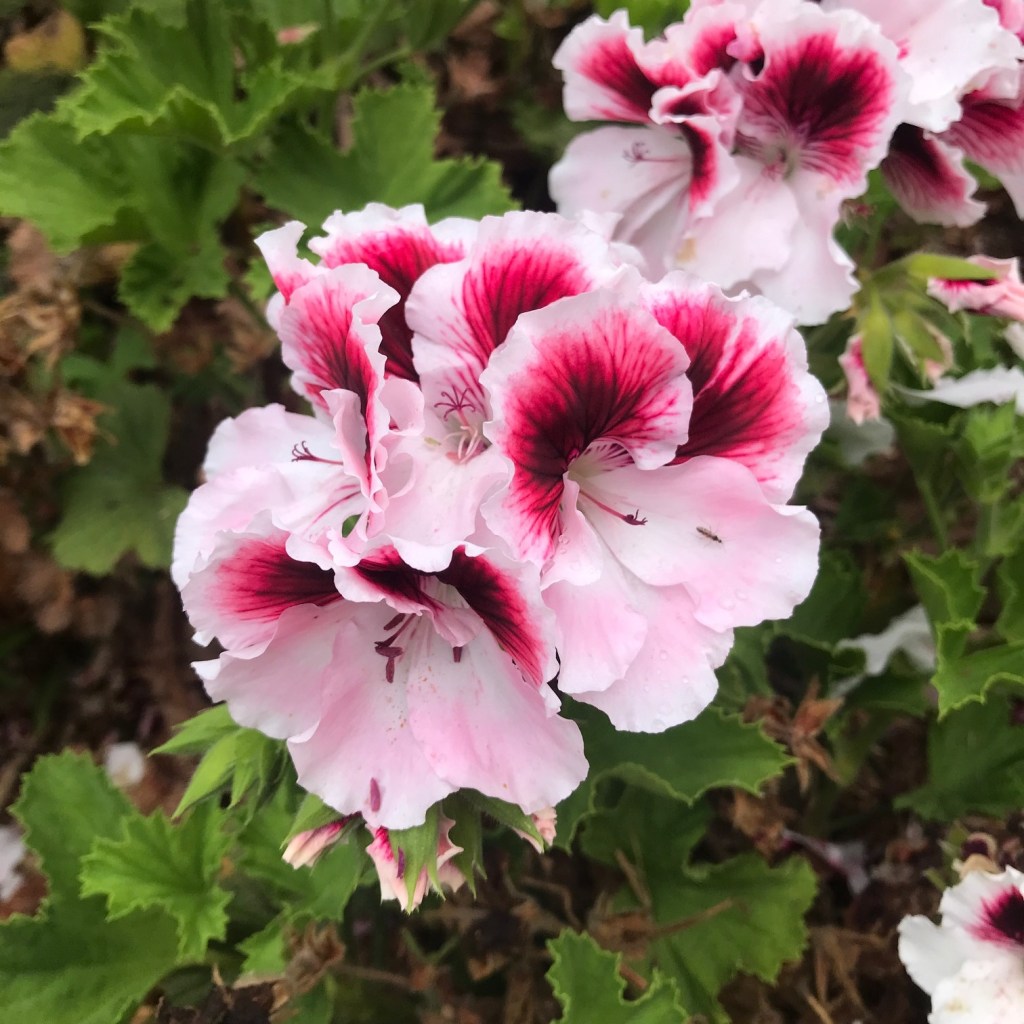
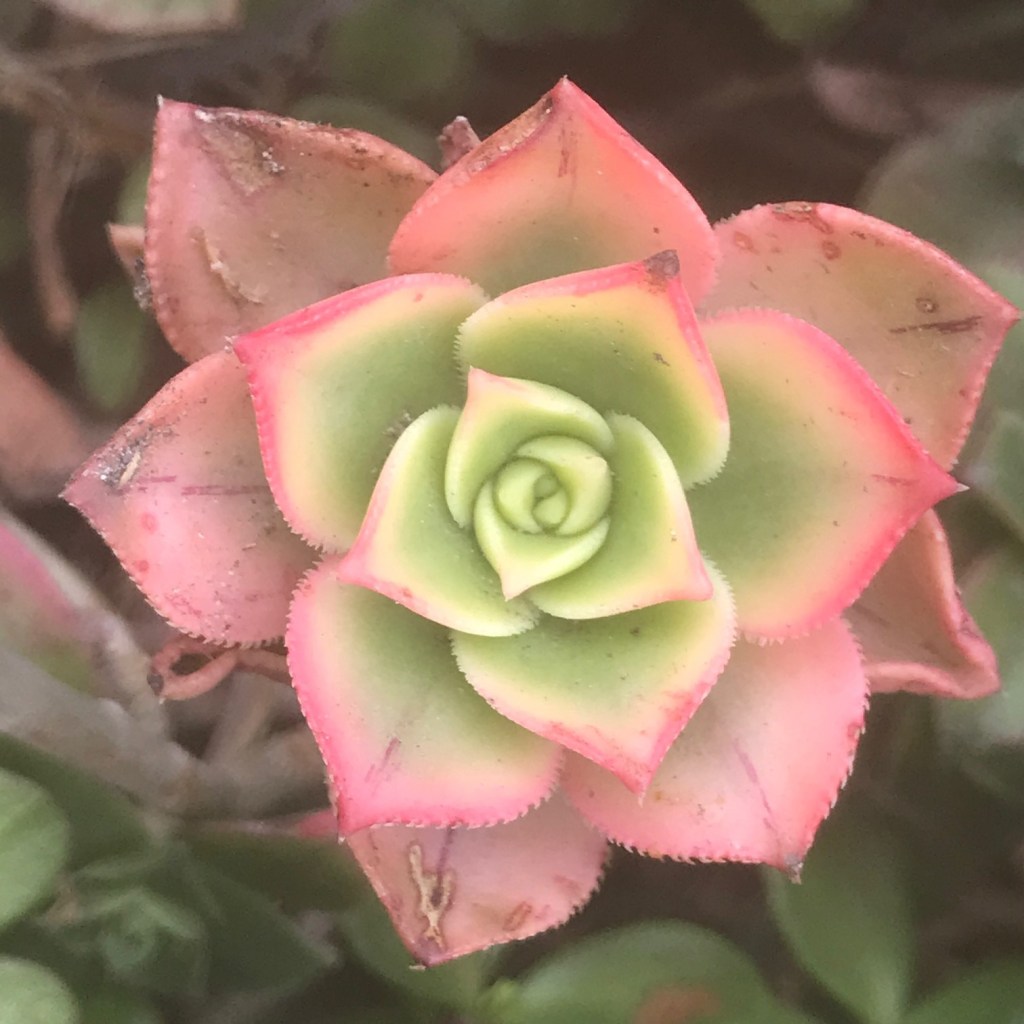
In this post, I’m celebrating the more pleasant parts of summer, namely the beautiful flowers that proliferate during this time of the year. My camera is an aging iPhone with limited features so my point is simply to showcase the abundance of colorful plantlife that is growing within a relatively small area around the complex where I life, rather than produce art-like photos.
Likewise, the flowers may be “lacking”, perhaps with browning edges or dirty petals or anything else that doesn’t look picture-perfect. But they are very real and a good reminder that there is so much that doesn’t look like it comes from the pages of a glossy magazine, and yet is still worthy of a mindful gaze.
There was a time when I could have rattled off the names of all of these, but while some are still familiar, others I cannot recall. So I’m posting them simply to appreciate for their form. I hope you enjoy!
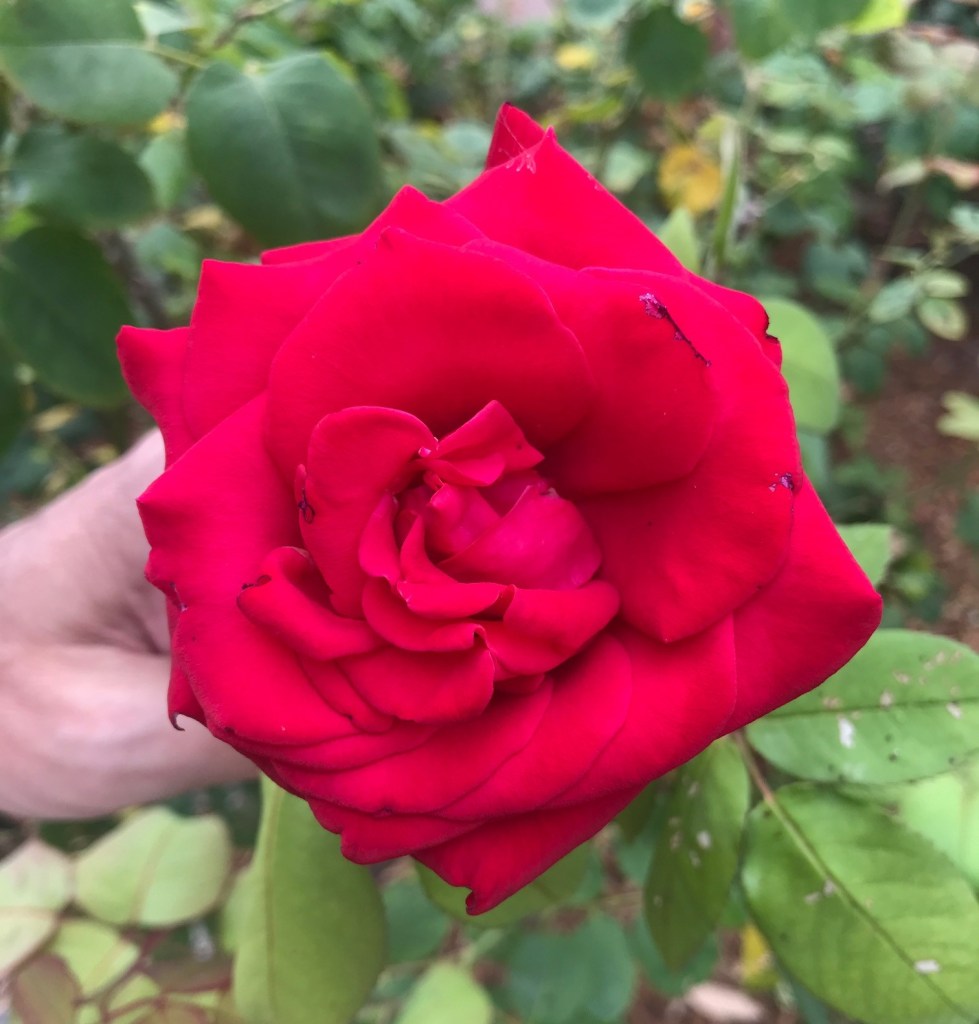
There is a glossy-leafed magnolia tree blooming outside our window with dinner plate-sized flowers. Its petals are so white that they were blinding my camera and my husband and I had to wrestle the flower into an position where its brightness wouldn’t overwhelm the iPhone.A rose is a rose is a rose…even when it’s a little rough around the edges.This plant looks very geranium-like to me but I’m not sure whether it actually is one. Anyone know? The flowers remind me of the peticoatted skirts of dancers kicking up their heels. Bug included at no extra cost.I know what this flower is and I’m going to remember the name right after I submit this post! I love this image for the fluffy stamens and teeny water drops…and the gracefulness of the blossom.Another flower whose name escapes me. This looks like a circle of red-dressed ladies holding hands and facing outwards.I love succulents for their beautiful leaf patterns, very fractal-like and interesting, even when dusted in dirt. Echeveria species, I presume.Another stunning succulent, a bit chewed up but beautiful in my eyes. Again Echeveria, I expect.A succulent preparing to flower. Tightly packed buds that look ready to bust open.Last but not least, a hibiscus. This is one of my favorite flowers — I assure you the photo does not do the colors justice. Unfortunately, this year my plant has been beset by various pests but is producing gorgeous flowers nonetheless.
As I return to really sinking down into my meditation practice, I am reminded of what I’ve been missing out over the past few months when my practice gradually changed and “shallowed”.
Due to pressures and stressors the start of this year, I had been skittering over the surface of my meditations, much as you would imagine barefoot skiing over the surface of a large body of water, and I use this as a visualization of my experience.
It is not fun trying to keep my head up and focused through my distractions.
Up on the surface, you have wind and waves to contend with. The more time that you spend up on top of the water, the more tumultuous distractions you find there and it becomes more difficult to find a sense of calm. The more you do that, the more it becomes habitual.
But when you stop charging across the surface — resisting the enticing attraction of thoughts — then you find yourself slowly sinking…but in a good way. Thrashing winds disappear, sounds become muffled and fade into the distance, movement slows. The deeper you descend, the more quiet you find there.
There are times that I think I’ve been meditating, only to realize that I’ve floated up to the surface and am actually bobbing around in the choppy waves of my thoughts. That realization comes more quickly the more time I’ve spent in the depths, and when I return to the process of sinking, it feels like such a relief.
The deeper I allow myself to descend, the quieter I become. It becomes less of a struggle to stay down.
I can learn to sit with frightening creatures the way I can learn to sit with unsettling thoughts…and vice versa.
And as I get progressively deeper, light dims. Initially, the darkness felt a little intimidating (I’m not a fan of dark water). But then I remembered, this is my ocean. I decide what dwells in the darkness. I can fill my ocean with fearsome, aggressive creatures — and sometimes I do this — but then because I realize that they are mine, they don’t hurt me and I am able to sit with them peacefully.
What an accurate analogy for our thoughts, no?
In this way I feel my own inner strength and power. The darkness does not have to be frightening — it is a gentle darkness that signals rest, allowing my mind to slow and focus inwards.
If that darkness is too disconcerting to you, imagine that there is a soft blue brightness in the water, illuminating your entire area of vision, and perhaps even an underwater staircase you can use to control your descent. Tweak it however you like so that it fits with your level of comfort.
This visualization is the perfect reminder of how good meditation feels when I don’t get in my way about it. Nothing to do but relax and let myself sink down…
For a number of months now, my meditations have been “sub-par”.
I know I’m not supposed to judge, but objectively I’m aware that I’ve veered off course somewhere. In the past, I’d have good days and bad days, transcendent meditation sessions and really distracted, “no-way-I’m-gonna-focus” ones. But that was okay, because a large part of mindfulness meditation is coming back to the breath AFTER losing focus.
Rabbit holes are very enticing places to disappear into.
This has been a little different.
It started with a few weeks of distractibility as I was navigating stressors in the early months of this year. But gradually, things went downhill until I seemed to make it my job to use meditation time to go down rabbit holes.
Maybe I was too tired, meditating in the evening before bed or when I woke in the middle of the night and couldn’t sleep, so I didn’t check my wandering mind because I was dozing off.
If I had music in the background, my mind would dance off in a tangent and I wasn’t meditating anymore, forgetting that this was a time for calm and presence.
I’d get lost during my meditation with little hope of finding my way back on the path that I was on.
So I’d start a guided meditation — listening to someone’s voice would keep me on track, right? Nope. My ability to allow that voice to fade into the background was nothing short of impressive.
Day after day, I had dutifully taken on the task of wandering way off my meditation path until I realized that I was going nowhere and it was time to quit the restlessness and stay still for a while.
Even after years of daily meditations, I had to re-learn the habit of staying… because over the past few months, I’ve established a new habit of not coming back to my center regularly enough. And this new habit of spending my session mindlessly had managed to supplant my previous meditation flow.
So here we go again: setting aside some quiet time when I’m not particularly sleepy, finding an anchor like the breath to focus on in a patient, non-gripping manner, maintaining a gentle awareness of where my mind is, and when it inevitably wanders away from my point of focus (which it always will), calmly guiding it back.
Going back and consciously setting an anchor again. And enjoying that comfortable feeling of being present and aware of this very second.
When the breath seems like a boring place to drop my anchor, I turn to the sensations in my hands and feet (particulary useful when I’m stressed) or the sounds of automobile traffic outside ebbing and flowing or opening my awareness to all my senses and accepting whatever shows up. My focus is on the present and that’s where I aim to keep it.
So it’s true, that old “muscle memory” is bringing back my meditation practice and strengthening it as it does so. This serves as a good reminder to not get complacent, calling myself a “meditator” and throwing around stats like how many days in a row I’ve been meditating. In the end, the important thing is not my meditation streak, it’s the fact that today I will choose to meditate again.
As the saga of our building’s leaky pipes continues, this experience reminds me of some of the best advice I received for getting through my cancer treatment.
How could cancer relate to a plumbing emergency? In how I perceived the news and possible outcomes. My cancer diagnosis was terrifying because I had grown up understanding that the disease meant difficult treatment and a real possibility of death. Now that I was dealing with cancer, I was jumping to conclusions, driven by FEAR.
And the leak in our unit? That meant a huge disruption in our lives as workmen enter and our belongings are piled together. But even more so, FEAR of the future, as we didn’t know the extent of the damage and whether we’d be able to to keep living here.
Getting a first glimpse of restoration. Lost some ceiling, light fixtures and a lot of kitchen cabinets.
The thought of moving brought anxiety about higher rental rates, dealing with belongings after nine years in the same apartment, even simply fear of change and uncertainty.
But that best bit of advice that I mentioned above? I found that it applied well to this situation also. And it goes like this: don’t try to tackle everything at once; take it bit by bit.
When I was diagnosed with cancer, the experience was nothing if not overwhelming. So many new terms, treatment options, possible outcomes. It was too much to handle. Someone I worked with suggested that I deal with things on a day to day basis. Not obsessing about the future, only what I needed to get through for today.
This was not easy for me, as being FEARful came naturally to me. But I understood what he was saying, even if I struggled to actually follow this advice at the time.
As with cancer, so with plumbing. My mind had already “gone there”, struggling to afford another unit (this is an older unit with rent lower than other places around us), staying up day and night to pack. Ending up in an even worse situation with inconsiderate neighbors…
But reality was not like that.
Behold, the FORCE AIR 2000EC! This monstrosity is the heart of the asbestos abatement operation. The workmen couldn’t fit it back in their truck so we’re babysitting it for a couple of days. Also, it looks like it was built by orks, but that has nothing to do with anything.
Within a weekend we had moved much of the kitchen and dining area. And really overhauled our possessions — even something as complicated as draining our 20-gallon fishtank and relocating its inhabitants to my husband’s office was not as difficult as anticipated.
I had time. I had time to move things, I had time to reorganize, to declutter, to stop and think about what was next. I had time because it wasn’t all happening at once. Stopping and breathing and noticing all the space around gave me space inside my head.
Discussions with our landlady suggested that we would take it one day at a time. No one was throwing in the towel yet…
…and even if the worst case scenario happened and we had to move, there were other places that were available (all with air conditioning, which we don’t currently have), and the rental cost would have been similar to what we pay now. In some cases the places were newer and most allowed pets (!), which I’ve been longing for.
All of a sudden, things didn’t look that bad. The options seemed promising.
Taking it bit by bit gave back a sense of control. All those fears slowly fell away.
And now, I find myself hovering with acceptance. Not landing on an expectation that THIS or THAT will happen. I don’t know what will happen and I’m finding a comfortable place to simply hang here, not gripping or holding on or needing for anything to be different.
Quite a lot has happened here in less than a week and it deserves a bit of an introduction.
It started with a leak last Wednesday. Water dripping from a ceiling fan…which isn’t supposed to happen! I got the upstairs neighbors to check their plumbing — their carpet was wet. And it got worse from there as plumbers found several gallons of standing water contained within the studs in the floor above us, coming from cracks in our neighbors’ kitchen drain pipe, now starting to overflow those confines.
Yeah…I’m pretty sure this is not a good thing.
That water was searching for low points…which happened to be overhead electrical spaces in our unit: ceiling fan in the dining area, wires coming through our kitchen cabinets, even the overhead kitchen light. Soaking the ceiling as it traveled.
The water looked toxic.
We live in an old-ish building with old-ish pipes that are showing their age. We have had quite a bit of water damage and leaks already, some of which required strict restoration measures since there is asbestos(!) in the ceilings. The current incident is no different except that this time the repairs will be more extensive due to both the asbestos and growing mold, requiring the removal of kitchen cabinets, some carpeting and lots of ceiling.
When things like this happen, the HOA’s insurance covers all issues from the walls into the interwall spaces and the homeowners’ insurance covers everything inside the unit. As risk-averse renters we have our own insurance to protect our belongings, but we are not the owners of this unit. Regrettably, our owner did not have the unit insured. This poses uncertainties that we have yet to address.
This part of the ceiling has been marked for removal…
First things first, however: a restoration company marked out the spaces that were wet and from which we needed to clean everything out. We spent all weekend doing so. And that brings me to the point of this post.
When you have a lot of stuff, it’s easy to keep holding onto it because there’s no real impetus to get rid of it. And even if you try, it’s too easy to talk yourself into not letting go. If you get rid of it and then have to repurchase, that’s like twice the cost, right?
…and this carpet has to go…
Except that I’ve come to believe that space = money. There’s so much that we have that we’re not really using. Maybe it was on sale, maybe it was something you needed one time, maybe you decided to splurge. But if these things are taking up space unnecessarily, they are costing you. I know they take an expensive toll on me in terms of headspace, making cleaning more difficult and our living area less inviting.
So this weekend was about purging. And wow did we PURGE. It felt amazing.
…as do the cabinets and ceiling in our galley kitchen.
Old glassware, shopping lists, aged spices, an extra bathroom scale (from a time long ago when we have two bathrooms), chipped plates, dollar store containers, plastic utensils, old computer cables, and the list went on. We emptied the 20-gallon fishtank, relocated its few inhabitants to the aquarium my husband has at his office, and realized that we could probably get rid of the cart that the tank sat on too.
There was so much that we’d been holding on to that simply was not necessary to have. And the more we got rid of, the lighter I felt. Buoyed by the sensation, I started going into areas not marked for restoration and getting rid of unneeded items, because I believe a big change is imminent. Something has been put into motion that will require big decisions and big action.
So in the midst of having the majority of our kitchen items and the entirety of our dining room stacked up in the living room area, I should be stressed out. But I’m floating in quiet acceptance, staying present and reveling in the lightness. I never expected to feel like this, so positive. Maybe it’s because all those things we held on to were weighing us down?
With the upcoming longest day of the year on June 21st, many yogis celebrate the Summer Solstice by performing 108 repetitions of the series of movements known as a Sun Salutation, or Surya Namaskar in Sanskrit.
Why 108? The number 108 is significant in a number of dharmic traditions, including Hinduism, Jainism, Buddhism and Sikhism, and appears many times in sacred ancient texts (see more info at sites such as himalayanyogainstitute.com, yogajournal.com, hinduamerican.org).
Practicing 108 Sun Salutations traditionally has been done during the changing of the seasons to usher in the new phase of the year by generating an internal heat for purification (stoked by the energy of the movements), cultivating a will that pushes the practitioner forward and breaking through mental and physical barriers (youaligned.com).
Prior to getting cancer, I would have reveled in the challenge of 108 Sun Salutations. My body was ready to go hard and fast and have everything be perfect. Today, I approach such practices more mindfully, so this post is about a more forgiving alternative to churning through so many Sun Salutations.
This is because high repetitions of these movements are not for everyone, and even otherwise fit people may begin having wrist, shoulder and back issues as they move through the repeats. Proper preparation is essential in avoiding injuries. My own body protests high volumes of some movements so I accept my limitations, reset my expectations and opt for gentler variations.
Does participating in this tradition interest you but you find the high number daunting? Don’t insist on doing all 108 repetitions; set out to do one. And if that flows well, do another. Feel into your body from the very first sequence to the very last one you do, no matter the number.
However, if it helps, set a repetition goal for yourself — keeping in the spirit of the practice, let it be a factor of 108 as there many ways to evenly divide this number: 9, 18, 27, 54 — but don’t make that goal your sole purpose. Instead, keep your attention on your breath and the flow of your body.
This is a meaningful sequence to immerse yourself in as you cycle through the movements.
Avoid worrying about how you look, wondering whether you’re “beating” the pace of others, thinking about what you’re going to do afterwards or how many calories you burned. I would argue that a single Sun Salutation done consciously, appreciating the connection between the ancient origins of the sequence and the present day, is more valuable than 108 repetitions done with your mind elsewhere, focused only on the achievement.
For this practice, send your ego off to wait patiently by itself until you’re done.
IMPORTANT: For this post, I am focusing on the mindful and spiritual benefits of Sun Salutations. It is true that there is the purely physical practice of the sequence, a full-body exercise that has benefits in its own right. If you are more interested in treating this as a workout rather than a symbolic detoxification as you transition to the next season of the year, I’m the last person to try to talk you out of it. But be aware that this is a very sacred practice for some; I encourage you to pause and approach it with respect.
Whatever number you end on, let that be the right number for you, no judgments. This is a beautiful way to add meaning to your yoga practice and nurture a connectedness to everyone else engaged in this tradition.
The next change of seasons, the Autumnal Equinox, is only three months away…
Perhaps this Solstice’s Sun Salutations will lead to a mindful daily practice of Surya Namaskar. This may blossom into the next opportunity to join everyone in the tradition for the Autumn and welcome in a season full of new possibilities…and maybe even the full 108 repetitions.
But for now, start with just one.
For a beginner-friendly version of Surya Namaskar, try the version below:
When I wrote my last post — a visualization and body scan for helping calm yourself and prepare for sleep — I knew I would enjoy immersing myself in describing a space that felt safe to me.
But what I didn’t expect was the effect that the actual process of writing the visualization would have on me.
As I continued describing the “healing bath” scene, searching for reference pictures and letting my imagination create a restful place, I realized that I myself was feeling more and more relaxed — breathing slower and experiencing a sense of placid grounding.
This got me thinking.
Beautiful journals may be appealing to some. But making use of technology in searching for images and recording your words provides you with the most flexibility for documenting ideas and bringing in visual aids…without risking writer’s cramp.
While there is no doubt that listening to a guided meditation can be very soothing, sitting down and writing one yourself takes you to another level. This is an exercise in finding what the most salient relaxing cues are for you personally.
Immersing yourself in locating photographs of environments that you consider your ideal for a retreat getaway helps you isolate those elements that exemplify what relaxation and grounding mean to you. I highly recommend sites like Pinterestfor this; if you’re not interested creating an account there, just start out with Google image searches and see where they lead.
And when you start writing, turning your focus towards describing the scene that you’re imagining means that you are truly “in it” in your mind. As you write about sights, smells, sounds, textures and other sensations, and hold them in your imagination, you sink deeper into them than you might even in a meditation where someone else is describing the surroundings to you.
It’s your writing and therefore everything you select is your choice, suited to your tastes. There’s no need to use complicated language, simply tune in to your mind’s eye and write what you see. Because this is for you alone, there’s no requirement that it be a complete representation of your safe space and no need to judge the quality of your mental picture. There only has to be enough imagery there to trigger the wonderful feeling of peace and calm that you have when you’re there. However, the more descriptive you can be, the better you can lock in the imagery.
Not a scribe? An oral description of your special place can be just as immersive as writing it out. And if you feel so inclined, recording it for yourself can help you preserve the images to return to at a later time.
Finally, each one of us has different experiences with putting words on a page. If you feel that being required to write out your thoughts will be frustrating, then find a quiet space where you have privacy, close your eyes and audibly describe your safe space, perhaps even record it. Imagine that you’re moving through it and explain to yourself what’s there and how it makes you feel.
Whether you choose to write or speak, the reason this can be such a powerful tool is because you focus on something that feels so relaxing. This may turn out to be the ultimate grounding meditation for you.
As a visual person, I have days when my “mind’s eye” has difficulty focusing during meditations. For those times, listening to guided visualizations is my best option for a calming tool.
Additionally, body scans are excellent pre-bedtime wind-downs. So when I recently heard of a great visualization that includes a body scan, I wanted to share it here.
Your private pool can be anywhere you want, even indoors. Source: https://pin.it/4UeEa1U
This one is based on a “healing bath” visualization that was presented by an MSW/Oncological Therapist who leads Friday morning meditation at my cancer center. Putting the focus on vivid visuals and including your other senses fills your awareness with rich imagery that works so well to soothe an overworked nervous system. While this will not be an auditory experience, use your imagination as you read this to paint yourself a picture of a safe, soothing space that you will remember.
Here’s the basic imagery (add details that resonate with you): you arrive at a beautiful natural location, walking down a path surrounded by lush greenery, wearing a luxurious fluffy robe and cushy slippers. As you follow the path, flowery fragrances waft on a gentle breeze that carries bird songs to you. The sun is at a height most soothing for you; for me, it is early morning with a mist in the air. Bright enough to see everything, but imparting a feeling of safety and privacy.
As you continue down the path, it opens up into a small secluded beach with a round pool of water, clear and sparkling; part natural pond and part constructed, with beautiful white stone steps leading into it. Surrounded by flowering plants, it invites you in.
You feel the sensation of the fluffy robe and slippers sliding off of you as you leave these items by the entrance to the steps. Then, you dip the toes of one foot into the water and find that the temperature is perfect for you. Notice the sensation of the warm water as you step onto the stone stairs with both feet, holding onto a sturdy railing. You stand up to your ankles in the pool and sense the difference in the temperature between the misty air and inviting water.
Take two more steps down and the water slides up to your calves, soothing your lower leg muscles. Then step further in as the water line slowly travels up past your knees and halfway up your thighs, so that most of your legs are submerged in the placid, warm pool, now feeling more like a bath.
The bottom of the pool is easily visible through the clear water. Unhurriedly, take a few more steps down as your toes reach the white sandy pool floor and the water rises up to your waist, enveloping your lower body in warmth.
Feel the gentle support of the water.
By one side of the pool is a smooth sculpted stone bench to which you glide, feeling the slip of the water against your skin as you move, drawing the tips of your fingers across the pool’s surface, leaving gentle streaks as you go.
As you lower yourself onto the seat, sense the warmth rise up your torso and arms, traveling up as you settle down. The bench is deep enough for your body to submerge but comfortably keep your head out of the water.
The soothing water supports you as the seat cradles your body. Rest your head on the side of the pool – the edge is sloped and comfortable. Then listen. What do you hear? Sweet songs of birds? The meditative buzz of gentle honeybees that flit among the flowers? Waves on a faraway beach?
Can you smell the fragrances of the flowering plants that surround you? As you breathe, as your chest rises and falls, feel the water glide around you. Warm, secure, safe, secluded. This pool is whatever you need it to be for you to feel nurtured and loved.
Stay here for as long as you like, watching light sparkle on the surface of the water. If you stay until evening, warm lighting illuminates the pool and surrounding plants, dispersing dark shadows and bringing a sleepy tranquility into the area.
Finally, when it’s time to return to present world, lift yourself out of your seat and glide back to the stairs, keeping yourself submerged to your shoulders until you take a hold of the handrail. Slowly, slowly release yourself from the pool, noticing the sensation of air on your skin as you emerge, feeling the waterline move down your body as you climb the steps.
With the final step, you leave the pool and take up the fluffy, soft robe waiting for you, wrapping yourself in it. Slip your feet into the cozy slippers. Your body dries quickly. Make your way up the path. And although you leave this magical space behind, it is always available for you whenever you want to return.
~~~~~~~~~~~~~~~~~~~~~~~~~~~~~~~~~~~
If you are uncomfortable with water or if the visualization keeps bringing in disturbing images such as a very deep pool, dark water or something foreboding lurking underneath the surface, or it feels constrictive or claustrophobic, substitute a sparkling mist or a golden light for the water. You can still feel the body sensations as you enter into the pool. There are no rules here, it is your safe space and you can set it up as you please.
Finally, to bring this from a visualization into reality, create a real-life pool for yourself in your bath, with ample tealights, a soundtrack of nature sounds or gentle music and water temperature that is right for you. Feel your arms and legs float, prop up your head with a towel on the side of the tub. Breathe deeply. This is a perfect way to end the day and prepare yourself for a restful slumber.
One of the strongest chemotherapy drugs used for breast cancer is doxorubicin, a drug in the anthracyline family that you might know as Adriamycin. It’s called “The Red Devil” due to its bright red color and tendency to temporarily dye the bodily fluids of its recipient red, but also due to its toxicity.
While it is highly effective, its use is limited by its potentially serious side effects, including damage to the heart. According to Drugs.com, “[b]ecause of its heart toxicity, doxorubicin has a maximum cumulative dose that can be given to each patient. The higher the total dose you receive over time, the greater your chance of heart side effects.”
Doxorubicin is a highly effective chemotherapy, but carries with it a considerable risk of heart toxicity.
There has been interest in discovering other drugs that can decrease the cardiotoxicity of doxorubicin, particularly since in addition to breast cancer, it is used against a variety of other cancers.
But as with so many things cancer-related, the drugs given to protect against chemotherapy side effects themselves have side effects, so it’s useful to explore other means of achieving protection from the toxic effects of doxorubicin.
Can Exercise Help?
In a webinar for the American College of Sports Medicine (ACSM) that I attended on May 18, 2023, University of Florida, Department of Applied Physiology and Kinesiology researcher Dr. Ashley Smuder and her lab presented research about the protective effects of exercise on the heart and muscle doxorubicin.
Importantly, Dr. Smuder’s lab was able to demonstrate that exercise-trained rats who were then given doxorubicin showed a decrease in the amount of drug that accumulated in the heart and diaphragm compared to sedentary rats, echoing the results of Parry and Hayward (2015, Am J Physiol Regul Integr Comp Physiol). Those results had suggested that exercise didn’t diminish and even increased the amount of doxorubicin that made it to the cancer tumor while decreasing the amount of the drug that went to the heart (left ventricle) and diaphragm.
Exercise keeps rodents healthier, even under a punishing chemotherapy regimen.
While the actual mechanism of this protective effect is still being researched, once again these studies show the benefits of exercise in a cancer situation.
Additionally, a doctoral student in Dr. Smuder’s lab, Brendan Nguyen, reported on work that he’s done showing the differences of exercise on fat mass and lean mass in rats administered doxorubicin using the same infusion schedule that a human patient would received (4 doses, 3 weeks apart). There were four conditions: (1) a sedentary group that received saline injections, (2) a sedentary group that received doxorubicin, (3) a moderate-exercise group that received doxorubicin, (4) a high-intensity exercise training (HIIT) group that received doxorubicin.
Moderate exercise: rats ran on a treadmill 3 days/week at a speed of 30 meters/min for 60 min/session.
HIIT exercise: rats ran on a treadmill 3 days/week, four 4-min bouts at 45 meters/min with 3 minutes of active recovery in between the bouts.
Not surprisingly, the exercise training had a significant effect on the body composition of the animals. Sedentary rats in both groups had an increased risk of obesity. Both groups of exercising rats (both moderate exercise and HIIT) saw a decrease in fat mass during this time and were able to avoid doxorubicin-induced cardiorespiratory weakness. Also, the HIIT exercise animals showed a significant increase in lean mass in addition to the drop in fat mass.
For reliable protection from the negative physiological effects of chemotherapy, exercise is still your best bet.
The take-home message here remains the same as it’s been in my other posts. If you don’t currently exercise, start now. And then don’t stop. It’s easy to keep laboratory rats active and fit, but humans find many reasons not to challenge themselves with physical activity. If you needed a reason, these studies provide a little encouragement to find your favorite movement modality and make exercise a life-long habit.
REFERENCES
Battaglini CL, Mills RC, Phillips BL, Lee JT, Story CE, Nascimento MG, Hackney AC (2014) Twenty-five years of research on the effects of exercise training in breast cancer survivors: A systematic review of the literature. World J Clin Oncol, 5, 177-190. https://doi.org/10.5306/wjco.v5.i2.177.
Lee K, Kang I, Mack WJ, Mortimer J, Sattler F, Salem G, Dieli-Conwright CM (2019) Feasibility of high intensity interval training in patients with breast Cancer undergoing anthracycline chemotherapy: a randomized pilot trial. BMC Cancer, 19, 653. https://doi.org/10.1186/s12885-019-5887-7.
Lee K, Norris MK, Wang E, Dieli-Conwright CM (2021) Effect of high-intensity interval training on patient-reported outcomes and physical function in women with breast cancer receiving anthracycline-based chemotherapy. Support Care Cancer, 29, 6863-6870. https://doi.org/10.1007/s00520-021-06294-7.
Parry TL, Hayward R (2015) Exercise training does not affect anthracycline antitumor efficacy while attenuating cardiac dysfunction. Am J Physiol Regul Integr Comp Physiol, 309, R675-83. https://doi.org/10.1152/ajpregu.00185.2015.
Smuder AJ, Nguyen BL (May 18, 2023) Cardiorespiratory muscle response to chemotherapy and exercise. ACSM’s From Around The Field webinar.