There’s more to the story I began in Part 1 and what better time than the start of a new decade to relate it?
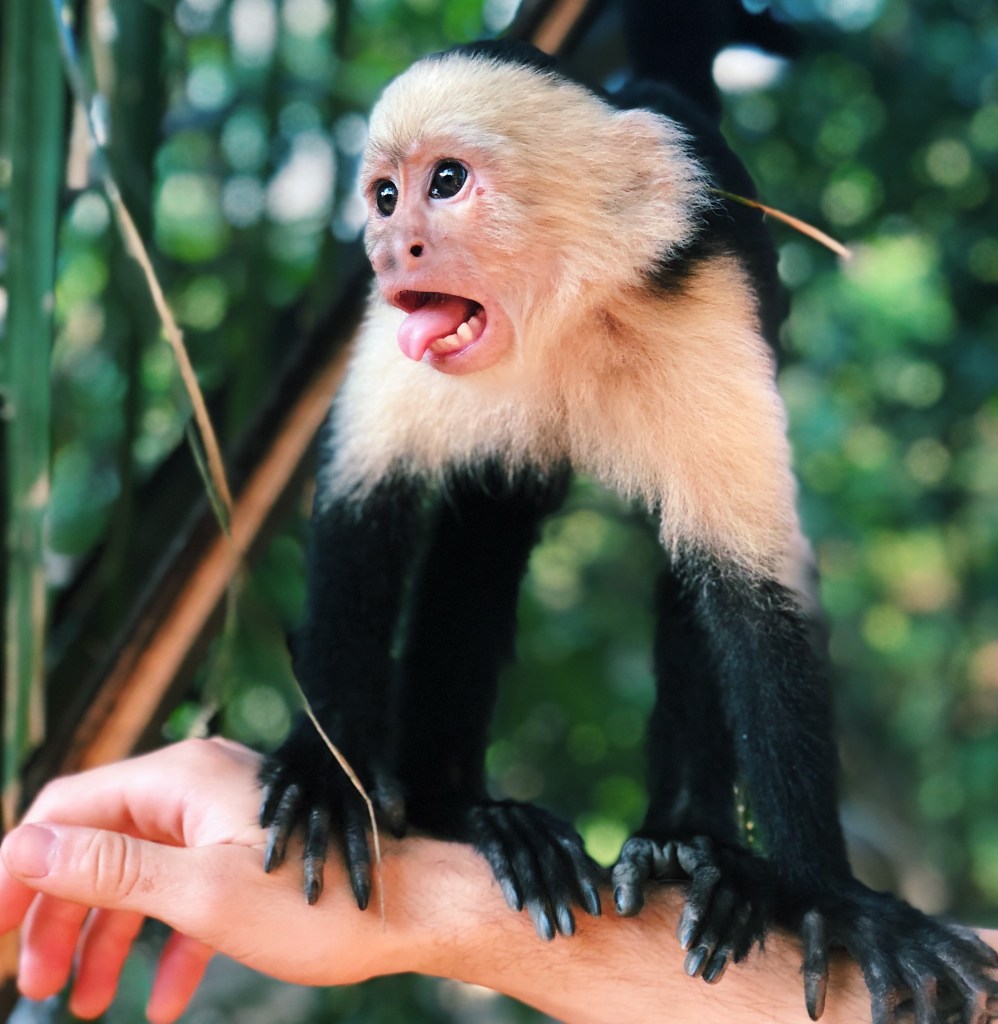
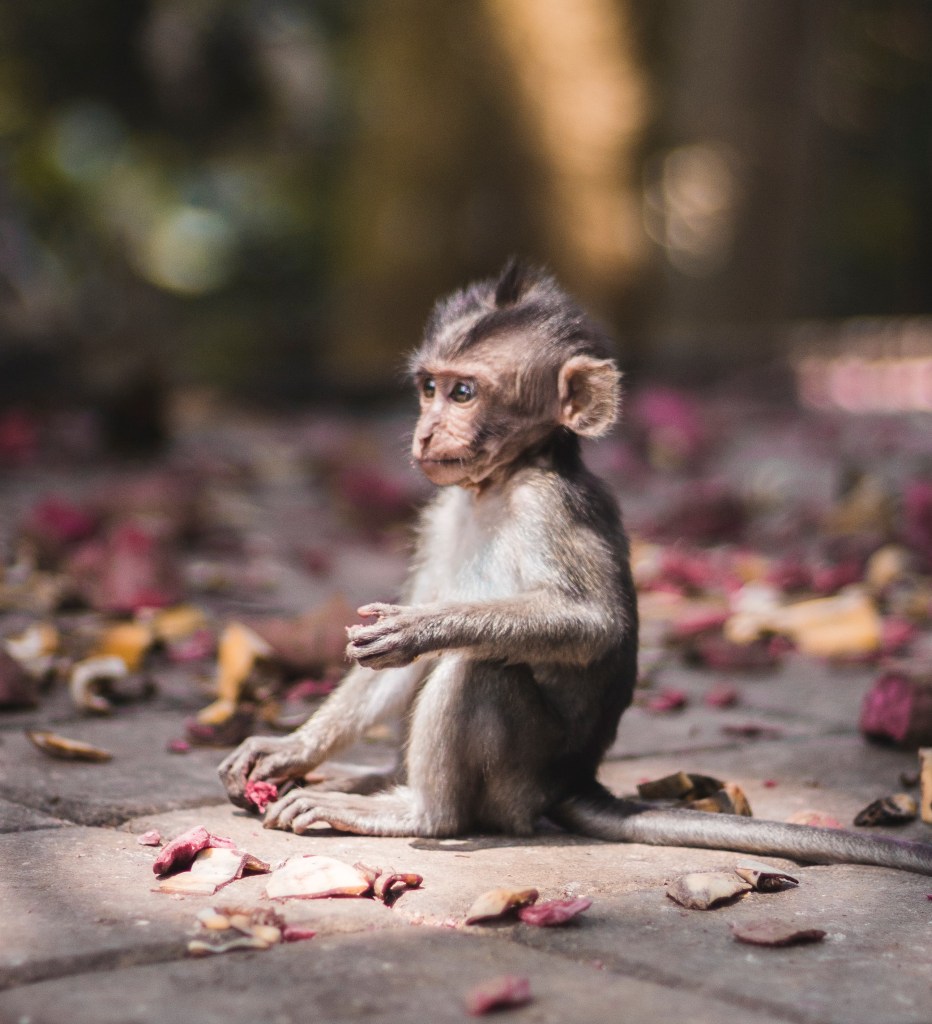
I have a monkey. Those of you aware of your monkey minds know exactly what I mean.
But at this moment, “I have a monkey” means something more tangible. After giving it some thought, after going through struggle after exhausting struggle over all the negative chatter in my head, it was clear that I needed to change my strategy.
A quick Amazon search provided the result I needed: a gloriously soft, appropriately small, unbelievably cute plush monkey that would serve as my previously-maligned nemesis. It is a physical representation of my MonkeyMind (my little MoMi), but not one that I’d want to stay away from. This one begs for soft cuddles.
(To be clear, I bought a stuffed toy from the Amazon site, not an actual primate from the Amazon!)
How can something so darling be a nemesis? It shouldn’t be.
This is not about avoiding thoughts or wrestling my mind into submission, which I’d been trying to do. This is about acceptance of something that is a part of me.
Instead of tossing and turning at night, instead of succumbing to anxiety, instead of frantically trying not-to-think about what’s bothering me, I take that comfy manifestation of my worries and shower it with affection. I hold it gently, and then I hold my thoughts gently too.
Spread the love in 2020. We desperately need it.
The best part of this is that MoMi, a representation of that which upsets me, is actually so easy to hold and love.
What does my MonkeyMind need? The same thing this world needs a lot more of: LOVE.
I got thinking about my MonkeyMind. Most of the time it’s doing a lot of chattering, distracting me from the present and keeping me up at night. I meditate in an effort to shut it up, but that’s a struggle.
We have had a tumultuous relationship, MonkeyMind and I.
I’ve tried to wrestle it into submission, but WOW does it put up a fight! We stand at odds, I in one corner and my MonkeyMind in the other, dukes up, gritting our teeth.
Headaches result. This is tiring. Something needs to change.
After numerous fruitless boxing matches, I decide to try something else, something I hadn’t thought of before. I invite MonkeyMind into my home. While I had, in the past, taken it by the scruff of the neck and attempted to toss it outside–an exercise in futility–now I’m opening the door…
We stare at each other. MonkeyMind looks a lot smaller sitting on the rug by the front door than when it’s screaming in my ear at 3am. Gentler and less menacing. Even a little scared, unsure of what’s going to happen.
MonkeyMind doesn’t look so scary there on the ground by itself. You mean, this is the little guy who’s been giving me so much grief?
I pat it on the head. Its fur is silky soft! I expected a rough, bristly coat, but it’s nothing like that. I can’t resist, I pick MonkeyMind up and then, as I look down at its anxious little face, I’m struck by an overwhelming urge to hug the little bugger, so I do.
And then something new happens: MonkeyMind burbles contentedly. I’ve never heard that before!
Then again I’ve never held MonkeyMind before. I’ve never given it the attention it required to make its needs known, never been sincerely patient with it, never cuddled it. I’ve just tried to push it away.
This is so much nicer.
Now when I wake in the middle of the night and notice MonkeyMind chattering in my ear, I take it in my arms and rub its tiny feet. I stroke its little back and feel the softness of its fur against my face. We take a deep breath together.
I feel grounded and present. MonkeyMind settles down. We both go back to sleep.
Perhaps it’s more correct to say that the journey is BACK on. I enjoyed my time off tamoxifen, but I really didn’t notice much of a difference in myself whether I was taking it or not, suggesting that maybe what I thought were side effects, weren’t. So I’m willing to humor my oncologist and try an aromatase inhibitor.
Not gonna lie, I really did not want to go on yet another medication, but for this appointment, I left all the journal articles at home and put away the boxing gloves. I promised my oncologist that I would stay off the forums, stay off PubMed, quit overthinking things and give letrozole a chance.
The reason? My oncologist thinks that my earlier frustration with tamoxifen was, to put it bluntly, in my head. And my clinical counselor suggested that what I complained of could be explained by anxiety. But I swore that my memory and focus issues started with tamoxifen.
You know what? I’m not so sure now.
The fact is, everything that I was experiencing could have been caused by anxiety (or menopause). And even more striking were the things that I didn’t experience. Not only did I not have significant hot flashes (maybe a “warm flush” here or there, easily countered by taking off a sweater), I never had night sweats. Heck, I had more night sweats before my cancer.
No weight gain, either, which had been another big concern of mine. I’ve been disciplined in maintaining healthy fitness habits throughout my adult life, probably to the point that most people wouldn’t tolerate. Tamoxifen didn’t manage to mess with that, which was extremely gratifying.
While I really want to peg the concentration problems, distractability, flagging libido and other negatives on estrogen-blockers, a retrospective look at my emotional history suggests that (1) I’m highly suggestible (I need to stay off the internet!), (2) there have been loads of anxiety-amplifying events in my life, even before cancer, that I haven’t handled well, and (3) I would be better off shutting up, taking the pill and working on getting my mental state in order.
I mean, I already knew most of this. But some things need to hit me between the eyes a number of times before they actually register.
Wow, dizziness and impaired ability to drive are bad enough to merit a prominent place on the label? Yay! I’m going to pretend that this is a sleep inducer that will leave me better rested. I’ll let you know if that works.
So, while my oncologist warned me about “a little joint pain” (eek!), I’ve avoided anything but a cursory glance at what I might experience on letrozole, besides what reactions would necessitate calling the doctors.
We’ll see how bad these side effects really are.
~~~~~~~~~~~~~~~~~~
A FINAL NOTE – According to what was written on the bottle, this stuff can cause dizziness and impair my ability to operate a vehicle. Seriously? I didn’t expect that, but here’s what I’m going to do with that tidbit of information: I’m going to view letrozole as a reason to get to bed earlier, since I’ll obviously have to take it in the evening. And I’m going to tell myself that this is going to help me sleep. Who knows, maybe it will?
More than two years after finishing chemo, after being afraid my hair would not grow back, and after being delighted with the way it did…I’m experiencing follicular drama, once again.
Once chemo was over, my sleepy follicles took their time getting roused into action. To say that I worried would be an understatement. I was still caught up in the unfairness of being smacked down by breast cancer. Confronting the possibility that after enduring the nastiness of cancer treatment, I might not get my hair back? That was too much.
Well, if you’ve read my posts on hair, you’ll know that my hair finally did come back. And there was much rejoicing.
And that’s where my hair posts stopped. But as happens with these kinds of things, that wasn’t the end of the story.
While still bald, I had been fed reassuring anecdotes by well-meaning supporters about hair coming back even better than before, lush locks that served as well-deserved rewards for undergoing the anxiety and strain of cancer diagnosis and treatment.
But as much as cancer patients feel like they don’t know what’s going on, those around them have even less of an idea. They want you to “stay positive” at all costs, so they overload you with lots of good news.
The forest isn’t as dense as it used to be.
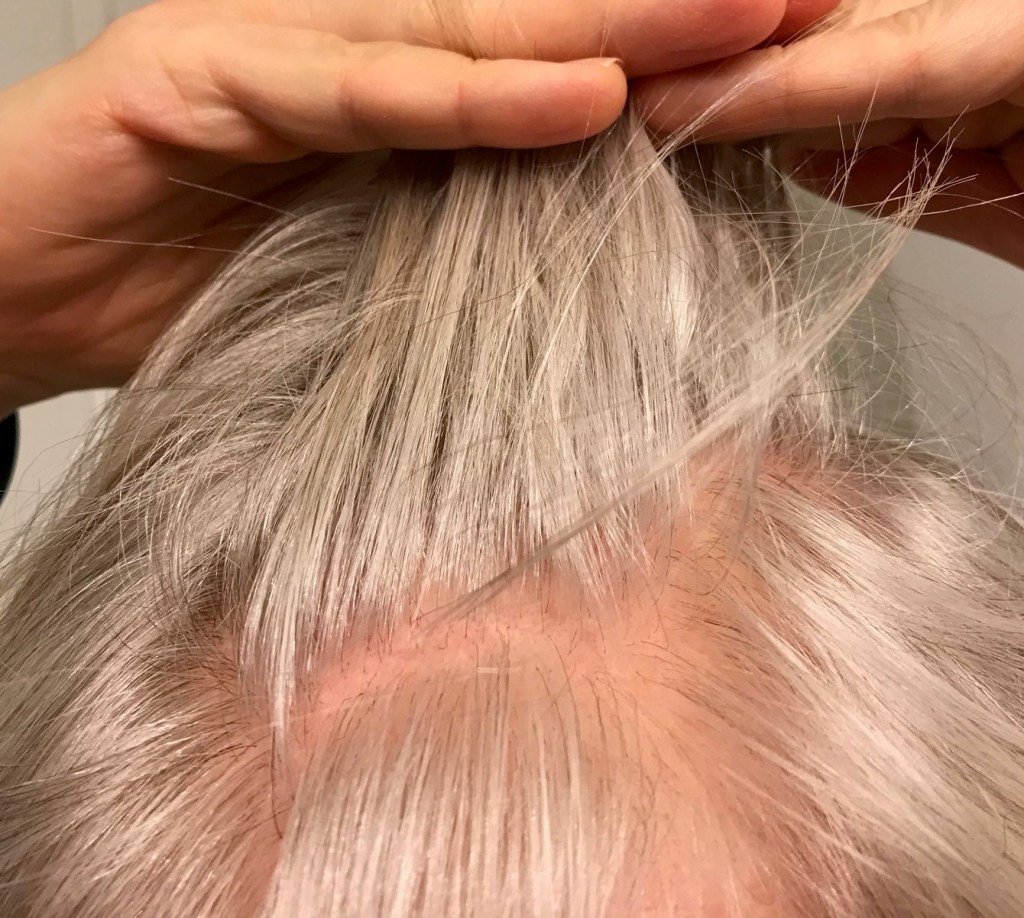
By now you can probably guess where I’m going with this. Because in Spring 2019, things started changing. Within a few months, my uber-cool spikey rockstar hair lost fullness as my strands thinned. Then, I saw “bald spots”.
So, let me explain how I define “bald spots”: these areas have hair, but due to the color (um, WHITE) and thinness, the hair seems translucent, even transparent. And along the part? You can’t see the roots well at all.
My reward for enduring cancer is invisible hair.
My hairstylist confirmed that the hair that comes back in after chemo is different from the hair that eventually settles in. And mine had settled.
Tamoxifen also played a role, since choking off estradiol and moving into menopause will age both you and your hair, particularly if you are premenopausal going into treatment, as I was. So this should have been expected, but in the hustle and bustle of all the other little things, like, oh, wondering if you’re going to survive the ordeal, no one really talks about the fact that there will be other changes that take place.
And now, I’ve been off tamoxifen for almost six weeks, but can’t tell whether there’s been any regrowth, not that I expect any. I meet with my oncologist this Tuesday and you can bet your panties he’s going to prescribe an aromatase inhibitor for me, so the pharmaceutical depression of estrogen will continue.
I am dealing. Mostly. Am I happy about this? Of course not. The last few years have felt like running a gauntlet of misery, but one where I’m only hobbled and not completely taken out. Given that, I’m ashamed of complaining, as there are many others doing so much worse. But not ashamed enough to stop writing about it, as this is my reality and it affects me. If I’m going through this, there’s a good chance that many others are too.
I’m supposed to be moving on and leaving cancer behind me, right? But like an annoyingly nosy neighbor, it keeps waving at me through my kitchen window, reminding me that it’s living next door.
This weekend would have marked two years of taking tamoxifen, the estradiol-blocking medication that is supposed to keep my hormone-positive breast cancer from recurring.
As it turns out, there will be no such commemoration. Several weeks ago, I started noticing a funny cramping feeling in the general area of my uterus. It was light and under any other circumstances, I would have ignored it, but use of tamoxifen is associated with an increased risk of endometrial/uterine cancer, so it kept me on edge.
It’s worth noting that the increased risk is actually for postmenopausal women, and to the best of my knowledge, I was not yet postmenopausal. That’s why pre- and perimenopausal women are started on tamoxifen but taken off of it as soon as they go through menopause. Still the sensation, although intermittent, didn’t go away.
I finally called my oncologist. As it was, I was wary of tamoxifen – I already blamed it for a number of other negative things that I experienced: fatigue, hair thinning, low libido, cognitive issues, mood swings, general misery…all of those and more were listed as possible side effects.
I complained about the light cramping to an oncological nurse, who was surprised that I didn’t have a recent pap smear on record, because according to her, the oncologist wanted me to have one yearly. Mind you, pap smears are for cervical cancer, and I wasn’t at an increased risk for that. But whatever. The nurse gave me her blessing to stay off tamoxifen until I next saw the oncologist.
Conveniently, my oncologist appointment was in three days.
I was stressed, because if there’s one thing that being a cancer survivor made me good at, it was stressing. So much so, that my blood pressure hit 165/95 at my appointment. I couldn’t get over how ridiculous that was and how my thoughts had generated that sort of a reaction. I don’t think my pressure was even that high before my cancer surgery, at a time when my anxiety was raging and everything felt out of control.
I had a prolonged discussion (negotiation?) with my oncologist. In the end, we decided the following: I could take a month off tamoxifen and meet with him again in six weeks. In the meantime, I would go to my gynecologist to rule out endometrial cancer. (Incidentally, a week later at the gynecologist’s office my blood pressure was back down to a very reasonable 102/64.)
No more tamoxifen? Yeah, I feel like celebrating.
My oncologist and my clinical counselor (who I discovered had spoken to him about me) thought that some of the worst side effects that I was experiencing were not due to tamoxifen, but anxiety. My onc suggested that if nothing improved after a month off tamoxifen, I should consider anti-anxiety meds.
But he also checked my hormone levels to see where I was in my journey into menopause. A few days later, I got the news: I was officially postmenopausal and was told to not restart tamoxifen.
So, okay, no more tamoxifen. I was also quite happy that I managed to transition through menopause without any significant hot flashes. The downside of this was, however, that I would be put on an aromatase inhibitor, which came with its own set of side effects, not the least of which was significant bone pain and bone density loss.
Or at least those were some of the effects that I remembered from the last time that I read about them, which was a while ago. This time, I’ve decided, I won’t go back and research all the negatives of the medication. Anxiety does hit me hard, I have to admit, and I want to be sure that I’m really experiencing what I’m experiencing and not simply being influenced by what I’ve read.
So I’ll give the new medication a fair shake and give myself a break by not getting worked up by what *might* happen. As the gynecologist said, looking over my bloodwork, “Actually, you’re really healthy, except for having had breast cancer.” I’m going to go with that and see where it takes me.
Some of the recurring themes in my conversations with my oncologist have been that there’s so much we still don’t know about cancer and that the truth will likely be much more complex than we realize.
The recommendations offered as ways to reduce the risk of cancer should not be misconstrued as sure ways of preventing the disease. Thinking we can prevent something gives us a sense of security, which is what we crave. With cancer, we don’t yet have a clear view of how the processes that initiate a DNA mutation translate into our everyday world behaviors or environmental influences, if they even do. What we know is mostly correlational, which means that there seems to be a connection between two things, that they occur together. But that does not mean that one causes the other.
Consider this example: the growth of grass that comes in spring is correlated with the appearance of robins searching for worms. But it would be incorrect to say that the appearance of robins causes the grass to grow. That’s confusing correlation with causation.
In the case of cancer, we don’t have significant causal information when it comes to providing guidelines to humans about what to do and what not to do to prevent the disease. We can offer suggestions, although as in the case of the robins, we can be way off in terms of the way that one thing might affect the other.
Perhaps most unsettling is that as humans, we’re used to being the top predator. What we don’t have as protection inherently (claws, fur, huge teeth), we can use our big brains to manufacture. Cancer, however, still exerts its dominance over us.
We are trying, of course, and learning more all the time. Witness how far we’ve come with treatments, and how we’ve affected the survival rates. That’s a significant and positive step – as a breast cancer survivor, I can attest to that.
But not being able to effectively address the cause means that the treatments, as effective as they may be, take a huge toll on the patient both physically and psychologically. Many of us struggle in recovering from treatments that are considered highly effective, while others succumb to either the disease or the treatment itself.
So as the Breast Cancer Awareness Month of October comes to a close, it’s a good time to celebrate all the positives associated with our medical advances, but also keep an open heart for those who continue to suffer from any type of cancer.
And many of those do not have the benefit of being highlighted in pink.
There have been times when things in my life have gotten intense and I feel the walls closing in on me (cancer, I’m looking at you). Those are the times that I need to back off and give myself space to breathe. Being a very visual person, one of the methods I’ve employed is finding an image and associating a calm mind with it.
This becomes my safe space. Whether you prefer to call it your “calm space”, “sacred space” or even the oft-ridiculed “happy place”, the idea is the same. Find the visual elements that you find soothing and comforting — perhaps a place in nature, a place from your past where you felt safe, even a fantasy land that you create for the purpose. Real, imaginary, familiar or visited only in your mind, it doesn’t matter. What matters is that it resonates with you.
When I did this most recently, in the preparatory phase for Eye Movement Desensitization and Reprocessing (EMDR) therapy sessions to help with anxiety that I’d never been able to shake, I made a new Pinterest account to collect images.
I highly recommend this for anyone going through stressful times. We all need a buffer between ourselves and this hectic, unpredictable life, and this is one way to do that. Collecting and pinning these images is relaxing in itself!
I have always been drawn to natural settings with lots of greenery, so I searched for elements such as gardens, greenhouses, water, hanging vines, flowers and fish. This is a place created exclusively for me.
It is is easy to find many images that capture the feeling I’m after: a sense of closeness and security in a place of natural beauty, where I can be alone (unless I chose to let someone else in), a space impenetrable from the outside.
The sound of running water is luxuriously soothing, and the vibrant color of koi brightens everything. The above image may have been at the side of a house, but in my mind, it could be a hidden corner that only I can access.
Not all spaces have to be confined, as this vine-covered path above illustrates. It provides room to wander and breathe deeply while still feeling secluded.
Your calm space can be made up of different images that show different elements of it. Each space needs a portal through which you enter, so why not make it magical?
Once I had gathered a variety of images that evoked the feeling of grounding and peace that I sought, it was time to name it: one word (or phrase) that enables me to conjure up my calm space. I settled on Halcyon, but realized later that it didn’t give me what I needed (I’m picky about words and their meanings). Then I came up with Elysium, as it suggested an other-worldly place in the heavens.
I thought that name fit perfectly. Except that as we continued in the preparation phase for EMDR, I had a hard time maintaining focus on one particular image. I had chosen so many! So I thought about what I really needed.
It was breathing space. A place to pause when things come at me too quickly. Ironically, after pinning so many glorious images on Pinterest, I returned to a photo that has served as the background for my two monitors at work. When I arrive in the morning and log in, this image grounds me and I find myself taking a very deep breath, like a sigh:
THIS is my sanctuary.
This image speaks to me. It combines nature with a sense of spaciousness, yet feels secluded enough to impart a feeling of security. And my name for it? Sanctuary. So simple and to the point, and yet encompassing so many different emotions and meanings for me.
The next step has been feeling into the sensations that this calm space evokes. What does that feel like in my body? And then holding onto that feeling, saying the name, imagining the setting. You can “charge” the image with meaning in this way ( à la Pavlov).
The associations that are formed in the process create a sense of calm that I can draw upon to center and ground myself during periods of high stress. It’s not a pill to end all woes, but it can be a powerful tool for dropping yourself down into a more peaceful state. I encourage you to give it a try.
I try to avoid “stream-of-consciousness”posts, but occasionally I’ll let one through.This one stings a bit…
I am tired. Physical fatigue is easy for me; getting emotionally wrung out is exhausting.
Events that have taken place over the past several years have demanded a release of expectations, a relinquishing of normality, how I think life “should” be.
Cancer was the big one. I used to wake in the morning, hoping that my diagnosis had been a bad dream. That I could laugh and shake my head, thinking, “Phew! Glad THAT wasn’t real!” And then go about my day, forgetting the fear and immersing myself in blissfully boring everyday life.
But that’s not what happened. I would wake in the pre-dawn hours after sleep had left me to the darkness, coldness spreading through my belly as I remembered that I had cancer. And in the midst of the fear of dying was that wrenching feeling of having to let go of wanting things to be different. Still desperately holding on when it was too late to do so.
Attachment leads to suffering. I know this, but I cling nonetheless, stubbornly refusing to accept change.
I was given a bit of news several days ago, too disorienting for me to even define in this post. Like cancer, it caught me off guard, and I cling to wanting things to be different. To be “normal” and uninteresting. I’m compelled by my need to fix it, make it comfortable and easy to accept.
I need to get.a.grip…
Yet another thing I wish I could control. But I can only paw at it from the outside.
Now I’m engaging in emotional calisthenics, to try to find a notch on this slick surface that I can stick my finger into and get some sort of grip.
I wish this wasn’t the case. I’m disappointed that I feel the way I do. I tell myself, I should be more tolerant of what happens. But it’s the hope that things will stay the same that makes change so difficult.
I twist my thoughts into origami, trying to find a comfortable shape. It takes a lot of massaging to smooth out the edges and make this morsel easier to swallow. Every time I mull it over, it cuts me again.
At some point it is no longer the matter itself that causes pain. It’s all the emotion layered on top of it.
So I’m tired. Letting go, yes, but so slowly. You’d think that it would get easier with practice but even the process hurts.
I’m constantly working to keep anxiety under control. For me, one of the most common feelings associated with stress is that of it being “in your face”. There is no buffer and therefore no easy way to give yourself time to pause. Emotions rush at you.
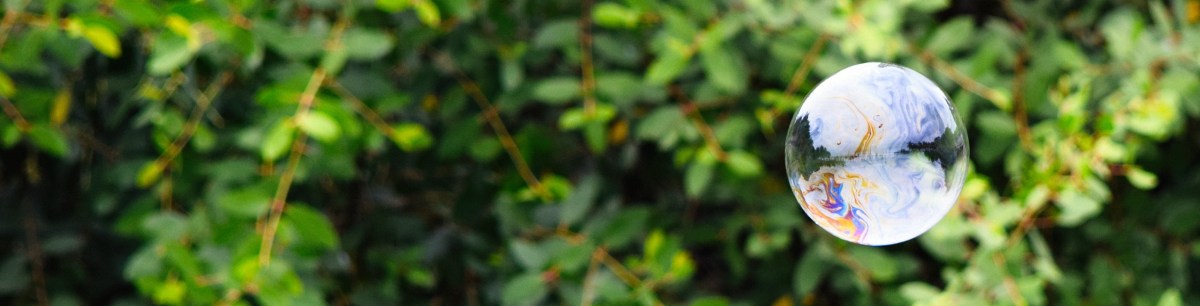
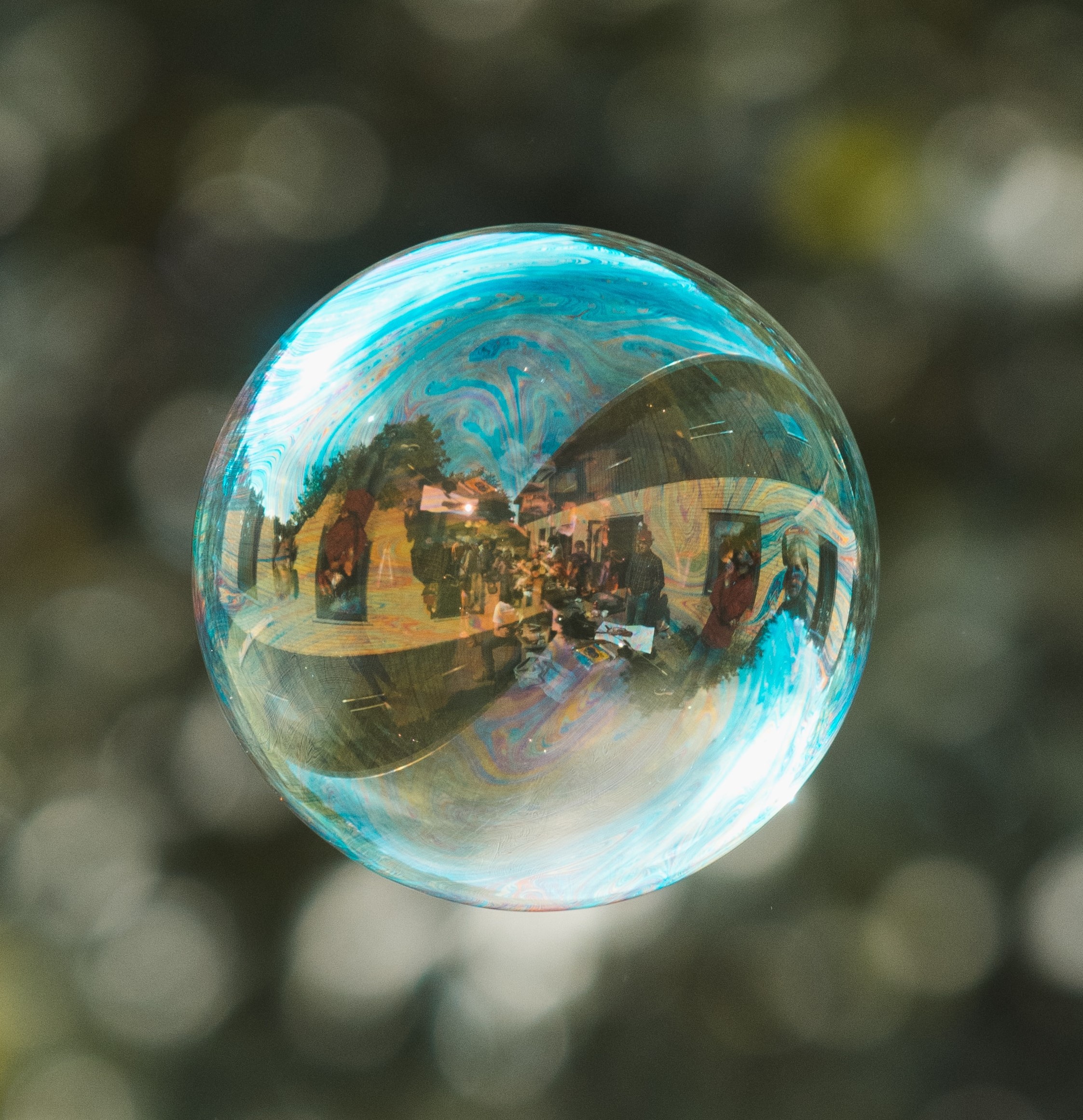
I’ve developed visualizations to give me some space. I’ve already written about getting perspective and keeping anxiety at arm’s length, but sometimes I need another way of freeing myself from stressful thoughts. So I use bubbles!
Oooo, bubbles!
When I get caught up in thoughts of a stressful situation and I feel like the images are right in front of me, I imagine pulling back from the scene. What is transpiring before me continues, but I slowly move away, and as I do, the periphery of my vision starts bending inward. As I pull back, I realize that I am inside a bubble with finite edges.
I keep moving backwards through the wall of the bubble until I’m standing outside it. The actions within are still taking place, but they’re no longer coming at me. I watch from a safe distance, feeling secure.
I may allow the bubble to float away or I can pop it if I choose. Or I may stay with it for a while, observing without getting drawn back in.
Sometimes this becomes a game, particularly if I wake in the middle of the night and find myself in the grip of fearful thoughts. It’s usually not enough for me to back out of one bubble. There may be many. Sometimes I leave a bubble and then realize that I’m standing in another, even bigger one.
When my mind is particularly active, the bubbles keep coming.
But eventually, I get to the point where I am standing outside of all the bubbles, watching them floating before me, the figures or events looking small and not menacing at all. That is the perspective that I need to create myself breathing space.
The metaphor of a bubble is a lovely one because bubbles by themselves are playful, beautiful and, of course, ephemeral. Just as the bubble does not last forever, the events in our lives, no matter how stressful, don’t last forever either. The bubble reminds me that all things pass.
I’ve even brought a little container of soapy water with a bubble wand to work. Blowing bubbles (when no one’s looking) in my office slows my breathing and requires some focus. A controlled exhalation is needed to not pop the prismatic ball of soap-water before I can send it on its way, taking my worries along with it.
A stressful event taking place inside a bubble seems less frightening.
When I cannot do this indoors, I may take a break and head outside, letting the bubbles float off into the breeze. I might make someone else smile in the the process and that gladdens my heart.
It’s silly and fun and reminds me not to take everything so seriously. And if I can send my cares off in bubbles, giving me even a temporary reprieve from anxiety, then perhaps what might have seemed like an overwhelming crisis may feel more manageable.
I first learned of Dr. Jimmie Holland’s work through her obituary in the New York Times, following her passing on December 24, 2017. As a psychiatrist at Memorial Sloan-Kettering Cancer Center, she was credited with pioneering the field of psycho-oncology, which addresses the stuff that goes on in your noggin while you’re making your way through cancer treatment.
Years ago, Dr. Holland became frustrated by the fact that cancer patients were questioned about how every inch of their bodies felt, but oncologists neglected to ask about the state of their emotions. I’m grateful for her recognition of this fact and I completely agree with her. The psychological experience of cancer is a critically important element in treatment, one that is too easily overlooked by hospitals and physicians in their rush to address physical symptoms.
The late Jimmie Holland, a psychiatrist who happened to be married to an oncologist, understood the many psychological pressures affecting cancer patients.
I highly recommend Dr. Holland’s book, The Human Side of Cancer: Living With Hope, Coping with Uncertainty, which still sits by my bedside even though I finished reading it well over a year ago. While I read it cover-to-cover, it works just as well as a reference text, set up so that you can go to the section most relevant to you.
For me, with a background in psychology, this book was exactly what I was looking for, but certainly psychology degrees are not necessary to utilize what’s on these pages. The book was written for both patients and caregivers, for those undergoing treatment and those on the path of survivorship, dealing with a poor prognosis or experiencing a recurrence. There is information appropriate for all these varied situations and all types of cancers.
The book is divided into 16 chapters, followed by a listing of resources. The chapters are as follows:
What Is the Human Side of Cancer?
The Tyranny of Positive Thinking
The Mind-Body Connections and Cancer
The Diagnosis: “I Could Die of This”
Working Together
Coping
The Human Side of Cancer Treatments
The Human Side of Specific Cancers
All Medicine Doesn’t Come in a Bottle: Psychological Treatment
Alternative and Complementary Therapies
“I’m a Survivor–Now What?”
Staying Healthy
The Goal is Control
The Last Taboo
The Family and Cancer
How Do I Go On?
At some point, I had to stop tagging pages because, honestly, I wanted to tag everything.
I enthusiastically plowed through this book because Dr. Holland was writing exactly about the things I’d been thinking about. Most of the parts that I tagged for future reference were in the center (chapters 7-11), but in its entirety, the book is invaluable. Dr. Holland provided numerous examples of situations that her patients experienced in addition to offering practical advice on a variety of topics. So many sections spoke directly to questions that I’d had, such as, “Did Stress Alter My Immune System and Cause My Cancer?, “Are All These Problems [from treatment] Worth the Long Term Gain?” and “Am I a Cancer Patient or a Cancer Survivor?”, to name several. I was surprised by how many issues that had been bothering me showed up in the pages of this book.
Cancer is never an easy topic, but thoughts about potential outcomes and treatment consequences are the reality that cancer patients live every day. This book addressed everything about that reality, and it was perfect for where my head was at the time I was reading it: having had surgery, chemo and radiation, still undergoing monoclonal antibody infusions. My hair had just begun to grow back in and I was happy that the “worst” of my treatment was over, but I was facing the uncertainty of the future.
I remember reading The Human Side of Cancer and being excited by how relevant the material was to my life, and simultaneously wondering why this wasn’t required reading for anyone receiving a cancer diagnosis. Or every oncologist on the face of this planet.
If you are a cancer survivor, current patient or caring for someone who is, I encourage you to get a copy of this book. You might not realize how much you need it.














 Frantic Shanti