“Not Going It Alone”: Complementary Cancer Therapies

With as much sophisticated research as has been done on cancer, it still remains a confounding disease and much of the treatment may seem to be, for lack of a better word, medieval.

So it shouldn’t seem surprising that cancer patients also reach out for less conventional therapy to help themselves through the treatment process.

First, a clarification of terms used in this post:

Acupuncture is utilized as a non-standard treatment (for those who can take more poking)
  • Conventional medicine: chemotherapy, radiation, surgery, immunotherapy, etc., prescribed by your medical team.
  • Complementary medicine: non-standard treatment used in conjunction with conventional treatment; also called Integrative Medicine.
  • Alternative medicine: non-standard treatment used instead of conventional treatment.

Therefore, generally speaking, what distinguishes complementary from alternative medicine is whether it’s used with standard medical treatment.

According to a study (Crudup et al., 2021) that was presented at the 2021 Annual Meeting of the American Society of Clinical Oncology (ASCO), 73% of breast cancer patient participants stated that they employed complementary therapies in their treatment. However, while oncologists were supportive of such therapies, they were not aware of the extent to which their patients utilized them and thought that only 43% of their patients did.

Patients get more benefit from spiritual practices than most oncologists realize

Furthermore, oncologists felt that counseling, support groups, exercise, etc. were the most effective non-standard therapies, in contrast to patients who found great benefit in meditation, mindfulness and spiritual practices. While two-thirds of both patients and oncologists felt that complementary medicine improved quality of life, a majority of patients also felt that it improved their outcomes.

Wayne Jonas, MD, a co-author of this study, says: “Cancer is a complex disease that affects every component of a patient’s life. While conventional medicine is effective for curing disease, it can fall short in helping patients heal. Patients are turning to these therapies to look for hope and to improve their quality of life and well-being after diagnosis… .”

What types of therapies do these include? The website “Cancer Health” provides examples of some complementary treatments (see here for an explanation of each):

Acupuncture
Aromatherapy
Art Therapy
Biofeedback
Cannabis
Herbal Therapies
Labyrinth Walking
Massage
Meditation
Music/Dance Therapy
Qigong
Spirituality
Tai Chi
Traditional Medicine (Ayurvedic, Chinese, etc.)
Vitamins and Supplements
Yoga

[This list is by no means exhaustive.]

I used a number of these complementary therapies myself and can attest to the important role they played in my recovery. As Dr. Jonas points out above, conventional treatments “can fall short in helping patients heal” [emphasis mine], whereas non-standard therapies seem to focus on that aspect.

I believe that these additional therapies, particularly more spiritual ones, are what give us hope throughout the cancer experience. Patients should be encouraged to seek out additional, complementary therapies to help themselves move through treatment, fully supported by their oncologists and ideally also guided by them.

Did you rely on complementary or alternative treatments to help you through your cancer journey?

~~~~~~~~~~~~~~~~~~~~~~~~~~~

REFERENCES

Original Research

Abstract for presentation:

Crudup et al. (2021) Awareness, perceptions, and usage of whole person integrative oncology practices: Similarities and differences between breast cancer patients and oncologists. Presented at 2021 Annual Meeting of the American Society of Clinical Oncology (ASCO), https://meetings.asco.org/abstracts-presentations/200685

Published research article:

Crudup et al. (2021) Breast cancer survivorship and level of institutional involvement utilizing integrative oncology. J Clin Oncol,  39, no. 15_suppl. e18588,
https://www.doi.org/10.1200/JCO.2021.39.15_suppl.e18588

Synopses

The ASCO Post Staff (June 7, 2021; updated June 15, 2021) Use of integrative medicine by patients with breast cancer. ASCO Post, https://ascopost.com/news/june-2021/use-of-integrative-medicine-by-patients-with-breast-cancer/

Tien C (June 28, 2021) Oncologists Underestimate the Number of Breast Cancer Patients Who Use Complementary Medicine. Cancer Health, https://www.cancerhealth.com/article/oncologists-underestimate-number-breast-cancer-patients-use-complementary-medicine

Descriptions of complementary therapies

Living with Cancer: Complementary Therapies. Cancer Health, https://www.cancerhealth.com/basics/health-basics/complementary-therapies

Mindfulness 101: Noticing the Qualities

The main reason why I started a meditation practice was because I had been diagnosed with breast cancer and was, to put it mildly, freaking out.

As a naturally anxious person, the diagnosis blew the roof off my ability to cope and plunged me into a nightmarish situation. Anyone who’s ever dealt with severe anxiety will tell you that nothing is more important than making it stop.

Over the years, my anxiety gathered enough power that it was able to blindside me. Cancer anxiety practically wrecked me.

When my radiation oncologist recommended mindfulness meditation, I felt empowered by the thought of gaining control of my runaway anxiety without the need for medication.

I was hoping meditation would enable me to sit in peace in the midst of chaos. But I imagined that as feeling no stress, as in, being numb to anxiety-provoking stimuli.

That simply doesn’t exist. I wanted to not experience any stressful situations, but there is always stress. We can’t change that. Mindfulness meditation was only going to help me change the way I reacted to it.

So here I am, more than six years after initally starting a daily meditation practice and guess what? I still have stress, I still feel anxiety.

However, what did change is that I can define it now. When I become aware of agitation and anxiety, I know to pause and bring attention to how it manifests in my body.

What does it feel like? Tightness, heat, rapid breath?

Where does it show up? Face, temples, chest, stomach?

Is there a color or sound or smell associated with it? Does it have a “texture”?

Does anxiety have an odor? Next time stop and take a whiff.

I can relax my muscles, sink into the earth, breathe deeply and notice the qualities of anxiety. By pulling apart what is happening, I slow time down. Instead of being hit by a locomotive full force, I walk around the train cars. I can notice how I feel as I pass through the experience.

Is it pleasant? No. Does it always work immediately? No. However, I can see it coming, and as a result, I relax into it. It is the awareness of the anxiety that helps me through it, not a numbness to it. This leads me to acceptance of the situation instead of bracing against it.

On one level, it’s a little discouraging to still be dealing with the unsettling nature of stressors. But I am heartened by the empowerment that mindfulness offers. I have evolved enough that I know I don’t have to go back to being thrashed by the whirlwind. I can sit inside it and watch it swirl and pass through. Every time I do this, it gives me more confidence for the next time.

Is this something that might help you too?

Things I Wish I’d Known About Breast Cancer, Part 2

This post continues what I started in the last post…a few things about breast cancer that I wasn’t aware of at the time of my diagnosis. Knowing the following would have made things a little less stressful:

1. Lumpectomy is a relatively uncomplicated surgery. I wish someone had explained this to me because I was a total wreck going into surgery (which happened to be the only surgery that I had ever had up to that point, making everything 10 times worse). Although I had decided against a full mastectomy, I was still so afraid of what a lumpectomy would entail, what I’d look like and how long it would take me to recover from losing a chunk of flesh.

The reality was…I was back at work the next week. No drainage tubes, no need for heavy analgesics — just a couple of ibuprofin the night after surgery because skipping coffee that morning resulted in a headache, but that was it. It was even hard to tell that I’d had my lump excised. Wish I could go back to my earlier self and tell her not to worry.

Stethoscopes are emotionless. Oncologists can seem to be too, but that’s by design.

2. Doctors are not in a hurry to give you good news. I think there’s a general feeling among medical professionals that there’s so much that can go poorly during cancer treatment that your doc isn’t going to go out of their way to pump you full of optimism. They probably practice keeping an emotionless face as they deliver all sorts of news, both good and bad. As a patient, however, I watched every flicker on my oncologist’s face for an indication of how things were “really” going. I feared that there was something he wasn’t telling me.

It wasn’t until perhaps a year or so later when I was expressing my fears to him about possible abnormalities inside my body that he uttered the phrase, “but you have your health”…and I was taken aback because I had never heard him sound so positive. It was almost a shock to hear him confirm that I was actually considered healthy.

3. Don’t expect things to be the same as before. Accepting that part of your life has changed will make it much easier to go on. This took me a while to appreciate because I was expecting to get back to doing and feeling everything the same as before my diagnosis.

But chemo (and eventually, age) pushed me through menopause, and I had to come to grips with, say, a high-intensity interval workout requiring more recovery time and that I had trouble remembering people’s names. Once I got to that point of acceptance, life after cancer treatment became easier, although it did take a number of years to get there.

4. Hair takes a while to grow back in. The reason I created posts with photographs that illustrated the cancer journey that my hair went through (here and here) was because I could not find good photos on the internet documenting the process. I did see images of a woman a few weeks after stopping chemo with little stubs already visible, but that was not my experience and it made my anxiety over my slow regrowth even worse.

Walking around with no hair was getting old and I was getting more desperate by the day to see evidence of sprouts!

If you’ve ever googled your chemo drug name + “hair loss”, you understand the fear: the first search result is usually a law office gathering info on behalf of cancer patients whose hair never grew back!

It took a number of months before my folicles woke up and actually started growing. I remember the moment that I finally saw growth on the front of my head and it was as if the heavens had opened up and divine light poured out onto me. Seriously. I would have avoided a lot of stress if someone had just told me that it’s gonna be a while.

~~~~~~~~~~~~~~~~~~~~~~~

Ok, ok, to be fair, my oncologist did urge patience with the regrowth but I was a jumbled mess of nerves and was feeling overwhelmed. All the internet propaganda about both (1) other women having much faster regrowth, or (2) other women never getting their hair back terrified me. Note to self: when feeling desperate, stay off the internet!

“Detached”: Time-Out in Third-Person

As an addendum to my post where I wrote about using third-person language in meditation to help keep distance between yourself and your thoughts, I wanted to revisit this method for everyday life.

While in that post I alluded to using third-person descriptions on stressful days, it’s really worth emphasizing the utility of creating space throughout the day.

To sum up that post, I mentioned a mindfulness technique suggested by meditation teacher Jeff Warren in which when we find ourselves being swept away in thought, we describe what’s happening in “third-person” language and play the role of an observer.

Observe…make space…gain perspective.

But as I said in that post, why limit that to meditation sessions? In fact, you could argue that it is even more important to bring that type of gentle detachment to the things that ordinarily set us off in our daily lives, whether it be with family, at work or anywhere.

I would say that so much of my anxiety has stemmed from an inability to maintain perspective about the trigger. Noticing when I’m getting carried away and then describing the situation as something that is happening to another person — similar to the way a newcaster might report on an event in a calm, informative manner — helps loosen its grip on me.

The ability to step back and detach from the situation is kind of the name of the game in terms of reducing stress levels, isn’t it?

By narrating the circumstances around your stressors, we make space: “FranticShanti felt a little ill when she saw that the letter in her mailbox was from her landlady. She expected this to be about a rent increase…and she was right. Another $200 per month.”

Third-person language gives us the space we need to tackle our stressors without getting pulled into them.

That telling offers some space. It doesn’t change the situation, simply presents what’s happening in an unemotional manner. Then following up with some trouble-shooting helps soothe my agitation: “This will require a review of her finances, but as she calculated with last year’s rent increase, she can still absorb this additional amount. Things will probably be okay. She takes some deep breaths and feels into her hands and feet.”

Not only can you calmly describe the situation, but you can describe yourself engaging in self-soothing techniques as you work out your next steps.

It is quite effective in slowing down racing thoughts, particularly if you’re in a place where you can speak out load, as hearing yourself describing things can be even more grounding.

As with other simple grounding techniques, this may seem a little contrived or simplistic, but it might be just enough to bring you out of your head and into the here and now — cool, calm and collected.

Creating Space with Third-Person Language

I’ve had some up-and-down weeks this year and have been working on making space in my head to lessen the impact of anxious thoughts.

I recently heard a wonderful suggestion by meditation teacher Jeff Warren (via his Daily Trip on the Calm app) about creating more mental room for yourself. He encourages describing what’s happening in the third person when thoughts come up during meditation.

Like many suggestions to help with mindfulness, this seems surprisingly simple, but so far I and everyone else I’ve recommended it to have found it to be very effective.

Making space is good for more than avoiding viruses…

It goes like this: I am sitting in meditation focused on my breath (or any other chosen anchor) and a thought pops into my mind. I say to myself, “There goes FranticShanti thinking about X topic again”.

Suddenly I feel a *whoosh* as I’m pulled back out of that scenario. And instead, I’m observing myself having that thought. Hearing myself describe the situation as a bystander has a calming effect and creates a sensation of safety and distance.

I’m still staying present and noticing what’s going on around me, but recognizing that this thought is happening to the person who is known as me — instead of allowing myself to get sucked into it, along with all the associated emotions — expands the amount of mental space I have.

It’s kind of like looking through a window at a situation instead of being there in the room with it. Not nearly as scary or immersive.

Looking at things through a protective buffer makes even scary situations less threatening.

Likewise, throughout the day, describing a stressful situation in third person helps us remember that there is always space around us that can serve as a buffer from unsettling thoughts. It can even help us handle anxiety-provoking situations as it also provides an opportunity to describe a potential ‘solution’, as if you were to give a friend some advice on how to deal with it.

Imagine saying, “[Your name] just realized that there’s a deadline they forgot about, so they’re reshuffling their schedule to accommodate the task.” That’s much more productive and grounding than screaming, “AAAAAAAAIIIIIIIEEEEE!!!” in your head.

So, I’ve started using this in everyday interactions when I feel myself getting swept away by worries. It’s been an effective way of bringing myself back into the present, to what is real and actually here, and it serves to reframe what is going on in my life.

This sort of method brings stressors down to a manageable level, allowing for perspective. And we can all use a bit of that.

Fighting Depression with Exercise

If you’ve hung around this blog for a while, you know that I am a firm believer that exercise will make just about anything better.

That was certainly the experience I had with cancer, as maintaining my fitness was critical to lifting my spirits. A nice workout was the best way for me to shake off the remaining side effects of a chemo infusion.

Moving makes you feel better.

That’s why I’m not completely surprised that a group of researchers (Heissel et al., 2023, Br J Sports Med) are suggesting, based on a meta-analysis of 41 studies comprised of a total of 2264 participants, that exercise be used as a primary treatment for depression. That means they feel the results of their research demonstrated exercise to be just as effective as psychotherapy and medication.

The study authors conclude boldy, “Exercise is efficacious in treating depression and depressive symptoms and should be offered as an evidence-based treatment option focusing on supervised and group exercise with moderate intensity and aerobic exercise regimes.” [Emphasis mine]

However, while no one is arguing against the importance of exercise in helping individuals treat their depression, an article appearing in The Washington Post cites other researchers who feel that it may be premature to use exercise as a primary treatment for people suffering from clinical depression and suggest that additional studies should be conducted.

More research needs to be done to determine the specifics of how to use exercise to lift depression.

In particular, as a meta-analysis, although the total number of research participants was large (2,264), the individual studies on which the analysis was based tended to have smaller participant sizes, due in no small part to the fact that running studies like this can be costly.

There are still a number of questions that need to be addressed, such as exercise type, frequency, intensity and amount. Depression is different for everyone both in scope and origin, and an “exercise prescription” should be personalized for the individual. Still, no one is disupting that any form or length of exercise is far better than doing nothing.

In light of these results, what should you do?

Do the type of exercise you enjoy. The best results in this particular meta-analysis were obtained from moderate intensity exercise, although intense exercise was still beneficial, and benefits were also gained from even light exercise. Avoiding sedentary behavior was key.

If you’re just starting out, find a simple exercise that you’ll enjoy doing and will look forward to.

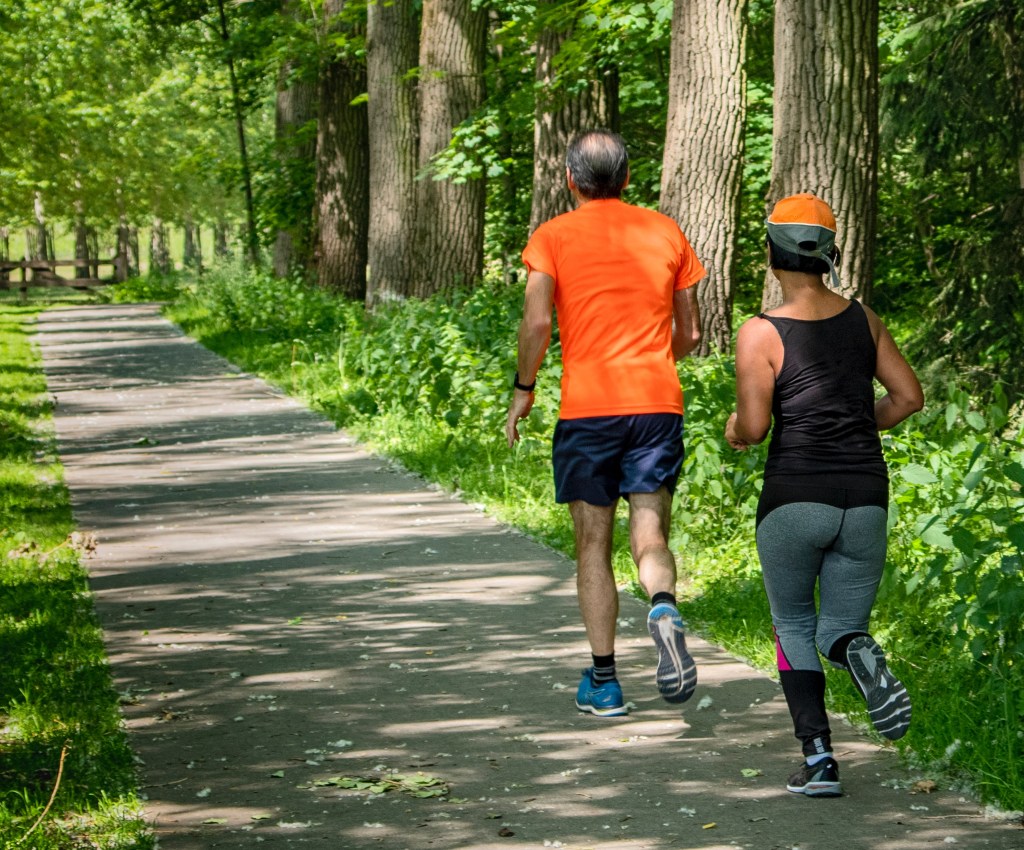
My personal suggestion for anyone who is not currently exercising would be to try to maintain consistency with a simple exercise like brisk walking. If you are able to get outside into nature, perfect! If you’re deadset on bingewatching the latest season of your favorite show and decide to march in place, swinging your arms while you watch, that is great too! It still beats the pants off of crashing out on the couch as the show plays on.

There are many ways to incorporate more movement into your life and also ways to make it pleasant so that you look forward to it. At the least, find a simple exercise that you don’t dread…and then keep doing it. In the meantime, we will await future studies that can offer more insights into the psychological benefits of exercise.

REFERENCES

The Study, a Meta-analysis
Heissel A, et al. (2023) Exercise as medicine for depressive symptoms? A systematic review and meta-analysis with meta-regression. Br J Sports Med. http://dx.doi.org/10.1136/bjsports-2022-106282.

A Reader-friendly Synopsis
Reynolds G (March 15, 2023) The best treatment for depression? It could be exercise. The Washington Post. https://www.washingtonpost.com/wellness/2023/03/15/exercise-depression-benefits/

Tall Like a Mountain: A Meditative Visualization

In dealing with anxiety, I’ve come to accept that while fearful thoughts come and go, I remain the same.

Visualizations have been helpful in realizing this. One of my favorites, the one made famous by Jon Kabat-Zinn, PhD — creator of the Mindfulness-Based Stress Reduction (MBSR) program — is the Mountain Meditation, and I value this visualization particularly because it is so meaningful in its description.

For this meditation, you settle into your seat and bring your attention to your body. Scanning your different parts, from your feet to your head. Feeling yourself breathe as you go. No need to change anything; you’re simply noticing sensations.

Imagine your ideal mountain…and then become it.

As you sit with eyes closed, shift your thoughts to a beautiful mountain, tall and stately. Imagine the details about it, it can be whatever kind of mountain you choose. Steep or gently sloping, rocky or carpeted with greenery. Allow the image to form itself: the mountain is stable, majestic and unperturbed regardless of the season or weather.

Then, once you have a clear picture of your mountain…allow yourself to become the mountain, settling into its form and taking on its characteristics. Feel yourself grounded in its stillness.

Sitting as the mountain, imagine the seasonal changes and the different weather that each brings. Through the snow of winter that blankets everything, the spring thaw as nature awakens and buds burst open, the summer teeming with life under the warmth of the sun, and autumn with its changing colors and cooler breezes that move you into a quieter state in preparation for the coming winter again.

All these bring wind, precipitation and occasionally harsh conditions whether they be cold or heat. But the mountain still sits as it always has, unmoving and unbothered.

And so you, as the mountain, also sit in the midst of different conditions. When you take on the garb of the mountain, you link with its strength and stability and unchanging nature from day to month to year. This meditation encourages us to see through the chaos of our everyday lives and find the persistent calm behind it.

This is one of my favorite meditations because it carries so much meaning. Below is a YouTube video of Dr. Kabat-Zinn leading a 20-minute Mountain Meditation:

Jon Kabat-Zinn’s Mountain Meditation

If you would like to read a version of it, PalouseMindfulness.com has provided their own adapted transcript of Kabat-Zinn’s Mountain Meditation in a pdf file. Alternatively, googling “mountain meditation” will also bring up a nice variety of recordings.

I encourage you to try this when you feel you need extra grounding.

“My Eyelids Are Heavy, But My Thoughts Are Heavier” – Anxiety At Night

I have a full toolbox of techniques for handling anxiety during the day, but nighttime is a little trickier. If you’ve had the same experience, you’re not just imagining things.

A Live Science article by Louise Bond examines this issue. According to Clinical Psychologist Charissa Chamorro, PhD, at night our brains have fewer distractions, leaving us more vulnerable to worries that creep in. This makes sense as we can redirect our attention during the day to activities that are not available when we’re in bed.

Darkness can be unsettling enough, but researchers feel that the circadian rhythmn is also involved in the accentuation of nighttime fear.

And you don’t need to be suffering from horrible anxiety for this to be the case. Research (Li et al., 2015, Int J Psychophysiol) showed that even among women without anxiety, fear was enhanced at nighttime, and not simply because of darkness, suggesting the involvement of the circadian rhythm. At the same time, as diurnal beings, humans naturally evolved to have stronger fear responses at night. This is partly due to the fact that we don’t see well in the absence of light and therefore are more vulnerable to nighttime predators.

Furthermore, while there is a natural ebb and flow of cortisol throughout the circadian cycle with cortisol levels peaking in the morning and being lowest at midnight, when anxiety keeps cortisol levels high during the day, that affects nighttime hormone release and therefore your ability to rest (Hirotsu et al., 2015, Sleep Sci).

To make matters worse, once your sleep is disrupted, worrying about your inability to get a good night’s sleep can result in being unable to sleep, and a vicious cycle develops.

Establishing calming practices during the day can have a positive effect on nighttime anxiety.

You’ve probably heard the suggestions for improving sleep: turning the lights down in the evening, avoiding electronics (or using blue-light blockers), keeping your bedroom cool and dark, using a sound machine to mask noises, avoiding stressful or polarizing conversations in the evening, and the like.

To that I would add that what you do during the day itself can affect what kind of sleep you have at night. Meditation, practicing mindfulness, doing deep breathing exercises all put us into a calmer state. If you wake up in the middle of the night with a racing mind, having practiced and become adept at self-grounding techniques in daytime can help you soothe yourself at night.

While the roots of our anxiety may be complex, for those of us for whom it’s built up over time, so too will it take time to establish behaviors to help control it. Sometimes we need support of a therapist or medication, sometimes we can manage on our own, but setting aside time every day for even a short calming practice can help you improve management of anxiety no matter when it appears.

REFERENCES

Bond, Louise (2023) Can’t sleep? An expert reveals why anxiety may be worse at night. Live Science, https://www.livescience.com/anxiety-at-night

Li Y, Ma W, Kang Q, Qiao L, Tang D, Qiu J, Zhang Q, Li H (2015) Night or darkness, which intensifies the feeling of fear? Int J Psychophysiol, 97, 46-57. https://www.sciencedirect.com/science/article/abs/pii/S0167876015001713

Hirotsu, Tufik S, Anderson ML (2015) Interactions between sleep, stress, and metabolism: From physiological to pathological conditions. Sleep Sci, 8, 143-152. https://www.ncbi.nlm.nih.gov/pmc/articles/PMC4688585/pdf/main.pdf

Believing in My Abilities: A Superpower for 2023

I’m calling 2023 my “year of calm”, because I’m going to be nuturing a deep, conscious, peaceful state of being. This is my superpower.

Since my cancer diagnosis six years ago, I’ve worked at combatting the rawness of emotion by making space, and one of the things that I’ve found is very important in doing so is the feeling of self-efficacy: the idea that I, in fact, can step back from frightening or obsessive thoughts and ruminations. Not to repress them, but to observe them without getting sucked in.

Breathing deeply, relaxing, I create space around myself. Relief from the rawness of emotion in my face. Grounded, I watch the world from the safety of my calm bubble.

I flex my superpower of quieting my thoughts by visualizing this scenario: I imagine that I’m being chased by something scary (monsters, zombies, another cancer diagnosis…). But a split-second before something grabs me, I slow everything down, feeling into my extremities and making space all around me. I imagine this as a pearlized bubble forming around me and the calmer I am, the deeper my breaths, the more protected I become. If I believe in my ability to calm myself, no matter how close the monster is to me, they can’t touch me.

My calm demeanor allows me to float in my bubble. I see everything around me, including the things that terrify me. But from within that pearl, sounds are a bit more distant and the view is a little clouded, as if I am watching through a gentle haze. Inside I am firmly grounded and aware in my body. Confident that I’m safe in the present moment. And as long as I believe it, I am.

This might seem like an overly simplistic view of anxiety and it’s not meant to belittle what someone else might experience. I’ve been through those feelings of anxiety run amuck — at that point in my life this would not have worked. What I was experiencing was very real and intense. Having emotions constantly “in your face” chips away at the perception that you’ll ever being able to get a handle on them.

When I believe in my ability to calm myself, I calm myself.

After years of practice in grounding, mindfulness and meditation, I can attest to the fact that believing in my ability to calm myself has been critical in helping combat anxiety. Acquiring that level of confidence was a process of consistent mindful meditation, on good days and bad days. But now that I’ve gotten a fingerhold on it, every time I am able to calm myself, my self-efficacy is strengthened.

Because as anxious as my thoughts can be, and as loud as they may seem, they are only inside my head. Remembering that has given me the greatest superpower in the world.

In Memoriam: Thich Nhat Hanh, “I Have Arrived, I Am Home” [VIDEO]

Since my last post, my family and I were diagnosed with COVID. We are doing well and experiencing mild symptoms.

I’d like to devote this post to a beautiful documentary that came out on January 22, 2023, Vietnam time (January 21, 2023 in the US), a year to the day of the passing of Zen master Thich Nhat Hanh, aged 95, known as the “Father of Mindfulness”.

Entitled I Have Arrived, I Am Home (Plum Village YouTube Channel), this film covers the last few years of the life of Thich Nhat Hanh — also called Thay, or “teacher” — after he returned to the Tu Hieu Temple in Vietnam at which he was ordained a monk many decades prior.

“I Have Arrived, I Am Home” – 41:46 min

Under 3/4 of an hour long, the film beautifully illustrates how Thay, in his post-stroke years, returned to his roots in preparation for his passing (“transition”). It documents his death and funeral and the effect that his life has had on the existing monasteries of the Plum Village Tradition, which he established.

The writing of Thay greatly touched me during my cancer journey, and I Have Arrived, I Am Home is a lovely video that depicts his kindness and care for his students. This was not created to “convert” anyone but only to teach by example. I hope you take some time to view it, especially as our world continues to experience much unrest and pain.

~~~~~~~~~~~~~~~~~~~~~~~~~~~~~

If you are interested in learning more about Thich Nhat Hanh’s mindful life, I encourage you to refer to this article from Lion’s Roar magazine, published on the day of his death last year.

I had the pleasure of attenting a “Day of Mindfulness” at the Deer Park Monastery (Plum Village Tradition) in Escondido, CA in Summer 2019 and described it here.