Mindful Games I Love: Meditating with “Playne”

I didn’t think I needed a video game to help me mediate.

In the description for “Playne” (on the Steam platform), the developer states that the game is designed to help you establish a meditation habit. While, I thought it would be uninteresting for someone who already had a solid habit, the reviews of the game were very positive and the concept seemed inviting, so I decided to give it a try.

After a week of meditation, saplings have emerged.

I had no idea that it would have such an impact on the quality of my meditation. While I often listen to ambiances (such as through the “MyNoise” app and website) and use guided meditations (“Calm”, “Insight Timer”) or similar auditory cues (“Unwind”), what I didn’t have was a visual representation of my meditation practice as it progresses over time. “Playne” supplies that.

“Playne” has three modes: Story, Sandbox and Evolve. This post is about the Story mode, as that’s the one most people start out with and the one I’m currently working on. Sandbox allows to you build your own meditation spaces and Evolve can only be unlocked after 100 days of meditation (I’m still in the 50s).

You have a small selection of meditations to choose from with the emphasis being on learning to sit with yourself.

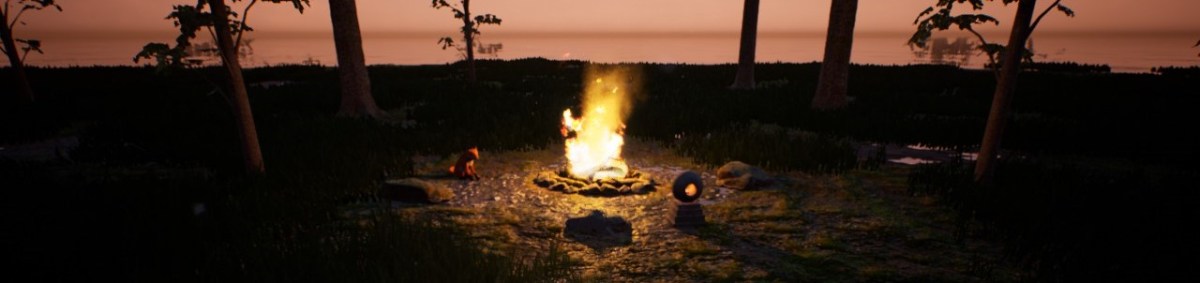
The game starts out on a semi-barren island with only a tiny flame in a campfire, a stone lantern, several rocks and Sensei Fox to keep you company. There are both guided and unguided meditations to choose from and as you meditate everyday, the fire grows taller and seedlings sprout and grow. With consistency, you unlock different story chapters, which wise Fox relates, gain the ability to change the weather, and most importantly, grow the island into a beautiful meditation retreat. All it takes is patience.

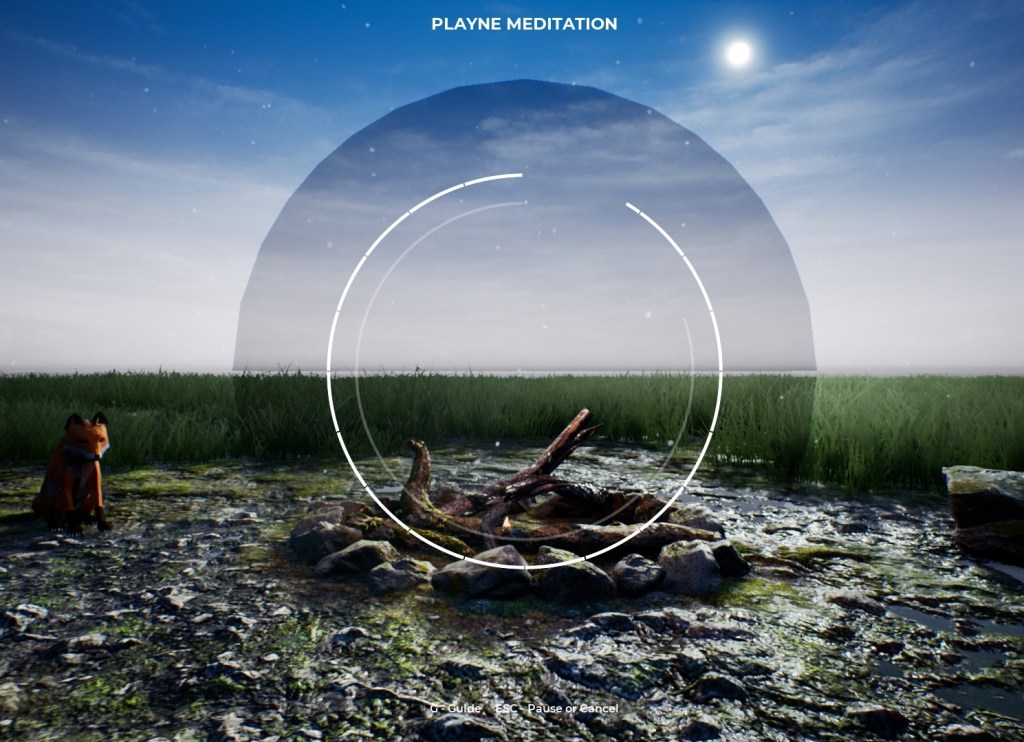
There is a breath bubble to guide your breathing if you wish, and also a ring that serves as a countdown timer. Both can be turned off if they are distracting or unnecessary.

You are given the ability to chose the length and type of your meditation. In addition, you can regulate inhales and exhales (the length of which you can designate) with a breath bubble, keep track of your meditation time with a minute-ring, enable a journaling option (known as “thought pages”, which you can either keep or burn in the fire if preferred), and mark each instance that you become aware that your mind has wandered (as I enthusiastically wrote about here). There are different places on the island to meditate, and as you accumulate more days, you not only get more weather options to chose from, but also access to elements such as birds, fireflies, Aurora Borealis and butterflies. These are quite lovely and make your “Playne” even more inviting.

Be forewarned that there is the temptation to mark your progress and count achievements. I understand why, from the viewpoint of a game, this is necessary but it does go against the concept of mindfulness. On the other hand, I’m really looking forward to flowers and butterflies!

Now for the potential downside: As much as I enjoy all the offerings, there are a few parts of the game that seem antithetical to mindfulness meditation. The game keeps track of “effort”, you gain “achievements” and note your “progress”. As do other meditation apps/games, “Playne” maintains a record of your streak, and depending on your settings, if you don’t log in to meditate with “Playne” on a given day, you run the risk of having the flame in the campfire go out. While I know that this is done to encourage daily meditation, it is also somewhat problematic, as the whole idea of mindfulness is non-striving. I feel that too much emphasis on achievement in the context of a meditation practice goes against being mindful of the present.

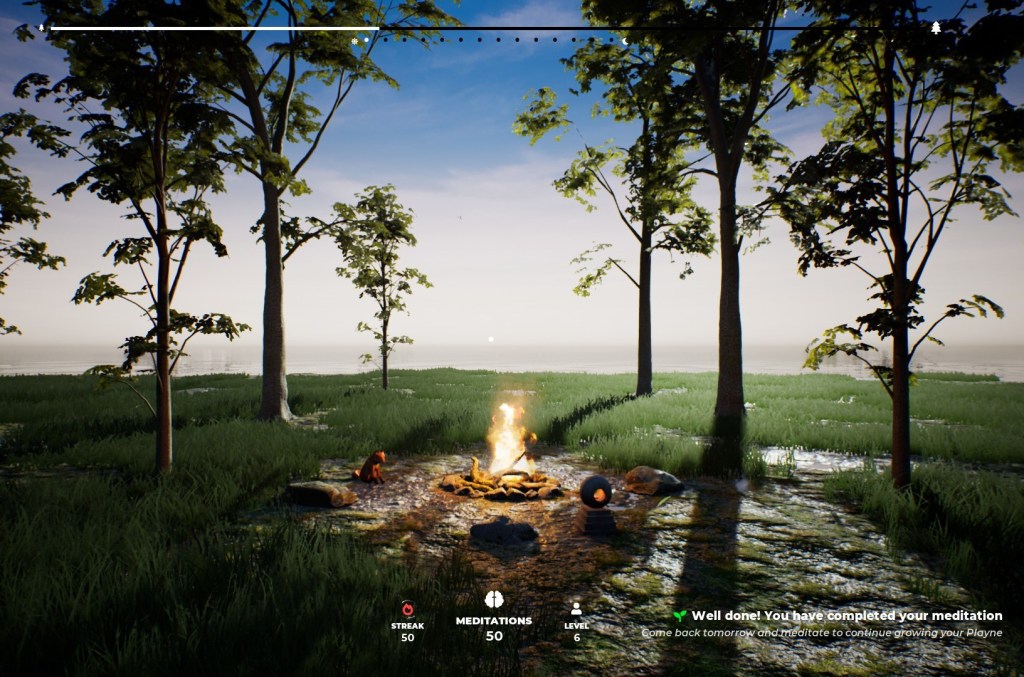
Over 50 days into this, my Playne has grown significantly.

Being of a naturally competitive nature, I was reluctant to turn my practice into one where I would be clinging to achievements. Nonetheless, there are enough positives to this game, and it has benefited my practice so much, that I have been learning to let go. That in itself is a significant improvement!

Yes, it’s unlikely that I will risk breaking my streak, but that’s pressure I can live with.

Reservations aside, I am really impressed with the game. I will write about the Sandbox and Evolve modes when I get to them, and post more images as my “Playne” grows. Additionally, there is a virtual reality (VR) option that I am looking forward to playing with. For anyone starting out with meditation, “Playne” offers a solid platform from which to develop and maintain a consistent meditation habit.

~~~~~~~~~~~~~~~~~~~~~~~~~~~~~~~~~

In addition to “Playne”, I am also using other mindfulness media on a regular basis (my favorite ones are here). That makes for a lot of checking in with electronics, unfortunately. I’ve gotten to the point where I meditate about a half-hour to an hour-plus every day. While it’s a priority in my life, there are days that it’s a struggle to find time for it all. Introducing “Playne” has added to this, and the last thing I need more of in my life is stress.

Sometimes I combine “Playne” with other apps to take advantage of the “Playne” ambiance while doing my favorite guided meditations. More recently, however, I’ve also used “Playne” as a way to emphasize unguided meditation, and that has allowed my meditation practice to mature and expand beyond the confines of a computer program and into the rest of my day. That is one of the greatest benefits of this program and the main reason why I have found it so valuable.

Endocrine Therapy: Getting to the Heart of the Matter

Looks like visiting a cardiologist after stopping aromatase inhibitors for breast cancer was a good idea after all.

The letrozole (aromatase inhibitor) that I’d been taking has been associated with cardiovascular effects, and since I was feeling progressively worse from the medication, I wanted to make sure that everything checked out okay.

With the improvement in surivorship comes an increase in the diseases that come about from cancer treatments. The longer people live, the more long-term effects take their toll.

It seems like the American Heart Association (AHA) agrees with my concerns. An April 26, 2021 statement by the AHA underscored the complicated picture of cancer treatments, in this case hormonal therapies for breast and prostate cancer. As stated in the article by Okwuosa et al. (2021) published in Circulation: Genomic and Precision Medicine, “As patients with hormone-dependent cancers continue to live longer, CVD [cardiovascular disease] has emerged as a leading cause of mortality and morbidity among survivors of these cancers.”

Ironically, breast and prostate cancers are some of the most common cancers in women and men, in addition to having some of the most effective treatments. The number is of breast and prostate cancer survivors is growing. Part of the success of treatment is expressly due to the development of hormonal therapies for long-term (5-10 year) use. At the same time, the increase in CVD problems is a result of this success, because as cancer survivors age they experience greater amounts of age-related cardiovascular events than do non-cancer surivors.

So, what do you do when the treatment that’s increasing your chances of beating cancer may also be increasing your chances of a cardiovascular event? Isn’t that one of the many problems with cancer? If your treatment works well, then that opens the door to having it work “too enthusiastically”, possibly with long-lasting negative effects.

It still comes down to healthy behaviors.

The AHA statement paper cited here stresses the importance of communicating with your oncological team about CVD risk factors and possibly requesting a referral to a cardiologist, having appropriate tests conducted (ECG/EKG, echocardiogram), and–in my opinion the most important thing the survivors themselves can do–modify lifestyle (diet, exercise, smoking cessation, etc.) to maximize your chances of a cardiovascular event-free survivorship.

While it may be frustrating to think of entering into an “out of the frying pan, into the fire” scenario with a potential leapfrog from cancer to CVD, nothing is written in stone. You can make an effort to protect yourself and avoid being a statistic. Focusing on healthy living will benefit you in many ways and is guaranteed to improve your life, no matter what your risks.

~~~~~~~~~~~~~~~~~~~~~~~~~~

Link to the AHA statement:
Okwuosa et al. (2021) Impact of Hormonal Therapies for Treatment of Hormone-Dependent Cancers (Breast and Prostate) on the Cardiovascular System: Effects and Modifications: A Scientific Statement From the American Heart Association. Circ Genom Precis Med,
DOI: 10.1161/HCG.0000000000000082

Link to a reader-friendly version:
People Taking Hormonal Therapy for Breast Cancer Have Higher Risk of Heart Disease, Monitoring Recommended, https://www.breastcancer.org/research-news/higher-risk-of-heart-disease-for-diagnosed-people-taking-hormonal-therapy

Grounding Through the Fingertips: Hand Steepling

Note: this is another grounding technique, by which I mean a way to retain focus on what is happening in the “now” rather than getting lost in memories of the past, which we cannot change, or succumbing to fears about what may happen in the future. It’s not a woo-woo magical technique. It’s merely being mindful about what is currently taking place so that you can respond appropriately and maintain your composure.

During acute stress, we need to bring ourselves back to the present quickly. By doing so, we are able to clear our heads of the “what-ifs” and “you shouldas” that cloud our thoughts at those times.

But what’s the fastest way to do that? For me, it’s definitely focusing on the fingertips. Each fingertip has approximately 3,000 nerve endings, more than any other part of the body (except the most intimate). When you touch something, all those nerves start firing.

You can take advantage of this sensitivity to ground yourself.

Channel Benedict Cumberbatch’s Sherlock and put your fingertips together.

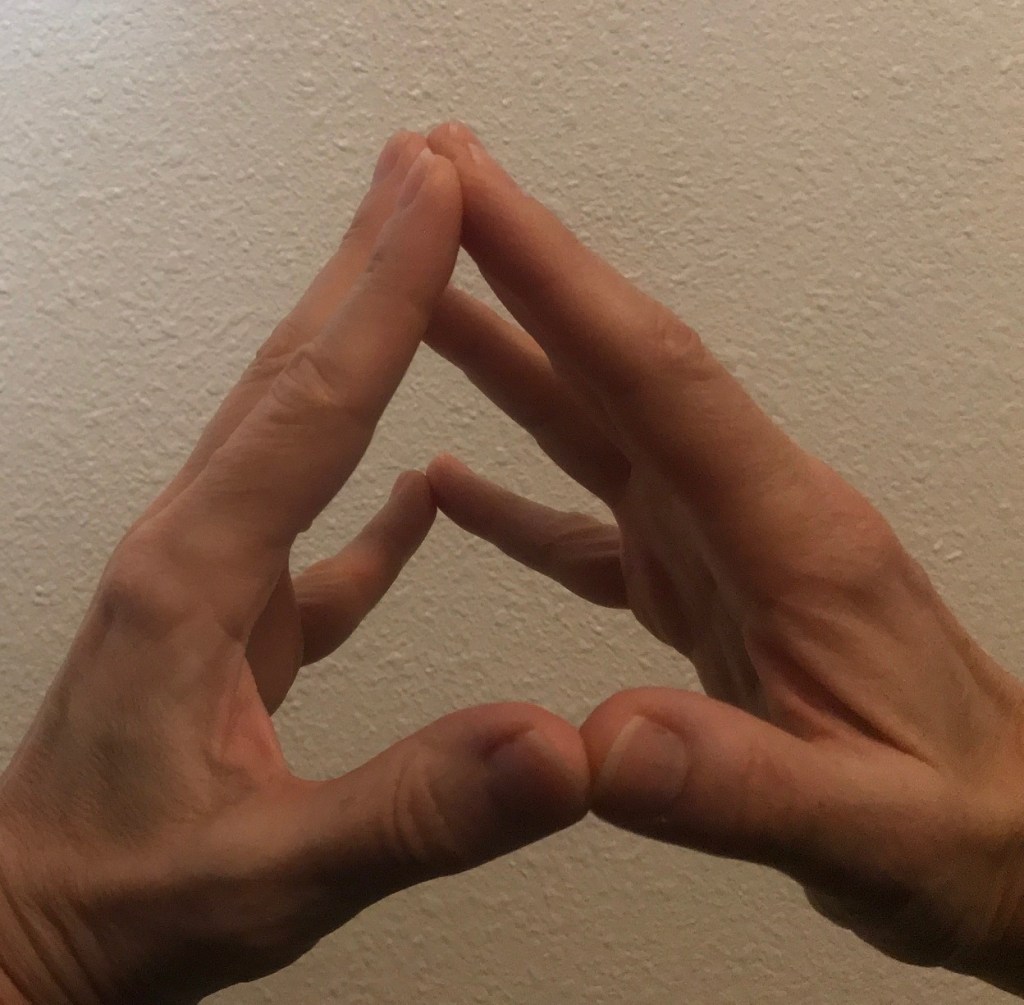
This is what I do: I “steeple” my fingers (thumb against thumb, index finger against index finger, etc.) as if I were Star Trek‘s Mr. Spock contemplating a complex situation. The fingertip pressure immediately commands attention from my fearful mind in the same way that a boss displaying that hand gesture would command an employee’s attention. Taking deeper breaths, I rub my fingertips against each other in a circular motion. The movement enables the nerve endings on the fingertips to keep firing as the sensation continues. Or I can bounce my fingertips off each other, or keep them together but flex the fingers to create a pulsing motion.

Closing my eyes accentuates the emphasis on sensation and makes maintaining focus on it easier.

Yes, this seems so simple, but it’s also quite effective. By placing our focus on the fingertips, we take our attention away from more reactive parts of the body like the chest area, where the heart might be beating fast and ribcage expanding and contracting with rapid breathing. Feeling into those areas might only serve to reinforce the heightened emotions that we’re experiencing.

The hands lie further away from that commotion, and that distance between the chest and our fingertip sensations enables us, if even for a short while, to get some perspective. Think of it as the anxiety not being “in your face”.

We can use body sensations as anchors to help stabilize us through anxious times.

Sometimes, when I close my eyes, all I “see” is that sensation of fingertip to fingertip, as if it’s the only thing that exists. I can play with this, imagining that I’m holding something between my hands, and that the sensation I feel is actually the feeling of that object against my fingers. It can be a pane of glass or even a beach ball. It all depends on what my brain is willing to accept at the moment. It’s a relaxing mental exercise.

As with many things related to mindfulness, it’s helpful to practice this fingertip pose when we’re in a relaxed and meditative state to connect the sensation to a feeling of calm, enabling it to serve as an anchor when our emotional seas are rough. The more we practice, the stronger that association, and the more effective the grounding response when we use this technique in the midst of anxiety.

~~~~~~~~~~~~~~~~~~~~~~~~~~~

Fun fact: body language experts consider steepled fingers to be an expression of confidence. That might be the little boost you need when you’re navigating a stressful event!

Clicking Back to the Breath

I’ve written before about being an imperfect meditator. There are days when the narrative running through my head is never-ending and refuses to be silenced.

However, I found something that helps while I was playing a meditation game called “Playne” (about which I’ll write in the future). One aspect of this game is that it allows you to mark the occurrence of a thought by clicking the mouse button.

As soon as you realize you’re not focused on your breath, you click the button, and the program makes a pleasant little noise.

The concept is similar to that of a meditation bell except you decide when the “bell” sounds.

As simple as this sounds, it has made a huge difference in my meditation practice. Not only does it help me recognize when I’ve drifted away, but that little sound is very effective at bringing me back to the breath. Instead of gradually floating back to breath awareness, I immediately wake up into the present moment.

It’s as if the sound plants a sonic flag at the point where realization hits and that speeds my return.

This is not unlike a meditation bell that sounds at regular intervals and invites you back into focus. However, the benefit from the sound in my meditation game comes from teaching self-awareness and presence, because I ring it when I myself identify the thought. In mindfulness meditation, we are taught to note the thought inside our head, but in my opinion, the sound helps it “stick”.

Over the past weeks, I’ve become quicker in releasing the thoughts and returning to the breath. The more I practice, the stronger the habit of regaining focus quickly becomes.

While it’s not feasible for me to hold all my meditation sessions within the confines of a game, I’ve found that there are other means of marking my thoughts. Clicking a retractable pen works similarly to the sound in “Playne”. The “click” is just enough to bring attention to itself without being disruptive

Something as simple as the clicking sound of a retractable pen can serve the purpose of noting a thought an d bringing you back to the breath.

Other gadgets that can work? Anything that delivers a distinct sonic note. Tapping a hard surface with the edge of a coin would serve the purpose. Or a hand tally counter that one might use to count people coming through an entrance. A quick search of phone apps reveals a number of tally counter apps if you don’t have access to the handheld mechanical device.

But it’s important to remember that the point of this is not to get obsessed about how many thoughts you had during a particular meditation. What you want is a little sound, like a gentle beep or click, to make you more aware of the thought.

Next time you are finding it hard to focus on your breath, grab a pen, a coin, open an app on your phone…even snapping your fingers may serve as your thought marker. It may be that little extra something that helps you back to the present all that more quickly.

Counting Backwards to Sleep

I’m still experiencing weird sleep disruptions. Many nights I’ll be up for an extended time during the wee hours of the morning.

This isn’t conducive to being bright and alert during the day, so I’m devising a game plan for limiting the length of these nighttime interruptions.

My newest strategy is a variant of a counting practice that I heard over the radio years ago, and it goes like this:

Imagine a clean whiteboard. In one hand you’re holding a dry-erase marker in your favorite color, in the other a cloth or eraser.

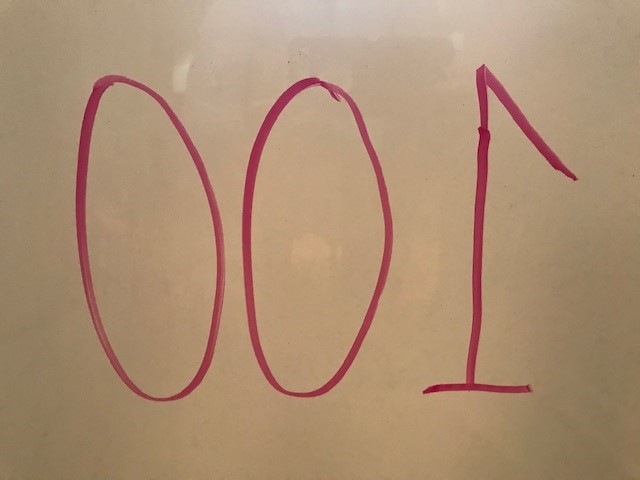
Your imaginary nighttime whiteboard won’t have a reflection like mine, but you get the idea. The numbers are familiar but you might need to think a bit about how to form them in reverse.

Write “100” in large numbers, but do it backwards so it looks like a mirror image. Channel your inner da Vinci. 🙂

Your board may be brighter and the numbers more perfect than mine. Perhaps you’ll choose a different color. All that matters is that you focus on forming the numbers in reverse.

Then erase the number and write “99”, again reversed. Erase it again.

Keep counting down. Don’t rush. Think about how your hand should move to scribe the backwards numbers. Breathe deeply. When you erase, erase carefully and completely.

As you count down, don’t breeze past the erasure. Make sure you allow your imagination to clean off all markings of the previous numbers before you start writing the next ones.

You probably won’t get to zero. The first two nights I did this, I didn’t make it past 80. It doesn’t always work so well, but when it does, it’s soothing and sleep-inducing.

Why does it put you to sleep? First, you’re not doing anything very complex and therefore this shouldn’t be putting you into a greater state of wakefulness; in fact, counting down is kind of boring. You’re giving your full focus to this task so there are fewer opportunities for intrusive thoughts to interrupt. If they do, return your focus to the numbers. Do this each time your mind wanders. And while the task is easy enough, it does require you to pause and consider how to move your hand, since you’re doing the opposite of what you usually do to write a number.

The counting task requires enough attention that you shift your focus away from thoughts that may be keeping you up, but is gentle enough to lull you into a calmer state that helps bring on sleep.

If imagining a whiteboard doesn’t work for you in the middle of the night, there are other counting variations that would work as well:

Starting from 100, simply count backwards by threes (no imaginary writing required). If 100 seems too optimistically small a number from which to start, use 300 or even 1000. If counting down by threes seems too complex, try twos. Go slow.

Really good at addition? Try calculating the Fibonacci Sequence, a series of numbers where the next number is the sum of the two preceeding it. Start from zero, add one and then keep going: 0, 1, 1, 2, 3, 5, 8, 13, 21, 34… unfortunately, this can get out of control quickly (I usually lose track somewhere in the three-digit numbers). But intrepid math fans might be able to get far enough to refocus themselves to the present and enter a calmer state.

Does the idea of math cause you stress? Then just count your breaths, start from 100 and going backwards, slowing down the breathing as you go, imagining the numbers count down with each inhale. This works particularly well if you focus on releasing all your muscles with each exhale.

A specific strategy may not work every time, but the overall idea is the same: something that requires a little brain focus with minimal excitation or strain (so that you can lazily shift your focus and keep your mind gently occupied). Do not rush through these; the magic lies in the process. There is nothing to achieve here. You’re simply boring yourself to sleep.

Try any of these the next time you find yourself awake with a racing mind and let me know how it goes.

Soy and Breast Cancer: What Does the Science Say?

IMPORTANT: Please discuss the information below with your oncological and nutritional team prior to making changes to your diet! They will be able to provide you with the proper guidelines for your situation.

One common area of contention within the context of hormone-positive breast cancer is the effect of soy consumption on cancer risk. There has been some back-and-forth on this topic, and “to soy or not to soy?” is a frequently-heard question coming from newly-diagnosed cancer patients.

It was a concern for me. I became vegetarian at age 18 and consumed a soy-heavy diet until my mid-40s, at which point, partly spooked by warnings about soy, I backed off. As recent research shows, I needn’t have.

For a little background, the main concern for breast cancer patients is the presence of phytoestrogens in soy, known as isoflavones, and how they function in the human body. They have a mild estrogenic effect, which is why many women use them in supplement form to ameliorate the uncomfortable effects of menopause. In that sense, they are acting like estrogen, although it’s important to stress that they are not estrogen.

Soy (here, both tofu and edamame) is a staple in Asian and vegetarian cuisines, and is the only plant-based protein that is a complete protein.

But given this similarity to estrogen, does soy increase the risk of breast cancer and breast cancer recurrence? In short, studies show that if you grew up eating soy and eat it daily, as is the case in many Asian countries where soy products are dietary staples, soy has a significant protective effective against breast cancer. Results of these studies have been inconclusive in Western populations, however this seems to be due to differences in diet: not only do Westerners eat considerably less soy compared to Asians, they also don’t eat it throughout all stages of their lives.

Is there a difference in how these diverse cultures handle isoflavones? It appears that a major isoflavone-derived metabolite, equol, has well-documented antioxidant and estrogen-like actions and seems to be associated with numerous positive outcomes, but only about 30-50% of the human population has the gut microbiota to derive it from the diet. There is a need for more research on how this conversion takes place and under what conditions.

But most importantly, as stated by the American Institute for Cancer Research, “Population studies don’t link soy consumption with an increased risk of any cancer.” While the childhood and adolescent consumption of soy is what seems to offer the most long-term benefits, for those who increased their intake at a later age or don’t eat it regularly, the current view is that even if eating soy doesn’t significantly reduce your risk of cancer, there is no definitive evidence that it will make your risk worse.

For me, that means that I will continue using soy as an important protein source in my diet.

Take note:

As with other foods, unprocessed and minimally-processed soy is still the healthiest option.
  • Overdoing anything is not good, so don’t overload on overly processed soy supplements in the hopes of preventing cancer development and/or recurrence — particularly if you’re postmenopausal and not a life-long soy eater. Having said that, there is ample room for minimally-processed soy foods (tofu, edamame, tempeh, miso) in a healthy plant-based diet, and that will definitely benefit you.
  • No single thing will prevent cancer 100%, so you’d be well-served to consider your lifestyle as a whole. As a matter of fact, Zhang et al. (2017, Cancer) noted that “[w]omen who consumed high levels of dietary isoflavone were more likely to be Asian Americans, young, premenopausal, physically active, more educated, not overweight or obese, never smokers, and drank either no alcohol or <7 drinks per week.” [Emphasis mine.] That means protection came not only from soy; the women were also engaging in other behaviors associated with a lower risk of breast cancer. Bottom line, lifestyle matters!

Finally, this is only a brief summary of what I found. Soy is a topic that I’ll be keeping my eye on and will report back as newer studies are published.

In the meantime, here are three excellent reader-friendly websites for more information:

1. American Institute for Cancer Research website, “Soy: Intake Does Not Increase Risk for Breast Cancer Survivors – https://www.aicr.org/cancer-prevention/food-facts/soy/

2. Harvard School of Public Health website, “Straight Talk About Soy” – https://www.hsph.harvard.edu/nutritionsource/soy/

3. Oncology Nutrition website, “Soy and Breast Cancer” – https://www.oncologynutrition.org/erfc/healthy-nutrition-now/foods/soy-and-breast-cancer

References for this post (all articles are available online free of charge):

Baglia ML, Zheng W, Li H, Yang G, Gao J, Gao Y-T, Shu X-O (2016) The association of soy food consumption with the risk of subtype of breast cancers defined by hormone receptor and HER2 status. Int J Cancer. 139: 742–748. https://doi.org/10.1002/ijc.30117

Kucuk O (2017) Soy foods, isoflavones, and breast cancer. Cancer. 123: 1901-1903. https://doi.org/10.1002/cncr.30614

Lee SA, Shu XO, Li H, Yang G, Cai H, Wen W, Ji BT, Gao J, Gao YT, Zheng W (2009) Adolescent and adult soy food intake and breast cancer risk: results from the Shanghai Women’s Health Study. Am J Clin Nutr. 89: 1920-1926. https://doi.org/10.3945/ajcn.2008.27361

Mayo B, Vázquez L, Flórez AB (2019) Equol: A bacterial metabolite from the daidzein isoflavone and its presumed beneficial health effects. Nutrients. 11: 2231. https://doi.org/10.3390/nu11092231

Messina M, Rogero MM, Fisberg M, Waitzberg D (2017) Health impact of childhood and adolescent soy consumption. Nutr Rev. 75: 500–515. https://doi.org/10.1093/nutrit/nux016

Nagata C (2010) Factors to consider in the association between soy isoflavone intake and breast cancer risk. J Epidemiol. 20: 83-89. https://doi.org/10.2188/jea.je20090181

Patisaul HB, Jefferson W (2010) The pros and cons of phytoestrogens. Front Neuroendocrinol. 31: 400–419. https://doi.org/10.1016/j.yfrne.2010.03.003

Wu AH, Yu MC, Tseng C-C, Pike MC (2008) Epidemiology of soy exposures and breast cancer risk. Br J Cancer. 98: 9-14. https://doi.org/10.1038/sj.bjc.6604145

Zhang FF, Haslam DE, Terry MB, Knight JA, Andrulis IL, Daly MB, Buys SS, John EM (2017) Dietary isoflavone intake and all‐cause mortality in breast cancer survivors: The Breast Cancer Family Registry. Cancer. 123: 2070-2079. https://doi.org/10.1002/cncr.30615

~~~~~~~~~~~~~~~~~~~~~~~~~~~~~~

When I asked my oncologist about soy, he shrugged and said, “Yes, it’s true that soy foods contain plant estrogens…but you’re not a plant.”

My Top 4 Mindfulness Apps

This time of the year is stressful for me because it’s the anniversary of my breast cancer diagnosis. That means it’s time for the scans that determine whether I can continue to consider myself “cancer-free”. Scanxiety, anyone?

This week is going to be a doozie, since I have my diagnostic mammogram on Tuesday followed by a cardiologist appointment on Thursday, the latter of which has become, ironically, the major stressor as I try to determine whether I’m suffering from “cardiac anxiety” or an actual arrhythmia (one of the possible side effects of aromatase inhibitors). To top it off, I get my first COVID immunization Friday, which brings its own stressors since I’m a bit “side effects-shy” these days.

Given all this, it’s a good time to talk about what apps I use the most to help calm my anxious mind. I’ve written about quite of few of them in my “Mindfulness Apps I Love” series, but here are the one I keep coming back to (all have generous free offerings; both Calm and Insight Timer have had major upgrades since I originally posted about them):

The app I started my meditation practice with. I use it at least once a day, every day.

Calm
This was the first mindfulness app I downloaded and it’s the one I’ve used every.single.day since March 13, 2017. I find the voice behind the app, that of Tamara Leavitt, very soothing. Since I started with it, Calm has added a number of elements featuring voices of celebrities, music, movement, classes, sleep stories, background sounds and other features that I haven’t even used.

What I use most: The curated “Daily Calm” meditations are my do-to first thing in the morning or if I wake up in the middle of the night with troubling thoughts swirling in my head — Tamara’s voice gives me something to focus on and shoos out the scary negative self-talk.

Why I like it: Because all the material is created specifically for the app, I always know what I’m going to get. It’s predictably high quality using a consistent format, and for me, it works. Also, once the meditation is done, the background sound continues and provides a soundtrack for drifting back to sleep or continuing meditation on my own, if that’s what I need. Finally, since this one was my first app and I ended up investing in a lifetime membership, I get access to everything it has to offer. If you’re not ready for such a loyal commitment to this app, you might not have quite as much to choose from.

By far the largest selection of meditations, classes, music and more that I’ve ever seen anywhere. You’ll need time to look through the offerings, but relax, there’s a search function. 🙂

Insight Timer
This app offers a large collection of many meditations, music, classes and whatnot by a huge array of teachers. You need to search around because you don’t always know what you’re going to get, but if it’s out there, it’s in this app. I’ve played around with meditations that I might not otherwise just because they were available to try out. And now new, there are live events that include meditations, concerts, even yoga classes that you can join to help maintain a sense of community–so important at a time when so many in-person venues are closed.

What I use the most: I’ve settled on a handful of teachers with voices and styles that I prefer. Often, I use this app at the end of the day, when I’m trying to clear my head and settle into sleep, but it’s also great for any time when I want some guidance for settling down and am looking for variety.

Why I like it: OMG, the selection! Not only is there just about every type of meditation available (secular, sacred, shamanic and so much more–and now the app allows you to filter out the ones that make you, shall we say, “uncomfortable”), but there is a vast array of languages in which to listen. I speak a specific European language from a small Baltic nation, and yep, Insight Timer has a meditation in it. This is really worth looking into and most of everything is available for free–but donations in support of the app and teachers are very welcome.

Unwind has lulled me back to sleep after nighttime wakings with too much swirling in my head. It’s prevented me from throwing myself headlong into anxiety, as I’m reminded that breathwork is a tool to put the breaks on runaway fear.

Unwind
This is an app that I recently reviewed here, and as I’ve gotten more into breathwork and vagus nerve relaxation, it has become invaluable to me. The combination of ambiances that you can select from paired with a gentle guiding voices that cues breath inhales, exhales and holds has made this perfect when I don’t want a guided meditation but I do want something to focus on.

What I use the most: Lately I’ve been opting for the “box breathing” pattern (inhale, hold, exhale, hold). It is perfect for calming my mind without straining my breath. I pair that with the “River Under Bridge” background ambiance that is a nice combo of gentle bird sounds with soothing running water.

Why I like it: Unwind has gotten me out of some anxious moments, specifically too-early wakings brought on by a racing heart. Instead of throwing in the towel and deciding that I’m just going to have to start my day at 4:27am, I’ve been able to lull myself back to sleep; again, the spoken breath cues provide guidance but are unobtrusive enough to allow drowsiness to set it. Additionally, Unwind is ideal for those times of my day that I need to eke out some head space and take a break from work pressure. Even a few minutes is enough to get my breath under control.

MyNoise helps me put distance between myself and my fears. It generates the mental space that enables me to step back and observe what’s going on without being pulled into it. And of course, the wide selection of sounds will mask just about anything.

MyNoise
I posted about this app in late January. It’s the most recent one that I added, but it is amazing! MyNoise consists of sound generators that you can manipulate to your liking, to create unique and changing background sounds for literally just about any mood or need that you can imagine! In addition to the app, there is a website (mynoise.net) that provides similar generators. Both the app and the site offer so much, but when I’m working on my computer, I’ll usually listen through the website since my eyes do better with the large screen.

What I use the most: I tend to prefer nature sounds with running water or else drones and more meditative music. My daughter, who is also a MyNoise afficionado uses the sound of medieval scribes to create an atmosphere conducive to doing college work remotely.

Why I like it: S P A C E. MyNoise creates space by masking unwanted ambient noises (busy street, noisy neighbors, etc.) and thereby provides breathing room and headspace. I have used this for mental breaks throughout the day, or for times when I feeled overwhelmed and need help staying present. There are no discernable loops in the sounds and because each sound generator is made up of different elements that can be manipulated by sliders, you literally can create a totally custom sound environment. It has to be experienced to be believed and it’s well worth experimenting with.

So, these are the four apps that I’ll be working with a lot this week as I make my way through scans, tests and immunizations. Each app has their own little something to contribute to maintaining my peace and I appreciate the portability of having such effective soothers in my hand, on my phone.

The Case for Chilling Out: Stress and Cancer Recurrence

In case you’re wondering why there’s all this mindfulness stuff on a cancer blog, here’s a reason: a recently published article in Science – Translational Medicine (Perego et al., 2020) provides laboratory evidence for the benefits of reducing stress levels for cancer survivors. It has to do with the effects of stress hormones on cancer recurrence.

In this study researchers looked at the cancer cells that are sometimes pushed into dormancy by treatments like chemotherapy. Cancer recurrence may be a result of such cells being activated again at some point in the future.

Findings in the lab may explain what’s going on in the human body–and ultimately lead to treatments that prevent cancer recurrence.

Perego and colleagues were able to recreate such dormant cancer cells in the lab, then found that they could awaken them again using neutrophils, a type of white blood cell that, under certain circumstances, can be harnessed by tumor cells to aid in their proliferation.

Those “certain circumstances” turn out to involve stress hormones. The researchers found that stress hormone + neutrophils = woken cancer cells. The process is a cascade of events: the stress hormones caused the neutrophils to produce S100 proteins, which in turn created lipids, and it was those lipids that caused hibernating cancer cells to stretch and rub the sleep out of their eyes.

Keep in mind that these studies were conducted in petri dishes (for “proof of concept”) and then in mice, which does not equate to eliciting the same response in humans. In fact, the connection between stress and cancer is still inconclusive in human studies, partly because in the past researchers have noted that some of the coping mechanisms that humans use to deal with stress (smoking, drinking, overeating, etc.) may be the more important culprits that lead to cancer.

Learning how to keep stress under control may be one of the most important things that cancer survivors can do to help prevent canver recurrence.

Nonetheless, Perego and colleagues were able to show that stress and neutrophils may form a path by which dormant cancer cells awaken in humans, leading to cancer recurrence, and this opens the door to more directed future research. Note, this is certainly not the only way that cancer can recur, but it provides an opportunity to develop drugs that can break the cascade and thereby prevent recurrence in some cancer survivors.

To be clear, this doesn’t mean that if a cancer survivor is stressed out their cancer will definitely come back, because there are a number of intermediate steps that need to take place within that cascade, but this is still a good reason to practice stress-reduction techniques. It might help you remain cancer-free.

~~~~~~~~~~~~~~~~~~~~~~~

For a reader-friendly version of this study, go to the National Cancer Institute’s Cancer Currents Blog’s article, “Study Suggests a Link between Stress and Cancer Coming Back”.

If you have access to a university or hospital library, you can look up the original research article using the following PubMed citation (links to abstracts below; once the free full-text PMC version is available, I will link to it here):

Perego M, Tyurin VA, Tyurina YY, Yellets J, Nacarelli T, Lin C, Nefedova Y, Kossenkov A, Liu Q, Sreedhar S, Pass H, Roth J, Vogl T, Feldser D, Zhang R, Kagan VE, Gabrilovich DI. Reactivation of dormant tumor cells by modified lipids derived from stress-activated neutrophils. Sci Transl Med. 2020 Dec 2;12(572):eabb5817. doi: 10.1126/scitranslmed.abb5817. PMID: 33268511.

Mindfulness Apps I Love: “ZenView”

ZenView is a sweet little app that has been around for a number of years–I downloaded mine way before I even considered breast cancer as a possibility in my life. Note: I use the iPhone app and cannot recommend an Android version.

This is the default “theme” that comes up. It’s been my favorite for a number of years. The menu is accessed via the cross at the bottom right.
The menu is intuitive and easy to navigate. Here, you can select from a number of themes on the left.

ZenView is designed to offer you a respite from a hectic day and it accomplishes this very simply. It provides you with a soothing nature image and the ability to create raindrops in it, as if you were looking into a puddle.

The interface is easy to figure out. Click on the little cross at the bottom right of the screen to bring up a minimalist menu. You can chose from a variety of “themes”, which are basically background images (8 free and 8 with a paid upgrade). Then select the type of rain you’d like: “soft sprinkle”, “light shower”, “heavy storm” and even a “clear sky”, so you can place raindrops on the image with a fingertip and watch the ripples fan out.

Here, raindrops fall on the bamboo theme. The photo doesn’t do it justice, as it does appear as if you’re looking into a puddle as the rain comes down. The movement of the ripples is soothing and calming.

If the provided images don’t suit your fancy, you can use your phone’s camera and get a calmer, rainy-er view of your world through its lens. I’ve found that this is a great way to quickly put some space between myself and a real-life stressor.

The raindrop sounds feel immersive, perfect for taking me away from the stress du jour, no matter what rain intensity I choose. And the sounds can be turned off completely if that’s what you need at the time.

I used the free version of ZenView for years and only recently unlocked the premium themes–I was completely satisfied without them, which is one of the loveliest things about this app: the free version is quite enough.

Ultimately, I upgraded to support the developers, particularly since the cost was only $0.99. Given how much I’ve used this little app over the years, I felt that it was time.

I would encourage you to try this out. It’s not a complex app, but it delivers what it promises: a zen view of the world.

Mental Grounding Through the Roof of Your Mouth

Okay, this is going to sound weird, but I’ve found that this really works.

A little background: in the midst of a stressful situation, I struggle with staying present and grounded. While I try to focus on and slow my breathing, that can be ineffective, since my heart is often beating quickly and, you guessed it, focusing on my breath brings me to close to my heart. It’s hard to ignore the pounding.

I’ve written before about turning attention to the extremities, in particular the hands and feet, feeling into the sensations there, since they are as far as you can get from your heart and still be in your body.

But most of us are very aware of our hands and even our feet since we get signals from them all day long as we manipulate objects and walk around. It’s not a new sensation. Even digging your nails into the palm of your hands may end up as a stressor of its own (ow!).

Granted, we’re not hippos. But IF we were, we would have a whole lotta palate to explore!

However, one place in our body that can still elicit novel sensations is the roof of the mouth. Even for someone like me, who often scratches my palate with hard veggie stems and uses my tongue to feel around up there, the ridges and other surfaces still seem new and unexplored.

Imagine that you’re drawing a topographical map of the inside of the mouth: feel where the teeth sit in the gums, and the hard area to the inside of the teeth traveling deeper in, how that hard ridge drops off into the concave part of the hard palate, curving up and then softening into the soft palate.

One of the supposed benefits of stroking the roof of the mouth with the tongue is that doing so can purportedly stimulate the vagus nerve, and thereby the parasympathetic nervous system, because the vagus nerve rests close to the surface of the inside of the mouth. All of this may have a calming effect, which is exactly what you’re looking for.

Just thinking about the sourness of biting into a lemon makes my salivary glands go bonkers!

It’s also worth noting that in the throes of stressful situations, our mouths tend to dry out. Something to try the next time you’re anxious and cotton-mouthed: elicit salivation by simply thinking about something extremely sour–imagine biting into a slice of lemon. Try that now, visualize it as realistically as you can, and chances are your salivary glands will respond. Mine are just writing about this!

When you are able to focus on bodily sensations you bring yourself back to the reality of the here and now. It removes you from the fear of what may be, and gives you the opportunity to come back to Earth, take a deep breath and carry on.

So next time you are feeling overwhelmed, see if you can allow the novelty of the roof of your mouth to buy you some breathing room.