For those of us in the United States, Thanksgiving presents an opportunity to gather with family and close friends and share a festive meal.
However, this holiday can become complicated in a time of polarized views. Coming on the heels of another political election, togetherness with those of strong opinions might be, to say the least, uncomfortable.
Put another way, the battles will be epic, the indigestion will be legendary.
So for everyone who is anticipating shifting restlessly in their seats this week, I wanted to offer you a short meditation.
Listen closely. On the surface you might not like what you hear, but there may be deeper messages that speak to the vulnerability of those who seem the most belligerent.
Listen. If you listen closely enough, you will hear the real reasons that your family members believe what they do, particularly if their views seem hurtful or unfair. It often has something to do with fear or an unfulfilled need and often comes from a place of vulnerability.
You will chose how to approach this. But I can assure you that arguments are pointless. There will be no “winner”. Just resentment and an even stronger resolve not to change their minds. Don’t plan on pulling a “zinger” that will convert everyone to your way of understanding. Not gonna happen.
Observe. Instead of reacting to statements that you feel are wrong, watch the body language of those around you – it will show you the state that they are in. Clenched fists, hunched shoulders, unsmiling faces, repetitive movements – all these belie discomfort. Are people enjoying their food or unhappily shoveling it down?
Take a step back to help you see what’s really going on. Everyone at the table has a three-dimensional life with their own desires, joys and sorrows. In the time of heightened emotions, it’s easy to forget that.
Smile and find something that everyone can agree on.
Breathe. Don’t get sucked in. If someone asks you what you think about a contentious topic, smile and compliment Aunt Gladys’ stuffing. How does she always make it so flavorful? You woke this morning salivating, thinking about having it for dinner.
It may sound contrived, but if you can find a sincere compliment to express, you can change the direction of the conversation and relieve tension. But please, be sincere.
This is not a dishonest deflection of attention. This is finding that one thing that everyone can agree on and focusing on it. It’s like lighting a spark and then blowing on it gently to help it grow into a warm and cozy fire. Everyone benefits.
This is mindfulness at its best. Every person has something within them that wants to be loved and respected, even if they don’t feel they deserve it. Sometimes those who seem the most cantankerous feel the most wretched inside. Remember, at the end of the visit, you will get to leave, so why not leave having spread a little joy and goodwill?
At the least, you will have made Aunt Gladys smile.
~~~~~~~~~~~~~~~~~~~~~~~~~~~~~~
There is a lot going on in the world that is worth fighting for. Thanksgiving dinner is not the place to do that. And perhaps the peace that you impart over that meal will eventually soften hearts and open minds.
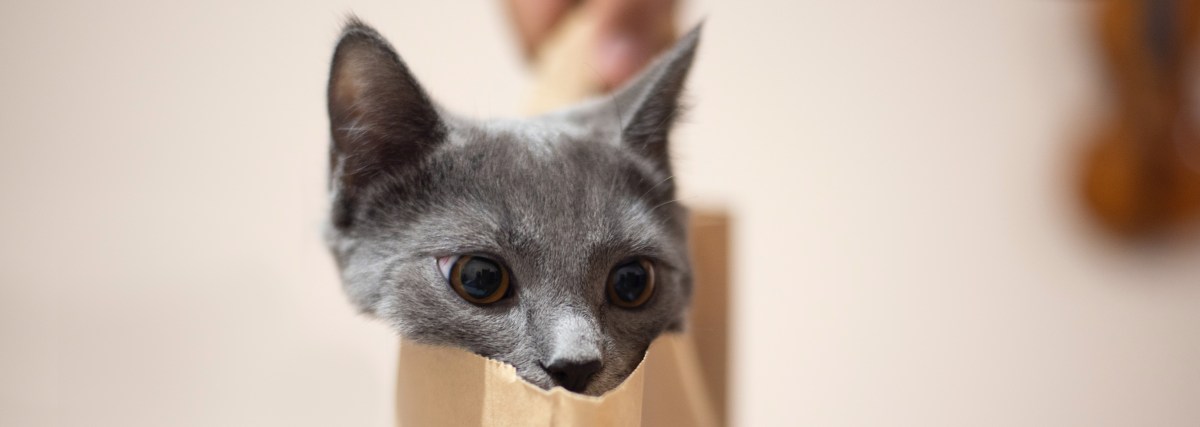
I wanted to share a little technique that I’ve been using to give myself perspective. It’s quite simple: I have a small brown paper bag pinned to the wall above my desk.
The bag is there to remind me that most of the things that are upsetting me or stressing me or just taking up headspace in the moment are transient issues that fit into that paper bag. The REST of my world remains outside that bag and unbothered by whatever is going on in there.
The trick for me is to not get sucked into that brown bag. When that happens, and it does, I’m suddenly whirling around with all the daily stressors and emergencies-of-now, and that’s all I see. My entire experience becomes those anxiety-provoking elements and my stress levels skyrocket.
When stress levels are high, it’s easy to get sucked into a space of high anxiety where you see only those stressors, forgetting that the rest of the world is outside.
It takes a lot more effort to fight my way back out of there than to stay outside in the first place.
At the same time, it’s so easy to follow all those stressors right into that bag. For me, that’s the path of least resistance, even a habit.
But when I lean back and take in the entire picture–the time-limited nature of what’s bothering me and the fact that in a couple of weeks it’ll be gone–my view broadens and I am reminded of what else is going around me right now, in this moment.
Right here, where I feel my feet planted on the ground. I smell the scent of lemon wafting up from my diffuser. I’m aware of sounds from the street below and sunshine coming in through my window.
Perspective. All of these things tumbling around inside the bag will pass. And, yes, perhaps more importantly, new ones will bubble up and take their place. I can’t stop that and I have to accept it. But I can take a deep breath and stay in the bright light of the day instead of darkness of that little bag.
I am a newly minted registered yoga teacher (RYT-200), having passed my Yoga Teacher Trainer (YTT) final exam in mid-May 2022. When I tell people I’m a yoga teacher, they naturally assume that I am extremely flexible and have impeccable balance.
But, no.
Yes, yes, when I’m warmed up I can touch my toes with straight legs, even put my palms flat on the floor…but in yoga practice, I prefer to keep a slight bend in the knee in forward fold. My balance is a little wonkier and I’ve been known to wobble and trip my way around a corner if I’m moving quickly.
I enjoy a deep yogi squat because I’ve been practicing that pose since childhood, but neuropathy pain in my feet prevents me from holding my back heel up high in lunges. So my abilities are spotty.
The gift of yoga is that it is available to all.
When I took level 2 yoga classes, part of the prerequisite for my YTT, I would regularly lose my balance in some of the moves that the younger class participants easily nailed. It took more brain power and concentration to keep my body steady (possibly chemo brain played a part). I’m sure other students would have been surprised that I was in yoga teacher training.
I mean, WHY would I even consider becoming a yoga teacher?
Because I want people to know that yoga is for everyone. While I’ve ranted about this before here, going through YTT classes really underscored the fact that, at least in the United States, yoga practitioners tend to be very homogeneous: young, white, female, flexible, affluent.
Come as you are. Nothing special needed.
This is particularly disappointing because there are other populations that would benefit greatly from establishing a yoga practice and arguably might need it even more for their well-being. Slowly, yoga is being made available to “the rest of us”. But it’s going to take a while.
So I urge you, seek out yoga in parks and free classes at the Y. Explore YouTube for gentle beginner yoga videos so you can practice from home. You don’t need the burning sage, expensive yoga pants, organic cork blocks or trendiest mat. You just need to show up, follow along with the poses and breathe.
~~~~~~~~~~~~~~~~~~~~~~~~~~~~~~
To be fair, my balance and flexibility have improved significantly with regular yoga, and that’s my point: I didn’t need to be super flexible to begin. No one does. But if the message that yoga studios and fellow yogis are sending is that you already need to be able to strike a complicated advanced pose, think of all the people who won’t even consider starting.
And I have learned to seek out modifications for those yoga poses that throw me off center. The old self-conscious me would have thought that made me a failure. But I know better now.
Because I know I can do the most important pose very well: sit quietly and breathe.
As we close out October, otherwise known as “Breast Cancer Awareness Month”, I wanted to share a video of a webinar about advances in the fight against breast cancer, offered through the Yale Alumni Health Network, led by Dr. Jamie Wells.
The speakers included Dr. David Mankoff (from UPenn) and Drs. Lajos Pusztai, Maryam Lustberg and Eric Winer (all from Yale) as they talked about research being done on hormone-positive, HER2 receptor positive and triple negative breast cancers. I’ve pasted in the Vimeo clip from Twitter, but also offer my simplified synopsis below. If you have the time to watch (~45 min for the talks, then interesting Q&As for about 20 minutes), I highly recommend the video!
— YALE ALUMNI HEALTH NETWORK (YAHN) (@YaleHealthSIG) October 28, 2022
In the midst of the discussions, it was heartening to hear that the doctors placed a lot of emphasis on both health disparities in different populations and also the search for treatments that would not severely impact a patient’s quality-of-life. These are two important topics. I appreciated that they acknowledged that we cannot make advances in the disease if we are leaving behind large numbers of people for whom treatment is inaccessible, and that a treatment is not viable if it successfully treats the cancer but damages the patient in other ways.
The best overall news is that since 1990, deaths from breast cancer have decreased by a third. That’s a significant improvement within the past 30 or so years, even though the prevalence of the disease is increasing. Dr. Mankoff noted that the survival rate improvements are due not simply to earlier detection, but also to advances in the treatments.
HORMONE-POSITIVE BREAST CANCER
Dr. Lustberg spoke about hormone-positive breast cancers and started with a quick explanation of the history of such cancers, and then explained how current-day personalized medicine (genomic profiling) can identify the patients who might be spared chemo based on the characteristics of their tumors, and how targeted therapies improve survival rates. She experienced some audio issues towards the very end of her talk, but not much information was lost.
She acknowledged that the “most effective drug is one you can take”, stating that there’s been an effort to try to understand the toxicity of various treatments. If the drug’s side effects are too negative, patients will have a hard time continuing to take it. She noted the importance of keeping the patient involved in the decision making process, something that all of us who have been through this can applaud. It’s too easy for oncologists to forget that they’re treating a human being who will be dealing with the concequences of heavy treatments.
HER2+ BREAST CANCER
Dr. Winer discussed HER2-targeted therapy, noting that prior to the year 2000, it was considered one of the most aggressive forms of breast cancer with common recurrences, after which the prognosis for survival was poor. As a HER2+ cancer suvivor, I am so thankful that this is no longer the case! The landscape changed with the introduction of monoclonal antibody drugs such as Herceptin, and the development of additional drugs, should Herceptin stop working, has given patients with this type of cancer much more hope for a full recovery.
Two of these new drugs for metastatic HER2+ cancer are “antibody drug conjugates” (T-DM1 and trastuzumab deruxtucan). Dr. Winer described them as Trojan Horses, as they can deliver the chemotherapy with which they’re paired directly into the cell, greatly decreasing side effects to the patient.
It’s so refreshing to hear the words “cancer” and “cure” used together in the same sentence. We are making serious progress now!
Perhaps most important, Dr. Winer actually used the word “cured” when talking about the outcomes for early stage HER2+ cancers, something that is truly remarkable. This is especially true for women with stage I cancers.
Many patients with stage II & III cancers receive the drugs prior to surgery, which can decrease the need for mastectomies and complete removal of the lymph nodes. In addition, pre-surgical treatment can guide the medical team in adjusting later therapies, based on how the tumor reacts to early drug administration.
Finally, Dr. Winer spoke of the stark disparities in cancer care, noting that black women are twice as likely to die from breast cancer as white women. Eliminating these disparities is his number one-rated area of importance for where to focus future efforts, something I strongly support.
TRIPLE NEGATIVE BREAST CANCER
Dr. Pusztai spoke of Triple Negative Breast Cancer (TNBC), and having lost several friends to this specific type of cancer, I was very interested in treatment advances that have been made. He described the differences beween TNBC and hormone positive breast cancers, noting that it’s likely that these two diseases orginated from completely different cell types, suggesting that these are different diseases and should be viewed as such.
It was exciting to learn that most of the patients with early stage TNBC disease are able to be cured (again, that beautiful word!). We now have both better treatment strategies and new drugs, and success rates are improving year by year. Dr. Pusztai emphasized the benefits of completing chemotherapy prior to surgery, going against our strong impulse to “get the cancer out” first. With the drug-first strategy, medical teams can adjust the post-operative treatments as needed.
The thing that was so amazing to me was that the recurrence-free rate of survival was 85-90% with these “modern regimens” for early stage disease. That’s impressive!
Next on the horizon is fine-tuning the right balance of drugs for patients, given that chemotherapies are still toxic.
There’s still a lot to be done, but all of this makes me feel so hopeful for a future in which a cancer diagnosis is something that we don’t have to fear.
Dr. Pusztai stated that he felt we already have the drugs with which to cure “at least some” of the metastatic TNBC patients, especially for those who are diagnosed at stage IV (rather than having earlier-stage disease that was treated and later metastasized). The idea is to utilize existing drugs but apply them using the new treatment strategies that have been developed. However, Dr. Pusztai stressed that new drugs are also being developed.
Q&As
There were a range of excellent questions that began at about the 45-minute mark, but as mentioned above, I enjoyed hearing the admissions by the doctors that they considered quality of life to be a very important factor in whether or not to continue medications, and they acknowledged that it is the patient who should have the control to balance their risks against their treatment options. Other questions included recurrence in hormone-positive cancers, development of drug resistance, genetic testing, continuation of care (“risk-stratified follow-up care”) and second opinions.
Dr. Winer commented that within a decade he felt we will have all the treatment we need to prevent and cure breast cancer in most patients, so again, he stressed that the focus must turn to making that treatment available to everyone, regardless of who they are.
LAST BUT NOT LEAST…
Dr. Winer admitted that many doctors, in treating patients, end up “taking over people’s lives and medicalizing their lives”. His approach, therefore, is “to try to provide therapy without making someone either unhappy or feeling like they are attached with a leash to their doctor’s office.” While there was some discussion related to this, I appreciated that doctors are actually thinking about this and want to allow patients to “live their lives”.
Finally, I was amused by the doctors’ admissions that even they found the drug names to be unpronounceable. It’s true that in my own treatment, I usually stuck to the easiest name to pronounce…I can’t imagine having to use those names on a daily basis!
Ah, anxiety. I hate it but it’s such a fixture in my life, although it’s gotten better now that I’ve become more aware of the nuances of my reactions to stress.
That awareness was key, but it took a while for me to figure it out. I had been told to “feel what the response to anxiety feels like in my body”, but lemme tell ya, when you’re in the middle of being really stressed out, the only answer you can give is: “TERRIBLE!”
I think the way this suggestion has been posed is all wrong. It wasn’t until I started mindfulness meditation that I finally understood what was really the point of feeling into body sensations.
First of all, in case you’ve been fortunate enough to never experience severe anxiety, here’s how to imagine it: (1) turn on a really large blender, (2) stick your head in it. That’s about it. Then, when someone asks you to feel what body sensations you have, you answer, “Dunno, my brain is missing.”
If serenity is a clear day, this is anxiety.
Basically, in the midst of anxiety, there is so much that feels out of control that I don’t think it’s possible to lasso down sensations without having a person hold your hands, look into your eyes and say, “Okay, focus on me and do this…”
And that, my friends, is why scratching out even the slightest bit of space for yourself in a stressful situation, just so that you are not 100% caught up in the whirlwind, is so beneficial for getting yourself through it.
Just like you don’t wait until the day of your first marathon to start training for it, you need to prepare for the next tornadic episode of anxiety before you’re in it.
Become your own Professional Stress Manager. That takes practice, primarily when things are peaceful. Just like you don’t wait until the day of your first marathon to start training for it, you need to prepare for the next tornadic episode of anxiety before you’re in it.
Job One is bringing yourself out of the swirling thoughts in your head and that can be hard to do, since they are where your anxiety originates. That’s why you have to re-direct your attention to something outside your mind, and that’s where focusing on body sensations comes into play.
First, find stability and grounding.
First, find yourself an anchor, like the oft-mentioned breath, and start with that. Focusing on the breath gives you a target for your attention when everything else feels crazy. There are a variety of sensations associated with breathing: the rush of air, expansion of the chest, expansion of the belly and whatever else is salient to you.
Pick one that makes sense. It is expected that you won’t be able to maintain your focus on it and your mind will wander off. That’s OK. In fact, the whole point of this is that you DO lose your focus. And once you realize that you have, bring your attention back to your breath.
And that’s it. That’s ALL of it. It doesn’t get more complicated than that.
And when you’ve achieved some sort of stability there, you’ve made yourself some space. Take advantage of that and bring your attention to other parts of your body, with one eye on your breath: is there a tingle in your fingertips? How about your toes? Are you clenching any muscles in your body and what happens if you try to release them?
Ask yourself, “How do I know I’m anxious?” What are the signs? Face feeling hot? Stomach bunched up? Cold feeling in the intestines? Tightness in the chest? Can I take a deeper breath and try to relieve that tightness? Can I send warmth into my gut? Try to define what anxiety means to you on a physical level. The more you do that, the more control you get on your reaction and the experience is not as frightening.
See, the idea is that you need that fingerhold in the crack between your stressor and your reaction to it so that you don’t get swept up in the lack of control. And establishing that will take some practice and time, but as with any exercise, each practice session will benefit you. And then best time to start is now.
From what I can tell, the loss of body odor following cancer chemotherapy isn’t widely acknowledged within the medical community, but it’s certainly something that many of us have experienced.
This is NOT what you think of when someone says, “sweaty armpit”!
Based on what I’ve read, this might be a result of the weedwhacking effect that chemo drugs have on our microbiomes. Regardless, the result has been positive for those of us who find that we don’t have to worry about being smelly.
However, I happened to catch an interview on National Public Radio (aka NPR) that helped make more sense of what was actually going on, even though it was a bit of a killjoy. Listen to it here, where you can also find a full write-up of the piece.
Basically, that sweaty stink that we find repugnant is from a compound produced by bacteria living on the skin. One species of these bacteria that’s associated with an onion-like odor is Staphylococcus hominis.
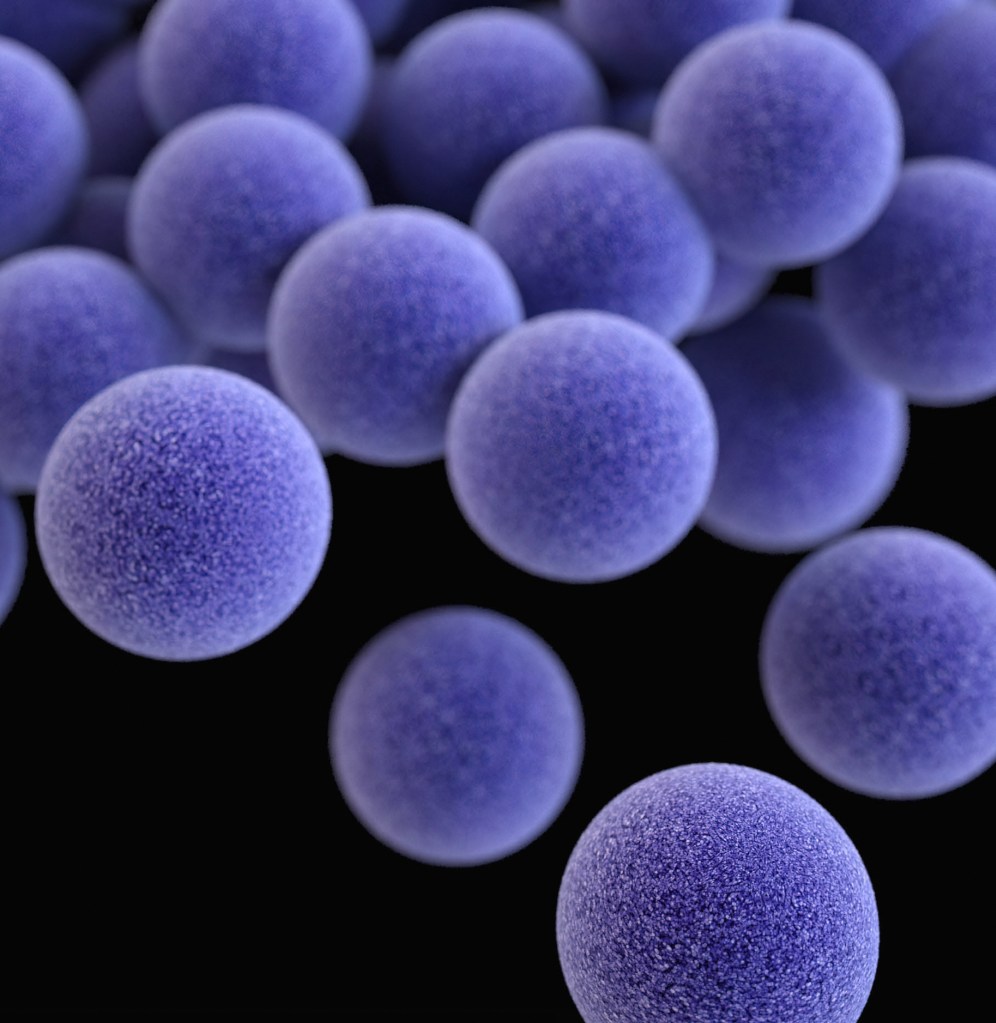
Our stinky sweat may offer some protection from stuff like MRSA, shown on this CDC photo. They might look like cute fuzzy purple balls, but in the age of antibiotic-resistant bacteria, they’re potential killers.
And unfortunately, these smelly microbes are very beneficial, helping protect humans from things like eczema and MRSA (antibiotic-resistant Staphylococcus aureus). As one of the researchers puts it, sweat is an “antibiotic juice” that forms a protective layer on our skin as it dries.
Yeah, I know what you’re thinking: cancer is miserable enough, and you HAD to take away this one little thing (loss of body odor) that was the only perk to chemo?
Well, as mentioned above, I’m not qualified to definitively say that it’s the chemo that kills the skin microbes and makes you not smell. I’ve been unable to find research studies that examine the effects of chemotherapy on your skin’s microscopic residents. Nonetheless, I’ve tried to contact the researchers mentioned in the NPR story to see if they’ve had any experience with chemotherapy and loss of body odor in cancer patients. If they reply, I’ll report back to you.
For now, if you’re happy being odorless, keep enjoying it.
I’ve posted several times about different counting techniques that I’ve used to help calm and ground myself (counting backwards, counting 100 breaths). It sounds like such a simple thing, but it is surprisingly effective.
Counting is one of those things that we naturally learn when we are very young, and because it’s so familiar to us, we can do it with ease as adults.
Job #1 is to stop the swirling thoughts so that you can drop back to sleep.
This ease comes in handy when our Monkey Mind is jumping around like mad, stewing over what has happened or fearing for what is to come. Counting gives it something to do so that its attention is drawn away from anxious thoughts.
In particular, I’ve found this to be useful at night when falling back to sleep has been hindered by that incessant buzz of thinking that won’t go away.
The technique that I’ve used over the last few weeks weaves a counting pattern like this:
Become aware of your body lying in bed. Try to soften the most obvious places of tension (for me, neck and shoulders) and turn your attention to your breath.
Begin by focusing on your inhales of your breaths and counting them, up to ten. Then, switch your focus to your exhales, counting each one up to ten. And again, switch back to focusing on the inhales, continuing this way
The combination of counting up to ten and focusing on either the inhales or exhales provides enough of a distraction from your thoughts, but requires some gentle attention to keep on track. The switching of focus invites your mind to return to the breath.
Counting sheep might work just fine, but counting breaths helps you stay present and grounded.
I’ve found ten to be a very good number; however, five would also work. Whatever you prefer. This might require experimentation to see what is best for you. For example, counting to two might work better for some people during waking hours when there is naturally more stimulation around.
As you establish a pattern with your breath, extend your exhales regardless of where your focus is. This helps slow both your breath and heartrate.
Again, this technique works because counting to ten is simple and unstimulating, allowing the mind to lull itself into a calmer state. When I find myself missing ten and instead counting into the teens without switching my inhale-exhale focus, I know that I’m beginning to drift off. I gently stay with it, but sleep is nearby.
By now I’m probably sounding like a broken record about how important exercise is to all aspects of your life, but here I go again…
Although this is not specifically about cancer, an article recently published in the Journal of Aging and Physical Activity (Posis et al., 2022) scored another point for the benefits of maintaining an active lifestyle.
This study was conducted at the Herbert Wertheim School of Public Health and Human Longevity Science (University of California, San Diego), where the researchers examined the effect of physical activity/sedentary time on longevity in women. The 5400+ study participants spanned the entire range of genetic predispositions for longer or shorter lives. You can read a synopsis of the research here.
When in doubt, keep moving.
The results of this prospective study (2012-2020), while not surprising in the grand scheme of things, can be considered a wake-up call.
Regardless of their genetic predisposition, women who engaged in higher levels of activity had a lower mortality risk and those who were more sedentary had a higher risk. This is important, because it’s tempting to think that if your family members are long-lived, you will be too. However, your own activity levels do matter.
In addition, being physically active was effective in extending the lifespans even of those women whose genetics suggested a shorter life.
This can be considered promising news: you do have some control over your lifespan. Even when you’ve been dealt what may seem like a losing hand in terms of longevity or disease, providing your body with the supportive behaviors that it needs and deserves still makes things better.
It’s easy to forget this when we focus on the negatives in life. And while we do need to acknowledge our hardships and allow ourselves time to grieve for our losses, making choices that benefit our bodies and minds is a sign of respect for ourselves.
So go ahead, soak those tootsies…then get back outside for a walk. And don’t stop.
Unlike a glass of wine or a rich dessert, commonly considered an “indulgence”, self-care in the form of moving ourselves, step by step, day by day, closer to a healthier lifestyle is the kindest, most loving indulgent act you can ever do for yourself.
What one little thing can you do today that you didn’t offer to yourself yesterday that will move the needle further towards a more active life?
Posis et al., (2022) Associations of Accelerometer-Measured Physical Activity and Sedentary Time With All-Cause Mortality by Genetic Predisposition for Longevity, J Aging Phys Act, https://doi.org/10.1123/japa.2022-0067.
The August 9, 2022 edition of the National Cancer Institute’s Cancer Currents blog announced the findings of the clinical trial KEYNOTE-355 that examined the benefits of using the immunotherapy drug pembrolizumab (Keytruda) in conjunction with chemotherapy in treating advanced triple-negative breast cancer (TNBC).
The results, published in the New England Journal of Medicine (Cortes et al., 2022), revealed that pembrolizumab in conjunction with chemotherapy was effective in extending the lives of TNBC patients with advanced disease as compared to chemotherapy alone, and the difference was striking. Those who received the drug lived a median of 23 months compared to 16.1 months for the chemo-only group.
Of course, cancer differs among patients and not all TNBC tumors are the same. The life-prolonging benefits of pembrolizumab were limited to those patients with PD-L1 scores of at least 10; PD-L1 is an immune checkpoint protein, and the score denotes the level of this protein found in cancer tumor cells.
And it’s important to note that while the drug extended life expectancy, it was not yet a cure, which is what we’re all still waiting for.
So there are asterisks associated with these findings, which might be disappointing for those with advanced cancers of this type. But the researchers stressed that this is a very promising outcome.
Consider the advances that have been made. TNBC used to be treated with untargeted therapies, kind of like throwing everything you’ve got at the tumor and hoping that something “sticks”. On the other hand, pembrolizumab is a targeted therapy for this specific subset of TNBC, and that makes a huge difference.
There has been a push to address the complexities of TNBC and large strides have been made in understanding what makes it tick. New therapies are being approved and they are making researches optimistic about eventually being able to cure the disease.
As an example, in April 2021, the FDA approved the use of sacituzumab govitecan (Trodelvy) for the treatment of certain types of TNBC (after conditional approval had been granted in April 2020). As noted in the May 12, 2021 edition of the Cancer Currents blog, sacituzumab is comprised of an “antibody coupled to a more potent form of the chemotherapy drug irinotecan (Camptosar). The antibody binds to breast cancer cells, delivering the chemotherapy directly to those cells.”
There’s good news for some patients with advanced triple-negative breast cancer.
Notably, patients receiving sacituzumab lived a median of 11.8 months longer compared to 6.9 months for those patients receiving the chemotherapy alone. Positive results were also obtained for patients with brain metastases, where the cancer has spread to the brain, who tend to have worse outcomes when treated only with chemotherapy.
There is still so much more to learn. Cancer is a puzzle and researchers have known for some time that the pieces do not yet fit together cleanly. But each one of these advances brings us more effective treatments for TNBC, addressing more specific targets on the tumors. Lifespans are increasing and for many, cancer is taking the form of a chronic disease, not a death sentence.
Staying present is key for not letting your thoughts take you on a wild ride.
Maintaining presence, however, takes practice so I’m always on the lookout for new ways to imagine the state of being in the “now”. Some of these are simpler exercises than others, but the upside of a more “complex” technique means that all my mental energy remains on staying present instead of, say, worrying whether I embarrassed myself at a party three nights ago.
The following is a visualization and mental exercise rolled into one:
What if only what you’re touching exists and everything else falls into nothingness?
Seated, close the eyes. Breathing deeply, allow everything that is around you to fall away in your mind, leaving only those points where your body makes contact with the surface beneath you.
Imagine that the soles of your feet sit on top of sole-shaped pieces of support material. Your buttocks and thighs contact like-shaped material, as does any place your back rests against your chair. If you touch your fingers to the side of your chair seat, small oval-shaped pieces of material appear where your fingers make contact.
Everything else disappears against a background of light (or darkness, if that is more calming). The chair and floor and even the room you are in? Gone. The point of this visualization is maintaining focus on only what you are physically experiencing at any given moment.
It is a strange sensation to imagine, floating through the ether but still feeling support from the slightest bits of material that touch you. This is the ultimate in being 100% present and turns the concept of object permanence on its head.
You don’t feel it? It doesn’t exist.
Our brain wants to fill in the parts that we can’t see because the brain has formulated an image of what is out there. However, in this practice we try to do the opposite–let go of what we do not have immediate physical evidence for.
This is a good analogy for dealing with thoughts that our brain fabricates based on the expectations that it has. What if we let go of them, if only for a short while, and simply sit in the stillness of what is happening right now?