Mindfulness 101: Noticing the Qualities

The main reason why I started a meditation practice was because I had been diagnosed with breast cancer and was, to put it mildly, freaking out.

As a naturally anxious person, the diagnosis blew the roof off my ability to cope and plunged me into a nightmarish situation. Anyone who’s ever dealt with severe anxiety will tell you that nothing is more important than making it stop.

Over the years, my anxiety gathered enough power that it was able to blindside me. Cancer anxiety practically wrecked me.

When my radiation oncologist recommended mindfulness meditation, I felt empowered by the thought of gaining control of my runaway anxiety without the need for medication.

I was hoping meditation would enable me to sit in peace in the midst of chaos. But I imagined that as feeling no stress, as in, being numb to anxiety-provoking stimuli.

That simply doesn’t exist. I wanted to not experience any stressful situations, but there is always stress. We can’t change that. Mindfulness meditation was only going to help me change the way I reacted to it.

So here I am, more than six years after initally starting a daily meditation practice and guess what? I still have stress, I still feel anxiety.

However, what did change is that I can define it now. When I become aware of agitation and anxiety, I know to pause and bring attention to how it manifests in my body.

What does it feel like? Tightness, heat, rapid breath?

Where does it show up? Face, temples, chest, stomach?

Is there a color or sound or smell associated with it? Does it have a “texture”?

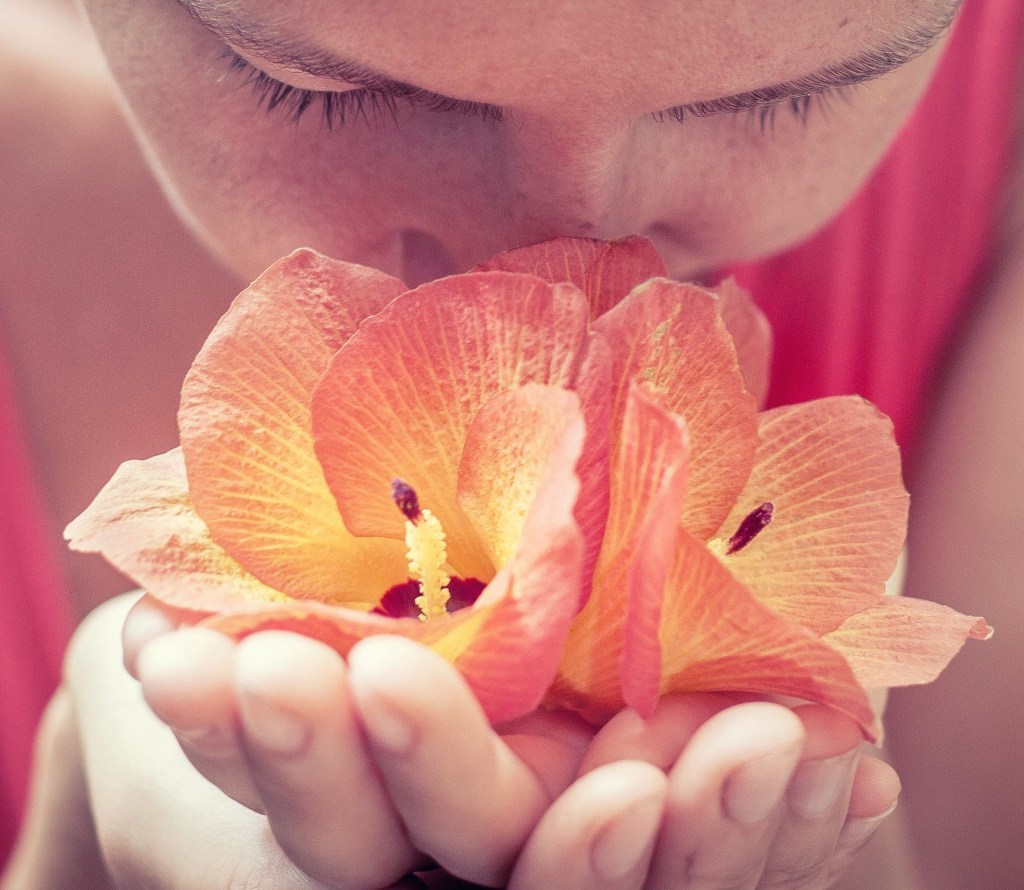
Does anxiety have an odor? Next time stop and take a whiff.

I can relax my muscles, sink into the earth, breathe deeply and notice the qualities of anxiety. By pulling apart what is happening, I slow time down. Instead of being hit by a locomotive full force, I walk around the train cars. I can notice how I feel as I pass through the experience.

Is it pleasant? No. Does it always work immediately? No. However, I can see it coming, and as a result, I relax into it. It is the awareness of the anxiety that helps me through it, not a numbness to it. This leads me to acceptance of the situation instead of bracing against it.

On one level, it’s a little discouraging to still be dealing with the unsettling nature of stressors. But I am heartened by the empowerment that mindfulness offers. I have evolved enough that I know I don’t have to go back to being thrashed by the whirlwind. I can sit inside it and watch it swirl and pass through. Every time I do this, it gives me more confidence for the next time.

Is this something that might help you too?

Things I Wish I’d Known About Breast Cancer, Part 2

This post continues what I started in the last post…a few things about breast cancer that I wasn’t aware of at the time of my diagnosis. Knowing the following would have made things a little less stressful:

1. Lumpectomy is a relatively uncomplicated surgery. I wish someone had explained this to me because I was a total wreck going into surgery (which happened to be the only surgery that I had ever had up to that point, making everything 10 times worse). Although I had decided against a full mastectomy, I was still so afraid of what a lumpectomy would entail, what I’d look like and how long it would take me to recover from losing a chunk of flesh.

The reality was…I was back at work the next week. No drainage tubes, no need for heavy analgesics — just a couple of ibuprofin the night after surgery because skipping coffee that morning resulted in a headache, but that was it. It was even hard to tell that I’d had my lump excised. Wish I could go back to my earlier self and tell her not to worry.

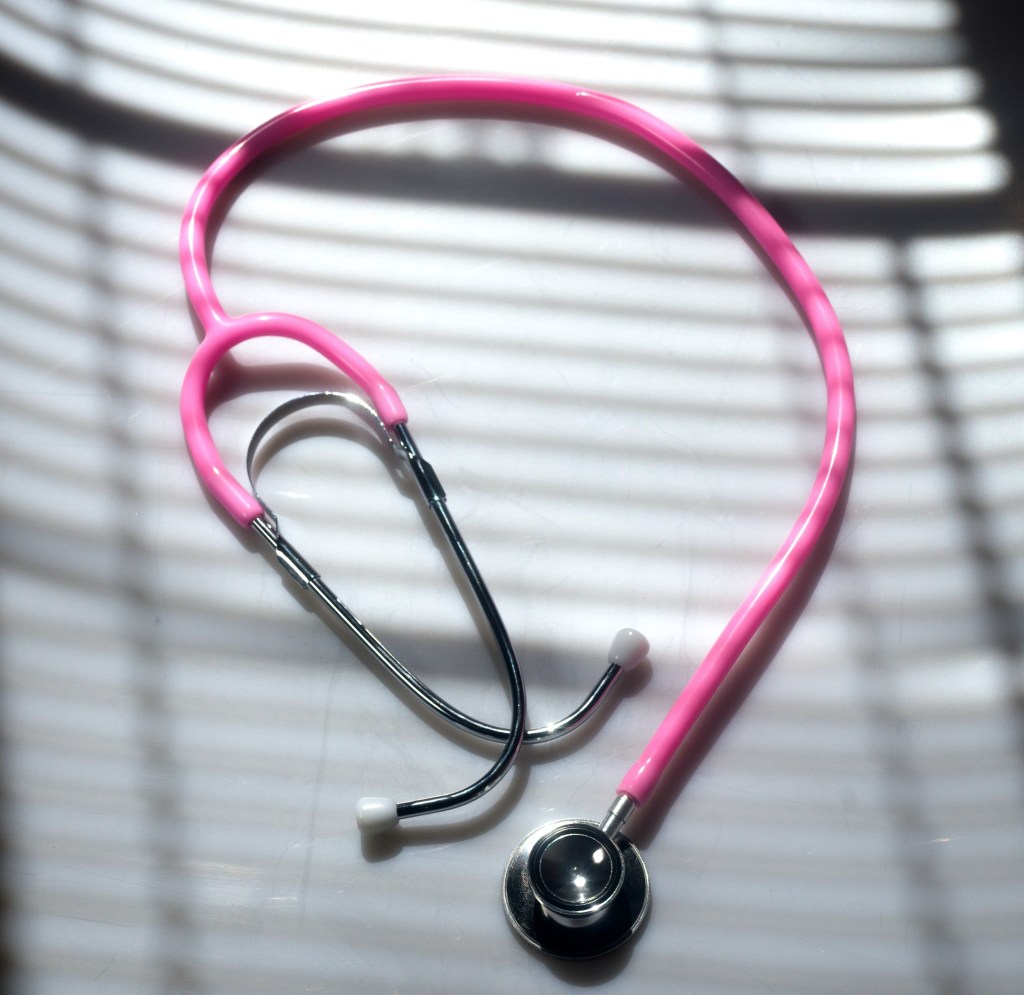
Stethoscopes are emotionless. Oncologists can seem to be too, but that’s by design.

2. Doctors are not in a hurry to give you good news. I think there’s a general feeling among medical professionals that there’s so much that can go poorly during cancer treatment that your doc isn’t going to go out of their way to pump you full of optimism. They probably practice keeping an emotionless face as they deliver all sorts of news, both good and bad. As a patient, however, I watched every flicker on my oncologist’s face for an indication of how things were “really” going. I feared that there was something he wasn’t telling me.

It wasn’t until perhaps a year or so later when I was expressing my fears to him about possible abnormalities inside my body that he uttered the phrase, “but you have your health”…and I was taken aback because I had never heard him sound so positive. It was almost a shock to hear him confirm that I was actually considered healthy.

3. Don’t expect things to be the same as before. Accepting that part of your life has changed will make it much easier to go on. This took me a while to appreciate because I was expecting to get back to doing and feeling everything the same as before my diagnosis.

But chemo (and eventually, age) pushed me through menopause, and I had to come to grips with, say, a high-intensity interval workout requiring more recovery time and that I had trouble remembering people’s names. Once I got to that point of acceptance, life after cancer treatment became easier, although it did take a number of years to get there.

4. Hair takes a while to grow back in. The reason I created posts with photographs that illustrated the cancer journey that my hair went through (here and here) was because I could not find good photos on the internet documenting the process. I did see images of a woman a few weeks after stopping chemo with little stubs already visible, but that was not my experience and it made my anxiety over my slow regrowth even worse.

Walking around with no hair was getting old and I was getting more desperate by the day to see evidence of sprouts!

If you’ve ever googled your chemo drug name + “hair loss”, you understand the fear: the first search result is usually a law office gathering info on behalf of cancer patients whose hair never grew back!

It took a number of months before my folicles woke up and actually started growing. I remember the moment that I finally saw growth on the front of my head and it was as if the heavens had opened up and divine light poured out onto me. Seriously. I would have avoided a lot of stress if someone had just told me that it’s gonna be a while.

~~~~~~~~~~~~~~~~~~~~~~~

Ok, ok, to be fair, my oncologist did urge patience with the regrowth but I was a jumbled mess of nerves and was feeling overwhelmed. All the internet propaganda about both (1) other women having much faster regrowth, or (2) other women never getting their hair back terrified me. Note to self: when feeling desperate, stay off the internet!

Things I Wish I’d Known About Breast Cancer, Part 1

Cancer, perhaps more than any other disease, has a formidable reputation that precedes it. Because of this, cancer “lore” can affect your expectations of treatment effects and anticipated prognosis if you are unfortunate enough to receive a diagnosis.

There were a number of things that I didn’t realize about breast cancer that might have made my experience, if not better, at least slightly less harrowing. Here are a few of them, in no particular order:

1. Breast cancer research remains more highly funded than that any other cancer (source: 2019 Northwestern University estimate) and is therefore the best-studied type of cancer. As a result the treatment plan is solid. While this does depend somewhat on the type of breast cancer you have (Triple-Negative, Triple-Positive, Hormone Receptor-Positive, Inflammatory, etc.), the fact remains that there is great interest in “saving the boobies”.

We are living in an era where research in breast cancer is churning out valuable findings at a break-neck pace.

Your treatment plan has likely been well-tested with ample positive outcomes. Combine this with the tendency for this cancer to be diagnosed at earlier stages due to the relative ease in finding a tumor (I mean, you can feel the lump even if it’s not very big), survival rates tend to be very good. Understandably, that might not be very comforting at the time that you’re hit with the news that you have breast cancer, but it is a blessing that you’ll appreciate later.

2. Getting breast cancer is not your fault. I struggled with this one for a loooong time. If you’ve read some of my earliest posts, you know that I not only had a hard time getting my head around my diagnosis, but also a lot of anger about everything I did that was considered “protective” that seemed not to make any difference.

The reality is, as much as we do know about cancer, there’s still a lot we don’t, which means you can be doing everything right — even “perfectly” — and still be diagnosed with breast cancer.

The message I got from cancer-prevention campaigns was that there was so much you could do to avoid the disease. I checked off all those boxes and thought that I was at very low risk. I was “the fit one”, the vegetarian, a dutiful breast-feeding mom allowing myself no indulgences — the last person you’d imagine this happening to, but it did.

I felt ashamed about the diagnosis, even feared that I would be accused of lying about my healthy habits. I was terrified that my healthy lifestyle had somehow backfired. While this sounds ridiculous now, feeling so out-of-control about my own health was demoralizing and depressing.

3. A healthy lifestyle goes a long way in making recovery easier. While I felt dejected about not being able to avoid breast cancer, my exercise and dietary habits helped me recover from treatment side effects faster and not gain weight afterwards. And as I learned later, by maintaining an active lifestyle, I was significantly decreasing my chances of cancer recurrence. I wrote about those findings in this post.

So all my efforts were not for naught. Word to the wise: if you don’t exercise regularly, start now. If you do exercise, keep going!

In the darkness I found a little light.

4. There is light in dark places. I must stress that cancer isn’t some “great” thing that happens to you and it carries with it big side effects and an ever-present risk of death. I lost two friends to breast cancer who were both diagnosed about the time that I was and they were far too young to die.

But given that I had to go through this, I had the option of “sink or swim” when it came to how I would view my experience. Eventually I found the light in the darkness of the cancer tunnel, but it did take a number of years and many ups-and-downs before I was able to appreciate the lessons that the disease taught me: being able to accept and live with uncertainty, identifying a clear purpose in my life, finding gratitude in small things, even coming to grips with my own mortality. These lessons were difficult but also valuable, and I admit that I wouldn’t have learned them if I had not gotten cancer.

Perhaps some of the most important of these were identifying that I had suffered from anxiety for a good part of my life and understanding how it had shaped my decisions. Yes, it took cancer for me to realize all that! This led to incorporating mindfulness and meditation into my daily routine.

And that is a very positive thing indeed.

“Detached”: Time-Out in Third-Person

As an addendum to my post where I wrote about using third-person language in meditation to help keep distance between yourself and your thoughts, I wanted to revisit this method for everyday life.

While in that post I alluded to using third-person descriptions on stressful days, it’s really worth emphasizing the utility of creating space throughout the day.

To sum up that post, I mentioned a mindfulness technique suggested by meditation teacher Jeff Warren in which when we find ourselves being swept away in thought, we describe what’s happening in “third-person” language and play the role of an observer.

Observe…make space…gain perspective.

But as I said in that post, why limit that to meditation sessions? In fact, you could argue that it is even more important to bring that type of gentle detachment to the things that ordinarily set us off in our daily lives, whether it be with family, at work or anywhere.

I would say that so much of my anxiety has stemmed from an inability to maintain perspective about the trigger. Noticing when I’m getting carried away and then describing the situation as something that is happening to another person — similar to the way a newcaster might report on an event in a calm, informative manner — helps loosen its grip on me.

The ability to step back and detach from the situation is kind of the name of the game in terms of reducing stress levels, isn’t it?

By narrating the circumstances around your stressors, we make space: “FranticShanti felt a little ill when she saw that the letter in her mailbox was from her landlady. She expected this to be about a rent increase…and she was right. Another $200 per month.”

Third-person language gives us the space we need to tackle our stressors without getting pulled into them.

That telling offers some space. It doesn’t change the situation, simply presents what’s happening in an unemotional manner. Then following up with some trouble-shooting helps soothe my agitation: “This will require a review of her finances, but as she calculated with last year’s rent increase, she can still absorb this additional amount. Things will probably be okay. She takes some deep breaths and feels into her hands and feet.”

Not only can you calmly describe the situation, but you can describe yourself engaging in self-soothing techniques as you work out your next steps.

It is quite effective in slowing down racing thoughts, particularly if you’re in a place where you can speak out load, as hearing yourself describing things can be even more grounding.

As with other simple grounding techniques, this may seem a little contrived or simplistic, but it might be just enough to bring you out of your head and into the here and now — cool, calm and collected.

Such a Fragile Life

I’m not going to post the post I’d written for today.

Something else came up and it really made me think about how we are teetering on a slim ledge between “everything’s ok” and “the end is near”.

Last Wednesday, I cut the inside of the roof of my mouth in the soft palate. Or maybe it was a burn? I didn’t pay much attention to it because this happens from time to time, it’s not that big a deal and it seems to heal quickly.

Except this time it didn’t. Granted, I ignored it a tad too much and wasn’t as careful as I should have been about what I was eating. I felt loose skin rub off around that area.

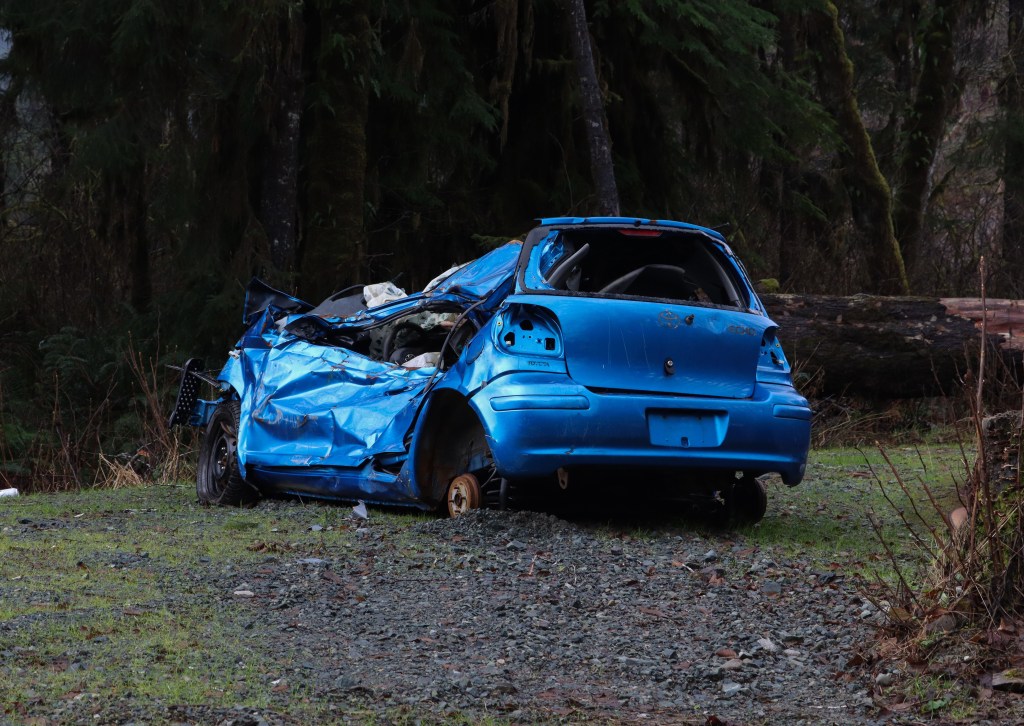
In a second, everything can change. [Note: this is not my car.]

It started hurting more and eating became more painful. At night, my mouth dries out even when I’m sleeping with closed lips. My tongue feels like sandpaper against my palate and because of where the wound was, my tongue was irritating it.

Friday, I realized that if I spoke a lot without a break, my tongue would abrade that sore area even more. Saturday, I told myself that I should be doing warm salt water rinses, but kept forgetting to do so.

Sunday, my head hurt upon waking although the area felt kind of better? But when I tried eating and drinking as normal (albeit avoiding that side of the mouth), the pain seemed worse.

Or maybe it was my perception of that pain? For me, it’s so hard to tell. I vacillate between ignoring a dangerous situation and imagining the possible worst; it feels like I could talk myself into/out of anything.

Before I was diagnosed with breast cancer, I had been aware of the lump in my breast for six months, but kept telling myself not to freak out and that it would probably go away on its own.

Maybe it’s really bad, maybe it’s not bad at all…I dunno…

Spoiler: it didn’t, and although the tumor was still Stage I-sized when I finally went to the doctor half a year later, it had already invaded the tissue outside the milk duct in which it originated. [To be fair to myself, there was more to that decision, which I won’t go into here. I wasn’t a total idiot about it.]

And then after completing all of my chemo rounds, one of my fingernails looked like it had a bubble underneath it…which I ignored for several days (actually, it became impossible to ignore because the pain was increasing), figuring I’d wait because it was probably just my nail coming off, which sometimes happens with chemo.

Except that it wasn’t. It was an infection. But instead of going to the ER immediately, I waited another night because it was the weekend and I figured I’d call my oncologist in the morning.

That night was worse than any night of my life. I barely slept because my hand was on fire and in the morning there was red line running down from my finger into my wrist.

At that point, I was probably closer to death than I had been throughout my entire cancer experience.

My point is, I was able to “reason away” any immediate responses and ignore striking red flags for fear of blowing things out of proportion. I didn’t want to look like a hypochondriac. It was hard for me to fathom that the situation was as dangerous as it ended up being.

Here for only who knows how long…

But our lives are really so fragile. After going through cancer, I realized that something could be going on inside my body, silently, that could change me irreparably — even kill me — within a very short period of time. And it could be happening right now.

What a tenuous hold we have on our existence here. How often do we forget that? And why aren’t we more careful with ourselves?

Such a short tenure on this Earth. Where do we put our energy? Too many spend so much time being horrible to each other and the world around us. And most of us don’t appreciate what we have until it’s too late. Some of us never appreciate it at all.

Take a deep breath, hug the ones you love (that should include yourself) and enjoy this moment.

I’m going to go rinse with salt water…

~~~~~~~~~~~~~~~~~~~~~~

A little update: I made a doctor’s appointment for early tomorrow morning, after which I realized — through diligent image googling — that I probably had a massive canker sore. It’s not likely to kill me but it’s doing a good job making me miserable.

And if I’m wrong and it’s something worse…then that’ll be next week’s post.

Creating Space with Third-Person Language

I’ve had some up-and-down weeks this year and have been working on making space in my head to lessen the impact of anxious thoughts.

I recently heard a wonderful suggestion by meditation teacher Jeff Warren (via his Daily Trip on the Calm app) about creating more mental room for yourself. He encourages describing what’s happening in the third person when thoughts come up during meditation.

Like many suggestions to help with mindfulness, this seems surprisingly simple, but so far I and everyone else I’ve recommended it to have found it to be very effective.

Making space is good for more than avoiding viruses…

It goes like this: I am sitting in meditation focused on my breath (or any other chosen anchor) and a thought pops into my mind. I say to myself, “There goes FranticShanti thinking about X topic again”.

Suddenly I feel a *whoosh* as I’m pulled back out of that scenario. And instead, I’m observing myself having that thought. Hearing myself describe the situation as a bystander has a calming effect and creates a sensation of safety and distance.

I’m still staying present and noticing what’s going on around me, but recognizing that this thought is happening to the person who is known as me — instead of allowing myself to get sucked into it, along with all the associated emotions — expands the amount of mental space I have.

It’s kind of like looking through a window at a situation instead of being there in the room with it. Not nearly as scary or immersive.

Looking at things through a protective buffer makes even scary situations less threatening.

Likewise, throughout the day, describing a stressful situation in third person helps us remember that there is always space around us that can serve as a buffer from unsettling thoughts. It can even help us handle anxiety-provoking situations as it also provides an opportunity to describe a potential ‘solution’, as if you were to give a friend some advice on how to deal with it.

Imagine saying, “[Your name] just realized that there’s a deadline they forgot about, so they’re reshuffling their schedule to accommodate the task.” That’s much more productive and grounding than screaming, “AAAAAAAAIIIIIIIEEEEE!!!” in your head.

So, I’ve started using this in everyday interactions when I feel myself getting swept away by worries. It’s been an effective way of bringing myself back into the present, to what is real and actually here, and it serves to reframe what is going on in my life.

This sort of method brings stressors down to a manageable level, allowing for perspective. And we can all use a bit of that.

Fighting Depression with Exercise

If you’ve hung around this blog for a while, you know that I am a firm believer that exercise will make just about anything better.

That was certainly the experience I had with cancer, as maintaining my fitness was critical to lifting my spirits. A nice workout was the best way for me to shake off the remaining side effects of a chemo infusion.

Moving makes you feel better.

That’s why I’m not completely surprised that a group of researchers (Heissel et al., 2023, Br J Sports Med) are suggesting, based on a meta-analysis of 41 studies comprised of a total of 2264 participants, that exercise be used as a primary treatment for depression. That means they feel the results of their research demonstrated exercise to be just as effective as psychotherapy and medication.

The study authors conclude boldy, “Exercise is efficacious in treating depression and depressive symptoms and should be offered as an evidence-based treatment option focusing on supervised and group exercise with moderate intensity and aerobic exercise regimes.” [Emphasis mine]

However, while no one is arguing against the importance of exercise in helping individuals treat their depression, an article appearing in The Washington Post cites other researchers who feel that it may be premature to use exercise as a primary treatment for people suffering from clinical depression and suggest that additional studies should be conducted.

More research needs to be done to determine the specifics of how to use exercise to lift depression.

In particular, as a meta-analysis, although the total number of research participants was large (2,264), the individual studies on which the analysis was based tended to have smaller participant sizes, due in no small part to the fact that running studies like this can be costly.

There are still a number of questions that need to be addressed, such as exercise type, frequency, intensity and amount. Depression is different for everyone both in scope and origin, and an “exercise prescription” should be personalized for the individual. Still, no one is disupting that any form or length of exercise is far better than doing nothing.

In light of these results, what should you do?

Do the type of exercise you enjoy. The best results in this particular meta-analysis were obtained from moderate intensity exercise, although intense exercise was still beneficial, and benefits were also gained from even light exercise. Avoiding sedentary behavior was key.

If you’re just starting out, find a simple exercise that you’ll enjoy doing and will look forward to.

My personal suggestion for anyone who is not currently exercising would be to try to maintain consistency with a simple exercise like brisk walking. If you are able to get outside into nature, perfect! If you’re deadset on bingewatching the latest season of your favorite show and decide to march in place, swinging your arms while you watch, that is great too! It still beats the pants off of crashing out on the couch as the show plays on.

There are many ways to incorporate more movement into your life and also ways to make it pleasant so that you look forward to it. At the least, find a simple exercise that you don’t dread…and then keep doing it. In the meantime, we will await future studies that can offer more insights into the psychological benefits of exercise.

REFERENCES

The Study, a Meta-analysis
Heissel A, et al. (2023) Exercise as medicine for depressive symptoms? A systematic review and meta-analysis with meta-regression. Br J Sports Med. http://dx.doi.org/10.1136/bjsports-2022-106282.

A Reader-friendly Synopsis
Reynolds G (March 15, 2023) The best treatment for depression? It could be exercise. The Washington Post. https://www.washingtonpost.com/wellness/2023/03/15/exercise-depression-benefits/

Again, the Mammogram

It feels like it wasn’t all that long ago that I had my five-year 3-D mammogram…and here I am with my six-year scan.

I’m writing this prior to the scan and will follow up with the results at the end of this post, but I find it useful to write while I am still experiencing the little uncertainties that come with scans. Like a Schroedinger’s-esque situation, I am both a cancer survivor and a cancer patient right now, since no matter how small a chance that another tumor will be found in my breast, survivor and patient are my only two possible modes of existence.

For this short period of time, I’m both survivor and patient.

For my own sake, I try to release all expectations at this time. I don’t want to relax and tell myself that I’m sure that the scan will be clear, because the drop down from that back into “cancer patient” state would be too fast and steep, so I breath deeply and anticipate nothing. But that’s hard to maintain.

At the same time, just a few weeks after seeing my oncologist who skillfully performed a clinical breast exam and found nothing, it’s very unlikely that a mammogram would bring up anything life-changing for me at this time. In fact, if anything were found, it would be a tumor in its nascent stages that would be much easier to treat than the one I had in 2017. Or so I tell myself.

To be frank, it’s not locating another tumor in the breast that constitutes the scariest scary outcome. No, it’s the not finding a tumor in some other part of the body — perhaps a lone sleeper cell that evaded chemotherapy’s effects and circulated through my body before grabbing onto a vital organ and silently beginning to grow.

That’s the real bad news…but it would not be the news I’d get today.

This brings me back to that situation that all cancer survivors face: accepting that there are no guarantees.

The waiting is the hardest part.

For the next hours before my mammogram I will focus on work, think of nothing to do with cancer and take deep conscious breaths. As I sit in the waiting room I will gently distract myself, submit to the squishing of the scan and hang in the stillness of the present moment until I get my response…and hopefully go on for another year. Maybe.

~~~~~~~~~~~~~~~~~~~~~~~~~~

So, I’m back now with the outcome that I was both hoping for and (to be honest) expected: All clear for one more year!

And even though I always play it cool before and during the scan, the difference in my state is really noticible after I get the thumbs-up sign. Those minutes of sitting and waiting for my results [note: as a cancer survivor, I get my answer on the spot, which I really appreciate] are a little uncomfortable — I float, trying to focus on my breathing. But to this day, even when I’m “not expecting bad news”, I cannot shake that tickle of unease.

And that’s just another part of being comfortable with being uncomfortable. Still working on it…

Just One Day

If you had one day to live, how would you live it?

I pondered this question last week as I was trying to calm myself down before teaching my first official public yoga class, while also juggling emotions about certain events at home over which I had no control. Read that as: anxiety.

And in the midst of this all-too-familiar emotional turmoil I felt myself being consumed by my thoughts. And yet, if I had only one day left on this earth, I can’t image that I’d let myself get mired in everyday worries. My perspective would immediately snap into a megawide view of everything that exists in the world.

Never was I so aware of every palm tree…

It would be easier to see the beauty everywhere. Consider this: when I returned to Southern California after four bitterly cold years in a Northern climate, I noticed every.single.palm tree. I was so aware of everything that I had missed during my years away and appreciated every ray of warm sunshine. Other cares temporarily fell away as I was filled with gratitude to be back.

If I had only one day to enjoy the world, I hope that I wouldn’t spend it lamenting over little things. I would sit with my face to the sun, smell the breeze, take deep breaths and appreciate the here and now. Accepting that I had only 24 hours, I imagine that I wouldn’t be ruminating about something a co-worker said to me in passing or how I really should be cleaning the bathroom more often.

So interesting that it would take facing the end of my days to begin truly appreciating them.

So how about this (and this was what I meditated on last week in the midst of nervous feelings), why not imagine the feelings of that last precious day every single day? Stop and feel into my feet on the ground and the air in my lungs. There is so much wonder all around us and what a pity that it takes a drastic event to experience a perspective shift.

It feels so glorious to be alive.

~~~~~~~~~~~~~~~~~~~~~~

Don’t get me wrong, the shock of knowing that your end is near could be devastating. So if you’d like to use this idea as a meditation prompt, perhaps consider if you were on vacation in a paradise-like location and if your plane were leaving in a day, how would you enjoy your remaining time there?

Finally Normal: My Six-Year Oncological Visit

I hit another cancer journey milestone this past week: my six-year oncology appointment.

Like my last few appointments, this one felt commonplace and unintimidating…and if the nurse had let me sit down for a couple of minutes after coming into the exam room, my blood pressure would have been lower. As it was, the reading was not that far from normal.

For the first time since cancer, my bloodwork is all normal!!!

One other thing that was strikingly normal: for the first time in six years, since all the cancer madness began, all my bloodwork, both Complete Blood Count (CBC) and Comprehensive Metabolic Profile (CMP), was completely normal. Nothing that would suggest a year’s worth of cancer treatment in the past.

This is so curious because for years, nothing felt normal.

Now everything is.

Ironically, it was my oncologist who was experiencing illness and I had to switch my appointment time so that he could get to his doctor.

I was hit by the realization that everything that had felt out-of-control and hopeless six years ago no longer existed. I was the one who had kept the idea of cancer alive in myself. I still defined myself as a cancer survivor because perhaps I needed some way to justify what I considered to be my shortcomings, as in, “I used to be able to do this, but…”.

This was a battle I fought in but only memories remain. In the present moment, there’s only silence.

Returning to the cancer center for this appointment felt like I was visiting a battlefield from a war that I had fought long ago. The echoes of battle cries…just the wind. The clashing weapons and falling bodies…not there anymore. This may sound like such an overly theatrical description, but that’s exactly what it seemed like.

This doesn’t mean that I’ve got the rest of my life figured out. There are still so many unknowns, including an increased chance of cancer recurrence — and I still need to schedule this year’s mammogram, something else that slipped my mind as I was basking in the idea of being “normal”.

But that tortured soul who, on top of all the other stressful things going on in her life, was hit with a cancer diagnosis…she doesn’t exist anymore. If I’m so unfortunate as to have the cancer come back, she won’t be experiencing the aftermath.

I will. And I feel like I’m so much better equipped to handle all that uncertainty than she ever was.

~~~~~~~~~~~~~~~~~~~~~~

I still call myself a cancer survivor. But it’s only one of a long list of “skills” that I have on my resume.