Benefits of Mind-Body Fitness Classes for Cancer Patients: A Preliminary Research Study

If you needed yet another reason to turn to meditative exercise practices in the course of cancer treatment, here it is.

A recent, unpublished study that was presented at the 2023 ASCO (American Society of Clinical Oncology) Quality Care Symposium, entitled “Virtual Mind–Body Fitness Classes Show Unexpected Benefit in People with Cancer” (Mao et al., 2023), examined the effects of virtual mind-body fitness classes on visits to urgent care or unplanned hospitalizations for cancer patients who were in active treatment and were dealing with moderate or greater fatigue.

While mind-body practices are already recommended for cancer patients to help deal with the symptoms of treatment and its emotional fallout, the results of this study illuminated specific benefits. Those patients who had been assigned to the group given access to virtual live mind-body and fitness classes (called Intergrative Medicine at Home, or IM@Home) had fewer hospitalizations and shorter hospital stays, in addition to fewer visits to urgent care, compared to those subjects who were only given access to pre-recorded online meditation resources (Enhanced Usual Care, or EUC).

It’s not surprising that mindfulness benefits cancer patients, although it’s striking how those benefits manifest themselves.

This study was run at the renown Memorial Sloan Kettering Cancer Center (MSKCC) with 200 cancer patients randomized into the two groups (IM@Home and the stan, which makes the design more solid and increases confidence in the results. Nonetheless, as the lead author Dr. Jun Mao (Chief of Integrative Medicine at MSKCC) stated in the National Cancer Institute’s Cancer Currents blog, “I do want to caution that the current trial was designed as an early-phase trial, so we would like to do a larger study with longer follow-up to confirm our results before we are completely confident in the findings.

A larger study is currently in the works. Dr. Mao would like to explore whether these classes help patients follow through on their treatment plans, and if so, whether these patients also live longer.

The IM@Home group’s classes included a variety of classes (again, quoted from Cancer Currents blog): “Some of the classes taught participants movement-based activities such as yoga, tai chi, and dance therapy; other classes taught meditation-based practices, such as music therapy and mindfulness.” It is already known that exercise during cancer treatment can reduce fatigue, but the researchers felt that part of the success of this study was due to the participants’ ability to choose the level of exertion based on how they were feeling at the time of the class.

Looking forward to further research on the ways that we can support cancer patients physically, emotionally and spiritually!

As Dr. Mao pointed out, more directed research on this must be done before drawing specific conclusion, but this was a very valuable pilot program, the results of which would not surprise those of us who have made use of various exercise modalities, particularly those with a mind-body angle, for calming ourselves during our cancer journeys.

The more this subject is studied, the greater the chance that cancer centers focusing on whole-patient treatment will be offering such classes to their patients. COVID taught us that there are ways to make classes accessible to people with limited mobility or conditions that may prevent physical travel to classes.

While I believe that attending mind-body oriented classes in person is ideal, this study illustrated that even virtual opportunities can have significant benefits for the patient.

It’s worth pointing out that of the 200 study participants, 91% were female and 77% were white. That is not a diverse spread and reflects the typical clientele at your average yoga studio (based mainly on my personal observations), with the exception being that the average age of these study participants was 60 years. I would be willing to bet that less-represented groups would benefit greatly from the stress relievers offered here and I hope that the researchers expand their subject pool to balance out the participants in their future study.

Regardless, these are intriguing results that underscore the important of mind-body focused classes, and exercise in general, in the well-being and improvement of cancer patients. This study joins a growing list of research that is changing the way that we look at managing cancer treatment side effects.

~~~~~~~~~~~~~~~~~~~~~~~~~~

REFERENCES:

Reader-Friendly
Windstead, E, Virtual Mind–Body Fitness Classes Show Unexpected Benefit in People with Cancer, Cancer Currents, December 15, 2023:
https://www.cancer.gov/news-events/cancer-currents-blog/2023/mind-body-fitness-cancer-side-effects

Research Study Abstract
Mao, JJ et al., Effect of virtual mind-body fitness program on reduction in unplanned hospitalizations among patients undergoing active cancer treatments: A pragmatic randomized clinical trial, presented at 2023 ASCO Quality Care Symposium, October 28, 2023:
https://meetings.asco.org/2023-asco-quality-care-symposium/15514?presentation=227485#227485 (note: click on “Abstract 473” on right side panel for abstract text)
Finding Balance, Literally

(Title Image: Photo by Martin Dawson on Unsplash)

One of the striking benefits of mindfulness is that it amplifies the richness of our world. On a personal level, it’s revealed to me how tightly my mind and body are connected.

I truly believe that when you calm the mind, you calm the body and vice versa. This is particularly important for me because 1) I am prone to anxiety and 2) some of the breast cancer drugs I was given were cardiotoxic. Therefore, I have an inherent interest in keeping calm and avoiding stress.

Avoiding stress. HA!

After several anxious weeks that included trying to secure a new apartment and the possibility of serving as a juror on a 4-week criminal trial (for better or worse, neither one has happened), I found myself drained and unbalanced.

So for my Advent commitment, I’m working on getting my sense of balance back. And while I realize that yoga is much more than just one aspect of the physical practice, in my case, I believe that being able to calm my body, find a point of focus (drishti) and work on my balance go hand in hand with balancing my mind .

The moves that I’m using are uncomplicated and unimpressive, but I’m getting back to basics and rebuilding my balance foundation from there, even though I’ve found that there are more advanced balance moves that I can do that don’t seem to give me as much trouble. Go figure.

My daily practice has incorporated the following poses (asanas) with the intention of holding each for a prolonged period of time:


Standing wind-release pose (Tadasana Pavanmuktasana): This is a classic beginner pose that I chose as a starting point. From Mountain Pose (Tadasana), shifting weight into supporting leg, float the other leg up forward, knee bent with options to draw it into your chest or, which I find more comfortable, have my hands in prayer or support the raised leg under the knee.

Tree pose (Vrksasana): This is the classic tree pose, weight on supporting leg, other leg bent with knee pointing to the side, but with the sole of foot on the inside of the supporting calf instead of the inner thigh, as we usually see it portrayed. I chose this because of the hip opening aspect and by keeping the foot on the lower leg, all my focus is on balance, without having flexibility become an issue, because that is also affected by stress–I found that certain muscles tighten up and throw things out of whack.

Warrior Three (Virabhadrasana III): This is an intermediate level pose in which body weight is in the supporting leg with the upper body bent forward parallel to the floor in line with the hips, and the non supporting leg stretched out back, also in line with the hips. I play around with arm positioning, alternating between arms stretched forward past my head, out to the side or behind me.

Has this been a humbling experience? Yes, it has.

My balance practice is not a competition, it is a gentle smoothing of my nervous system. I’m not trying out for Cirque du Soleil. Ever.
(Photo by GMB Fitness on Unsplash)

Balance poses are not my “thing”. They used to be no big deal, but that was in my pre-cancer life. Physical balance took a huge hit during cancer treatment and I found myself strangely off-kilter afterwards. Aromatase inhibitors’ effects on my joints certainly didn’t help either. It was exhausting to fight this deterioration when I already felt spent. Years later, I had been avoiding balance asanas in my practice, which means that what was suboptimal has become worse.

Starting out this time around I was terrible. And I mean embarrassingly terrible. When I moved into the first asana, it felt as though I’d been plugged into a light socket with nervous energy coursing through me, making it so difficult to be still. I couldn’t hold any poses for very long and Warrior Three felt like a constant struggle.

But even in the space of a week’s practice, I am getting better. These asanas were chosen with ease of progress in mind and I’ve decided to keep going with this well into the New Year. I can definitely use the work.

While it’s frustrating feeling like I’ve regressed so much, I guess that means my progress will seem even better, right?

Dampening the Echoes of the Past

(Title image: Photo by Anastasiya Badun on Unsplash)

The Advent season is a perfect time for introspection and mindfulness. For me, 2023 has had challenges and as a result has served as a proving ground for different calming techniques.

One of the things I’ve grappled with, usually in the wee hours of morning, is the persistence of uncomfortable memories from the past.

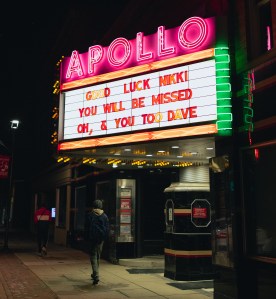
It reminds me of a one-panel comic that I saw some time ago: a person lying in bed, eyes wide, a theater marquis over their head that reads in bright lights: PLAYING AT 3AM! EVERYTHING YOU SAID AT THE PARTY LAST NIGHT! [A cartoon in the same general vein by Hilary Fitzgerald Campbell appeared in The New Yorker on Jan 21, 2019 (#11 of 15), but I’m not posting it here because they might be touchy about copyright infringement.]

In the middle of the night, being hit with an glaring memory of something that sends your stress levels rocketing…goodbye sleep.
(Photo by Gregory Brainard on Unsplash)

How many of us have had a similar experience? I occasionally find myself tortured by things I said or did even decades ago. DECADES! Or they could have happened yesterday. A simple image can trigger shame, embarrassment or regret that feels real and vivid and, yes, while this generally happens at night for me, it’s certainly not limited to that time.

How odd that we give the past so much power over us when it’s not even real anymore. While we’re shaped by our experiences, allowing ourselves to be haunted by them serves no purpose, especially not once we’ve learned whatever we needed to from them.

Soooo, one early morning in the darkness I found a way to add some perspective to the memories that bully me: I started thinking of them as echoes, wispy harmless reminders of what happened.

And there in bed at 3am, I am safe. My body is not in the imagined situation, it’s under the covers, lying on my mattress. Here is where mindfulness is so helpful because it brings me back to the present. The past is echoing, trying to get my attention. But the more aware I am of where I am in space currently, the easier it is to step back and simply observe the echoes, watching them fade away.

I’m making this sound simple, I know–as with all the things that bounce around inside our heads, taming a stressful memory is not necessarily easy. But identifying it as just an echo has been remarkably helpful for me. It has provided a different viewing angle that enabled my perspective to shift.

Echo…echo…echo…

Thinking of thoughts as echoes can dispell them, but simultaneously focusing on a sense helps ground us in reality.
(Photo by Mariana Rascão on Unsplash)

I’m not there now, those other people are not there now, that event is not happening now–just because I remember it so vividly doesn’t mean that anyone else does. And most of the time, I don’t remember it either. Only during the limited, wee-morning-hour viewing window during which it appears because I’m susceptible to the tickle of anxiety.

The senses can bring me back to reality. Opening the eyes, feeling where my body contacts the surface that it’s on, hearing the hum of a fan or sound machine. Anything occuring in the present anchors me to what’s going on now.

And in the present, that echo cannot hurt me because it’s just an airy thought.

Of course, this all comes back to the basic idea that the more we practice presence, the easier it will be to minimize the impact of thoughts that unsettle us. It may take some exploration to find what works best for you, but in the end, being patient and consistent will be the best way to calm your mind and bring you back to what is real at the moment.