Oncology Yoga: It’s Not Just for Relieving Stress

(Title image: Photo by Raghu Nath on Unsplash)

Last week I finished up my 75-hour yoga4cancer (y4c) Oncology Yoga teacher training (wow, that’s a mouthful!).

It was about five months of some pretty hefty lessons that spanned the cancer experience, the science of cancer, the science of yoga, the y4c methodology and lots of practice, introspection and critique. And more!

What drew me to this particular specialized yoga training was that it uses yoga as an exercise modality for true mind-body fitness, not simply to help practitioners deal with the stress and anxiety related to a cancer diagnosis, but to tap into the physical benefits of exercise in helping manage treatment-related side effects and prevent cancer recurrence.

Oncology Yoga offers a safe and effective yoga practice keeping the needs of those touched by cancer paramount.
(Photo by Junseong Lee on Unsplash)

I recently spoke with someone who represented another cancer yoga certification. She felt that cancer patients and survivors were not looking for yoga that emphasizes exercise, they wanted the stress-relieving, nurturing aspects of a yoga practice.

And there is some truth to that. I myself made the most use of the Pranayama (breath work) and Dhyana (meditation) aspects of Patanjali’s Eight Limbs of Yoga, of which Asanas (poses) are only one limb, when I was going through my own cancer experience.

But on top of that, I continued to row and lift weights throughout treatment, exercising as soon as I got over the worst days of my chemo. Same thing throughout radiation treatment. Exercise made me feel strong and “normal”, and gave me a sense of control when everything else in my life seemed out of control. This was something *I* could do for myself. It gave me agency over my life.

There is a growing body of evidence that staying physically active before, during and after cancer treatment is incredibly beneficial for survival. The evidence-based y4c Oncology Yoga methodology offers sequences that are appropriate for cancer patients and survivors, taking into account cancer-related side effects. There is ample propping to support the needs of practitioners, while still allowing them to participate in many asanas that you would find in a yoga class that isn’t cancer-oriented, taking care to avoid those that could be harmful.

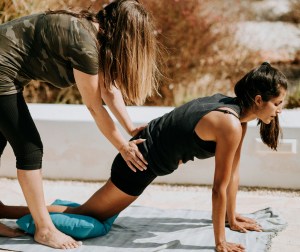
The y4c methodology incorporates generous propping to allow cancer survivors to participate fully in class while keeping themselves safe.
(Photo by Samantha Sheppard on Unsplash)

No doubt, the stress-relieving aspect of yoga is immensely critical also, at a time when a cancer patient/survivor may be dealing with existential fears. There are studies being run on the impact of mindfulness and meditation as they relate to cancer and results of this research are very promising on a variety of levels.

Oncology Yoga combines the two, mind and body. Breath connects with movement in this specialized vinyasa class. The sequences help with lymphatic drainage, bone and muscle building, relieving constipation, regaining range of motion and more, all the while slowing the breath, calming the mind, lifting the spirit, bringing in a sense of grounding and self-efficacy.

I am very excited about the y4c training and am working on integrating Oncology Yoga principles into classes that I offer. My intent is to use my franticshanti.com platform to post sequences and meditations in the future. Watch this space!

Farming ‘Likes’ on Instagram

(Title image: Photo by Chelsea Gates on Unsplash)

I am a reasonably flexible person although I’ve become less so with age and especially following cancer treatment. Yoga asanas that I used to be able to do…well, they don’t come so easily anymore, if at all.

After going through my yoga teacher training in my 50s and now in the middle of an Oncology Yoga (y4c) certification program, I spend a lot of time feeling like an imposter.

There’s an element of shame to this. I tell myself I should be more flexible, I should have better balance, I should be able to hold more advanced poses and for longer.

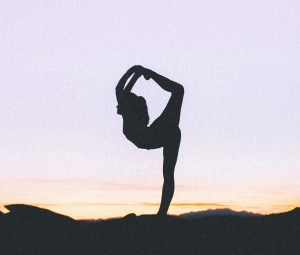
In my y4c training, the manual referenced a concept, versions of which I’ve seen before and have written about myself, but the message continues to hold true (see this article). The proliferation on social media of young, flexible bodies in extremely inaccessible poses for the vast majority of the population not only hurts the practice, but completely misses the point.

It seems like a lot of images that show up as “yoga” on platforms such as Instagram are part (if not wholly) acrobatics and contortions. But yoga is actually a spiritual practice and only one part of it, the one that is overemphasized in the west, is physical.

POV: You’re a cancer patient and your forward-thinking oncologist suggests that you try yoga to help alleviate some of your side effects. But this is what you think of when you hear “yoga”. What are the chances that you’ll try a yoga class? What are the chances that you’ll even find a yoga class that is appropriate for your current condition? Or will be able to afford one?
(Photo by Wesley Tingey on Unsplash)

And that physical practice is a big money maker. If you doubt that, take a look at how many yoga studios exist in affluent areas, and the dearth of studios in more moderate-to-low valued ones.

Yoga was what helped me through my cancer diagnosis, treatments and beyond. But that yoga was minus the “workout”. My workouts during cancer focused more on rowing and lifting weights rather than Sun Salutations and balance asanas. Yoga was for my mind and spirit, to maintain connection and grounding, to not get lost in my fears and to be grateful for what I had.

This is not to say that it’s not impressive when people post challenging asanas on social media. Some of the wonderful teachers that I have trained with have shared those kinds of posts. It’s natural to want to show off a physical achievement that you’ve worked so hard for. In a way, that’s the whole point of social media posts. And that’s also part of the problem with social media.

Frankly, yoga has become deeply entrenched in the United States as a physical practice and nothing is going to change that now. We can be hopeful that those who dutifully attend yoga class, rolled up mat under the arm, will take the time to understand the depth of this ancient practice. But regardless, the flow of the class still brings peace to the mind in a way that my ‘hardcore’ workouts do not.

There are a lot of people who could benefit greatly from the practice of yoga in all its forms, matching breath to movement and developing a mind-body connection. Cancer patients and survivors are some of those people. But if all they know is that yoga demands extreme flexibility, even hypermobility, and statue-like balance, they will avoid the practice as too advanced and inaccessible to them.

If you are a teacher, please keep that in mind. If you are a potential student, please don’t let social media keep you away from such a beneficial form of exercise for both your body and your mind. And if you are a current practitioner, please dig deeper to understand the roots of yoga to honor the cultural tradition from which it arose. It’s not just for likes on Instagram.

Aging Muscle: After Cancer Treatment and Menopause [PHOTOS]

(Title image: Photo by Samuel Girven on Unsplash)

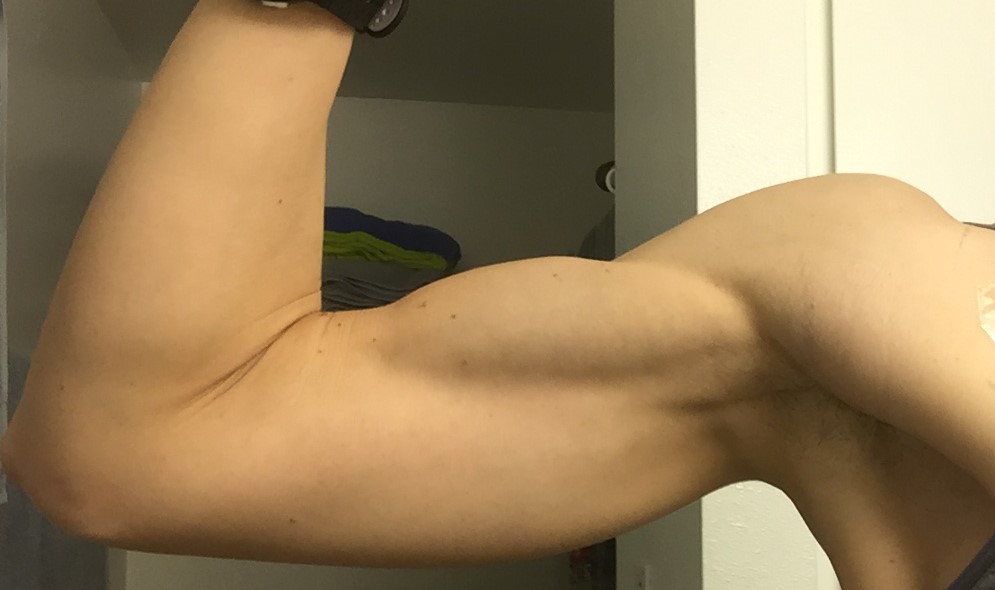
This is a reality check to demonstrate how, even with the greatest of intentions and planning, coupled with a serious love of exercise, you can’t turn back time.

And that’s okay.

But first, the comparison. Taken from this previous post, here’s a photo right before I started chemotherapy for triple-positive breast cancer, April 27, 2017:

April 27, 2017: I was exercising with a vengeance

After finishing chemo, radiation and Herceptin, AND after two years of estrogen-lowering Tamoxifen and a year into Letrozole, I’d lost some muscle even though I was lifting as heavy as I could.

This photo is from December 11, 2020:

December 11, 2020: Still exercising with a vengeance, but…

While I was still working out hard, endocrine therapy and menopause took their toll on my progress. Interestingly, estrogen is not simply a “feminizing” hormone; in women, it also helps preserve both muscle and bone mass. Menopause puts the breaks on estrogen production.

This becomes worrying as we age because less estrogen means weaker muscles which can lead to a greater risk of falls and chance of bone fractures. Endocrine therapy, which is designed to decrease the estrogen in the body in order to lessen the recurrence risk of hormone-sensitive breast cancer, adds to the problem.

And more than seven years after the top photo, this was taken today before posting, September 23, 2024:

September 23, 2024: New phone, different lighting (sorry!), more wrinkles, same moles. I’m working hard just to keep what I have, but loss is inevitable.

I’m still lifting but the entire landscape of my workout routines has changed. I have to give myself more recovery time between strength training sessions. I am much more susceptible to injuries—seriously, I can tweak something by turning or stretching out in a weird way. I have neuropathy in my feet which makes getting up on my toes (such as in plank or doing lunges) painful.

We recently had an intense heat wave: for a week the temperature inside our apartment didn’t fall below 80F degrees, and during the day it climbed as high as 95F degrees (again, INSIDE our apartment). I managed to work out through a chunk of that week, but the heat eventually got to me. And recovering from that took almost another week.

So, the spirit is willing but the flesh is barely managing at times.

However, there is an upside to being 58 years old with a lifetime of fitness experience. I still love working out. Even tough training sessions are manageable because they feel like an awesome accomplishment, and I feel bouyed afterwards.

Even on the days that I don’t do a formal workout, I make sure that I’m moving as much as I can. Fitness is an integral part of my life, even though it looks different now than it did seven years ago. In the post that I reference earlier, at the very bottom I wrote about how yoga was becoming a larger part of my life.

And that’s continued. Through my yoga teacher training in 2022 and upcoming yoga4cancer advanced training starting in January 2025, this direction feels so right for me.

While I don’t plan to give up my gym sessions anytime soon, yoga has given me a path to physical and mental fitness as I age. I am gradually moving into a more meditative approach to exercise that is less about intensity and more about staying healthy by integrating mind and body.

Reconsidering Yoga Adjustments

(Title image: Photo by Shashi Chaturvedula on Unsplash)

There is an expectation in the US that yoga practitioners are all young and flexible with great balance, but we know that’s not the case. Many people who might benefit the most from a yoga practice are certainly not.

When I started Yoga Teacher Training (YTT), there were two assumptions that most of us made:

“Full expression of the pose” is not accessible to every yoga practitioner.
(Photo by Carl Barcelo on Unsplash)
  1. Every yogi strives for the “full expression of the pose”, suggesting that there is one perfect way to perform a yoga asana.
  2. An important responsibility of a yoga teacher is to move students into the full expression of the pose, using hands-on adjustments if necessary.

Those two assumptions may:
(1) discourage students from yoga practice, particularly when you consider that yoga originally developed as a practice for men, and asanas do not necessarily take into consideration the female body (or diverse body shapes) even though the majority of practitioners in the US are female; and (2) may compel newly-minted yoga teachers to push students into positions that are wrong for their body shapes and can cause harm to them.

During YTT, however, we learned that the “full expression of the pose” as a concept was no longer taught and teachers were discouraged to refer to asanas in that way, no doubt in an effort to be more welcoming to a broad range of people.

My person belief is that hands-on adjustments are not necessary for yoga under most circumstances.
(Photo by Annie Spratt on Unsplash)

We also learned how to do hands-on adjustments. The idea was that you needed to check with the student whether they wanted to be adjusted.

However, I myself have received adjustments in classes that I hadn’t requested or agreed to. It’s never been harmful to me and generally felt good, especially in settings where I couldn’t check my form in a mirror. Futhermore, the classes tended to be higher level, so there was probably an assumption on the part of the instructor that you’re in a more intense class for a reason, otherwise you’d be in a lower level class.

But you can probably see where I’m going with this. I tended to be one of the oldest students in these classes. I’ve done yoga (and a range of other exercise modalities) for decades, but my flexibility and balance have taken a hit from cancer treatment and various injuries. Unless a teacher is sensitive to that, we can run into trouble.

Additionally, I’ve seen less-experienced students attend more difficult classes because they were coming with a friend or couldn’t get to the easier class that they wanted, and decided to just “do their best”. That should always be good enough without putting a student at harm.

Yogis come in different shapes, sizes and levels of flexibility…and that’s okay.
(Photo by LOGAN WEAVER | @LGNWVR on
Unsplash)

My personal feeling? Stick with gentle verbal adjustments to relay the spirit of the asana and cue according to the class’ level, understanding that students will have varying ranges of flexibility. I do not feel comfortable doing hands-on adjustments unless the student is requesting it AND I know the student well enough to be familiar with their limitations, if any. That means verbal adjustment for students in a general class vs. POSSIBLY hands-on adjustments for a student that I’m teaching privately, where we can talk through how the asana feels in their body. Quite often, I will forgo hands-on adjusting altogether.

Finally, I leave you with a quote from the YogaUOnline.com website. Charlotte Bell proposes a difference definition of “full expression”, in an excellent article titled, What is Full Expression in Yoga Practice?: “Full expression arises in a pose when our bodies are aligned such that the wave of the breath is free to circulate throughout the body. It also happens when we have invested our full attention into the sensations arising as we move and breathe in the pose. The full expression is not dependent on what a pose looks like.”

I Am an Imperfect Yoga Teacher

(Title image: Photo by Cameron Raynes on Unsplash)

A couple of months ago I received an amazing invitation: to teach yoga to cancer survivors at our local Cancer Survivors Day event on June 1st.

What an amazing opportunity! The sole reason that I had gone through yoga teacher training and registered with the Yoga Alliance was to eventually teach cancer survivors. To have this invitation fall into my lap was serendipity at its very finest!

It was also terrifying.

Ever been offered an amazing opportunity and felt like you’re still a little too ‘green’ to handle it?
(Photo by Nagara Oyodo on Unsplash)

My first impulse was to run and hide under the most solid object that I could find. You know, sometimes you have great goals, but you don’t consider what you will do if you actually manage to achieve them. I didn’t feel confident that I was ready for something that had always seemed several years away.

But I still had enought time to prepare for this class. I had taken a specialty 5-hour training on teaching cancer survivors, I had 16 years of maintaining a personal trainer certification with a clinical/academic focus and, importantly, I was a cancer survivor myself. I kinda knew what’s what.

At the same time, I felt a nagging doubt. What if I created a yoga class that people hated? What if someone got injured? What if I couldn’t memorize the sequence, kept stumbling over words or blanked out in the middle of it?

The more I practiced the sequence with friends and family, the more opportunities I had to beat myself up over every time I said “right” instead of “left”. Or said “arm” instead of “hand”. Or anything else that seemed less than perfect. The possibility of looking like a bad teacher and shaming myself opened the door for anxiety to flood my mind.

Nothing quite like thinking you’re not good enough and then proving yourself wrong!
(Photo by Clay Banks on Unsplash)

Eventually, I recognized that I was driving myself nuts with unrealistic expectations. I also realized that this is a bad habit that I’ve fallen into on other occasions too. So I took some time to sit quietly and reflect on what was happening.

I am an imperfect yoga teacher. While I try to mirror movements for my students, I mess up once in a while (mirroring can be really hard!). I might not always use the right word to describe a body part. I might forget to mention a cue and then have to stick the instruction in later. I might even forget whether I forgot to say something!

But when the day came to teach to this amazing group of people, my students followed along without a problem. And you know what? After class, they clapped for me. My heart was so full!

I may be an imperfect yoga teacher but maybe that’s okay.

Why Does Mindfulness Have to be Expensive?

(Photo by Mackenzie Marco on Unsplash)

This past January, I was delighted to receive an email from work about a day-long mindfulness class being offered to help usher in the new year. What a great idea! I can think of no better way to launch into another journey around the sun than with a sense of calm and acceptance, and I felt myself puff up with enthusiasm.

But as I scrolled down for more details I saw that this retreat had a price tag. Good feelings gone. It was close to $100.

This was an experience offered by my workplace, presumably so that I could be a more mindful employee, and they were charging for it.

Need I say, work can be stressful?
(Photo by Alex Kotliarskyi on Unsplash)

I understand the importance of investing in yourself. It’s worth more than a monthly Netflix subscription and will get you much farther in life than a daily Starbucks run. Mindfulness experiences are where I want to put my hard-earned dollars.

But this past year was tough. I needed mindful guidance even more, and yet I kept coming across financial barriers.

Why does all this good stuff need to cost so much? Meditation costs absolutely nothing and offers infinite rewards, and yet, there seems to be a vibe out there that you must spend money (the right cushion, the most beautiful journal, the most blissful island retreat, the perfect yoga pants) in order to do this right.

I live in Southern California where the cost-of-living is high and so are many salaries, but not all. And the gap between those who live comfortably and those who struggle to get by is widening. There are so many who could use the grounding and calm that meditation can offer.

At the same time, I completely get that someone like a yoga teacher or a sound therapist in this area is also struggling. In order for them to be able to offer the services that they do, they must cover their costs.

Yeah, I know. All this mindfulness stuff seems to be unnecessarily pricey.
(Photo by Magic Bowls on Unsplash)

So here’s my wish for the remainder of 2024: Hey, workplaces! Yeah, you, the ones who expect a lot from your employees! Make sure they are fully supported in all aspects of wellness. Bring in a meditation teacher or a yoga instructor. Set up a quiet space for people to destress for a few minutes. Don’t expect your workers to shell out part of their paycheck for staying grounded dealing with your expectations.

And for the meditation teachers and yoga instructors and sound therapy practitioners and the like who are actually making a very good living…fine. Do your thing. Charge your prices. I know that trainings and musical instruments and sacred spaces aren’t cheap. There are people who can and will pay a premium for them to get a truly calming and magical experience.

But after that, please. Offer free classes in parks and libraries and community centers. Volunteer your time for a good cause (my favorite has been a charity yoga class at the local Humane Society). Look for opportunities to share your talents in the not-so-bougie parts of town.

It will make a big difference to people who usually are not usually shown such grace.

Why I Get Irritated Searching for Yoga Photos

(Title image: Photo by Katie Bush on Unsplash)

This is getting annoying.

I’ve been posting a lot about yoga, specifically about yoga for cancer populations.

Yoga programming for such populations is *not* your garden variety beginner/intermediate yoga. With the possible exception of well-practiced, life-long yogis who experience a cancer diagnosis, most of the people taking these yoga classes will have limitations to their movement and will need thoughtfully-designed sequences that offer appropriate modifications.

In a number of cases, these individuals may be older (for example, the average age at diagnosis for a woman in the US with breast cancer is 62). Many of them will not have an established yoga practice but may be attracted to yoga due to its reputation as being a mind-body activity: people with cancer not only have to deal with the disease and physical side effects of treatments, but also the emotional repercussions of being diagnosed with a life-threatening illness. Yoga can help.

So why am I irritated? Because the photo databank I use for my blog is replete with photographs of bodies in yoga poses. However, the poses shown are nothing that I would ever consider twisting a cancer patient into.

Make no mistake: the photographs are lovely, the yogis are impressively advanced, but what kind of a message does seeing mainly *these* kinds of yoga photos send to those cancer patients considering trying out yoga?
(Photo by Oksana Taran on Unsplash)

The yogis shown almost without exception are young and flexible. And when I’ve searched for “senior yoga” etc. to increase the diversity of the images…sure, I can find some but they’re locked behind a paywall (mine is a free blog without a budget for such niceities). Apparently, an older individual doing yoga is considered “exotic”.

This type of exclusivity feeds the narrative that yoga is for youthful, injury-free people who have the funds to attend studio classes. Someone who might be older, recovering from surgery, limited in range of motion and conscious about their budget due to treatment costs…well, I wouldn’t be surprised if they felt that yoga wasn’t welcoming of them and their needs.

This is, of course, so ironic, because of all the different exercise modalities, yoga is one of the most perfect for cancer patients. These are the people who need yoga the most!

Yes, I’ve written (griped?) about this topic before. Yes, we’re becoming more accepting of diverse bodies in diverse situations. But good luck trying to illustrate a blog post on yoga for cancer patients with actual photos of cancer patients doing yoga!

~~~~~~~~~~~~~~~~~~~~~~~~~

I’m not expecting to easily find every type of person depicted doing yoga in a given (free) photobank. But in the US we have a problem with making yoga accessible, and the more images that we run of only a certain kind of human doing yoga, the more we inadvertently push the idea that yoga is only for that certain kind of human.

White Paper: “Yoga Interventions for Cancer Patients and Survivors”

(Title image: Photo by Raimond Klavins on Unsplash)

I’ve been writing a lot lately about using yoga to mitigate cancer therapy-related side effects.

In this post, I want to bring your attention to the white paper entitled, “Yoga Interventions for Cancer Patients and Survivors” [Important: this links to the download page on the yoga4cancer website, *not* directly to the pdf itself]. It’s an evidence-based review of research regarding the benefits of a yoga practice in coping with negative side effects that afflict cancer patients and survivors, followed by recommendations for teaching yoga to this population.

This 24-page document (quoted directly from the paper’s abstract) “(1) provides a summary of research on the benefits of yoga for cancer patients and survivors, (2) highlights the most beneficial components of yoga for cancer survivors, (3) identifies barriers and solutions to the creation of accessible, evidence-based yoga programming, and (4) offers guidelines for developing yoga programs that best meet the unique needs of cancer patients and survivors.” [Again, this links to the download page.]

The white paper is written in non-technical language, distilling the research down into a form that doesn’t require a scientific background to understand. Additionally, editions are available in Spanish and Japanese, both available on the download page beneath the English version.

If you’d rather not download, you can read the English version below (or click the “download” button underneath the paper for a pdf):

yoga4cancer: Bringing the Benefits of Yoga to Cancer Patients and Survivors [VIDEOS]

(Title image: Photo by Zoltan Tasi on Unsplash)

In February 2022, I started a yoga teacher training program with a singular goal: to eventually teach yoga to cancer patients and survivors.

With its mix of physical postures (asanas), breathwork (pranayama) and meditation, yoga is ideal for someone going through the traumatic experience that cancer can be. Yoga can provide enough physical exertion to count as moderate exercise and the ability to help the practioner calm their mind, things that are so important for improving cancer treatment outcomes. However, classes must be designed carefully and taught thoughtfully.

Yoga4Cancer Q&A for Cancer Patients and Survivors (Yoga Alliance on YouTube)

Keep in mind, yoga teachers were yoga practitioners first. Many of them got really good at the practice, developed great flexibility and balance and gained respect for the tradition of yoga. But that doesn’t automatically make them appropriate yoga teachers for cancer patients, who need an instructor that understands the nuances of what cancer is and how treatment affects us.

A yoga teacher and breast cancer survivor by the name of Tari Prinster addressed that need by creating yoga4cancer (y4c), “an evidence-informed Oncology Yoga method tailored to address the specific physical and emotional needs left by the cancer and cancer treatments. The approach matches breath and movement to stimulate the immune system, improve flexibility & strength, reduce anxiety and boost overall well-being” (from the y4c website).

I’m planning to begin the y4c advanced 75-hour certification program (see informational video here) either later this year or early next. I’ve been so impressed by y4c’s emphasis on understanding the unique situation that cancer patients and survivors are in–it’s not just your garden variety beginner yoga class with “also for cancer patients” dressing. The program is well-thought out and comprehensive, and I’m so excited to embark on this next leg of moving closer to my teaching goal.

In the meantime, here is a selection of videos created by Tari and her instructors that are specifically geared for the mental and physical needs of cancer patients and survivors:

Yoga4Cancer Oncology Yoga for Cancer Related Fatigue (Yoga Alliance on YouTube)
Yoga4Cancer Yoga for Bone Loss (Yoga Alliance on YouTube)
Yoga4Cancer Yoga for Range of Motion (Yoga Alliance on YouTube)
Yoga4Cancer.com Yoga for Anxiety (Yoga Alliance on YouTube
yoga4cancer.com Yoga for Lymphedema (Yoga Alliance on YouTube)
yoga4cancer.com Yoga for Constipation (Yoga Alliance on YouTube)

Enjoy!

Benefits of Mind-Body Fitness Classes for Cancer Patients: A Preliminary Research Study

If you needed yet another reason to turn to meditative exercise practices in the course of cancer treatment, here it is.

A recent, unpublished study that was presented at the 2023 ASCO (American Society of Clinical Oncology) Quality Care Symposium, entitled “Virtual Mind–Body Fitness Classes Show Unexpected Benefit in People with Cancer” (Mao et al., 2023), examined the effects of virtual mind-body fitness classes on visits to urgent care or unplanned hospitalizations for cancer patients who were in active treatment and were dealing with moderate or greater fatigue.

While mind-body practices are already recommended for cancer patients to help deal with the symptoms of treatment and its emotional fallout, the results of this study illuminated specific benefits. Those patients who had been assigned to the group given access to virtual live mind-body and fitness classes (called Intergrative Medicine at Home, or IM@Home) had fewer hospitalizations and shorter hospital stays, in addition to fewer visits to urgent care, compared to those subjects who were only given access to pre-recorded online meditation resources (Enhanced Usual Care, or EUC).

It’s not surprising that mindfulness benefits cancer patients, although it’s striking how those benefits manifest themselves.

This study was run at the renown Memorial Sloan Kettering Cancer Center (MSKCC) with 200 cancer patients randomized into the two groups (IM@Home and the stan, which makes the design more solid and increases confidence in the results. Nonetheless, as the lead author Dr. Jun Mao (Chief of Integrative Medicine at MSKCC) stated in the National Cancer Institute’s Cancer Currents blog, “I do want to caution that the current trial was designed as an early-phase trial, so we would like to do a larger study with longer follow-up to confirm our results before we are completely confident in the findings.

A larger study is currently in the works. Dr. Mao would like to explore whether these classes help patients follow through on their treatment plans, and if so, whether these patients also live longer.

The IM@Home group’s classes included a variety of classes (again, quoted from Cancer Currents blog): “Some of the classes taught participants movement-based activities such as yoga, tai chi, and dance therapy; other classes taught meditation-based practices, such as music therapy and mindfulness.” It is already known that exercise during cancer treatment can reduce fatigue, but the researchers felt that part of the success of this study was due to the participants’ ability to choose the level of exertion based on how they were feeling at the time of the class.

Looking forward to further research on the ways that we can support cancer patients physically, emotionally and spiritually!

As Dr. Mao pointed out, more directed research on this must be done before drawing specific conclusion, but this was a very valuable pilot program, the results of which would not surprise those of us who have made use of various exercise modalities, particularly those with a mind-body angle, for calming ourselves during our cancer journeys.

The more this subject is studied, the greater the chance that cancer centers focusing on whole-patient treatment will be offering such classes to their patients. COVID taught us that there are ways to make classes accessible to people with limited mobility or conditions that may prevent physical travel to classes.

While I believe that attending mind-body oriented classes in person is ideal, this study illustrated that even virtual opportunities can have significant benefits for the patient.

It’s worth pointing out that of the 200 study participants, 91% were female and 77% were white. That is not a diverse spread and reflects the typical clientele at your average yoga studio (based mainly on my personal observations), with the exception being that the average age of these study participants was 60 years. I would be willing to bet that less-represented groups would benefit greatly from the stress relievers offered here and I hope that the researchers expand their subject pool to balance out the participants in their future study.

Regardless, these are intriguing results that underscore the important of mind-body focused classes, and exercise in general, in the well-being and improvement of cancer patients. This study joins a growing list of research that is changing the way that we look at managing cancer treatment side effects.

~~~~~~~~~~~~~~~~~~~~~~~~~~

REFERENCES:

Reader-Friendly
Windstead, E, Virtual Mind–Body Fitness Classes Show Unexpected Benefit in People with Cancer, Cancer Currents, December 15, 2023:
https://www.cancer.gov/news-events/cancer-currents-blog/2023/mind-body-fitness-cancer-side-effects

Research Study Abstract
Mao, JJ et al., Effect of virtual mind-body fitness program on reduction in unplanned hospitalizations among patients undergoing active cancer treatments: A pragmatic randomized clinical trial, presented at 2023 ASCO Quality Care Symposium, October 28, 2023:
https://meetings.asco.org/2023-asco-quality-care-symposium/15514?presentation=227485#227485 (note: click on “Abstract 473” on right side panel for abstract text)