When Gratitude is Hard, Try Appreciation

(Title image: Photo by Amadeo Valar on Unsplash)

After last week’s post about writing out your stressors, I wanted to follow up with something positive so that we’re not left thinking about all the rough stuff that we have to deal with.

And how better to do that than by counting your blessings? Ok, so I realize that sometimes it’s not so easy to get excited about a great cup of coffee or the fact that it’s almost Friday when you are drowning under a pile of bills or dreading the arrival of combatative relatives.

But part of a resistance to gratitude, at least as far as I’ve experienced it, is feeling that it’s forced. I’ve written a number of posts about this—seems like I hit on this topic at least once a year—and guess what? It’s time for this year’s version.

This week, I’m posting on the magic of gratitude again, but this time for the recalcitrant ‘gratituder’. Full disclosure: sometimes that’s me.

When gratitude doesn’t come easily then maybe we just need to reinterpret how we view gratitude and what it expects of us.

And that can be achieved by switching out the term “gratitude” with “appreciation”.
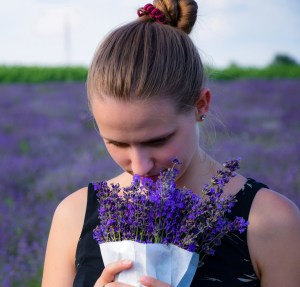
Appreciating the glorious scent of a bunch of lavender? Yep, that’s gratitude!
(Photo by Richárd Ecsedi on Unsplash)

That’s it. You don’t have to do anything else. Looking at a sunset? Just appreciate the beautiful colors—no need to “wallow in gratitude” about it. You have a cup of coffee? Just appreciate that you’ve got that cup of coffee warming your hands.

Sounds too simple? It is simple and that’s why I love this. Because thinking of it as appreciation rather than GRATITUDE takes some pressure off. All of a sudden, there is a whole world of things that we can appreciate without feeling like we need to crawl on our knees to be grateful for them.

And of course, the silly little truth about this is that appreciation IS gratitude. No matter what label you place on it, it gets us to the same place. It’s quite beautiful how suddenly we find that we can be appreciative, meaning we can be grateful for the little things in our lives without a need to force anything.

One of the posts I wrote about this included the realization that it can be the little things in life (for instance, being able to walk around pain-free after a tweaked muscle heals) that mean so much for our quality of life. And that is a very important thing indeed.

I encourage you to try it out this week: look around and see how many things you can genuinely appreciate, no gratitude required. 😉

(And yes, I’m making a list again.)

Making a List, Checking It Twice

(Title image: Photo by Kelly Sikkema on Unsplash)

I have been stressed lately, which is a bummer because this year I really wanted to relax and enjoy the holiday season. But once again, it seems like the year has some zingers left for the final months of 2024.

Instead of writing about them in a post, I decided to write them down…and I was surprised by how many stressors had built up.

I made my list carefully, organizing it by time periods: first, I wrote down the things that had been nagging me all year or longer. Stuff like constant increases in rent and cost-of-living. These were exerting continuous pressure on my well-being.

“Dear Santa, please don’t bring me any more stress. I’m good for this year.”
(Photo by Mike Arney on Unsplash)

Second, I wrote down things that seemed to have happened in the second half of the year and had a large impact, like my father’s death and experiencing frequent visual migraine auras.

Third, I got more granular and wrote about the things I was experiencing on a daily basis. Like feeling that my words were misunderstood or having to go through the rigamarole of tracking down a package that hadn’t arrived—these are things that work themselves out in a relatively short period of time but are stressful in the moment.

Why bother listing all this? Because it helps sort things out. I get perspective on exactly what’s going on in my life. Without that, it’s like someone throwing a huge blanket over you—suddenly it’s dark and you feel smothered. And that feeling of overwhelm elicits a lot of anxiety.

And once I had started the lists, I considered how I was reacting to these stressors. For example, since my father’s death I had not given myself the opportunity to grieve, not even during the funeral. There were so many other concerns that it didn’t seem like it was “the right time”.

So over the last two weeks, I gave myself the space to cry. If I hadn’t stopped to consider what was actually going on, I might have tried to soldier on and pushed away how much it hurt. I had been affected by not only his loss, but also by how his gentle nature meant he didn’t push back against forces that led him to forsake his own passions, and knowing that compounded my pain.

Ah, here comes that word again: PERSPECTIVE. You really don’t get the whole view until you step back and quietly observe.
(Photo by Brigitta Schneiter on Unsplash)

But the reactions don’t have to be as heavy as that. I also noticed that I had been doing a lot of sighing this year, something that is associated with stress and anxiety. Even my body was trying to tell me to take a break.

Writing out the lists gave me a chance to acknowledge what I was already feeling, and pushed me to evaluate whether what I was doing to relieve my stress levels was effective enough for what was going on.

It’s important to note that the purpose of writing up these lists is not to wallow in misery! Everyone has stress of some kind and I’m not unique in that, nor am I trying to make this a bigger thing than it is.

The fact is, some stressors happen to me and some I impose upon myself (unrealistic expectations, perhaps?). It is only when I am able to review them that I can determine which is which, and then take appropriate measures to alleviate whatever pressures I can.

“Detached”: Time-Out in Third-Person

As an addendum to my post where I wrote about using third-person language in meditation to help keep distance between yourself and your thoughts, I wanted to revisit this method for everyday life.

While in that post I alluded to using third-person descriptions on stressful days, it’s really worth emphasizing the utility of creating space throughout the day.

To sum up that post, I mentioned a mindfulness technique suggested by meditation teacher Jeff Warren in which when we find ourselves being swept away in thought, we describe what’s happening in “third-person” language and play the role of an observer.

Observe…make space…gain perspective.

But as I said in that post, why limit that to meditation sessions? In fact, you could argue that it is even more important to bring that type of gentle detachment to the things that ordinarily set us off in our daily lives, whether it be with family, at work or anywhere.

I would say that so much of my anxiety has stemmed from an inability to maintain perspective about the trigger. Noticing when I’m getting carried away and then describing the situation as something that is happening to another person — similar to the way a newcaster might report on an event in a calm, informative manner — helps loosen its grip on me.

The ability to step back and detach from the situation is kind of the name of the game in terms of reducing stress levels, isn’t it?

By narrating the circumstances around your stressors, we make space: “FranticShanti felt a little ill when she saw that the letter in her mailbox was from her landlady. She expected this to be about a rent increase…and she was right. Another $200 per month.”

Third-person language gives us the space we need to tackle our stressors without getting pulled into them.

That telling offers some space. It doesn’t change the situation, simply presents what’s happening in an unemotional manner. Then following up with some trouble-shooting helps soothe my agitation: “This will require a review of her finances, but as she calculated with last year’s rent increase, she can still absorb this additional amount. Things will probably be okay. She takes some deep breaths and feels into her hands and feet.”

Not only can you calmly describe the situation, but you can describe yourself engaging in self-soothing techniques as you work out your next steps.

It is quite effective in slowing down racing thoughts, particularly if you’re in a place where you can speak out load, as hearing yourself describing things can be even more grounding.

As with other simple grounding techniques, this may seem a little contrived or simplistic, but it might be just enough to bring you out of your head and into the here and now — cool, calm and collected.

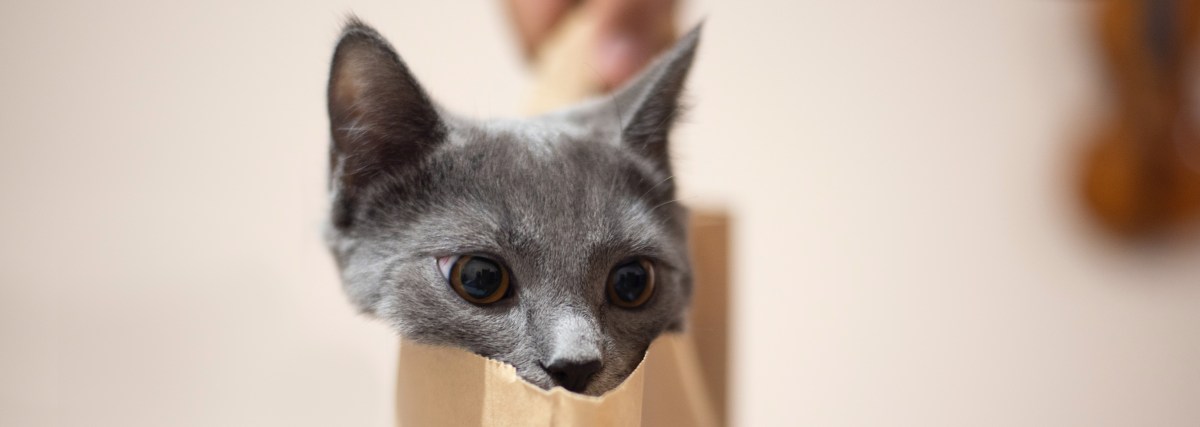
Fighting My Way Out of a Paper Bag: An Analogy

I wanted to share a little technique that I’ve been using to give myself perspective. It’s quite simple: I have a small brown paper bag pinned to the wall above my desk.

The bag is there to remind me that most of the things that are upsetting me or stressing me or just taking up headspace in the moment are transient issues that fit into that paper bag. The REST of my world remains outside that bag and unbothered by whatever is going on in there.

The trick for me is to not get sucked into that brown bag. When that happens, and it does, I’m suddenly whirling around with all the daily stressors and emergencies-of-now, and that’s all I see. My entire experience becomes those anxiety-provoking elements and my stress levels skyrocket.

When stress levels are high, it’s easy to get sucked into a space of high anxiety where you see only those stressors, forgetting that the rest of the world is outside.

It takes a lot more effort to fight my way back out of there than to stay outside in the first place.

At the same time, it’s so easy to follow all those stressors right into that bag. For me, that’s the path of least resistance, even a habit.

But when I lean back and take in the entire picture–the time-limited nature of what’s bothering me and the fact that in a couple of weeks it’ll be gone–my view broadens and I am reminded of what else is going around me right now, in this moment.

Right here, where I feel my feet planted on the ground. I smell the scent of lemon wafting up from my diffuser. I’m aware of sounds from the street below and sunshine coming in through my window.

Perspective. All of these things tumbling around inside the bag will pass. And, yes, perhaps more importantly, new ones will bubble up and take their place. I can’t stop that and I have to accept it. But I can take a deep breath and stay in the bright light of the day instead of darkness of that little bag.