Managing Expectations: A Reflection

As I sit at home waiting for the stormy remnants of what used to be Hurricane Hilary to pass by, a bit of reflecting…

There is a saying attributed to Buddha: “The root of all suffering is attachment.”

While there is much that can be and has been written about this, I’d like to bring it down to something very concrete in my life.

It seems so simple, this letting go of our expectations. But we humans are hard-wired not to do that!

One of the wonderful attributes that we as humans have is the ability to plan. Yes, that’s been evidenced in very clever animals, but humans take it to a whole new level.

Where that incredible gift fails us is that in the process of planning, our goals and expectations become very real in our minds, and if they don’t play out as we had anticipated…well, sometimes we don’t deal with the disappointment well.

For instance, in such situations I experience stress and anxiety. Others may react with anger and frustration.

Regardless of the outlet (whether handwringing or yelling), it’s safe to say that the outcome is not pleasant for anyone. And yet letting go is hard when we are really counting on the expectation being realized. Or perhaps even worse, when we get lost in thoughts of how things could have been.

Consider this scenario: let’s say that following a leak in our apartment and subsequent slow repair process, two months later our water-damaged kitchen cabinets haven’t yet been replaced.

But wait, I get word that the cabinets are coming finally coming in this Friday, August 25th and will be installed the following Monday (28th)! Expectation established! And it’s not a small one because most of our kitchen and the entire dining room have been sitting in the living room area for over eight weeks.

Oh, how difficult it is to sit with what’s happening in the present moment — we’re always looking to see what’s up ahead or somewhere in the past. The greatest peace I’ve ever felt is to simply be here.

WOW, do I want this to get fixed! We have a house guest arriving on Wednesday the 30th who is supposed to sleep in the living room. Weeks ago, when she arranged to visit, I was sure that all the repairs to our apartment would have been done long ago. But now, between the cabinet installation and her arrival, I don’t have a lot of time to clear out the mess and get everything back in its place.

I cannot let go of the need for everything to go smoothly. But while I’m struggling with the burden of that need, I’m simultaneously living through the stress of, “oh no, what if it doesn’t work out that way???”

So there you go, a double-whammy. All this because although I know better, I latch on to how I want/need things to be. Either expecting perfect success or total disaster.

Letting go will never be as easy to do as it is to talk about. But in my brightest moments, I am able to step outside the confines of my thinking, move out of myself and get perspective on the present situation, accepting that I cannot predict and shouldn’t expect too deeply. That’s when I experience the highest level of calmness.

And then, as will happen, I forget and sink back into my small, highly personal mind, where I once again cling to having things be a certain way.

“Am I Clenching?”; or “Wait, Where’s My Tree?”

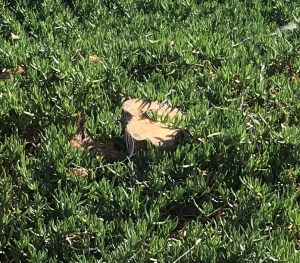
A few days ago I realized that we were missing a tree out in front of our balcony. Not some little sapling that could be easily overlooked, but a tall, mature pine tree that offered us shade during hot summer afternoons.

It was gone, only stumps remaining. I was stunned. After I furiously texted my family for answers (WHERE IS THE TREE???), my husband texted back that it hadn’t been there for weeks, and I hadn’t noticed its disappearance even though I’d been out on the balcony numerous times.

WHO TOOK MY TREE???

That was weird.

So, you might be wondering what that has to do with this post. Well, it’s easy to cruise through life not being fully aware of what’s going on around us…or in our bodies. Just like I was imaging the tree was still there (while also wondering why the plants on the balcony were drying up much faster this summer), many times I’m also not aware that I’m holding tension in my body.

Perfect example: I had trouble falling asleep a few nights ago. After lying awake in bed for some time, it struck me that I was clenching just about every part of my body. My jaws, neck, shoulders, back, glutes…everything had tightened into knots.

I had been concerned about preparations for a party that we were to attend the next day–and I was aware of that–but all of those worries had passed into my physical being, and that I wasn’t aware of. Good luck trying to get to sleep when you’re as rigid as a board!

So I started a little dance of releasing those muscles, then drifting back to my “normal” state of what can only be described as oblivious unattention, until I noticed that I was still not sleeping and–oh look!–everything was rigid again, so I released my muscles again…

Sometimes I find myself clenching just a teensy bit too tightly…

Yes, I went through the process of relaxing my face, my jaw, my neck…blah blah blah…if you’re a meditator, you know the drill. But a few minutes later, everything had clenched up again without me realizing it.

This went on for a while. When I get caught in a “loop of oblivion” like this, one of the first things I do is stop. Just halt the dance. And take a very deep breath.

That’s the first start in resetting things. Think of it as a much kindler, gentler version of someone slapping you in the face and yelling, “Get it together!”

And that’s when my broader awareness returned and I was able to get out of autopilot mode, acknowledging my mental tension and thereby the physical one. It was a perspective shift because I wasn’t just thinking, “Will we get everything done in time?”

I realized what was actually happening: “All this concern about getting everything done in time is keeping me up.”

That slight shift enabled me to pull back and out of myself, brush off the worries about things I could do nothing about at the moment, and drift off to sleep. But it also reminded me that I need to practice awareness more than I had been. In a sense, I was now more aware of the need to stay even more aware.

Yes, even after years of understanding the importance of mindfulness, I must return to square one and refocus. I don’t think I’ll ever not be restarting, especially not as long as trees keep disappearing from under my nose. But that’s okay…the journey is soothing and the practice itself is a destination. My main task is to not stop practicing.

“Detached”: Time-Out in Third-Person

As an addendum to my post where I wrote about using third-person language in meditation to help keep distance between yourself and your thoughts, I wanted to revisit this method for everyday life.

While in that post I alluded to using third-person descriptions on stressful days, it’s really worth emphasizing the utility of creating space throughout the day.

To sum up that post, I mentioned a mindfulness technique suggested by meditation teacher Jeff Warren in which when we find ourselves being swept away in thought, we describe what’s happening in “third-person” language and play the role of an observer.

Observe…make space…gain perspective.

But as I said in that post, why limit that to meditation sessions? In fact, you could argue that it is even more important to bring that type of gentle detachment to the things that ordinarily set us off in our daily lives, whether it be with family, at work or anywhere.

I would say that so much of my anxiety has stemmed from an inability to maintain perspective about the trigger. Noticing when I’m getting carried away and then describing the situation as something that is happening to another person — similar to the way a newcaster might report on an event in a calm, informative manner — helps loosen its grip on me.

The ability to step back and detach from the situation is kind of the name of the game in terms of reducing stress levels, isn’t it?

By narrating the circumstances around your stressors, we make space: “FranticShanti felt a little ill when she saw that the letter in her mailbox was from her landlady. She expected this to be about a rent increase…and she was right. Another $200 per month.”

Third-person language gives us the space we need to tackle our stressors without getting pulled into them.

That telling offers some space. It doesn’t change the situation, simply presents what’s happening in an unemotional manner. Then following up with some trouble-shooting helps soothe my agitation: “This will require a review of her finances, but as she calculated with last year’s rent increase, she can still absorb this additional amount. Things will probably be okay. She takes some deep breaths and feels into her hands and feet.”

Not only can you calmly describe the situation, but you can describe yourself engaging in self-soothing techniques as you work out your next steps.

It is quite effective in slowing down racing thoughts, particularly if you’re in a place where you can speak out load, as hearing yourself describing things can be even more grounding.

As with other simple grounding techniques, this may seem a little contrived or simplistic, but it might be just enough to bring you out of your head and into the here and now — cool, calm and collected.

Such a Fragile Life

I’m not going to post the post I’d written for today.

Something else came up and it really made me think about how we are teetering on a slim ledge between “everything’s ok” and “the end is near”.

Last Wednesday, I cut the inside of the roof of my mouth in the soft palate. Or maybe it was a burn? I didn’t pay much attention to it because this happens from time to time, it’s not that big a deal and it seems to heal quickly.

Except this time it didn’t. Granted, I ignored it a tad too much and wasn’t as careful as I should have been about what I was eating. I felt loose skin rub off around that area.

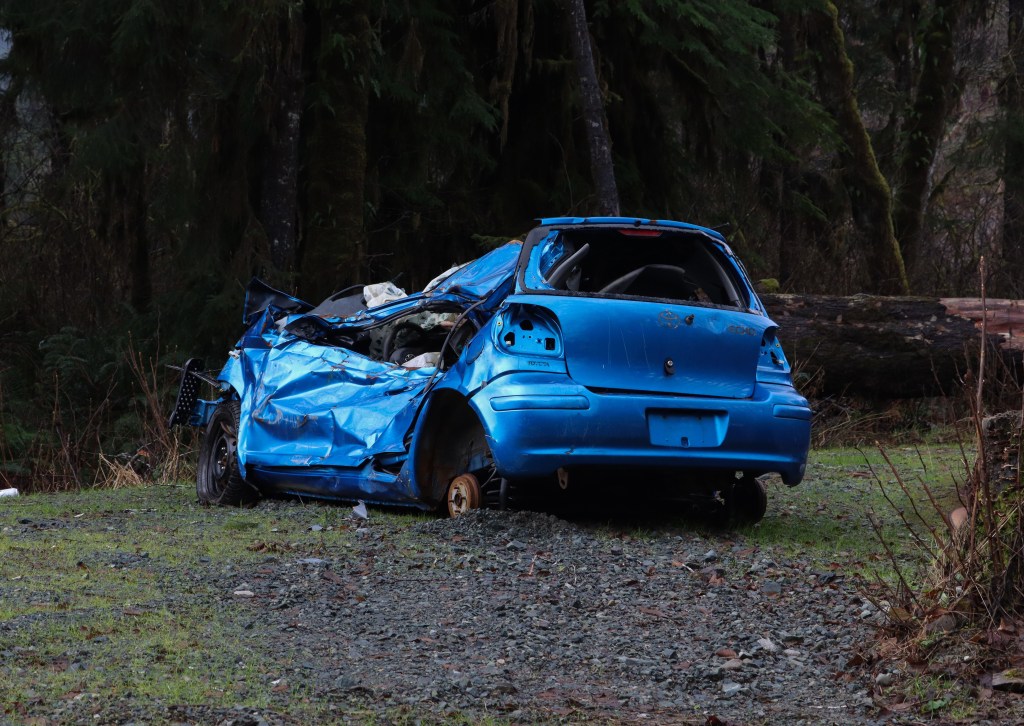
In a second, everything can change. [Note: this is not my car.]

It started hurting more and eating became more painful. At night, my mouth dries out even when I’m sleeping with closed lips. My tongue feels like sandpaper against my palate and because of where the wound was, my tongue was irritating it.

Friday, I realized that if I spoke a lot without a break, my tongue would abrade that sore area even more. Saturday, I told myself that I should be doing warm salt water rinses, but kept forgetting to do so.

Sunday, my head hurt upon waking although the area felt kind of better? But when I tried eating and drinking as normal (albeit avoiding that side of the mouth), the pain seemed worse.

Or maybe it was my perception of that pain? For me, it’s so hard to tell. I vacillate between ignoring a dangerous situation and imagining the possible worst; it feels like I could talk myself into/out of anything.

Before I was diagnosed with breast cancer, I had been aware of the lump in my breast for six months, but kept telling myself not to freak out and that it would probably go away on its own.

Maybe it’s really bad, maybe it’s not bad at all…I dunno…

Spoiler: it didn’t, and although the tumor was still Stage I-sized when I finally went to the doctor half a year later, it had already invaded the tissue outside the milk duct in which it originated. [To be fair to myself, there was more to that decision, which I won’t go into here. I wasn’t a total idiot about it.]

And then after completing all of my chemo rounds, one of my fingernails looked like it had a bubble underneath it…which I ignored for several days (actually, it became impossible to ignore because the pain was increasing), figuring I’d wait because it was probably just my nail coming off, which sometimes happens with chemo.

Except that it wasn’t. It was an infection. But instead of going to the ER immediately, I waited another night because it was the weekend and I figured I’d call my oncologist in the morning.

That night was worse than any night of my life. I barely slept because my hand was on fire and in the morning there was red line running down from my finger into my wrist.

At that point, I was probably closer to death than I had been throughout my entire cancer experience.

My point is, I was able to “reason away” any immediate responses and ignore striking red flags for fear of blowing things out of proportion. I didn’t want to look like a hypochondriac. It was hard for me to fathom that the situation was as dangerous as it ended up being.

Here for only who knows how long…

But our lives are really so fragile. After going through cancer, I realized that something could be going on inside my body, silently, that could change me irreparably — even kill me — within a very short period of time. And it could be happening right now.

What a tenuous hold we have on our existence here. How often do we forget that? And why aren’t we more careful with ourselves?

Such a short tenure on this Earth. Where do we put our energy? Too many spend so much time being horrible to each other and the world around us. And most of us don’t appreciate what we have until it’s too late. Some of us never appreciate it at all.

Take a deep breath, hug the ones you love (that should include yourself) and enjoy this moment.

I’m going to go rinse with salt water…

~~~~~~~~~~~~~~~~~~~~~~

A little update: I made a doctor’s appointment for early tomorrow morning, after which I realized — through diligent image googling — that I probably had a massive canker sore. It’s not likely to kill me but it’s doing a good job making me miserable.

And if I’m wrong and it’s something worse…then that’ll be next week’s post.

Creating Space with Third-Person Language

I’ve had some up-and-down weeks this year and have been working on making space in my head to lessen the impact of anxious thoughts.

I recently heard a wonderful suggestion by meditation teacher Jeff Warren (via his Daily Trip on the Calm app) about creating more mental room for yourself. He encourages describing what’s happening in the third person when thoughts come up during meditation.

Like many suggestions to help with mindfulness, this seems surprisingly simple, but so far I and everyone else I’ve recommended it to have found it to be very effective.

Making space is good for more than avoiding viruses…

It goes like this: I am sitting in meditation focused on my breath (or any other chosen anchor) and a thought pops into my mind. I say to myself, “There goes FranticShanti thinking about X topic again”.

Suddenly I feel a *whoosh* as I’m pulled back out of that scenario. And instead, I’m observing myself having that thought. Hearing myself describe the situation as a bystander has a calming effect and creates a sensation of safety and distance.

I’m still staying present and noticing what’s going on around me, but recognizing that this thought is happening to the person who is known as me — instead of allowing myself to get sucked into it, along with all the associated emotions — expands the amount of mental space I have.

It’s kind of like looking through a window at a situation instead of being there in the room with it. Not nearly as scary or immersive.

Looking at things through a protective buffer makes even scary situations less threatening.

Likewise, throughout the day, describing a stressful situation in third person helps us remember that there is always space around us that can serve as a buffer from unsettling thoughts. It can even help us handle anxiety-provoking situations as it also provides an opportunity to describe a potential ‘solution’, as if you were to give a friend some advice on how to deal with it.

Imagine saying, “[Your name] just realized that there’s a deadline they forgot about, so they’re reshuffling their schedule to accommodate the task.” That’s much more productive and grounding than screaming, “AAAAAAAAIIIIIIIEEEEE!!!” in your head.

So, I’ve started using this in everyday interactions when I feel myself getting swept away by worries. It’s been an effective way of bringing myself back into the present, to what is real and actually here, and it serves to reframe what is going on in my life.

This sort of method brings stressors down to a manageable level, allowing for perspective. And we can all use a bit of that.

Just One Day

If you had one day to live, how would you live it?

I pondered this question last week as I was trying to calm myself down before teaching my first official public yoga class, while also juggling emotions about certain events at home over which I had no control. Read that as: anxiety.

And in the midst of this all-too-familiar emotional turmoil I felt myself being consumed by my thoughts. And yet, if I had only one day left on this earth, I can’t image that I’d let myself get mired in everyday worries. My perspective would immediately snap into a megawide view of everything that exists in the world.

Never was I so aware of every palm tree…

It would be easier to see the beauty everywhere. Consider this: when I returned to Southern California after four bitterly cold years in a Northern climate, I noticed every.single.palm tree. I was so aware of everything that I had missed during my years away and appreciated every ray of warm sunshine. Other cares temporarily fell away as I was filled with gratitude to be back.

If I had only one day to enjoy the world, I hope that I wouldn’t spend it lamenting over little things. I would sit with my face to the sun, smell the breeze, take deep breaths and appreciate the here and now. Accepting that I had only 24 hours, I imagine that I wouldn’t be ruminating about something a co-worker said to me in passing or how I really should be cleaning the bathroom more often.

So interesting that it would take facing the end of my days to begin truly appreciating them.

So how about this (and this was what I meditated on last week in the midst of nervous feelings), why not imagine the feelings of that last precious day every single day? Stop and feel into my feet on the ground and the air in my lungs. There is so much wonder all around us and what a pity that it takes a drastic event to experience a perspective shift.

It feels so glorious to be alive.

~~~~~~~~~~~~~~~~~~~~~~

Don’t get me wrong, the shock of knowing that your end is near could be devastating. So if you’d like to use this idea as a meditation prompt, perhaps consider if you were on vacation in a paradise-like location and if your plane were leaving in a day, how would you enjoy your remaining time there?

Fighting My Way Out of a Paper Bag: An Analogy

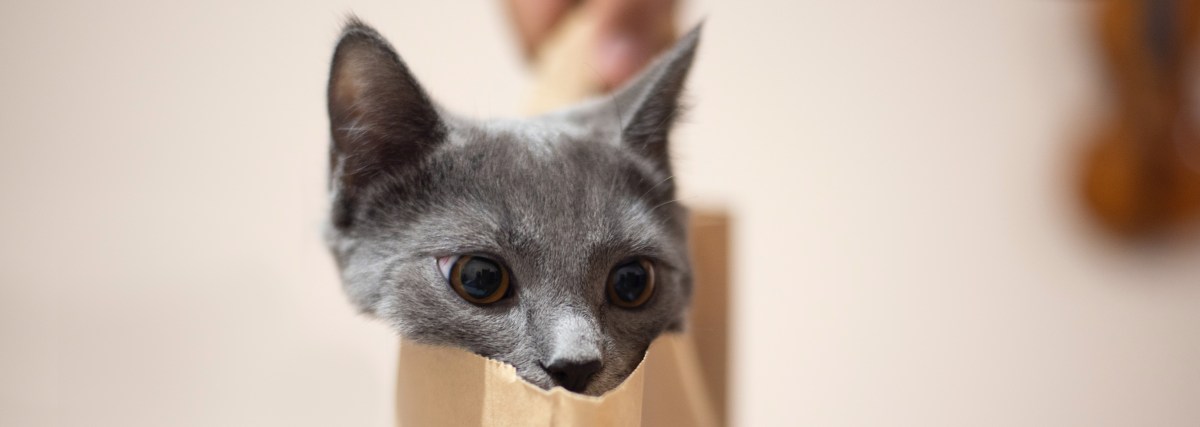
I wanted to share a little technique that I’ve been using to give myself perspective. It’s quite simple: I have a small brown paper bag pinned to the wall above my desk.

The bag is there to remind me that most of the things that are upsetting me or stressing me or just taking up headspace in the moment are transient issues that fit into that paper bag. The REST of my world remains outside that bag and unbothered by whatever is going on in there.

The trick for me is to not get sucked into that brown bag. When that happens, and it does, I’m suddenly whirling around with all the daily stressors and emergencies-of-now, and that’s all I see. My entire experience becomes those anxiety-provoking elements and my stress levels skyrocket.

When stress levels are high, it’s easy to get sucked into a space of high anxiety where you see only those stressors, forgetting that the rest of the world is outside.

It takes a lot more effort to fight my way back out of there than to stay outside in the first place.

At the same time, it’s so easy to follow all those stressors right into that bag. For me, that’s the path of least resistance, even a habit.

But when I lean back and take in the entire picture–the time-limited nature of what’s bothering me and the fact that in a couple of weeks it’ll be gone–my view broadens and I am reminded of what else is going around me right now, in this moment.

Right here, where I feel my feet planted on the ground. I smell the scent of lemon wafting up from my diffuser. I’m aware of sounds from the street below and sunshine coming in through my window.

Perspective. All of these things tumbling around inside the bag will pass. And, yes, perhaps more importantly, new ones will bubble up and take their place. I can’t stop that and I have to accept it. But I can take a deep breath and stay in the bright light of the day instead of darkness of that little bag.

Remember: You’re in the Driver’s Seat

Since we’re halfway through October – Breast Cancer Awareness Month – this is a good opportunity to remind everyone who’s had a cancer diagnosis that you’re still in control.

That might be very different from what you’re feeling. The whole thing with cancer is the sense that your life is out of control. Even your most faithful ally, your body, seems to be out to get you, growing a tumor behind your back.

Does it feel like someone else is controlling everything in your life?

That’s to say nothing of how your weekly schedule gets highjacked with oncological appointments, radiation treatments and days recovering from chemo. Then there’s the onslaught of new medical terms, the many pills that you’re supposed to take, even the practically unpronounceable chemotherapy drug names (what kind of a suffix is “-ib”???).

If anything, this might feel like the most out-of-control time of your life. When you’re slapped with a difficult treatment plan, you want it all to stop, but your oncologist tells you, “we won’t let you skip an infusion or stop taking your medication.”

That sense of being forced to do something (especially when it’s unpleasant) can open the floodgates to a deluge of anxiety on top of the fear and frustration that you might already feel about your cancer treatment. No one wants to feel like they have no say in a matter that affects them so deeply and personally.

This life is yours…and so are decisions about your cancer treatment.

But remember this: you always have a choice. Even though your medical team might not be phrasing it that way, you are still in control.

Perhaps this tiny acknowledgement may relax some of that perceived pressure and actually make it easier to continue. Your cancer treatment choices remain yours to make, so allow that realization to help you to step back, get perspective and weigh your options. When you demand space for yourself, you have room to think and it’s easier to act in your own best interest.

So, breathe. You’re still calling all the shots.

And, hey, medical team: maybe stop being so pushy and remind those cancer patients that they get to make the decisions about their treatment and their lives. It would go a long way towards helping your patients feel better about their treatment plans, like they’re part of the team instead of a prisoner of their situation.

Launching into Space: A Visualization for Creating Distance

In my continuing quest to find ways to calm myself and soften anxious thoughts, I often resort to visualizations. They are effective in putting the breaks on distressing thought patterns, creating space and encouraging a broader perspective.

My clinical counselor offered the visualization I’m introducing here. It works similarly to “thought container“, which is a visualization in which you create a container for your stressful thoughts, put them in there, lock the container up and place it on a shelf.

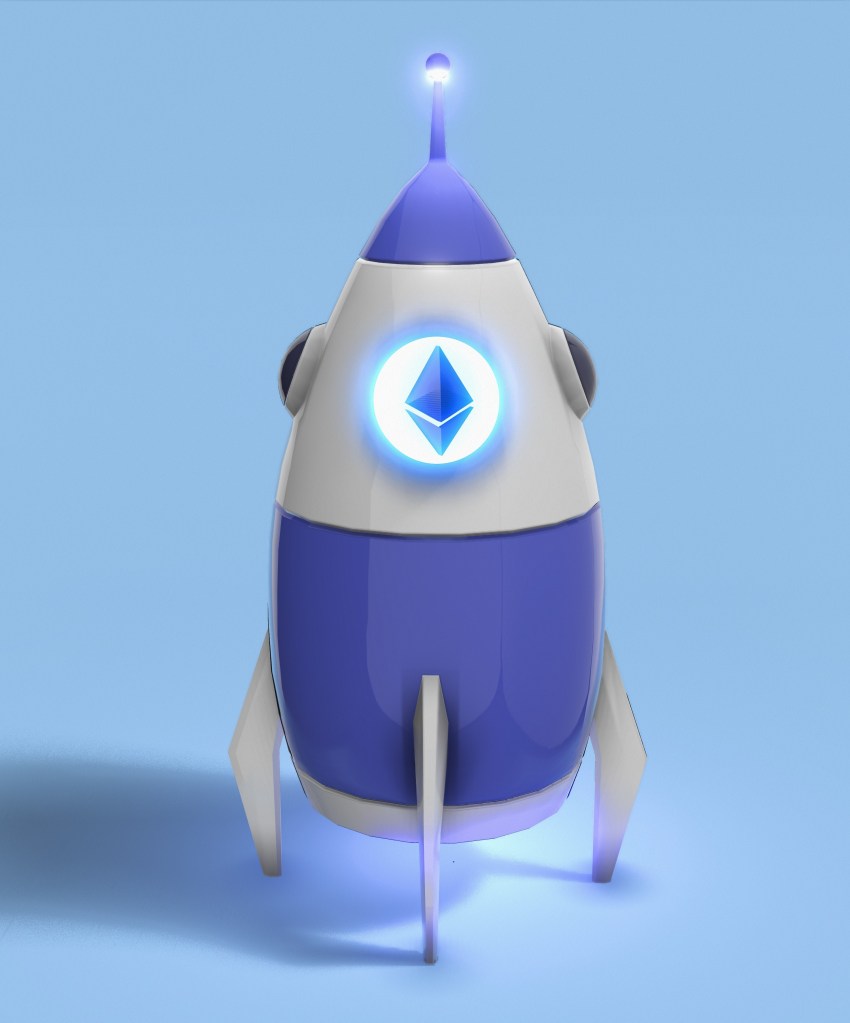
You decide how you’d like your rocket to look. Serious and foreboding or cute and shiny?

However, this one goes a step further. For this visualization, imagine a shiny space capsule on a launch pad, of whatever style and era that suits you. Gather up your troubling thoughts and send them towards the capsule, marching them up the ramp and in through the door. You can wave good-bye as the thoughts enter and settle into comfy seats, safely belted in.

Your thoughts are not “bad”. They simply elicit negative reactions in your body. And right now you want to loosen their grip on you.

When all those stressful images are inside, close the airlock/door. It’s up to you how that’s going to look. Perhaps it’s a high-tech electronic door that shuts and locks remotely so you don’t have to be close by. Or maybe it looks like a massive bulkhead, with a wheel that you yourself physically crank shut and secure so that you can be sure that nothing slips out.

When the capsule is secured. Start the countdown to launch. Or just press a button and shoot it off into space immediately. You have full control here.

But here’s the thing: this is a visualization to create distance, not to completely eradicate those thoughts. Because that’s impossible. They will not simply disappear. However, you can give yourself a little break from them, which is what this lauch is about.

Your stressors are still there, but it’s easier to learn to deal with them from down here. Give yourself some space.

Where does the capsule go? To the Moon. It will rocket off the Earth and land on our satellite neighbor. Point your telescope at the Moon at night and you’ll see the capsule, knowing that those thoughts are there but far enough away that they don’t torment you. You’re not trying to forget about them completely. Instead, practice dealing with them where they’re not an in-your-face threat.

In this way, you don’t repress or avoid, you give yourself breathing space and the opportunity for calm.

~~~~~~~~~~~~~~~~~~~~~~~~~~~~~~~~~

I admit that if you’ve been particularly beleaguered by stressors, it would be very tempting to treat the rocket like a clay pigeon and blast the whole thing to bits…and maybe there’s a great idea for a video game there. But truly, it may be easiest to handle them by releasing the thoughts into the ether.

Yes, they’ll be back. And so will the chance to take a deep breath and send them off again.

Cancer, “Why Me?” and Mustard Seeds: The Path to Acceptance

At some point in a cancer patient’s life, there are certain questions that tend to come up. The most likely one of these is why we were singled out to have such a serious calamity befall us.

I went through a long period of this. I mean, loooong. The early posts of this blog are filled with agonized questions about why cancer hit me even when, by all accounts, it shouldn’t have. I posted about not having risk factors and blah blah blah. I kept going around and around and around on this, stuck on a hamster wheel that wouldn’t stop.

I clung to the same ride, unhappy but not wanting to get off.

Allow me to stress: cancer is a serious illness. That is not to be taken lightly. Most of us, regardless of lifestyle, experience profound shock with our cancer diagnosis. It may seem that life is cruel and unfair (well, it is) and that we didn’t deserve to get cancer (well, we didn’t).

I struggled with anger and frustration for years. It’s both embarrassing and freeing to admit that.

Acceptance is a process. I thought I’d accepted my situation a couple of years ago, but in retrospect, I hadn’t. Some days I felt holy and zen-like, floating on my own little cloud, but it was a sham. I’d have glimpses of acceptance and then a wave of anger and resentment would wash over me and I’d be pissed off for another week.

I thought God hated me. A purportedly loving and merciful being allowed this to happen. It was hard to not think of cancer as a blow against my value as a person because of how I interpreted my situation.

It wasn’t until I stepped outside the confines of that type of thinking that I gained a different perspective. I posted about re-writing my life (basically, viewing the same experiences through a different, more positive lens) which provided a glimpse of another way to assess what had happened. And when I heard the retelling of an ancient Buddhist tale I finally understood what it meant.

Never seen mustard seeds? Here they are. Kisa, however, came up empty-handed.

What was that tale? It was “Kisa Gotami and the Mustard Seed”. In brief, Kisa Gotami’s young son dies and she is so distraught–not understanding why she would deserve such a painful experience–that she goes to the Buddha in hopes that he can bring the son back from the dead.

The Buddha agrees to revive her son if she can bring him mustard seeds from households where no one has died. Of course, she cannot because death touches all living creatures. She is comforted by the realization that her sorrow is shared and understood by everyone in the community and she finds acceptance of her loss .

Another way of looking at this is that we all suffer. For me, it’s a reminder that while a cancer diagnosis is life-threatening, there are few (if any) humans on this Earth who have not experienced some form of loss or grief at some point in their lives. Yes, some of us bear a far greater burden than others–grave inequities exist. But they also bring profound opportunities for growth.

And while I (and I expect most cancer patients/survivors) would have preferred to experience this personal growth through means other than cancer, being able to be here in this moment, having turned the corner, is one of the most beautiful gifts I could ever receive.

~~~~~~~~~~~~~~~~~~~~~~~~~~~~~~~

Two points need to be made here:

Point #1: Burdens are distributed unequally. Socioeconomic, racial and other disparities further tip the scales, making outcomes from a disease like cancer even worse. As a society, we haven’t come close to rebalancing this. Acceptance is easier for some than for others; no one has a right to preach to anyone else.

Point #2: It’s been over five years since my initial cancer diagnosis, and even longer that I’ve been worrying about it. As I mentioned above, it took a LONG time to get to this point of acceptance. Knowing this, I would never rush a new cancer patient to get here. Acceptance must come organically, and yes, sometimes never does. Cancer breaks hearts and no one experiences it in the same way. Be patient.