Advent 2025: Refusing Good Cheer

(Title image: Photo by Nathan Dumlao on Unsplash)

If you’re following my Advent experience, you’ll know that I had a teensy bit of trouble getting into the swing of things as far as reenergizing my mindfulness practice was concerned. But as I mentioned in my last post, the trick was regular and frequent (3x an hour) reminders to stop, take a breath and return to the present.

This strategy worked so well that these thrice-hourly breaks opened the door for gratitude to seep in. The extra-deep breath slowed everything down and made it easier to notice how “okay” things were around me.

That’s a reminder that I think we all need. So innocently, in casual conversations, I mentioned to friends how I found this Advent practice to be particularly uplifting because it allowed me some time and space, even if only a sliver, to realize there was so much good stuff going on.

And, ok, since I had such a positive experience with my deep breath and gratitude, I (gently) encouraged others to try it.

Psst! It’s that gratitude thing again.
(Photo by Thiago Rocha on Unsplash)

Well, just like unsolicited advice is wont to do, I didn’t get the greatest reaction to what I felt was simply finding light when things feel dark. Many people that I know have worries and hardships and things-to-be-angry-about, and sometimes, when difficulties abound…let’s just say that there’s not a lot of enthusiasm for making yourself feel better.

[Note: I am not suggesting “everything is 100% awesome” toxic positivity! This is about finding little things to appreciate.]

I think it’s very human to resist gratitude at times, especially when you feel you’ve been wronged and might believe that letting go of hurt and anger is like “letting the other side win”, so to speak.

But it is interesting to ponder how we can stubbornly cling to feelings of hurt and agitation if we convince ourselves that making ourselves miserable is how we further our cause. As if nurturing your discontent makes you more focused in fighting for your way. But I’m not convinced that this is beneficial; all it does is increase your stress levels, which introduces physical and emotional repercussions.

Instead, in allowing ourselves to soften and appreciate the good around us, we can lift our spirits. By calming ourselves and creating space, we think more clearly, respond more appropriately and ultimately are more productive.

There’s a lot think about this week—I am amazed at the difference that one little breath timer has made, and I’m so grateful for it.

Advent 2025: Expectation vs. Reality

(Title image: Photo by Dayne Topkin on Unsplash)

Or, “if at first you don’t succeed…”

I had planned out my Advent to incorporate a return to peace through mindfulness after a particularly difficult year. It wasn’t supposed to be overly involved or unattainable.

As a matter of fact, I figured it would be simple to slide back into staying more present, particularly since we are heading into one of my favorite times of the year. Hourly check-ins, more dedicated meditation time, a concerted effort at staying present all day long and avoiding anxious reactivity—oh, the blissful calm that would flood my life!

Hmmm, this did not go according to plan.
(Photo by Alan Rodriguez on Unsplash)

Instead, none of that happened. I was still running up until bedtime when I’d scramble to meditate. Continuously forgot to set an hourly reminder to return to mindfulness. Found myself being yanked around emotionally. And I didn’t even unpack any of the remaining moving boxes that are sitting around the new apartment.

An entire week of Advent was gone and I felt like I frittered it away. I was expecting to feel a bit more grounded by now, but I’m not even getting a decent night’s sleep.

So, I sat down to take a look at where I ran off the road. And truthfully, I was never even on one.

I stated my intention for Advent in last week’s post…and then aimlessly wandered off into the woods.

This is a good reminder that mindfulness doesn’t happen on its own, no matter how long you’ve been practicing it. By its very definition, it requires attention.

Funny, in order to practice mindfulness, you kinda need to be mindful about it.

This time, I had a brilliant idea: why not actually DO the thing that I planned to do?
(Photo: @FranticShanti)

Enough belly-aching. I brushed myself off, hiked up my pants and did the following: I set a timer. This could have been any sort of timer, but I used the Plum Village smartphone app’s “Bell of Mindfulness” timer, set to ring (well, “bong” actually) once every 20 minutes from 8am to 8am.

It’s a low, soulful tone that rumbles through whatever else I’m doing, while at the same time not sounding intrusive.

When I hear the “bong”, I take a deep breath and notice what that feels like. Quite often, that breath turns into a deep sigh and I realize that my breath before was shallower. So I take a few more deep breaths.

That type of diaphragmatic breathing, into the belly, activates the parasympathetic (“rest and digest”) nervous system, and thereby the relaxation response.

Then I go back to my work until I hear the next “bong” and this process repeats.

By mid-afternoon, I found that I was much more aware of my breath and was breathing deeper during the interval between the bonging. And that was just the first day.

Ahhhh, this was a much better plan than my previous “no-plan” plan. Yes, I was bummed that I hadn’t implemented an actual plan a week ago, but here I am now and it’s working well.

The best part is, you can’t really “fall behind” on being mindful. Unlike where I am with my Advent cheese calendar…

Advent 2025: Turning Inward

(Title image: Photo by Waldemar Brandt on Unsplash)

Sunday, November 30 marks the start of Advent. While this is a time period associated with a Christian tradition that encompasses the four Sundays and intervening weeks preceding Christmas—and is considered a season of preparation—I believe that it’s a season that can be appreciated by all, regardless of religious beliefs.

Certainly, stores are very willing to cash in on Advent calendars, some of which are extremely elaborate and quite expensive. That’s a sad reminder that where there’s a tradition, there’s a way to make money off of it.

Yep, there’s an Advent calendar for that.
(Photo: @FranticShanti)

There are more mindful ways of treating this season. While I celebrate Advent every year, as I’ve gotten older, the way that I focus on this time of the year has changed.

It used to be common to “give something up” for Advent. As a child, it was generally sweets, so that when the Christmas holiday came around, we would enjoy desserts all the more.

However, there are more meaningful ways to spend the 3+ weeks prior to end-of-year holidays.

Instead of “giving up” something that I might simply go back to once the holidays hit, I use Advent to help me form new and important habits, or to reinforce practices that I might have allowed to slip.

This year year has been a challenging one for me. I found myself pushing meditation back to evening time, right before bed…and I’d often fall asleep before I was done.

With so many changes and stressors in my life, I have spent too much of the day running, exhausted and not paying attention to what my body and mind are feeling. So for this Advent season, I’ve decided to reacquaint the rest of my day with staying mindful and present.

We can all use a reminder to remain mindful throughout our day.
(Photo by Jakob Owens on Unsplash)

Therefore, my focus has turned inward. I am paying more attention to sensations in my hands and feet, starting with the physical aspects of making my morning coffee (decaf) and tea (matcha). I have set a reminder on my phone to check in at least once an hour to see where my body is in space, no matter where I am. When I do so, I consider how long it’s been since I stretched my limbs or had a drink of water. In doing so, I anchor myself in the present moment and remember that difficulties ebb and wane like the tides.

Yes, I still have a lot of take care of, and the last month brought some painful changes that I have to fully deal with. And I can’t truly “slow down” at work the way some might suggest. But mindfulness works with my schedule.

Staying present means that I can keep pace with my responsibilities instead of allow them to run roughshod over me, since it helps me avoid a sense of overwhelm. Yes, that requires discipline as my tendency is to allow myself to get swept up in the torrent of anxiety and busyness that is my life. But I remain conscious of the fact that I get done what I can, and that is enough.

For anyone who feels that this isn’t “religious” enough, I disagree. I find that experiencing the present moment may be one of the most sacred things that you can do. You honor the nature of the season by being a participant in it, not simply a passive passenger in the whoosh of activities that mindlessly steamroll us through the holidays in the New Year.

I wish you a joyous Advent season!

Breast Cancer: Know When to Say When

(Title image: Photo by Marius Serban on Unsplash)

This is going to be short because I’m on the cusp of moving my family to a new apartment…and that’s going to take more work now that one of our cars is finally having its damage repaired.

So this is a gentle reminder to slow down and look around once in a while. Life’s obligations can push us like a bulldozer and we might not notice that we’re worn out until something happens that forces us into a mini-vacation.

Something, perhaps, like chemotherapy.

Who needs some love? You do.
(Photo by Mayur Gala on Unsplash)

And if you need a cancer diagnosis (or a broken bone or the flu or…) to give you a break from the pressures of work and family, then I think we can all agree that your mental health needs more love than you’ve been giving it.

Yes, easier said than done. But there are little breaks you can take. A 10-minute body scan meditation or guided breathing practice. A matcha tea break where you focus on the movements of your hands as they prepare your cup. Staring out the window and counting trees/people/cars.

It doesn’t have to be a pricey spa day. You can have a spa inside your head with a phone app and a set of headphones. You just need to care enough about yourself to allow this.

Believe me, I care about you and I don’t even know you. You are the whole reason why I started this blog and why I keep it going, even eight years after my diagnosis. I hope it helps you remember that you are worth being cared for. ❤

Remembering to Do Nothing

(Title image: Photo by Ken Cheung on Unsplash)

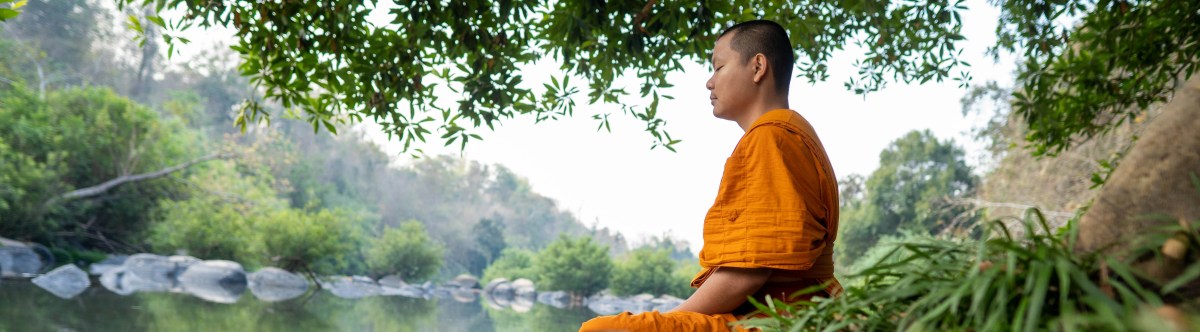
I remembered something last night about mindfulness meditation that I’d realized I had somehow forgotten.

I don’t have to do anything when I meditate.

Not strain, nor grip, nor furrow my brow.

The only thing I need to do when I meditate is to exist, and to be aware that I am existing.

I was thankful that I remembered this because I’d been struggling with the concept of sitting and being present for the past few months. I had slipped into the belief that I needed to work at it.

But last night I asked myself, “What would it feel like if I didn’t try so hard? Or at all?”

Simply exist.
(Photo by Jeppe H. Jensen on Unsplash)

If you’ve practiced mindfulness meditation, you know that the guidance is simple and straightforward.

It goes something like this:

“Sit comfortably with a tall spine, alert but relaxed. Take a few deep breaths, stretching upward on the inhale and settling down on the exhale. Soften the muscles of your body starting from your face, moving down the neck, shoulders, torso, arms to the fingers, hips and seat, down the legs to your toes. Then allow your awareness to settle onto a focal point like the breath, tingling in the hands, the hum of an appliance or sounds of traffic in the distance.”

Does that sound familiar? There are of course numerous variations of this. You select an anchor to come back to whenever you realize that you’ve drifted away from the present moment and into the thoughts in your head.

And that’s it. It’s quite basic and yet we find ways to complicate it and make it a strenuous exercise.

You don’t necessarily have to sit, you can lie down or even stand if that works for you (or you’re practicing while queuing up for something).

There are no rules for mindfulness meditation. Yes, there are principles and/or steps to take, but no real way to do it “wrong”. The only thing that would be considered “incorrect meditation” would be going to meditate, but then spending all that time doing something else.

Last night, when I remembered that my meditation didn’t have to be a certain way and all I needed to do was simply to be and to be aware of myself being, it felt like a release. The last year has been difficult and there have been tough things that I have been required to do.

This felt like a gift, that I could rest and think, “Oh, yeah…I don’t have to do anything.” And I was so grateful for that moment.

Why do I make these things so much harder than they should be?

Try a Little Tenderness

(Title image: Photo by Alin Luna on Unsplash)

This is a bit of a departure from the usual posts. But I was thinking about how my emotions get pushed and pulled during the course of the day…

Suffice it to say, we live in contentious times where people are compelled to take sides. That leads to an environment where we think badly of each other which, in turn, adds an underlying level of stress to our daily lives.

Perhaps you feel it like an annoying irritation, maybe a quickening of the heartbeat or an increase in your blood pressure. Heat under the collar. And suddenly you are imagining what a jerk the other person is.

All that based upon a single interaction. This is an unfair snapshot judgment of people and brings with it the kind of stress I don’t need.

So this is what I do. And I love the instant effect that it has on me.

When I find myself getting annoyed with someone—whether it’s a rude customer service representative, someone interviewed on the news with an extreme political view, even a person who cuts me off in traffic—instead of muttering something hateful under my breath, I pause and think.

What might be going on in someone’s life to cause them to act or think this way?

If you had the kind of day they did, you’d be in a bad mood too.
(Photo by Alex Greenberg on Unsplash)

Did the customer service rep receive bad news at home followed by an interaction with an aggressive customer?

Has the person with distinctly different world views had a frightening personal experience that affected them deeply?

Is the driver who cut me off in a hurry to help someone with a medical condition?

You can say that, no, all those people are just malicious, egotistical jerks. But in reality, they are far more than the two-dimensional view that we have of them. Their lives are as full as ours and they share the same struggles and dreams that we do.

I sit with these thoughts. The “empathy” muscle is an important one to exercise.

For some, this is hard work to do. When we feel slighted, it can be difficult to give someone the benefit of the doubt. And when political tensions are high, some people may feel that being emotionally generous towards someone with views they find odious is like “giving in” to them, letting them “win”.

But you are not losing anything by practicing empathy.

Why do I bring this up? Because this helps give us peace. It makes us less reactive and helps us see things more clearly. It provides space for our brains to function in. It relieves anxiety.

In the end, it makes the world a better place. And we all need that.

~~~~~~~~~~~~~~~~~~~~

Anger is exhausting. Hate bleeds around the edges. Welcome peace back into your life regardless of whether or not the other person deserves it.

Oncology Yoga: It’s Not Just for Relieving Stress

(Title image: Photo by Raghu Nath on Unsplash)

Last week I finished up my 75-hour yoga4cancer (y4c) Oncology Yoga teacher training (wow, that’s a mouthful!).

It was about five months of some pretty hefty lessons that spanned the cancer experience, the science of cancer, the science of yoga, the y4c methodology and lots of practice, introspection and critique. And more!

What drew me to this particular specialized yoga training was that it uses yoga as an exercise modality for true mind-body fitness, not simply to help practitioners deal with the stress and anxiety related to a cancer diagnosis, but to tap into the physical benefits of exercise in helping manage treatment-related side effects and prevent cancer recurrence.

Oncology Yoga offers a safe and effective yoga practice keeping the needs of those touched by cancer paramount.
(Photo by Junseong Lee on Unsplash)

I recently spoke with someone who represented another cancer yoga certification. She felt that cancer patients and survivors were not looking for yoga that emphasizes exercise, they wanted the stress-relieving, nurturing aspects of a yoga practice.

And there is some truth to that. I myself made the most use of the Pranayama (breath work) and Dhyana (meditation) aspects of Patanjali’s Eight Limbs of Yoga, of which Asanas (poses) are only one limb, when I was going through my own cancer experience.

But on top of that, I continued to row and lift weights throughout treatment, exercising as soon as I got over the worst days of my chemo. Same thing throughout radiation treatment. Exercise made me feel strong and “normal”, and gave me a sense of control when everything else in my life seemed out of control. This was something *I* could do for myself. It gave me agency over my life.

There is a growing body of evidence that staying physically active before, during and after cancer treatment is incredibly beneficial for survival. The evidence-based y4c Oncology Yoga methodology offers sequences that are appropriate for cancer patients and survivors, taking into account cancer-related side effects. There is ample propping to support the needs of practitioners, while still allowing them to participate in many asanas that you would find in a yoga class that isn’t cancer-oriented, taking care to avoid those that could be harmful.

The y4c methodology incorporates generous propping to allow cancer survivors to participate fully in class while keeping themselves safe.
(Photo by Samantha Sheppard on Unsplash)

No doubt, the stress-relieving aspect of yoga is immensely critical also, at a time when a cancer patient/survivor may be dealing with existential fears. There are studies being run on the impact of mindfulness and meditation as they relate to cancer and results of this research are very promising on a variety of levels.

Oncology Yoga combines the two, mind and body. Breath connects with movement in this specialized vinyasa class. The sequences help with lymphatic drainage, bone and muscle building, relieving constipation, regaining range of motion and more, all the while slowing the breath, calming the mind, lifting the spirit, bringing in a sense of grounding and self-efficacy.

I am very excited about the y4c training and am working on integrating Oncology Yoga principles into classes that I offer. My intent is to use my franticshanti.com platform to post sequences and meditations in the future. Watch this space!

Hovering Over Possibilities

(Title image: Photo by Victor Rutka on Unsplash)

Since I’ve been writing about non-attachment, I wanted to follow up with a description of what it feels like for me.

As an example, I’m currently waiting on medical results for a family member. And I can promise you, there is a particular outcome that I really want. It’s the one where everything works out without any problems and you can look back at what transpired and wonder what you were even worried about. All good!

But that’s a best-case scenario, and wish as we might, it’s not a guaranteed outcome, even when we assume it’s a guaranteed outcome. When reality comes out worse, the let-down can feel intense. I’ve experienced that too many times.

Gently, gently. Allowing thoughts to come and go as they please without holding on or pushing away.
(Photo by Dmitry on Unsplash)

So I’ve taken to holding my thoughts lightly, like you would hold a little bird in your hand. Not grasping them, just keeping my hand open and allowing them to flit in and out of it.

It feels like I’m hovering over the possibilities of what might transpire. I am aware of the potential outcomes, but not holding on to them. I don’t push them out of my mind completely. Rather, I fuzz my view of them as if with a softened gaze.

Then time stops. And coming down out of what is swirling in my head, I turn my awareness to what is going on right now. Especially what my feet are doing. How my soles feel pressed against the floor. Focusing on the sensations.

Always, when the possibilities get too intense and clear, I return to my feet on the floor. If my recalcitrant mind continues to swirl, I focus on my hands and pour my senses into what they are doing: tying shoelaces, making coffee, doing the dishes—noticing the movements and pressure, watching my fingers. Once I’m anchored in my body, my awareness reaches out again.

I know those thoughts, hopes and fears are there. I don’t try to repress them. I don’t try to analyze them. They simply come and go, and I return to the calmness of where I am.

Admittedly, some days it’s much harder than on other days. “Letting go” is a practice, not a destination. But even brief moments of respite are welcome.

~~~~~~~~~~~~~~~~~~~~

There’s also something to be said about the underlying fear of waiting for responses, the uncertainty that weighs so heavily upon us. I’ve always felt that one of the toughest times of my cancer experience was when I was waiting for scan results, biopsy results, even doctors’ appointments. That was the real test of “hovering” and it was one that I did not handle well at the time. But thankfully, relief came in the form of a treatment plan, a.k.a. a certainty of sorts. No, it didn’t make everything better, but it gave me a path to focus on.

How’s the Weather in There?

(Title image: Photo by NOAA on Unsplash)

Here’s a fun little way of observing your internal state, thanks to a mindfulness practice that I saw on a Calm app tool.

It illustrates the transience of emotions, driving home the notion that nothing is permanent and even the worst of days will come to an end.

It goes like this: consider how you are feeling in this moment. Simply observe without trying to change anything. Are you feeling content and peaceful? Stressed-out? Unmotivated?

Then try to describe those same emotions in terms of the weather. If you are feeling great, it’s sunny without a cloud in the sky. If you feel anxious, perhaps there are dark clouds overhead. Angry? Thunder and lightning abound. Tired and groggy translates to being in the midst of thick fog.

Feeling amazing? It’s a clear day with a warm, gentle breeze.
(Photo by Vlad ION on Unsplash)

Looking at your emotions in this way enables you make some space between the intensity of what you’re feeling and the present moment, so that you don’t get completely sucked in and consumed by negativity. This is a particularly important part of mindfulness and something to practice on a daily basis.

But creating an internal weather report also provides a different perspective on the all-encompassing nature of some emotions. It can be difficult to see the break in the clouds when you are in the midst of a stormy night. But eventually the storm passes, as do different emotions.

This gives us hope that no matter how oppressive things feel right now, they will pass and better times will appear on the horizon.

Give this simple practice a try and I wish you brighter days ahead.

Energy Modulation through Breath and Imagery

(Title image: Photo by Alexander Krivitskiy on Unsplash)

As my family takes some time to grieve the passing of a family member, I have been using pranayama (breathwork) to help with the broad range of emotions that such situations elicit.

I came across an excellent meditation by teacher Jeff Warren on the Calm app in which he pairs visualization with breathwork as a way of modifying your energy states.

Need to spark yourself? Or cool the sparks? There’s a breathing practice for that.
(Photo by Jez Timms on Unsplash)

It works with the natural ability of inhales to quicken your heartrate and bring up your energy levels and exhales to calm the nervous system and elicit the relaxation response. This is my version of what he instructed (his actual guidance may have been a little different):

To increase energy:
Breath ~ Extended, intentional inhales fully filling the lungs followed by shorter, sharper, quicker exhales. Five such breaths followed by natural breath, then bringing attention to your current state. Important: stop if becoming lightheaded or short of breath. This should increase your energy, not overwhelm or wear you out!
Visualization ~ Imagine sparks of energy rising up from the earth and entering your body, into the fingertips and soles of the feet, coalescing in your core, then shooting upwards towards your head and skyward from your crown. Imagine the sensation of energy coursing through your entire body, and a sense of lightness and bouyancy, as if your body is charged and driving itself.

To come into calm:
Breath ~ Four-count inhales through the nose breathing into the diaphragm followed by 6-count extended exhales through pursed lips. Five of these breaths then moving into your natural breath, noticing the stillness. If available to you, extend the exhales to eight counts. This helps elicit the “relaxation response”.
Visualization ~ Imagine heat and sparks draining down from your body, into the earth. Feel a coolness washing over you, notice a solid foundation beneath you. There is a slowing and steadiness, a pleasant grounding and a clearing of the ears. Notice the sensations of your surroundings in the present moment.

Sometimes a mind-body break is in order.
(Photo by Victoria Tronina on Unsplash)

Quite honestly, I rarely need to increase my energy levels due the the ability of my parasympathetic nervous system to get activated quickly. If I am feeling fatigued, I don’t do breathwork to rev myself up. More likely, I will exercise…or I’ll respect the fact that my body is telling me that rest is needed and will respond accordingly.

On the other hand, I make frequent and liberal use of calming breaths and find that my ability to handle difficult emotions has improved because of it. Of course, I still struggle from time to time, but that is why this type of work is called a “practice.”

I hope these help you too!