How’s the Weather in There?

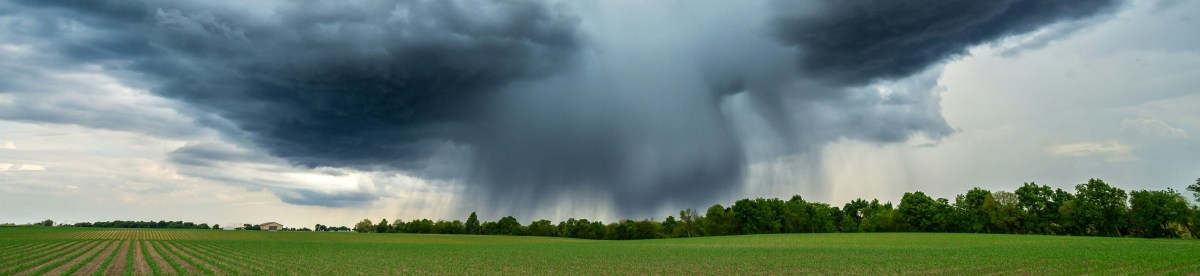
(Title image: Photo by NOAA on Unsplash)

Here’s a fun little way of observing your internal state, thanks to a mindfulness practice that I saw on a Calm app tool.

It illustrates the transience of emotions, driving home the notion that nothing is permanent and even the worst of days will come to an end.

It goes like this: consider how you are feeling in this moment. Simply observe without trying to change anything. Are you feeling content and peaceful? Stressed-out? Unmotivated?

Then try to describe those same emotions in terms of the weather. If you are feeling great, it’s sunny without a cloud in the sky. If you feel anxious, perhaps there are dark clouds overhead. Angry? Thunder and lightning abound. Tired and groggy translates to being in the midst of thick fog.

Feeling amazing? It’s a clear day with a warm, gentle breeze.
(Photo by Vlad ION on Unsplash)

Looking at your emotions in this way enables you make some space between the intensity of what you’re feeling and the present moment, so that you don’t get completely sucked in and consumed by negativity. This is a particularly important part of mindfulness and something to practice on a daily basis.

But creating an internal weather report also provides a different perspective on the all-encompassing nature of some emotions. It can be difficult to see the break in the clouds when you are in the midst of a stormy night. But eventually the storm passes, as do different emotions.

This gives us hope that no matter how oppressive things feel right now, they will pass and better times will appear on the horizon.

Give this simple practice a try and I wish you brighter days ahead.

Staying Present in Discomfort: Being Here When You’d Rather Not

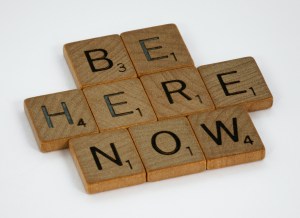
Title image: Photo by Tolga Ulkan on Unsplash

~~~~~~
Thank you everyone for your patience during this time of my father’s passing from cancer and dementia. I have appreciated the quiet visit to my childhood home, supporting my mother and being comforted by close friends and relatives.
~~~~~~

There are times that the present moment is an uncomfortable place to be in.

That’s when things are not going well and you want the current situation to be over so that you can move past it and onto healing. But one could argue that this is exactly the time you need to sink even deeper into the present moment.

And even more important to get more granular and still. To observe what is going on even more closely. To understand the important of this very point in time, how it will never come again in the same way. And even in this discomfort there is something to learn, something to lean into, something to accept.

I felt this strain while my father was still in in-home hospice, declining at a pace that was both quick and slow depending on what you’re focusing on. It evoked an axiety in me: wanting to hold on to him and save him–but knowing that this was an impossibility. The tug of time is unrelenting, taking everything with it like a glacier or a tsunami that continues onward no matter what is in its way.

But this is also an opportunity to remember that the impermanence of life does not take away from the joy and beauty of it. Dropping down into what is happening right now, taking a front seat on top of that glacier/tsunami, and allowing everything to be here is the way to appreciate all of this.

So while I would rather that the things that were happening not be happening, I couldn’t stop them. I sat here trying to understand my feelings and allowing gratitude for my father’s long life to remain in the forefront. There was peace in knowing that he was living his last days at home, in familiar surroundings with my mother there.

I could have made all sorts of stories up about what he was feeling or thinking, but the reality is that I didn’t know. So I didn’t pretend and instead noticed the sounds around me, the feeling of the air on my skin and the knowledge that my father’s imminent passing unscored all the many things about him and my own life that I have to be thankful for.

~~~~~~~~~~~~~~~~~~~~~~~

It’s easier to ignore reality and think about other things, but that doesn’t help us deal with them.

Mindfulness 101: You’ve Got Options!

It’s been a long work day so this post has a simple message: you have options in practicing mindfulness meditation. And then for good measure, at the end I toss in an article about other meditation practices you can try.

In a nutshell, mindfulness meditation is the process of noticing your thoughts (“awareness”) and observing them without judgment (“acceptance”). It often involves an anchor, such as the sensation of the breath or a constant sound in the background, that the meditator focuses on for the purpose of grounding and staying present. The anchor is what we return to after we realize we’ve been pulled away by thoughts.

The anchor to presence is what we return to after we find ourselves carried away by thoughts.

This way we explore the concept of impermanence as it relates to life and our own situation. Everything is in flux. Negative experiences pass, positive experiences pass and we move through it all. The more we practice, the more we are able to notice the ups and downs without being as affected by them.

In the same way, I consider mindfulness meditation to be fluid without rigid rules. For example, you do *not* have to be seated in Lotus pose with your hand on your heart. You do not need a special cushion, outfit or music. There are no specific words to recite or candles to light. However, you are welcome to do all of these.

Lying down, seated on a chair, leaning against a tree or riding a crowded bus holding on to a strap are all viable positions. Eyes open, closed or half-shut. Paying attention to bird songs, a light rain, a washing machine or cars whooshing down the road, all good. In the early morning, during a work break, when the kids are napping or when you’re settling in for the evening are all ideal opportunites.

You don’t have to be in a specific location in order to practice mindfulness meditation, although admittedly some places come with a better view than others.

Even carelessly sprawled out on your bed, noticing how it feels to do that, no matter how dorky you think you look. Mindfulness doesn’t judge.

All of these are good conditions under which to practice mindfulness meditation and that is one of the things that I feel makes it an ideal meditation starting point.

As you continue to practice, you develop a tool with which to nurture a sense of peace and calm down a busy mind. It is a tool that you can take with you no matter where you go, like a little gift for yourself that you keep in your pocket, bringing it out whenever there is a need.

And since we’re talking “meditation options”…

I’ll finish up by noting that just as there are different ways to engage in mindfulness meditation, there are a number of other meditations that you can try if you want some variety.

For that, I’m going to punt you over to an article on the website Healthline, written by Holly J. Bertone, CNHP, PMP, and Crystal Hoshaw, entitled, “Which Type of Meditation Is Right for Me?” I really liked the information mentioned here, including the nine types of meditation that they describe:

  • mindfulness meditation
  • spiritual meditation
  • focused meditation
  • movement meditation
  • mantra meditation
  • transcendental meditation
  • progressive relaxation
  • loving-kindness meditation
  • visualization meditation

See the Healthline article for more information.

I do not believe that the above is an exhaustive list by any means, although it is a wonderful place to start if you want to explore other meditative practices. While I feel that mindfulness is one of the most accessible meditations for beginners, if you feel inspired to try something new, there are many options to choose from.

The only thing you “should” do is begin. 🙂

Hang On, Honeybee!

A few days ago, I took my daughter to the train station, about a 7-mile drive.

As we pulled out of our driveway, I noticed a honeybee on my side window, close to the middle of the pane. It was a foggy morning so the little girl must have lost her way.

In the past, when I start accelerating and there’s a bug on the glass, the insect takes off (or the wind “encourages” her to take off). But not this little bee. She hung on tightly.

Part of the drive was along a stretch of road with a faster speed limit, reaching over 50mph. I wanted to get my daughter to the train early, so I couldn’t drive much slower. At the same time, I was getting very invested in the bee, still hunkered down and holding on.

My daughter suggested that we take the freeway for part of the trip, but I protested, concerned that the bee’s grip wouldn’t be able to handle the acceleration.

Through faster and slower speeds, my tiny hitchhiker clung hard. Her little wings seemed to be fluttering, battered by the wind, but she was not letting go.

She made it all the way to the train station, holding on like crazy! My tenacious little girl! Then took the opportunity to clean herself up. ❤

And then we finally arrived at the station. My daughter made her train with time to spare and I sat in the lot nearby waiting for it to depart. In the meantime, my little bee had started to preen herself, cleaning up her antennae and straightening the hairs on her legs.

I was so impressed with her ability to hold on!

By this time, the fog had lifted but it was still very cloudy–not proper bee-navigation weather. And I was concerned that if the bee took off from the station, 7 miles from home, she’d never find her way back. I needed to return her to familiar lands!

When we returned home, she sat very still. I held my breath.

Now I was 100% into this. And apparently, so was my little bee. Because in the process of grooming she had edged closer to the frame of the car window. Smart girl, because that meant less air resistance! As I started driving, she expertly tucked her wings together, widened her stance, and…if a bee could give a thumbs up, I’m sure that’s what she’d have done.

On the way home, I drove a little more slowly, trying not to go over 40mph and a lot slower whenever possible. She looked determined to make it.

But when I pulled into our driveway and parked the car, she and I both sat motionless. C’mon, I thought, you’ve made it this far. You’re home. You’ve got to be okay!

Looking more closely it seemed like one of her legs was moving, perhaps twitching a bit. But nothing more.

I wasn’t going anywhere until I knew all was well. At that point, clouds were starting to thin and the outline of the sun becoming visible through them. THE SUN! Coming to the rescue!

My little heroine recovered and immediately took to smoothing her antennae, as if 14-mile journeys were an everyday thing. ❤

Eventually, my little bee started straightening her hairs again, then grooming quite vigorously. The air was warming, the sun was coming out, and my darling girl was getting herself together after taking a battering on the road.

Finally, the sun was bright enough to cast shadows, increasing in strength by the minute. And my bee, stalwart little travel companion, walked up the glass onto the door frame to finish warming up.

One last view of her as the sun was coming out. She was vigorously brushing through her hairs and antennae. Ready to return to her sisters and charm them with stories of where she’d been, what she’d seen and how she’d held on. ❤

I returned to my apartment feeling uplifted by the tenacity of that little creature. She had a purpose and was committed to it. What a beautiful analogy for holding on when we think we can’t go any further, when no one would expect us to keep going. Even then, we manage. Because no matter how bad things seem, the sun will come out and we will find our way home.

Fighting My Way Out of a Paper Bag: An Analogy

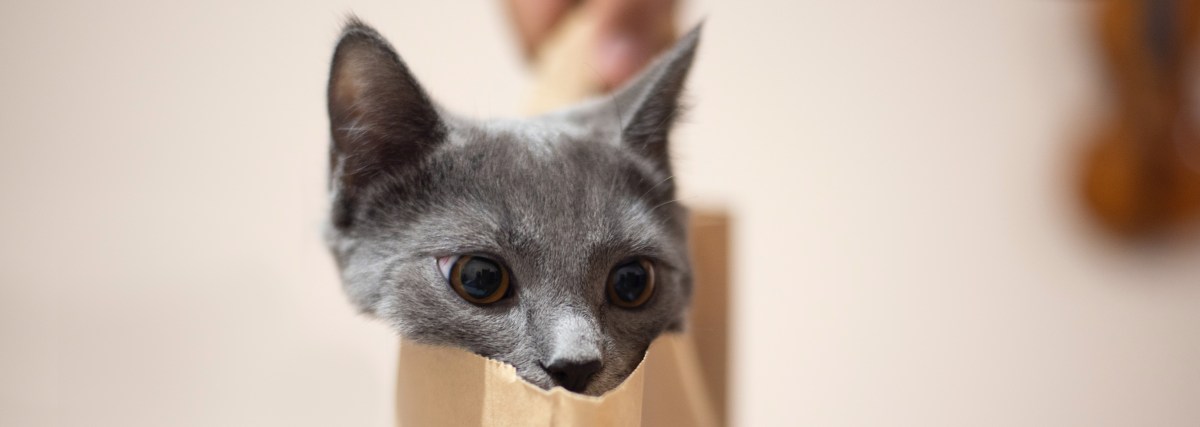
I wanted to share a little technique that I’ve been using to give myself perspective. It’s quite simple: I have a small brown paper bag pinned to the wall above my desk.

The bag is there to remind me that most of the things that are upsetting me or stressing me or just taking up headspace in the moment are transient issues that fit into that paper bag. The REST of my world remains outside that bag and unbothered by whatever is going on in there.

The trick for me is to not get sucked into that brown bag. When that happens, and it does, I’m suddenly whirling around with all the daily stressors and emergencies-of-now, and that’s all I see. My entire experience becomes those anxiety-provoking elements and my stress levels skyrocket.

When stress levels are high, it’s easy to get sucked into a space of high anxiety where you see only those stressors, forgetting that the rest of the world is outside.

It takes a lot more effort to fight my way back out of there than to stay outside in the first place.

At the same time, it’s so easy to follow all those stressors right into that bag. For me, that’s the path of least resistance, even a habit.

But when I lean back and take in the entire picture–the time-limited nature of what’s bothering me and the fact that in a couple of weeks it’ll be gone–my view broadens and I am reminded of what else is going around me right now, in this moment.

Right here, where I feel my feet planted on the ground. I smell the scent of lemon wafting up from my diffuser. I’m aware of sounds from the street below and sunshine coming in through my window.

Perspective. All of these things tumbling around inside the bag will pass. And, yes, perhaps more importantly, new ones will bubble up and take their place. I can’t stop that and I have to accept it. But I can take a deep breath and stay in the bright light of the day instead of darkness of that little bag.

Presence by Touch: A Visualization

Staying present is key for not letting your thoughts take you on a wild ride.

Maintaining presence, however, takes practice so I’m always on the lookout for new ways to imagine the state of being in the “now”. Some of these are simpler exercises than others, but the upside of a more “complex” technique means that all my mental energy remains on staying present instead of, say, worrying whether I embarrassed myself at a party three nights ago.

The following is a visualization and mental exercise rolled into one:

What if only what you’re touching exists and everything else falls into nothingness?

Seated, close the eyes. Breathing deeply, allow everything that is around you to fall away in your mind, leaving only those points where your body makes contact with the surface beneath you.

Imagine that the soles of your feet sit on top of sole-shaped pieces of support material. Your buttocks and thighs contact like-shaped material, as does any place your back rests against your chair. If you touch your fingers to the side of your chair seat, small oval-shaped pieces of material appear where your fingers make contact.

Everything else disappears against a background of light (or darkness, if that is more calming). The chair and floor and even the room you are in? Gone. The point of this visualization is maintaining focus on only what you are physically experiencing at any given moment.

It is a strange sensation to imagine, floating through the ether but still feeling support from the slightest bits of material that touch you. This is the ultimate in being 100% present and turns the concept of object permanence on its head.

You don’t feel it? It doesn’t exist.

Our brain wants to fill in the parts that we can’t see because the brain has formulated an image of what is out there. However, in this practice we try to do the opposite–let go of what we do not have immediate physical evidence for.

This is a good analogy for dealing with thoughts that our brain fabricates based on the expectations that it has. What if we let go of them, if only for a short while, and simply sit in the stillness of what is happening right now?

No More Sticky Fingers!

Running late with this post as I’m furiously cleaning our apartment in advance of the Christmas holiday!

I noticed a few mornings ago that when I made a fist and then straightened the fingers of my right hand, the joints didn’t stick at all.

It took over 300 days…but I’m happy to celebrate the end of the side effects!

While this may seem like an odd thing to celebrate, it marked a milestone for me. This was the last side effect attributable to letrozole that I had been experiencing, and it was finally gone. Letrozole is an aromatase inhibitor that blocks production of estrogen and is used as endocrine therapy for breast cancer patients who have estrogen receptor-positive tumors. I’d been on it for about 14 months after switching to it from tamoxifen.

For reference, as of today, I am at Day 307 since stopping the medication, so it’s taken quite a while for this joint side effect to subside. Yes, there are other things still plaguing me, such as memory issues, low libido and difficulty maintaining muscle (even with strength training), but those are more difficult to separate out from the garden-variety effects of menopause.

The sticking fingers began in August 2020 (about 8 months after starting letrozole) and were getting progressively worse. By March 2021, when I called it quits with the endocrine therapy, a number of finger joints were sticking and painful, particularly in the morning.

At that point, I was having trouble getting up off the floor, as I was having issues with joints throughout my entire body. The medication was affecting various aspects of my life, making it difficult to exercise and, as I like to put it, lowering the quality of my existence. Following discussions with my oncologist, we both agreed that my risk of breast cancer recurrence was low enough to stop the meds.

It’s been quite a journey to get to the point where I am now.

Shaking this last side effect of letrozole reminded me how far on this cancer journey I’ve traveled. There have been so many ups and downs, friends made and friends lost to the disease, that it was easy to forget that nothing in life is permanent. Time passes and situations change, sometimes for better, sometimes for worse.

The concept of “CANCER” used to terrify me, and after I was diagnosed, I hit a low so deep I thought I’d never be able to crawl out of it.

Gradually, as my experience with the disease played itself out, I came to accept the uncertainty about the future. As the end of 2021 draws near, I inch closer to the 5-year survival mark. The fact that I can straighten my fingers in the morning without any pain or sticking is a perfect example of how while I cannot know what the future will bring, I can deal with the “now”. And this “now” is not so bad.

~~~~~~~~~~~~~~~~~~~~~~~~~~~~~

Best wishes to everyone for a very Joyous Holiday Season and much promise for 2022!

The Snow Globe: A Mindful Visualization

Since it’s winter in the US and we’re starting to get the first blankets of white around the country, I thought it’d be fun to use snow as a visualization.

While it doesn’t snow where I live now, I grew up in New England and remember the peacefulness of calm, snowy nights when I stood out on the second floor balcony in the midst of snowfall, listening to the gentle “pat-pat” of snowflakes as they landed on the ground.

When we’re at our busiest, life can feel like a blur.

I draw on those memories when I think of snow globes. Yes, they’ve often been associated with chintzy souvenirs, but there’s really something quite magical about that little underwater world.

They are also quite beautiful representations of the process of settling down.

Shake a snow globe and watch the glitter spin furiously about, swirling like mad with little sense of a pattern. Those are the thoughts of a busy pre-occupied mind, overwhelmed with responsibities and expectations. For some of us this may be what our current life is like. Or perhaps we’re going through a particularly stressful time and feel as though we’re unable to slow down and catch our breath.

Perhaps we ourselves are adding to the chaos by unintentionally shaking things even more, allowing our monkey minds to run with stressful thoughts. With so much “noise” we can’t see through the water. Everything is a blur. We have a hard time collecting our thoughts.

When we stop shaking the globe and put it down…it will continue to swirl for a while and we may feel like we’re getting “nowhere” by trying to relax. But if we trust in ourselves, trust in impermanence–nothing lasts forever–slowly things will start calming down. The agitation will diminish.

Just as the “snow” will begin to settle down, so too will our busy thoughts and our busy lives. The glitter will float through the water more slowly, and the view will become clearer. A few more breaths, a few more moments of patience. The currents inside the globe lose momentum and the snow will gently blanket the bottom until, eventually, everything is still.

No sign of the tempest that once took place. Just silent peace and quiet breaths.

Until the moment the globe is shaken again.

~~~~~~~~~~~~~~~~~~~~~~~~~~~~~~~~~

The trick, of course, is to learn how to find peace as the glitter water swirls madly about. Once we can do that, the storm may rage, but we will enjoy bliss.

After My Last Oncologist Visit, I Fell Off A Cliff

I had an oncologist appointment last Thursday that marked four years of being done with chemo for breast cancer.

During my previous onc visit in February, I had been a mess: depressed, stressed and miserable with joint pain and a feeling that my endocrine therapy was taking away from me more than it was giving me. At that point, he let me stop the aromatase inhibitors.

Now, half a year later, I felt so different. My blood pressure was 118/83, much lower than the 130s and 140s systolic numbers I was hitting after stepping into the exam room on previous visits. I was peaceful and more hopeful.

We discussed all sorts of “survivor” things. The joint pain had mostly resolved itself and was no longer a hindrance to exercise, one of the things most important to me. My libido could have been higher and my short-term memory was often lacking, but he felt that could also be attributable to working and sleeping in the same room for the past year and a half, coupled with menopause.

Finally, my doctor noted that it was time for another chest MRI. Not the most comfortable of scans, but I’d done it once, I could do it again.

I would love a pet, even if it means having to clean fur out of my keyboard.

It was not until around noon of the next day that I suddenly plunged off a cliff. I was talking to my daughter and randomly mentioned my willingness to look after any pets she might have in the future when she’s living on her own, were she to travel for work, because where we lived now we weren’t allowed to have pets…

…and I was slammed by a massive wave of sadness and regret.

My thoughts zoomed back to my first chest MRI, stripped to the waist, lying on my belly, arms stretched over my head, frightened and painfully vulnerable. All my focus was on breast cancer and what other horrible realities the MRI would reveal. All I could think of was surviving my upcoming treatments.

That MRI meant that my life was on hold. There would be no progress in my career for the foreseeable future, and no chance of moving into a bigger place, one that would allow us to get a cat (note: I’m a dog person, but I would have been happy with a cat!). Animals have always been a part of my life, but our apartment rules prohibited them. I yearned for the chance to have a pet again. It seemed such a small thing to ask, but even that wasn’t available to us now.

That brief discussion with my daughter underscored a profound feeling of loss and despair. Cancer had robbed me of a lot of things in my life that others took for granted.

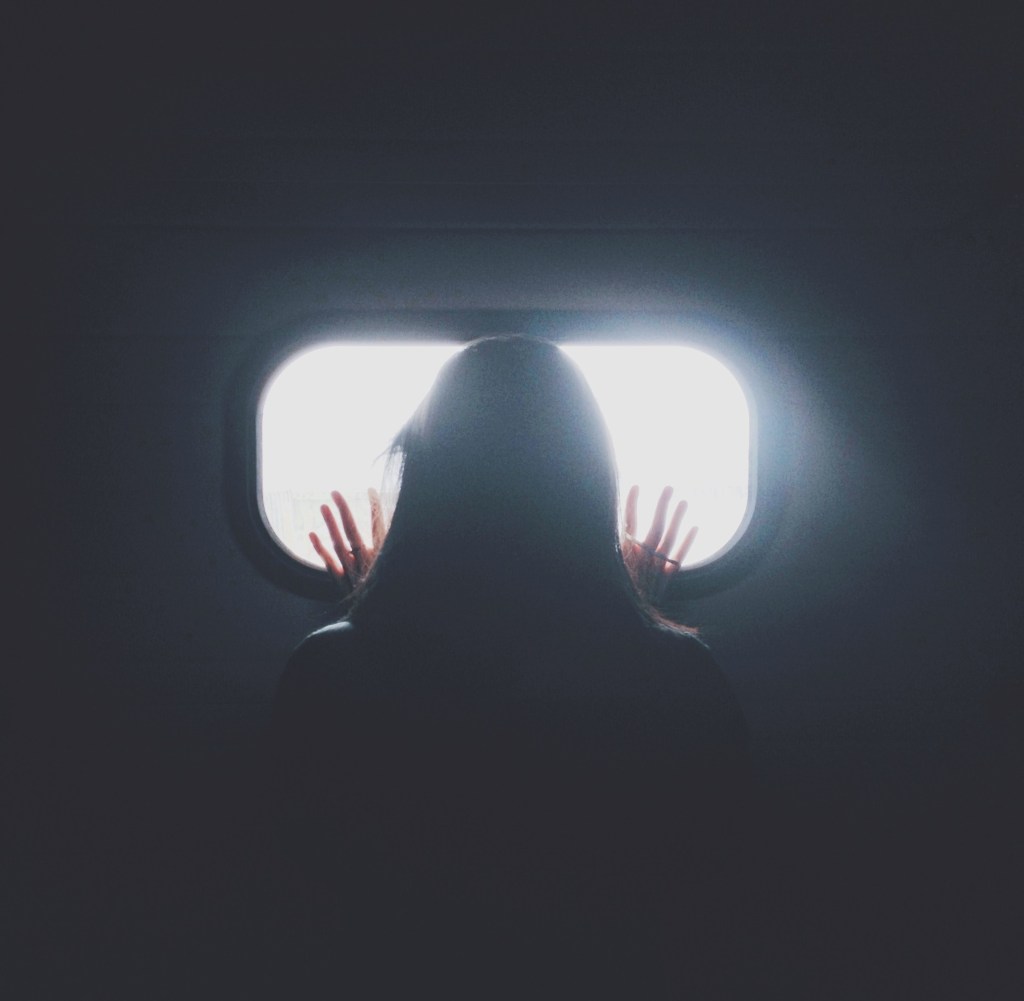
This was my view before I realized I didn’t have to sit there.

And as I sat there in the depths, I forgot that time does not stand still, things are always changing, nothing is permanent…and I have inside me everything I need to climb out.

Curiously enough, I had recently attended a talk on managing anxiety aimed at cancer patients and survivors. The counselor who presented the information was herself a breast cancer survivor and she told us a story of doing a follow-up chest MRI, which she found very stressful. Afterwards, she was asked by one of the cancer nurses what sorts of mental tools she had used while in the MRI tube to calm herself down. At that point, she realized that even though she taught these techniques to her patients on a daily basis, she had completely forgotten to use them herself!

I had been sitting in the darkness for a few minutes when I remembered her story. Most importantly, I remembered that I didn’t have to feel this way, that it served no practical purpose and that I wanted be happier. The only reason I felt like this was because these emotional plunges had been a habit of mine.

So I twisted a rope out of all those grounding techiques that I’ve posted about and pulled myself up.

~~~~~~~~~~~~~~~~~~~~~~~~~~

True, I still didn’t have a cat. But I was able to take a deep breath and realize that at least I had a future. And that future might contain a cat.

Sleep Peacefully, Sweet Aira

“[A pet is] a little tuft of consciousness that circles around a person like a moon around a planet, and completes their energy field making them more whole.”

Dr. Rachel Naomi Remen quoting a spiritual teacher, as related by Dr. Nancy Novak on the Nancy’s List email newsletter, November 1, 2020.

There are few reminders of impermanence as poignant as life transitions. I experienced this over the weekend as we said goodbye to our beautiful Siberian husky, Aira. I knew the time was coming and that it was right to let her go, just a month shy of her 15th birthday.

Retirement: living the good life in her “golden years”, in her own room. Lots of naps and loads of love.

Aira’s transition was gentle. My mother held and stroked her as she lay on her favorite rug in her bedroom in my parents house. She fell asleep quietly with the first injection, and after the I.V. drug was administered, passed into peace, surrounded by the people she knew and loved in familiar surroundings.

She now lies beneath the window outside her room, one of her favorite places in the yard to sit during the winter, as it was almost guaranteed to have a snow mound. She loved that. As the days became warmer, that mound was one of the last to melt.

In her younger days, bright with husky energy.

I remember the silkiness of the fur on the backs of her ears. And the unbridled joy she exhibited when she would get loose and start tearing around the neighborhood. And how she would roll around in freshly fallen snow in ecstasy. And how wonderful she smelled after rooting around in a rosemary bush. And how we would find a dog treat hidden in a shoe, under a pillow or anywhere else she thought was a safe spot that she could return to later for a snack.

Everything changes. Aira matured and calmed down. She followed us from Chicago to California, then due to stifling housing constraints in the Golden State, was welcomed by my parents in Connecticut, where she got a beautiful yard, lots of snow and unbelievable amounts of attention. Years after their three kids had left, my parents and Aira formed their own little family unit and went almost everywhere together.

My father’s health faltered and Aira, too, started showing her age. The last year brought on the most striking changes. Aira sprouted a fast-growing mast cell tumor on her shoulder. By the time it was removed, the mass weighed almost five pounds, and her prognosis was guarded. That was in April of this year.

Some weeks ago, my mother noticed a hard spot in Aira’s belly. As with the previous tumor, this one grew lightning fast. And unlike the tumor on her shoulder, this one was among her organs and taking a toll on her. This one was not coming out.

I would lie away at night, wondering how this would end. Had I known how blissfully she would transition out of this world, my heart would not have felt so heavy.

Newly arrived at my parents home in New England, looking forward to the cooler air and, after years of California warmth, SNOW.

~~~~~~~~~~~~~~~~~~~~~~~~~~~~

I am Roman Catholic. When I was young, I remember a humble missionary priest speaking of how anyone could baptize someone with the sign of the cross and holy water. So, logically, I pilfered some holy water that my grandmother kept on a shelf and baptized our dog at the time, a good-natured chihuahua named Rudis.

Several decades later, when Aira was part of our family, I was already an adult (so I have no excuses), and as I was holding a small vial of holy water brought back from mass, Aira came to sniff at it. I thought, “Why not?” and baptized her.

I’m sure that I’ll be punished for this brazen transgression. And you know what? That’s okay. I hope that I’m banished to the place where animals go after they die, because I’d rather give up my spot in Heaven to spend eternity with my dogs.