Rappeling Down through the Strata: A Grounding Exercise

(Title image: Photo by Outward Bound Costa Rica on Unsplash)

It’s been a very weird few weeks for me. My stress levels have been climbing, and while I can kind of, sort of point to certain anxiety-provoking events that might be responsible…there’s nothing truly significant that would elicit this type of response.

Regardless, I’ve been spending more time in the “higher strata” of myself, and I don’t mean this in a good sense. Another way of putting it is that I’m all up in my own head, bouncing around and being pummeled by all sorts of thoughts, expectations, fears, unreasonable beliefs and the like.

Oooo, there I am, stuck in my own head.
(Photo by Taylor Brandon on Unsplash)

Usually I know when this is happening, but this time I was too preoccupied with the worries of those around me that I didn’t notice myself drift up and stake a camp in the swamp of my mind.

Even my meditations tended to get stuck up there. Time to rappel down.

I get myself down this way: first by acknowledging the mess that I’m dealing with in my head, the rainstorm whipping up swirling thoughts. Not all my concerns are unreasonable, but they are pointless to get hung up on in this moment.

Next, I focus on the noise on the street outside (there is always noise on our street, but the longer I listen, the greater chance that I’ll hear a bird or other wildlife sounds). I bring my attention out to the expanse around me—getting out of the cramped space between my ears.

That’s a nice break. But I can’t ignore myself forever. So I feel into the sensations on my face: the feeling of the air (hot or cool), noticing the weight of my glasses on my nose, perhaps an itch on the scalp or cheek.
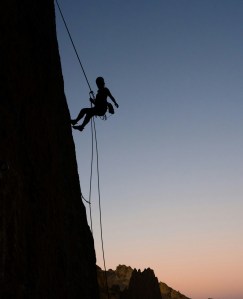
And here I go, rappeling down to a place where I can ground myself and return to the present moment.
(Photo by Ben Kitching on Unsplash)

Then I drop down to my neck and shoulders, giving them a roll as I go, and then towards my chest. Here I pause and bring focus to my breathing. Usually that results in an automatic slowing of the breath, as I notice my ribs expand and contract.

But after a brief stay I rappel down and out more quickly, into my hands and feet. Noticing how my hands feel on whatever surface they lie. And how my feet feel against the earth.

I imagine that my feet are part of the bedrock, joining the rest of the Earth’s crust. Connected and solid, forming a stable base.

And from down here, I look back up to where those clouds around my head were bringing furious rain, and they seem so far away. I’m peaceful and unruffled here on the ground. Down here is what’s really happening in the present, without being affected by the past and future. And what’s happening is just what’s happening, neither good nor bad.

Taking a deep breath, maybe a yawn, I stretch my body out the way I do when waking from a long sleep, enjoying the slight shiver of the muscles.

And then, on to the rest of my day a little bit calmer.

Putting Pen to Paper for the Ultimate Mental Vacation

When I wrote my last post — a visualization and body scan for helping calm yourself and prepare for sleep — I knew I would enjoy immersing myself in describing a space that felt safe to me.

But what I didn’t expect was the effect that the actual process of writing the visualization would have on me.

As I continued describing the “healing bath” scene, searching for reference pictures and letting my imagination create a restful place, I realized that I myself was feeling more and more relaxed — breathing slower and experiencing a sense of placid grounding.

This got me thinking.

Beautiful journals may be appealing to some. But making use of technology in searching for images and recording your words provides you with the most flexibility for documenting ideas and bringing in visual aids…without risking writer’s cramp.

While there is no doubt that listening to a guided meditation can be very soothing, sitting down and writing one yourself takes you to another level. This is an exercise in finding what the most salient relaxing cues are for you personally.

Immersing yourself in locating photographs of environments that you consider your ideal for a retreat getaway helps you isolate those elements that exemplify what relaxation and grounding mean to you. I highly recommend sites like Pinterest for this; if you’re not interested creating an account there, just start out with Google image searches and see where they lead.

And when you start writing, turning your focus towards describing the scene that you’re imagining means that you are truly “in it” in your mind. As you write about sights, smells, sounds, textures and other sensations, and hold them in your imagination, you sink deeper into them than you might even in a meditation where someone else is describing the surroundings to you.

It’s your writing and therefore everything you select is your choice, suited to your tastes. There’s no need to use complicated language, simply tune in to your mind’s eye and write what you see. Because this is for you alone, there’s no requirement that it be a complete representation of your safe space and no need to judge the quality of your mental picture. There only has to be enough imagery there to trigger the wonderful feeling of peace and calm that you have when you’re there. However, the more descriptive you can be, the better you can lock in the imagery.

Not a scribe? An oral description of your special place can be just as immersive as writing it out. And if you feel so inclined, recording it for yourself can help you preserve the images to return to at a later time.

Finally, each one of us has different experiences with putting words on a page. If you feel that being required to write out your thoughts will be frustrating, then find a quiet space where you have privacy, close your eyes and audibly describe your safe space, perhaps even record it. Imagine that you’re moving through it and explain to yourself what’s there and how it makes you feel.

Whether you choose to write or speak, the reason this can be such a powerful tool is because you focus on something that feels so relaxing. This may turn out to be the ultimate grounding meditation for you.

Give it a try and see where it takes you.

When I Can’t Keep Images Out of My Head

When I first started my mindfulness meditation journey, I was taught to use the breath as the point of focus. It is a reliable anchor, always there to return to when you inevitably drift off into thought. It is a stable grounding force that keeps us present.

But there are times when it’s hard to focus on the breath. Perhaps when the mind is especially busy. At those times, I switch to other bodily sensations, such as tingling in my hands or pressure from contact with the surface that I’m sitting on. I wrote a post about moving between two points of focus to help the mind maintain concentration without wandering off. That helps too.

Some days my monkey mind is particularly loud and attention-seeking.

And sometimes my chattering “monkey mind” calls for a switch to an auditory focal point such as gentle music, singing bowls, nature sounds or even simply street noises. Those will keep me present as long as I don’t fall into the trap of making stories about the sounds.

But some days are extra tough.

I tend to avoid meditating with my eyes open. Doing so only reminds me that I need to clean my desk or vacuum the carpet (“guilt-guilt, blame-blame”). However, I am a very visual person with a vivid imagination, and opening my eyes immediately grounds me if my thoughts get too pervasive when my eyes are closed.

Sometimes a thought will trigger an uncomfortable and anxiety-provoking feeling simply because a seemingly-innocuous scene has been associated with a disturbing event. The scene flashes before my eyes andbefore I know it I’m down a rabbit hole. Monkey mind is activated.

While staying with bodily sensations would be preferable, some days there are too many opportunities for my monkey mind to run away with me. It can get exhausting and counterproductive to “dodge” these visuals. Yes, we are “supposed to” let the thoughts pass by us without getting caught up in them. But there are days when they agitate me too much and throw me off track.

Tree!

So I’m cutting myself some slack and turning the “problem” into the solution. On those difficult days, I focus on an image of my own choosing. Something that I can visualize clearly so that it keeps the monkey occupied while at the same time keeping me away from troubling scenes. You could argue that I’m “avoiding” the thoughts. But I see this differently–I’m giving myself a little break from them.

What works best for me? An image unencumbered by potent associations–this is different for each person. A tree, for example, works for me. It might be a thin white birch tree or as majestic and meaningful as Yggdrasil. The tree itself doesn’t matter as much as that I choose it according to what suits me and what soothes me. I can focus on its rough bark, veiny leaves and thick canopy and the sensations that these things evoke to keep away from creating stories.

And if this results in greater concentration, I have the option of hopping back to the breath. Or not.

This might not seem like an earth-shattering revelation. There are relatively popular mountain and lake meditations, so this concept is not new. But with all the emphasis on feeling into your breath in an effort to calm the thinking mind, sometimes it’s simpler to not worry about the “shoulds” and instead see what your own self needs to help it let go and settle into peace.

Breathing into Limbs: A Grounding Visualization

I’m perpetually on the lookout for different ways to ground myself.

When things get tough and I feel my anxiety rising, I’ve gotten better at pausing and pulling a grounding technique out of my “mental tool bag” before the feelings become too intense.

One that I came up with recently works quiet well, especially if you can take a quick break and find a quiet corner.

As I breathe, I visualize my breath inflating my limbs, filling them with relaxation.

The idea behind this one is that you take a few deep breaths to help slow your breathing down, and then start imagining that your breath is going down into one arm, inflating it.

I’ve visualized it in two ways. The first being breathing into the arm as if it were a balloon that inflates in all directions, all the way down to the fingertips, until it’s completely full. I imagine it glowing from within.

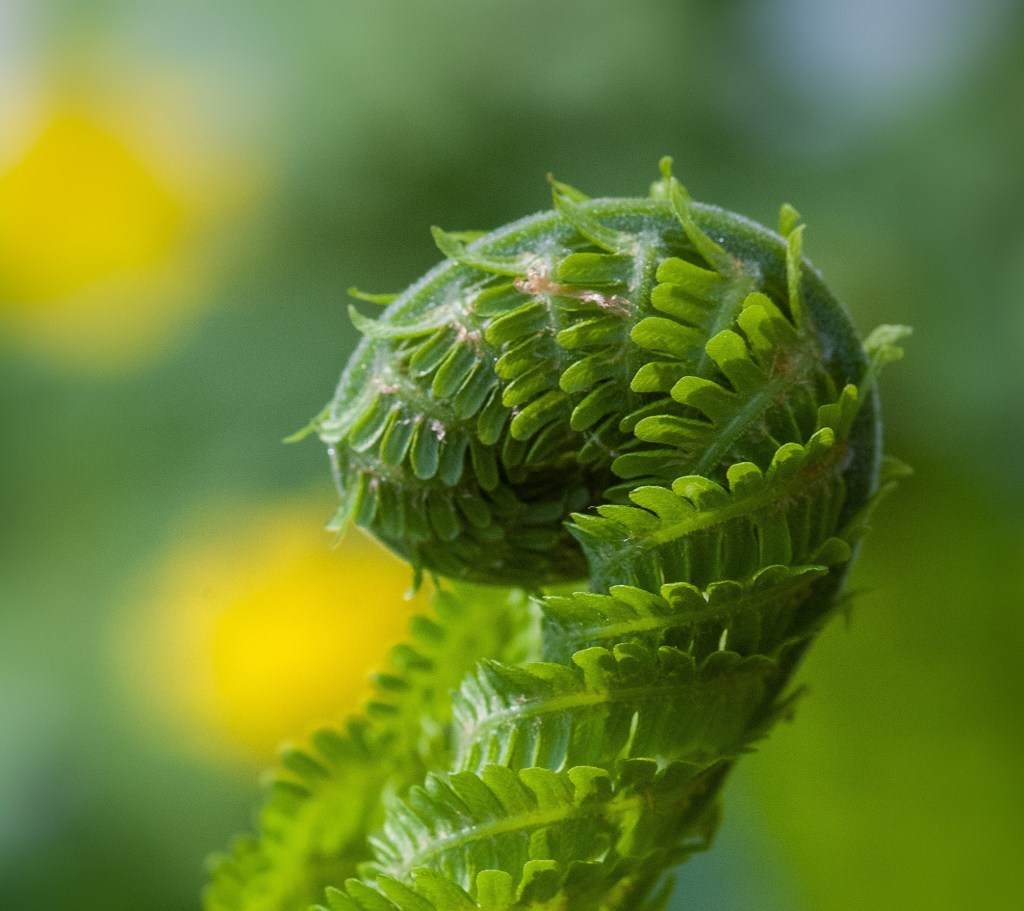
The second entails imagining the breath filling the arm in the way that a fern leaf unfolds. The expansion starts at the shoulder, then upper arm, elbow, lower arm, wrist, hand and finally fingers. As the arm fills with the inhalation, it brightens. This visualization is best when your breathing has already slowed considerably, as it may take a longer breath for your entire limb to sense the serial expansion down to your fingertips.

If my breathing has slowed enough, I imagine the breath entering my limb gradually, just like a fern leaf gently unfurls, part by part.

Either way, I wiggle my fingers at the end of the in-breath, and then as I exhale, the fingers fall still again and the breath exits my arm as it arrived.

Then I do the same with my other arm, followed by one leg and then the other.

On days that I’m really rushed, I might only have time for one limb, particularly if I’m sitting at my desk at work. But that’s okay. Even that short bit is better than letting stress run away with me. That little pause may be exactly what I need.

If this “extremity inflation” sounds too complicated in the heat of the moment, I urge you to try it when you’re lying in bed with your eyes closed. Then you can focus on the sensation of expansion and get familiar with it, so that when you need to call upon it in a stressful situation, you’ll have an easier time bringing up that imagery.

My limbs glow as the breath brings brightness into them.

What I particularly like about this visualization is that it’s a touch more complex, and therefore requires more attention from you. The inhalation all the way to the wiggling fingers makes it more difficult to be thinking about other things. So while it may demand more, I feel that it also delivers more, since everything else decreases to a dull roar in the background as you visualize the air rush in and inflate your body.

And of course, there are different variations of this that you can play with, such as expanding your entire body.

If you are able to practice with this, or even duck out to the bathroom for a few moments of eyes-closed peace, I think you’ll find it a lovely way to give your nervous system a needed break.

Sanctuary: Creating A Safe Space

There have been times when things in my life have gotten intense and I feel the walls closing in on me (cancer, I’m looking at you). Those are the times that I need to back off and give myself space to breathe. Being a very visual person, one of the methods I’ve employed is finding an image and associating a calm mind with it.

This becomes my safe space. Whether you prefer to call it your “calm space”, “sacred space” or even the oft-ridiculed “happy place”, the idea is the same. Find the visual elements that you find soothing and comforting — perhaps a place in nature, a place from your past where you felt safe, even a fantasy land that you create for the purpose. Real, imaginary, familiar or visited only in your mind, it doesn’t matter. What matters is that it resonates with you.

When I did this most recently, in the preparatory phase for Eye Movement Desensitization and Reprocessing (EMDR) therapy sessions to help with anxiety that I’d never been able to shake, I made a new Pinterest account to collect images.

I highly recommend this for anyone going through stressful times. We all need a buffer between ourselves and this hectic, unpredictable life, and this is one way to do that. Collecting and pinning these images is relaxing in itself!

I have always been drawn to natural settings with lots of greenery, so I searched for elements such as gardens, greenhouses, water, hanging vines, flowers and fish. This is a place created exclusively for me.

As if from another time, this space offers vines, a beautiful pool, elegant architecture and the feeling of a hideaway. https://www.pinterest.com/pin/701998660650066569/

It is is easy to find many images that capture the feeling I’m after: a sense of closeness and security in a place of natural beauty, where I can be alone (unless I chose to let someone else in), a space impenetrable from the outside.

There’s nothing quite like watching koi to bring peace to your day: https://www.pinterest.com/pin/701998660650161590/

The sound of running water is luxuriously soothing, and the vibrant color of koi brightens everything. The above image may have been at the side of a house, but in my mind, it could be a hidden corner that only I can access.

A beautiful path, lined with flowers, that gives the feeling of being tucked away in an elegant and exclusive setting. https://www.pinterest.com/pin/701998660650067012/

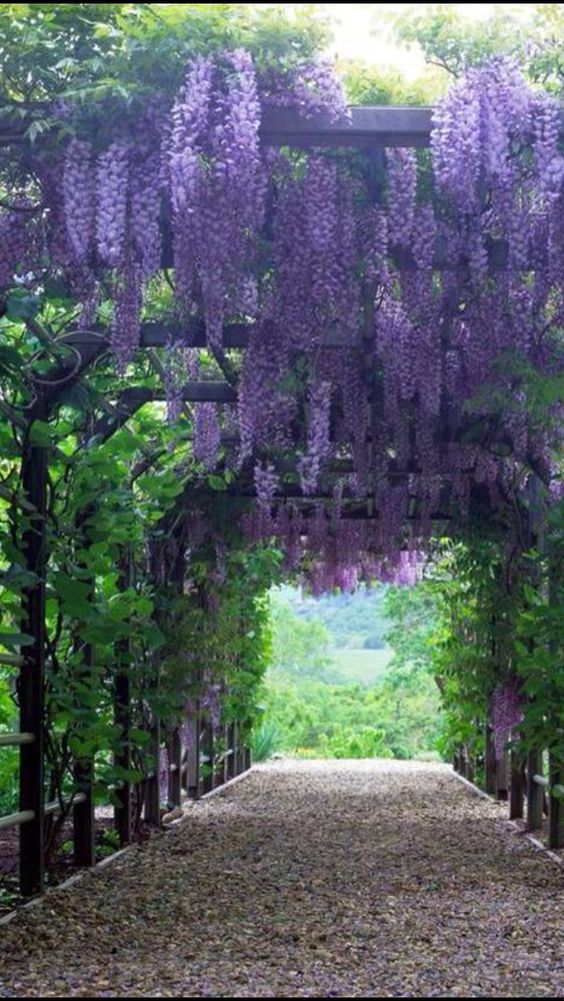
Not all spaces have to be confined, as this vine-covered path above illustrates. It provides room to wander and breathe deeply while still feeling secluded.

This could be the magical entrance to your fantasy space: https://www.pinterest.com/pin/701998660650254229/

Your calm space can be made up of different images that show different elements of it. Each space needs a portal through which you enter, so why not make it magical?

It might be enough to have a safe area from which you can look out onto the world, but still feel secure in a colorful, fragrant setting: https://www.pinterest.com/pin/701998660650066950/

Once I had gathered a variety of images that evoked the feeling of grounding and peace that I sought, it was time to name it: one word (or phrase) that enables me to conjure up my calm space. I settled on Halcyon, but realized later that it didn’t give me what I needed (I’m picky about words and their meanings). Then I came up with Elysium, as it suggested an other-worldly place in the heavens.

I thought that name fit perfectly. Except that as we continued in the preparation phase for EMDR, I had a hard time maintaining focus on one particular image. I had chosen so many! So I thought about what I really needed.

It was breathing space. A place to pause when things come at me too quickly. Ironically, after pinning so many glorious images on Pinterest, I returned to a photo that has served as the background for my two monitors at work. When I arrive in the morning and log in, this image grounds me and I find myself taking a very deep breath, like a sigh:

THIS is my sanctuary.

This image speaks to me. It combines nature with a sense of spaciousness, yet feels secluded enough to impart a feeling of security. And my name for it? Sanctuary. So simple and to the point, and yet encompassing so many different emotions and meanings for me.

The next step has been feeling into the sensations that this calm space evokes. What does that feel like in my body? And then holding onto that feeling, saying the name, imagining the setting. You can “charge” the image with meaning in this way ( à la Pavlov).

The associations that are formed in the process create a sense of calm that I can draw upon to center and ground myself during periods of high stress. It’s not a pill to end all woes, but it can be a powerful tool for dropping yourself down into a more peaceful state. I encourage you to give it a try.