February: A Great Month for a Diagnosis Reenactment

(Title image: Photo by Aaron Burden on Unsplash)

It’s February and that means it’s the start of “diagnosis season” for me. At this point in cancer survivorship, I don’t get as affected by everything that happened “on this date X years ago“. However, I have an oncologist appointment and my yearly 3D mammogram around this time, so I can’t forget what this month means.

You would think that since 2024 marks seven (!) years since my initial diagnosis, I’d feel pretty good about having made it this far past my treatment…and you would be right.

Seven years down and still going strong!
(Photo by Frankie Lopez on Unsplash)

I’m now living the feeling that I so desperately wished for seven years ago when everything felt devastating and out of control. My outcome, even with the many pesky moguls that I’ve had to clear, is something I’m so thankful for.

But of course, even as mellow and relatively unconcerned as I am now, there are little reminders of the rough and tumble past that unsettle me.

Like that point in my mammogram when the tech finishes up and leaves the room to consult with the radiologist, and all of a sudden I don’t feel great anymore. It’s maybe 5-10 minutes or so of sitting in a quiet room all by myself, wrapped up in that bathrobe-y gown made out of fabric that seems like it should be less scratchy, trying to focus really hard on the tropical ocean video that they have playing on the tv screen on the wall.

No matter how warm the room is, there is a cold spot in the pit of my stomach. The hospital does its best making the surroundings seem inviting. Really they try. But it’s kind of hard to mellow out the echo of an impending sense of doom.

Same goes for every time my oncologist says something like, “Hmmm, should we do another chest MRI?” No, no we should not. That’s about 45 minutes of being stretched out like superman on a surface that’s clearly meant for a woman much shorter than me, while getting my ears blasted.

In case you’ve never taken a ride in the tube, this is what it’s like. Don’t forget your earplugs. Bonus for chest MRIs: you’re lying on your belly with your arms stretched past your head for almost an hour, giving you plenty of time to reconsider your life choices.

My husband says the MRI sounds like a broken dot matrix printer. I think if your printer is making sounds like that, it’s time to evacuate the building.

Ah the memories. But again, I am talking about this from the vantage point of seven years away. It is nicer being up here above the fray. It also gives me a great view of the potential rollercoaster disaster that this season could become, if my scans go south.

But seven years into this, I’m betting it probably won’t. So far, so good.

Mindfulness 101: Noticing the Qualities

The main reason why I started a meditation practice was because I had been diagnosed with breast cancer and was, to put it mildly, freaking out.

As a naturally anxious person, the diagnosis blew the roof off my ability to cope and plunged me into a nightmarish situation. Anyone who’s ever dealt with severe anxiety will tell you that nothing is more important than making it stop.

Over the years, my anxiety gathered enough power that it was able to blindside me. Cancer anxiety practically wrecked me.

When my radiation oncologist recommended mindfulness meditation, I felt empowered by the thought of gaining control of my runaway anxiety without the need for medication.

I was hoping meditation would enable me to sit in peace in the midst of chaos. But I imagined that as feeling no stress, as in, being numb to anxiety-provoking stimuli.

That simply doesn’t exist. I wanted to not experience any stressful situations, but there is always stress. We can’t change that. Mindfulness meditation was only going to help me change the way I reacted to it.

So here I am, more than six years after initally starting a daily meditation practice and guess what? I still have stress, I still feel anxiety.

However, what did change is that I can define it now. When I become aware of agitation and anxiety, I know to pause and bring attention to how it manifests in my body.

What does it feel like? Tightness, heat, rapid breath?

Where does it show up? Face, temples, chest, stomach?

Is there a color or sound or smell associated with it? Does it have a “texture”?

Does anxiety have an odor? Next time stop and take a whiff.

I can relax my muscles, sink into the earth, breathe deeply and notice the qualities of anxiety. By pulling apart what is happening, I slow time down. Instead of being hit by a locomotive full force, I walk around the train cars. I can notice how I feel as I pass through the experience.

Is it pleasant? No. Does it always work immediately? No. However, I can see it coming, and as a result, I relax into it. It is the awareness of the anxiety that helps me through it, not a numbness to it. This leads me to acceptance of the situation instead of bracing against it.

On one level, it’s a little discouraging to still be dealing with the unsettling nature of stressors. But I am heartened by the empowerment that mindfulness offers. I have evolved enough that I know I don’t have to go back to being thrashed by the whirlwind. I can sit inside it and watch it swirl and pass through. Every time I do this, it gives me more confidence for the next time.

Is this something that might help you too?

Things I Wish I’d Known About Breast Cancer, Part 1

Cancer, perhaps more than any other disease, has a formidable reputation that precedes it. Because of this, cancer “lore” can affect your expectations of treatment effects and anticipated prognosis if you are unfortunate enough to receive a diagnosis.

There were a number of things that I didn’t realize about breast cancer that might have made my experience, if not better, at least slightly less harrowing. Here are a few of them, in no particular order:

1. Breast cancer research remains more highly funded than that any other cancer (source: 2019 Northwestern University estimate) and is therefore the best-studied type of cancer. As a result the treatment plan is solid. While this does depend somewhat on the type of breast cancer you have (Triple-Negative, Triple-Positive, Hormone Receptor-Positive, Inflammatory, etc.), the fact remains that there is great interest in “saving the boobies”.

We are living in an era where research in breast cancer is churning out valuable findings at a break-neck pace.

Your treatment plan has likely been well-tested with ample positive outcomes. Combine this with the tendency for this cancer to be diagnosed at earlier stages due to the relative ease in finding a tumor (I mean, you can feel the lump even if it’s not very big), survival rates tend to be very good. Understandably, that might not be very comforting at the time that you’re hit with the news that you have breast cancer, but it is a blessing that you’ll appreciate later.

2. Getting breast cancer is not your fault. I struggled with this one for a loooong time. If you’ve read some of my earliest posts, you know that I not only had a hard time getting my head around my diagnosis, but also a lot of anger about everything I did that was considered “protective” that seemed not to make any difference.

The reality is, as much as we do know about cancer, there’s still a lot we don’t, which means you can be doing everything right — even “perfectly” — and still be diagnosed with breast cancer.

The message I got from cancer-prevention campaigns was that there was so much you could do to avoid the disease. I checked off all those boxes and thought that I was at very low risk. I was “the fit one”, the vegetarian, a dutiful breast-feeding mom allowing myself no indulgences — the last person you’d imagine this happening to, but it did.

I felt ashamed about the diagnosis, even feared that I would be accused of lying about my healthy habits. I was terrified that my healthy lifestyle had somehow backfired. While this sounds ridiculous now, feeling so out-of-control about my own health was demoralizing and depressing.

3. A healthy lifestyle goes a long way in making recovery easier. While I felt dejected about not being able to avoid breast cancer, my exercise and dietary habits helped me recover from treatment side effects faster and not gain weight afterwards. And as I learned later, by maintaining an active lifestyle, I was significantly decreasing my chances of cancer recurrence. I wrote about those findings in this post.

So all my efforts were not for naught. Word to the wise: if you don’t exercise regularly, start now. If you do exercise, keep going!

In the darkness I found a little light.

4. There is light in dark places. I must stress that cancer isn’t some “great” thing that happens to you and it carries with it big side effects and an ever-present risk of death. I lost two friends to breast cancer who were both diagnosed about the time that I was and they were far too young to die.

But given that I had to go through this, I had the option of “sink or swim” when it came to how I would view my experience. Eventually I found the light in the darkness of the cancer tunnel, but it did take a number of years and many ups-and-downs before I was able to appreciate the lessons that the disease taught me: being able to accept and live with uncertainty, identifying a clear purpose in my life, finding gratitude in small things, even coming to grips with my own mortality. These lessons were difficult but also valuable, and I admit that I wouldn’t have learned them if I had not gotten cancer.

Perhaps some of the most important of these were identifying that I had suffered from anxiety for a good part of my life and understanding how it had shaped my decisions. Yes, it took cancer for me to realize all that! This led to incorporating mindfulness and meditation into my daily routine.

And that is a very positive thing indeed.

Six Years and 2 Days Ago, Panic

On Feb 8, 2017, I finally went to see my nurse practitioner about a breast lump that I’d originally noticed six months before, the previous August.

From the split second that the expression on her face shifted as she felt the lump and sent me off with an order for a diagnostic mammogram, everything changed. I went from hemming and hawing about spending the money on a copay for a doc appointment for something that would obviously turn out to be nothing…to a downward spiral into despair like I’d never felt before.

Memories of this period in my life are not very pleasant, so instead of loading up images of frightened faces and horrible possibilities, I’ve decided to post only peaceful pictures here.

Looking back on that time, knowing all the self-calming techniques and meditation methods that I currently practice, if I were going through this now one thing is very clear: I would still have panicked.

It bears mentioning that on Feb 8, 2017, I did not get my diagnosis. That appointment simply opened the door for scans that I was hoping I wouldn’t have to go through, but it devastated me regardless. In the two weeks that it took before I could actually go in for the mammogram and ultrasound, I died many times over.

The fact is, nothing ever prepares you for a cancer diagnosis. No matter what sort of mental calisthenics you practice, cancer is still CANCER. And even the idea that cancer could be a reality is terrifying.

There is no “alternative wording” that makes this easier. Sooner or later, you’d still bump up against that six-letter word that, for someone in my generation, meant a distinct possibility for a very sad ending (which arguably is an outdated and potentially irrational view, but that’s what you get).

Yeah, nothing stressful here. Just a sleepy kitten.

So rest assured, if you ever find yourself in this situation, no matter how you’re handling it, you’re doing a good job. Because you don’t really “handle” the news, you just splash around and try to keep your head above water.

Doctors, I’m told, practice delivering the news in a calm but empathic manner. Trust me, that’s kind of lost on the patient. Since my lump was clearly cancerous on the diagnostic ultrasound, I actually got the news broken to me twice:

My radiologist (after the ultrasound): “I have two things to tell you. One, you have cancer. Two, you’re going to be okay.”

My general practitioner (after the biopsy): “It’s as we feared. It’s cancer.”

See, whether the delivery is kind of upbeat with an attempt at a positive ending or whether it’s more reserved, anticipating the patient’s fear at hearing this, it doesn’t matter. Because once you cross that threshhold, you can’t turn back to “it’s nothing, have a nice day”. You are literally propelled forward into the next steps, and there will be many of them.

Room for one more image? How about tulips? I love tulips.

But there are a few things to remember. Being thrust headfirst into the world of cancer means that at least you’re not standing still like you are when you’re worrying about a diagnosis. Recalling Churchill’s famous quote, “When you’re going through hell, keep going”. Of all the times in a cancer journey, the point right around the diagnosis is the most terrifying because you know you have cancer but not necessarily how “bad” your situation is or what the next steps are.

There is relief in the movement of information and the passage of time. If there is a way to focus on the next step, always the next step, without getting overwhelmed by the tidal wave brought on by the concept of having cancer, you will be able to gingerly find yourself a path through which to navigate the cancer journey, and there is peace in that.

And if there isn’t peace…you’re still very normal. ❤

Five Years Down and Moving Along

I had another oncologist appointment last week. This one was a milestone, since it officially marks five years since my breast cancer diagnosis.

Five years ago, I was told that with triple-positive breast cancer I had an 85% chance of survival…but there in the fine print was added “five-year survival”.

Delays in routine care due to the pandemic have resulted in more late-stage diagnoses.

With advances in treatment for HER2-receptor-positive tumors (HER2 being the third marker in “triple-positive”), that percentage has improving. But it’s still interesting to note that there’s a finite end to what reliable survival info your doctor can give you, since it’s hard to run longitudinal studies with a large group of participants.

In any case, my oncologist was happy to see me alive and kicking. With the pandemic, women voluntarily and/or involuntarily delayed preventative care, and as a result, there has been an increase in the percentage of women presenting with advanced-stage breast cancer (from UC San Diego Health). Given how far treatment itself has come, this is a distressing statistic because it means that we have effective treatments but patients are not getting them soon enough. So perhaps, for him, I was a five-year treatment success in the midst of all of this.

My oncologist’s concern now is less that my tumor will recur and more that whatever conditions were responsible for the first tumor might result in a brand new one. He still checked me over carefully. My bloodwork looked good with only a lower white blood cell count (“that may never recover,” he’s said in the past). I have no headaches, my bone pain has significantly decreased and other long term physical side effects from endocrine therapy have just about Sudisappeared.

Five years post-diagnosis I’m turning down another path, one that I would have never explored had it not been for what cancer made me face.

I’m still dealing with things like distractability issues, but that could also be due to menopause and the pandemic situation and maybe just the march of age in general. I’ve noted before that it’s hard to pull apart all the factors to identify a single culprit.

My oncologoist remarked that I looked like I was doing well, that I exuded a positive “aura”, and while I’m sure he didn’t mean that metaphysically, the truth is, I feel like I’m finally moving forward in my life again. This coming weekend I start a three-month yoga teacher training course that will move me down a new path for the future.

I still plan to keep posting weekly during this time. We’ll see how it goes!

Gratitude: It’s Not Just for Big Things

A number of years ago, when my kids were still very small, we lived in an area with brutal winters. That meant sub-freezing temperatures for weeks at a time. Money was tight so we had to keep the thermostat in the 50s overnight and in the low 60s during the day. To make matters worse, our bedroom was in a part of the house that the radiator pipes wouldn’t warm properly, so it was always cold there at that time of the year.

Gratitude for a cup of tea and a quiet moment to write – that is enough.

And by “cold” I mean, the bedsheets would be literally frigid when it was time for bed. So much so, that my joints would ache and I’d be miserable until my body heat could warm them up.

This continued for a year or two until I found an electric mattress pad. The first night that I crawled under the sheets with the heat turned on, I thought I’d won the lottery.

There were so many negative parts to the years we lived there, but going to bed with warmed sheets overwhelmed me with gratitude for the simple pleasure of removing the pain of the cold.

The reason that I’m telling you this is that it’s so obvious to be grateful for the stark changes in our situation. It’s a no-brainer.

But there is no need to wait for something like that. There are simple things that we take for granted that it would be so easy to be grateful for.

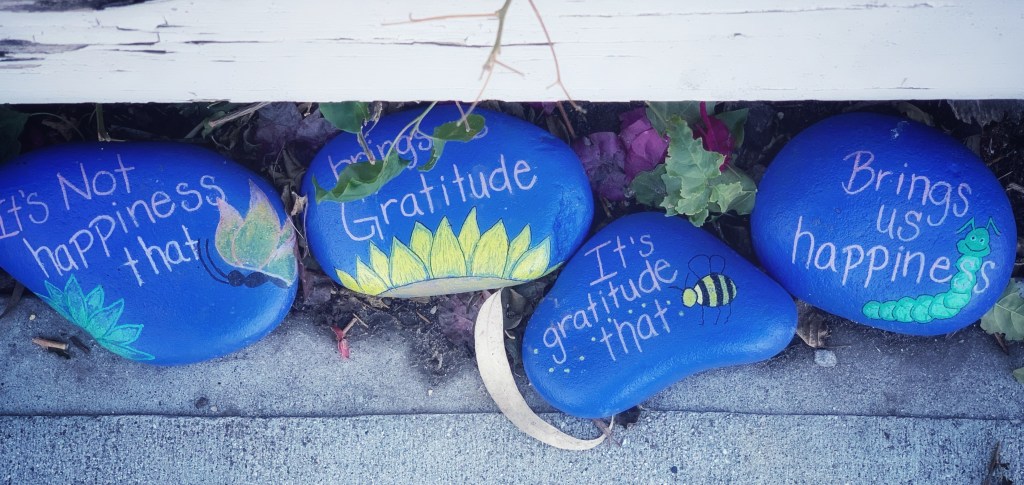
Turn your attention to little pleasures and acknowledge their importance in your life. Take some time to sit and bring them to your awareness. Feel into how they lighten your existence. Maybe thinking about them makes you smile. Or maybe the fact that something is simply working properly can be enough to help us realize how fortunate we are to have it at all.

Whatever it is, open up and invite gratitude in.

~~~~~~~~~~~~~~~~~~~~~~~

Maybe generating gratitude during bad times is exactly what we need.

Those of us who have recently gotten a cancer diagnosis may feel a touch bitter about this concept. Understandably, it may be easier to be grateful when you’re not dealing with a serious disease. And no one would blame you for having a hard time generating a mood of gratitude.

But perhaps that’s exactly when you should look for things that elicit a sense of gratefulness, no matter how small. It may be one of the most important things you can do to maintain a sense of well-being in a difficult time.

Before You Meet Your Oncologist, Be Aware…

…they don’t pull punches.

This is critical to be aware of when you’ve gotten your cancer diagnosis and are meeting your oncologist for the first time. We all go into that exam room fearful but hoping for good news. We want reassurance that it’s going to be okay.

The problem is, your oncologist can’t tell you that. They can’t say that you’ll get through this fine. Because they’re not going to promise you something they cannot guarantee. What they can give you is statistics. However, that may come in the form of something like, “You have an 85% chance of surviving…”, which sounds great, right, “…for 5 years.”

Is it good news or bad news? Their faces won’t tell.

Now, I don’t know how you feel about this, but honestly, when I heard that I thought, um, is that the best you can give me?

While I adore my oncologist, there was no cute wrinkled nose, no “I’m sure you’re gonna be okay” warm-and-fuzzies. It was all, “this is what’s next.”

I’m convinced that oncologists start their day by practicing how to deliver information without emotion, without giving away whether the news is good or bad. As patients, we literally hang on every word, every hesitation, every wrinkle on our oncologist’s face for an indication of just HOW bad the situation is. Some will reveal more than others, but in my own experience, it was “just the facts, ma’am” for quite a long time.

This could be very frustrating. I learned that I needed to get the “rah-rah” encouragement elsewhere.

On the plus side, however, I knew that if something was bad, my oncologist was going to tell me. He wouldn’t be like that friend who assures you your ugly outfit looks good just so that they don’t hurt your feelings. So if it’s any consolation, you’ll leave the office knowing what’s up, and what the doc doesn’t know yet if they’re still waiting for results. No false promises.

That helps get your head past the diagnosis and moving forward into treatment.

~~~~~~~~~~~~~~~~~~~~~~~~~~

I remember when, after my final infusion, I developed a horrible nail infection that landed me in the Emergency Room. I was stabilized, pumped full of antibiotics and my wound cleaned out. As I recovered, my ER doc came back to see how I was doing because he knew I’d just finished chemo and was familiar with the cancer experience. He told me that he was about to go notify another ER patient that they had liver cancer and wanted to take a breather and come talk to me before he had to break the news to them. It was obvious that he was moved by his patient’s plight.

So this was a great reminder for me that even though the doctors may seem to be stone-faced, they are by no means stone-hearted.

Not A Cancer Superhero? You Are Still Enough

After reading about the tragic passing of actor Chadwick Boseman at age 43 from colon cancer, in addition to his nothing-short-of-heroic efforts to persevere with his career and charitable acts while facing cancer treatment and a worsening prognosis, I was moved with emotion. First, for the loss of an immensely talented actor who would have had a long and bright future. Second, because knowing how society looks at cancer sufferers, he would not have gotten the roles he did had he been open about his diagnosis. 

And, third, for the rest of us run-of-the-mill cancer patients. When I was going through treatment, I wasn’t a hero. I was scared. I didn’t keep my illness a secret so that I wouldn’t be viewed as “uncastable” like Mr. Boseman might have been, or so I would be unhindered in my drive to achieve great things, as other notable cancer patients have. At least the ones who are written about in the media.

Me? I was barely holding on.

Everyone knew about my diagnosis, especially those who saw me on a daily basis. I didn’t want people to speculate about my condition once I started losing my hair and missing work, so I made sure to get the word out. But the real battle I fought was much more personal and invisible. My nemesis was anxiety, and I entered that fight ill-equipped to win it.

It may not feel like it when you’re hearing about the accomplishments of others, but just showing up is an achievement when it comes to cancer.

So while I was dragging myself around to doctors’ appointments and cancer treatments, I was churning inside. There were days I wanted to numb out and curl up in a corner. But I went to the office. I smiled at coworkers even when I was nauseated by anxiety. That’s it. No great feats, nothing that others could remark favorably on or report in the news. I didn’t feel strong or brave and certainly not like a hero. I simply existed. 

It would have been so cool was to have bravely fought cancer while still racking up amazing accomplishments. To be the one about whom people would say, “And she did ALL THAT while undergoing treatment!” No, not me. Not everyone is in a position to be that superhero.

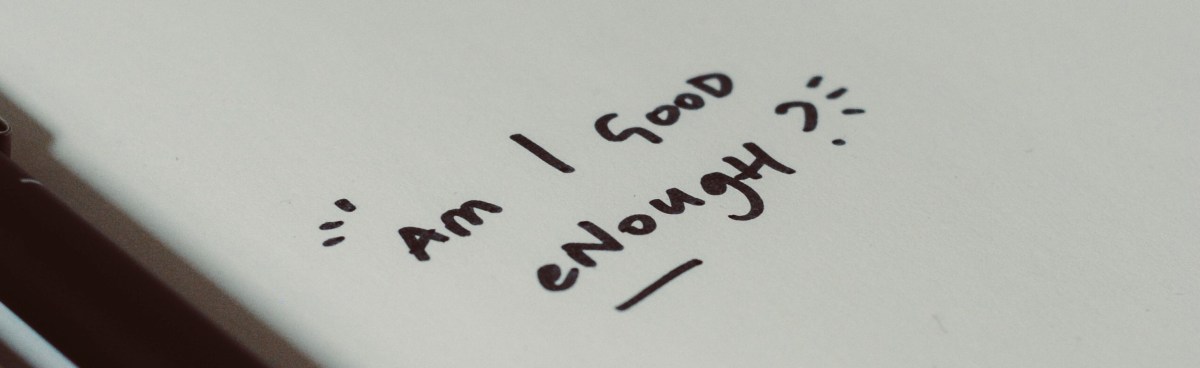
So the point I want to make is that you will hear of the cancer patients who are truly inspirational, and I, along with everyone else, am awed by their strength of character and ability to continue in the face of a life-threatening illness. But there are also many of us that limp along day by day, trying to keep our lives together after they’ve been torn asunder by a cancer diagnosis. We’re not going to get accolades for making it back to work after five days of nausea. But we persevere in our own inconspicuous ways. Perhaps you’re one of those.

And that’s enough. 

Hey Doctors! Before You Give a Cancer Diagnosis…

From time to time, I think back on my cancer experience (who am I kidding, I think about it every single day!) and wonder how things might have gone differently. Generally, I write for the cancer patient, but this post is directed at the doctor who delivers the diagnosis.

So…dear doctors:

Think very carefully about what else you want to tell a new cancer patient right after you tell them that they have cancer. It better not be important, because they’re not going to hear it. Once you deliver the diagnosis, a cancer patient’s executive level cognitive processes freeze, making comprehension difficult. Any further speech sounds like the “wah-wah-wah” talk of the adults in Charlie Brown cartoons.

For example, I was told two things by my radiologist, when he came into the room after he looked at my diagnostic ultrasound: (1) you have cancer, and (2) you’re going to be alright. Guess which one of those points I didn’t remember. I’m sure my doctor was trying to be cheery and supportive, but I can guarantee you it didn’t work.

Let’s face it, no matter how gently a doctor tries to break it to you, being told that you have cancer is devastating. It’s perfectly normal to be blown back by the news because your life is going to change drastically for at least a while, and maybe permanently. But, geez, doc, you should be prepared to repeat the same info at least several times and cut out the unnecessary bits. Your newly-designated cancer patient is going to have to need time to process the news!

Tip to the patient: bring someone with you to your subsequent visits who’s good at taking notes and is on an even keel. I brought my husband but he barely wrote anything down. Turns out, he was just as shocked as I was and wasn’t taking the news any better.

Hey, doc, I get that this is hard on you too. So please don’t think I don’t appreciate what you do (especially these days!). But please consider some of these things before you deliver your next cancer diagnosis. Thanks. 🙂

Following up on that, doc, the next thing that I would suggest is that you not give overly specific responses to questions based on assumptions you’re making. I asked about the recovery time from surgery, since I was terrified by the thought of going under the knife. Mine was early stage breast cancer, and ultimately I had a lumpectomy, but that same radiologist had warned me that recovery would take 4-6 weeks. Up to a month and a half?!? I whimpered something along the lines of, “But I have to work,” at which point he reminded me that my health was more important than my job.

I don’t know where he pulled out such a long recovery time, but being given that sort of time frame compounded my anxiety. Maybe he also said that some people have a shorter recovery time, but of course, I wasn’t processing info well and all I could remember was “4-6 weeks”.

So I would recommend to doctors, (1) if you really don’t know specifics, don’t offer estimates–I was back to work the week after my surgery, btw–and (2) please don’t blow off a patient’s concern about the importance of other aspects of their lives, like going to work. Yes, ultimately, as the saying goes, “if you don’t have your health, you don’t have anything.” But for many of us, if you don’t have a job, you don’t have health insurance! Everything in our lives is interconnected. It’s all important. Please keep that in mind.

Hey, nobody likes to deliver bad news and I know you’re trying your best. But the only thing worse than telling someone they have cancer is being the one it’s being told to. So please, be gentle. You will go home that evening possibly bummed that another one of your patients has cancer.

The patient is going home that evening embarking on one of the most frightening journeys of their life.