This is going to be short because I’m on the cusp of moving my family to a new apartment…and that’s going to take more work now that one of our cars is finally having its damage repaired.
So this is a gentle reminder to slow down and look around once in a while. Life’s obligations can push us like a bulldozer and we might not notice that we’re worn out until something happens that forces us into a mini-vacation.
And if you need a cancer diagnosis (or a broken bone or the flu or…) to give you a break from the pressures of work and family, then I think we can all agree that your mental health needs more love than you’ve been giving it.
Yes, easier said than done. But there are little breaks you can take. A 10-minute body scan meditation or guided breathing practice. A matcha tea break where you focus on the movements of your hands as they prepare your cup. Staring out the window and counting trees/people/cars.
It doesn’t have to be a pricey spa day. You can have a spa inside your head with a phone app and a set of headphones. You just need to care enough about yourself to allow this.
Believe me, I care about you and I don’t even know you. You are the whole reason why I started this blog and why I keep it going, even eight years after my diagnosis. I hope it helps you remember that you are worth being cared for. ❤
“I see pharmacological interventions in your future” is a paraphrasing of what my oncologist told me at my last doctor’s visit.
So let me back up a bit. I had my “eight-years-since-finishing-chemo” appointment with my oncologist last week. Things went the way they’ve been going for a while. He was very pleased with how things have been going and that made me feel very positive.
Certainly, I have my share of stressors churning at the moment, but most of them are not health-related. Most.
When my oncologist reviewed my bone density reports, however, he made the same prediction that he has during my previous two visits with him (see his quote above). The issue is that my bone scan in 2019 showed osteopenia, which I have to say is pretty weird given my lifestyle, which includes a lot of strength training. We both thought that perhaps it was an issue with the way the numbers were calculated.
Unfortunately, my 2024 bone scan showed a significant loss of bone compared to 2019. Enough to really concern my oncologist and befuddle us both.
So despite my living the lifestyle that medical guidelines say I’m “supposed to” live in order to stay healthy and strong, it’s still not good enough.
This harkens back to what I experienced after being diagnosed with breast cancer. It seemed like I had done everything I could to lessen my chances of getting cancer, including things that should have been protective, but there I was, a breast cancer patient, and a young one at that (which, I later learned, what one of the reasons the risk factors didn’t necessarily apply to me, but I didn’t know that at the time).
It drove my perfectionistic mind haywire.
It brought on feelings of helplessness and even despair.
The only thing that gave me a bit of a lift was learning to meditate. Meditation imparted a sense that I had a teensy bit of control, if not on the situation, at least in the way that I reacted to it.
I got through that period of my life, brushed myself off and went on. And for a while, I was feeling blessed.
But cancer treatments have long-term effects. And the repercussions of being pushed through menopause and being on endocrine therapy eventually caught up to me. Physical movements that used to be easy started to hurt. I lost muscle mass…and apparently, I lost bone too. I felt like I was treading water with a weight tied around me.
Never good enough.
So I am bearing down and reworking my diet and exercise program even more. And to be honest, this is also an opportunity to shed some of my perfectionistic tendencies. While I want to feel like I am doing everything I can to help stop my bone loss and avoid taking medication for it, I need to learn to give myself grace. Sometimes even doing everything “right” will not be 100% successful, and I have to be okay with that.
When I finished my final radiation treatment for breast cancer in 2017, I got to bang a gong as part of my cancer center’s tradition.
The gong-ringing marked getting to a milestone, one that I only dreamed about when I was handed my treatment plan. It felt like closure…except that I wasn’t really “done”—I still had months of Herceptin to go and years of endocrine therapy ahead of me. But the toughest chemo and radiation were over.
And those around me who weren’t done yet also celebrated along, just as I had for the patients that had gone before me, eagerly awaiting their turn at the gong. This tradition also occurs at many other cancer centers, although instead of a gong, it might be a bell or a chime or something similar.
However, as with many things that have to do with cancer, there is a more somber side to the end-of-chemo bell. As noted in this article from Psychology Today (“The Psychology of the Cancer Bell”), hearing the ringing of the bell can be devastating for someone with metastatic cancer, who will never be done with treatment, or is at late stages of the disease.
There are many other creative ways to commemorate the end of treatment for cancer than simply bell-ringing. (Photo by Nick Fewings on Unsplash)
The article also points out that in cases where someone experienced a cancer recurrence, hearing the bell rung by someone else elicited painful emotions. What should be a jubilant event for all can feel depressing and isolating, like being left behind.
But it goes beyond that. As a study by Williams et al. (2019, Int J Radiat Oncol) found, even those who are finishing their treatment might not have a positive response to ringing the bell. From the “Conclusion” section in the study’s abstract:
Not what I would have expected! And it certainly came as a surprise to the study’s authors.
These findings have been reflected in a reimagining of the completion bell. As the Psychology Today article mentions, some cancer centers are moving it’s location and renaming it the “Bell of Hope”, or providing different means of allowing patients to mark the stages of their treatment rather than focusing on “completion”.
Personally, I was looking forward to banging my gong and was more focused on what treats I could bring for the radiology staff and saying goodbye to all of them. But I can see why such a commemoration could be problematic, especially when so many parts of the cancer experience are stressful. You don’t need one more.
How about you? How do you feel about ringing a bell (or similar)? Is there something else that you did or would prefer?
It used to be that people undergoing chemotherapy for cancer were told to be careful with physical activity and restrict themselves to low- and moderate-intensity exercise. Even when I was going through cancer treatment eight years ago, there was concern about how much weight I was lifting for fear of eliciting lymphedema, although by that time, exercise was more encouraged.
I am so glad that our understanding of exercise and cancer has changed! This evolution in thinking is exemplified by a case study that was recently published in the journal Lifestyle Medicine (Rolle & Crane, 2025). The lead author and PhD student in Public Health at U of Miami, LaShae Rolle (age 27), was also a competitive powerlifter who was diagnosed with stage 2B estrogen receptor-positive breast cancer in 2024.
For LaShae, exercise was an integral part of her life, something to which I can relate. She worked with her team to create training sessions that aligned appropriately with her cancer treatments which consisted of four cycles of chemo following a mastectomy.
Remarkably, by modifying her workouts as needed, LaShae was able to maintain 93% of her squat strength (408 lbs of her 441-lb one-repetition maximum (1RM)) and 87% of both her bench press (254 lbs of her 292-lb 1RM) and deadlift (430 lbs of her 497-lb 1RM). This is so impressive considering that throughout her chemo treatment she was still able to squat and deadlift over 400 lbs!
Not surprisingly, attempting to train at high-intensity on the day following her first infusion (!) resulted in severe dizziness and fatigue. By the 3rd and 4th cycles of her chemo, Rolle found that delaying intense exercises for about a week following her infusions allowed her to train more effectively. Note that her chemo cycles were three weeks apart, allowing sufficient time to recover.
Yes, you can train vigorously during chemotherapy!
Why keep training during chemotherapy? There is a rapidly increasing body of research that demonstrates the critical role that physical activity plays in recovery from cancer treatment and avoiding recurrence. Unfortunately, for people who view exercise as a chore or burden, being urged to maintain an exercise program while they’re undergoing something as punishing as chemotherapy may feel like an additional punishment.
But the benefits of exercising throughout treatment, as appropriate, are irrefutable. For those who haven’t previously exercised, it’s important to begin slowly, finding physical activities that are enjoyable and rewarding, eventually ramping up the challenge to include cardiovascular exercise, strength training, balance work and flexibility training.
For those for whom workouts are an integral part of their lives, being encouraged to continue exercising as we have prior to cancer is psychologically uplifting. I’ve written in earlier posts that working out was one of the few things that I could do that gave me a sense of control in the out-of-control landscape of a cancer diagnosis. It helped me feel “normal” when I felt anything but, and that was such an important part of mentally getting through treatment.
Bottom line: Participating in your regular exercise routine during chemotherapy is doable, with modifications, and the physical activity can help you get through the treatment process. While LaShae Rolle did experience treatment side effects, she was able to work around those to limit the amount of strength she lost during chemo to an impressive degree.
REFERENCES
Research Article:
Rolle LD & Crane TE (2025) Exercising Through Breast Cancer: A Case Study on Strength Training During Active Treatment. Lifestyle Medicine, 6, e70034. https://doi.org/10.1002/lim2.70034
Over the last week or so, there have been a number of news articles focused on Catherine, Princess of Wales, who has been talking about life after finishing her cancer treatment.
She is officially in remission from her unspecified cancer, having completed chemotherapy. However, in a conversation on July 2 with hospital patients, staff and volunteers at Colchester Hospital in Essex (in southeast England), the princess noted that there was still more to endure once she was past her cancer treatment.
This is summed up from an article in USA Today (and numerous other outlets):
Wow, this is so relatable! I’m grateful that Kate is discussing life after cancer treatment, especially because she’s a highly public figure.
Many cancer survivors have experiences similar to Kate’s, particularly those, such as breast cancer survivors with hormone-positive cancers, who continue to take “maintenance” medications like tamoxifen and aromatase inhibitors. While many patients expect chemotherapy and radiation to be tough, they are often not prepared for the side effects associated with endocrine treatments that are prescribed to be taken for years after finishing everything else.
Princess Kate breaks with royal protocol in speaking frankly about the struggles following the end of cancer treatment. (Video from TODAY)
But even without endocrine therapy, many cancer survivors are left with long-lasting side effects of varying severity. Some may be truly life-changing. Most of them will prevent a return to “normal” as we used to know it.
That normal, however, is what others may be expecting of you. Or you might expect of yourself. And that’s tough. Kate mentions the importance of reaching out for professional support if it is especially difficult to manage the phase following treatment, and I concur 100%.
Because it’s not simply the side effects…it’s the frustration that we feel with having the side effects linger. Or even the reactions of loved ones who don’t understand why things aren’t back to how they used to be. There is a grieving process associated with the loss of our previous lives that those around us may not appreciate, so I’m glad that Princess Kate is using her position to bring this out into the open.
Many cancer patients complain of feelings of helplessness after their diagnosis, and I can certainly relate to that. As a result, I’m particularly interested in research that explores whether patients can gain control over the success of their treatments.
The most recent study I’ve come across includes breast cancer patients undergoing treatment at Yale and Dana Farber Cancer Centers.
This study appeared in the Journal of Clinical Oncology(Sanft et al., 2023). Researchers examined the effect of diet and exercise on “relative dose intensity” (RDI), which is the relationship between the amount of chemotherapy delivered to the patient compared to the standard amount prescribed. Low RDI means that there was a reduction in the chemotherapy the patient received and is generally associated with a poorer outcome. Dose reductions result from the patient’s difficulty in tolerating the drug.
The researchers also looked for “pathologic complete response” (pCR), which is “the lack of all signs of cancer in tissue samples removed during surgery or biopsy after treatment with radiation or chemotherapy” (definition from cancer.gov). This was for women receiving neoadjuvant chemotherapy, which is chemotherapy administered prior to surgery.
Yep, once again we come back to diet and exercise, even during chemo. (Photo by Yulissa Tagle on Unsplash)
The subjects of this study were women recently diagnosed with stage I-III breast cancer, who either received the “usual care” or a diet and exercise intervention. Those in the intervention group received nutritional counseling with a focus on a plant-based diet. The physical activity included counseling and support for maintaining a home-based exercise program that included strength training (2x/week) and brisk walking (150 min/week of moderate intensity or 75 min/week of vigorous intensity).
What the research confirmed first was that the subjects in the intervention group were able to increase their exercise and diet quality, which showed that it was feasible to make lifestyle improvements even in the midst of chemotherapy.
However, in this study, the RDI for both groups (“usual care” and diet & exercise intervention) ended up being similar, but also quite high, which meant that women in both groups completed most of their treatment. The researchers noted that the study should be re-run with patients who were at greater risk of not being able to complete all their chemo to see how much of an effect improved diet and exercise would have, especially since exercise has been shown in other studies to have a positive effect on patient outcomes.
But a striking difference was seen for women receiving neoadjuvant (prior to surgery) chemotherapy in that the rates of pCR (disappearance of cancer in the tissues) were 53% for women in the intervention group versus 28% for women receiving usual care. That suggests that the intervention enabled the chemotherapy to be more effective.
There are many physical activities you can choose from–clifftop not required. (Photo by Sigmund on Unsplash)
The researchers stated the following in summarizing their study: “Given that pCR is an accepted predictor of recurrence and mortality, our findings could provide oncologists with a supportive care intervention that affects the ability to potentially improve survival outcomes” (Sanft et al., 2023, J Clin Oncol). And this is very good news indeed.
The take-home message here is not surprising, and it’s good advice for life in general: no matter what your current lifestyle, prioritizing a healthier diet (emphasis on whole foods, plant-based, less processing, etc.) and engaging in regular cardiovascular and strength training exercise will improve your quality of life. It is always worth the effort.
~~~~~~~~~~~~~~~~~~~~~~~~~~
REFERENCE: Sanft et al. (2023) Randomized Trial of Exercise and Nutrition on Chemotherapy Completion and Pathologic Complete Response in Women With Breast Cancer: The Lifestyle, Exercise, and Nutrition Early After Diagnosis Study. J Clin Oncol, 41: 5285–5295. https://doi.org/10.1200%2FJCO.23.00871. [This paper is Open Access and can also be found in PubMed Central: https://www.ncbi.nlm.nih.gov/pmc/articles/PMC10691793/]
One of the strongest chemotherapy drugs used for breast cancer is doxorubicin, a drug in the anthracyline family that you might know as Adriamycin. It’s called “The Red Devil” due to its bright red color and tendency to temporarily dye the bodily fluids of its recipient red, but also due to its toxicity.
While it is highly effective, its use is limited by its potentially serious side effects, including damage to the heart. According to Drugs.com, “[b]ecause of its heart toxicity, doxorubicin has a maximum cumulative dose that can be given to each patient. The higher the total dose you receive over time, the greater your chance of heart side effects.”
Doxorubicin is a highly effective chemotherapy, but carries with it a considerable risk of heart toxicity.
There has been interest in discovering other drugs that can decrease the cardiotoxicity of doxorubicin, particularly since in addition to breast cancer, it is used against a variety of other cancers.
But as with so many things cancer-related, the drugs given to protect against chemotherapy side effects themselves have side effects, so it’s useful to explore other means of achieving protection from the toxic effects of doxorubicin.
Can Exercise Help?
In a webinar for the American College of Sports Medicine (ACSM) that I attended on May 18, 2023, University of Florida, Department of Applied Physiology and Kinesiology researcher Dr. Ashley Smuder and her lab presented research about the protective effects of exercise on the heart and muscle doxorubicin.
Importantly, Dr. Smuder’s lab was able to demonstrate that exercise-trained rats who were then given doxorubicin showed a decrease in the amount of drug that accumulated in the heart and diaphragm compared to sedentary rats, echoing the results of Parry and Hayward (2015, Am J Physiol Regul Integr Comp Physiol). Those results had suggested that exercise didn’t diminish and even increased the amount of doxorubicin that made it to the cancer tumor while decreasing the amount of the drug that went to the heart (left ventricle) and diaphragm.
Exercise keeps rodents healthier, even under a punishing chemotherapy regimen.
While the actual mechanism of this protective effect is still being researched, once again these studies show the benefits of exercise in a cancer situation.
Additionally, a doctoral student in Dr. Smuder’s lab, Brendan Nguyen, reported on work that he’s done showing the differences of exercise on fat mass and lean mass in rats administered doxorubicin using the same infusion schedule that a human patient would received (4 doses, 3 weeks apart). There were four conditions: (1) a sedentary group that received saline injections, (2) a sedentary group that received doxorubicin, (3) a moderate-exercise group that received doxorubicin, (4) a high-intensity exercise training (HIIT) group that received doxorubicin.
Moderate exercise: rats ran on a treadmill 3 days/week at a speed of 30 meters/min for 60 min/session.
HIIT exercise: rats ran on a treadmill 3 days/week, four 4-min bouts at 45 meters/min with 3 minutes of active recovery in between the bouts.
Not surprisingly, the exercise training had a significant effect on the body composition of the animals. Sedentary rats in both groups had an increased risk of obesity. Both groups of exercising rats (both moderate exercise and HIIT) saw a decrease in fat mass during this time and were able to avoid doxorubicin-induced cardiorespiratory weakness. Also, the HIIT exercise animals showed a significant increase in lean mass in addition to the drop in fat mass.
For reliable protection from the negative physiological effects of chemotherapy, exercise is still your best bet.
The take-home message here remains the same as it’s been in my other posts. If you don’t currently exercise, start now. And then don’t stop. It’s easy to keep laboratory rats active and fit, but humans find many reasons not to challenge themselves with physical activity. If you needed a reason, these studies provide a little encouragement to find your favorite movement modality and make exercise a life-long habit.
REFERENCES
Battaglini CL, Mills RC, Phillips BL, Lee JT, Story CE, Nascimento MG, Hackney AC (2014) Twenty-five years of research on the effects of exercise training in breast cancer survivors: A systematic review of the literature. World J Clin Oncol, 5, 177-190. https://doi.org/10.5306/wjco.v5.i2.177.
Lee K, Kang I, Mack WJ, Mortimer J, Sattler F, Salem G, Dieli-Conwright CM (2019) Feasibility of high intensity interval training in patients with breast Cancer undergoing anthracycline chemotherapy: a randomized pilot trial. BMC Cancer, 19, 653. https://doi.org/10.1186/s12885-019-5887-7.
Lee K, Norris MK, Wang E, Dieli-Conwright CM (2021) Effect of high-intensity interval training on patient-reported outcomes and physical function in women with breast cancer receiving anthracycline-based chemotherapy. Support Care Cancer, 29, 6863-6870. https://doi.org/10.1007/s00520-021-06294-7.
Parry TL, Hayward R (2015) Exercise training does not affect anthracycline antitumor efficacy while attenuating cardiac dysfunction. Am J Physiol Regul Integr Comp Physiol, 309, R675-83. https://doi.org/10.1152/ajpregu.00185.2015.
Smuder AJ, Nguyen BL (May 18, 2023) Cardiorespiratory muscle response to chemotherapy and exercise. ACSM’s From Around The Field webinar.
With as much sophisticated research as has been done on cancer, it still remains a confounding disease and much of the treatment may seem to be, for lack of a better word, medieval.
So it shouldn’t seem surprising that cancer patients also reach out for less conventional therapy to help themselves through the treatment process.
First, a clarification of terms used in this post:
Acupuncture is utilized as a non-standard treatment (for those who can take more poking)
Conventional medicine: chemotherapy, radiation, surgery, immunotherapy, etc., prescribed by your medical team.
Complementary medicine: non-standard treatment used in conjunction with conventional treatment; also called Integrative Medicine.
Alternative medicine: non-standard treatment used instead of conventional treatment.
Therefore, generally speaking, what distinguishes complementary from alternative medicine is whether it’s used with standard medical treatment.
According to a study (Crudup et al., 2021) that was presented at the 2021 Annual Meeting of the American Society of Clinical Oncology (ASCO), 73% of breast cancer patient participants stated that they employed complementary therapies in their treatment. However, while oncologists were supportive of such therapies, they were not aware of the extent to which their patients utilized them and thought that only 43% of their patients did.
Patients get more benefit from spiritual practices than most oncologists realize
Furthermore, oncologists felt that counseling, support groups, exercise, etc. were the most effective non-standard therapies, in contrast to patients who found great benefit in meditation, mindfulness and spiritual practices. While two-thirds of both patients and oncologists felt that complementary medicine improved quality of life, a majority of patients also felt that it improved their outcomes.
Wayne Jonas, MD, a co-author of this study, says: “Cancer is a complex disease that affects every component of a patient’s life. While conventional medicine is effective for curing disease, it can fall short in helping patients heal. Patients are turning to these therapies to look for hope and to improve their quality of life and well-being after diagnosis… .”
What types of therapies do these include? The website “Cancer Health” provides examples of some complementary treatments (see here for an explanation of each):
Acupuncture Aromatherapy Art Therapy Biofeedback Cannabis Herbal Therapies Labyrinth Walking Massage Meditation Music/Dance Therapy Qigong Spirituality Tai Chi Traditional Medicine (Ayurvedic, Chinese, etc.) Vitamins and Supplements Yoga
[This list is by no means exhaustive.]
I used a number of these complementary therapies myself and can attest to the important role they played in my recovery. As Dr. Jonas points out above, conventional treatments “can fall short in helping patients heal” [emphasis mine], whereas non-standard therapies seem to focus on that aspect.
I believe that these additional therapies, particularly more spiritual ones, are what give us hope throughout the cancer experience. Patients should be encouraged to seek out additional, complementary therapies to help themselves move through treatment, fully supported by their oncologists and ideally also guided by them.
Did you rely on complementary or alternative treatments to help you through your cancer journey?
~~~~~~~~~~~~~~~~~~~~~~~~~~~
REFERENCES
Original Research
Abstract for presentation:
Crudup et al. (2021) Awareness, perceptions, and usage of whole person integrative oncology practices: Similarities and differences between breast cancer patients and oncologists. Presented at 2021 Annual Meeting of the American Society of Clinical Oncology (ASCO), https://meetings.asco.org/abstracts-presentations/200685
This post continues what I started in the last post…a few things about breast cancer that I wasn’t aware of at the time of my diagnosis. Knowing the following would have made things a little less stressful:
1. Lumpectomy is a relatively uncomplicated surgery. I wish someone had explained this to me because I was a total wreck going into surgery (which happened to be the only surgery that I had ever had up to that point, making everything 10 times worse). Although I had decided against a full mastectomy, I was still so afraid of what a lumpectomy would entail, what I’d look like and how long it would take me to recover from losing a chunk of flesh.
The reality was…I was back at work the next week. No drainage tubes, no need for heavy analgesics — just a couple of ibuprofin the night after surgery because skipping coffee that morning resulted in a headache, but that was it. It was even hard to tell that I’d had my lump excised. Wish I could go back to my earlier self and tell her not to worry.
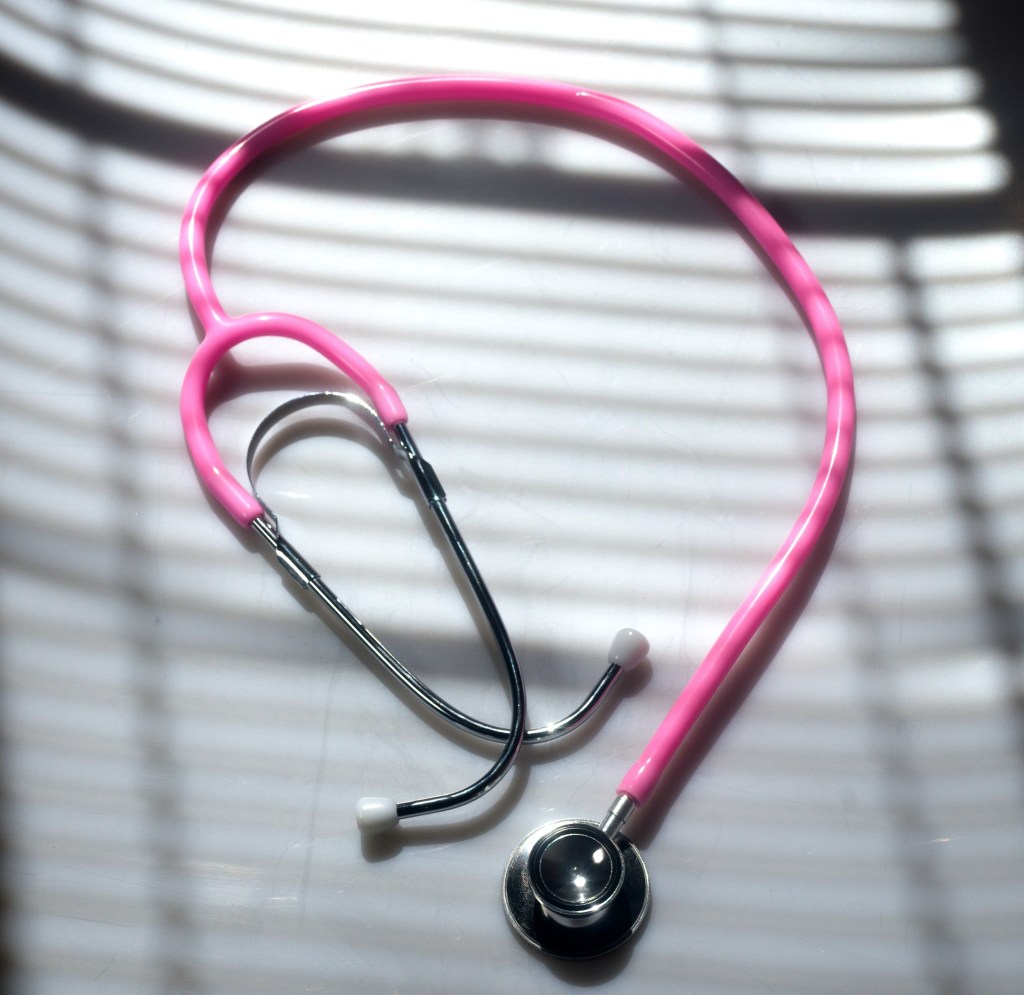
Stethoscopes are emotionless. Oncologists can seem to be too, but that’s by design.
2. Doctors are not in a hurry to give you good news. I think there’s a general feeling among medical professionals that there’s so much that can go poorly during cancer treatment that your doc isn’t going to go out of their way to pump you full of optimism. They probably practice keeping an emotionless face as they deliver all sorts of news, both good and bad. As a patient, however, I watched every flicker on my oncologist’s face for an indication of how things were “really” going. I feared that there was something he wasn’t telling me.
It wasn’t until perhaps a year or so later when I was expressing my fears to him about possible abnormalities inside my body that he uttered the phrase, “but you have your health”…and I was taken aback because I had never heard him sound so positive. It was almost a shock to hear him confirm that I was actually considered healthy.
3. Don’t expect things to be the same as before. Accepting that part of your life has changed will make it much easier to go on. This took me a while to appreciate because I was expecting to get back to doing and feeling everything the same as before my diagnosis.
But chemo (and eventually, age) pushed me through menopause, and I had to come to grips with, say, a high-intensity interval workout requiring more recovery time and that I had trouble remembering people’s names. Once I got to that point of acceptance, life after cancer treatment became easier, although it did take a number of years to get there.
4. Hair takes a while to grow back in. The reason I created posts with photographs that illustrated the cancer journey that my hair went through (here and here) was because I could not find good photos on the internet documenting the process. I did see images of a woman a few weeks after stopping chemo with little stubs already visible, but that was not my experience and it made my anxiety over my slow regrowth even worse.
Walking around with no hair was getting old and I was getting more desperate by the day to see evidence of sprouts!
If you’ve ever googled your chemo drug name + “hair loss”, you understand the fear: the first search result is usually a law office gathering info on behalf of cancer patients whose hair never grew back!
It took a number of months before my folicles woke up and actually started growing. I remember the moment that I finally saw growth on the front of my head and it was as if the heavens had opened up and divine light poured out onto me. Seriously. I would have avoided a lot of stress if someone had just told me that it’s gonna be a while.
~~~~~~~~~~~~~~~~~~~~~~~
Ok, ok, to be fair, my oncologist did urge patience with the regrowth but I was a jumbled mess of nerves and was feeling overwhelmed. All the internet propaganda about both (1) other women having much faster regrowth, or (2) otherwomen never getting their hair back terrified me. Note to self: when feeling desperate, stay off the internet!
After a few years of wondering what the heck is going on with my head, I joined a Memory and Attention Adaptation Training (MAAT) class generously provided by my cancer center (which I’ll be posting about on a later date).
This is gratifying on two levels: first, that I can learn new strategies for dealing with the memory issues and distractibility that have been plaguing me since finishing breast cancer treatment five years ago; and second, and perhaps more important to me emotionally, that what I am experiencing is REAL. It’s officially termed Chemotherapy Related Cognitive Impairment (CRCI) or, informally, chemo brain.
I’ve been told that “you’re imagining this” (I’m not) or “you’ve always been like this” (I haven’t) or “just focus harder” (I AM!!!) or even “this is just an excuse” (Argh! No!), coming from people who have been annoyed by my memory lapses.
Chemo brain spends a lot of time just wandering around without an idea of how to get anywhere.
My brain isn’t lazy. As a matter of fact, it’s the opposite problem. My brain is too busy.
In the MAAT class, we learned of a study from the University of British Columbia (UBC) by Kam et al. (2016, Clin Neurophysiol) that examined what happens inside those brains that suffer cognitive impairment from cancer treatment, even years later. In that published study, the experimental group consisted of nineteen breast cancer survivors. All had undergone chemotherapy for early stage breast cancer and had subsequently self-reported cognitive issues.
Researchers at UBC compared these survivors against twelve (non-cancer) control subjects in a task that required sustained attention. All the participants’ brains were monitored via electroencephalogram (EEG) both while working on the task and while at rest.
The results were vindicating for me and, I’m sure, for others experiencing this. Normal brains cycle through periods of focus and periods of “wandering”. However, as the UBC researchers stated in a summary of their results (published here): “We found that chemo brain is a chronically wandering brain, they’re essentially stuck in a shut out mode.”
This was true even when the breast cancer survivors thought that they were focusing. Furthermore, the survivors’ brains exhibited activity even when they were instructed to relax.
Great. We know that chemo brain is an undeniable fact for some cancer survivors and can last for years — in this study, up to three years. However, for me and some of the people in my MAAT class, it’s been five years and we’re still dealing with this, which is frustrating. What can be done about it?
When anxiety and chemo brain collide, you get a confused goat tangled up in a rope. That would be me.
It won’t come as a surprise — anxiety makes everything worse, and that holds true for chemo brain too. As mentioned above, I’ll discuss this in greater detail in a later post, but basically, a main focus of the MAAT class is learning to handle stressors in an effort to relieve anxiety.
So now that I know that what I’m experiencing is a real thing, a large part of combatting it is what I’m already trying to do — mindfulness, meditation, yoga and similar sensible self-care. And while it might seem aggravating that even with all that practice I’m still dealing with this, I’m actually bouyed by the fact that every bit of mindfulness helps. The reality is, I’ve made a monumental amount of progress from where I was when I started, five years ago.
And that keeps me going. Where would I be if I wasn’t trying?
The published study: Kam JWY, Brenner CA, Handy TC, Boyd LA, Liu-Ambrose T, Lim HJ, Hayden S, Campbell KL (2016) Sustained attention abnormalities in breast cancer survivors with cognitive deficits post chemotherapy: An electrophysiological study, Clinical Neurophysiology, 127, 369-378. https://doi.org/10.1016/j.clinph.2015.03.007 Please note that the above study is not available free online at this time. For a pdf free of charge, contact one of the authors (email address next to their name at link above) or your local university library. Due to copyright issues, I am unable to distribute the full document myself.














 Frantic Shanti